
UPS Freight Rates Increase Effective May 17, 2026


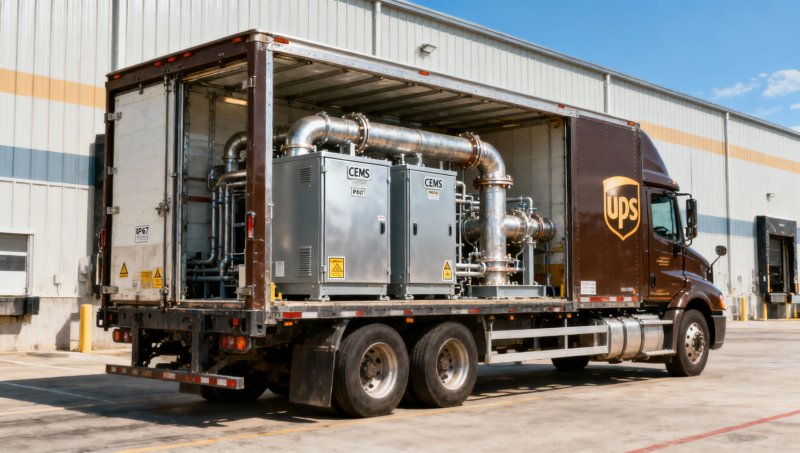
Global logistics provider UPS will implement a comprehensive freight rate increase effective May 17, 2026. This adjustment directly affects exporters of bulky, heavy industrial online monitoring equipment—including pipeline corrosion monitoring stations and continuous emissions monitoring systems (CEMS) cabinets—raising cross-border logistics costs and reshaping FOB pricing structures. Exporters in China and other manufacturing hubs, particularly those serving industrial automation, environmental compliance, and energy infrastructure markets, must assess implications for cost modeling, delivery timelines, and customer budgeting.
Event Overview
UPS announced a broad-based freight rate adjustment scheduled to take effect on May 17, 2026. The change applies globally to standard ground, air, and international express services. Publicly confirmed details include revised base rates, updated dimensional weight calculations, and adjustments to fuel and peak-season surcharges. eBay and other e-commerce platforms have notified sellers that certain ancillary fees may also shift as a result. No further operational or regional exceptions have been disclosed at this time.
Industries Affected by Segment
Direct Export Trading Enterprises
These firms—especially those quoting FOB terms for large-format industrial monitoring hardware—are exposed to immediate margin pressure. Since UPS is a primary carrier for mid-volume air and express shipments from China to North America and Europe, the rate hike alters landed cost projections and may trigger renegotiation requests from overseas buyers accustomed to stable freight-inclusive quotes.
Manufacturers of Industrial Online Monitoring Equipment
Producers of CEMS cabinets, corrosion monitoring stations, and similar fixed-installation devices face compound impact: high unit weight, non-collapsible form factors, and strict packaging requirements amplify dimensional weight surcharges. Unlike consumer electronics, these products rarely qualify for consolidated palletized shipping, limiting opportunities to offset per-unit cost increases through volume efficiencies.
Supply Chain & Logistics Service Providers
Firms offering end-to-end export logistics—including freight forwarding, customs brokerage, and documentation support—must update client-facing rate cards and revise service-level agreements (SLAs) tied to transit time guarantees. UPS’s revised cutoff times and new handling fees for oversized packages may require reconfiguration of warehouse staging protocols and last-mile coordination with local carriers.
What Enterprises and Practitioners Should Monitor and Do Now
Track official UPS communications and regional implementation notes
While the May 17, 2026 effective date is confirmed, UPS has not yet published region-specific rate tables or detailed methodology updates for dimensional weight recalibration. Exporters should monitor UPS’s official tariff publications and subscribe to carrier notifications—particularly for changes affecting Asia–US and Asia–EU lanes.
Review current product packaging and transport configurations
Analysis shows that even modest reductions in external dimensions—e.g., switching from rigid steel frames to foldable aluminum enclosures—can lower dimensional weight by 15–25% for certain CEMS models. Companies should prioritize engineering reviews focused on modular disassembly, nested component stacking, and standardized ISO container loading patterns—not just material substitution.
Reassess FOB vs. DAP/DPU quotation strategies
Observably, more buyers in regulated sectors (e.g., power generation, chemical processing) are requesting DAP or DPU terms to retain control over import compliance and site readiness. Exporters may find it operationally more efficient to absorb partial freight volatility by shifting to DAP—provided customs clearance capacity and inland delivery partnerships are already in place.
Update internal costing models before Q2 2026 order cycles
Many industrial equipment procurement cycles align with fiscal-year planning windows ending June 30. Current more appropriate is to revise internal freight cost assumptions—and associated gross margin forecasts—by early May 2026, ahead of formal RFQ submissions and contract renewals.
Editorial Perspective / Industry Observation
This rate adjustment is better understood as a structural signal than an isolated cost event. From an industry perspective, it reflects tightening global air cargo capacity, rising regulatory compliance overhead for hazardous and oversized shipments, and carrier-level recalibration toward higher-margin, value-added logistics services. It does not indicate a temporary spike but rather a step in a multi-year trend toward cost transparency and operational accountability across industrial supply chains. Continued attention is warranted—not only to UPS’s next tariff cycle but also to parallel adjustments from FedEx and DHL, especially regarding dimensional weight thresholds and minimum charge floors for heavy parcels.
Conclusion: The UPS freight increase signals a measurable shift in the cost architecture for exporting industrial monitoring hardware—not merely a line-item adjustment. Its significance lies less in absolute percentage changes and more in how it accelerates strategic decisions around product design, shipment modality, and commercial terms. At present, it is most accurately interpreted as a catalyst for operational refinement rather than a crisis requiring emergency response.
Source Disclosure: Primary information sourced from UPS official announcement (dated March 2026, publicly accessible via ups.com/rates). Regional implementation details and surcharge breakdowns remain pending publication and are flagged for ongoing observation.
Recommended for You
 Brazil to Eliminate Import Duties on Cross-Border E-Commerce Orders Under USD 50Brazil to eliminate import duties on cross-border e-commerce orders under USD 50—key for portable testing instruments exporters targeting Mercado Livre & DIY buyers.
 New AI Agent Guidelines Impact Smart Inspection Device ExportsAI Agent Guidelines impact smart inspection device exports—learn how new China AI safety rules affect EU, US & Middle East market access.
 UPS Freight Rates Increase Effective May 17, 2026UPS freight rates increase effective May 17, 2026—impact FOB pricing for industrial monitoring equipment exporters. Act now to optimize packaging, revise quotes, and secure margins.
 新修订《海商法》施行:卸货港无人提货责任转向托运人,检测设备出口交期风控升级New Maritime Code shifts unclaimed cargo liability to shippers at discharge ports—critical for testing equipment exporters managing delivery timelines and compliance risk.
 China Imposes Zero Tariffs on Lab Analyzers for 20 African NationsChina's zero tariffs on lab analyzers for 20 African nations boost export competitiveness—pH meters, spectrophotometers & more now duty-free from May 2026.
 CA Toxic Chemical Tank Overheating Sparks Explosion Risk, Monitoring Equipment Orders SurgeGas leak detectors, remote temperature warning systems & explosion-proof thermal imagers surge in demand after CA toxic tank overheating incident.
 EU REACH Adds DBDPE to SVHC List, Impacting Brominated Flame Retardant Testing for Export EquipmentDBDPE added to EU REACH SVHC list—impact on brominated flame retardant testing for industrial instruments, sensors & export compliance. Act now.
 Thailand Customs Digital Reform Spurs RFID Equipment DemandRFID equipment demand surges in Thailand as Customs digital reform mandates e-labeling, real-time parcel tracking & API compliance—act now to meet TISI specs and platform rules.
 Lazada Thailand Cuts Import Duties on 528 CategoriesLazada Thailand cuts import duties on 528 categories — including wired headphones & notebooks — lowering costs for Chinese exporters and Thai SMEs via LGS.
 US Delays 400 Tomahawk Missiles to Japan Amid Iran Inventory ReplenishmentTomahawk missiles delay to Japan sparks urgent demand for alternative guidance, navigation & secure comms suppliers—key opportunity for export-ready defense electronics firms.
 What to Check Before Importing an F2 Concentration Analyzer in 2026F2 concentration analyzer import guide for 2026: learn what to check on compliance, performance, integration, lifecycle cost, and supplier support before you buy.
 SF6 Concentration Analyzer Market Trends for Power and Gas Applications in 2026SF6 concentration analyzer market trends for 2026: explore accuracy, digital integration, emissions control, and buying tips for power and gas applications.
 Common HCl Concentration Analyzer Mistakes That Lead to Unstable ReadingsHCl concentration analyzer unstable readings? Discover the most common installation, calibration, sampling, and maintenance mistakes—and the practical fixes that improve accuracy fast.
 H2S Concentration Analyzer Price Trends: What’s Driving Costs in 2026H2S concentration analyzer price trends in 2026: discover what drives costs, from sensor technology and compliance to materials and digital features, and make smarter buying decisions.
 How to Choose a Cl2 Concentration Analyzer for Process Safety in 2026Cl2 concentration analyzer selection in 2026 starts with process safety. Learn how to match scenarios, improve reliability, avoid costly mistakes, and choose with confidence.
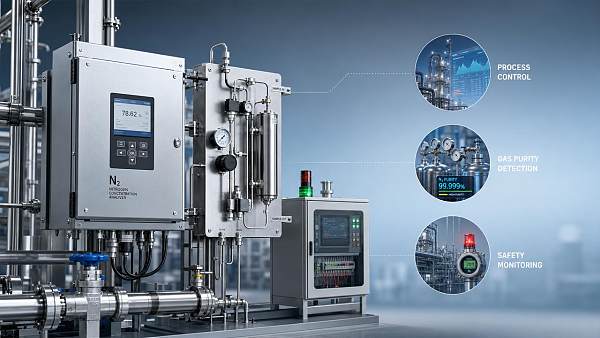
 N2 Concentration Analyzer Cost Factors for Bulk Industrial ProcurementN2 concentration analyzer cost depends on more than unit price. Compare process, purity, and safety applications with total cost logic to source smarter and reduce lifecycle risk.
 Oxygen Concentration Analyzer vs Sensor Systems: Which Fits Continuous UseOxygen concentration analyzer or sensor system? Compare stability, drift, maintenance, and uptime for continuous use to choose the most reliable fit for your process.
 SO2 Concentration Analyzer News: Compliance Demands Reshaping Product SpecsSO2 concentration analyzer trends are shifting with stricter compliance rules. Learn how new specs, data integrity, and uptime demands are reshaping smarter buying decisions.
 He Concentration Analyzer Maintenance Tips for Stable Long-Term ReadingsHe concentration analyzer maintenance tips for stable long-term readings. Learn how to reduce drift, improve calibration accuracy, cut downtime, and keep industrial systems reliable.
 CH4 Concentration Analyzer Selection Mistakes That Raise Operating RiskCH4 concentration analyzer selection mistakes can raise safety, compliance, and maintenance risk. Learn how to choose the right analyzer for reliable performance and lower lifecycle cost.
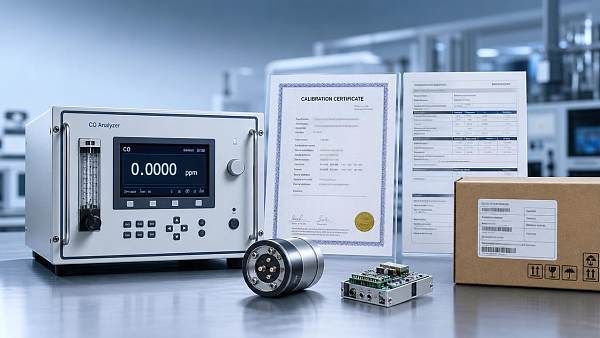
 CO Concentration Analyzer Import Rules to Watch in 2026CO concentration analyzer import rules for 2026: learn the key customs, certification, labeling, and compliance checks to reduce risk, avoid delays, and source with confidence.
 NH3 Concentration Analyzer Market Trends for Industrial Process Control in 2026NH3 concentration analyzer market trends in 2026: explore technologies, industrial applications, selection tips, and how smarter monitoring improves compliance, safety, and process control.
 Ar Concentration Analyzer Accuracy Issues in High-Purity Gas ApplicationsAr concentration analyzer accuracy issues can compromise high-purity gas quality, safety, and compliance. Learn the key causes, practical fixes, and how to improve reliable measurement performance.
 CO2 Concentration Analyzer Price Trends in 2026: What Shapes Total CostCO2 concentration analyzer price trends in 2026 depend on technology, accuracy, calibration, compliance, and integration. Discover total cost drivers to compare quotes smarter and control lifecycle risk.
 How to Choose a NOX Concentration Analyzer for Low-Emission MonitoringNOX concentration analyzer selection for low-emission monitoring made easier. Learn how to compare accuracy, response time, compliance, and lifecycle cost before you buy.
 2026 Summit Highlights China's Smart Inspection Equipment as New Global Cooperation FocusSmart inspection equipment takes center stage at the 2026 Summit—unlocking new global cooperation, standards alignment, and market opportunities for exporters, OEMs, and tech suppliers.
 White House Warns Oil Shock May Fuel Core Inflation, Delaying Industrial Instrument ExportsWhite House warns oil shock may fuel core inflation—impacting industrial instrument exports. Discover how pressure, temperature & flow instrumentation exporters can mitigate delays and optimize trade finance workflows now.
 New AI Agent Guidelines Impact Export of AI-Powered Testing EquipmentAI agent guidelines impact export of AI-powered testing equipment—learn how new China security & controllability rules affect global compliance, supply chains, and market access.
 Canton Fair Phase III Boosts Sensor & Energy Testing ExportsSensor & energy testing exports surge at Canton Fair Phase III—driven by global demand for new energy home appliances and smart furniture compliance solutions.
 UAE Announces $150B Energy Infrastructure InvestmentUAE's $150B energy infrastructure push drives demand for IP68/IP69K, ATEX/IECEx, and LPWAN-enabled industrial sensors — act now to align with ADNOC tenders.
 WTI Net Longs Surge, Boosting Demand for Lubricant Monitoring SystemsLubricant monitoring systems surge in demand as WTI net longs rise—real-time viscosity, moisture & oxidation tracking now critical for global manufacturers.
 Shanghai Pudong Launches E-Label Pilot for Imported CosmeticsShanghai Pudong’s e-label pilot for imported cosmetics drives global demand for RFID/NFC readers, traceability solutions & certified testing equipment—act now to comply and lead.


























Search Categories
Search Categories
Latest Article
- Brazil to Eliminate Import Duties on Cross-Border E-Commerce Orders Under USD 50Brazil to eliminate import duties on cross-border e-commerce orders under USD 50—key for portable testing instruments exporters targeting Mercado Livre & DIY buyers.Posted by:
- New AI Agent Guidelines Impact Smart Inspection Device ExportsAI Agent Guidelines impact smart inspection device exports—learn how new China AI safety rules affect EU, US & Middle East market access.Posted by:
- UPS Freight Rates Increase Effective May 17, 2026UPS freight rates increase effective May 17, 2026—impact FOB pricing for industrial monitoring equipment exporters. Act now to optimize packaging, revise quotes, and secure margins.Posted by:
Please give us a message
