
Hydrogen analyzer drift isn’t just about calibration—here’s what aging sensors actually hide


Hydrogen analyzer drift often signals more than a routine calibration need—it can reveal deeper issues like sensor aging, material fatigue, or cross-interference from other gases. Whether you rely on a paramagnetic analyzer, laser gas analyzer, or multi component analyzer for H₂, NH₃, NOX, SO₂, CH₄, CO₂, CO, or other critical measurements, unaddressed drift compromises safety, compliance, and process efficiency. For users, technicians, procurement teams, and project managers alike, understanding what aging sensors *actually* hide—beyond specsheets and service logs—is essential. This article uncovers the hidden failure modes behind hydrogen analyzer drift—and why your CO analyzer or SO₂ analyzer might be telling the same story.
Why drift isn’t just a calibration trigger—but an early warning system
Drift in hydrogen analyzers is commonly misdiagnosed as a simple calibration deviation. In reality, it’s often the first measurable symptom of irreversible physical degradation—especially in electrochemical, thermal conductivity, and catalytic bead sensors. Over 7–15 days of continuous operation at >40% of full-scale range, aging sensors exhibit nonlinear response decay, baseline shift exceeding ±2.5% FS/month, and increased recovery time from step changes (e.g., 30–90 seconds vs. original <15 s).
This degradation directly impacts industries where real-time H₂ monitoring is mission-critical: ammonia synthesis loops (where 0.1% H₂ in N₂ affects catalyst life), fuel cell feed gas purity (requiring <1 ppm detection), and refinery hydrotreater off-gas (subject to EPA Method 25A compliance). A single undetected drift event can trigger false alarms, unnecessary shutdowns, or—worse—missed flammability thresholds.
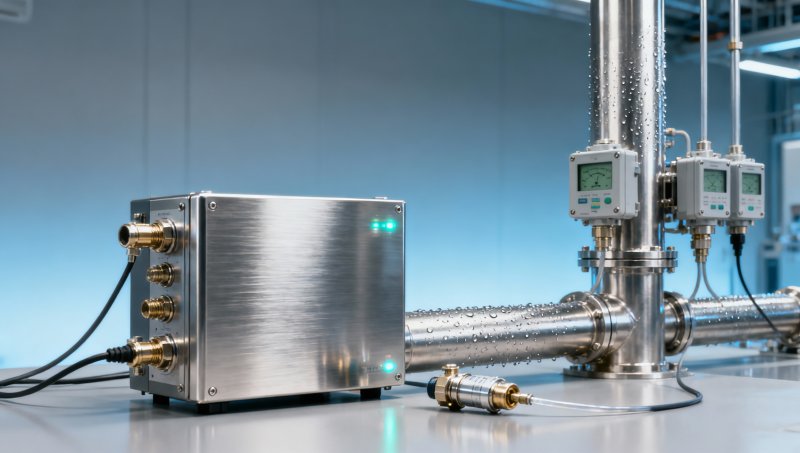
Unlike temperature or pressure transmitters, hydrogen sensors interact chemically with their environment. Platinum electrodes corrode in sulfur-rich streams; polymer electrolytes dehydrate above 60°C; and optical windows fog due to condensate accumulation in humid biogas applications. These mechanisms aren’t reflected in factory calibration certificates—they emerge only during field use.
What aging sensors hide—and how to spot it before failure
Three hidden failure modes masked by “normal” drift
- Electrode passivation: Gradual oxide layer formation on catalytic surfaces reduces sensitivity by up to 40% over 6 months in ambient air exposure—undetectable without reference gas challenge tests.
- Membrane embrittlement: Nafion®-based sensors lose proton conductivity when operated below 10°C or above 85°C for >200 cumulative hours, causing hysteresis >5% FS between up/down cycles.
- Cross-sensitivity creep: Aging metal oxide sensors show increasing response to CO (up to 12% equivalent H₂ reading) and CH₄ (up to 8%) after 3,000 operating hours—invalidating selectivity claims.
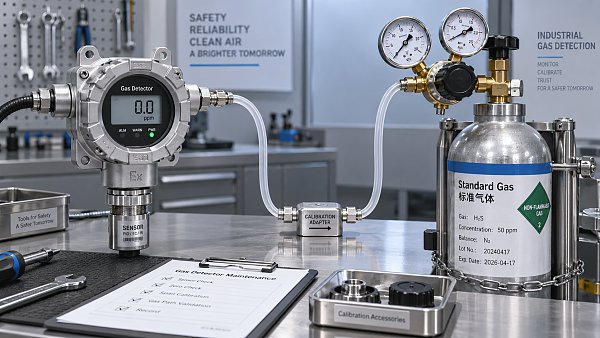
Field verification requires more than zero/span checks. Technicians should perform dual-point linearity validation using certified H₂/N₂ blends at 10% and 90% of range—and log response time, repeatability (±0.3% FS over 5 cycles), and zero stability (drift <0.5% FS/24h) as KPIs.
How procurement teams evaluate long-term reliability—not just specs
Procurement decisions for hydrogen analyzers rarely hinge on datasheet accuracy alone. Leading industrial buyers now assess five operational durability metrics before vendor shortlisting:
These criteria separate instruments designed for lab-grade repeatability from those engineered for 24/7 plant-floor resilience. Vendors unable to provide traceable test reports for all three parameters typically rely on extrapolated lab data—not field-proven performance.
When to replace vs. recalibrate: a decision framework for maintenance teams
Maintenance engineers face a recurring dilemma: invest in quarterly recalibration ($850–$1,400 per unit) or replace aging units ($4,200–$12,500)? The break-even point depends on four quantifiable factors:
- Sensor age: Units >24 months old in high-humidity (>70% RH) or corrosive (H₂S >1 ppm) environments show 3.2× higher drift recurrence post-calibration.
- Drift pattern: Monotonic drift (steady increase/decrease) suggests electrode aging; erratic drift indicates electronics or power supply issues.
- Calibration frequency history: More than 4 calibrations/year correlates with 87% probability of underlying sensor degradation (per 2023 ISA Maintenance Benchmark Survey).
- Process criticality: For SIL-2 safety loops, replacement is mandatory after 36 months regardless of drift magnitude—per IEC 61511 clause 11.4.3.
Project managers overseeing brownfield upgrades report 22% lower TCO over 5 years when replacing units at 30-month intervals versus extending life beyond 42 months—even with premium calibration contracts.
Why choose instrumentation partners who embed longevity into design
We engineer hydrogen analyzers for industrial continuity—not just initial accuracy. Every unit ships with:
- Onboard diagnostic logs tracking 12 aging indicators (electrode impedance, membrane hydration index, optical path attenuation) — accessible via Modbus TCP or local USB export;
- Field-replaceable sensor modules validated for ≥3,500 operating hours in simulated refinery off-gas (ASTM D7165 synthetic gas matrix);
- A 3-stage predictive maintenance program: automated drift alerts → remote diagnostics → pre-qualified replacement dispatch within 48 business hours.
Contact us to request: (1) your current analyzer’s drift trend analysis against industry baselines, (2) customized replacement ROI calculator for your process conditions, or (3) documentation package for IEC 62443-3-3 cybersecurity compliance in connected analyzer deployments.
Recommended for You
 How to verify accuracy claims for industrial quality analyzersVerify accuracy claims for industrial quality analyzers with calibration checks, independent testing, and clear acceptance criteria. Learn how to reduce risk and buy with confidence.
 How to calculate cooling loads for an industrial analyzer shelterSize industrial analyzer shelter cooling with confidence. Learn to calculate equipment heat, solar gains, and ventilation loads, then select HVAC capacity for reliable analyzer performance.
 Industrial Safety vs. Emission Monitoring: What Are the Differences?What are the main differences between industrial safety and emission monitoring? Compare goals, sensors, response times, and compliance needs to choose the right systems for your facility.
 Is Remote Monitoring Worth the Cost for Small Emission Sources?Is it worth investing in remote monitoring for small emission sources? Compare costs, compliance needs, and potential savings to choose the right solution for your operation.
 How Do You Handle Analyzer Failure During an Environmental Audit?Learn how to handle analyzer failure during environmental compliance audit procedures. Protect evidence, verify data, and restore monitoring with this practical response guide.
 Do VOC Monitors Require Explosion-Proof Certification?Does VOC monitoring require explosion-proof certification? Learn when approval is needed, compare ATEX and IECEx, and choose the right monitor for your site.
 How sample conditioning affects accuracy in petrochemical analyzersImprove accuracy in petrochemical analyzers with smarter sample conditioning. Discover how phase control, filtration, and transport design prevent bias and deliver reliable process data.
 How to troubleshoot sensor drift in industrial gas detectorsIndustrial gas detectors showing sensor drift? Learn how to verify calibration gas, identify root causes, and determine when sensor replacement is needed for reliable monitoring.
 How to judge whether a competitive price reflects real valueCompetitive Price: learn how to compare scope, compliance, performance, and lifecycle costs to identify real value, reduce risk, and make smarter purchasing decisions.
 When custom gas analysis is the right fit for complex process streamsCustom gas analysis for complex process streams: learn when tailored sampling, interference control, and reliable measurement design deliver confident decisions.
 When does a laser gas analyzer meet stack emissions monitoring needs?Laser gas analyzer for stack emissions: learn when it delivers fast, reliable data, how to assess installation risks, and what to verify for CEMS compliance.
 How to select a hazardous gas analyzer for confined spacesHazardous gas analyzer selection for confined spaces: compare sensors, sampling, certifications, alarms, and maintenance to protect workers and choose with confidence.
 When is a single gas analyzer sufficient for workplace safety monitoring?Discover when a single gas analyzer delivers reliable workplace safety monitoring, and learn the key limits, calibration needs, and risks that require broader detection.
 How to choose an ambient gas analyzer for low-level leak detectionAmbient gas analyzer selection for low-level leak detection: compare sensitivity, cross-sensitivity, sampling design, alarms, and calibration for reliable site performance.
 How to tell when an oxygen sensor needs replacementOxygen sensor replacement signs explained: learn how live data, fault codes, wiring checks, and exhaust inspections pinpoint the real issue before you buy.
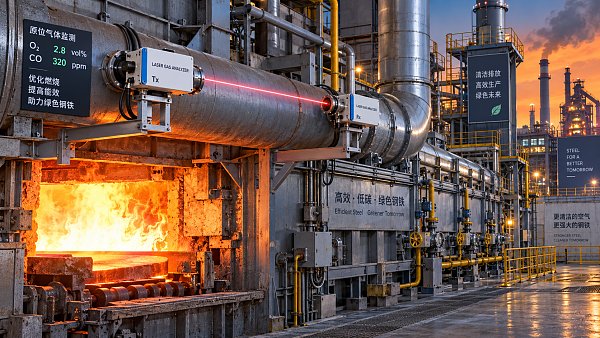
 How laser gas analyzers improve combustion control in steel furnacesLaser gas analyzer for steel industry applications delivers fast in-situ O₂ and CO data to optimize furnace combustion, cut fuel waste, and improve steel heating stability.
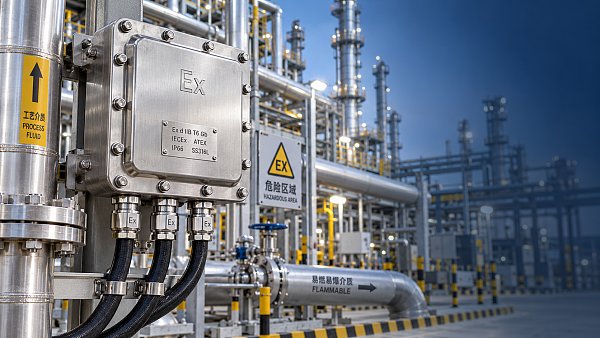
 How to verify whether explosion proof equipment meets site requirementsExplosion proof equipment verification made practical: match zones, gas or dust groups, temperature classes, certificates, and installation conditions for confident compliance.
 How industrial gas analysis helps detect contamination before releaseIndustrial Gas Analysis helps detect moisture, oil, oxygen, and toxic contaminants before release—protecting processes, ensuring compliance, and reducing costly risks.
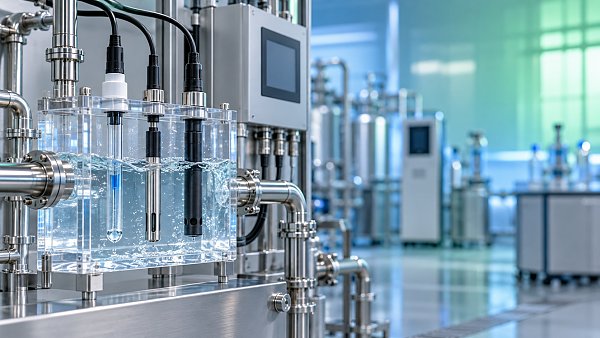
 When is electrochemistry detection the right choice for water analysis?Electrochemistry detection for water analysis: learn when fast, reliable monitoring of ions, chlorine, pH, and more delivers actionable results.
 How industrial standards reduce quality risks in supplier selectionIndustrial Standard guidance helps quality and safety managers reduce supplier risks, verify compliance, strengthen traceability, and build resilient instrumentation supply chains.
 When does a multi-component system reduce installation complexity?Multi component systems reduce installation complexity when they eliminate field interfaces, streamline commissioning, and provide proven compatibility. Learn how to assess total cost and supplier accountability.
 How to size an industrial control shelter for outdoor equipmentIndustrial control shelter sizing guide: optimize layout, HVAC, access, safety, and expansion space for reliable outdoor equipment operations.
 How flue analysis helps verify combustion efficiencyFlue analysis verifies combustion efficiency by assessing O2, CO, CO2, and stack temperature to identify excess air, incomplete combustion, and heat losses.
 How to select industrial gas detectors for confined spacesIndustrial gas detectors for confined spaces: learn how to match sensors, sampling methods, alarms, and certifications to real atmospheric hazards.
 When does a laser oxygen analyzer outperform zirconia sensors?Laser oxygen analyzer vs. zirconia sensors: compare speed, selectivity, maintenance, gas chemistry, and installation needs to choose the right oxygen measurement solution.
 How to select a percent range analyzer for process measurementsPercent range analyzer selection made practical: compare accuracy, sample systems, calibration, gas matrix, integration, and lifecycle cost for reliable process measurements.
 How explosion proof analysis verifies safe equipment for hazardous areasExplosion proof analysis verifies hazardous-area equipment by matching certifications, temperature ratings, installation details, and inspection controls for safer compliance.
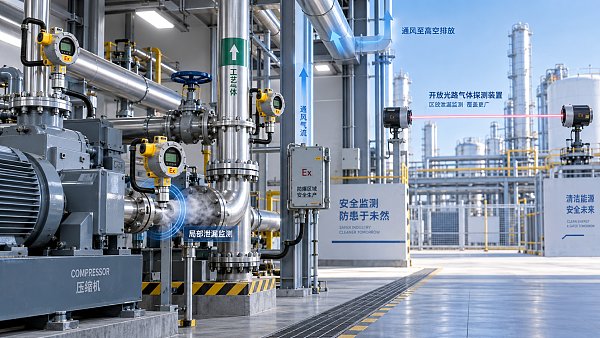
 When does fixed gas detection need point sensors instead of open-path monitoring?Fixed gas detection: discover when point sensors outperform open-path monitoring for predictable leaks, enclosed zones, local alarms, and safer design decisions.
 How to choose industrial metrology systems for tight-tolerance partsIndustrial metrology guide for tight-tolerance parts: compare CMMs, optical scanners, gauges, uncertainty, workflow, and traceable inspection strategies.
 How process metrology reduces measurement variation in productionProcess metrology reduces production measurement variation by improving traceability, uncertainty control, calibration, and reliable quality decisions.
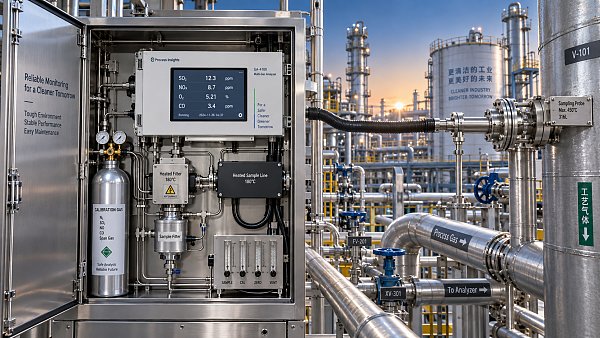
 How to select an industrial monitoring analyzer for harsh environmentsIndustrial monitoring analyzer selection for harsh environments: evaluate sampling, durability, hazardous-area compliance, accuracy, maintenance, and data reliability.
 How calibration intervals affect test and measurement equipment accuracyTest and measurement equipment calibration intervals directly affect accuracy, risk, compliance, and uptime. Learn how to set evidence-based schedules that protect critical decisions.
Search Categories
Search Categories
- Smart Meters & Power Quality
- Transformer Gas Analyzers
- BESS Thermal Runaway Detectors
- Energy, Power & Smart Grid Monitoring
- Optical Profilers & CMM
- Ultrasonic & X-Ray NDT
- Calibration Standards
- Precision Metrology & NDT
- Water Quality Analyzers
- CEMS & VOCs Monitors
- Price Trends
- Import & Export Updates
- Market Trends
- Industry News
- Industry Insights
Latest Article
- How to verify accuracy claims for industrial quality analyzersVerify accuracy claims for industrial quality analyzers with calibration checks, independent testing, and clear acceptance criteria. Learn how to reduce risk and buy with confidence.Posted by:
- How to calculate cooling loads for an industrial analyzer shelterSize industrial analyzer shelter cooling with confidence. Learn to calculate equipment heat, solar gains, and ventilation loads, then select HVAC capacity for reliable analyzer performance.Posted by:
- Industrial Safety vs. Emission Monitoring: What Are the Differences?What are the main differences between industrial safety and emission monitoring? Compare goals, sensors, response times, and compliance needs to choose the right systems for your facility.Posted by:
Please give us a message
