
When is a single gas analyzer sufficient for workplace safety monitoring?


A Single Analyzer Is Sufficient Only When the Hazard Is Truly Singular
A single gas analyzer can be sufficient for workplace safety monitoring when the exposure scenario is narrow, predictable, and supported by a defensible hazard assessment. The gas must be known, its expected concentration range must be understood, and workers must not be exposed to other atmospheric hazards that could create an immediate health, fire, or oxygen-deficiency risk.
That standard is more demanding than it first appears. A work area may use one primary chemical, yet still contain displaced oxygen, cleaning-agent vapors, combustion by-products, solvent residues, or gases released during maintenance. Selecting one instrument because one gas is the main process concern can leave an important gap if the work environment changes outside normal production conditions.
For safety managers and quality teams, the decision should begin with the exposure scenario rather than the instrument category. A single gas analyzer is a sound choice when it matches one defined monitoring objective and does not create false confidence about unmonitored hazards.
Start With the Question: What Must the Instrument Detect?
The first decision is whether the workplace has one credible atmospheric hazard or several. This should be based on the materials handled, process conditions, ventilation design, possible failure modes, and worker tasks.
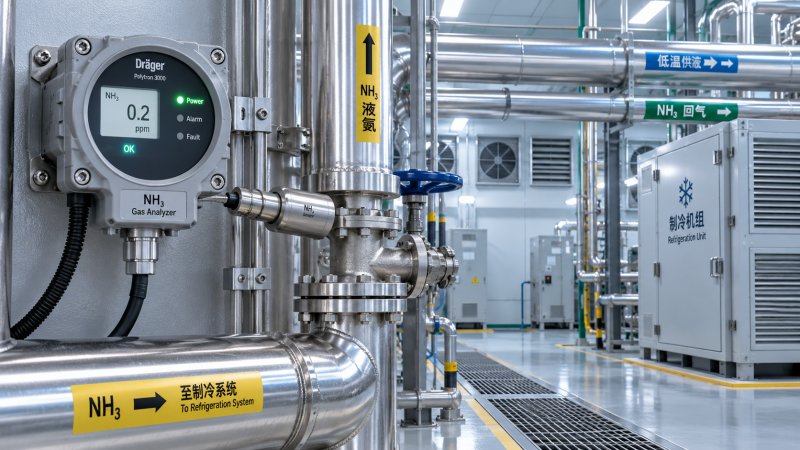
A fixed analyzer dedicated to ammonia may be appropriate near a refrigeration plant where ammonia is the only material likely to leak into the monitored zone. A hydrogen sulfide analyzer may be suitable at a defined process point where sour gas exposure is the sole reasonably foreseeable hazard. Similarly, a carbon monoxide analyzer can serve a focused purpose around a combustion source if oxygen depletion and other combustion gases are not credible concerns for the personnel in that area.
Those examples depend on the boundaries remaining stable. Once personnel enter enclosed spaces, work around several process chemicals, perform line-breaking activities, handle solvents, or work during shutdowns and maintenance, the atmospheric risk profile often expands. In those situations, one gas channel may answer only part of the safety question.
A practical assessment should distinguish between the gas that is routinely present and the gases that could appear during an abnormal event. Routine operations are often the easiest conditions to monitor. The more difficult question is whether a leak, failed ventilation system, process upset, or cleaning activity could introduce a separate hazard before workers can react.
The following conditions usually support a single-analyzer approach:
- One hazardous gas is clearly identified as the relevant airborne exposure risk.
- The gas source, release mechanism, and monitored area are well defined.
- Other toxic gases, flammable gases, and oxygen displacement are not reasonably expected in the same task area.
- Operating conditions remain relatively stable across shifts and production cycles.
- The analyzer can detect the gas at concentrations meaningful for the site’s alarm and response procedures.
- Workers do not rely on the device for confined-space entry or other activities requiring broader atmospheric verification.
When several of these conditions are uncertain, a single gas analyzer may still be useful, but it should be treated as a targeted measurement device rather than the complete safety-monitoring strategy.
The Measurement Range Must Match the Safety Decision
A gas analyzer is only sufficient when its measurement capability aligns with the action workers need to take. This involves more than choosing a sensor that detects the correct chemical. The selected range, resolution, alarm points, response time, and recovery behavior must support the actual exposure risk.
For toxic-gas monitoring, the instrument needs useful sensitivity around the concentrations at which the site expects personnel to respond. An analyzer designed for high-concentration process measurement may be unsuitable for personal exposure protection if it lacks the resolution or alarm behavior needed at lower levels. Conversely, a low-range analyzer can become unreliable or unavailable if a release is likely to exceed its specified measuring range.
For flammable atmospheres, the monitoring objective is different. The device must provide dependable indication before gas concentrations approach a hazardous fraction of the lower explosive limit. The sensor type, sampling method, and response characteristics matter because some combustible gas sensors respond differently to different vapors and gases. A device calibrated for one gas may not provide equivalent readings for another without appropriate correction factors or a revised calibration basis.
Sampling location is equally important. A fixed analyzer positioned near a ceiling may detect a buoyant gas effectively but miss a vapor that tends to collect near floor level. A personal monitor measures conditions close to the worker, but its value depends on whether the employee is present when the release develops. A single instrument can be technically capable and still fail to represent the breathing-zone exposure or accumulation point that matters.
Before purchase, safety managers should document four basic questions:
- What concentration should trigger a warning, evacuation, ventilation response, or process shutdown?
- How quickly could the concentration rise from normal background levels to a hazardous condition?
- Where is the first credible point of exposure: at the source, in the breathing zone, at a low point, or within a duct or enclosure?
- Can the analyzer continue to provide useful readings after a short high-concentration event, or will it require inspection, recalibration, or sensor replacement?
This exercise often reveals whether a single analyzer is genuinely adequate. If different answers apply to different zones, tasks, or release scenarios, one device type and one set of alarm settings may not cover the entire workplace.
Stable Operations Matter More Than a Simple Process Diagram
A common error is to assess the process only during normal production. Many sites are straightforward while equipment is operating as designed, then become far less predictable during cleaning, startup, shutdown, maintenance, sampling, or emergency intervention.
For example, a production room may normally warrant a dedicated analyzer for one gas used in the process. During cleaning, another chemical may be introduced. During maintenance, a vessel could be opened, inerted, purged, or isolated. During an outage, temporary generators or combustion equipment may change the carbon monoxide and oxygen-risk profile. These are not edge cases if workers are regularly present during such tasks.
The right scope is therefore the monitored activity, not merely the equipment under observation. If the analyzer protects an operator stationed beside a closed system during routine production, its suitability can be assessed narrowly. If the same device is expected to support permit-to-work decisions, emergency response, or entry into partially enclosed process areas, a broader monitoring approach is likely needed.
Quality teams can help by linking gas monitoring to operating procedures. Changes in raw materials, cleaning chemicals, process temperature, ventilation configuration, or maintenance practices should prompt a review of the hazard assumptions behind the analyzer selection. A monitoring plan that was appropriate at commissioning can lose relevance when the process changes incrementally over time.
Calibration and Functional Checks Determine Whether “Sufficient” Remains True
A single gas analyzer has no redundancy at the measurement level. Its reliability therefore depends heavily on maintenance discipline. An analyzer that is correctly specified but poorly maintained is less protective than a more modest device supported by clear calibration, inspection, and alarm-verification practices.
Calibration should be traceable to the target gas, the applicable concentration range, and the manufacturer’s approved procedure. Using an unsuitable calibration gas, extending intervals without evidence, or assuming that a sensor remains accurate because it powers on can undermine the monitoring decision. Some sensors are affected by temperature, humidity, pressure, interfering gases, aging, or sudden high exposures. Those influences must be considered where they are relevant to the installation.
For portable instruments, functional checks before use are often as important as scheduled calibration. A bump test or equivalent response verification confirms that gas reaches the sensor and that audible, visual, and vibrating alarms operate as intended. For fixed systems, inspection should include sensor condition, sample lines where used, flow status, alarm outputs, power integrity, and the connection to ventilation or control systems.
Alarm management deserves the same attention. An alarm that is technically triggered but cannot be heard in a high-noise area, seen in bright light, or acted upon by an assigned person is not an effective control. Fixed systems may require clear annunciation, remote notification, or automatic interlocks. Personal devices require workers to understand the alarm meaning and the immediate action expected of them.
Where One Analyzer Is Usually Not Enough
A single channel should not be treated as a universal low-cost substitute for a multi-gas strategy. Several conditions should trigger caution.
- Confined-space entry: Entry decisions commonly require assessment of oxygen, flammability, and toxic contaminants relevant to the space. One targeted gas reading rarely establishes that the atmosphere is safe.
- Potential oxygen displacement: Nitrogen, carbon dioxide, argon, helium, and other gases can create an oxygen-deficient atmosphere even where the target toxic gas is absent or below alarm level.
- Mixed chemical processes: Solvents, acids, fuels, reactive chemicals, and decomposition products may create different hazards under different operating conditions.
- Hot work and combustion sources: Temporary burners, engines, welding, and thermal processes can add carbon monoxide, oxygen depletion, or flammable-gas concerns.
- Variable or poorly controlled ventilation: Changes in airflow can alter where gases accumulate and how quickly concentrations rise.
- Emergency response duties: Responders may encounter conditions outside those anticipated during normal operation and need broader situational awareness.
In these cases, the decision is not simply “single-gas versus multi-gas.” The site may need a combination of fixed detection at known release points, portable personal monitors for worker exposure, and task-specific atmospheric testing. Different tools can serve different decisions without unnecessary duplication.
Make the Purchase Decision Against the Control Plan
Before approving a single gas analyzer, safety managers should be able to state in one sentence what it is intended to protect against, where it will be used, and what response follows an alarm. If that sentence becomes qualified by several possible gases, changing work locations, or uncertain release conditions, the scope is probably too broad for one channel.
The procurement specification should then cover the target gas, expected concentration range, sensor technology, response time, alarm configuration, environmental limits, calibration requirements, maintenance support, data-recording needs, and any area-classification or electrical protection requirements applicable to the installation. Certification markings matter, but they do not replace a review of whether the sensing method fits the actual hazard.
A single gas analyzer is sufficient when it provides a reliable answer to one clearly framed safety question. It becomes inadequate when the workplace needs answers to several questions at once: whether oxygen is adequate, whether a flammable atmosphere is forming, whether multiple toxic substances are present, and whether conditions remain safe as the task changes. Keeping that distinction clear prevents both overbuying and the more serious risk of monitoring only the hazard that is easiest to name.
Recommended for You
 How to choose the right detection range for a custom gas analyzerChoose the right custom gas analyzer detection range with practical guidance on accuracy, exposure limits, calibration, and supplier evaluation.
 How does multi component monitoring detect gases in stack emissions?Discover how multi component monitoring detects stack gases, manages interference and supports reliable emissions reporting. Explore key CEMS selection factors.
 How bright should an industrial monitor be for outdoor use?Choosing an outdoor industrial monitor? Learn why 1,000 nits is a starting point and how glare, contrast, and heat affect sunlight readability.
 How does water vapor affect infrared gas analyzers?Infrared gas analyzers can be affected by humidity, condensation and spectral interference. Learn how to protect sample integrity and achieve reliable results.
 How to reduce customer support response timesReduce Customer Support response times with actionable tips for reporting equipment faults, choosing the right channel, and getting expert help faster.
 How to choose a low range analyzer for trace-level measurementsChoose the right low range analyzer for trace-level measurements. Compare detection limits, sampling, calibration and support to make a confident decision.
 How to choose combustible gas detectors for a specific gasChoose combustible gas detectors with confidence. Compare sensor technologies, gas response, calibration, placement, and certification for your application.
 How to choose an air quality analyzer for the pollutants you need to measureChoose an air quality analyzer with confidence. Compare pollutant measurement methods, sampling, accuracy and calibration to find the right fit for your needs.
 How to choose industrial metrology tools for tight tolerancesChoose industrial metrology tools for tight tolerances with confidence. Compare uncertainty, calibration, tool types, and costs to reduce inspection risk.
 How moisture affects fixed analyzer accuracy in stack gas monitoringImprove fixed analyzer accuracy in stack gas monitoring. Discover how moisture causes dilution, interference, and sample loss—and learn practical ways to protect emissions data.
 How does production line speed affect in-line measurement accuracy?Discover how production line speed affects in-line measurement accuracy. Explore sensor response, sampling, and timing to boost throughput without compromising quality.
 How condensation affects HCl concentration analyzer accuracyHCl concentration analyzer accuracy can suffer when condensation traps HCl. Learn how to spot sampling losses, prevent low readings, and improve measurement reliability.
 How does cross-interference affect multi-component gas analyzers?How does cross-interference affect multi component gas analyzers? Explore measurement errors, compensation limits, and validation tips to choose the right system for your process.
 How does temperature affect high-accuracy sensor performance?Explore how temperature affects high accuracy sensor performance. Learn to reduce thermal drift, evaluate compensation, and select the right sensor for reliable measurements.
 Can a C4H8O concentration analyzer distinguish between isomers?Can a C4H8O concentration analyzer distinguish isomers? Compare GC, FTIR and MS methods, uncover selectivity limits, and learn what to validate before choosing your instrument.
 How to identify a reliable supplier using on-time delivery recordsIdentify a Reliable Supplier by verifying on-time delivery records, original commitments, and complete shipments. Learn practical checks to reduce purchasing risk and protect your project schedule.
 How sensitive should a portable hydrogen analyzer be for lab use?Choose a portable hydrogen analyzer for laboratory use with the right quantification limit, accuracy, and range. Learn how to verify performance and avoid costly buying mistakes.
 How to set industrial calibration intervals based on equipment riskSet industrial calibration intervals based on equipment risk, drift, and as-found data. Learn when to shorten or extend schedules to improve reliability and avoid unnecessary costs.
 How to choose electrochemical analyzers for low-current measurementsCompare electrochemical analyzers for precise low-current measurements. Learn how noise, leakage, bandwidth, and real-cell testing help you choose the right instrument.
 What tolerance does a custom gas mixture need for calibration?Choose the right custom gas tolerance for calibration. Learn how blending tolerance, certified uncertainty, and stability affect accuracy—and avoid paying for precision you don’t need.
 How condensation affects stack detector readings in wet flue gasStack detector readings can drift when wet flue gas condenses. Learn how to identify moisture interference, prevent sample losses, and improve emissions monitoring reliability.
 How to prevent condensation in a CO2 analyzer sampling systemPrevent condensation in your CO2 analyzer sampling system. Learn how to control dew point, eliminate cold spots, and manage moisture for reliable readings and fewer costly disruptions.
 How to verify accuracy claims for industrial quality analyzersVerify accuracy claims for industrial quality analyzers with calibration checks, independent testing, and clear acceptance criteria. Learn how to reduce risk and buy with confidence.
 How to calculate cooling loads for an industrial analyzer shelterSize industrial analyzer shelter cooling with confidence. Learn to calculate equipment heat, solar gains, and ventilation loads, then select HVAC capacity for reliable analyzer performance.
 Hydrogen Analyzers for Energy Storage: Purity Monitoring vs. Leak DetectionChoosing a hydrogen analyzer for energy storage systems? Compare purity monitoring and leak detection to select the right sensors, improve safety, and protect fuel cell performance.
 NH3 Monitoring in Fertilizer Plants: Where Should Leak Analyzers Be Installed?NH3 analyzer for fertilizer production: discover where to place leak detectors around storage, compressors, and loading areas to reduce blind spots and improve early warning.
 Diesel Engine NOx Analyzers: Response Time and NO2 Conversion ExplainedChoosing a NOX analyzer for diesel engines? Learn how response time, NO2 conversion, and sampling design affect accuracy—and make a smarter, evidence-based purchase.
 SO2 Analyzers for Smelter Emissions: Sampling Hot, Dust-Laden Flue GasSelect an SO2 analyzer for smelting industry applications. Discover how to handle hot, dust-laden flue gas, prevent sample losses, and achieve reliable emissions monitoring.
 Unstable CH4 Readings in Biogas Monitoring? Check Moisture and Sample FlowCH4 analyzer for biogas monitoring giving unstable readings? Discover how moisture, sample flow, and pressure checks help pinpoint faults and restore reliable methane measurements.
 Buying a CO2 Analyzer for Brewery Gas Recovery: Costs Beyond the Purchase PriceBuying a CO2 analyzer for brewery applications? Compare sampling, installation, calibration, and downtime costs to uncover hidden expenses and make a smarter gas recovery investment.
 Where to Place CO Analyzers for Effective Parking Garage VentilationOptimize your CO analyzer for parking garage ventilation with practical placement tips. Learn how sensor height, airflow, and zone coverage support timely detection and effective fan control.
 NDIR vs. FTIR Gas Analyzers: Which Fits Your Environmental Research?Find the right infrared gas analyzer for environmental research. Compare NDIR vs. FTIR on sensitivity, gas coverage, sampling needs, and cost to choose confidently for your study.




Search Categories
Search Categories
- Smart Meters & Power Quality
- Transformer Gas Analyzers
- BESS Thermal Runaway Detectors
- Energy, Power & Smart Grid Monitoring
- Optical Profilers & CMM
- Ultrasonic & X-Ray NDT
- Calibration Standards
- Precision Metrology & NDT
- Water Quality Analyzers
- CEMS & VOCs Monitors
- Price Trends
- Import & Export Updates
- Market Trends
- Industry News
- Industry Insights
Latest Article
- How to choose the right detection range for a custom gas analyzerChoose the right custom gas analyzer detection range with practical guidance on accuracy, exposure limits, calibration, and supplier evaluation.Posted by:
- How does multi component monitoring detect gases in stack emissions?Discover how multi component monitoring detects stack gases, manages interference and supports reliable emissions reporting. Explore key CEMS selection factors.Posted by:
- How bright should an industrial monitor be for outdoor use?Choosing an outdoor industrial monitor? Learn why 1,000 nits is a starting point and how glare, contrast, and heat affect sunlight readability.Posted by:
Please give us a message
