
Portable Gas Analyzers Price Trends in 2026: What Is Driving Total Ownership Cost?


Portable Gas Analyzers Are Entering a Cost Repricing Cycle
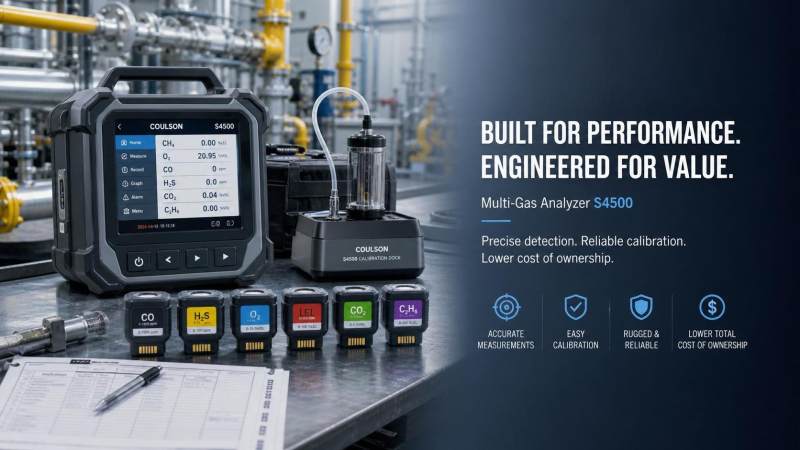
Portable gas analyzers in 2026 are being judged less by list price and more by lifetime cost behavior.
That shift is visible across industrial manufacturing, energy sites, environmental monitoring, laboratories, and construction safety programs.
The headline price still matters, but it no longer explains budget reality.
Portable gas analyzers now sit inside broader digital operations, compliance routines, and uptime targets.
As a result, ownership cost is spreading across calibration, sensor swaps, software maintenance, training, and fleet management.
This is especially important in instrumentation-heavy sectors where a failed reading can interrupt permits, shutdown work, or incident reporting.
From GIH’s supply-chain view, the market is no longer pricing only hardware.
It is pricing confidence, traceability, and the ability to keep measurements reliable across distributed field teams.
That is why portable gas analyzers price trends now look tighter on paper yet more variable in practice.
What Changed Behind the 2026 Price Trend
Recent pricing signals show moderate hardware stabilization, but a continued rise in ownership-linked costs.
Core components are no longer the only pressure point.
The more visible changes come from certification complexity, embedded connectivity, and maintenance intensity.
The important point is that portable gas analyzers are becoming more operationally embedded.
When a device becomes a data node, cost moves beyond procurement and into workflow economics.
Why Total Ownership Cost Now Moves Faster Than Unit Price
A common budgeting mistake is to treat portable gas analyzers like simple handheld tools.
In reality, they behave more like managed measurement assets.
The first source of acceleration is calibration frequency.
Sites with tight permit controls or hazardous-area protocols can multiply service events far beyond initial assumptions.
The second source is sensor life variance.
Electrochemical sensors rarely age evenly across fleets, especially where humidity, contamination, or intermittent high exposure is common.
That creates unpredictable replacement timing and makes annual budgeting less stable.
Battery systems add another layer.
Rechargeable designs reduce disposable waste, yet weak battery retention can quietly raise labor and standby inventory needs.
More noticeable in 2026 is the software layer.
Portable gas analyzers increasingly feed compliance archives, maintenance systems, and incident investigation records.
If export formats are limited or proprietary, integration cost can exceed expected savings.
That is why lower upfront bids may still produce a higher total ownership cost.
The Impact Is Different Across Use Environments
Not every user experiences portable gas analyzers price trends in the same way.
Cost pressure changes with the measurement context.
Industrial plants and energy assets
These environments often prioritize hazardous-area certification, rugged housings, and reliable alarm performance.
Here, downtime cost can outweigh the analyzer price by a wide margin.
Environmental and ecological monitoring
Portable gas analyzers used in field inspections need traceable records and repeatable accuracy.
Weak audit trails can trigger retesting, reporting delays, or regulatory disputes.
Laboratories and life sciences support work
These settings usually value measurement confidence and contamination control over pure field ruggedness.
Accessories, docking systems, and validation routines often shape the real cost base.
Construction and temporary worksites
Loss, mishandling, and inconsistent calibration discipline are more common cost risks here.
Fleet simplicity may be more valuable than feature richness.
This spread of use cases explains why portable gas analyzers cannot be benchmarked by one average market price.
Where Financial Risk Hides in Otherwise Reasonable Quotes
The most expensive portable gas analyzers are not always the ones with the highest invoice amount.
More often, the risk sits in omitted lifecycle details.
- Calibration consumables priced outside the main quote
- Sensor replacement intervals based on ideal conditions rather than actual exposure
- Limited regional service coverage for certified repairs
- Data platforms requiring paid connectors or license tiers
- Battery or charger ecosystems that force brand-specific spares
- Training gaps that increase misuse, false alarms, or unplanned service events
GIH’s instrumentation research often finds that hidden cost emerges where measurement discipline meets fragmented operations.
That is particularly true when fleets expand across regions, contractors, or mixed compliance regimes.
In those cases, standardization can deliver better economics than chasing the lowest entry quote.
What Deserves Closer Review Before 2026 Budgets Are Locked
A better review process starts by separating visible price from controllable cost.
That means testing assumptions, not just comparing models.
From a strategic point of view, portable gas analyzers should now be assessed as part of a measurement infrastructure layer.
That aligns with the broader instrumentation shift GIH tracks across smart manufacturing and industrial automation.
The Next Practical Step Is to Build a Better Ownership Model
The most useful response to 2026 portable gas analyzers price trends is not aggressive cost cutting.
It is a clearer ownership model.
Start with a three-year view of calibration events, sensor turnover, software charges, battery support, and fleet downtime exposure.
Then compare models by scenario, not by brochure.
More specifically, it helps to map portable gas analyzers against actual deployment patterns.
A refinery turnaround, a wastewater inspection route, and a confined-space construction program do not carry the same cost logic.
The market signal for 2026 is clear enough.
Portable gas analyzers are becoming more connected, more regulated, and more operationally consequential.
That makes total ownership cost the real price trend worth tracking.
The next step is to review field conditions, validate lifecycle assumptions, and update budget models before hardware quotes are treated as final answers.
Recommended for You
 How to choose the right detection range for a custom gas analyzerChoose the right custom gas analyzer detection range with practical guidance on accuracy, exposure limits, calibration, and supplier evaluation.
 How does multi component monitoring detect gases in stack emissions?Discover how multi component monitoring detects stack gases, manages interference and supports reliable emissions reporting. Explore key CEMS selection factors.
 How bright should an industrial monitor be for outdoor use?Choosing an outdoor industrial monitor? Learn why 1,000 nits is a starting point and how glare, contrast, and heat affect sunlight readability.
 How does water vapor affect infrared gas analyzers?Infrared gas analyzers can be affected by humidity, condensation and spectral interference. Learn how to protect sample integrity and achieve reliable results.
 How to reduce customer support response timesReduce Customer Support response times with actionable tips for reporting equipment faults, choosing the right channel, and getting expert help faster.
 How to choose a low range analyzer for trace-level measurementsChoose the right low range analyzer for trace-level measurements. Compare detection limits, sampling, calibration and support to make a confident decision.
 How to choose combustible gas detectors for a specific gasChoose combustible gas detectors with confidence. Compare sensor technologies, gas response, calibration, placement, and certification for your application.
 How to choose an air quality analyzer for the pollutants you need to measureChoose an air quality analyzer with confidence. Compare pollutant measurement methods, sampling, accuracy and calibration to find the right fit for your needs.
 How to choose industrial metrology tools for tight tolerancesChoose industrial metrology tools for tight tolerances with confidence. Compare uncertainty, calibration, tool types, and costs to reduce inspection risk.
 How moisture affects fixed analyzer accuracy in stack gas monitoringImprove fixed analyzer accuracy in stack gas monitoring. Discover how moisture causes dilution, interference, and sample loss—and learn practical ways to protect emissions data.
 How does production line speed affect in-line measurement accuracy?Discover how production line speed affects in-line measurement accuracy. Explore sensor response, sampling, and timing to boost throughput without compromising quality.
 How condensation affects HCl concentration analyzer accuracyHCl concentration analyzer accuracy can suffer when condensation traps HCl. Learn how to spot sampling losses, prevent low readings, and improve measurement reliability.
 How does cross-interference affect multi-component gas analyzers?How does cross-interference affect multi component gas analyzers? Explore measurement errors, compensation limits, and validation tips to choose the right system for your process.
 How does temperature affect high-accuracy sensor performance?Explore how temperature affects high accuracy sensor performance. Learn to reduce thermal drift, evaluate compensation, and select the right sensor for reliable measurements.
 Can a C4H8O concentration analyzer distinguish between isomers?Can a C4H8O concentration analyzer distinguish isomers? Compare GC, FTIR and MS methods, uncover selectivity limits, and learn what to validate before choosing your instrument.
 How to identify a reliable supplier using on-time delivery recordsIdentify a Reliable Supplier by verifying on-time delivery records, original commitments, and complete shipments. Learn practical checks to reduce purchasing risk and protect your project schedule.
 How sensitive should a portable hydrogen analyzer be for lab use?Choose a portable hydrogen analyzer for laboratory use with the right quantification limit, accuracy, and range. Learn how to verify performance and avoid costly buying mistakes.
 How to set industrial calibration intervals based on equipment riskSet industrial calibration intervals based on equipment risk, drift, and as-found data. Learn when to shorten or extend schedules to improve reliability and avoid unnecessary costs.
 How to choose electrochemical analyzers for low-current measurementsCompare electrochemical analyzers for precise low-current measurements. Learn how noise, leakage, bandwidth, and real-cell testing help you choose the right instrument.
 What tolerance does a custom gas mixture need for calibration?Choose the right custom gas tolerance for calibration. Learn how blending tolerance, certified uncertainty, and stability affect accuracy—and avoid paying for precision you don’t need.
 How condensation affects stack detector readings in wet flue gasStack detector readings can drift when wet flue gas condenses. Learn how to identify moisture interference, prevent sample losses, and improve emissions monitoring reliability.
 How to prevent condensation in a CO2 analyzer sampling systemPrevent condensation in your CO2 analyzer sampling system. Learn how to control dew point, eliminate cold spots, and manage moisture for reliable readings and fewer costly disruptions.
 How to verify accuracy claims for industrial quality analyzersVerify accuracy claims for industrial quality analyzers with calibration checks, independent testing, and clear acceptance criteria. Learn how to reduce risk and buy with confidence.
 How to calculate cooling loads for an industrial analyzer shelterSize industrial analyzer shelter cooling with confidence. Learn to calculate equipment heat, solar gains, and ventilation loads, then select HVAC capacity for reliable analyzer performance.
 Hydrogen Analyzers for Energy Storage: Purity Monitoring vs. Leak DetectionChoosing a hydrogen analyzer for energy storage systems? Compare purity monitoring and leak detection to select the right sensors, improve safety, and protect fuel cell performance.
 NH3 Monitoring in Fertilizer Plants: Where Should Leak Analyzers Be Installed?NH3 analyzer for fertilizer production: discover where to place leak detectors around storage, compressors, and loading areas to reduce blind spots and improve early warning.
 Diesel Engine NOx Analyzers: Response Time and NO2 Conversion ExplainedChoosing a NOX analyzer for diesel engines? Learn how response time, NO2 conversion, and sampling design affect accuracy—and make a smarter, evidence-based purchase.
 SO2 Analyzers for Smelter Emissions: Sampling Hot, Dust-Laden Flue GasSelect an SO2 analyzer for smelting industry applications. Discover how to handle hot, dust-laden flue gas, prevent sample losses, and achieve reliable emissions monitoring.
 Unstable CH4 Readings in Biogas Monitoring? Check Moisture and Sample FlowCH4 analyzer for biogas monitoring giving unstable readings? Discover how moisture, sample flow, and pressure checks help pinpoint faults and restore reliable methane measurements.
 Buying a CO2 Analyzer for Brewery Gas Recovery: Costs Beyond the Purchase PriceBuying a CO2 analyzer for brewery applications? Compare sampling, installation, calibration, and downtime costs to uncover hidden expenses and make a smarter gas recovery investment.
 Where to Place CO Analyzers for Effective Parking Garage VentilationOptimize your CO analyzer for parking garage ventilation with practical placement tips. Learn how sensor height, airflow, and zone coverage support timely detection and effective fan control.
 NDIR vs. FTIR Gas Analyzers: Which Fits Your Environmental Research?Find the right infrared gas analyzer for environmental research. Compare NDIR vs. FTIR on sensitivity, gas coverage, sampling needs, and cost to choose confidently for your study.





Search Categories
Search Categories
- Smart Meters & Power Quality
- Transformer Gas Analyzers
- BESS Thermal Runaway Detectors
- Energy, Power & Smart Grid Monitoring
- Optical Profilers & CMM
- Ultrasonic & X-Ray NDT
- Calibration Standards
- Precision Metrology & NDT
- Water Quality Analyzers
- CEMS & VOCs Monitors
- Price Trends
- Import & Export Updates
- Market Trends
- Industry News
- Industry Insights
Latest Article
- How to choose the right detection range for a custom gas analyzerChoose the right custom gas analyzer detection range with practical guidance on accuracy, exposure limits, calibration, and supplier evaluation.Posted by:
- How does multi component monitoring detect gases in stack emissions?Discover how multi component monitoring detects stack gases, manages interference and supports reliable emissions reporting. Explore key CEMS selection factors.Posted by:
- How bright should an industrial monitor be for outdoor use?Choosing an outdoor industrial monitor? Learn why 1,000 nits is a starting point and how glare, contrast, and heat affect sunlight readability.Posted by:
Please give us a message
