
Trusted Manufacturer or Lowest Price: What Matters More in Analyzer Sourcing


Trusted Manufacturer or Lowest Price: What Matters More in Analyzer Sourcing
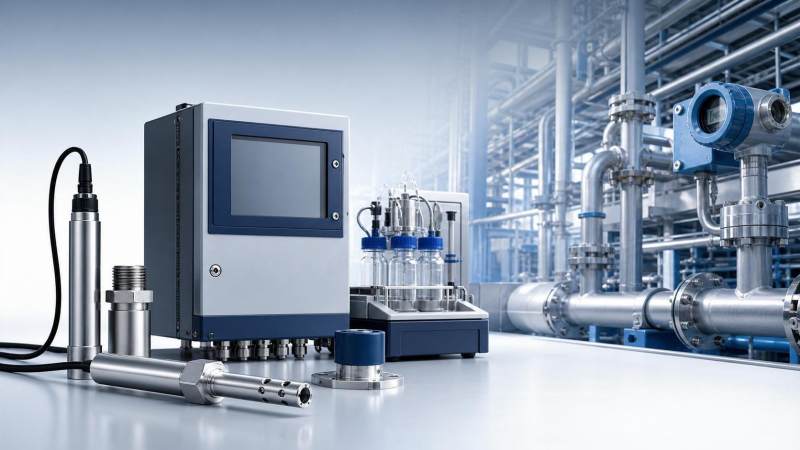
When sourcing analyzers, the price gap can look decisive at first glance.
A low quote promises immediate savings, faster approvals, and less pressure on procurement budgets.
But analyzer sourcing rarely ends with the purchase order.
In most industrial settings, the real test begins after installation, calibration, and daily operation.
That is where a Trusted Manufacturer often outperforms the lowest-price offer.
This matters even more for gas analyzers, water quality analyzers, laboratory analyzers, and process analyzers.
These devices influence compliance, product quality, safety, and operating continuity.
A weak sourcing decision can create hidden costs that far exceed the initial discount.
So the real question is not simply, “Who is cheaper?”
It is, “Which supplier reduces risk while preserving long-term value?”
Why the Lowest Price Often Looks Better Than It Really Is
Low pricing can be attractive because it is visible, measurable, and easy to compare.
Downtime risk, support quality, and data accuracy are harder to quantify during tender evaluation.
That difference creates a common sourcing trap.
A very low bid may exclude startup support, spare parts, software updates, or application engineering.
It may also rely on less stable components or inconsistent calibration procedures.
In analyzer sourcing, those details directly affect measurement confidence.
For regulated sectors, poor measurement performance can trigger retesting, audit findings, or batch losses.
For continuous process environments, a failed analyzer can interrupt operations and distort control decisions.
This is why a Trusted Manufacturer should never be treated as a branding preference alone.
It is usually a risk-control decision.
What a Trusted Manufacturer Actually Brings to Analyzer Sourcing
A Trusted Manufacturer offers more than a recognizable name.
The real value appears in consistency, traceability, and technical accountability.
From recent market shifts, one clear signal stands out.
Buyers are paying closer attention to lifecycle reliability, not just landed cost.
In practical terms, a Trusted Manufacturer usually brings the following advantages:
- Stable product performance across multiple production batches
- Documented calibration and validation procedures
- Clear compliance support for ISO, ATEX, IECEx, FDA, or sector-specific standards
- Faster root-cause analysis when measurement issues appear
- Better spare parts availability and after-sales responsiveness
- Stronger application knowledge for difficult media, harsh environments, or custom integration
These capabilities reduce uncertainty throughout analyzer sourcing.
They also help procurement teams defend decisions internally with stronger evidence.
Trust Signals Worth Checking
Not every supplier claiming quality is a Trusted Manufacturer.
Verification matters more than marketing language.
- Factory audit records and process control documentation
- Third-party certifications and test reports
- Reference projects in comparable industries
- Response time commitments for service and support
- Software, firmware, and parts continuity plans
Where Low-Cost Analyzer Sourcing Creates Hidden Risk
The biggest sourcing mistakes usually come from underestimating downstream impact.
An analyzer is not a passive commodity.
It shapes decisions, alarms, controls, and quality judgments every day.
When the supplier is selected mainly on price, several risks become more likely.
1. Compliance Gaps
Certificates may be incomplete, outdated, or not valid for the target market.
That can delay commissioning or trigger nonconformance during audits.
2. Shorter Service Life
Cheaper analyzers may fail faster under vibration, corrosion, temperature swings, or continuous use.
The replacement cycle then erodes any initial savings.
3. Weak Technical Support
Support quality becomes critical when readings drift or integration issues appear.
A Trusted Manufacturer usually has better field knowledge and faster escalation paths.
4. Unstable Data Quality
Bad analyzer data can distort process control, emissions reporting, or lab decisions.
That creates operational and financial exposure far beyond procurement cost.
How to Compare Total Value, Not Just Unit Price
Better analyzer sourcing decisions come from a wider cost lens.
Instead of comparing only quoted price, compare total cost of ownership over the expected service period.
That means evaluating direct and indirect costs together.
This framework changes the conversation.
A supplier with a higher quote may still deliver the best commercial outcome.
That is especially true when the supplier is a Trusted Manufacturer with strong lifecycle support.
A Practical Analyzer Sourcing Checklist
In real procurement work, simple checklists prevent expensive oversights.
Use this shortlist before awarding analyzer sourcing projects.
- Define the application clearly, including media, range, environment, and compliance requirements.
- Verify whether the supplier is a Trusted Manufacturer with relevant industry references.
- Request full documentation, including certificates, calibration methods, and parts lists.
- Check integration compatibility with existing DCS, PLC, SCADA, or laboratory systems.
- Compare service response times and local support capability.
- Estimate total cost of ownership over three to five years.
- Assess business continuity risk if the analyzer fails or drifts.
- Score suppliers on value, not just price ranking.
This approach makes analyzer sourcing more disciplined and easier to justify internally.
When Lowest Price Can Still Make Sense
Lowest price is not always the wrong choice.
It can work for non-critical applications with low compliance pressure and limited operational consequence.
For example, a backup unit, a non-critical utility measurement point, or a temporary project may justify a lower-cost option.
Even then, the supplier should still meet baseline quality and documentation requirements.
Price-driven analyzer sourcing only works when risk is genuinely low.
In core operations, emissions monitoring, hazardous areas, and validated lab workflows, that assumption is rarely safe.
The Smarter Sourcing Decision
The best analyzer sourcing decision balances cost discipline with operational reality.
A Trusted Manufacturer usually delivers stronger reliability, cleaner compliance, and more dependable support.
Those factors protect uptime, data quality, and procurement credibility.
The lowest quote may reduce upfront spending, but it can increase total exposure later.
That is why experienced teams treat analyzer sourcing as a value decision, not a price contest.
Before the next RFQ, build a supplier scorecard around trust, technical fit, lifecycle cost, and compliance readiness.
That simple shift leads to fewer surprises and better long-term results.
Recommended for You
 How to choose the right detection range for a custom gas analyzerChoose the right custom gas analyzer detection range with practical guidance on accuracy, exposure limits, calibration, and supplier evaluation.
 How does multi component monitoring detect gases in stack emissions?Discover how multi component monitoring detects stack gases, manages interference and supports reliable emissions reporting. Explore key CEMS selection factors.
 How bright should an industrial monitor be for outdoor use?Choosing an outdoor industrial monitor? Learn why 1,000 nits is a starting point and how glare, contrast, and heat affect sunlight readability.
 How does water vapor affect infrared gas analyzers?Infrared gas analyzers can be affected by humidity, condensation and spectral interference. Learn how to protect sample integrity and achieve reliable results.
 How to reduce customer support response timesReduce Customer Support response times with actionable tips for reporting equipment faults, choosing the right channel, and getting expert help faster.
 How to choose a low range analyzer for trace-level measurementsChoose the right low range analyzer for trace-level measurements. Compare detection limits, sampling, calibration and support to make a confident decision.
 How to choose combustible gas detectors for a specific gasChoose combustible gas detectors with confidence. Compare sensor technologies, gas response, calibration, placement, and certification for your application.
 How to choose an air quality analyzer for the pollutants you need to measureChoose an air quality analyzer with confidence. Compare pollutant measurement methods, sampling, accuracy and calibration to find the right fit for your needs.
 How to choose industrial metrology tools for tight tolerancesChoose industrial metrology tools for tight tolerances with confidence. Compare uncertainty, calibration, tool types, and costs to reduce inspection risk.
 How moisture affects fixed analyzer accuracy in stack gas monitoringImprove fixed analyzer accuracy in stack gas monitoring. Discover how moisture causes dilution, interference, and sample loss—and learn practical ways to protect emissions data.
 How does production line speed affect in-line measurement accuracy?Discover how production line speed affects in-line measurement accuracy. Explore sensor response, sampling, and timing to boost throughput without compromising quality.
 How condensation affects HCl concentration analyzer accuracyHCl concentration analyzer accuracy can suffer when condensation traps HCl. Learn how to spot sampling losses, prevent low readings, and improve measurement reliability.
 How does cross-interference affect multi-component gas analyzers?How does cross-interference affect multi component gas analyzers? Explore measurement errors, compensation limits, and validation tips to choose the right system for your process.
 How does temperature affect high-accuracy sensor performance?Explore how temperature affects high accuracy sensor performance. Learn to reduce thermal drift, evaluate compensation, and select the right sensor for reliable measurements.
 Can a C4H8O concentration analyzer distinguish between isomers?Can a C4H8O concentration analyzer distinguish isomers? Compare GC, FTIR and MS methods, uncover selectivity limits, and learn what to validate before choosing your instrument.
 How to identify a reliable supplier using on-time delivery recordsIdentify a Reliable Supplier by verifying on-time delivery records, original commitments, and complete shipments. Learn practical checks to reduce purchasing risk and protect your project schedule.
 How sensitive should a portable hydrogen analyzer be for lab use?Choose a portable hydrogen analyzer for laboratory use with the right quantification limit, accuracy, and range. Learn how to verify performance and avoid costly buying mistakes.
 How to set industrial calibration intervals based on equipment riskSet industrial calibration intervals based on equipment risk, drift, and as-found data. Learn when to shorten or extend schedules to improve reliability and avoid unnecessary costs.
 How to choose electrochemical analyzers for low-current measurementsCompare electrochemical analyzers for precise low-current measurements. Learn how noise, leakage, bandwidth, and real-cell testing help you choose the right instrument.
 What tolerance does a custom gas mixture need for calibration?Choose the right custom gas tolerance for calibration. Learn how blending tolerance, certified uncertainty, and stability affect accuracy—and avoid paying for precision you don’t need.
 How condensation affects stack detector readings in wet flue gasStack detector readings can drift when wet flue gas condenses. Learn how to identify moisture interference, prevent sample losses, and improve emissions monitoring reliability.
 How to prevent condensation in a CO2 analyzer sampling systemPrevent condensation in your CO2 analyzer sampling system. Learn how to control dew point, eliminate cold spots, and manage moisture for reliable readings and fewer costly disruptions.
 How to verify accuracy claims for industrial quality analyzersVerify accuracy claims for industrial quality analyzers with calibration checks, independent testing, and clear acceptance criteria. Learn how to reduce risk and buy with confidence.
 How to calculate cooling loads for an industrial analyzer shelterSize industrial analyzer shelter cooling with confidence. Learn to calculate equipment heat, solar gains, and ventilation loads, then select HVAC capacity for reliable analyzer performance.
 Hydrogen Analyzers for Energy Storage: Purity Monitoring vs. Leak DetectionChoosing a hydrogen analyzer for energy storage systems? Compare purity monitoring and leak detection to select the right sensors, improve safety, and protect fuel cell performance.
 NH3 Monitoring in Fertilizer Plants: Where Should Leak Analyzers Be Installed?NH3 analyzer for fertilizer production: discover where to place leak detectors around storage, compressors, and loading areas to reduce blind spots and improve early warning.
 Diesel Engine NOx Analyzers: Response Time and NO2 Conversion ExplainedChoosing a NOX analyzer for diesel engines? Learn how response time, NO2 conversion, and sampling design affect accuracy—and make a smarter, evidence-based purchase.
 SO2 Analyzers for Smelter Emissions: Sampling Hot, Dust-Laden Flue GasSelect an SO2 analyzer for smelting industry applications. Discover how to handle hot, dust-laden flue gas, prevent sample losses, and achieve reliable emissions monitoring.
 Unstable CH4 Readings in Biogas Monitoring? Check Moisture and Sample FlowCH4 analyzer for biogas monitoring giving unstable readings? Discover how moisture, sample flow, and pressure checks help pinpoint faults and restore reliable methane measurements.
 Buying a CO2 Analyzer for Brewery Gas Recovery: Costs Beyond the Purchase PriceBuying a CO2 analyzer for brewery applications? Compare sampling, installation, calibration, and downtime costs to uncover hidden expenses and make a smarter gas recovery investment.
 Where to Place CO Analyzers for Effective Parking Garage VentilationOptimize your CO analyzer for parking garage ventilation with practical placement tips. Learn how sensor height, airflow, and zone coverage support timely detection and effective fan control.
 NDIR vs. FTIR Gas Analyzers: Which Fits Your Environmental Research?Find the right infrared gas analyzer for environmental research. Compare NDIR vs. FTIR on sensitivity, gas coverage, sampling needs, and cost to choose confidently for your study.





Search Categories
Search Categories
- Smart Meters & Power Quality
- Transformer Gas Analyzers
- BESS Thermal Runaway Detectors
- Energy, Power & Smart Grid Monitoring
- Optical Profilers & CMM
- Ultrasonic & X-Ray NDT
- Calibration Standards
- Precision Metrology & NDT
- Water Quality Analyzers
- CEMS & VOCs Monitors
- Price Trends
- Import & Export Updates
- Market Trends
- Industry News
- Industry Insights
Latest Article
- How to choose the right detection range for a custom gas analyzerChoose the right custom gas analyzer detection range with practical guidance on accuracy, exposure limits, calibration, and supplier evaluation.Posted by:
- How does multi component monitoring detect gases in stack emissions?Discover how multi component monitoring detects stack gases, manages interference and supports reliable emissions reporting. Explore key CEMS selection factors.Posted by:
- How bright should an industrial monitor be for outdoor use?Choosing an outdoor industrial monitor? Learn why 1,000 nits is a starting point and how glare, contrast, and heat affect sunlight readability.Posted by:
Please give us a message
