
How to select a NOX analyzer for power plant emissions compliance


Selecting a NOx analyzer for power plant emissions compliance is not a matter of choosing the widest range or the lowest capital cost. The decisive question is whether the complete measurement system can produce valid, traceable, and continuously available data under the unit’s real flue-gas conditions—and under the specific reporting rules in the operating jurisdiction.
A technically capable analyzer can still fail a compliance application if the sample path alters NO2, the converter is unsuitable for the required NOx definition, the calibration arrangement cannot support routine quality assurance, or the data system applies the wrong oxygen and moisture corrections. For power generation, the analyzer should therefore be evaluated as one component of a CEMS architecture rather than as a stand-alone instrument.
Start with the compliance measurement, not the analyzer brochure
The specification should begin with the emission limit and reporting basis. A permit may define NOx as NO2 equivalent, require results on a dry or wet basis, specify reference oxygen, and impose a particular averaging period. It may also define whether the monitored parameter is concentration, mass emissions, heat-input-normalized emissions, or a combination of these.
These details determine the required analyzer configuration. A system designed only to display stack NO concentration is not automatically suitable for reporting total NOx. Likewise, a reliable concentration value cannot generate valid mass emissions without dependable flue-gas flow, temperature, pressure, moisture, fuel, or heat-input data where those variables are required by the applicable rule.
In the United States, compliance configurations may be governed by permit conditions and, depending on the source and program, provisions such as EPA 40 CFR Part 60 or Part 75. Performance specifications, including EPA Performance Specification 2 for NOx and O2 CEMS applications, may be relevant to certification and ongoing quality assurance. In European installations, EN 14181 establishes the quality-assurance framework for automated measuring systems, while EN 15267 certification may be relevant to the acceptability of a system in a specific regulatory setting. These references should not be treated as interchangeable procurement labels: the permit, local transposition rules, and approved monitoring plan determine what is actually acceptable.
The evaluation file should state, before vendors are compared:
- the pollutants and measurement components required: NO, NO2, total NOx, O2, CO, CO2, NH3, or other gases;
- the emission limit, expected normal concentration, startup/shutdown conditions, and credible high-emission events;
- the required reporting basis, including dry/wet basis and reference oxygen where applicable;
- the required averaging, data availability, calibration, and audit rules;
- the installation point and the actual flue-gas temperature, pressure, moisture, dust, SO2, acid-gas, ammonia-slip, and condensable contaminant conditions.
Without this foundation, a comparison of analyzer specifications can produce a technically neat but compliance-incomplete decision.
The NOx measurement principle must match the required result
Chemiluminescence remains a widely used reference approach for low-level NO and NOx measurement in emissions monitoring because it offers strong sensitivity and fast response. In a typical configuration, NO reacts with ozone to generate light; the emitted intensity is related to NO concentration. To measure total NOx, NO2 must be converted to NO before detection. The performance of that converter is therefore central to the validity of the NOx result.
A vendor’s stated “NOx range” is not enough. Technical evaluation should examine converter efficiency across the expected NO2 fraction, the operating temperature, interference behavior, service interval, and how converter performance is verified. This matters particularly where combustion conditions, burner tuning, selective catalytic reduction (SCR), selective non-catalytic reduction (SNCR), or low-NOx combustion practices can alter the NO/NO2 split.
Non-dispersive infrared (NDIR), ultraviolet, and other optical techniques can be appropriate in certain configurations, particularly where concentration levels, gas matrix, response requirements, and approved certification support their use. Their suitability depends on demonstrated interference control, baseline stability, moisture behavior, and the measurement range. A method that works well for combustion control or screening may not provide the required performance margin for regulatory reporting near a tight emission limit.
A useful technical distinction is between measurement capability and compliance capability. An analyzer may detect NOx adequately, yet lack the certified configuration, documented uncertainty, audit support, or system-level approval required for the intended regulatory application.
Range selection should preserve resolution at normal operation
Power plants do not operate only at design load. A NOx analyzer must remain useful during low-load operation, fuel transitions, startup, shutdown, SCR bypass conditions, and elevated-emission events. The selected range should cover credible peaks without sacrificing meaningful resolution and uncertainty performance around the normal operating concentration and the compliance threshold.
An excessively broad range can make small but important deviations difficult to distinguish from noise, drift, or normal measurement variation. Conversely, a narrow range may saturate or require frequent range changes during transients. Where the analyzer supports multiple ranges, the reporting logic must be reviewed carefully: automatic range switching, calibration values, data flags, and the treatment of readings during a switch must align with the approved monitoring approach.
The lower end of the range requires particular scrutiny for units with effective SCR control. A system expected to report low post-control NOx should be assessed not only for its stated detection limit but also for zero stability, span drift, repeatability, response time, and behavior after maintenance or calibration. The practical compliance question is whether the system can distinguish a real rise in emissions from ordinary instrument variation over the applicable averaging period.
The sample interface often determines real-world performance
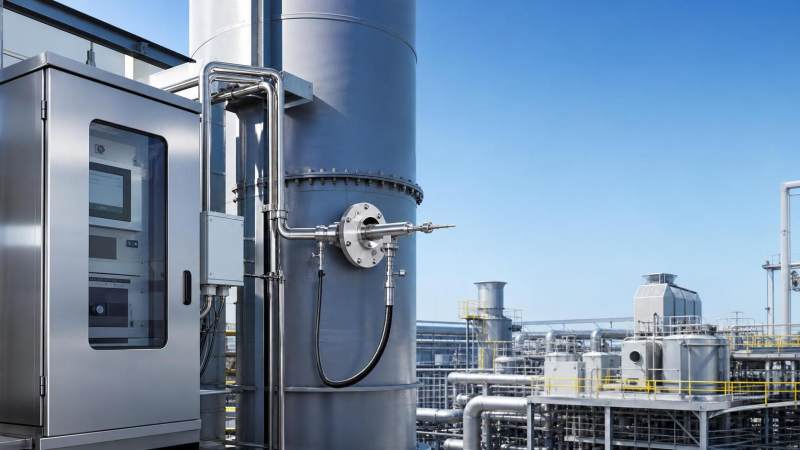
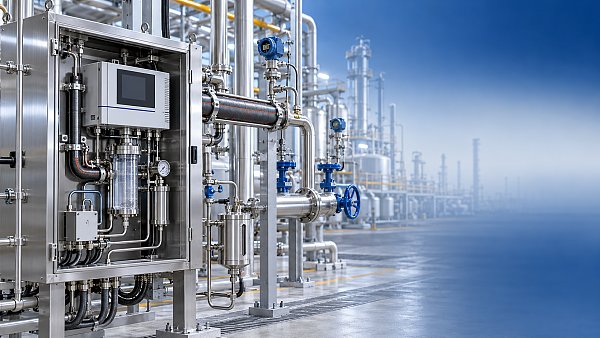
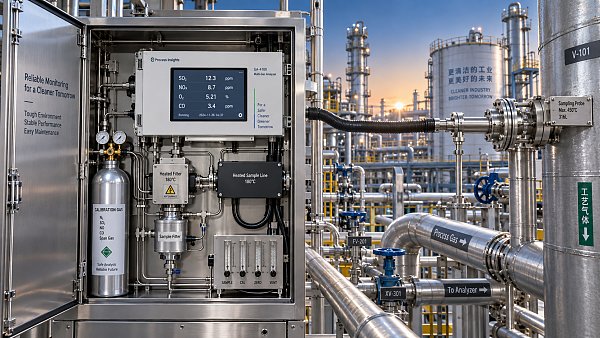
For extractive systems, the most consequential engineering decision may be the sample-conditioning arrangement rather than the analyzer cabinet itself. Flue gas can contain water vapor, particulates, sulfur compounds, ammonia, acid aerosols, and reactive species. A poorly designed probe, filter, line, cooler, or drain system can introduce bias long before gas reaches the detector.
NO2 is more reactive and more soluble than NO. If the system allows condensation, adsorption, or uncontrolled chemical interaction in the sample path, the reported NOx value may be biased. The risk is not eliminated simply by specifying a heated line. Evaluators should review the full path: probe material, filtration stage, heated components, line temperature control, residence time, cooler design where used, condensate management, and materials exposed to the gas.
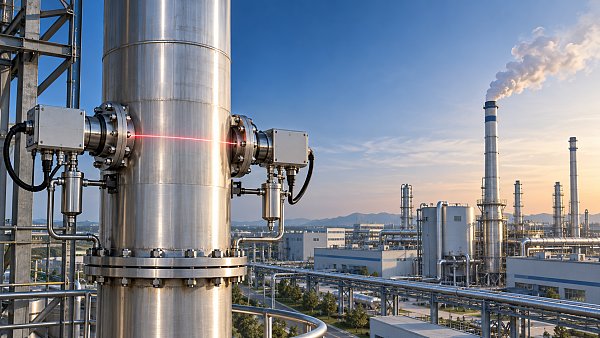
Dry extractive systems are common because they can provide a controlled sample to the analyzer and make calibration practical. They also introduce conditioning components that require maintenance and can become sources of leakage, contamination, or sample loss. Hot-wet extractive systems avoid some drying-related concerns but impose different requirements on heated transport, analyzer compatibility, safety, and maintenance. In-situ systems avoid a long extracted sample path, but their optical surfaces, path length, alignment, particulate loading, and representativeness must be assessed against the stack environment.
No architecture is inherently superior in every installation. A high-dust coal-fired exhaust, a gas turbine with rapid load changes, a biomass unit with variable ash and moisture, and a waste-derived fuel application present materially different sample-handling challenges. The selected design should be supported by a credible fouling, plugging, freezing, corrosion, and access strategy—not merely by an enclosure protection rating.
Response time matters when the reporting chain includes more than the analyzer
Analyzer response time is frequently quoted as a laboratory-style specification, but compliance response depends on the whole system. Probe transport delay, heated-line volume, sample pump performance, conditioning stages, manifold volume, converter dynamics, and data-acquisition filtering all contribute to the time between a stack event and a reported value.
This does not mean that every power plant requires the fastest possible response. The appropriate response depends on the regulatory averaging period and operational use of the data. Fast, repeatable response becomes more important where operators use CEMS signals for combustion optimization, SCR control verification, or investigation of short-duration excursions. It is also important during calibration checks because slow stabilization extends maintenance windows and can complicate diagnostics.
Request a defined response-time statement for the installed system, including sample probe and transport line, rather than accepting an analyzer-only figure. The same principle applies to recovery time after calibration gas exposure and to the system’s ability to return to stable operation after a process upset.
Oxygen, moisture, and flow measurements belong in the selection decision
NOx compliance values are often normalized to a reference oxygen concentration. This makes the O2 measurement a regulatory input, not a secondary convenience measurement. Its range, calibration arrangement, response alignment with NOx, and susceptibility to sample-conditioning effects deserve the same review as the NOx channel.
Where a dry-basis result is required, the moisture treatment must be explicit. A dry extractive system may produce dry gas at the analyzer, but the data system still needs the correct basis and, where necessary, a valid moisture value or approved calculation method. For wet-basis reporting, removing water from the sample without an appropriate correction can produce an incorrect reported concentration.
Mass-emissions compliance creates further dependencies. The NOx analyzer may be only one element in a chain that includes stack flow monitoring and plant operating data. Mismatched clocks, inconsistent averaging, unavailable flow data, or incorrect correction factors can invalidate an otherwise sound analyzer result. Technical evaluation should include the interfaces between the gas analyzer, flow monitor, plant historian, and emissions data handling and reporting system.
Calibration design is a maintainability decision
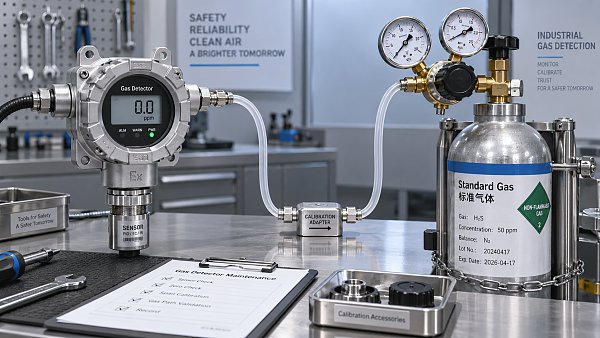
A NOx analyzer that is accurate only immediately after service is a poor compliance instrument. The evaluation should focus on how the system will demonstrate accuracy throughout its operating life. This includes zero and span checks, calibration gas connection points, automated calibration sequences, cylinder handling, regulators, line purging, calibration gas traceability, drift monitoring, and alarm behavior.
Calibration gas concentration should be selected to meet the applicable quality-assurance requirements and to exercise the useful measurement range. It should not be chosen solely because a standard cylinder concentration is readily available. For NOx systems using conversion, the process for verifying converter performance must also be clear. A conventional NO span check does not, by itself, demonstrate that NO2 is being converted correctly.
Maintenance access should be examined with equal care. Filters, sample pumps, coolers, drain assemblies, ozone generators where relevant, converters, and optical components all have service implications. Ask for a maintenance task list differentiated by routine inspection, consumable replacement, periodic verification, and major overhaul. A credible answer identifies what can be done without removing the analyzer, what requires an outage or scaffold access, and what conditions trigger replacement rather than cleaning.
Data integrity is part of the instrument specification
Compliance failures are not limited to bad measurements. They also arise from missing records, improper status flags, incorrect calibration handling, uncontrolled configuration changes, and gaps between analyzer data and reported values. The NOx analyzer for power plant emissions should therefore be assessed for its data interfaces and diagnostics, including time synchronization, digital communication protocols, local data retention, alarm mapping, calibration status signals, maintenance flags, and cybersecurity requirements for plant-network integration.
The data-acquisition and handling system must be able to identify calibration periods, invalid readings, substitute-data conditions where allowed, analyzer faults, and out-of-control quality-assurance events. Its calculations must apply the correct units, oxygen correction, moisture correction, averaging, and rounding rules. These functions should be reviewed against the approved reporting method before factory acceptance or site commissioning.
Evaluate the supplier around evidence, not generic claims
The most useful vendor submittal is not a polished specification sheet but a configuration-specific evidence package. It should identify the exact analyzer model, measurement method, converter arrangement, sample-conditioning components, certified ranges, environmental operating limits, calibration requirements, communications architecture, and documented compliance history relevant to the intended jurisdiction.
Questions that expose configuration risk include:
- Is the quoted certification applicable to this exact range, gas path, and installation arrangement?
- How is NO2-to-NO conversion efficiency verified and documented?
- Which flue-gas constituents can cause positive or negative interference at the proposed range?
- What sample-path temperatures and materials are required to prevent condensation or NO2 loss?
- What are the defined maintenance intervals, required consumables, and likely single points of failure?
- How are analyzer status, calibration status, and fault signals transferred to the reporting system?
- What factory and site acceptance tests demonstrate the complete system’s performance rather than detector performance alone?
The right selection is rarely the analyzer with the most impressive isolated specification. It is the configuration whose measurement principle, sample system, calibration regime, data handling, certification evidence, and maintainability all fit the unit’s fuel, controls, stack conditions, and compliance obligation. That alignment is what turns a NOx reading into defensible emissions data.
Recommended for You
 How to verify accuracy claims for industrial quality analyzersVerify accuracy claims for industrial quality analyzers with calibration checks, independent testing, and clear acceptance criteria. Learn how to reduce risk and buy with confidence.
 How to calculate cooling loads for an industrial analyzer shelterSize industrial analyzer shelter cooling with confidence. Learn to calculate equipment heat, solar gains, and ventilation loads, then select HVAC capacity for reliable analyzer performance.
 Industrial Safety vs. Emission Monitoring: What Are the Differences?What are the main differences between industrial safety and emission monitoring? Compare goals, sensors, response times, and compliance needs to choose the right systems for your facility.
 Is Remote Monitoring Worth the Cost for Small Emission Sources?Is it worth investing in remote monitoring for small emission sources? Compare costs, compliance needs, and potential savings to choose the right solution for your operation.
 How Do You Handle Analyzer Failure During an Environmental Audit?Learn how to handle analyzer failure during environmental compliance audit procedures. Protect evidence, verify data, and restore monitoring with this practical response guide.
 Do VOC Monitors Require Explosion-Proof Certification?Does VOC monitoring require explosion-proof certification? Learn when approval is needed, compare ATEX and IECEx, and choose the right monitor for your site.
 How sample conditioning affects accuracy in petrochemical analyzersImprove accuracy in petrochemical analyzers with smarter sample conditioning. Discover how phase control, filtration, and transport design prevent bias and deliver reliable process data.
 How to troubleshoot sensor drift in industrial gas detectorsIndustrial gas detectors showing sensor drift? Learn how to verify calibration gas, identify root causes, and determine when sensor replacement is needed for reliable monitoring.
 How to judge whether a competitive price reflects real valueCompetitive Price: learn how to compare scope, compliance, performance, and lifecycle costs to identify real value, reduce risk, and make smarter purchasing decisions.
 When custom gas analysis is the right fit for complex process streamsCustom gas analysis for complex process streams: learn when tailored sampling, interference control, and reliable measurement design deliver confident decisions.
 When does a laser gas analyzer meet stack emissions monitoring needs?Laser gas analyzer for stack emissions: learn when it delivers fast, reliable data, how to assess installation risks, and what to verify for CEMS compliance.
 How to select a hazardous gas analyzer for confined spacesHazardous gas analyzer selection for confined spaces: compare sensors, sampling, certifications, alarms, and maintenance to protect workers and choose with confidence.
 When is a single gas analyzer sufficient for workplace safety monitoring?Discover when a single gas analyzer delivers reliable workplace safety monitoring, and learn the key limits, calibration needs, and risks that require broader detection.
 How to choose an ambient gas analyzer for low-level leak detectionAmbient gas analyzer selection for low-level leak detection: compare sensitivity, cross-sensitivity, sampling design, alarms, and calibration for reliable site performance.
 How to tell when an oxygen sensor needs replacementOxygen sensor replacement signs explained: learn how live data, fault codes, wiring checks, and exhaust inspections pinpoint the real issue before you buy.
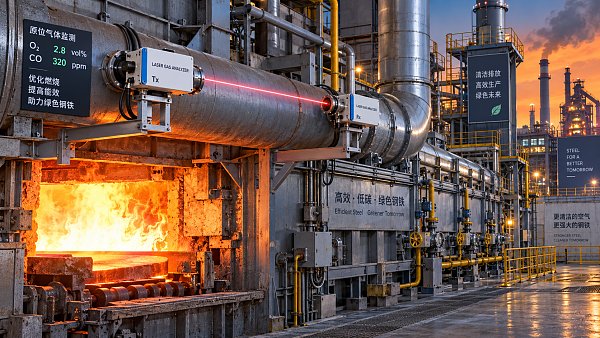
 How laser gas analyzers improve combustion control in steel furnacesLaser gas analyzer for steel industry applications delivers fast in-situ O₂ and CO data to optimize furnace combustion, cut fuel waste, and improve steel heating stability.
 How to verify whether explosion proof equipment meets site requirementsExplosion proof equipment verification made practical: match zones, gas or dust groups, temperature classes, certificates, and installation conditions for confident compliance.
 How industrial gas analysis helps detect contamination before releaseIndustrial Gas Analysis helps detect moisture, oil, oxygen, and toxic contaminants before release—protecting processes, ensuring compliance, and reducing costly risks.
 When is electrochemistry detection the right choice for water analysis?Electrochemistry detection for water analysis: learn when fast, reliable monitoring of ions, chlorine, pH, and more delivers actionable results.
 How industrial standards reduce quality risks in supplier selectionIndustrial Standard guidance helps quality and safety managers reduce supplier risks, verify compliance, strengthen traceability, and build resilient instrumentation supply chains.
 When does a multi-component system reduce installation complexity?Multi component systems reduce installation complexity when they eliminate field interfaces, streamline commissioning, and provide proven compatibility. Learn how to assess total cost and supplier accountability.
 How to size an industrial control shelter for outdoor equipmentIndustrial control shelter sizing guide: optimize layout, HVAC, access, safety, and expansion space for reliable outdoor equipment operations.
 How flue analysis helps verify combustion efficiencyFlue analysis verifies combustion efficiency by assessing O2, CO, CO2, and stack temperature to identify excess air, incomplete combustion, and heat losses.
 How to select industrial gas detectors for confined spacesIndustrial gas detectors for confined spaces: learn how to match sensors, sampling methods, alarms, and certifications to real atmospheric hazards.
 When does a laser oxygen analyzer outperform zirconia sensors?Laser oxygen analyzer vs. zirconia sensors: compare speed, selectivity, maintenance, gas chemistry, and installation needs to choose the right oxygen measurement solution.
 How to select a percent range analyzer for process measurementsPercent range analyzer selection made practical: compare accuracy, sample systems, calibration, gas matrix, integration, and lifecycle cost for reliable process measurements.
 How explosion proof analysis verifies safe equipment for hazardous areasExplosion proof analysis verifies hazardous-area equipment by matching certifications, temperature ratings, installation details, and inspection controls for safer compliance.
 When does fixed gas detection need point sensors instead of open-path monitoring?Fixed gas detection: discover when point sensors outperform open-path monitoring for predictable leaks, enclosed zones, local alarms, and safer design decisions.
 How to choose industrial metrology systems for tight-tolerance partsIndustrial metrology guide for tight-tolerance parts: compare CMMs, optical scanners, gauges, uncertainty, workflow, and traceable inspection strategies.
 How process metrology reduces measurement variation in productionProcess metrology reduces production measurement variation by improving traceability, uncertainty control, calibration, and reliable quality decisions.
 How to select an industrial monitoring analyzer for harsh environmentsIndustrial monitoring analyzer selection for harsh environments: evaluate sampling, durability, hazardous-area compliance, accuracy, maintenance, and data reliability.
 How calibration intervals affect test and measurement equipment accuracyTest and measurement equipment calibration intervals directly affect accuracy, risk, compliance, and uptime. Learn how to set evidence-based schedules that protect critical decisions.
Search Categories
Search Categories
- Smart Meters & Power Quality
- Transformer Gas Analyzers
- BESS Thermal Runaway Detectors
- Energy, Power & Smart Grid Monitoring
- Optical Profilers & CMM
- Ultrasonic & X-Ray NDT
- Calibration Standards
- Precision Metrology & NDT
- Water Quality Analyzers
- CEMS & VOCs Monitors
- Price Trends
- Import & Export Updates
- Market Trends
- Industry News
- Industry Insights
Latest Article
- How to verify accuracy claims for industrial quality analyzersVerify accuracy claims for industrial quality analyzers with calibration checks, independent testing, and clear acceptance criteria. Learn how to reduce risk and buy with confidence.Posted by:
- How to calculate cooling loads for an industrial analyzer shelterSize industrial analyzer shelter cooling with confidence. Learn to calculate equipment heat, solar gains, and ventilation loads, then select HVAC capacity for reliable analyzer performance.Posted by:
- Industrial Safety vs. Emission Monitoring: What Are the Differences?What are the main differences between industrial safety and emission monitoring? Compare goals, sensors, response times, and compliance needs to choose the right systems for your facility.Posted by:
Please give us a message
