Is Predictive Analytics for Emission Control Useful or Just Hype?


Is Predictive Analytics for Emission Control Useful or Just Hype?
As industrial operators face tighter carbon limits, rising compliance costs, and more complex process data, one question is gaining urgency: is predictive analytics useful for emission control or just hype? The honest answer is that it can be genuinely useful, but only under conditions that are less glamorous than most software demonstrations suggest.
A predictive model cannot repair a drifting gas analyzer, compensate for a blocked sample line, or replace an operator who understands a furnace, boiler, kiln, or reactor. What it can do is turn scattered measurements into earlier warning signals. When it is built on reliable Continuous Emission Monitoring System (CEMS) data, relevant process variables, and sound control logic, it may help teams spot conditions that are likely to push emissions toward a permit limit before the limit is crossed.
That distinction matters. Emission control is not a dashboard project. It sits at the intersection of measurement quality, combustion or process chemistry, maintenance discipline, reporting obligations, and operational decision-making. The value of analytics is therefore practical rather than magical: fewer surprises, clearer investigation priorities, and more time to make controlled adjustments instead of reacting during an excursion.
What Predictive Analytics Actually Means in an Emissions Setting
In environmental monitoring, predictive analytics generally refers to models that use historical and live data to estimate future emissions, identify abnormal behavior, or explain which operating factors are associated with higher risk. Depending on the site, the data may include stack concentrations, flue-gas oxygen, temperature, pressure, fuel properties, steam load, excess air, reagent flow, fan position, burner status, ambient conditions, and equipment alarms.
The model may be relatively simple. For example, a site could establish that nitrogen oxides tend to rise when firing conditions, oxygen levels, and load move into a particular combination. A more advanced approach may use multivariable statistical methods or machine-learning models to detect patterns that are hard to see in ordinary trend screens. Neither approach is automatically superior. A transparent model that an environmental manager and control-room team trust is often more useful than an opaque model with impressive-looking accuracy metrics.
It is also important not to confuse prediction with compliance measurement. Where regulations require certified or approved measurement and reporting methods, a predictive model normally supports operations; it does not replace the required CEMS, stack test, laboratory method, or regulatory calculation. The applicable rules depend on jurisdiction, permit conditions, pollutant, and facility type. That boundary should be settled before any project begins.
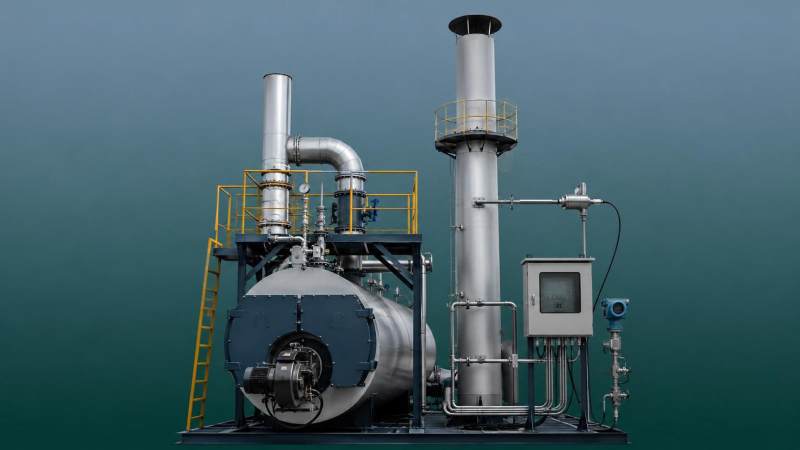
Where It Delivers Real Value
The strongest use case is usually early intervention. Consider a combustion process with emissions that remain compliant most of the time but become unstable during load changes, fuel switching, startup, or transient operating conditions. A conventional alarm may only activate when a measured value is already near a threshold. A predictive layer can instead flag that the current trajectory resembles previous high-risk conditions. The operator still decides what to do, but the decision is made earlier.
This can be particularly relevant for pollutants whose formation is sensitive to interacting variables. NOx, carbon monoxide, sulfur-related emissions, particulate matter, volatile organic compounds, and greenhouse-gas intensity each have different process drivers. A model is not a universal “emissions AI.” It must be configured around the chemistry and operational reality of the source.
Another valuable application is analyzer and process anomaly detection. CEMS data often contain clues that something is wrong before a formal failure becomes obvious: a sensor response becomes unusually slow, two signals lose their expected relationship, or a concentration pattern changes without a corresponding process explanation. Analytics can help maintenance teams distinguish between a probable process event and a probable instrumentation issue. That can reduce wasted troubleshooting time, provided technicians verify the finding through normal quality-assurance and maintenance procedures.
For multi-site operators, the benefit may be organizational rather than purely technical. A consistent view of emission risk, analyzer availability, calibration status, and abnormal operating modes can help central environmental teams ask better questions across plants. It does not eliminate local expertise. In fact, it makes local engineering input more important because similar-looking assets can behave differently due to fuel, design, maintenance history, or operating strategy.
Why Many Projects Disappoint
The common failure is not that the algorithm is weak. It is that the underlying measurement environment is weak. A model trained on poorly maintained sensors will learn sensor problems along with process behavior. If timestamps are misaligned between the DCS historian and CEMS, the model may find false relationships. If calibration events, maintenance periods, substituted data, and abnormal shutdown conditions are not identified, training data can become misleading very quickly.
There is also a practical issue with rare events. Serious emission excursions may be infrequent, which is good operationally but difficult analytically. A model may have abundant normal-operation data and very limited examples of the condition it is expected to predict. This is one reason claims of near-perfect forecasting should be treated carefully. A system should be evaluated against the events that matter, not only against average error across ordinary days.
A second disappointment comes from poor workflow design. If a model sends broad, repetitive alerts that do not identify a likely cause or recommended check, operators will eventually tune it out. An alert should fit the pace of the control room. “Risk increasing” is not enough. A useful notification might show the affected emission parameter, the expected time horizon, the confidence range, the key contributing variables, and whether the suggested response is operational, maintenance-related, or simply a request for verification.
Finally, predictive analytics cannot solve a physical control limitation. If a selective catalytic reduction system lacks available reagent capacity, a scrubber has hydraulic constraints, or burner hardware cannot maintain stable combustion across a required load range, software may diagnose the issue but cannot create missing capability. That sounds obvious, yet it is often overlooked when analytics is presented as a shortcut around capital planning or maintenance work.
The Instrumentation Question Comes First
Before asking a data science team to build a model, operators should ask whether their data chain is credible. In emission control, the chain starts at the sensing point: sampling systems, analyzers, flow and temperature measurement, pressure transmitters, oxygen probes, particulate monitors, and the infrastructure that carries signals into the historian and reporting system.
A useful review does not need to become a massive digital-transformation program. It should answer a few disciplined questions: Which signals are truly critical? How often are they unavailable, substituted, manually adjusted, or clearly implausible? Are calibration and maintenance records linked to the data? Do process and emissions timestamps use the same time basis? Are units, tag names, and operating-state codes consistent enough to interpret across shifts?
For facilities operating in hazardous areas or under strict quality requirements, equipment selection and data integrity need to respect the relevant technical framework. Requirements related to ATEX or IECEx, for example, concern equipment suitability in potentially explosive atmospheres; ISO/IEC 17025 relates to laboratory competence rather than general plant automation. These labels should not be used casually as proof that an analytics platform is compliant. The plant’s applicable standards, permit conditions, and verification procedures remain the reference point.
This is where an instrumentation-focused intelligence function can be more useful than generic AI advice. Global Instrument Hub tracks the connection between industrial process control, environmental monitoring, precision measurement, and supplier capability. For procurement and engineering teams, the relevant question is often not “Which platform has the best interface?” but “Can this solution work with our analyzers, historian, protocols, maintenance practices, and compliance workflow?”
How Should a Facility Test the Idea Without Overcommitting?
A narrow pilot is usually more revealing than a large enterprise rollout. Choose one emission concern that has operational relevance and enough historical context: repeated high-risk periods during load ramps, unstable CO behavior, unexplained variation in a scrubber outlet measurement, or recurring analyzer-versus-process disagreements. Avoid selecting a problem that is purely theoretical or one already known to require hardware replacement.
The pilot should define success in operational terms. Examples include whether the model identifies a meaningful share of known high-risk periods early enough to act, whether it reduces investigation time, whether operators find its explanations credible, and whether false alerts remain manageable. The target does not need to be a single universal number. Different sites will have different tolerance for missed events and nuisance alarms.
Keep a human validation loop. Environmental specialists, process engineers, instrument technicians, and operators should review model outputs together during the early phase. This often exposes important context that was absent from the dataset: unusual fuel deliveries, burner maintenance, a bypass mode, weather-related draft effects, or changes in laboratory sampling practice. That feedback is not a flaw in the system. It is how the model becomes grounded in plant reality.
A sensible pre-investment checklist
- Confirm the model’s role: advisory support, maintenance prioritization, operational guidance, or reporting assistance.
- Map the emissions data, process tags, data owners, sampling intervals, and known quality gaps.
- Separate measured compliance values from estimated or predicted values in all user interfaces.
- Ask how the model handles calibration periods, downtime, sensor replacement, fuel changes, and plant modifications.
- Require explanations that a process or environmental professional can challenge and verify.
- Define who acts on an alert and what action is permitted without further review.
- Review cybersecurity, data access, historian integration, and retention requirements before connecting systems.
Frequently Asked Questions
Can predictive analytics replace a CEMS?
Usually, no. Predictive analytics can complement CEMS by forecasting trends, detecting anomalies, and correlating emissions with operating conditions. It should not be assumed to replace required monitoring, reporting, calibration, or quality-assurance obligations. Any alternative monitoring arrangement would need to be evaluated under the rules and permit conditions that apply to the specific facility.
Is predictive analytics useful for emission control or just hype for smaller plants?
It can be useful for smaller plants, but the economic case needs to be disciplined. A facility with stable operations, limited tag history, and few emission-related decisions may gain more from improving analyzer reliability, calibrating instruments properly, or fixing historian gaps. Analytics becomes more compelling when operators regularly manage changing loads, variable inputs, complicated abatement equipment, or recurring compliance risk.
What data quality is “good enough” to begin?
There is no universal threshold. The practical test is whether the team can identify valid operating periods, explain obvious discontinuities, align data sources, and trace unusual readings to a known cause whenever possible. If that cannot be done, the first project should be data cleanup and instrumentation review, not advanced modeling.
Will the model tell operators exactly how to reduce emissions?
Sometimes it can suggest likely levers, but it should not be treated as an autonomous control authority without extensive engineering review. Emissions sit alongside safety, product quality, throughput, equipment protection, and energy use. A recommended change that lowers one pollutant may create an unacceptable issue elsewhere. Human judgment and established operating procedures remain essential.
The Practical Verdict
Predictive analytics for emission control is neither a cure-all nor empty hype. It is a useful layer of operational intelligence when measurement systems are trustworthy, the model addresses a real plant decision, and the people receiving alerts can act on them. Its most credible contribution is earlier visibility: seeing an emissions risk develop while there is still room to investigate, adjust, or prepare.
The better starting point is not “Which AI tool should we buy?” It is “Which emission risk repeatedly costs us attention, uncertainty, or operational flexibility—and do we have the instruments and records to understand it?” If the answer to the second question is no, strengthen the sensory system first. In emissions management, better predictions begin with better measurement.
Recommended for You
 How to verify accuracy claims for industrial quality analyzersVerify accuracy claims for industrial quality analyzers with calibration checks, independent testing, and clear acceptance criteria. Learn how to reduce risk and buy with confidence.
 How to calculate cooling loads for an industrial analyzer shelterSize industrial analyzer shelter cooling with confidence. Learn to calculate equipment heat, solar gains, and ventilation loads, then select HVAC capacity for reliable analyzer performance.
 Industrial Safety vs. Emission Monitoring: What Are the Differences?What are the main differences between industrial safety and emission monitoring? Compare goals, sensors, response times, and compliance needs to choose the right systems for your facility.
 Is Remote Monitoring Worth the Cost for Small Emission Sources?Is it worth investing in remote monitoring for small emission sources? Compare costs, compliance needs, and potential savings to choose the right solution for your operation.
 How Do You Handle Analyzer Failure During an Environmental Audit?Learn how to handle analyzer failure during environmental compliance audit procedures. Protect evidence, verify data, and restore monitoring with this practical response guide.
 Do VOC Monitors Require Explosion-Proof Certification?Does VOC monitoring require explosion-proof certification? Learn when approval is needed, compare ATEX and IECEx, and choose the right monitor for your site.
 How sample conditioning affects accuracy in petrochemical analyzersImprove accuracy in petrochemical analyzers with smarter sample conditioning. Discover how phase control, filtration, and transport design prevent bias and deliver reliable process data.
 How to troubleshoot sensor drift in industrial gas detectorsIndustrial gas detectors showing sensor drift? Learn how to verify calibration gas, identify root causes, and determine when sensor replacement is needed for reliable monitoring.
 How to judge whether a competitive price reflects real valueCompetitive Price: learn how to compare scope, compliance, performance, and lifecycle costs to identify real value, reduce risk, and make smarter purchasing decisions.
 When custom gas analysis is the right fit for complex process streamsCustom gas analysis for complex process streams: learn when tailored sampling, interference control, and reliable measurement design deliver confident decisions.
 When does a laser gas analyzer meet stack emissions monitoring needs?Laser gas analyzer for stack emissions: learn when it delivers fast, reliable data, how to assess installation risks, and what to verify for CEMS compliance.
 How to select a hazardous gas analyzer for confined spacesHazardous gas analyzer selection for confined spaces: compare sensors, sampling, certifications, alarms, and maintenance to protect workers and choose with confidence.
 When is a single gas analyzer sufficient for workplace safety monitoring?Discover when a single gas analyzer delivers reliable workplace safety monitoring, and learn the key limits, calibration needs, and risks that require broader detection.
 How to choose an ambient gas analyzer for low-level leak detectionAmbient gas analyzer selection for low-level leak detection: compare sensitivity, cross-sensitivity, sampling design, alarms, and calibration for reliable site performance.
 How to tell when an oxygen sensor needs replacementOxygen sensor replacement signs explained: learn how live data, fault codes, wiring checks, and exhaust inspections pinpoint the real issue before you buy.
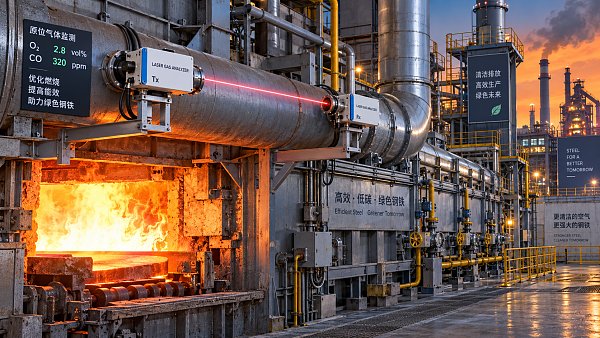
 How laser gas analyzers improve combustion control in steel furnacesLaser gas analyzer for steel industry applications delivers fast in-situ O₂ and CO data to optimize furnace combustion, cut fuel waste, and improve steel heating stability.
 How to verify whether explosion proof equipment meets site requirementsExplosion proof equipment verification made practical: match zones, gas or dust groups, temperature classes, certificates, and installation conditions for confident compliance.
 How industrial gas analysis helps detect contamination before releaseIndustrial Gas Analysis helps detect moisture, oil, oxygen, and toxic contaminants before release—protecting processes, ensuring compliance, and reducing costly risks.
 When is electrochemistry detection the right choice for water analysis?Electrochemistry detection for water analysis: learn when fast, reliable monitoring of ions, chlorine, pH, and more delivers actionable results.
 How industrial standards reduce quality risks in supplier selectionIndustrial Standard guidance helps quality and safety managers reduce supplier risks, verify compliance, strengthen traceability, and build resilient instrumentation supply chains.
 When does a multi-component system reduce installation complexity?Multi component systems reduce installation complexity when they eliminate field interfaces, streamline commissioning, and provide proven compatibility. Learn how to assess total cost and supplier accountability.
 How to size an industrial control shelter for outdoor equipmentIndustrial control shelter sizing guide: optimize layout, HVAC, access, safety, and expansion space for reliable outdoor equipment operations.
 How flue analysis helps verify combustion efficiencyFlue analysis verifies combustion efficiency by assessing O2, CO, CO2, and stack temperature to identify excess air, incomplete combustion, and heat losses.
 How to select industrial gas detectors for confined spacesIndustrial gas detectors for confined spaces: learn how to match sensors, sampling methods, alarms, and certifications to real atmospheric hazards.
 When does a laser oxygen analyzer outperform zirconia sensors?Laser oxygen analyzer vs. zirconia sensors: compare speed, selectivity, maintenance, gas chemistry, and installation needs to choose the right oxygen measurement solution.
 How to select a percent range analyzer for process measurementsPercent range analyzer selection made practical: compare accuracy, sample systems, calibration, gas matrix, integration, and lifecycle cost for reliable process measurements.
 How explosion proof analysis verifies safe equipment for hazardous areasExplosion proof analysis verifies hazardous-area equipment by matching certifications, temperature ratings, installation details, and inspection controls for safer compliance.
 When does fixed gas detection need point sensors instead of open-path monitoring?Fixed gas detection: discover when point sensors outperform open-path monitoring for predictable leaks, enclosed zones, local alarms, and safer design decisions.
 How to choose industrial metrology systems for tight-tolerance partsIndustrial metrology guide for tight-tolerance parts: compare CMMs, optical scanners, gauges, uncertainty, workflow, and traceable inspection strategies.
 How process metrology reduces measurement variation in productionProcess metrology reduces production measurement variation by improving traceability, uncertainty control, calibration, and reliable quality decisions.
 How to select an industrial monitoring analyzer for harsh environmentsIndustrial monitoring analyzer selection for harsh environments: evaluate sampling, durability, hazardous-area compliance, accuracy, maintenance, and data reliability.
 How calibration intervals affect test and measurement equipment accuracyTest and measurement equipment calibration intervals directly affect accuracy, risk, compliance, and uptime. Learn how to set evidence-based schedules that protect critical decisions.

Search Categories
Search Categories
- Smart Meters & Power Quality
- Transformer Gas Analyzers
- BESS Thermal Runaway Detectors
- Energy, Power & Smart Grid Monitoring
- Optical Profilers & CMM
- Ultrasonic & X-Ray NDT
- Calibration Standards
- Precision Metrology & NDT
- Water Quality Analyzers
- CEMS & VOCs Monitors
- Price Trends
- Import & Export Updates
- Market Trends
- Industry News
- Industry Insights
Latest Article
- How to verify accuracy claims for industrial quality analyzersVerify accuracy claims for industrial quality analyzers with calibration checks, independent testing, and clear acceptance criteria. Learn how to reduce risk and buy with confidence.Posted by:
- How to calculate cooling loads for an industrial analyzer shelterSize industrial analyzer shelter cooling with confidence. Learn to calculate equipment heat, solar gains, and ventilation loads, then select HVAC capacity for reliable analyzer performance.Posted by:
- Industrial Safety vs. Emission Monitoring: What Are the Differences?What are the main differences between industrial safety and emission monitoring? Compare goals, sensors, response times, and compliance needs to choose the right systems for your facility.Posted by:
Please give us a message