When does a thermal conductivity detector outperform an FID?


A thermal conductivity detector (TCD) outperforms a flame ionization detector (FID) when the analytical problem is defined by permanent gases, high bulk concentrations, non-destructive detection, or the need to quantify components that do not contain reduced carbon. In those conditions, the FID’s superior sensitivity for hydrocarbons is not the deciding advantage; in some cases, it provides little or no usable response at all.
The practical question is therefore not whether a TCD is “better” than an FID in general. It is whether the detector’s response mechanism matches the composition of the sample, the reporting range, and the operating constraints of the gas chromatograph. A detector choice made solely on published detection limits can create avoidable problems in refinery-gas analysis, gas-purity control, syngas measurement, electrolysis monitoring, and process streams containing hydrogen, nitrogen, oxygen, carbon dioxide, or carbon monoxide.
The decisive difference: what each detector can actually see
An FID measures ions formed when combustible organic compounds enter a hydrogen-air flame. It is exceptionally effective for many hydrocarbons and gives strong, stable response for compounds containing carbon-hydrogen bonds. This makes it a preferred detector for trace hydrocarbons, volatile organic compounds, solvent residues, and many petrochemical separations.
Its selectivity is also its limitation. An FID has essentially no direct response to nitrogen, oxygen, carbon dioxide, carbon monoxide, water, helium, argon, and other permanent or fully oxidized gases. Methane gives a strong FID signal; carbon dioxide does not. Carbon monoxide does not. Hydrogen does not. When these components are central to the measurement objective, an FID cannot replace a TCD unless the system adds a conversion device such as a methanizer for CO and CO2. Even then, hydrogen, oxygen, nitrogen, and noble gases remain outside the FID’s natural capability.
A thermal conductivity detector works differently. Its sensing element detects the change in heat transfer that occurs when an analyte passes through the detector relative to the carrier gas. It is not carbon-selective. Any component with thermal conductivity sufficiently different from the carrier gas can produce a response. This is why the TCD is often described as a universal GC detector, although “universal” should not be confused with equally sensitive for every compound.
The TCD’s broad response makes it especially valuable where a single chromatographic run must account for both permanent gases and hydrocarbons. It can measure a light gas mixture containing hydrogen, oxygen, nitrogen, methane, carbon monoxide, carbon dioxide, ethylene, and propane, provided the column configuration, carrier gas, and calibration strategy are appropriate.
Situations where a TCD is the stronger detector choice
Permanent gases are reportable components, not background gases
A TCD is the more appropriate primary detector when nitrogen, oxygen, hydrogen, carbon monoxide, carbon dioxide, argon, helium, or similar gases must be quantified. This is common in gas production and purification, industrial gas filling, fuel-gas characterization, synthesis gas analysis, catalyst research, and reaction monitoring.
Consider a hydrogen production stream. The analytical interest may include hydrogen purity, residual nitrogen, oxygen ingress, methane, carbon dioxide, and carbon monoxide. An FID can detect methane, but it cannot characterize the balance of the stream. A TCD can detect the permanent-gas portion directly, subject to proper carrier-gas selection and separation. The detector is therefore not merely an alternative; it is the detector that addresses the actual measurement scope.
The same logic applies to oxygen and nitrogen determination. These gases are invisible to an FID, regardless of how high their concentrations may be. A flame-based detector cannot compensate for a response mechanism that is fundamentally absent.
The target concentration is in percent or high ppm levels
TCD sensitivity is lower than FID sensitivity for most organic compounds. That disadvantage matters when the analyte is present at trace level. It matters far less when the target range is, for example, tens or hundreds of ppm, fractions of a percent, or several percent by volume.
In bulk-gas analysis, extreme trace sensitivity may be unnecessary and can even distract from more relevant requirements: stable calibration over a broad concentration interval, tolerable sample loading, reliable integration of large peaks, and direct measurement of major constituents. A TCD is well suited to this operating range because it is routinely used for relatively concentrated samples without relying on a flame response.
An FID may still be useful in high-concentration hydrocarbon work, particularly when low-level impurities must also be detected. But if the same stream must be assessed for permanent gases, a TCD often provides more complete compositional information. A dual-detector arrangement may be justified when both bulk permanent-gas composition and trace hydrocarbon impurities are critical.
The sample must remain available after detection
A TCD is non-destructive. The sample exiting the detector can be directed to another detector, collected, or used in a serial analytical configuration. An FID destroys the sample in a hydrogen-air flame. This is not always important, but it can be decisive where detector sequencing is required.
For example, a TCD may be placed before an FID in a GC flow path when the method needs bulk-gas information from the TCD and hydrocarbon selectivity from the FID. In other configurations, a splitter can direct sample flow to separate detectors. The preferred arrangement depends on flow control, column dimensions, pressure balance, and the method’s required quantitation range, but the TCD’s non-destructive nature preserves options that an FID does not.
Flame gases create an unnecessary operational burden
An FID requires hydrogen and combustion air, along with controlled detector flows and reliable flame ignition. In laboratory systems this is well understood and manageable. In process-adjacent installations, remote laboratories, mobile units, or facilities with restrictive hazardous-area procedures, the need to store and manage hydrogen may complicate operation.
A TCD does not require a flame, fuel gas, or oxidant supply. It still needs a stable carrier gas and carefully controlled flow, but its gas-management requirements can be simpler. This does not automatically make the TCD safer in every installation; the carrier gas itself may introduce considerations. Hydrogen used as carrier gas, for instance, still requires appropriate leak control, ventilation, and site-specific safety assessment. The advantage is that the detector does not add a continuous flame or a dedicated hydrogen-fuel demand.
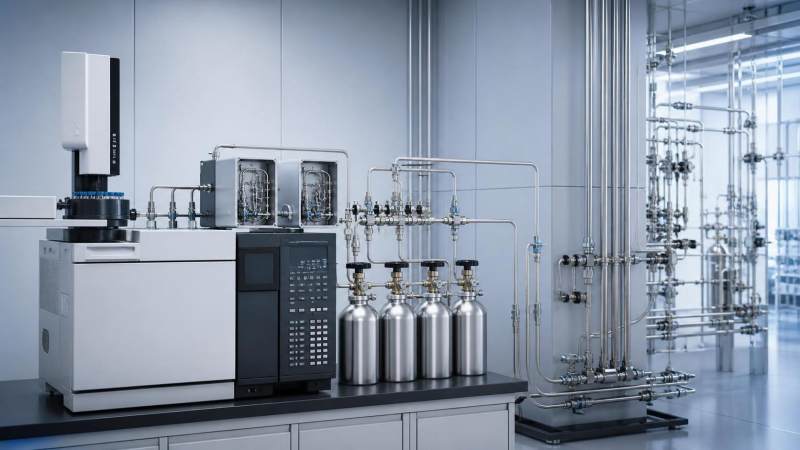
Carrier gas selection determines whether the TCD performs well
TCD performance cannot be evaluated independently of carrier gas. The detector measures the difference in thermal conductivity between analyte and carrier. A large difference generally produces a stronger signal; a small difference produces a weak signal and may make quantitation difficult.
Helium and hydrogen have high thermal conductivity and are often selected as TCD carrier gases because many analytes have substantially lower thermal conductivity. For many permanent gases and hydrocarbons, this creates useful detector response. However, a high-conductivity carrier gas is not universally optimal.
Hydrogen is the clearest example. Hydrogen’s thermal conductivity is very high, close to that of helium. Using helium carrier gas for hydrogen measurement can result in weak response because the conductivity contrast is limited. Nitrogen or argon may provide a stronger hydrogen signal, but that choice changes the response characteristics for the other components. It can also affect chromatographic efficiency and retention.
This is a frequent source of flawed detector selection. A method may be described as requiring “a TCD for permanent gases,” yet the real question is whether one carrier gas can provide adequate sensitivity and separation for every target compound. In complex mixtures, the correct solution may involve multiple columns, valve switching, separate channels, or different carrier gases rather than a single conventional TCD method.
When the FID remains clearly superior
A TCD should not be chosen simply because it detects more compound classes. When the method objective is trace-level hydrocarbon analysis, the FID’s sensitivity, selectivity, and stable response to many organic compounds remain difficult to surpass. Low concentrations of methane, light hydrocarbons, aromatic compounds, or VOCs may fall well below the practical quantitation capability of a standard TCD.
The FID is also less affected by many permanent-gas matrix components because they produce little or no signal. In a hydrocarbon method where nitrogen, oxygen, carbon dioxide, or water are present but are not reportable analytes, this selectivity can simplify chromatograms and reduce interference. A TCD, by contrast, responds to matrix changes. A large oxygen, nitrogen, or carbon dioxide peak may complicate integration of nearby target compounds if chromatographic separation is inadequate.
For hydrocarbon speciation in complex petroleum-derived mixtures, an FID can provide more favorable detection limits and a broad working range. The decision should therefore separate two questions that are often incorrectly combined: Which detector detects the most components? and Which detector measures the required components at the required concentration?
The CO and CO2 exception: methanizer-equipped FID systems
Carbon monoxide and carbon dioxide deserve separate treatment because they can be converted to methane in a catalytic methanizer, after which an FID can detect them with much higher sensitivity than a TCD. This configuration is useful for low-level CO and CO2 determination, especially where hydrocarbon contaminants are also relevant.
However, a methanizer is not a universal replacement for a TCD. It adds a heated catalytic component, requires hydrogen, and introduces its own performance dependencies. Catalyst condition, conversion efficiency, sulfur or halogen exposure, moisture management, and temperature control can affect reliability. More importantly, the methanizer does nothing for nitrogen, oxygen, hydrogen, argon, or helium.
A methanizer-FID configuration is therefore a targeted solution for sensitive CO/CO2 measurement, not evidence that a flame ionization detector can perform a full permanent-gas analysis.
Method risks that are often mistaken for detector limitations
Many disappointing TCD results originate upstream of the detector. A TCD cannot correct poor separation between gases with similar retention behavior, unstable carrier flow, leaks, valve timing errors, or inappropriate sample introduction. Because the detector responds to changes in thermal conductivity, baseline stability depends heavily on consistent flow, temperature control, and carrier-gas purity.
Leaks deserve particular attention in permanent-gas methods. Air ingress changes the composition of the carrier stream and can produce baseline disturbances or false oxygen/nitrogen-related results. The same issue is especially consequential when hydrogen is measured, because the carrier-gas choice may already place tight constraints on detector contrast.
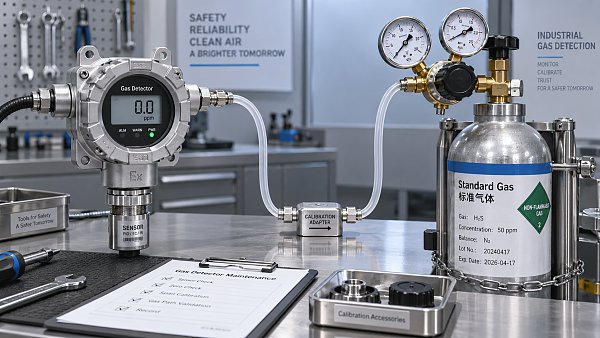
Calibration must reflect the expected matrix and concentration interval. A calibration prepared in one balance gas may not behave identically to a sample with a significantly different background composition, particularly when large matrix peaks affect integration or when detector response is nonlinear at the extremes of the method range. Calibration gas certificates, regulator compatibility, cylinder handling, and moisture control are therefore part of detector performance, not administrative details.
A defensible selection decision
A thermal conductivity detector outperforms an FID when the result must include permanent gases, when analytes are present at relatively high concentrations, when non-destructive detection enables a better system design, or when avoiding flame-gas infrastructure is operationally valuable. It is particularly strong for complete bulk-gas characterization rather than ultra-trace organic analysis.
An FID remains the better choice where the analytical value lies in detecting low concentrations of hydrocarbons and other FID-responsive organic compounds. For CO and CO2 at low levels, a methanizer-FID system may outperform a TCD, provided its added complexity is justified and other permanent gases are not part of the reporting requirement.
The most reliable selection begins with a component list and reporting limits, then tests whether the chosen carrier gas provides sufficient thermal-conductivity contrast for every critical analyte. If one detector cannot meet both the bulk-gas and trace-organic requirements, forcing a single-detector solution usually weakens the method. A TCD-FID combination, separate analytical channels, or a dedicated permanent-gas configuration can be the more technically sound choice.
Recommended for You
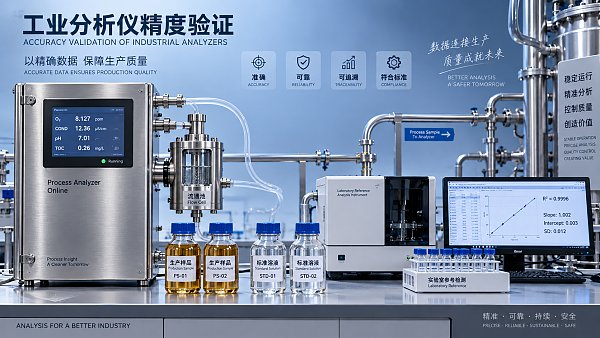
 How to verify accuracy claims for industrial quality analyzersVerify accuracy claims for industrial quality analyzers with calibration checks, independent testing, and clear acceptance criteria. Learn how to reduce risk and buy with confidence.
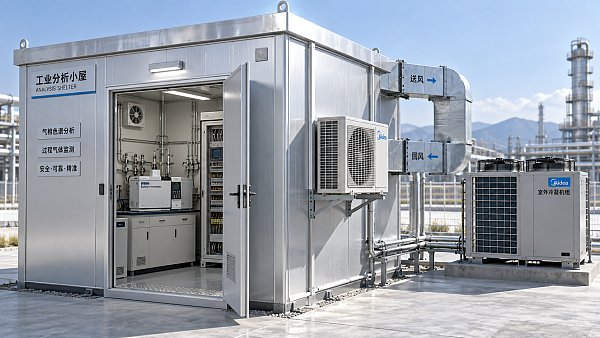
 How to calculate cooling loads for an industrial analyzer shelterSize industrial analyzer shelter cooling with confidence. Learn to calculate equipment heat, solar gains, and ventilation loads, then select HVAC capacity for reliable analyzer performance.
 Industrial Safety vs. Emission Monitoring: What Are the Differences?What are the main differences between industrial safety and emission monitoring? Compare goals, sensors, response times, and compliance needs to choose the right systems for your facility.
 Is Remote Monitoring Worth the Cost for Small Emission Sources?Is it worth investing in remote monitoring for small emission sources? Compare costs, compliance needs, and potential savings to choose the right solution for your operation.
 How Do You Handle Analyzer Failure During an Environmental Audit?Learn how to handle analyzer failure during environmental compliance audit procedures. Protect evidence, verify data, and restore monitoring with this practical response guide.
 Do VOC Monitors Require Explosion-Proof Certification?Does VOC monitoring require explosion-proof certification? Learn when approval is needed, compare ATEX and IECEx, and choose the right monitor for your site.
 How sample conditioning affects accuracy in petrochemical analyzersImprove accuracy in petrochemical analyzers with smarter sample conditioning. Discover how phase control, filtration, and transport design prevent bias and deliver reliable process data.
 How to troubleshoot sensor drift in industrial gas detectorsIndustrial gas detectors showing sensor drift? Learn how to verify calibration gas, identify root causes, and determine when sensor replacement is needed for reliable monitoring.
 How to judge whether a competitive price reflects real valueCompetitive Price: learn how to compare scope, compliance, performance, and lifecycle costs to identify real value, reduce risk, and make smarter purchasing decisions.
 When custom gas analysis is the right fit for complex process streamsCustom gas analysis for complex process streams: learn when tailored sampling, interference control, and reliable measurement design deliver confident decisions.
 When does a laser gas analyzer meet stack emissions monitoring needs?Laser gas analyzer for stack emissions: learn when it delivers fast, reliable data, how to assess installation risks, and what to verify for CEMS compliance.
 How to select a hazardous gas analyzer for confined spacesHazardous gas analyzer selection for confined spaces: compare sensors, sampling, certifications, alarms, and maintenance to protect workers and choose with confidence.
 When is a single gas analyzer sufficient for workplace safety monitoring?Discover when a single gas analyzer delivers reliable workplace safety monitoring, and learn the key limits, calibration needs, and risks that require broader detection.
 How to choose an ambient gas analyzer for low-level leak detectionAmbient gas analyzer selection for low-level leak detection: compare sensitivity, cross-sensitivity, sampling design, alarms, and calibration for reliable site performance.
 How to tell when an oxygen sensor needs replacementOxygen sensor replacement signs explained: learn how live data, fault codes, wiring checks, and exhaust inspections pinpoint the real issue before you buy.
 How laser gas analyzers improve combustion control in steel furnacesLaser gas analyzer for steel industry applications delivers fast in-situ O₂ and CO data to optimize furnace combustion, cut fuel waste, and improve steel heating stability.
 How to verify whether explosion proof equipment meets site requirementsExplosion proof equipment verification made practical: match zones, gas or dust groups, temperature classes, certificates, and installation conditions for confident compliance.
 How industrial gas analysis helps detect contamination before releaseIndustrial Gas Analysis helps detect moisture, oil, oxygen, and toxic contaminants before release—protecting processes, ensuring compliance, and reducing costly risks.
 When is electrochemistry detection the right choice for water analysis?Electrochemistry detection for water analysis: learn when fast, reliable monitoring of ions, chlorine, pH, and more delivers actionable results.
 How industrial standards reduce quality risks in supplier selectionIndustrial Standard guidance helps quality and safety managers reduce supplier risks, verify compliance, strengthen traceability, and build resilient instrumentation supply chains.
 When does a multi-component system reduce installation complexity?Multi component systems reduce installation complexity when they eliminate field interfaces, streamline commissioning, and provide proven compatibility. Learn how to assess total cost and supplier accountability.
 How to size an industrial control shelter for outdoor equipmentIndustrial control shelter sizing guide: optimize layout, HVAC, access, safety, and expansion space for reliable outdoor equipment operations.
 How flue analysis helps verify combustion efficiencyFlue analysis verifies combustion efficiency by assessing O2, CO, CO2, and stack temperature to identify excess air, incomplete combustion, and heat losses.
 How to select industrial gas detectors for confined spacesIndustrial gas detectors for confined spaces: learn how to match sensors, sampling methods, alarms, and certifications to real atmospheric hazards.
 When does a laser oxygen analyzer outperform zirconia sensors?Laser oxygen analyzer vs. zirconia sensors: compare speed, selectivity, maintenance, gas chemistry, and installation needs to choose the right oxygen measurement solution.
 How to select a percent range analyzer for process measurementsPercent range analyzer selection made practical: compare accuracy, sample systems, calibration, gas matrix, integration, and lifecycle cost for reliable process measurements.
 How explosion proof analysis verifies safe equipment for hazardous areasExplosion proof analysis verifies hazardous-area equipment by matching certifications, temperature ratings, installation details, and inspection controls for safer compliance.
 When does fixed gas detection need point sensors instead of open-path monitoring?Fixed gas detection: discover when point sensors outperform open-path monitoring for predictable leaks, enclosed zones, local alarms, and safer design decisions.
 How to choose industrial metrology systems for tight-tolerance partsIndustrial metrology guide for tight-tolerance parts: compare CMMs, optical scanners, gauges, uncertainty, workflow, and traceable inspection strategies.
 How process metrology reduces measurement variation in productionProcess metrology reduces production measurement variation by improving traceability, uncertainty control, calibration, and reliable quality decisions.
 How to select an industrial monitoring analyzer for harsh environmentsIndustrial monitoring analyzer selection for harsh environments: evaluate sampling, durability, hazardous-area compliance, accuracy, maintenance, and data reliability.
 How calibration intervals affect test and measurement equipment accuracyTest and measurement equipment calibration intervals directly affect accuracy, risk, compliance, and uptime. Learn how to set evidence-based schedules that protect critical decisions.
Search Categories
Search Categories
- Smart Meters & Power Quality
- Transformer Gas Analyzers
- BESS Thermal Runaway Detectors
- Energy, Power & Smart Grid Monitoring
- Optical Profilers & CMM
- Ultrasonic & X-Ray NDT
- Calibration Standards
- Precision Metrology & NDT
- Water Quality Analyzers
- CEMS & VOCs Monitors
- Price Trends
- Import & Export Updates
- Market Trends
- Industry News
- Industry Insights
Latest Article
- How to verify accuracy claims for industrial quality analyzersVerify accuracy claims for industrial quality analyzers with calibration checks, independent testing, and clear acceptance criteria. Learn how to reduce risk and buy with confidence.Posted by:
- How to calculate cooling loads for an industrial analyzer shelterSize industrial analyzer shelter cooling with confidence. Learn to calculate equipment heat, solar gains, and ventilation loads, then select HVAC capacity for reliable analyzer performance.Posted by:
- Industrial Safety vs. Emission Monitoring: What Are the Differences?What are the main differences between industrial safety and emission monitoring? Compare goals, sensors, response times, and compliance needs to choose the right systems for your facility.Posted by:
Please give us a message