
How to Choose Power Plant Instrumentation for Reliable Unit Performance


How to Choose Power Plant Instrumentation for Reliable Unit Performance
Choosing the right power plant instrumentation is essential for maintaining unit reliability, safety, and efficiency under demanding operating conditions.
The real challenge goes beyond comparing device catalogs. It involves judging accuracy stability, integration depth, compliance fit, maintainability, and lifecycle cost under plant realities.
A disciplined power plant instrumentation strategy helps operators reduce blind spots, prevent nuisance trips, and keep unit performance steady across load changes and harsh environments.
Start with the Unit’s Risk Profile
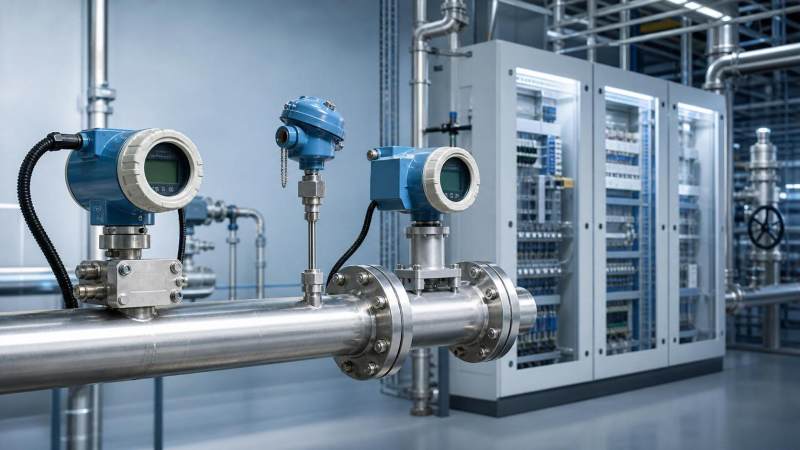
Good power plant instrumentation selection starts with process risk, not product branding. The instrument must match the consequence of failure at each measurement point.
In practical terms, a drum level transmitter carries a different risk profile than a utility water flow meter. Treating them the same creates avoidable reliability gaps.
Map critical loops first. Focus on boiler, turbine, feedwater, condensate, steam, fuel handling, emissions, cooling water, and electrical balance-of-plant systems.
A useful screening framework includes:
- Safety impact if the signal drifts or fails
- Process sensitivity to response time and accuracy
- Operating severity, including pressure, temperature, vibration, and corrosion
- Consequence of false trips, missed alarms, or bad control action
- Calibration frequency and outage access limitations
This first pass prevents overbuying on low-impact loops and under-specifying instruments that protect core unit performance.
Define What Must Be Measured, Not Just What Can Be Measured
Many power plant instrumentation issues begin with vague measurement objectives. “Monitor temperature” is too broad. “Protect superheater metal temperature margin during ramping” is actionable.
That difference changes sensor placement, range, sheath material, update rate, and signal conditioning requirements. It also affects alarm logic and maintenance planning.
For each tag, define the control purpose. Is the signal used for indication, closed-loop control, interlock, trip, performance analysis, or compliance reporting?
This step sharpens selection criteria for:
- Pressure transmitters on steam, feedwater, and condensate systems
- Temperature sensors in boiler tubes, bearings, and heat exchangers
- Flow meters for fuel gas, air, water, and steam accounting
- Level measurement in deaerators, drums, tanks, and sumps
- Analyzers for oxygen, pH, conductivity, silica, sodium, and emissions
A strong power plant instrumentation plan ties every device to a clear operational decision. That keeps procurement aligned with plant outcomes, not generic specifications.
Prioritize Accuracy Stability Over Nameplate Accuracy
Recent buying behavior shows a useful shift. Teams are paying less attention to headline accuracy and more attention to drift, repeatability, and installed performance.
That is the right move. In power plant instrumentation, a laboratory-grade accuracy claim means little if the sensor degrades quickly under thermal cycling or contaminated service.
Ask vendors for evidence under operating conditions that resemble your plant. Bench data alone is rarely enough for final evaluation.
Check these performance factors carefully:
- Long-term drift across annual maintenance cycles
- Response under startup, shutdown, and load-following conditions
- Resistance to impulse line plugging, fouling, and moisture effects
- Signal stability during vibration and electromagnetic interference
- Calibration traceability and field verification options
Reliable unit performance depends on stable data. Stable data comes from well-matched power plant instrumentation, not from optimistic brochure numbers.
Match the Instrument to the Process Environment
Environmental fit is where many selection errors become expensive. The wrong wetted material, seal fluid, enclosure rating, or mounting arrangement can shorten life dramatically.
Power plant instrumentation often faces steam hammer, ash, corrosive condensate, high ambient heat, and outdoor exposure. Each condition changes the practical specification.
For example, a pressure transmitter on high-temperature steam service may need remote seals, capillary considerations, and insulation awareness. A standard body-only selection is rarely enough.
Review the full installation context:
- Media chemistry and contamination risk
- Minimum and maximum process temperatures
- Pressure pulses, vibration, and pipe stress
- Required ingress protection and hazardous area certification
- Accessibility for calibration, replacement, and impulse line maintenance
A technically correct instrument can still fail commercially if installation complexity drives frequent maintenance or unplanned downtime.
Check Integration with DCS, Analytics, and Asset Management
Power plant instrumentation now supports more than process control. It feeds diagnostics, predictive maintenance, emissions reporting, and fleet-level performance analysis.
This means protocol compatibility matters early. The device should fit existing DCS, SIS, historian, and asset management tools without creating unnecessary engineering overhead.
More visible across the market is the demand for smarter diagnostics. Teams want devices that explain degradation before the process does.
Evaluate integration on four levels:
- Signal layer: 4-20 mA, HART, Foundation Fieldbus, Modbus, or other required standards
- Configuration layer: parameterization, backups, and version control support
- Diagnostic layer: sensor health, plugged line alerts, or analyzer maintenance flags
- Data layer: clean transfer into historian, reporting, and performance monitoring platforms
When power plant instrumentation integrates cleanly, troubleshooting becomes faster and engineering decisions become less reactive.
Compare Lifecycle Value, Not Purchase Price Alone
The cheapest instrument is often the most expensive one in service. This is especially true when the tag affects heat rate, trip risk, emissions, or chemistry control.
A better power plant instrumentation decision compares total ownership value across the maintenance cycle. That includes labor, spares, calibration needs, outage exposure, and production loss.
A higher initial price may be justified when the device extends calibration intervals or prevents a recurring derate condition.
This comparison makes procurement discussions more disciplined and easier to defend internally.
Use Vendor Qualification as a Reliability Filter
Power plant instrumentation quality depends on the device and the supplier behind it. Technical fit loses value if documentation, testing, or after-sales support is weak.
Look beyond the sales presentation. Ask how the vendor handles root cause analysis, firmware updates, calibration traceability, and urgent field failures.
A practical qualification checklist should cover:
- Relevant power sector references for similar duty conditions
- Factory test records and calibration documentation quality
- Compliance with required standards and certifications
- Lead time consistency and critical spare availability
- Engineering support during commissioning and troubleshooting
In many cases, supplier responsiveness becomes part of the instrument’s actual reliability profile.
Build a Shortlist That Survives Real-World Review
The final selection stage should be structured, fast, and evidence-based. A short technical scorecard works better than broad narrative comparisons.
Score each power plant instrumentation option against process fit, accuracy stability, diagnostics, integration, maintainability, service support, and lifecycle value.
Then pressure-test the shortlist with operations, maintenance, controls, and chemistry stakeholders. That review often exposes hidden constraints early.
A clean decision flow looks like this:
- Rank loops by operational and safety criticality
- Define measurable performance requirements by tag
- Screen vendors for environment, compliance, and integration fit
- Compare lifecycle value using plant-specific assumptions
- Validate the shortlist with cross-functional technical review
Reliable unit performance rarely comes from a single premium device. It comes from consistent, well-reasoned power plant instrumentation choices across the measurement chain.
The strongest decisions are usually the simplest to explain. They connect plant risk, measurement purpose, operating reality, and supplier capability in one clear logic.
When that logic is in place, power plant instrumentation becomes a performance enabler rather than a recurring source of uncertainty.
Recommended for You
 How to choose the right detection range for a custom gas analyzerChoose the right custom gas analyzer detection range with practical guidance on accuracy, exposure limits, calibration, and supplier evaluation.
 How does multi component monitoring detect gases in stack emissions?Discover how multi component monitoring detects stack gases, manages interference and supports reliable emissions reporting. Explore key CEMS selection factors.
 How bright should an industrial monitor be for outdoor use?Choosing an outdoor industrial monitor? Learn why 1,000 nits is a starting point and how glare, contrast, and heat affect sunlight readability.
 How does water vapor affect infrared gas analyzers?Infrared gas analyzers can be affected by humidity, condensation and spectral interference. Learn how to protect sample integrity and achieve reliable results.
 How to reduce customer support response timesReduce Customer Support response times with actionable tips for reporting equipment faults, choosing the right channel, and getting expert help faster.
 How to choose a low range analyzer for trace-level measurementsChoose the right low range analyzer for trace-level measurements. Compare detection limits, sampling, calibration and support to make a confident decision.
 How to choose combustible gas detectors for a specific gasChoose combustible gas detectors with confidence. Compare sensor technologies, gas response, calibration, placement, and certification for your application.
 How to choose an air quality analyzer for the pollutants you need to measureChoose an air quality analyzer with confidence. Compare pollutant measurement methods, sampling, accuracy and calibration to find the right fit for your needs.
 How to choose industrial metrology tools for tight tolerancesChoose industrial metrology tools for tight tolerances with confidence. Compare uncertainty, calibration, tool types, and costs to reduce inspection risk.
 How moisture affects fixed analyzer accuracy in stack gas monitoringImprove fixed analyzer accuracy in stack gas monitoring. Discover how moisture causes dilution, interference, and sample loss—and learn practical ways to protect emissions data.
 How does production line speed affect in-line measurement accuracy?Discover how production line speed affects in-line measurement accuracy. Explore sensor response, sampling, and timing to boost throughput without compromising quality.
 How condensation affects HCl concentration analyzer accuracyHCl concentration analyzer accuracy can suffer when condensation traps HCl. Learn how to spot sampling losses, prevent low readings, and improve measurement reliability.
 How does cross-interference affect multi-component gas analyzers?How does cross-interference affect multi component gas analyzers? Explore measurement errors, compensation limits, and validation tips to choose the right system for your process.
 How does temperature affect high-accuracy sensor performance?Explore how temperature affects high accuracy sensor performance. Learn to reduce thermal drift, evaluate compensation, and select the right sensor for reliable measurements.
 Can a C4H8O concentration analyzer distinguish between isomers?Can a C4H8O concentration analyzer distinguish isomers? Compare GC, FTIR and MS methods, uncover selectivity limits, and learn what to validate before choosing your instrument.
 How to identify a reliable supplier using on-time delivery recordsIdentify a Reliable Supplier by verifying on-time delivery records, original commitments, and complete shipments. Learn practical checks to reduce purchasing risk and protect your project schedule.
 How sensitive should a portable hydrogen analyzer be for lab use?Choose a portable hydrogen analyzer for laboratory use with the right quantification limit, accuracy, and range. Learn how to verify performance and avoid costly buying mistakes.
 How to set industrial calibration intervals based on equipment riskSet industrial calibration intervals based on equipment risk, drift, and as-found data. Learn when to shorten or extend schedules to improve reliability and avoid unnecessary costs.
 How to choose electrochemical analyzers for low-current measurementsCompare electrochemical analyzers for precise low-current measurements. Learn how noise, leakage, bandwidth, and real-cell testing help you choose the right instrument.
 What tolerance does a custom gas mixture need for calibration?Choose the right custom gas tolerance for calibration. Learn how blending tolerance, certified uncertainty, and stability affect accuracy—and avoid paying for precision you don’t need.
 How condensation affects stack detector readings in wet flue gasStack detector readings can drift when wet flue gas condenses. Learn how to identify moisture interference, prevent sample losses, and improve emissions monitoring reliability.
 How to prevent condensation in a CO2 analyzer sampling systemPrevent condensation in your CO2 analyzer sampling system. Learn how to control dew point, eliminate cold spots, and manage moisture for reliable readings and fewer costly disruptions.
 How to verify accuracy claims for industrial quality analyzersVerify accuracy claims for industrial quality analyzers with calibration checks, independent testing, and clear acceptance criteria. Learn how to reduce risk and buy with confidence.
 How to calculate cooling loads for an industrial analyzer shelterSize industrial analyzer shelter cooling with confidence. Learn to calculate equipment heat, solar gains, and ventilation loads, then select HVAC capacity for reliable analyzer performance.
 Hydrogen Analyzers for Energy Storage: Purity Monitoring vs. Leak DetectionChoosing a hydrogen analyzer for energy storage systems? Compare purity monitoring and leak detection to select the right sensors, improve safety, and protect fuel cell performance.
 NH3 Monitoring in Fertilizer Plants: Where Should Leak Analyzers Be Installed?NH3 analyzer for fertilizer production: discover where to place leak detectors around storage, compressors, and loading areas to reduce blind spots and improve early warning.
 Diesel Engine NOx Analyzers: Response Time and NO2 Conversion ExplainedChoosing a NOX analyzer for diesel engines? Learn how response time, NO2 conversion, and sampling design affect accuracy—and make a smarter, evidence-based purchase.
 SO2 Analyzers for Smelter Emissions: Sampling Hot, Dust-Laden Flue GasSelect an SO2 analyzer for smelting industry applications. Discover how to handle hot, dust-laden flue gas, prevent sample losses, and achieve reliable emissions monitoring.
 Unstable CH4 Readings in Biogas Monitoring? Check Moisture and Sample FlowCH4 analyzer for biogas monitoring giving unstable readings? Discover how moisture, sample flow, and pressure checks help pinpoint faults and restore reliable methane measurements.
 Buying a CO2 Analyzer for Brewery Gas Recovery: Costs Beyond the Purchase PriceBuying a CO2 analyzer for brewery applications? Compare sampling, installation, calibration, and downtime costs to uncover hidden expenses and make a smarter gas recovery investment.
 Where to Place CO Analyzers for Effective Parking Garage VentilationOptimize your CO analyzer for parking garage ventilation with practical placement tips. Learn how sensor height, airflow, and zone coverage support timely detection and effective fan control.
 NDIR vs. FTIR Gas Analyzers: Which Fits Your Environmental Research?Find the right infrared gas analyzer for environmental research. Compare NDIR vs. FTIR on sensitivity, gas coverage, sampling needs, and cost to choose confidently for your study.




Search Categories
Search Categories
- Smart Meters & Power Quality
- Transformer Gas Analyzers
- BESS Thermal Runaway Detectors
- Energy, Power & Smart Grid Monitoring
- Optical Profilers & CMM
- Ultrasonic & X-Ray NDT
- Calibration Standards
- Precision Metrology & NDT
- Water Quality Analyzers
- CEMS & VOCs Monitors
- Price Trends
- Import & Export Updates
- Market Trends
- Industry News
- Industry Insights
Latest Article
- How to choose the right detection range for a custom gas analyzerChoose the right custom gas analyzer detection range with practical guidance on accuracy, exposure limits, calibration, and supplier evaluation.Posted by:
- How does multi component monitoring detect gases in stack emissions?Discover how multi component monitoring detects stack gases, manages interference and supports reliable emissions reporting. Explore key CEMS selection factors.Posted by:
- How bright should an industrial monitor be for outdoor use?Choosing an outdoor industrial monitor? Learn why 1,000 nits is a starting point and how glare, contrast, and heat affect sunlight readability.Posted by:
Please give us a message
