
China Standardizes 'Token' as 'Ci-Yuan' for AI Data Interfaces


On April 20, 2026, China’s National Data Administration officially adopted ‘Ci-Yuan’ (‘word-unit’) as the standardized Chinese translation for ‘token’, defining it as both a value anchor and the smallest unit of settlement in AI systems. This decision directly impacts industries relying on smart metering, industrial data interoperability, and cross-border AI data services—particularly those engaged with EU and Singaporean markets where AI data governance frameworks are already operational.
Event Overview
On April 20, 2026, the National Data Administration of China formally announced ‘Ci-Yuan’ as the official Chinese term for ‘token’, specifying its role as the fundamental value anchor and minimal settlement unit in AI-driven data ecosystems. The definition is published in an official notice and applies to technical standards, regulatory documentation, and cross-border data service frameworks.
Industries Affected by This Standardization
Smart Metering & Industrial IoT Device Manufacturers
These manufacturers are affected because the ‘Ci-Yuan’ definition explicitly references standardization of data interfaces for intelligent meters—including OPC UA over Tokenized API—and device identity credentialing on distributed ledgers. Impact manifests in revised interface specifications, firmware update requirements, and new compliance validation steps for export-ready products.
Cross-Border Data Service Providers
Providers offering AI-processed metering or sensor data to regulated markets (e.g., EU under the AI Act, Singapore under the Model AI Governance Framework) face direct implications. The ‘Ci-Yuan’-aligned data interaction model supports transparent, auditable, and granular billing—making it a functional prerequisite for market access and pricing compliance in jurisdictions requiring traceable data units.
Industrial Automation Integrators
Integrators deploying AI-enhanced control systems must now align system-level data contracts, metadata tagging, and audit logs with the ‘Ci-Yuan’ unit. This affects how data lineage, provenance, and usage rights are encoded in edge-to-cloud workflows—especially where multi-vendor interoperability or third-party verification is required.
What Enterprises and Practitioners Should Monitor and Do Now
Track official technical implementation guidelines
Current policy defines ‘Ci-Yuan’ conceptually but does not yet specify encoding formats, serialization rules, or cryptographic binding mechanisms. Enterprises should monitor follow-up publications from the National Data Administration and Standardization Administration of China—particularly draft standards related to ‘tokenized data interfaces’ and ‘Ci-Yuan-based metering APIs’.
Assess exposure to EU and Singapore-facing product lines
For exporters, ‘Ci-Yuan’-compatible interface design may become a de facto requirement for certification in markets with mature AI data governance regimes. Companies should identify which metering or telemetry products are currently deployed—or planned for deployment—in these regions, and evaluate whether existing API architectures support token-unit granularity and verifiable attribution.
Distinguish between policy signal and operational readiness
The April 20 announcement is a terminological and conceptual standard—not an immediate compliance mandate. Analysis shows that adoption timelines will depend on integration into national standards (e.g., GB/T series), industry-specific white papers, and procurement specifications issued by State Grid or other key infrastructure buyers. No enforcement date or penalty framework has been published.
Prepare for upstream interface alignment
Manufacturers and integrators should begin reviewing current data schema definitions (e.g., in OPC UA Information Models or MQTT payloads) to assess feasibility of mapping measurement events or metadata attributes to ‘Ci-Yuan’-aligned units. Early alignment reduces rework risk when formal conformance testing requirements emerge.
Editorial Perspective / Industry Observation
Observably, this standardization is less a technical mandate and more a strategic framing device: it signals China’s intent to shape AI data economics around discrete, auditable, and commercially negotiable units—starting from foundational infrastructure like smart meters. From an industry perspective, ‘Ci-Yuan’ functions primarily as a semantic anchor, enabling consistent interpretation across policy, standards, and commercial contracts. It does not yet represent a deployed protocol or certified implementation, but rather a reference point for future interoperability layers. Continued observation is warranted—not for immediate compliance deadlines, but for how quickly downstream standards bodies and export-focused certification schemes incorporate the term operationally.
Conclusion
This standardization marks an early institutional step toward structuring AI data value flows at the infrastructure level. Its significance lies not in immediate enforcement, but in establishing a shared linguistic and conceptual foundation for future technical specifications, cross-border alignment efforts, and commercial models involving machine-generated data. Currently, it is best understood as a policy-level orientation marker—not a functional requirement—with practical impact contingent on subsequent standardization and market adoption.
Information Source
Primary source: Official notice issued by the National Data Administration of China on April 20, 2026. No additional implementing documents or technical annexes have been released as of publication. Ongoing developments—including draft standards, certification guidance, or international alignment statements—remain under observation.
Recommended for You
 IEC Approves China-Led Standard for Smart Sensor Semantic InteroperabilityIEC TR 63372 smart sensor semantic interoperability standard—led by China—cuts export certification time by 30%. Discover how it reshapes global IoT integration.
 MIIT Launches Joint Enforcement on EV Battery RecyclingMIIT's EV battery recycling enforcement targets BMS data leaks, illegal dismantling & electrolyte disposal—key for exporters, testers & procurement teams needing GDPR/CCPA compliance.
 SAMR Launches Unified Market Action on Testing & CertificationSAMR Launches Unified Market Action on Testing & Certification—tackling fragmentation, redundant fees & cross-border recognition barriers for exporters and manufacturers.
 Fifteenth Five-Year Urban Renewal Plan Approved, Signaling Overseas Procurement for Smart Water & Environmental Monitoring DevicesSmart water & environmental monitoring devices gain global momentum as China’s 15th Five-Year Urban Renewal Plan mandates intelligent infrastructure—key for Belt and Road exports.
 IMF Warns AI Amplifies Financial Cybersecurity RisksAI amplifies financial cybersecurity risks—IMF warns. Discover how XAI verification, adversarial attacks, and regulatory mandates impact AI detection equipment, FinTech, and banks.
 Tmall Health Launches 'Health Supplement Safety Alliance'Health Supplement Safety Alliance launched by Tmall Health—boosting traceability, lab credibility & cross-border quality for brands like By-Health and Centrum.
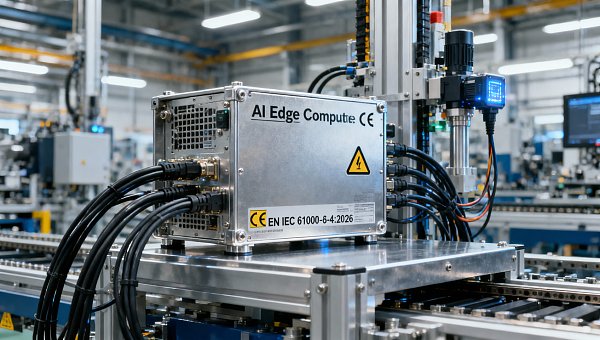
 EN IEC 61000-6-4:2026 EMC Standard Effective for AI Edge DevicesEN IEC 61000-6-4:2026 EMC standard is live—15% stricter radiated limits for AI edge devices. Act now to secure EU industrial IoT procurement eligibility.
 APEC Auto Dialogue Confirms Semi-Solid Battery Deployment and Fast ChargingSemi-solid battery deployment & 15-min fast charging confirmed at APEC Auto Dialogue—spurring global demand for China-made battery testing equipment, BMS validation, and thermal runaway simulation solutions.
 EU Imposes Final Anti-Dumping Duty on Chinese Adipic AcidEU anti-dumping duty on Chinese adipic acid takes effect May 2026—impacting pH meters, sensors & analytical instruments. Act now to secure supply chains.
 Colombia Upholds Anti-Dumping Duties on Chinese Acrylic SheetsColombia Upholds Anti-Dumping Duties on Chinese Acrylic Sheets — 32.7% tariff extended for 5 years. Critical for exporters of medical, lab & analytical instrument enclosures.
 Multi Component Analyzer Cost Trends for 2026 Expansion PlansMulti component analyzer cost trends for 2026: discover key pricing drivers, hidden costs, and smart supplier strategies to budget accurately and maximize expansion ROI.
 SR-2050 Analyzer Maintenance Points That Affect Service LifeSR-2050 analyzer maintenance points that directly impact service life, accuracy, and uptime. Learn how cleaning, calibration, inspection, and environment control reduce failures.
 SR-S2000 Shelter: Common Setup Mistakes to AvoidSR-S2000 shelter setup mistakes can cause heat, moisture, and maintenance issues. Learn what to avoid for safer installation, stable performance, and longer equipment life.
 Custom Gas Analyzer Import Risks and Spec Mismatch IssuesCustom gas analyzer import risks can derail projects through spec mismatch, compliance gaps, and integration issues. Learn how buyers can compare suppliers, verify requirements, and avoid costly rework.
 When to Choose the SR-2030 Oxygen Analyzer for ComplianceSR-2030 oxygen analyzer: learn when it’s the right choice for compliance, safety, and stable process control. Explore key selection checks, audit-ready benefits, and deployment tips.
 SR-EX Analyzer Price Factors in 2026 ProjectsSR-EX analyzer price factors explained for 2026 projects: compare scope, compliance, integration, and lifecycle costs to approve budgets with less risk and more confidence.
 SR-2070 Analyzer vs Alternatives: Key Performance ChecksSR-2070 analyzer vs alternatives: compare accuracy, drift, response time, calibration effort, and lifecycle cost to choose a more reliable, efficient analyzer with confidence.
 2026 Market Trends for Predictive Analytics InstrumentsPredictive analytics instruments are reshaping 2026 market strategy. Explore key trends, risks, and buying checkpoints to improve uptime, integration, and ROI across industries.
 Wireless Measurement Systems: What Impacts Data Stability Most?Wireless measurement systems perform best when data stays stable. Discover the key factors affecting reliability, accuracy, and long-term performance across industrial applications.
 How Remote Monitoring Devices Cut Downtime in Field OperationsRemote monitoring devices help field teams detect issues early, reduce downtime, and improve maintenance planning. Discover how they keep operations reliable and on schedule.
 5th TCM High-Quality Development Conference Highlights NIR & AI QC for Global ExportNIR & AI QC take center stage at the 5th TCM High-Quality Development Conference—key for global export compliance, real-time quality control, and smart manufacturing.
 IEC Approves China-Led Guide for Smart Sensor Semantic InteroperabilityIEC TR 63388 semantic interoperability guide for smart sensors—China-led, globally approved. Boost IIoT integration across OPC UA, MQTT & TSN now.
 PBOC April Data Shows Strong Credit Flow to Tech & Inclusive LendingPBOC April data reveals surging tech & inclusive lending—boosting global demand for calibrated lab equipment, R&D instruments, and metrology-ready exports.
 SABIC Launches 'Smart Factory 2030' with China-Focused Online Analysis ProcurementSABIC's 'Smart Factory 2030' launches China-focused online analysis procurement—pH/ORP, IR gas & LIBS analyzers. SIL2-certified suppliers, act now!
 China Completes '14th Five-Year' Smart CNC Line R&DChina's '14th Five-Year' Smart CNC Line R&D is complete — boosting reliability & cutting delivery time for precision metrology equipment. Discover how it transforms global procurement.
 FDA Updates IVD Software Guidance: AI Diagnostic Devices Must Provide Verifiable Training DatasetsFDA mandates verifiable training datasets for AI diagnostic devices — critical for medical imaging, DICOM tools, and regulatory services entering the U.S. market.
 EU EN IEC 61000-6-4:2026 EMC Standard Takes EffectEU EN IEC 61000-6-4:2026 EMC standard is live—stricter radiated emission limits for AI edge devices. Act now to avoid EU customs delays & certification bottlenecks.
 APEC Auto Dialogue Confirms Semi-Solid Battery Deployment and 15-Minute Fast ChargingSemi-solid battery deployment and 15-minute fast charging confirmed at APEC Auto Dialogue — driving urgent global demand for BMS validation, thermal runaway, and high-voltage test equipment.
 MIIT Launches Joint Enforcement on EV Battery RecyclingMIIT Launches Joint Enforcement on EV Battery Recycling: Critical for battery test equipment exporters, data compliance, and global supply chains—act now to avoid delays.
 DIA China Annual Meeting Sells Out Despite $7,000+ FeeDIA China Annual Meeting sells out despite $7,000+ fee — a powerful signal for pharma exporters, manufacturers & regulatory service providers targeting China’s innovation ecosystem.
 Continuous Monitoring Solutions and the Shift Toward Smarter ComplianceContinuous monitoring solutions help enterprises strengthen compliance with real-time visibility, traceable data, and faster risk response. Discover how smarter oversight improves resilience and audit confidence.
 Confined Space Monitors: Key Mistakes That Raise Safety RiskConfined space monitors can fail when selection, bump testing, calibration, or sampling is wrong. Learn the biggest safety mistakes and how to prevent false safe readings.





















Search Categories
Search Categories
Latest Article
- IEC Approves China-Led Standard for Smart Sensor Semantic InteroperabilityIEC TR 63372 smart sensor semantic interoperability standard—led by China—cuts export certification time by 30%. Discover how it reshapes global IoT integration.Posted by:
- MIIT Launches Joint Enforcement on EV Battery RecyclingMIIT's EV battery recycling enforcement targets BMS data leaks, illegal dismantling & electrolyte disposal—key for exporters, testers & procurement teams needing GDPR/CCPA compliance.Posted by:
- SAMR Launches Unified Market Action on Testing & CertificationSAMR Launches Unified Market Action on Testing & Certification—tackling fragmentation, redundant fees & cross-border recognition barriers for exporters and manufacturers.Posted by:
Please give us a message
