
Energy Efficiency vs Production Stability


In modern industrial operations, balancing Energy Efficiency with production stability is no longer optional but essential. From Industrial Control systems to Precision Instrument applications and the use of an Efficient Gas Analyzer, companies are turning to Green Technology and Sustainable Monitoring to achieve Emission Reduction, Process Optimization, and stronger Environmental Protection performance without compromising output, safety, or long-term profitability.
For instrumentation users, engineers, buyers, project managers, quality teams, and business decision-makers, this balance is not a theoretical debate. It affects uptime, operating cost, compliance risk, maintenance planning, and capital allocation. In plants where temperature, pressure, flow, level, and gas composition must remain within narrow thresholds, even a small efficiency initiative can create instability if the control strategy, sensor quality, or implementation sequence is weak.
The practical question is not whether to pursue energy savings, but how to do it without reducing process reliability. In the instrumentation industry, that means selecting the right monitoring architecture, verifying measurement accuracy, defining realistic optimization targets, and aligning automation upgrades with production constraints. The sections below outline the technical, operational, and procurement factors that matter most.
Why Energy Efficiency and Production Stability Must Be Managed Together
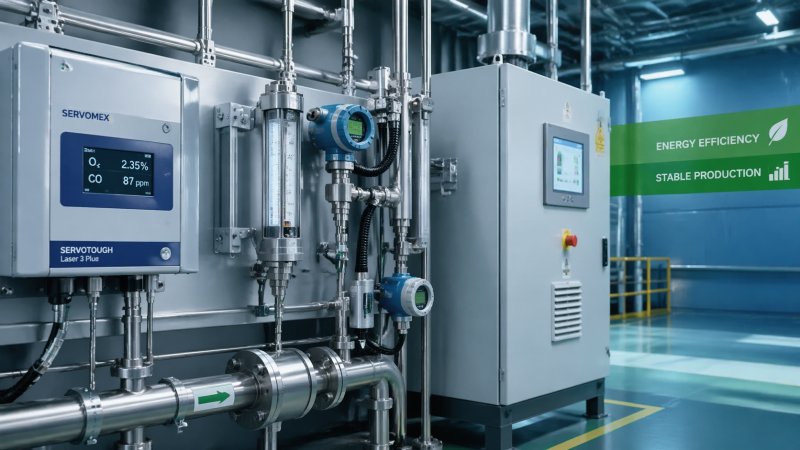
In continuous and batch operations alike, energy efficiency initiatives often start with obvious targets: compressed air loss, furnace heat waste, oversized pumps, unstable combustion, and excessive ventilation. However, in an instrumented environment, every change in load, setpoint, response time, or control logic can affect throughput, product consistency, and safety interlocks. That is why energy management must be linked to production stability from the first assessment stage.
A typical facility may monitor 20 to 200 critical points across pressure, temperature, flow, level, and gas concentration. If only 5% to 10% of those points drift beyond calibration tolerance, the result can be poor control decisions, false alarms, or hidden energy losses. In sectors such as power generation, process manufacturing, laboratories, and environmental systems, stability often depends on maintaining repeatable measurements within defined error ranges such as ±0.1% to ±1% of full scale, depending on the application.
The instrumentation industry plays a central role because it turns energy and process behavior into usable data. Without reliable transmitters, analyzers, calibration routines, and control feedback, efficiency projects rely on assumptions rather than verified operating conditions. Plants may lower power use on one asset while increasing cycle time, scrap rate, or maintenance frequency elsewhere.
Common conflict points in industrial optimization
The most frequent conflicts appear when teams focus on utility reduction without validating process dynamics. Lower fan speed may save electricity, but it can also reduce airflow below the threshold required for heat transfer or emission control. A tighter temperature band may improve product quality, yet it may increase control valve movement and shorten actuator life if tuning is not adjusted.
- Reducing equipment load by 10% to 15% without reviewing response time can create slower process recovery after disturbances.
- Changing analyzer sampling intervals from 5 seconds to 30 seconds may reduce data handling demand, but can weaken early fault detection.
- Installing variable-frequency drives without updating PID parameters may cause oscillation, overshoot, or unstable flow control.
For procurement and finance teams, this means evaluating lifecycle impact rather than purchase price alone. A lower-cost instrument with shorter calibration intervals, higher drift, or limited diagnostics may appear economical in year one, but increase unplanned intervention over a 3- to 5-year period.
Operational priorities by stakeholder
Different roles measure success differently, and a balanced project must address each view. Operators need stable interfaces and low nuisance alarm rates. Technical evaluators care about repeatability, response speed, and system integration. Procurement teams focus on delivery cycle, service support, and total cost. Quality and safety managers require traceable data and predictable control under upset conditions.
A practical program usually works best when it defines 4 shared targets: energy intensity reduction, uptime protection, measurement integrity, and compliance assurance. Once these are agreed, instrument upgrades and control changes can be prioritized with fewer internal conflicts.
Key Instrumentation Technologies That Improve Efficiency Without Sacrificing Uptime
Not all instruments contribute equally to the balance between energy efficiency and production stability. The highest-value technologies are usually those that improve visibility at critical control points, reduce uncertainty, and support faster correction. In many facilities, these include smart pressure transmitters, high-accuracy flow meters, temperature assemblies with stable signal conditioning, online gas analyzers, and integrated control instruments with diagnostic capability.
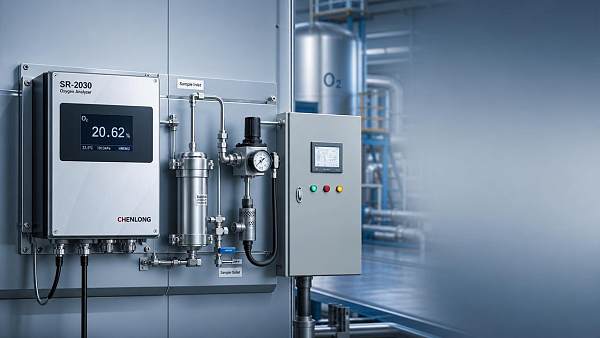
An Efficient Gas Analyzer is especially valuable in combustion systems, emission monitoring, inerting applications, and process optimization. By measuring oxygen, carbon dioxide, carbon monoxide, or other relevant gases in near real time, it helps teams tune air-to-fuel ratio, detect incomplete combustion, and maintain environmental performance. Sampling cycle requirements vary, but many industrial processes benefit from update intervals between 2 seconds and 20 seconds, depending on process volatility.
Precision Instrument selection also matters in utility systems. A flow meter with poor turndown may fail to track low-load conditions accurately, leading to waste during partial operation. Likewise, temperature sensors placed incorrectly can show delayed values, causing control loops to overreact. Good efficiency results depend on both instrument quality and installation quality.
Technology comparison for common industrial scenarios
The table below compares instrumentation options frequently used in energy and stability improvement projects. The goal is not to identify a universal best device, but to match the instrument to the process risk, response requirement, and maintenance environment.
The comparison shows that efficiency gains are often unlocked by better measurement quality rather than by aggressive operating limits. In many projects, the fastest return comes from improving data confidence at a few high-impact points rather than installing large numbers of low-priority devices.
Minimum technical checks before selection
- Confirm the process range, normal operating point, and upset range instead of sizing only for nameplate capacity.
- Check whether required accuracy applies to the full range or the normal band where the process runs 70% to 90% of the time.
- Review installation constraints such as vibration, ambient temperature, dust, corrosive media, and cable distance.
- Verify calibration workload, spare part availability, and communication compatibility with existing Industrial Control systems.
These checks reduce the risk of choosing a technically advanced device that performs poorly in real operating conditions. For project managers, they also help avoid commissioning delays caused by mismatch between instrument specification and site reality.
Selection Criteria for Buyers, Engineers, and Decision-Makers
In B2B procurement, the best instrumentation decision is rarely based on a single metric. A device that delivers strong energy visibility but weak service support can create long-term operating risk. A low-cost alternative may also increase recalibration time, spare inventory, and troubleshooting hours. Effective evaluation should combine technical fitness, business impact, serviceability, and implementation risk.
For most industrial projects, buyers should review at least 6 factors: measurement accuracy, repeatability, maintenance interval, integration effort, delivery lead time, and total cost of ownership. Depending on the facility, cybersecurity, hazardous-area suitability, enclosure rating, and traceable calibration support may also be critical. Delivery cycles commonly range from 2 to 8 weeks for standard instruments, while specialized analyzers or engineered packages may require 6 to 12 weeks.
Technical evaluators should also distinguish between energy-saving potential and energy-saving certainty. The first is the estimated opportunity; the second depends on whether the instrument can produce dependable data under actual process conditions. This distinction matters greatly when budget approval requires a clear operational case.
Procurement decision matrix
The following table can be used by procurement teams, finance approvers, and engineering leads to structure vendor comparisons. It works particularly well when multiple departments must sign off on one instrumentation package.
This matrix helps organizations compare options beyond basic specification sheets. It is especially useful when one vendor offers lower upfront pricing while another offers stronger diagnostics, shorter intervention time, or better integration support.
Questions that improve buying quality
- Will the instrument maintain performance across low-load and peak-load operation, or only under one condition?
- How often will recalibration or sample-system cleaning be required in a dusty, humid, or corrosive environment?
- Can maintenance teams replace critical parts within 30 to 60 minutes, or is specialist intervention required?
- Does the supplier provide commissioning guidance, startup tuning support, and operator training?
For financial approvers, these questions translate into predictable operating cost. For engineers, they reduce the gap between lab performance and field performance. For project owners, they improve schedule confidence and long-term reliability.
Implementation, Commissioning, and Risk Control in Real Projects
Even well-selected instrumentation can fail to deliver results if implementation is rushed. The highest-risk phase is usually the transition from installed hardware to live control influence. During this period, poor wiring checks, incorrect impulse lines, unsuitable sampling design, or unverified logic changes can turn an efficiency project into a source of instability. A disciplined commissioning process reduces this risk significantly.
A practical rollout often takes place in 5 stages over 2 to 10 weeks, depending on plant complexity: site survey, engineering confirmation, installation, loop testing, and performance validation. In brownfield facilities, it is often better to start with one process area, verify results for 2 to 4 weeks, and then scale to additional lines. This phased method protects production continuity while generating real operating data for business review.
Risk control should focus on both technical and organizational points. Technical issues include unstable signals, delayed response, poor grounding, and inaccurate sampling. Organizational issues include unclear acceptance criteria, incomplete operator training, and weak coordination between maintenance, production, and automation teams. A project becomes sustainable only when both dimensions are managed together.
Recommended implementation workflow
- Identify 3 to 5 high-impact measurement points linked to energy loss or process variability.
- Define baseline values such as kWh per unit output, alarm frequency, deviation range, and maintenance workload.
- Install and verify instruments under normal operating load before enabling any aggressive optimization logic.
- Run comparative observation over at least 7 to 14 days to confirm stability and data quality.
- Expand control changes gradually, with rollback criteria documented in advance.
This sequence is often more effective than trying to optimize everything at once. It gives operators time to adjust, allows maintenance teams to verify accessibility, and provides management with measurable evidence rather than assumptions.
Common implementation mistakes
One common mistake is setting energy targets without defining acceptable stability limits. For example, reducing fan power by 12% may look attractive, but if process temperature variance doubles or emission margin narrows, the overall result may be negative. Another error is trusting a single analyzer or sensor without a verification routine. In critical applications, validation by reference measurement or periodic cross-checking remains important.
A third mistake is underestimating maintenance access. Instruments installed in hard-to-reach points may cause servicing delays, and that can reduce data reliability over time. Good design should consider not only what the instrument measures, but also how teams will inspect, clean, calibrate, and replace it over a 1- to 3-year operating cycle.
Maintenance, Lifecycle Value, and Frequently Asked Questions
Long-term success depends on maintaining measurement integrity after commissioning. Energy efficiency gains often fade when sensors drift, sample lines clog, alarms are bypassed, or calibration records become irregular. For this reason, maintenance strategy should be included in the original project scope, not treated as an afterthought. In many cases, a moderate preventive schedule delivers better value than an aggressive optimization strategy with poor follow-up.
A well-managed lifecycle plan usually includes periodic inspection, calibration planning, spare part control, and operator feedback review. The correct interval depends on service severity. Clean utility measurements may be checked every 6 to 12 months, while harsher gas analysis or contaminated process streams may need monthly visual inspection and quarterly performance verification. What matters most is matching maintenance frequency to actual risk exposure.
For organizations evaluating return on investment, lifecycle value is not only about energy savings. It also includes reduced upset frequency, lower manual intervention, stronger environmental protection, and more consistent production output. These factors matter to quality teams, safety managers, and financial approvers just as much as energy metrics do.
Maintenance priorities by instrument category
- Pressure and flow instruments: inspect impulse lines, zero stability, and blockage risk at scheduled intervals.
- Temperature instruments: verify sensor drift, thermowell condition, and response change under load variation.
- Gas analyzers: review sample conditioning, filter status, calibration gas availability, and response consistency.
- Control instruments: check signal integrity, valve movement quality, alarm rationalization, and loop tuning stability.
These checks help prevent the gradual decline that often erodes both energy efficiency and production stability. They also provide useful evidence when planning upgrades or justifying maintenance budgets.
How should a company prioritize upgrades if budget is limited?
Start with points that influence both energy consumption and process risk. Typical examples include combustion control, compressed air monitoring, steam flow balance, cooling water control, and critical reactor or furnace temperature measurement. A focused first phase with 3 to 5 critical measurements often delivers clearer value than a broad but shallow rollout.
Which facilities benefit most from an Efficient Gas Analyzer?
Facilities with combustion systems, emission monitoring requirements, thermal processing, chemical handling, and environmental treatment processes usually benefit most. The analyzer becomes especially useful where oxygen balance, exhaust quality, or gas composition directly affects fuel use, safety margin, or compliance performance.
What is a reasonable acceptance standard after commissioning?
A practical acceptance plan often uses 3 categories: measurement verification, control stability, and operating outcome. Teams may define a 7- to 14-day observation window, confirm instrument response against known references, track alarm rates, and compare energy intensity per unit output before and after the change. The exact thresholds depend on process criticality.
How can buyers avoid overbuying instrumentation features?
Buy according to the operating scenario, not only the highest available specification. If the process does not require ultra-fast response, advanced sample systems, or complex diagnostics, the extra cost may not return value. The best selection is the one that meets the needed accuracy, durability, maintainability, and integration level for the real plant environment.
Balancing energy efficiency with production stability requires more than efficient equipment alone. It depends on accurate instrumentation, disciplined implementation, realistic performance targets, and lifecycle support that fits the operating environment. When Industrial Control systems, Precision Instrument strategy, and Sustainable Monitoring are aligned, organizations can improve Process Optimization, support Emission Reduction, and strengthen Environmental Protection without putting output or safety at risk.
If you are evaluating instrumentation upgrades, analyzer solutions, or control improvements for a new or existing project, now is the right time to review your key measurement points, procurement criteria, and commissioning plan. Contact us to discuss your operating scenario, get a tailored solution, and explore more practical ways to improve efficiency while protecting stable production.
Recommended for You
 IEC Approves China-Led Standard for Smart Sensor Semantic InteroperabilityIEC TR 63372 smart sensor semantic interoperability standard—led by China—cuts export certification time by 30%. Discover how it reshapes global IoT integration.
 MIIT Launches Joint Enforcement on EV Battery RecyclingMIIT's EV battery recycling enforcement targets BMS data leaks, illegal dismantling & electrolyte disposal—key for exporters, testers & procurement teams needing GDPR/CCPA compliance.
 SAMR Launches Unified Market Action on Testing & CertificationSAMR Launches Unified Market Action on Testing & Certification—tackling fragmentation, redundant fees & cross-border recognition barriers for exporters and manufacturers.
 Fifteenth Five-Year Urban Renewal Plan Approved, Signaling Overseas Procurement for Smart Water & Environmental Monitoring DevicesSmart water & environmental monitoring devices gain global momentum as China’s 15th Five-Year Urban Renewal Plan mandates intelligent infrastructure—key for Belt and Road exports.
 IMF Warns AI Amplifies Financial Cybersecurity RisksAI amplifies financial cybersecurity risks—IMF warns. Discover how XAI verification, adversarial attacks, and regulatory mandates impact AI detection equipment, FinTech, and banks.
 Tmall Health Launches 'Health Supplement Safety Alliance'Health Supplement Safety Alliance launched by Tmall Health—boosting traceability, lab credibility & cross-border quality for brands like By-Health and Centrum.
 EN IEC 61000-6-4:2026 EMC Standard Effective for AI Edge DevicesEN IEC 61000-6-4:2026 EMC standard is live—15% stricter radiated limits for AI edge devices. Act now to secure EU industrial IoT procurement eligibility.
 APEC Auto Dialogue Confirms Semi-Solid Battery Deployment and Fast ChargingSemi-solid battery deployment & 15-min fast charging confirmed at APEC Auto Dialogue—spurring global demand for China-made battery testing equipment, BMS validation, and thermal runaway simulation solutions.
 EU Imposes Final Anti-Dumping Duty on Chinese Adipic AcidEU anti-dumping duty on Chinese adipic acid takes effect May 2026—impacting pH meters, sensors & analytical instruments. Act now to secure supply chains.
 Colombia Upholds Anti-Dumping Duties on Chinese Acrylic SheetsColombia Upholds Anti-Dumping Duties on Chinese Acrylic Sheets — 32.7% tariff extended for 5 years. Critical for exporters of medical, lab & analytical instrument enclosures.
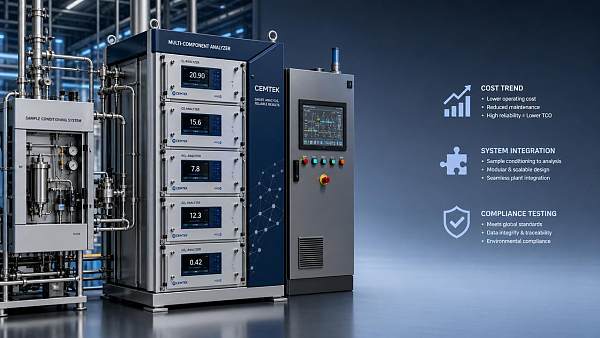
 Multi Component Analyzer Cost Trends for 2026 Expansion PlansMulti component analyzer cost trends for 2026: discover key pricing drivers, hidden costs, and smart supplier strategies to budget accurately and maximize expansion ROI.
 SR-2050 Analyzer Maintenance Points That Affect Service LifeSR-2050 analyzer maintenance points that directly impact service life, accuracy, and uptime. Learn how cleaning, calibration, inspection, and environment control reduce failures.
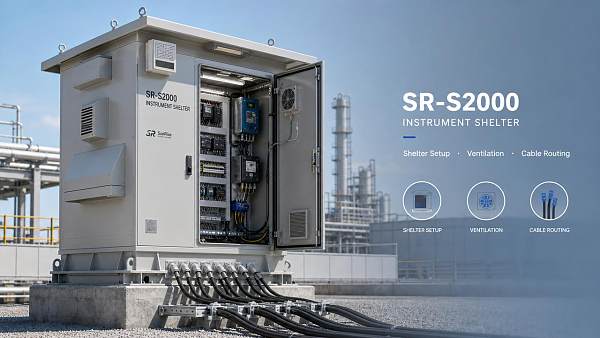
 SR-S2000 Shelter: Common Setup Mistakes to AvoidSR-S2000 shelter setup mistakes can cause heat, moisture, and maintenance issues. Learn what to avoid for safer installation, stable performance, and longer equipment life.
 Custom Gas Analyzer Import Risks and Spec Mismatch IssuesCustom gas analyzer import risks can derail projects through spec mismatch, compliance gaps, and integration issues. Learn how buyers can compare suppliers, verify requirements, and avoid costly rework.
 When to Choose the SR-2030 Oxygen Analyzer for ComplianceSR-2030 oxygen analyzer: learn when it’s the right choice for compliance, safety, and stable process control. Explore key selection checks, audit-ready benefits, and deployment tips.
 SR-EX Analyzer Price Factors in 2026 ProjectsSR-EX analyzer price factors explained for 2026 projects: compare scope, compliance, integration, and lifecycle costs to approve budgets with less risk and more confidence.
 SR-2070 Analyzer vs Alternatives: Key Performance ChecksSR-2070 analyzer vs alternatives: compare accuracy, drift, response time, calibration effort, and lifecycle cost to choose a more reliable, efficient analyzer with confidence.
 2026 Market Trends for Predictive Analytics InstrumentsPredictive analytics instruments are reshaping 2026 market strategy. Explore key trends, risks, and buying checkpoints to improve uptime, integration, and ROI across industries.
 Wireless Measurement Systems: What Impacts Data Stability Most?Wireless measurement systems perform best when data stays stable. Discover the key factors affecting reliability, accuracy, and long-term performance across industrial applications.
 How Remote Monitoring Devices Cut Downtime in Field OperationsRemote monitoring devices help field teams detect issues early, reduce downtime, and improve maintenance planning. Discover how they keep operations reliable and on schedule.
 5th TCM High-Quality Development Conference Highlights NIR & AI QC for Global ExportNIR & AI QC take center stage at the 5th TCM High-Quality Development Conference—key for global export compliance, real-time quality control, and smart manufacturing.
 IEC Approves China-Led Guide for Smart Sensor Semantic InteroperabilityIEC TR 63388 semantic interoperability guide for smart sensors—China-led, globally approved. Boost IIoT integration across OPC UA, MQTT & TSN now.
 PBOC April Data Shows Strong Credit Flow to Tech & Inclusive LendingPBOC April data reveals surging tech & inclusive lending—boosting global demand for calibrated lab equipment, R&D instruments, and metrology-ready exports.
 SABIC Launches 'Smart Factory 2030' with China-Focused Online Analysis ProcurementSABIC's 'Smart Factory 2030' launches China-focused online analysis procurement—pH/ORP, IR gas & LIBS analyzers. SIL2-certified suppliers, act now!
 China Completes '14th Five-Year' Smart CNC Line R&DChina's '14th Five-Year' Smart CNC Line R&D is complete — boosting reliability & cutting delivery time for precision metrology equipment. Discover how it transforms global procurement.
 FDA Updates IVD Software Guidance: AI Diagnostic Devices Must Provide Verifiable Training DatasetsFDA mandates verifiable training datasets for AI diagnostic devices — critical for medical imaging, DICOM tools, and regulatory services entering the U.S. market.
 EU EN IEC 61000-6-4:2026 EMC Standard Takes EffectEU EN IEC 61000-6-4:2026 EMC standard is live—stricter radiated emission limits for AI edge devices. Act now to avoid EU customs delays & certification bottlenecks.
 APEC Auto Dialogue Confirms Semi-Solid Battery Deployment and 15-Minute Fast ChargingSemi-solid battery deployment and 15-minute fast charging confirmed at APEC Auto Dialogue — driving urgent global demand for BMS validation, thermal runaway, and high-voltage test equipment.
 MIIT Launches Joint Enforcement on EV Battery RecyclingMIIT Launches Joint Enforcement on EV Battery Recycling: Critical for battery test equipment exporters, data compliance, and global supply chains—act now to avoid delays.
 DIA China Annual Meeting Sells Out Despite $7,000+ FeeDIA China Annual Meeting sells out despite $7,000+ fee — a powerful signal for pharma exporters, manufacturers & regulatory service providers targeting China’s innovation ecosystem.
 Continuous Monitoring Solutions and the Shift Toward Smarter ComplianceContinuous monitoring solutions help enterprises strengthen compliance with real-time visibility, traceable data, and faster risk response. Discover how smarter oversight improves resilience and audit confidence.
 Confined Space Monitors: Key Mistakes That Raise Safety RiskConfined space monitors can fail when selection, bump testing, calibration, or sampling is wrong. Learn the biggest safety mistakes and how to prevent false safe readings.

















Search Categories
Search Categories
Latest Article
- IEC Approves China-Led Standard for Smart Sensor Semantic InteroperabilityIEC TR 63372 smart sensor semantic interoperability standard—led by China—cuts export certification time by 30%. Discover how it reshapes global IoT integration.Posted by:
- MIIT Launches Joint Enforcement on EV Battery RecyclingMIIT's EV battery recycling enforcement targets BMS data leaks, illegal dismantling & electrolyte disposal—key for exporters, testers & procurement teams needing GDPR/CCPA compliance.Posted by:
- SAMR Launches Unified Market Action on Testing & CertificationSAMR Launches Unified Market Action on Testing & Certification—tackling fragmentation, redundant fees & cross-border recognition barriers for exporters and manufacturers.Posted by:
Please give us a message
