
Fixed Gas Analyzer vs Portable Testing: Which Fits Daily Operations Better


In daily operations, choosing between a fixed gas analyzer and portable testing can directly affect safety, efficiency, and response speed. For operators working across industrial sites, the right solution depends on how often measurements are needed, how stable the environment is, and how quickly risks must be detected. This comparison helps clarify which option better supports routine workflows, compliance, and reliable gas monitoring in real working conditions.
For most operators, the short answer is simple: if gas conditions must be watched continuously in a known location, a fixed gas analyzer usually fits daily operations better. If measurements are occasional, task-based, or spread across changing locations, portable testing is often more practical. In many real facilities, the best answer is not one or the other, but a combination of both.
The core search intent behind comparing a fixed gas analyzer with portable testing is decision-making. Users are not only trying to understand the technical difference. They want to know which option is safer, easier to use, faster in real work, and more suitable for their site conditions, staffing, and compliance requirements.
Operators and frontline users usually care about practical questions first. Will this device warn me in time? Can I trust the reading? How much work does it add to my shift? Is it difficult to calibrate or carry? What happens if gas conditions change suddenly? These are the issues that matter more than broad theory.
This article focuses on those practical concerns. Instead of repeating general product definitions, it looks at how each method performs in daily routines, alarm response, maintenance, workflow efficiency, and common operating scenarios. The goal is to help users make a clear, usable judgment rather than just understand the terminology.
What is the real difference in day-to-day use?
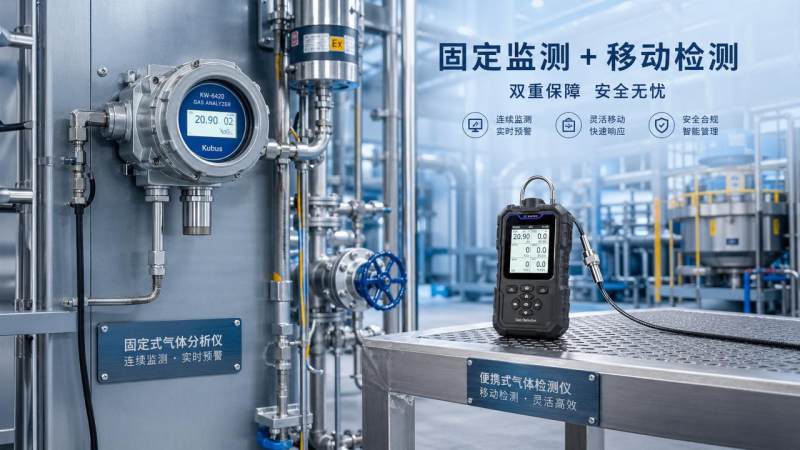
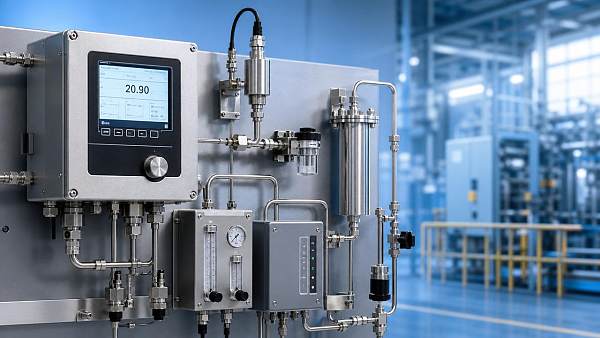
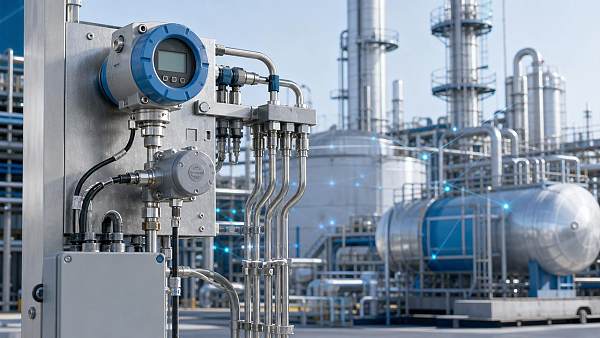
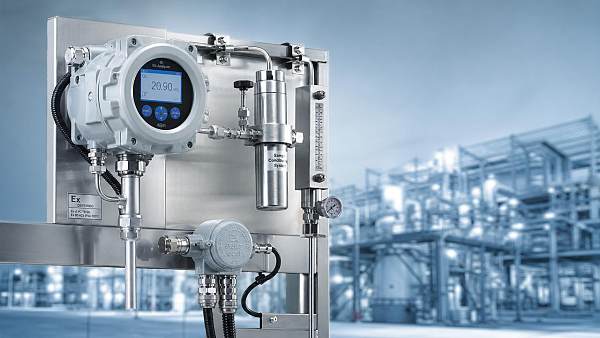
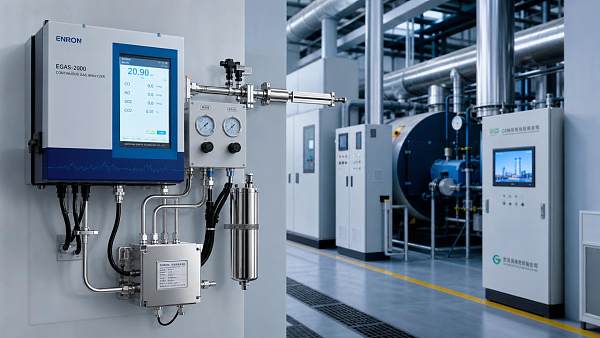
A fixed gas analyzer is installed in a specific location and continuously monitors gas concentration in that area or process line. It is designed for ongoing surveillance, automatic alarm triggering, and stable integration into plant operations. Once installed and configured correctly, it works in the background while operators focus on production, maintenance, or safety tasks.
Portable testing works differently. A handheld or wearable device is carried by an operator and used when entering a space, checking a process point, inspecting equipment, or moving through areas where gas exposure may vary. It gives flexibility, but it depends much more on operator action, timing, and testing discipline.
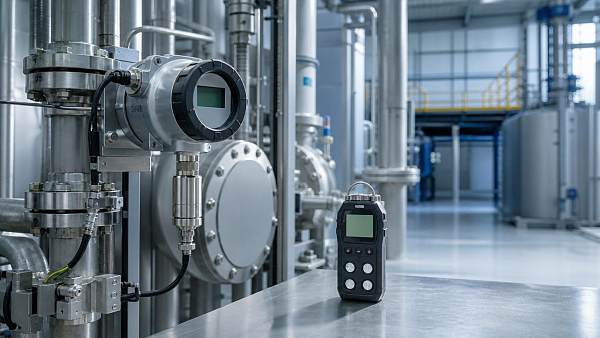
That difference changes daily operations in an important way. A fixed gas analyzer supports continuous awareness. Portable testing supports spot verification and mobility. One watches all the time in a defined zone. The other checks when and where the user decides to measure.
For sites with stable process areas, pipelines, tank farms, compressor rooms, boiler houses, or enclosed production zones, continuous visibility is often the biggest operational advantage. For field inspections, temporary works, confined space entry, route checks, and maintenance jobs across multiple locations, portable instruments often make more sense.
When does a fixed gas analyzer fit daily operations better?
A fixed gas analyzer is usually the stronger choice when gas risks are persistent, location-specific, or capable of escalating quickly without visible warning. This is common in industrial production, wastewater treatment, energy facilities, chemical handling areas, laboratories, and enclosed utility spaces.
Its main advantage is continuous monitoring. Operators do not need to remember to test every few minutes because the system is always measuring. If a leak starts during a shift change, lunch break, or low-traffic period, the analyzer can still detect it and trigger an alarm. That matters when response speed affects both safety and equipment protection.
It also supports routine efficiency. Once installed, the fixed system reduces the need for repeated manual checks in the same area. Operators spend less time taking duplicate readings and more time acting on reliable trend information. In many plants, that improves workflow consistency because gas monitoring becomes part of the infrastructure rather than an individual task.
Another benefit is alarm integration. A fixed gas analyzer can often connect to plant control systems, sirens, ventilation, shutdown logic, or remote dashboards. That means detection can trigger immediate action instead of relying on one person to notice a reading and report it. In higher-risk operations, this is often the deciding factor.
Fixed systems are also better for trend tracking. If operators or supervisors need to know whether exposure levels rise during certain shifts, weather conditions, production loads, or maintenance cycles, continuous records provide much better evidence than occasional portable measurements. This can help with troubleshooting, compliance, and process improvement.
That said, fixed analyzers are not automatically the best for every site. They require planned installation, correct sensor placement, power, maintenance access, calibration schedules, and a clear understanding of airflow and gas behavior. If they are installed in the wrong place, they can create a false sense of security.
When is portable testing the better operational choice?
Portable testing is often better when the work is mobile, variable, or temporary. Operators who move between different process points, enter equipment rooms, inspect ducts, open vessels, or perform maintenance in changing conditions need flexibility more than permanent coverage.
A portable unit is especially valuable when the hazard is not tied to one fixed point. For example, during shutdowns, repairs, sampling, loading operations, or contractor work, the risk may move with the task. In those cases, carrying the detector to the exact location of work gives more relevant information than relying only on a fixed station several meters away.
Portable testing is also highly useful for pre-entry checks. Before entering a confined space or low-ventilation area, operators can test oxygen levels, toxic gases, or combustible gases directly at the access point and at different depths if needed. A fixed gas analyzer nearby may not represent the exact conditions inside that space.
Cost and deployment speed can also favor portable units in some situations. If a facility has many occasional testing points but no permanent high-risk area, installing a network of fixed devices may be harder to justify. A well-managed portable testing program can cover those needs with less infrastructure.
However, portable testing has one major limitation: it only protects when it is present and being used correctly. If an operator forgets to test, delays a check, leaves the instrument behind, or uses it incorrectly, the monitoring gap becomes a safety gap. This dependence on human behavior is the main reason portable testing does not fully replace a fixed gas analyzer in continuous-risk areas.
Which option gives operators faster and more reliable warning?
In terms of automatic warning, a fixed gas analyzer usually wins. It does not wait for someone to arrive, turn it on, or start a reading. It monitors continuously and can issue alarms the moment conditions pass a threshold. For daily operations where leaks can happen unexpectedly, that constant readiness is hard to match.
Portable devices can also provide fast warning, especially wearable personal detectors. But they only protect the person carrying them and only in the place where they are being carried. If the hazard begins in an unoccupied area and spreads, a portable strategy alone may detect the problem later than a fixed system would.
Reliability also depends on consistency. A fixed gas analyzer delivers readings at all times within its designed range and installed coverage. Portable testing can be reliable too, but only when bump tests, calibration, battery charging, sensor checks, and correct usage are managed carefully. In practice, portable performance often varies more because it relies on more daily user actions.
For operators, this means the best warning method depends on the type of exposure. Area-wide, always-on risk favors fixed monitoring. Worker-specific exposure during movement or task execution favors portable detection. If both risks exist, both tools may be necessary.
How do maintenance and workload compare in real use?
Some users assume portable testing is easier because there is no installation. Others assume fixed systems are easier because they run automatically. In reality, both create work, but the workload appears in different places.
A fixed gas analyzer requires upfront planning, mounting, commissioning, calibration, and periodic inspection. Sensors may need replacement, sample lines may need attention, and alarm functions must be verified. This is usually managed by maintenance or instrumentation teams, which reduces the burden on operators during each shift.
Portable testing shifts more responsibility to daily users. Devices must be charged, carried, function-checked, and sometimes docked for data transfer. If several teams share units, storage and accountability become important. This can work well in disciplined operations, but it can become inconsistent in busy environments where equipment is borrowed, moved, or returned late.
From an operator perspective, the easier option is often the one that matches the workflow already in place. If the site has strong instrument support and permanent gas zones, a fixed gas analyzer can reduce daily effort. If the site runs many moving jobs with changing locations, portable testing may fit better because it follows the work instead of forcing the work to fit the device.
What about compliance, documentation, and audit readiness?
Many facilities do not choose gas monitoring tools based on convenience alone. They also need to satisfy internal safety procedures, customer requirements, and regulatory expectations. Here, the choice between a fixed gas analyzer and portable testing should be based on how evidence is captured and how risk is controlled.
Fixed systems are often stronger for continuous compliance documentation because they can log data over time, record alarm events, and show whether hazardous conditions developed outside active work periods. This kind of history is useful during incident review, environmental reporting, and process validation.
Portable testing is still important for compliance in task-based safety programs, especially confined space entry, maintenance permits, and personal exposure checks. It provides proof that the atmosphere was tested where the work actually happened. For many operations, this localized documentation is just as important as area monitoring.
For operators, the practical takeaway is this: compliance usually does not mean choosing only one tool. It means proving that the right monitoring method was used for the actual risk. A fixed gas analyzer supports area and process control. Portable testing supports task and personnel protection.
How should operators decide what fits their site best?
A useful decision method is to ask five practical questions. First, is the gas risk always present in one area, or only during certain tasks? Second, how quickly can conditions become dangerous? Third, do operators move between many testing points? Fourth, is automatic alarm response needed? Fifth, who will maintain the equipment reliably?
If the risk is continuous and tied to a process zone, a fixed gas analyzer is usually the better foundation. If the risk is temporary, mobile, or linked to entry and inspection work, portable testing may be the better daily tool. If both conditions exist, relying on only one method can leave gaps.
Operators should also consider gas behavior. Some gases accumulate high, others low, and airflow can shift concentrations away from where people expect them. This affects fixed sensor placement and also changes how portable testing should be performed. Good equipment cannot compensate for poor monitoring strategy.
Another key point is response planning. A detector is only as useful as the action it triggers. If a fixed gas analyzer alarms, do operators know the shutdown, evacuation, or ventilation procedure? If a portable unit reads high, does the user stop work immediately and report it? The right choice includes the right response process.
For many facilities, the best answer is a combined approach
In real industrial operations, fixed and portable gas monitoring often solve different parts of the same problem. A fixed gas analyzer protects critical zones continuously. Portable testing protects people during movement, verification, maintenance, and entry into changing environments.
This combined approach is common because daily operations are rarely uniform. A plant may have a permanent boiler room needing constant surveillance, while also requiring technicians to inspect valves, tanks, trenches, and utility corridors. Using only fixed coverage may miss task-level conditions. Using only portable checks may miss unattended leaks between inspections.
For operators, this is often the most practical conclusion. The question is not always which one is better in absolute terms. It is which one covers the risk that matters most, and whether a second layer is needed to close the remaining gap.
Conclusion: choose based on risk pattern, not just device type
If you need continuous protection in a defined area, faster automated warning, integrated alarms, and long-term trend visibility, a fixed gas analyzer usually fits daily operations better. If you need flexible checks across changing locations, pre-entry verification, and task-based monitoring, portable testing is often the better tool.
For most users and operators, the smartest choice comes from matching the monitoring method to the real work pattern. A fixed gas analyzer is best where the hazard stays in one place and cannot be left unwatched. Portable testing is best where the work moves and conditions must be checked directly on site.
In many industrial settings, the strongest daily protection comes from combining both. Fixed monitoring gives continuous area coverage. Portable testing gives local confirmation and personal awareness. When used together with proper maintenance and response procedures, they create a safer and more reliable gas monitoring strategy for real operations.
Recommended for You
 US-China Trade Talks Agree on Tariff Cuts for Key Test Equipment PartsUS-China tariff cuts on key test equipment parts—like pressure sensor chips & infrared thermal imaging modules—boost margins, cut costs, and strengthen global competitiveness for manufacturers.
 G7 Paris Meeting Focuses on Critical Mineral Supply SecurityCritical mineral supply security takes center stage at the G7 Paris meeting—key for rare-earth sensor exporters. Learn EU compliance impacts & actionable readiness steps.
 Brent Crude Surpasses $106/bbl, Raising Sea Freight Costs for Small Testing Equipment ExportsBrent Crude Surpasses $106/bbl—sea freight costs surge, impacting small testing equipment exporters. Learn how SMEs can adapt pricing, terms & logistics now.
 WTO Forecasts 1.9% Global Goods Trade Growth in 2026 Amid Supply Chain ShorteningWTO forecasts 1.9% global goods trade growth in 2026—sparking nearshoring demand for testing equipment, calibration services & OTA-ready solutions in ASEAN, Middle East & Mexico.
 UK-China Export Control Working Group Holds Second Meeting in LondonUK-China Export Control Working Group: Key updates on dual-use items—laser interferometers, quantum sensors & oscilloscopes. Learn compliance implications for exporters now.
 Japan's 10Y Yield Drop to 2.745% Lifts Yen, Raising China-Made Testing Equipment CostsJapan's 10Y yield drop to 2.745% lifts yen, raising costs for China-made testing equipment — explore FX impacts, procurement shifts & strategic responses.
 KOSPI 200 Futures Circuit Breaker Triggered, Impacting Industrial Automation Instrument Export TimelinesKOSPI 200 futures circuit breaker triggered — impact on PLC modules, transmitters & fieldbus instrument exports to Korea. Urgent timeline insights inside.
 South Korea’s Chip Exports Surge 202% in May 2026 Amid AI Test Equipment DemandAI test equipment demand surges as South Korea’s chip exports jump 202% in May 2026 — PCIe 6.0 & USB4.1 validation tools see sharp global procurement rise.
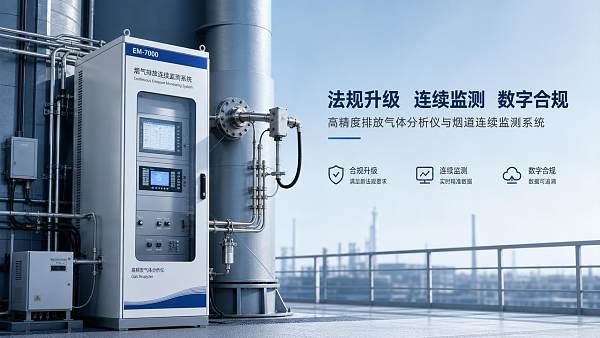
 Emission Gas Analyzer News in 2026: Regulatory Shifts Affecting DemandEmission gas analyzer demand is changing fast in 2026 as new regulations tighten limits, expand continuous monitoring, and raise data compliance standards. Explore key trends shaping smarter buying decisions.
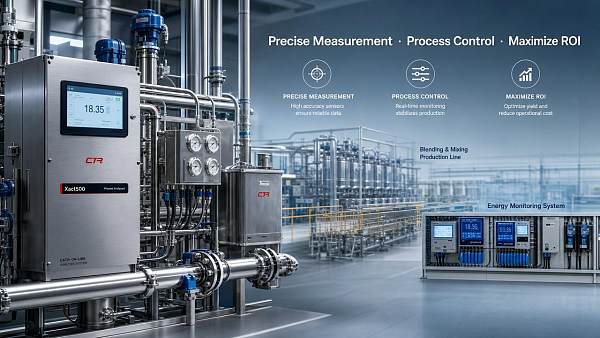
 When a High Accuracy Analyzer Delivers Real ROI in Process ControlHigh accuracy analyzer ROI starts with better process control. Learn where tighter measurements cut waste, improve stability, reduce compliance risk, and deliver measurable operational savings.
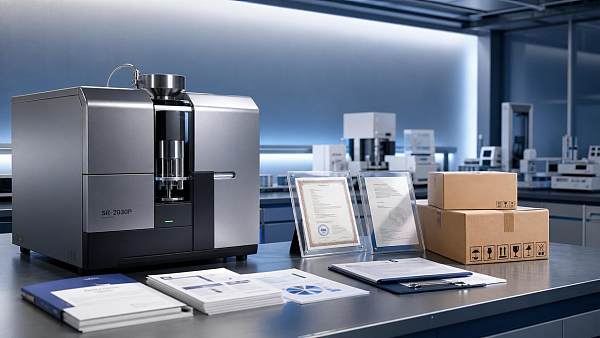
 SR-2030P Analyzer Import Updates in 2026: Compliance Points to ReviewSR-2030P analyzer import updates for 2026: review classification, certification, customs documents, and market access risks to reduce delays, control costs, and source with confidence.
 Industrial Oxygen Analyzer Price Trends in 2026: Cost Drivers to WatchIndustrial oxygen analyzer price trends in 2026 explained: compare sensor, compliance, installation, and maintenance cost drivers to make smarter, lower-risk buying decisions.
 Laser Oxygen Analyzer or Industrial Oxygen Analyzer: Which Fits BetterLaser oxygen analyzer or industrial oxygen analyzer? Compare speed, accuracy, maintenance, and cost to find the best fit for smarter, more reliable process control.
 ATEX Gas Analyzer Demand in 2026: What Is Shaping the MarketATEX gas analyzer demand in 2026 is driven by safety, digital integration, and lifecycle value. See what shapes buying decisions across industry, utilities, hydrogen, and automation.
 Fixed Gas Analyzer vs Portable Options: What Matters for Plant UseFixed gas analyzer or portable detector for plant use? Compare safety, response time, maintenance, and cost to choose the right monitoring solution with confidence.
 Explosion Proof Analyzer Selection Mistakes That Increase Site RiskExplosion proof analyzer selection mistakes can raise compliance, maintenance, and safety risks. Learn the key errors to avoid and how to choose a safer, more reliable solution.
 SR-2000 Infrared Analyzer: Key Performance Checks Before InstallationSR-2000 infrared analyzer pre-installation guide: learn how to verify accuracy, drift, site readiness, and calibration support to reduce startup risk and ensure stable long-term performance.
 How to Choose a Continuous Gas Analyzer for Stable 24/7 MonitoringContinuous gas analyzer selection guide for stable 24/7 monitoring. Learn how to compare accuracy, response time, maintenance, and integration for smarter industrial decisions.
 IEC Approves China-Led Standard for Smart Sensor Semantic InteroperabilityIEC TR 63372 smart sensor semantic interoperability standard—led by China—cuts export certification time by 30%. Discover how it reshapes global IoT integration.
 MIIT Launches Joint Enforcement on EV Battery RecyclingMIIT's EV battery recycling enforcement targets BMS data leaks, illegal dismantling & electrolyte disposal—key for exporters, testers & procurement teams needing GDPR/CCPA compliance.
 SAMR Launches Unified Market Action on Testing & CertificationSAMR Launches Unified Market Action on Testing & Certification—tackling fragmentation, redundant fees & cross-border recognition barriers for exporters and manufacturers.
 Fifteenth Five-Year Urban Renewal Plan Approved, Signaling Overseas Procurement for Smart Water & Environmental Monitoring DevicesSmart water & environmental monitoring devices gain global momentum as China’s 15th Five-Year Urban Renewal Plan mandates intelligent infrastructure—key for Belt and Road exports.
 IMF Warns AI Amplifies Financial Cybersecurity RisksAI amplifies financial cybersecurity risks—IMF warns. Discover how XAI verification, adversarial attacks, and regulatory mandates impact AI detection equipment, FinTech, and banks.
 Tmall Health Launches 'Health Supplement Safety Alliance'Health Supplement Safety Alliance launched by Tmall Health—boosting traceability, lab credibility & cross-border quality for brands like By-Health and Centrum.
 EN IEC 61000-6-4:2026 EMC Standard Effective for AI Edge DevicesEN IEC 61000-6-4:2026 EMC standard is live—15% stricter radiated limits for AI edge devices. Act now to secure EU industrial IoT procurement eligibility.
 APEC Auto Dialogue Confirms Semi-Solid Battery Deployment and Fast ChargingSemi-solid battery deployment & 15-min fast charging confirmed at APEC Auto Dialogue—spurring global demand for China-made battery testing equipment, BMS validation, and thermal runaway simulation solutions.
 EU Imposes Final Anti-Dumping Duty on Chinese Adipic AcidEU anti-dumping duty on Chinese adipic acid takes effect May 2026—impacting pH meters, sensors & analytical instruments. Act now to secure supply chains.
 Colombia Upholds Anti-Dumping Duties on Chinese Acrylic SheetsColombia Upholds Anti-Dumping Duties on Chinese Acrylic Sheets — 32.7% tariff extended for 5 years. Critical for exporters of medical, lab & analytical instrument enclosures.
 Multi Component Analyzer Cost Trends for 2026 Expansion PlansMulti component analyzer cost trends for 2026: discover key pricing drivers, hidden costs, and smart supplier strategies to budget accurately and maximize expansion ROI.
 SR-2050 Analyzer Maintenance Points That Affect Service LifeSR-2050 analyzer maintenance points that directly impact service life, accuracy, and uptime. Learn how cleaning, calibration, inspection, and environment control reduce failures.
 SR-S2000 Shelter: Common Setup Mistakes to AvoidSR-S2000 shelter setup mistakes can cause heat, moisture, and maintenance issues. Learn what to avoid for safer installation, stable performance, and longer equipment life.
 Custom Gas Analyzer Import Risks and Spec Mismatch IssuesCustom gas analyzer import risks can derail projects through spec mismatch, compliance gaps, and integration issues. Learn how buyers can compare suppliers, verify requirements, and avoid costly rework.

Search Categories
Search Categories
Latest Article
- US-China Trade Talks Agree on Tariff Cuts for Key Test Equipment PartsUS-China tariff cuts on key test equipment parts—like pressure sensor chips & infrared thermal imaging modules—boost margins, cut costs, and strengthen global competitiveness for manufacturers.Posted by:
- G7 Paris Meeting Focuses on Critical Mineral Supply SecurityCritical mineral supply security takes center stage at the G7 Paris meeting—key for rare-earth sensor exporters. Learn EU compliance impacts & actionable readiness steps.Posted by:
- Brent Crude Surpasses $106/bbl, Raising Sea Freight Costs for Small Testing Equipment ExportsBrent Crude Surpasses $106/bbl—sea freight costs surge, impacting small testing equipment exporters. Learn how SMEs can adapt pricing, terms & logistics now.Posted by:
Please give us a message
