
Hazardous Gas Analyzer Placement Mistakes That Weaken Protection


Even the most advanced hazardous gas analyzer can fail to deliver real protection if it is installed in the wrong location. For project managers and engineering leaders, placement mistakes often lead to blind spots, delayed alarms, and higher operational risk. Understanding where and why these errors happen is essential to improving detection performance, compliance, and overall site safety.
Why does hazardous gas analyzer placement matter more than many teams expect?
A hazardous gas analyzer is often treated as a specification item: select the sensor type, confirm the gas range, define output signals, and complete installation. In practice, placement has just as much influence on protection quality as the analyzer itself. A correctly selected analyzer installed 5 to 15 meters away from the real leak path may detect too late, while a less sophisticated unit located near the actual accumulation zone may provide earlier warning.
For project managers, this is not only a technical issue but also a risk allocation issue. Poor placement affects alarm response time, shutdown logic, ventilation strategy, maintenance access, and compliance evidence during audits. In industrial manufacturing, power generation, laboratories, storage terminals, and environmental monitoring sites, gas release behavior can change within seconds, especially in enclosed or partially ventilated areas.
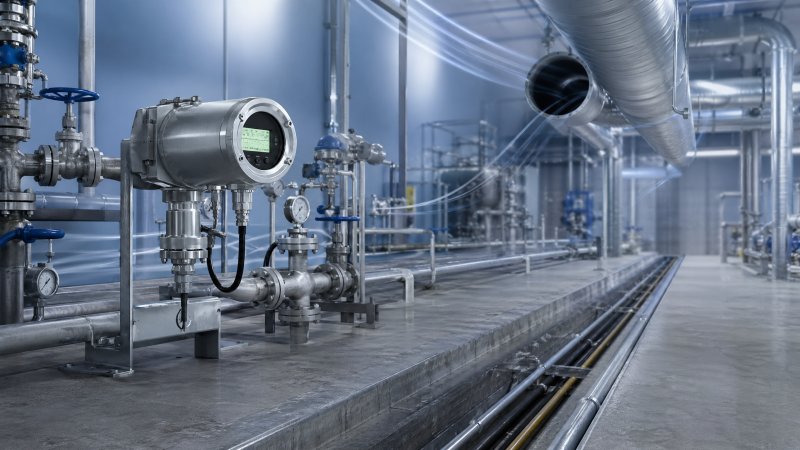
The most common misconception is that a hazardous gas analyzer protects the entire room simply because it is present. Detection coverage is never uniform. Airflow, process temperature, density relative to air, obstruction by equipment skids, and local exhaust systems all shape where gas actually travels. A placement review done only from a 2D drawing often misses the vertical and directional movement that defines real exposure.
What makes placement errors so costly?
When a detector is installed in a convenient rather than effective location, the result is often one of three failures: delayed alarm, nuisance alarm, or no alarm at all during a credible leak event. Each of these outcomes affects operations differently. Delayed alarms can reduce evacuation time by several minutes. Nuisance alarms can lead to operator desensitization. Missed alarms expose personnel, assets, and schedule commitments to avoidable disruption.
- A 30-second to 120-second delay can materially change emergency response effectiveness in enclosed process zones.
- One poorly placed analyzer may trigger repeated maintenance visits every 1 to 4 weeks if exposed to contamination, vibration, or washdown conditions.
- Relocating analyzers after commissioning usually costs more than addressing placement during front-end engineering, cable routing, and support design.
For organizations managing CAPEX and schedule, placement should be reviewed as part of hazard analysis, not as a late electrical installation detail. This is especially important when a hazardous gas analyzer is connected to alarm voting, ventilation interlocks, or process shutdown actions.
What are the most common hazardous gas analyzer placement mistakes?
Most placement failures come from simplified assumptions about how gas behaves on site. Teams may place units at eye level for convenience, near walkways for easy access, or close to cable trays to reduce installation effort. These choices can make the hazardous gas analyzer easier to service, but not necessarily better at detection.
Another frequent issue is using a generic rule without adapting it to the gas type and release source. Gases lighter than air may rise toward ceilings, cable voids, or roof pockets. Heavier gases may sink into trenches, pits, bunds, or low-lying corners. Toxic gases may behave differently depending on temperature, pressure, and ventilation rate. A fixed rule like “mount everything at 1.5 meters” is rarely sufficient across mixed process areas.
Project teams also underestimate local obstructions. A hazardous gas analyzer installed behind vessels, inside dead-air pockets, or downwind of a constant exhaust fan can become effectively isolated from the most likely plume path. In modular plants or skid packages, even a structural beam or maintenance platform can divert gas enough to reduce detection reliability.
Which mistakes appear most often during projects?
The table below summarizes frequent placement mistakes, why they happen, and what operational effect they usually create. It is a useful reference for project reviews, HAZOP follow-up, and pre-commissioning inspection planning.
The pattern behind these issues is clear: placement mistakes usually come from coordination gaps between process, mechanical, E&I, safety, and operations teams. A hazardous gas analyzer should never be positioned by drawing discipline alone. Cross-functional review at 30%, 60%, and 90% design maturity can reduce relocation risk significantly.
What should project leaders check first?
- Identify the top 3 to 5 credible leak points rather than assuming full-room detection.
- Confirm whether the gas is typically lighter than air, heavier than air, or variable under process conditions.
- Review forced ventilation direction, air changes per hour, and seasonal operating modes.
- Check whether scaffolding, platforms, skids, ducts, or cabinets may block plume travel.
- Verify that maintenance access does not override detection effectiveness.
This first-pass review usually takes less than a few hours for a defined area, but it prevents expensive redesign late in procurement or site commissioning.
How should teams decide the right location for each hazardous gas analyzer?
The right location is determined by leak scenario, gas behavior, occupancy risk, and instrument survivability. A hazardous gas analyzer intended for combustible gas near a compressor seal may require a different height, distance, and shielding strategy than an analyzer monitoring toxic gas in a chemical dosing room. The objective is not simply to detect gas somewhere; it is to detect the right gas early enough to support action.
Good placement decisions usually start with a simple question: where is gas most likely to be released, accumulate, or pass during the first stage of an event? In many facilities, the answer lies near flanges, sample lines, valve manifolds, regulators, seals, cylinder storage points, and transfer interfaces. Secondary review should then consider where personnel may be exposed within 1 to 3 minutes of a release.
A practical design approach combines process knowledge with site constraints. The hazardous gas analyzer must be close enough to the hazard path for timely detection, but not so exposed that vibration, heat, splash, corrosive contamination, or mechanical impact degrades reliability. This balance is especially important in integrated projects where analyzer uptime directly affects production continuity and permit compliance.
What decision factors matter most?
Use the following matrix when comparing candidate locations. It helps engineering teams turn a subjective placement discussion into a documented, auditable decision process.
This kind of structured review is particularly valuable when multiple departments disagree about installation height or support location. It turns the discussion into measurable criteria rather than preference. For many projects, a documented placement review can also simplify later commissioning approval and management sign-off.
A practical 5-step placement workflow
- List leak scenarios by source type, pressure level, and operating mode, including startup and maintenance conditions.
- Map likely gas travel zones in plan and elevation views, not only on floor layout drawings.
- Evaluate 2 to 4 candidate positions for each hazardous gas analyzer against detection and maintenance criteria.
- Review the chosen locations with operations and safety personnel before final cable and bracket design.
- Validate after installation using commissioning checks, bump testing, airflow observation, and field walkdown.
Even in medium-size projects, this workflow can usually be completed within the normal design review cycle and avoids the common trap of correcting analyzer location after startup.
Which site conditions most often distort gas detection results?
A hazardous gas analyzer does not operate in a neutral environment. Site conditions constantly influence sample contact, sensor life, and alarm reliability. Ventilation fans may dilute gas before it reaches the analyzer. Steam, dust, oil mist, and chemical vapors may contaminate the sensing element. Process heat may create upward convection currents that move gas differently from what was expected in the design package.
In outdoor or semi-open installations, wind direction and structural sheltering create uneven coverage. A detector may perform well under one seasonal pattern and poorly under another. This matters for energy facilities, tank farms, utility compounds, and loading stations where process conditions vary across shifts and weather windows. If a hazardous gas analyzer is placed without considering these variables, formal installation compliance may still fail to deliver practical protection.
Another challenge is interference from routine operations. Forklift routes, hose movements, washdown spray, valve insulation changes, temporary barriers, and maintenance scaffolds can all alter gas access to the detector. A location that looked ideal during construction may become compromised six months later if site operations evolve.
What conditions deserve special review?
- Low pockets, trenches, pits, and cable basements where heavier gases may collect.
- Ceiling voids, roof trusses, and enclosed upper spaces where lighter gases may accumulate.
- Areas with 6 to 12 air changes per hour, where dilution can shift the most effective detector position.
- Spaces with hot surfaces or process exhaust that create vertical flow patterns.
- High-humidity or corrosive areas where sensor protection and maintenance interval must be considered from day one.
How often should placement be rechecked?
Placement is not a one-time engineering decision. It should be reassessed when the process changes, when ventilation is modified, after repeated nuisance alarms, or when maintenance records show abnormal drift or contamination. For many facilities, an annual review is reasonable, while higher-risk zones may benefit from review every 6 to 12 months or after any major modification.
If your site uses management of change procedures, hazardous gas analyzer location should be included whenever piping reroutes, equipment additions, enclosure changes, or occupancy patterns are updated. This is especially relevant in automation-heavy environments where detection signals trigger control actions and not just local warnings.
How can project managers balance protection, budget, and installation schedule?
The goal is not to place analyzers everywhere. The goal is to place the right hazardous gas analyzer in the right positions with the least lifecycle compromise. Over-instrumentation increases capital cost, calibration workload, spare parts demand, and commissioning complexity. Under-instrumentation creates blind spots and may force corrective work later, which is often more expensive than the original installation.
A practical budgeting method is to prioritize areas by consequence and leak likelihood. Critical enclosed process zones, gas storage areas, transfer points, and occupied rooms usually deserve earlier placement attention than low-risk open spaces. This allows project leaders to phase investment while preserving the integrity of the highest-risk areas first.
Lead time also matters. Depending on configuration, enclosure rating, signal type, and regional compliance requirements, analyzer procurement and integration may require several weeks to a few months. If location approval is delayed until cable trays and supports are already fixed, schedule pressure may push the team toward a compromised placement that stays in service for years.
What is a sensible implementation checklist?
The following FAQ-style checklist helps keep project decisions aligned from design through startup.
This checklist is especially useful for instrumentation and automation projects where analyzer decisions affect wiring, PLC logic, SCADA alarms, and maintenance planning at the same time. It also gives project managers a clear basis for discussing scope with suppliers and EPC partners.
What should you confirm before selecting or relocating a hazardous gas analyzer?
Before buying new equipment or moving an existing hazardous gas analyzer, teams should confirm the basic engineering conditions that determine whether the change will actually improve protection. Start with the target gas, expected concentration range, release behavior, and required alarm purpose. Then verify environmental exposure, signal integration, mounting constraints, and maintenance method. Without these inputs, relocation may solve one issue and create another.
It is also useful to separate three questions that are often mixed together: where gas is released, where gas accumulates, and where people are at risk. These are related but not identical. A good design may require more than one analyzer if the release point and occupancy route are different, or if the area includes both high and low accumulation zones.
From a procurement and implementation perspective, the most effective supplier discussions happen when the site can provide at least a basic hazard map, installation photos, process description, and control system requirements. This shortens the review cycle and makes product selection, accessory recommendations, and delivery planning more accurate.
Why choose us?
In the instrumentation industry, successful gas detection is never only about the device. It depends on how measurement, monitoring, control integration, site conditions, and maintenance realities work together. We support project managers and engineering leaders with practical guidance on hazardous gas analyzer application, placement review, configuration matching, and implementation planning across industrial manufacturing, energy, environmental, laboratory, and automation projects.
If you are evaluating a new hazardous gas analyzer, correcting a weak detection layout, or preparing an upgrade during shutdown, we can help you clarify the key decisions before procurement. You can contact us to discuss parameter confirmation, product selection, installation location review, delivery cycle expectations, customization options, control signal integration, certification-related requirements, sample support, and quotation planning.
If you already have drawings, process descriptions, or site photos, sharing those details early can speed up technical communication and reduce rework. A well-placed hazardous gas analyzer protects more than compliance; it supports safer operation, steadier project outcomes, and better long-term reliability.
Recommended for You
 US-China Trade Talks Agree on Tariff Cuts for Key Test Equipment PartsUS-China tariff cuts on key test equipment parts—like pressure sensor chips & infrared thermal imaging modules—boost margins, cut costs, and strengthen global competitiveness for manufacturers.
 G7 Paris Meeting Focuses on Critical Mineral Supply SecurityCritical mineral supply security takes center stage at the G7 Paris meeting—key for rare-earth sensor exporters. Learn EU compliance impacts & actionable readiness steps.
 Brent Crude Surpasses $106/bbl, Raising Sea Freight Costs for Small Testing Equipment ExportsBrent Crude Surpasses $106/bbl—sea freight costs surge, impacting small testing equipment exporters. Learn how SMEs can adapt pricing, terms & logistics now.
 WTO Forecasts 1.9% Global Goods Trade Growth in 2026 Amid Supply Chain ShorteningWTO forecasts 1.9% global goods trade growth in 2026—sparking nearshoring demand for testing equipment, calibration services & OTA-ready solutions in ASEAN, Middle East & Mexico.
 UK-China Export Control Working Group Holds Second Meeting in LondonUK-China Export Control Working Group: Key updates on dual-use items—laser interferometers, quantum sensors & oscilloscopes. Learn compliance implications for exporters now.
 Japan's 10Y Yield Drop to 2.745% Lifts Yen, Raising China-Made Testing Equipment CostsJapan's 10Y yield drop to 2.745% lifts yen, raising costs for China-made testing equipment — explore FX impacts, procurement shifts & strategic responses.
 KOSPI 200 Futures Circuit Breaker Triggered, Impacting Industrial Automation Instrument Export TimelinesKOSPI 200 futures circuit breaker triggered — impact on PLC modules, transmitters & fieldbus instrument exports to Korea. Urgent timeline insights inside.
 South Korea’s Chip Exports Surge 202% in May 2026 Amid AI Test Equipment DemandAI test equipment demand surges as South Korea’s chip exports jump 202% in May 2026 — PCIe 6.0 & USB4.1 validation tools see sharp global procurement rise.
 Emission Gas Analyzer News in 2026: Regulatory Shifts Affecting DemandEmission gas analyzer demand is changing fast in 2026 as new regulations tighten limits, expand continuous monitoring, and raise data compliance standards. Explore key trends shaping smarter buying decisions.
 When a High Accuracy Analyzer Delivers Real ROI in Process ControlHigh accuracy analyzer ROI starts with better process control. Learn where tighter measurements cut waste, improve stability, reduce compliance risk, and deliver measurable operational savings.
 SR-2030P Analyzer Import Updates in 2026: Compliance Points to ReviewSR-2030P analyzer import updates for 2026: review classification, certification, customs documents, and market access risks to reduce delays, control costs, and source with confidence.
 Industrial Oxygen Analyzer Price Trends in 2026: Cost Drivers to WatchIndustrial oxygen analyzer price trends in 2026 explained: compare sensor, compliance, installation, and maintenance cost drivers to make smarter, lower-risk buying decisions.
 Laser Oxygen Analyzer or Industrial Oxygen Analyzer: Which Fits BetterLaser oxygen analyzer or industrial oxygen analyzer? Compare speed, accuracy, maintenance, and cost to find the best fit for smarter, more reliable process control.
 ATEX Gas Analyzer Demand in 2026: What Is Shaping the MarketATEX gas analyzer demand in 2026 is driven by safety, digital integration, and lifecycle value. See what shapes buying decisions across industry, utilities, hydrogen, and automation.
 Fixed Gas Analyzer vs Portable Options: What Matters for Plant UseFixed gas analyzer or portable detector for plant use? Compare safety, response time, maintenance, and cost to choose the right monitoring solution with confidence.
 Explosion Proof Analyzer Selection Mistakes That Increase Site RiskExplosion proof analyzer selection mistakes can raise compliance, maintenance, and safety risks. Learn the key errors to avoid and how to choose a safer, more reliable solution.
 SR-2000 Infrared Analyzer: Key Performance Checks Before InstallationSR-2000 infrared analyzer pre-installation guide: learn how to verify accuracy, drift, site readiness, and calibration support to reduce startup risk and ensure stable long-term performance.
 How to Choose a Continuous Gas Analyzer for Stable 24/7 MonitoringContinuous gas analyzer selection guide for stable 24/7 monitoring. Learn how to compare accuracy, response time, maintenance, and integration for smarter industrial decisions.
 IEC Approves China-Led Standard for Smart Sensor Semantic InteroperabilityIEC TR 63372 smart sensor semantic interoperability standard—led by China—cuts export certification time by 30%. Discover how it reshapes global IoT integration.
 MIIT Launches Joint Enforcement on EV Battery RecyclingMIIT's EV battery recycling enforcement targets BMS data leaks, illegal dismantling & electrolyte disposal—key for exporters, testers & procurement teams needing GDPR/CCPA compliance.
 SAMR Launches Unified Market Action on Testing & CertificationSAMR Launches Unified Market Action on Testing & Certification—tackling fragmentation, redundant fees & cross-border recognition barriers for exporters and manufacturers.
 Fifteenth Five-Year Urban Renewal Plan Approved, Signaling Overseas Procurement for Smart Water & Environmental Monitoring DevicesSmart water & environmental monitoring devices gain global momentum as China’s 15th Five-Year Urban Renewal Plan mandates intelligent infrastructure—key for Belt and Road exports.
 IMF Warns AI Amplifies Financial Cybersecurity RisksAI amplifies financial cybersecurity risks—IMF warns. Discover how XAI verification, adversarial attacks, and regulatory mandates impact AI detection equipment, FinTech, and banks.
 Tmall Health Launches 'Health Supplement Safety Alliance'Health Supplement Safety Alliance launched by Tmall Health—boosting traceability, lab credibility & cross-border quality for brands like By-Health and Centrum.
 EN IEC 61000-6-4:2026 EMC Standard Effective for AI Edge DevicesEN IEC 61000-6-4:2026 EMC standard is live—15% stricter radiated limits for AI edge devices. Act now to secure EU industrial IoT procurement eligibility.
 APEC Auto Dialogue Confirms Semi-Solid Battery Deployment and Fast ChargingSemi-solid battery deployment & 15-min fast charging confirmed at APEC Auto Dialogue—spurring global demand for China-made battery testing equipment, BMS validation, and thermal runaway simulation solutions.
 EU Imposes Final Anti-Dumping Duty on Chinese Adipic AcidEU anti-dumping duty on Chinese adipic acid takes effect May 2026—impacting pH meters, sensors & analytical instruments. Act now to secure supply chains.
 Colombia Upholds Anti-Dumping Duties on Chinese Acrylic SheetsColombia Upholds Anti-Dumping Duties on Chinese Acrylic Sheets — 32.7% tariff extended for 5 years. Critical for exporters of medical, lab & analytical instrument enclosures.
 Multi Component Analyzer Cost Trends for 2026 Expansion PlansMulti component analyzer cost trends for 2026: discover key pricing drivers, hidden costs, and smart supplier strategies to budget accurately and maximize expansion ROI.
 SR-2050 Analyzer Maintenance Points That Affect Service LifeSR-2050 analyzer maintenance points that directly impact service life, accuracy, and uptime. Learn how cleaning, calibration, inspection, and environment control reduce failures.
 SR-S2000 Shelter: Common Setup Mistakes to AvoidSR-S2000 shelter setup mistakes can cause heat, moisture, and maintenance issues. Learn what to avoid for safer installation, stable performance, and longer equipment life.
 Custom Gas Analyzer Import Risks and Spec Mismatch IssuesCustom gas analyzer import risks can derail projects through spec mismatch, compliance gaps, and integration issues. Learn how buyers can compare suppliers, verify requirements, and avoid costly rework.


Search Categories
Search Categories
Latest Article
- US-China Trade Talks Agree on Tariff Cuts for Key Test Equipment PartsUS-China tariff cuts on key test equipment parts—like pressure sensor chips & infrared thermal imaging modules—boost margins, cut costs, and strengthen global competitiveness for manufacturers.Posted by:
- G7 Paris Meeting Focuses on Critical Mineral Supply SecurityCritical mineral supply security takes center stage at the G7 Paris meeting—key for rare-earth sensor exporters. Learn EU compliance impacts & actionable readiness steps.Posted by:
- Brent Crude Surpasses $106/bbl, Raising Sea Freight Costs for Small Testing Equipment ExportsBrent Crude Surpasses $106/bbl—sea freight costs surge, impacting small testing equipment exporters. Learn how SMEs can adapt pricing, terms & logistics now.Posted by:
Please give us a message
