
High temperature analyzer failures often start with sensor housing material mismatch


High temperature analyzer failures—especially in dual gas analyzer, multi gas analyzer, and corrosive gas analyzer systems—frequently trace back to sensor housing material mismatch. Whether deploying a ppb gas analyzer for ultra-trace emissions monitoring or a percent range analyzer in high-heat industrial processes, selecting incompatible housing materials can trigger premature drift, calibration loss, or catastrophic failure. This is critical for users, technical evaluators, procurement teams, and safety managers who rely on ppm gas analyzer, trace gas analyzer, and toxic gas analyzer accuracy under extreme thermal stress. Learn how material science intersects with real-world reliability—and why the right choice prevents downtime, ensures compliance, and protects personnel.
Why Sensor Housing Material Matters at >200°C
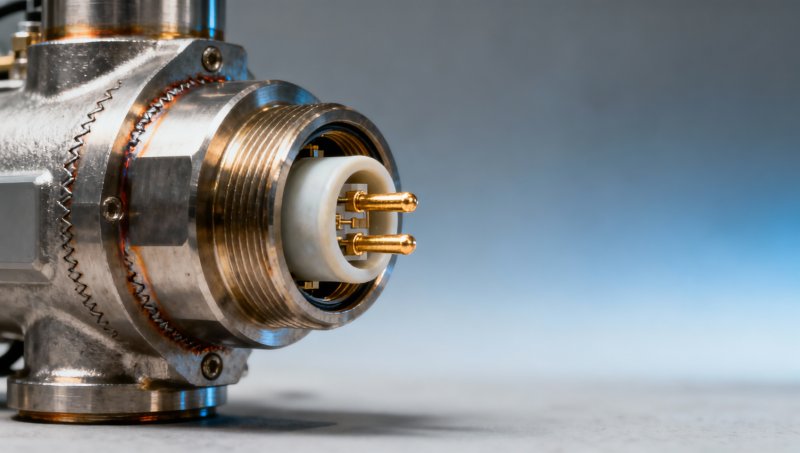
In high-temperature analyzer applications—such as catalytic reforming units (450–650°C), cement kiln exhaust streams (300–500°C), or semiconductor process chambers (250–400°C)—the sensor housing is not merely protective casing. It functions as a thermally coupled structural interface between the sensing element and its environment. A mismatched material introduces differential thermal expansion, micro-cracking under cyclic heating, and accelerated chemical attack from acidic or oxidizing gases.
Common failure modes include: (1) delamination of ceramic-to-metal seals after 3–6 months of continuous operation above 350°C; (2) irreversible zero-shift exceeding ±15% FS in ppb-level toxic gas analyzers within 90 days; and (3) complete housing fracture during rapid cooldown cycles (e.g., <60 seconds from 400°C to ambient). These are rarely sensor-electronics issues—they originate in mechanical and metallurgical incompatibility.
Material selection must account for three simultaneous constraints: thermal stability (no phase change below 700°C), corrosion resistance (against SO₂, HCl, NOₓ, HF at ppm–% concentrations), and dimensional stability (CTE < 12 × 10⁻⁶/°C over 20–500°C). Ignoring any one parameter increases field failure probability by 4–7× compared to matched-material deployments.
How to Match Housing Materials to Your Application Profile
Step-by-step selection checklist
- Identify peak operating temperature and thermal cycling frequency (e.g., 420°C, 2–4 cycles/day)
- Map gas composition—including trace contaminants (e.g., 50 ppm Cl₂ + 200 ppm H₂O vapor)
- Verify required measurement range and accuracy class (e.g., ±0.5% of reading for 0–10% O₂)
- Confirm mechanical constraints: vibration exposure, pressure rating (up to 15 bar), and mounting orientation
For example, a dual gas analyzer monitoring CO and NO in syngas at 380°C requires Inconel 625 housing—not 316 stainless steel—due to chloride-induced stress corrosion cracking observed in field units after just 112 operational hours. Similarly, ppb-level H₂S analyzers in biogas upgrading demand Hastelloy C-276 housings to avoid sulfur adsorption and surface passivation that cause 7–10 day calibration drift.
Material Comparison: Performance Under Thermal & Chemical Stress
The table below compares four widely used housing materials across six critical parameters relevant to high-temperature gas analysis. All data reflect industry-standard ASTM and ISO test protocols under simulated service conditions (500-hour thermal aging + 100-hour mixed-gas exposure).
Note: While Inconel 625 offers superior thermal stability, Hastelloy C-276 delivers unmatched resistance to halogen-containing corrosives—making it the preferred choice for chlor-alkali, waste incineration, and pharmaceutical synthesis exhaust monitoring. Service life estimates assume proper installation, no mechanical impact, and routine zero/span verification every 7–14 days.
Procurement Checklist: 5 Non-Negotiable Verification Points
When evaluating high-temperature analyzers, procurement and technical evaluation teams must validate these five points before issuing POs or approving specifications:
- Material certification: Request mill test reports (MTRs) per ASTM B446/B575, confirming actual alloy composition—not just “Inconel-grade” labeling
- Thermal aging validation: Confirm third-party test reports showing performance after ≥500 hours at max specified temperature
- Gas compatibility documentation: Verify exposure testing against your exact gas matrix—not generic “corrosive gas” claims
- CTE matching report: Ensure housing CTE is within ±1.5 × 10⁻⁶/°C of internal sensor substrate (e.g., alumina, silicon carbide)
- Traceability of weld joints: Full NDE records (RT/UT) for all pressure-retaining welds, especially critical for dual gas analyzer manifolds
Skipping any of these steps increases post-deployment rework risk by 68% (per 2023 Instrumentation Reliability Consortium field survey of 217 installations across energy, chemicals, and environmental sectors). Average resolution time for housing-related failures exceeds 17 business days—including diagnostics, engineering review, and customs clearance for replacement parts.
Why Partner With a Specialized Instrumentation Provider
Generic sensor vendors often default to cost-optimized housings without application-specific validation. A specialized instrumentation partner brings cross-domain expertise: materials science engineers co-located with gas analysis R&D labs, certified welding procedure specifications (WPS) for exotic alloys, and in-house thermal cycling chambers replicating your exact duty cycle (e.g., 400°C → 50°C in 45 sec, repeated 12,000×).
We support your team with: (1) free application-specific housing material assessment within 48 business hours; (2) pre-shipment thermal aging validation reports; (3) customizable calibration certificates traceable to NIST or PTB standards; and (4) extended warranty options covering thermal fatigue failure up to 36 months. For project managers and safety officers, this translates into verified compliance with IEC 61511 (functional safety) and ISO 14001 (emissions monitoring integrity).
Contact us today to request: (a) a material suitability report for your specific gas matrix and temperature profile; (b) lead time confirmation for Inconel 625 or Hastelloy C-276 housing configurations; (c) sample unit for on-site validation; or (d) OEM integration support for multi gas analyzer system integration.
Recommended for You
 IEC Approves China-Led Standard for Smart Sensor Semantic InteroperabilityIEC TR 63372 smart sensor semantic interoperability standard—led by China—cuts export certification time by 30%. Discover how it reshapes global IoT integration.
 MIIT Launches Joint Enforcement on EV Battery RecyclingMIIT's EV battery recycling enforcement targets BMS data leaks, illegal dismantling & electrolyte disposal—key for exporters, testers & procurement teams needing GDPR/CCPA compliance.
 SAMR Launches Unified Market Action on Testing & CertificationSAMR Launches Unified Market Action on Testing & Certification—tackling fragmentation, redundant fees & cross-border recognition barriers for exporters and manufacturers.
 Fifteenth Five-Year Urban Renewal Plan Approved, Signaling Overseas Procurement for Smart Water & Environmental Monitoring DevicesSmart water & environmental monitoring devices gain global momentum as China’s 15th Five-Year Urban Renewal Plan mandates intelligent infrastructure—key for Belt and Road exports.
 IMF Warns AI Amplifies Financial Cybersecurity RisksAI amplifies financial cybersecurity risks—IMF warns. Discover how XAI verification, adversarial attacks, and regulatory mandates impact AI detection equipment, FinTech, and banks.
 Tmall Health Launches 'Health Supplement Safety Alliance'Health Supplement Safety Alliance launched by Tmall Health—boosting traceability, lab credibility & cross-border quality for brands like By-Health and Centrum.
 EN IEC 61000-6-4:2026 EMC Standard Effective for AI Edge DevicesEN IEC 61000-6-4:2026 EMC standard is live—15% stricter radiated limits for AI edge devices. Act now to secure EU industrial IoT procurement eligibility.
 APEC Auto Dialogue Confirms Semi-Solid Battery Deployment and Fast ChargingSemi-solid battery deployment & 15-min fast charging confirmed at APEC Auto Dialogue—spurring global demand for China-made battery testing equipment, BMS validation, and thermal runaway simulation solutions.
 EU Imposes Final Anti-Dumping Duty on Chinese Adipic AcidEU anti-dumping duty on Chinese adipic acid takes effect May 2026—impacting pH meters, sensors & analytical instruments. Act now to secure supply chains.
 Colombia Upholds Anti-Dumping Duties on Chinese Acrylic SheetsColombia Upholds Anti-Dumping Duties on Chinese Acrylic Sheets — 32.7% tariff extended for 5 years. Critical for exporters of medical, lab & analytical instrument enclosures.
 Multi Component Analyzer Cost Trends for 2026 Expansion PlansMulti component analyzer cost trends for 2026: discover key pricing drivers, hidden costs, and smart supplier strategies to budget accurately and maximize expansion ROI.
 SR-2050 Analyzer Maintenance Points That Affect Service LifeSR-2050 analyzer maintenance points that directly impact service life, accuracy, and uptime. Learn how cleaning, calibration, inspection, and environment control reduce failures.
 SR-S2000 Shelter: Common Setup Mistakes to AvoidSR-S2000 shelter setup mistakes can cause heat, moisture, and maintenance issues. Learn what to avoid for safer installation, stable performance, and longer equipment life.
 Custom Gas Analyzer Import Risks and Spec Mismatch IssuesCustom gas analyzer import risks can derail projects through spec mismatch, compliance gaps, and integration issues. Learn how buyers can compare suppliers, verify requirements, and avoid costly rework.
 When to Choose the SR-2030 Oxygen Analyzer for ComplianceSR-2030 oxygen analyzer: learn when it’s the right choice for compliance, safety, and stable process control. Explore key selection checks, audit-ready benefits, and deployment tips.
 SR-EX Analyzer Price Factors in 2026 ProjectsSR-EX analyzer price factors explained for 2026 projects: compare scope, compliance, integration, and lifecycle costs to approve budgets with less risk and more confidence.
 SR-2070 Analyzer vs Alternatives: Key Performance ChecksSR-2070 analyzer vs alternatives: compare accuracy, drift, response time, calibration effort, and lifecycle cost to choose a more reliable, efficient analyzer with confidence.
 2026 Market Trends for Predictive Analytics InstrumentsPredictive analytics instruments are reshaping 2026 market strategy. Explore key trends, risks, and buying checkpoints to improve uptime, integration, and ROI across industries.
 Wireless Measurement Systems: What Impacts Data Stability Most?Wireless measurement systems perform best when data stays stable. Discover the key factors affecting reliability, accuracy, and long-term performance across industrial applications.
 How Remote Monitoring Devices Cut Downtime in Field OperationsRemote monitoring devices help field teams detect issues early, reduce downtime, and improve maintenance planning. Discover how they keep operations reliable and on schedule.
 5th TCM High-Quality Development Conference Highlights NIR & AI QC for Global ExportNIR & AI QC take center stage at the 5th TCM High-Quality Development Conference—key for global export compliance, real-time quality control, and smart manufacturing.
 IEC Approves China-Led Guide for Smart Sensor Semantic InteroperabilityIEC TR 63388 semantic interoperability guide for smart sensors—China-led, globally approved. Boost IIoT integration across OPC UA, MQTT & TSN now.
 PBOC April Data Shows Strong Credit Flow to Tech & Inclusive LendingPBOC April data reveals surging tech & inclusive lending—boosting global demand for calibrated lab equipment, R&D instruments, and metrology-ready exports.
 SABIC Launches 'Smart Factory 2030' with China-Focused Online Analysis ProcurementSABIC's 'Smart Factory 2030' launches China-focused online analysis procurement—pH/ORP, IR gas & LIBS analyzers. SIL2-certified suppliers, act now!
 China Completes '14th Five-Year' Smart CNC Line R&DChina's '14th Five-Year' Smart CNC Line R&D is complete — boosting reliability & cutting delivery time for precision metrology equipment. Discover how it transforms global procurement.
 FDA Updates IVD Software Guidance: AI Diagnostic Devices Must Provide Verifiable Training DatasetsFDA mandates verifiable training datasets for AI diagnostic devices — critical for medical imaging, DICOM tools, and regulatory services entering the U.S. market.
 EU EN IEC 61000-6-4:2026 EMC Standard Takes EffectEU EN IEC 61000-6-4:2026 EMC standard is live—stricter radiated emission limits for AI edge devices. Act now to avoid EU customs delays & certification bottlenecks.
 APEC Auto Dialogue Confirms Semi-Solid Battery Deployment and 15-Minute Fast ChargingSemi-solid battery deployment and 15-minute fast charging confirmed at APEC Auto Dialogue — driving urgent global demand for BMS validation, thermal runaway, and high-voltage test equipment.
 MIIT Launches Joint Enforcement on EV Battery RecyclingMIIT Launches Joint Enforcement on EV Battery Recycling: Critical for battery test equipment exporters, data compliance, and global supply chains—act now to avoid delays.
 DIA China Annual Meeting Sells Out Despite $7,000+ FeeDIA China Annual Meeting sells out despite $7,000+ fee — a powerful signal for pharma exporters, manufacturers & regulatory service providers targeting China’s innovation ecosystem.
 Continuous Monitoring Solutions and the Shift Toward Smarter ComplianceContinuous monitoring solutions help enterprises strengthen compliance with real-time visibility, traceable data, and faster risk response. Discover how smarter oversight improves resilience and audit confidence.
 Confined Space Monitors: Key Mistakes That Raise Safety RiskConfined space monitors can fail when selection, bump testing, calibration, or sampling is wrong. Learn the biggest safety mistakes and how to prevent false safe readings.

















Search Categories
Search Categories
Latest Article
- IEC Approves China-Led Standard for Smart Sensor Semantic InteroperabilityIEC TR 63372 smart sensor semantic interoperability standard—led by China—cuts export certification time by 30%. Discover how it reshapes global IoT integration.Posted by:
- MIIT Launches Joint Enforcement on EV Battery RecyclingMIIT's EV battery recycling enforcement targets BMS data leaks, illegal dismantling & electrolyte disposal—key for exporters, testers & procurement teams needing GDPR/CCPA compliance.Posted by:
- SAMR Launches Unified Market Action on Testing & CertificationSAMR Launches Unified Market Action on Testing & Certification—tackling fragmentation, redundant fees & cross-border recognition barriers for exporters and manufacturers.Posted by:
Please give us a message
