
How to Avoid Gas Sensor Calibration Errors


Calibration errors in a gas sensor can compromise safety, compliance, and process efficiency across industrial applications. Whether you manage emission equipment, process equipment, or stack equipment, understanding how an industrial sensor or emission sensor fails during calibration is essential. This guide explains practical ways to reduce mistakes, improve accuracy, and protect the performance of critical gas equipment in demanding environments.
For operators, calibration is not just a maintenance task. It directly affects alarm reliability, product quality, environmental reporting, and shutdown decisions. For technical evaluators and project managers, repeated gas sensor calibration errors often point to deeper issues in procedure control, instrument selection, environmental conditions, or service discipline.
In the instrumentation industry, where measurement integrity supports automation, compliance, and risk management, small calibration mistakes can create large downstream costs. A drift of only a few percentage points may lead to false alarms, missed gas exposure events, rejected batches, or avoidable recalibration cycles.
The sections below explain the main causes of calibration error, practical prevention measures, parameter checks, service planning, and procurement considerations for industrial gas monitoring systems used in manufacturing, energy, environmental monitoring, laboratories, and process plants.
Why Gas Sensor Calibration Errors Happen in Industrial Environments
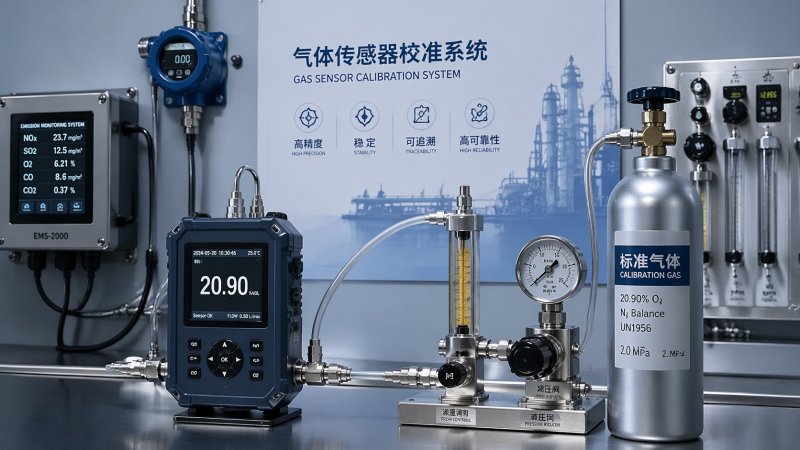
A gas sensor rarely fails during calibration because of one isolated issue. In most industrial settings, errors come from a combination of sensor aging, unstable calibration gas, poor flow control, environmental changes, and inconsistent technician practice. These issues are common in plants with continuous duty cycles of 24/7, variable temperatures, and mixed contaminant exposure.
Electrochemical, infrared, catalytic bead, and photoionization sensors all behave differently. An oxygen sensor may drift because of electrolyte depletion over 18 to 36 months, while an infrared CO2 sensor may show error because of optical contamination, pressure variation, or incorrect zero reference. Treating all sensor types with the same calibration routine increases risk.
Another frequent cause is mismatch between the actual application and the configured gas range. If a detector is routinely exposed near its upper range limit, poisoning, saturation, or accelerated drift becomes more likely. In stack monitoring and emission monitoring, this can be made worse by moisture, vibration, and rapid load changes in the process.
Human factors also matter. Skipping stabilization time, using expired gas cylinders, applying the wrong regulator, or performing zero calibration in a contaminated area can all introduce avoidable deviation. In many facilities, the issue is not lack of instruments, but lack of standardized calibration discipline across shifts and teams.
Typical root causes to check first
- Calibration gas concentration does not match the sensor measurement range or target gas type.
- Gas cylinder shelf life has passed, especially for reactive gases with shorter stability periods of 6 to 12 months.
- Flow rate is too high or too low; many portable and fixed detectors require a controlled rate around 0.5 L/min.
- Ambient temperature, humidity, or pressure differs significantly from normal operating conditions.
- Technicians do not allow adequate warm-up, purge, or response time before adjustment.
The following table summarizes common calibration error sources and their practical impact in industrial instrumentation applications.
For buyers and technical reviewers, the key lesson is that calibration error is often a system problem rather than a sensor-only problem. The sensor, gas kit, accessories, site conditions, maintenance schedule, and technician method all need to be evaluated together.
Build a Calibration Procedure That Reduces Variation
The most effective way to avoid gas sensor calibration errors is to use a documented and repeatable procedure. In multi-site operations, differences between technicians can easily produce 3% to 10% reading variation even when the same detector model is used. Standardization lowers this gap and makes audit records more defensible.
A robust procedure starts before the gas reaches the sensor. Verify model compatibility, gas concentration, expiration date, regulator type, tubing cleanliness, and environmental suitability. Then confirm the instrument has completed warm-up, often 5 to 30 minutes depending on design, before zero and span steps begin.
Timing is a frequent weak point. Some teams rush through zeroing and apply span gas immediately, while others remove gas before the reading stabilizes. In many industrial instruments, a stable plateau may take 30 to 120 seconds. Skipping that wait can create apparent calibration success but poor field accuracy.
Documentation should also record the as-found and as-left values, not only the final pass result. This helps quality, safety, and engineering teams identify recurring drift patterns, cross-sensitivity, or process contamination. Over 3 to 6 maintenance cycles, these records become valuable for replacement planning and budget forecasting.
A practical 6-step field workflow
- Inspect the sensor body, inlets, filters, tubing, and connectors for damage, blockage, or residue.
- Confirm the calibration gas label, concentration, balance gas, expiry date, and required flow rate.
- Stabilize the instrument in a clean area and perform zero calibration only when the baseline is reliable.
- Apply span gas for the specified duration, commonly 60 to 90 seconds, until the reading stabilizes.
- Record as-found and as-left results, plus temperature, date, technician, and any anomalies.
- Conduct a functional check or bump test after calibration to confirm alarm and response behavior.
Where procedures often break down
Breakdowns usually happen in fast-moving operations where production pressure competes with maintenance discipline. For example, portable detectors used by contractors may be bump-tested daily but only fully calibrated every 30, 60, or 90 days. If site exposure is heavy, that interval may be too long.
Similarly, fixed gas detection points in harsh outdoor locations can require more frequent inspection than indoor laboratory or utility areas. A single uniform schedule across all sensor positions may look efficient on paper, but it often fails in practice because environmental stress is not uniform.
Control the Variables That Most Affect Accuracy
Gas sensor calibration accuracy depends on controlling a small set of variables very consistently. In industrial instrumentation, the highest-value controls are gas quality, flow stability, environmental conditions, and sensor health. If these four variables are managed well, a large share of calibration errors can be prevented before they reach operations.
Calibration gas selection deserves special attention. The concentration should be appropriate for the detector range and the intended application. For many toxic gas sensors, span gas is selected at 40% to 80% of full scale, while combustible gas detectors may be calibrated at a defined percentage of LEL. Using a gas that is too low or too close to the top of range can reduce adjustment quality.
Environmental control is equally important. A temperature swing from 10°C to 35°C, or rapid humidity changes above 80% RH, can affect response behavior and zero stability. Outdoor emission and stack systems may also be influenced by condensate, dust, and pressure pulsation, which means sample conditioning and line integrity must be reviewed alongside the sensor itself.
Sensor age should not be ignored during troubleshooting. When a detector begins to require repeated adjustments to stay within tolerance, this often indicates end-of-life behavior rather than a simple calibration problem. For business evaluators and finance approvers, replacing an unstable sensor may cost less than repeated labor, downtime, and nonconformance risk.
Recommended control points by category
The table below provides a practical checklist that engineering, maintenance, and procurement teams can use when reviewing calibration reliability.
This control framework is useful because it turns calibration from a single event into an ongoing measurement management process. That approach is especially valuable in regulated sites, high-risk process units, environmental monitoring systems, and distributed facilities managed by multiple teams or contractors.
Application-specific adjustment priorities
- For emission monitoring, focus on sample conditioning, moisture removal, and long-term zero stability.
- For process equipment, check cross-interference, pressure effects, and response speed under varying load conditions.
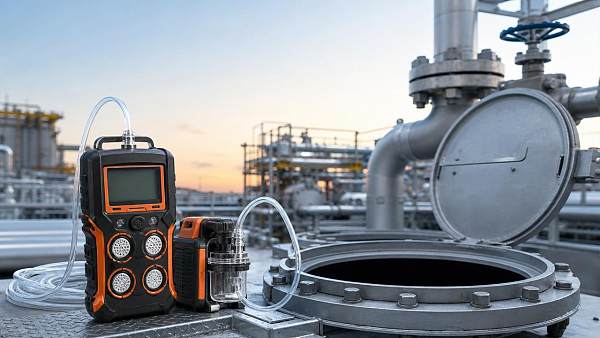
- For confined-space and portable safety use, prioritize daily bump tests, simple field procedures, and traceable calibration records.
- For laboratories and clean utility zones, emphasize calibration gas purity, baseline control, and documented tolerances.
Choose Equipment, Service, and Procurement Criteria That Support Reliable Calibration
Avoiding gas sensor calibration errors starts long before commissioning. Procurement decisions influence calibration stability throughout the product life cycle. A low-cost detector that lacks stable electronics, clear diagnostics, compatible accessories, or timely technical support can create much higher operating cost over 2 to 5 years.
For technical assessment teams, key selection criteria include sensor technology suitability, drift behavior, expected service life, accessory compatibility, maintenance interval, and calibration record handling. For business and finance reviewers, the broader concerns are total cost of ownership, spare availability, technician training needs, and downtime exposure.
Distributors and project managers should also assess whether the instrument fits the field environment. Outdoor process areas may need stronger ingress protection, heated sample paths, or better vibration resistance. Indoor facilities may prioritize easier calibration access, faster response, or multi-gas integration with automation and data logging systems.
Service support matters as much as hardware. A supplier should be able to define calibration frequency guidance, accessory kits, turnaround expectations, replacement lead times, and recommended inspection intervals. Without that service structure, even a well-designed gas sensor can become difficult to maintain consistently.
Procurement checklist for calibration reliability
The table below can help purchasing teams compare options beyond the initial unit price.
A careful procurement review often reveals that reliable calibration depends on ecosystem fit. The instrument, accessories, gas supply plan, technician skill level, and service response should be purchased as one working solution rather than as disconnected items.
Four purchasing signals of a better long-term choice
- Clear guidance on calibration intervals, bump testing, and replacement triggers.
- Availability of compatible regulators, tubing kits, and field accessories without custom improvisation.
- Documented service support for commissioning, troubleshooting, and recordkeeping.
- Practical maintenance design that reduces labor time per instrument by 10 to 20 minutes per cycle.
Common Mistakes, FAQ, and a Practical Maintenance Plan
Even well-equipped teams can make preventable mistakes if calibration is treated as a routine checkbox. The most common errors are using old gas, zeroing in a contaminated area, calibrating too infrequently for the real exposure level, and failing to investigate repeated drift. Over time, those mistakes can affect safety, compliance, and maintenance cost at the same time.
A practical maintenance plan should separate daily, monthly, and periodic tasks. For example, a portable detector in heavy-use service may require a daily bump test, a monthly review of logs and accessories, and a full calibration every 30 days or according to site risk. A fixed detector in a stable indoor location may have a longer interval, but it still needs trend review and condition checks.
Project leaders should also define escalation rules. If the same sensor fails calibration twice in a row, or if drift exceeds a site limit such as ±5% of span, the response should move beyond recalibration to root-cause review. That may include filter replacement, line inspection, environmental correction, or sensor replacement.
For organizations managing multiple detectors across production, utilities, environmental monitoring, or laboratory systems, a centralized record system can reduce missed intervals and improve budgeting. Consistent logs make it easier to identify which locations consume the most maintenance time and which sensor types have the highest drift rate.
How often should a gas sensor be calibrated?
There is no single interval that fits every application. Common practice ranges from 30 days to 180 days depending on sensor type, exposure severity, and site policy. High-risk safety applications and harsh environments generally require shorter intervals, while stable clean environments may support longer cycles if performance data justifies it.
What is the difference between a bump test and full calibration?
A bump test checks whether the sensor responds and alarms correctly when exposed to test gas. It is fast and often completed in less than 1 minute. Full calibration adjusts zero and span values against a known reference and takes longer. Both are useful, but they serve different control purposes.
Red flags that mean recalibration alone is not enough
- The reading responds slowly even with fresh gas and correct flow.
- The instrument passes calibration, then drifts out again within a few days or weeks.
- As-found error repeatedly exceeds internal limits such as 5% to 10%.
- Filters, sample lines, or sensor surfaces show contamination or moisture effects.
- The detector has reached its expected service age and maintenance frequency is increasing.
Avoiding gas sensor calibration errors requires a combination of the right instrument, the right gas, the right procedure, and the right maintenance culture. When calibration is managed as part of the broader instrumentation strategy, facilities gain more reliable alarms, cleaner audit records, and lower life-cycle cost.
If you are evaluating gas monitoring equipment, reviewing calibration procedures, or planning a new instrumentation project, now is a good time to compare your current practice against application-specific requirements. Contact us to discuss your operating conditions, request a tailored solution, or learn more about dependable calibration support for industrial gas detection systems.
Recommended for You
 IEC Approves China-Led Standard for Smart Sensor Semantic InteroperabilityIEC TR 63372 smart sensor semantic interoperability standard—led by China—cuts export certification time by 30%. Discover how it reshapes global IoT integration.
 MIIT Launches Joint Enforcement on EV Battery RecyclingMIIT's EV battery recycling enforcement targets BMS data leaks, illegal dismantling & electrolyte disposal—key for exporters, testers & procurement teams needing GDPR/CCPA compliance.
 SAMR Launches Unified Market Action on Testing & CertificationSAMR Launches Unified Market Action on Testing & Certification—tackling fragmentation, redundant fees & cross-border recognition barriers for exporters and manufacturers.
 Fifteenth Five-Year Urban Renewal Plan Approved, Signaling Overseas Procurement for Smart Water & Environmental Monitoring DevicesSmart water & environmental monitoring devices gain global momentum as China’s 15th Five-Year Urban Renewal Plan mandates intelligent infrastructure—key for Belt and Road exports.
 IMF Warns AI Amplifies Financial Cybersecurity RisksAI amplifies financial cybersecurity risks—IMF warns. Discover how XAI verification, adversarial attacks, and regulatory mandates impact AI detection equipment, FinTech, and banks.
 Tmall Health Launches 'Health Supplement Safety Alliance'Health Supplement Safety Alliance launched by Tmall Health—boosting traceability, lab credibility & cross-border quality for brands like By-Health and Centrum.
 EN IEC 61000-6-4:2026 EMC Standard Effective for AI Edge DevicesEN IEC 61000-6-4:2026 EMC standard is live—15% stricter radiated limits for AI edge devices. Act now to secure EU industrial IoT procurement eligibility.
 APEC Auto Dialogue Confirms Semi-Solid Battery Deployment and Fast ChargingSemi-solid battery deployment & 15-min fast charging confirmed at APEC Auto Dialogue—spurring global demand for China-made battery testing equipment, BMS validation, and thermal runaway simulation solutions.
 EU Imposes Final Anti-Dumping Duty on Chinese Adipic AcidEU anti-dumping duty on Chinese adipic acid takes effect May 2026—impacting pH meters, sensors & analytical instruments. Act now to secure supply chains.
 Colombia Upholds Anti-Dumping Duties on Chinese Acrylic SheetsColombia Upholds Anti-Dumping Duties on Chinese Acrylic Sheets — 32.7% tariff extended for 5 years. Critical for exporters of medical, lab & analytical instrument enclosures.
 Multi Component Analyzer Cost Trends for 2026 Expansion PlansMulti component analyzer cost trends for 2026: discover key pricing drivers, hidden costs, and smart supplier strategies to budget accurately and maximize expansion ROI.
 SR-2050 Analyzer Maintenance Points That Affect Service LifeSR-2050 analyzer maintenance points that directly impact service life, accuracy, and uptime. Learn how cleaning, calibration, inspection, and environment control reduce failures.
 SR-S2000 Shelter: Common Setup Mistakes to AvoidSR-S2000 shelter setup mistakes can cause heat, moisture, and maintenance issues. Learn what to avoid for safer installation, stable performance, and longer equipment life.
 Custom Gas Analyzer Import Risks and Spec Mismatch IssuesCustom gas analyzer import risks can derail projects through spec mismatch, compliance gaps, and integration issues. Learn how buyers can compare suppliers, verify requirements, and avoid costly rework.
 When to Choose the SR-2030 Oxygen Analyzer for ComplianceSR-2030 oxygen analyzer: learn when it’s the right choice for compliance, safety, and stable process control. Explore key selection checks, audit-ready benefits, and deployment tips.
 SR-EX Analyzer Price Factors in 2026 ProjectsSR-EX analyzer price factors explained for 2026 projects: compare scope, compliance, integration, and lifecycle costs to approve budgets with less risk and more confidence.
 SR-2070 Analyzer vs Alternatives: Key Performance ChecksSR-2070 analyzer vs alternatives: compare accuracy, drift, response time, calibration effort, and lifecycle cost to choose a more reliable, efficient analyzer with confidence.
 2026 Market Trends for Predictive Analytics InstrumentsPredictive analytics instruments are reshaping 2026 market strategy. Explore key trends, risks, and buying checkpoints to improve uptime, integration, and ROI across industries.
 Wireless Measurement Systems: What Impacts Data Stability Most?Wireless measurement systems perform best when data stays stable. Discover the key factors affecting reliability, accuracy, and long-term performance across industrial applications.
 How Remote Monitoring Devices Cut Downtime in Field OperationsRemote monitoring devices help field teams detect issues early, reduce downtime, and improve maintenance planning. Discover how they keep operations reliable and on schedule.
 5th TCM High-Quality Development Conference Highlights NIR & AI QC for Global ExportNIR & AI QC take center stage at the 5th TCM High-Quality Development Conference—key for global export compliance, real-time quality control, and smart manufacturing.
 IEC Approves China-Led Guide for Smart Sensor Semantic InteroperabilityIEC TR 63388 semantic interoperability guide for smart sensors—China-led, globally approved. Boost IIoT integration across OPC UA, MQTT & TSN now.
 PBOC April Data Shows Strong Credit Flow to Tech & Inclusive LendingPBOC April data reveals surging tech & inclusive lending—boosting global demand for calibrated lab equipment, R&D instruments, and metrology-ready exports.
 SABIC Launches 'Smart Factory 2030' with China-Focused Online Analysis ProcurementSABIC's 'Smart Factory 2030' launches China-focused online analysis procurement—pH/ORP, IR gas & LIBS analyzers. SIL2-certified suppliers, act now!
 China Completes '14th Five-Year' Smart CNC Line R&DChina's '14th Five-Year' Smart CNC Line R&D is complete — boosting reliability & cutting delivery time for precision metrology equipment. Discover how it transforms global procurement.
 FDA Updates IVD Software Guidance: AI Diagnostic Devices Must Provide Verifiable Training DatasetsFDA mandates verifiable training datasets for AI diagnostic devices — critical for medical imaging, DICOM tools, and regulatory services entering the U.S. market.
 EU EN IEC 61000-6-4:2026 EMC Standard Takes EffectEU EN IEC 61000-6-4:2026 EMC standard is live—stricter radiated emission limits for AI edge devices. Act now to avoid EU customs delays & certification bottlenecks.
 APEC Auto Dialogue Confirms Semi-Solid Battery Deployment and 15-Minute Fast ChargingSemi-solid battery deployment and 15-minute fast charging confirmed at APEC Auto Dialogue — driving urgent global demand for BMS validation, thermal runaway, and high-voltage test equipment.
 MIIT Launches Joint Enforcement on EV Battery RecyclingMIIT Launches Joint Enforcement on EV Battery Recycling: Critical for battery test equipment exporters, data compliance, and global supply chains—act now to avoid delays.
 DIA China Annual Meeting Sells Out Despite $7,000+ FeeDIA China Annual Meeting sells out despite $7,000+ fee — a powerful signal for pharma exporters, manufacturers & regulatory service providers targeting China’s innovation ecosystem.
 Continuous Monitoring Solutions and the Shift Toward Smarter ComplianceContinuous monitoring solutions help enterprises strengthen compliance with real-time visibility, traceable data, and faster risk response. Discover how smarter oversight improves resilience and audit confidence.
 Confined Space Monitors: Key Mistakes That Raise Safety RiskConfined space monitors can fail when selection, bump testing, calibration, or sampling is wrong. Learn the biggest safety mistakes and how to prevent false safe readings.










Search Categories
Search Categories
Latest Article
- IEC Approves China-Led Standard for Smart Sensor Semantic InteroperabilityIEC TR 63372 smart sensor semantic interoperability standard—led by China—cuts export certification time by 30%. Discover how it reshapes global IoT integration.Posted by:
- MIIT Launches Joint Enforcement on EV Battery RecyclingMIIT's EV battery recycling enforcement targets BMS data leaks, illegal dismantling & electrolyte disposal—key for exporters, testers & procurement teams needing GDPR/CCPA compliance.Posted by:
- SAMR Launches Unified Market Action on Testing & CertificationSAMR Launches Unified Market Action on Testing & Certification—tackling fragmentation, redundant fees & cross-border recognition barriers for exporters and manufacturers.Posted by:
Please give us a message
