
How to Compare Emission Monitoring Analyzer Accuracy Claims


When vendors promote an emission monitoring analyzer, accuracy claims can look similar on paper yet differ significantly in real-world use. For technical evaluators, comparing these statements requires more than reading a datasheet—it means examining test conditions, calibration methods, detection limits, drift performance, and compliance standards. This article outlines a practical framework to help you judge analyzer accuracy with confidence and make more reliable procurement decisions.
In instrumentation-driven industries, analyzer accuracy affects more than laboratory performance. It influences regulatory reporting, process optimization, maintenance planning, and total operating cost over 3 to 10 years of service life. A specification such as “±1% of reading” may sound competitive, but without context on range, gas matrix, temperature, humidity, and calibration interval, it tells only part of the story.
For technical assessment teams, the goal is not simply to identify the tightest number on a brochure. The real task is to determine which emission monitoring analyzer will deliver stable, traceable, and auditable measurement performance under your actual stack, process, or ambient monitoring conditions. The sections below break that task into practical evaluation criteria.
Understand What an Accuracy Claim Really Includes

The first step in evaluating an emission monitoring analyzer is to separate headline accuracy from full measurement uncertainty. Many suppliers present a single figure, such as ±2% of full scale or ±1% of measured value, but these are not interchangeable. A full-scale basis can look stronger at high concentration and much weaker at low concentration, especially when the operating range spans 0–100 ppm, 0–500 ppm, or wider.
Technical evaluators should also verify whether the stated value includes only analyzer core performance or the complete system effect. In practical installations, sample conditioning, heated lines, moisture removal, flow stability, and pressure compensation can all change delivered accuracy. A bench result at 20–25°C and clean dry gas is not equal to field performance in a high-moisture, variable-load application.
A credible review should break the claim into at least 4 components: reference basis, measurement range, environmental conditions, and supporting calibration method. If one of these is missing, the published number may be difficult to compare fairly against another supplier’s statement.
Key terms that often look similar but are not
Datasheets often mix terms such as accuracy, repeatability, linearity, zero drift, and span drift. These metrics describe different behaviors. Repeatability may be excellent within 0.2% over 10 cycles, while long-term drift could still require recalibration every 7 days. Likewise, linearity within 1% does not guarantee strong low-end detection if the lower detection limit is too close to the normal operating concentration.
A useful internal review checklist should ask whether the claim is based on reading, full scale, or combined error. It should also note whether the figure is specified for 1 gas component or multiple gases in a cross-sensitive matrix. For NOx, SO2, CO, CO2, and O2 measurement, cross-interference can materially affect analyzer behavior.
Questions to ask during technical comparison
- Is the published accuracy based on laboratory conditions, field conditions, or both?
- Does the value apply across 100% of the measuring range or only between 20% and 80% of span?
- Are zero drift and span drift stated over 24 hours, 7 days, or 30 days?
- Does the emission monitoring analyzer require automatic correction for pressure, temperature, or water vapor?
These questions quickly reveal whether two products are being compared on equal ground. In many procurement reviews, this early clarification eliminates the false impression that all “±1%” claims are equivalent.
Compare Test Conditions, Ranges, and Calibration Basis
An accuracy figure only becomes meaningful when tied to test conditions. For an emission monitoring analyzer, concentration range, ambient temperature, sample gas composition, and reference gas traceability all influence the result. A claim proven at 25°C, 1 atm, and dry calibration gas may not hold in stack applications where sample temperatures exceed 120°C before conditioning and moisture content varies hour by hour.
Calibration practice is equally important. Some vendors specify performance using a 2-point calibration, while others use 3-point or 5-point verification across the range. For technical evaluators, more points usually provide better insight into linearity and low-end error behavior. If your emissions permit threshold is close to the lower 10% to 20% of range, this part of the curve deserves special scrutiny.
It is also good practice to confirm whether the analyzer is calibrated with certified standard gas mixtures and whether the certificate is traceable to recognized metrology systems. Without traceability, even a strong initial specification can become weak in audit situations or during acceptance testing.
A practical comparison table for test-condition review
The table below can be used during vendor evaluation meetings to normalize specifications from multiple suppliers. It helps your team compare not just the number itself, but the conditions behind it.
In many reviews, the most revealing difference is not the advertised accuracy number but the test envelope around it. A vendor that openly documents range, temperature, pressure, humidity, and calibration method usually presents a lower comparison risk than one offering only a headline figure.
How to normalize unlike datasheets
When suppliers use different bases, ask each one to restate accuracy over the same operating range and at the same reference conditions. A useful procurement rule is to request values at 3 load points, such as 20%, 50%, and 80% of expected process concentration. This approach highlights whether a unit is optimized for nominal operation but weaker at low-load or startup conditions.
You should also compare calibration interval assumptions. An analyzer that achieves better accuracy but requires manual intervention every 3 days may be less practical than one with slightly wider initial tolerance but stable operation for 14 or 30 days. In a plant environment, sustainable accuracy matters more than brochure accuracy.
Evaluate Detection Limits, Drift, and Cross-Interference
Low-concentration performance is one of the most common blind spots in emission monitoring analyzer comparison. If a process normally runs close to the reporting threshold, the lower detection limit and signal-to-noise behavior can be more important than top-end span accuracy. For example, an analyzer range of 0–500 ppm may appear flexible, but if the application needs stable readings at 5–15 ppm, that wide span may not be ideal.
Drift should be reviewed over realistic operating periods. Zero drift and span drift over 24 hours are useful, but drift over 7 days or 30 days often matters more for staffing and compliance planning. In continuous operation, each corrective calibration event adds labor, interrupts data continuity, and can create uncertainty during report reconciliation.
Cross-interference is another critical factor. In combustion, waste treatment, energy, and industrial process applications, gas mixtures are rarely clean. Water vapor, CO2, hydrocarbons, and sulfur compounds can affect response depending on sensing technology. A technical evaluator should not accept an accuracy claim without understanding how the analyzer performs in a representative gas matrix.
Parameters worth prioritizing in low-end performance review
- Lower detection limit relative to your normal operating band, such as 2 ppm, 5 ppm, or 10 ppm.
- Zero noise level over a defined interval, often measured over 30 minutes to 1 hour.
- Zero drift and span drift over 24 hours, 7 days, and where possible 30 days.
- Documented interference behavior from common coexisting gases in your process stream.
A comparison table for long-term measurement stability
Instead of ranking vendors only on initial specification, use a stability-focused matrix. This is especially useful when the emission monitoring analyzer will run in unattended or lightly staffed facilities.
A vendor that can provide 7-day or 30-day drift records often gives stronger evidence of field readiness than one offering only initial calibration results. For technical evaluators, stability evidence is often the difference between a compliant purchase and a maintenance-heavy one.
Check Compliance Standards, Acceptance Methods, and Documentation Quality
Accuracy cannot be reviewed in isolation from compliance requirements. Depending on project scope, the emission monitoring analyzer may need to align with plant-level environmental obligations, stack monitoring protocols, customer technical specifications, or internal quality management procedures. Even when no single regulation is mandated in the purchase brief, documentation discipline still matters because auditors and engineering teams need traceable evidence.
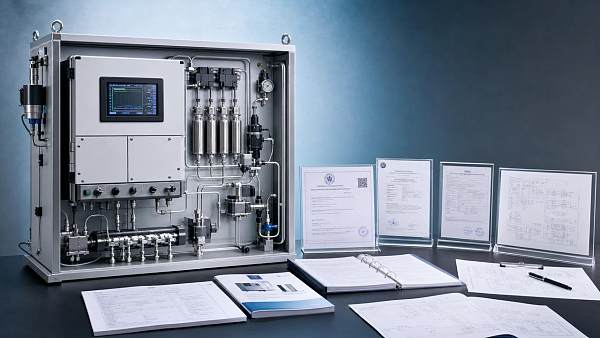
A strong supplier package should include a clearly structured datasheet, calibration instructions, maintenance intervals, and a factory acceptance or performance verification method. If those documents do not specify test gas concentration, ambient conditions, warm-up time, or pass/fail criteria, the quoted accuracy becomes hard to validate during FAT, SAT, or site commissioning.
Documentation quality also affects lifecycle efficiency. An analyzer that takes 2 hours less to verify during commissioning, or that reduces ambiguity in monthly maintenance, can save substantial engineering time across multi-site installations. For procurement teams managing 5, 10, or more monitoring points, consistent document structure is a practical advantage.
What acceptance documentation should contain
- A defined warm-up period, such as 30 minutes or 60 minutes before verification.
- Specified zero and span gas concentrations with traceability information.
- Pass/fail criteria for accuracy, linearity, repeatability, and drift.
- A clear procedure for handling out-of-tolerance results and recalibration steps.
- Environmental limits for temperature, humidity, vibration, and power supply variation.
These five items create a common verification language between buyer, integrator, and supplier. Without them, even a technically capable emission monitoring analyzer may become difficult to approve consistently across projects.
Common documentation red flags
Watch for claims that omit duration, such as “low drift” without stating whether it refers to 8 hours, 24 hours, or longer. Be cautious when no distinction is made between analyzer module performance and full system performance. Another warning sign is a datasheet that states broad compatibility with multiple gases but gives no interference table or application boundary. These gaps do not automatically disqualify a product, but they should trigger a deeper technical review.
For cross-functional teams, it is helpful to score documentation on a 1–5 scale for clarity, completeness, traceability, and acceptance readiness. This adds discipline to procurement decisions and prevents the final selection from being based only on price or nominal specification.
Build a Practical Procurement Framework for Real-World Comparison
The most effective way to compare emission monitoring analyzer accuracy claims is to use a weighted decision framework. In many industrial instrumentation projects, technical teams assign 40% to measurement performance, 20% to long-term stability, 15% to serviceability, 15% to documentation and compliance readiness, and 10% to commercial terms. The exact ratio can change, but a structured model prevents overreliance on one attractive specification line.
This framework should also reflect the intended use case. If the analyzer supports process control as well as compliance reporting, response time, low-end sensitivity, and uptime may deserve heavier weighting. If the application is batch-based or periodic, maintenance simplicity and recalibration workflow may become more important than ultra-fast response.
For technical evaluators, a side-by-side vendor workshop often reveals more than documents alone. Ask each supplier to explain how their analyzer performs under your process conditions, what the expected calibration frequency is, and what maintenance tasks are required per month or per quarter. The answers usually expose the true operating profile behind the accuracy claim.
Suggested 6-point procurement checklist
- Match the analyzer range to actual emission levels rather than selecting the widest available span.
- Request performance data at 3 operating points: low, normal, and high process load.
- Verify drift behavior over at least 7 days, and preferably 30 days for critical installations.
- Review cross-interference evidence using a representative gas matrix.
- Check whether calibration gases, consumables, and spare parts are realistically available within your maintenance cycle.
- Define FAT and SAT acceptance criteria before issuing the purchase order.
How to turn comparison into a defendable decision
A defendable procurement decision links each score to evidence. If Supplier A offers ±1% of reading but provides only a 24-hour drift statement, while Supplier B offers ±1.5% but documents 30-day stability, matrix testing, and clearer acceptance procedures, Supplier B may present lower lifecycle risk. In regulated or quality-sensitive environments, lower risk often justifies a moderate price premium.
The final review should include engineering, maintenance, and quality stakeholders. Accuracy on paper, service burden in the field, and traceability during audits are all parts of the same decision. Evaluating them together leads to a more robust selection and reduces the chance of post-installation disputes.
FAQ for technical evaluators
How many calibration points are enough for comparison?
For an initial screen, 3 points can be acceptable: low, mid, and high range. For higher-risk projects or low-threshold monitoring, 5 points are better because they show how the emission monitoring analyzer behaves across the full span and near reporting limits.
What drift period should be requested from suppliers?
At minimum, ask for 24-hour and 7-day data. For continuous industrial use, 30-day evidence is more valuable because it better reflects real maintenance planning and calibration burden. If no long-term data is available, treat the accuracy claim more cautiously.
Is lower detection limit always more important than span accuracy?
Not always. It depends on where your process normally operates. If your expected concentration is close to the lower end, detection limit and noise performance may matter most. If your process runs at mid-to-high concentrations, overall linearity and drift control may have greater operational value.
Comparing emission monitoring analyzer accuracy claims is ultimately a process of turning broad specifications into application-specific evidence. Technical evaluators should review the basis of accuracy, normalize test conditions, examine detection limits and drift, and confirm that documentation supports clear acceptance and long-term operation.
A well-chosen analyzer does more than pass a datasheet review. It supports reliable reporting, reduces unnecessary recalibration, and fits the realities of industrial instrumentation, automation, and environmental monitoring programs. If you are planning a new evaluation or replacing an existing monitoring system, now is the right time to build a tighter technical comparison process.
To discuss analyzer selection criteria, compare performance requirements, or get a tailored evaluation framework for your site, contact us today to explore more instrumentation and monitoring solutions.
Recommended for You
 US-China Trade Talks Agree on Tariff Cuts for Key Test Equipment PartsUS-China tariff cuts on key test equipment parts—like pressure sensor chips & infrared thermal imaging modules—boost margins, cut costs, and strengthen global competitiveness for manufacturers.
 G7 Paris Meeting Focuses on Critical Mineral Supply SecurityCritical mineral supply security takes center stage at the G7 Paris meeting—key for rare-earth sensor exporters. Learn EU compliance impacts & actionable readiness steps.
 Brent Crude Surpasses $106/bbl, Raising Sea Freight Costs for Small Testing Equipment ExportsBrent Crude Surpasses $106/bbl—sea freight costs surge, impacting small testing equipment exporters. Learn how SMEs can adapt pricing, terms & logistics now.
 WTO Forecasts 1.9% Global Goods Trade Growth in 2026 Amid Supply Chain ShorteningWTO forecasts 1.9% global goods trade growth in 2026—sparking nearshoring demand for testing equipment, calibration services & OTA-ready solutions in ASEAN, Middle East & Mexico.
 UK-China Export Control Working Group Holds Second Meeting in LondonUK-China Export Control Working Group: Key updates on dual-use items—laser interferometers, quantum sensors & oscilloscopes. Learn compliance implications for exporters now.
 Japan's 10Y Yield Drop to 2.745% Lifts Yen, Raising China-Made Testing Equipment CostsJapan's 10Y yield drop to 2.745% lifts yen, raising costs for China-made testing equipment — explore FX impacts, procurement shifts & strategic responses.
 KOSPI 200 Futures Circuit Breaker Triggered, Impacting Industrial Automation Instrument Export TimelinesKOSPI 200 futures circuit breaker triggered — impact on PLC modules, transmitters & fieldbus instrument exports to Korea. Urgent timeline insights inside.
 South Korea’s Chip Exports Surge 202% in May 2026 Amid AI Test Equipment DemandAI test equipment demand surges as South Korea’s chip exports jump 202% in May 2026 — PCIe 6.0 & USB4.1 validation tools see sharp global procurement rise.
 Emission Gas Analyzer News in 2026: Regulatory Shifts Affecting DemandEmission gas analyzer demand is changing fast in 2026 as new regulations tighten limits, expand continuous monitoring, and raise data compliance standards. Explore key trends shaping smarter buying decisions.
 When a High Accuracy Analyzer Delivers Real ROI in Process ControlHigh accuracy analyzer ROI starts with better process control. Learn where tighter measurements cut waste, improve stability, reduce compliance risk, and deliver measurable operational savings.
 SR-2030P Analyzer Import Updates in 2026: Compliance Points to ReviewSR-2030P analyzer import updates for 2026: review classification, certification, customs documents, and market access risks to reduce delays, control costs, and source with confidence.
 Industrial Oxygen Analyzer Price Trends in 2026: Cost Drivers to WatchIndustrial oxygen analyzer price trends in 2026 explained: compare sensor, compliance, installation, and maintenance cost drivers to make smarter, lower-risk buying decisions.
 Laser Oxygen Analyzer or Industrial Oxygen Analyzer: Which Fits BetterLaser oxygen analyzer or industrial oxygen analyzer? Compare speed, accuracy, maintenance, and cost to find the best fit for smarter, more reliable process control.
 ATEX Gas Analyzer Demand in 2026: What Is Shaping the MarketATEX gas analyzer demand in 2026 is driven by safety, digital integration, and lifecycle value. See what shapes buying decisions across industry, utilities, hydrogen, and automation.
 Fixed Gas Analyzer vs Portable Options: What Matters for Plant UseFixed gas analyzer or portable detector for plant use? Compare safety, response time, maintenance, and cost to choose the right monitoring solution with confidence.
 Explosion Proof Analyzer Selection Mistakes That Increase Site RiskExplosion proof analyzer selection mistakes can raise compliance, maintenance, and safety risks. Learn the key errors to avoid and how to choose a safer, more reliable solution.
 SR-2000 Infrared Analyzer: Key Performance Checks Before InstallationSR-2000 infrared analyzer pre-installation guide: learn how to verify accuracy, drift, site readiness, and calibration support to reduce startup risk and ensure stable long-term performance.
 How to Choose a Continuous Gas Analyzer for Stable 24/7 MonitoringContinuous gas analyzer selection guide for stable 24/7 monitoring. Learn how to compare accuracy, response time, maintenance, and integration for smarter industrial decisions.
 IEC Approves China-Led Standard for Smart Sensor Semantic InteroperabilityIEC TR 63372 smart sensor semantic interoperability standard—led by China—cuts export certification time by 30%. Discover how it reshapes global IoT integration.
 MIIT Launches Joint Enforcement on EV Battery RecyclingMIIT's EV battery recycling enforcement targets BMS data leaks, illegal dismantling & electrolyte disposal—key for exporters, testers & procurement teams needing GDPR/CCPA compliance.
 SAMR Launches Unified Market Action on Testing & CertificationSAMR Launches Unified Market Action on Testing & Certification—tackling fragmentation, redundant fees & cross-border recognition barriers for exporters and manufacturers.
 Fifteenth Five-Year Urban Renewal Plan Approved, Signaling Overseas Procurement for Smart Water & Environmental Monitoring DevicesSmart water & environmental monitoring devices gain global momentum as China’s 15th Five-Year Urban Renewal Plan mandates intelligent infrastructure—key for Belt and Road exports.
 IMF Warns AI Amplifies Financial Cybersecurity RisksAI amplifies financial cybersecurity risks—IMF warns. Discover how XAI verification, adversarial attacks, and regulatory mandates impact AI detection equipment, FinTech, and banks.
 Tmall Health Launches 'Health Supplement Safety Alliance'Health Supplement Safety Alliance launched by Tmall Health—boosting traceability, lab credibility & cross-border quality for brands like By-Health and Centrum.
 EN IEC 61000-6-4:2026 EMC Standard Effective for AI Edge DevicesEN IEC 61000-6-4:2026 EMC standard is live—15% stricter radiated limits for AI edge devices. Act now to secure EU industrial IoT procurement eligibility.
 APEC Auto Dialogue Confirms Semi-Solid Battery Deployment and Fast ChargingSemi-solid battery deployment & 15-min fast charging confirmed at APEC Auto Dialogue—spurring global demand for China-made battery testing equipment, BMS validation, and thermal runaway simulation solutions.
 EU Imposes Final Anti-Dumping Duty on Chinese Adipic AcidEU anti-dumping duty on Chinese adipic acid takes effect May 2026—impacting pH meters, sensors & analytical instruments. Act now to secure supply chains.
 Colombia Upholds Anti-Dumping Duties on Chinese Acrylic SheetsColombia Upholds Anti-Dumping Duties on Chinese Acrylic Sheets — 32.7% tariff extended for 5 years. Critical for exporters of medical, lab & analytical instrument enclosures.
 Multi Component Analyzer Cost Trends for 2026 Expansion PlansMulti component analyzer cost trends for 2026: discover key pricing drivers, hidden costs, and smart supplier strategies to budget accurately and maximize expansion ROI.
 SR-2050 Analyzer Maintenance Points That Affect Service LifeSR-2050 analyzer maintenance points that directly impact service life, accuracy, and uptime. Learn how cleaning, calibration, inspection, and environment control reduce failures.
 SR-S2000 Shelter: Common Setup Mistakes to AvoidSR-S2000 shelter setup mistakes can cause heat, moisture, and maintenance issues. Learn what to avoid for safer installation, stable performance, and longer equipment life.
 Custom Gas Analyzer Import Risks and Spec Mismatch IssuesCustom gas analyzer import risks can derail projects through spec mismatch, compliance gaps, and integration issues. Learn how buyers can compare suppliers, verify requirements, and avoid costly rework.






Search Categories
Search Categories
Latest Article
- US-China Trade Talks Agree on Tariff Cuts for Key Test Equipment PartsUS-China tariff cuts on key test equipment parts—like pressure sensor chips & infrared thermal imaging modules—boost margins, cut costs, and strengthen global competitiveness for manufacturers.Posted by:
- G7 Paris Meeting Focuses on Critical Mineral Supply SecurityCritical mineral supply security takes center stage at the G7 Paris meeting—key for rare-earth sensor exporters. Learn EU compliance impacts & actionable readiness steps.Posted by:
- Brent Crude Surpasses $106/bbl, Raising Sea Freight Costs for Small Testing Equipment ExportsBrent Crude Surpasses $106/bbl—sea freight costs surge, impacting small testing equipment exporters. Learn how SMEs can adapt pricing, terms & logistics now.Posted by:
Please give us a message
