
How to Compare Leak Detection Instruments for Fast Site Checks


Choosing effective leak detection instruments for fast site checks affects safety, downtime, compliance, and repair quality across industrial, utility, construction, laboratory, and environmental operations.
The best comparison is not only about headline sensitivity. It must reflect site speed, target gas or fluid, background interference, operator workload, and data value after the inspection ends.
This guide shows how to compare leak detection instruments by real inspection scenarios, so evaluations support faster decisions and better long-term field performance.
Why site context changes how leak detection instruments should be compared
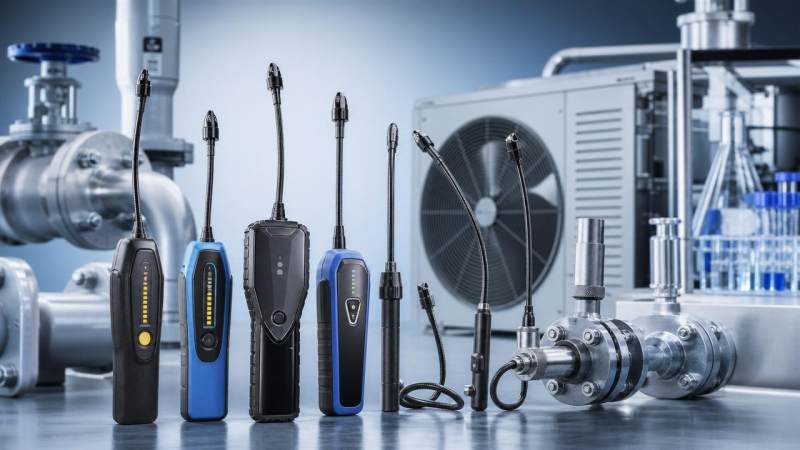
Leak detection instruments work differently in clean indoor rooms, noisy plants, open outdoor networks, and confined mechanical spaces.
A detector that performs well in a laboratory may slow down field checks in a windy utility yard or around hot rotating equipment.
Fast site checks require a balance between detection limit and practical usability. Response speed, warm-up time, probe access, alarm clarity, and battery endurance often decide success.
In the instrumentation industry, this comparison matters because measurement reliability supports maintenance planning, automation continuity, digital records, and risk reduction across many sectors.
Scenario 1: Comparing leak detection instruments for industrial production lines
Production environments usually demand short inspection windows, repeatable results, and minimal interruption to running systems.
Here, leak detection instruments should be checked for startup speed, stability near vibration, resistance to dust or oil mist, and simple one-hand operation.
Audible and visual alarms are important when background noise is high. A slow display refresh can cause missed leak points during quick scanning.
Data logging also matters. When recurring leaks affect compressed air, gas, coolant, or vacuum systems, trend records help confirm whether repairs solved the root issue.
Core checks for this scenario
- Response time during continuous scanning
- Probe reach around pipes, valves, and seals
- Resistance to false alarms from solvents or process vapors
- Battery life for multi-point rounds
- Log export for maintenance records
Scenario 2: Comparing leak detection instruments for building services and HVAC checks
HVAC and building systems create a different challenge. Access is often tight, service teams move frequently, and leaks may be small but expensive over time.
In this case, leak detection instruments should be lightweight, portable, and quick to calibrate. Flexible probes and clear concentration changes are valuable.
For refrigerant work, selectivity is critical. Cross-sensitivity can lead to wasted time if cleaners, lubricants, or residual gases trigger alarms.
A strong instrument for HVAC checks helps confirm leak location before opening panels or replacing components, reducing unnecessary labor.
Core checks for this scenario
- Portability during ladder or rooftop access
- Sensitivity to very small refrigerant leaks
- Sensor recovery after alarm exposure
- Ease of use in low-light equipment rooms
Scenario 3: Comparing leak detection instruments for utilities and outdoor network inspections
Outdoor checks involve wind, temperature shifts, traffic, surface moisture, and dispersed leak patterns. These conditions can weaken signal stability.
For utility lines or outdoor gas distribution, leak detection instruments must offer reliable readings under changing ambient conditions and support rapid area screening.
Durability becomes a deciding factor. Weather resistance, rugged housing, glove-friendly controls, and long runtime are often more valuable than extreme laboratory sensitivity.
Mapping or location tagging can also accelerate repair dispatch, especially when many inspection points are covered in one route.
Core checks for this scenario
- Performance in wind and cold starts
- Ingress protection and physical ruggedness
- Sampling speed across wide search areas
- GPS or digital reporting support
Scenario 4: Comparing leak detection instruments for laboratories and controlled environments
Controlled spaces prioritize precision, traceability, and repeatable thresholds over rugged field mobility.
In these settings, leak detection instruments should be compared by calibration traceability, measurement stability, low-level sensitivity, and integration with documentation workflows.
A slightly slower instrument may still be the better choice if it produces more dependable records and lower uncertainty.
The key question is whether the instrument supports verification, compliance, and repeat testing without excessive manual correction.
How scenario needs differ when comparing leak detection instruments
What to compare first before shortlisting leak detection instruments
A practical comparison starts with the leak medium. Gas, refrigerant, compressed air, vacuum, or specialty process media require different detection approaches.
Next, define the minimum leak size that matters operationally. A detector can be sensitive enough on paper but still too slow for field scanning.
Then evaluate inspection rhythm. Fast route checks need speed and simplicity. Investigative troubleshooting may justify more advanced analysis features.
Finally, compare ownership factors such as sensor life, calibration intervals, accessories, software compatibility, and training effort.
Shortlist criteria that usually matter most
- Target leak type and expected concentration range
- Actual response and recovery speed
- Portability and access around equipment
- Resistance to environmental interference
- Usability, reporting, and service support
Scenario-based recommendations for selecting leak detection instruments
- Choose fast-response leak detection instruments for routine production rounds and high-volume screening tasks.
- Choose highly selective leak detection instruments when mixed gases, solvents, or refrigerants create interference.
- Choose rugged leak detection instruments for outdoor utility routes, exposed construction zones, and harsh service environments.
- Choose traceable leak detection instruments for laboratories, validation work, and compliance-heavy documentation.
- Choose instruments with digital logs when repair verification and historical comparison are part of maintenance strategy.
Common mistakes when evaluating leak detection instruments for fast checks
One common mistake is overvaluing peak sensitivity while ignoring scan speed. Fast site checks fail when the detector reacts too slowly during movement.
Another mistake is skipping interference testing. Leak detection instruments should be evaluated around actual background vapors, not only in ideal demonstrations.
Battery runtime is also underestimated. An instrument that needs charging halfway through a route can delay urgent maintenance decisions.
Some evaluations ignore operator feedback. Button layout, display readability, and alarm pattern directly affect field efficiency.
A final oversight is failing to compare serviceability. Consumables, calibration support, and sensor replacement costs influence long-term value.
Next steps to compare leak detection instruments with confidence
Build a short field checklist before reviewing specifications. Include target media, site temperature, access limits, expected leak size, and inspection duration.
Test shortlisted leak detection instruments in the real environment whenever possible. Compare alarm response, recovery, handling comfort, and reporting speed side by side.
Record where each instrument saves time or creates uncertainty. This turns selection from a generic product comparison into a site-fit decision.
When leak detection instruments are matched to scenario demands, fast site checks become more accurate, safer, and easier to standardize across operations.
Recommended for You
 IEC Approves China-Led Standard for Smart Sensor Semantic InteroperabilityIEC TR 63372 smart sensor semantic interoperability standard—led by China—cuts export certification time by 30%. Discover how it reshapes global IoT integration.
 MIIT Launches Joint Enforcement on EV Battery RecyclingMIIT's EV battery recycling enforcement targets BMS data leaks, illegal dismantling & electrolyte disposal—key for exporters, testers & procurement teams needing GDPR/CCPA compliance.
 SAMR Launches Unified Market Action on Testing & CertificationSAMR Launches Unified Market Action on Testing & Certification—tackling fragmentation, redundant fees & cross-border recognition barriers for exporters and manufacturers.
 Fifteenth Five-Year Urban Renewal Plan Approved, Signaling Overseas Procurement for Smart Water & Environmental Monitoring DevicesSmart water & environmental monitoring devices gain global momentum as China’s 15th Five-Year Urban Renewal Plan mandates intelligent infrastructure—key for Belt and Road exports.
 IMF Warns AI Amplifies Financial Cybersecurity RisksAI amplifies financial cybersecurity risks—IMF warns. Discover how XAI verification, adversarial attacks, and regulatory mandates impact AI detection equipment, FinTech, and banks.
 Tmall Health Launches 'Health Supplement Safety Alliance'Health Supplement Safety Alliance launched by Tmall Health—boosting traceability, lab credibility & cross-border quality for brands like By-Health and Centrum.
 EN IEC 61000-6-4:2026 EMC Standard Effective for AI Edge DevicesEN IEC 61000-6-4:2026 EMC standard is live—15% stricter radiated limits for AI edge devices. Act now to secure EU industrial IoT procurement eligibility.
 APEC Auto Dialogue Confirms Semi-Solid Battery Deployment and Fast ChargingSemi-solid battery deployment & 15-min fast charging confirmed at APEC Auto Dialogue—spurring global demand for China-made battery testing equipment, BMS validation, and thermal runaway simulation solutions.
 EU Imposes Final Anti-Dumping Duty on Chinese Adipic AcidEU anti-dumping duty on Chinese adipic acid takes effect May 2026—impacting pH meters, sensors & analytical instruments. Act now to secure supply chains.
 Colombia Upholds Anti-Dumping Duties on Chinese Acrylic SheetsColombia Upholds Anti-Dumping Duties on Chinese Acrylic Sheets — 32.7% tariff extended for 5 years. Critical for exporters of medical, lab & analytical instrument enclosures.
 Multi Component Analyzer Cost Trends for 2026 Expansion PlansMulti component analyzer cost trends for 2026: discover key pricing drivers, hidden costs, and smart supplier strategies to budget accurately and maximize expansion ROI.
 SR-2050 Analyzer Maintenance Points That Affect Service LifeSR-2050 analyzer maintenance points that directly impact service life, accuracy, and uptime. Learn how cleaning, calibration, inspection, and environment control reduce failures.
 SR-S2000 Shelter: Common Setup Mistakes to AvoidSR-S2000 shelter setup mistakes can cause heat, moisture, and maintenance issues. Learn what to avoid for safer installation, stable performance, and longer equipment life.
 Custom Gas Analyzer Import Risks and Spec Mismatch IssuesCustom gas analyzer import risks can derail projects through spec mismatch, compliance gaps, and integration issues. Learn how buyers can compare suppliers, verify requirements, and avoid costly rework.
 When to Choose the SR-2030 Oxygen Analyzer for ComplianceSR-2030 oxygen analyzer: learn when it’s the right choice for compliance, safety, and stable process control. Explore key selection checks, audit-ready benefits, and deployment tips.
 SR-EX Analyzer Price Factors in 2026 ProjectsSR-EX analyzer price factors explained for 2026 projects: compare scope, compliance, integration, and lifecycle costs to approve budgets with less risk and more confidence.
 SR-2070 Analyzer vs Alternatives: Key Performance ChecksSR-2070 analyzer vs alternatives: compare accuracy, drift, response time, calibration effort, and lifecycle cost to choose a more reliable, efficient analyzer with confidence.
 2026 Market Trends for Predictive Analytics InstrumentsPredictive analytics instruments are reshaping 2026 market strategy. Explore key trends, risks, and buying checkpoints to improve uptime, integration, and ROI across industries.
 Wireless Measurement Systems: What Impacts Data Stability Most?Wireless measurement systems perform best when data stays stable. Discover the key factors affecting reliability, accuracy, and long-term performance across industrial applications.
 How Remote Monitoring Devices Cut Downtime in Field OperationsRemote monitoring devices help field teams detect issues early, reduce downtime, and improve maintenance planning. Discover how they keep operations reliable and on schedule.
 5th TCM High-Quality Development Conference Highlights NIR & AI QC for Global ExportNIR & AI QC take center stage at the 5th TCM High-Quality Development Conference—key for global export compliance, real-time quality control, and smart manufacturing.
 IEC Approves China-Led Guide for Smart Sensor Semantic InteroperabilityIEC TR 63388 semantic interoperability guide for smart sensors—China-led, globally approved. Boost IIoT integration across OPC UA, MQTT & TSN now.
 PBOC April Data Shows Strong Credit Flow to Tech & Inclusive LendingPBOC April data reveals surging tech & inclusive lending—boosting global demand for calibrated lab equipment, R&D instruments, and metrology-ready exports.
 SABIC Launches 'Smart Factory 2030' with China-Focused Online Analysis ProcurementSABIC's 'Smart Factory 2030' launches China-focused online analysis procurement—pH/ORP, IR gas & LIBS analyzers. SIL2-certified suppliers, act now!
 China Completes '14th Five-Year' Smart CNC Line R&DChina's '14th Five-Year' Smart CNC Line R&D is complete — boosting reliability & cutting delivery time for precision metrology equipment. Discover how it transforms global procurement.
 FDA Updates IVD Software Guidance: AI Diagnostic Devices Must Provide Verifiable Training DatasetsFDA mandates verifiable training datasets for AI diagnostic devices — critical for medical imaging, DICOM tools, and regulatory services entering the U.S. market.
 EU EN IEC 61000-6-4:2026 EMC Standard Takes EffectEU EN IEC 61000-6-4:2026 EMC standard is live—stricter radiated emission limits for AI edge devices. Act now to avoid EU customs delays & certification bottlenecks.
 APEC Auto Dialogue Confirms Semi-Solid Battery Deployment and 15-Minute Fast ChargingSemi-solid battery deployment and 15-minute fast charging confirmed at APEC Auto Dialogue — driving urgent global demand for BMS validation, thermal runaway, and high-voltage test equipment.
 MIIT Launches Joint Enforcement on EV Battery RecyclingMIIT Launches Joint Enforcement on EV Battery Recycling: Critical for battery test equipment exporters, data compliance, and global supply chains—act now to avoid delays.
 DIA China Annual Meeting Sells Out Despite $7,000+ FeeDIA China Annual Meeting sells out despite $7,000+ fee — a powerful signal for pharma exporters, manufacturers & regulatory service providers targeting China’s innovation ecosystem.
 Continuous Monitoring Solutions and the Shift Toward Smarter ComplianceContinuous monitoring solutions help enterprises strengthen compliance with real-time visibility, traceable data, and faster risk response. Discover how smarter oversight improves resilience and audit confidence.
 Confined Space Monitors: Key Mistakes That Raise Safety RiskConfined space monitors can fail when selection, bump testing, calibration, or sampling is wrong. Learn the biggest safety mistakes and how to prevent false safe readings.

























Search Categories
Search Categories
Latest Article
- IEC Approves China-Led Standard for Smart Sensor Semantic InteroperabilityIEC TR 63372 smart sensor semantic interoperability standard—led by China—cuts export certification time by 30%. Discover how it reshapes global IoT integration.Posted by:
- MIIT Launches Joint Enforcement on EV Battery RecyclingMIIT's EV battery recycling enforcement targets BMS data leaks, illegal dismantling & electrolyte disposal—key for exporters, testers & procurement teams needing GDPR/CCPA compliance.Posted by:
- SAMR Launches Unified Market Action on Testing & CertificationSAMR Launches Unified Market Action on Testing & Certification—tackling fragmentation, redundant fees & cross-border recognition barriers for exporters and manufacturers.Posted by:
Please give us a message
