
How to Properly Calibrate Your Dual Gas Analyzer for Accurate Results


Why Proper Calibration is Essential for Dual Gas Analyzers
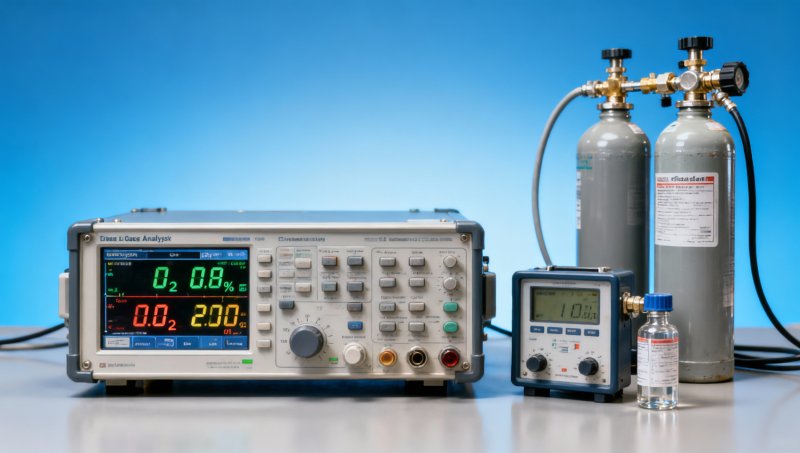
Accurate gas concentration measurements directly impact operational safety, regulatory compliance, and process efficiency across industries. Dual gas analyzers—whether measuring O2/CO2 in combustion processes or H2S/CH4 in oil & gas applications—require periodic calibration to maintain ±0.5% FS accuracy. Uncalibrated instruments can drift by 2-5% annually, leading to false readings that jeopardize safety protocols and product quality.
Modern analyzers with ppm/ppb detection capabilities demand even stricter calibration protocols. Trace-level measurements for semiconductor manufacturing or pharmaceutical cleanrooms often require NIST-traceable calibration gases with ≤1% uncertainty. The consequences of improper calibration range from EPA non-compliance fines exceeding $50,000 to catastrophic equipment failures in high-temperature applications.
Key Risks of Poor Calibration Practices
- Safety incidents from undetected toxic gas leaks (H2S, CO, etc.)
- Product quality deviations in food packaging or pharmaceutical processes
- Regulatory violations under OSHA 29 CFR 1910 or EPA 40 CFR Part 60
- Premature sensor degradation requiring $1,500-$5,000 replacements
Step-by-Step Calibration Process for Dual Gas Analyzers
The following 7-step procedure applies to most dual-channel analyzers, including infrared, electrochemical, and laser-based models. Always consult your device manual for model-specific requirements.
For critical applications like refinery flare gas monitoring, perform 3-point calibration (zero, mid-range, span) every 30 days. Portable analyzers used in confined space entry require bump testing before each use with 50% LEL calibration gas.
Advanced Calibration Techniques
High-temperature analyzers (up to 1800°C) need special consideration:
- Allow 2-hour thermal equilibrium before calibration
- Use heated sample lines maintained at 150-200°C
- Verify pressure compensation for process conditions
Selecting Calibration Equipment: Technical Specifications
Choosing appropriate calibration gases and equipment requires matching your analyzer's specifications with these critical parameters:
For corrosive gases like HCl or SO2, specify electropolished stainless steel regulators with PTFE diaphragms. Moisture-sensitive applications require calibration gases with ≤5 ppmv H2O content.
Maintenance & Troubleshooting Guide
Implement these best practices to extend analyzer lifespan and reduce calibration frequency by 30-50%:
Preventive Maintenance Schedule
- Daily: Verify flow rates, check for leaks
- Weekly: Clean sample filters, inspect tubing
- Monthly: Full calibration, sensor performance test
- Quarterly: Replace consumables (filters, membranes)
Common Calibration Issues & Solutions
Problem: Slow response during span calibration
Solution: Check for clogged filters (replace if ΔP > 2 psi) or exhausted chemical scrubbers
Problem: Drift between calibrations
Solution: Verify storage conditions (avoid >85% RH), check for contaminated calibration gas
Industry-Specific Calibration Considerations
Different applications require tailored calibration approaches:
Environmental Monitoring
CEMS (Continuous Emissions Monitoring Systems) under 40 CFR Part 75 require:
- Quarterly RATA (Relative Accuracy Test Audits)
- Daily calibration drift checks ≤2% of span
- NIST-traceable PS-9 calibration gases
Pharmaceutical Manufacturing
GMP environments demand:
- 21 CFR Part 11 compliant calibration records
- Annual third-party certification
- Validation of calibration gases against primary standards
Conclusion & Next Steps
Proper calibration of dual gas analyzers combines technical precision with regulatory awareness. By implementing these protocols, facilities can achieve:
- Consistent measurement accuracy within ±1% of reading
- Reduced compliance risks and audit findings
- Extended sensor life (3-5 years vs. 1-2 years)
For complex applications or regulatory questions, consult with our certified gas analysis specialists. Request a site-specific calibration protocol or schedule on-site training for your technical team.
Recommended for You
 IEC Approves China-Led Standard for Smart Sensor Semantic InteroperabilityIEC TR 63372 smart sensor semantic interoperability standard—led by China—cuts export certification time by 30%. Discover how it reshapes global IoT integration.
 MIIT Launches Joint Enforcement on EV Battery RecyclingMIIT's EV battery recycling enforcement targets BMS data leaks, illegal dismantling & electrolyte disposal—key for exporters, testers & procurement teams needing GDPR/CCPA compliance.
 SAMR Launches Unified Market Action on Testing & CertificationSAMR Launches Unified Market Action on Testing & Certification—tackling fragmentation, redundant fees & cross-border recognition barriers for exporters and manufacturers.
 Fifteenth Five-Year Urban Renewal Plan Approved, Signaling Overseas Procurement for Smart Water & Environmental Monitoring DevicesSmart water & environmental monitoring devices gain global momentum as China’s 15th Five-Year Urban Renewal Plan mandates intelligent infrastructure—key for Belt and Road exports.
 IMF Warns AI Amplifies Financial Cybersecurity RisksAI amplifies financial cybersecurity risks—IMF warns. Discover how XAI verification, adversarial attacks, and regulatory mandates impact AI detection equipment, FinTech, and banks.
 Tmall Health Launches 'Health Supplement Safety Alliance'Health Supplement Safety Alliance launched by Tmall Health—boosting traceability, lab credibility & cross-border quality for brands like By-Health and Centrum.
 EN IEC 61000-6-4:2026 EMC Standard Effective for AI Edge DevicesEN IEC 61000-6-4:2026 EMC standard is live—15% stricter radiated limits for AI edge devices. Act now to secure EU industrial IoT procurement eligibility.
 APEC Auto Dialogue Confirms Semi-Solid Battery Deployment and Fast ChargingSemi-solid battery deployment & 15-min fast charging confirmed at APEC Auto Dialogue—spurring global demand for China-made battery testing equipment, BMS validation, and thermal runaway simulation solutions.
 EU Imposes Final Anti-Dumping Duty on Chinese Adipic AcidEU anti-dumping duty on Chinese adipic acid takes effect May 2026—impacting pH meters, sensors & analytical instruments. Act now to secure supply chains.
 Colombia Upholds Anti-Dumping Duties on Chinese Acrylic SheetsColombia Upholds Anti-Dumping Duties on Chinese Acrylic Sheets — 32.7% tariff extended for 5 years. Critical for exporters of medical, lab & analytical instrument enclosures.
 Multi Component Analyzer Cost Trends for 2026 Expansion PlansMulti component analyzer cost trends for 2026: discover key pricing drivers, hidden costs, and smart supplier strategies to budget accurately and maximize expansion ROI.
 SR-2050 Analyzer Maintenance Points That Affect Service LifeSR-2050 analyzer maintenance points that directly impact service life, accuracy, and uptime. Learn how cleaning, calibration, inspection, and environment control reduce failures.
 SR-S2000 Shelter: Common Setup Mistakes to AvoidSR-S2000 shelter setup mistakes can cause heat, moisture, and maintenance issues. Learn what to avoid for safer installation, stable performance, and longer equipment life.
 Custom Gas Analyzer Import Risks and Spec Mismatch IssuesCustom gas analyzer import risks can derail projects through spec mismatch, compliance gaps, and integration issues. Learn how buyers can compare suppliers, verify requirements, and avoid costly rework.
 When to Choose the SR-2030 Oxygen Analyzer for ComplianceSR-2030 oxygen analyzer: learn when it’s the right choice for compliance, safety, and stable process control. Explore key selection checks, audit-ready benefits, and deployment tips.
 SR-EX Analyzer Price Factors in 2026 ProjectsSR-EX analyzer price factors explained for 2026 projects: compare scope, compliance, integration, and lifecycle costs to approve budgets with less risk and more confidence.
 SR-2070 Analyzer vs Alternatives: Key Performance ChecksSR-2070 analyzer vs alternatives: compare accuracy, drift, response time, calibration effort, and lifecycle cost to choose a more reliable, efficient analyzer with confidence.
 2026 Market Trends for Predictive Analytics InstrumentsPredictive analytics instruments are reshaping 2026 market strategy. Explore key trends, risks, and buying checkpoints to improve uptime, integration, and ROI across industries.
 Wireless Measurement Systems: What Impacts Data Stability Most?Wireless measurement systems perform best when data stays stable. Discover the key factors affecting reliability, accuracy, and long-term performance across industrial applications.
 How Remote Monitoring Devices Cut Downtime in Field OperationsRemote monitoring devices help field teams detect issues early, reduce downtime, and improve maintenance planning. Discover how they keep operations reliable and on schedule.
 5th TCM High-Quality Development Conference Highlights NIR & AI QC for Global ExportNIR & AI QC take center stage at the 5th TCM High-Quality Development Conference—key for global export compliance, real-time quality control, and smart manufacturing.
 IEC Approves China-Led Guide for Smart Sensor Semantic InteroperabilityIEC TR 63388 semantic interoperability guide for smart sensors—China-led, globally approved. Boost IIoT integration across OPC UA, MQTT & TSN now.
 PBOC April Data Shows Strong Credit Flow to Tech & Inclusive LendingPBOC April data reveals surging tech & inclusive lending—boosting global demand for calibrated lab equipment, R&D instruments, and metrology-ready exports.
 SABIC Launches 'Smart Factory 2030' with China-Focused Online Analysis ProcurementSABIC's 'Smart Factory 2030' launches China-focused online analysis procurement—pH/ORP, IR gas & LIBS analyzers. SIL2-certified suppliers, act now!
 China Completes '14th Five-Year' Smart CNC Line R&DChina's '14th Five-Year' Smart CNC Line R&D is complete — boosting reliability & cutting delivery time for precision metrology equipment. Discover how it transforms global procurement.
 FDA Updates IVD Software Guidance: AI Diagnostic Devices Must Provide Verifiable Training DatasetsFDA mandates verifiable training datasets for AI diagnostic devices — critical for medical imaging, DICOM tools, and regulatory services entering the U.S. market.
 EU EN IEC 61000-6-4:2026 EMC Standard Takes EffectEU EN IEC 61000-6-4:2026 EMC standard is live—stricter radiated emission limits for AI edge devices. Act now to avoid EU customs delays & certification bottlenecks.
 APEC Auto Dialogue Confirms Semi-Solid Battery Deployment and 15-Minute Fast ChargingSemi-solid battery deployment and 15-minute fast charging confirmed at APEC Auto Dialogue — driving urgent global demand for BMS validation, thermal runaway, and high-voltage test equipment.
 MIIT Launches Joint Enforcement on EV Battery RecyclingMIIT Launches Joint Enforcement on EV Battery Recycling: Critical for battery test equipment exporters, data compliance, and global supply chains—act now to avoid delays.
 DIA China Annual Meeting Sells Out Despite $7,000+ FeeDIA China Annual Meeting sells out despite $7,000+ fee — a powerful signal for pharma exporters, manufacturers & regulatory service providers targeting China’s innovation ecosystem.
 Continuous Monitoring Solutions and the Shift Toward Smarter ComplianceContinuous monitoring solutions help enterprises strengthen compliance with real-time visibility, traceable data, and faster risk response. Discover how smarter oversight improves resilience and audit confidence.
 Confined Space Monitors: Key Mistakes That Raise Safety RiskConfined space monitors can fail when selection, bump testing, calibration, or sampling is wrong. Learn the biggest safety mistakes and how to prevent false safe readings.






















Search Categories
Search Categories
Latest Article
- IEC Approves China-Led Standard for Smart Sensor Semantic InteroperabilityIEC TR 63372 smart sensor semantic interoperability standard—led by China—cuts export certification time by 30%. Discover how it reshapes global IoT integration.Posted by:
- MIIT Launches Joint Enforcement on EV Battery RecyclingMIIT's EV battery recycling enforcement targets BMS data leaks, illegal dismantling & electrolyte disposal—key for exporters, testers & procurement teams needing GDPR/CCPA compliance.Posted by:
- SAMR Launches Unified Market Action on Testing & CertificationSAMR Launches Unified Market Action on Testing & Certification—tackling fragmentation, redundant fees & cross-border recognition barriers for exporters and manufacturers.Posted by:
Please give us a message
