
Quality Control Analyzer Results Vary by Shift: What Causes It?


When quality control analyzer results vary by shift, the issue rarely comes from a single source. For quality teams and safety managers, these fluctuations can signal hidden problems in operators, sampling methods, calibration routines, environmental conditions, or process stability. Understanding why a quality control analyzer performs differently across shifts is the first step toward improving consistency, reducing risk, and building a more reliable quality management system.
Why Shift-to-Shift Variation Matters in Real Operating Scenarios
In instrumentation-heavy industries, a quality control analyzer is often used across 2 or 3 daily shifts, sometimes continuously for 16 to 24 hours. When results drift between morning, evening, and night teams, the risk is not limited to a single test point. It can affect product release, process control limits, rework decisions, and safety response timing. For quality personnel, this means unstable data; for safety managers, it can mean delayed recognition of a real process deviation.
The same analyzer may perform acceptably in one application and poorly in another because the operating context changes. A laboratory bench analyzer in a controlled room at 22°C behaves differently from an online analyzer installed near a hot production line where ambient temperature swings by 8°C to 12°C over a shift. That is why root-cause analysis must begin with the use scenario, not only the instrument itself.
Another reason this issue deserves attention is that shift variation is often gradual. A 1.5% bias on Shift A, a 2.0% sample handling loss on Shift B, and an extra 10-minute delay before testing on Shift C may not trigger alarms separately. Together, they create a pattern that makes the quality control analyzer look unreliable, even when the deeper problem is inconsistency in people, process, and environment.
- Batch manufacturing: shift variation can change release decisions for borderline lots.
- Continuous processing: unstable analyzer trends can distort feedback control loops.
- Safety-critical operations: delayed or inconsistent measurements may mask abnormal conditions.
- Multi-site quality systems: local shift practices can reduce comparability across plants.
For this reason, a useful investigation should answer three practical questions: in which operating scenarios does the variation appear, which shift-specific factors differ by more than a normal tolerance band, and what corrective action can reduce variation within 7 to 30 days without disrupting production continuity.
Typical Application Scenarios Where a Quality Control Analyzer Shows Different Results
Not every site uses a quality control analyzer in the same way. Some rely on it for incoming material verification, some for in-process monitoring, and others for final quality confirmation or environmental safety screening. Each scenario creates different failure modes. Looking at the scenario first helps teams avoid the common mistake of recalibrating the analyzer repeatedly while leaving the true source of variation untouched.
Below is a practical comparison of common use scenarios. It helps quality and safety teams identify where shift-to-shift inconsistency is most likely to originate and what should be checked first. The values shown are typical operating ranges rather than fixed rules, and they should be adapted to the actual instrument, sample matrix, and internal quality standard.
This table shows why a quality control analyzer cannot be judged in isolation. In incoming inspection, people and sample handling dominate the variation. In online applications, the analyzer may be accurate while the process itself is less stable during certain hours. In release testing, operational pressure near shift change can add subtle bias. Different scenarios require different controls.
A useful field practice is to compare at least 10 to 20 data points per shift over 1 to 2 weeks and then review operator logs, calibration events, maintenance activity, and process alarms on the same timeline. This often reveals whether the variation is systematic, random, or linked to a specific production condition.
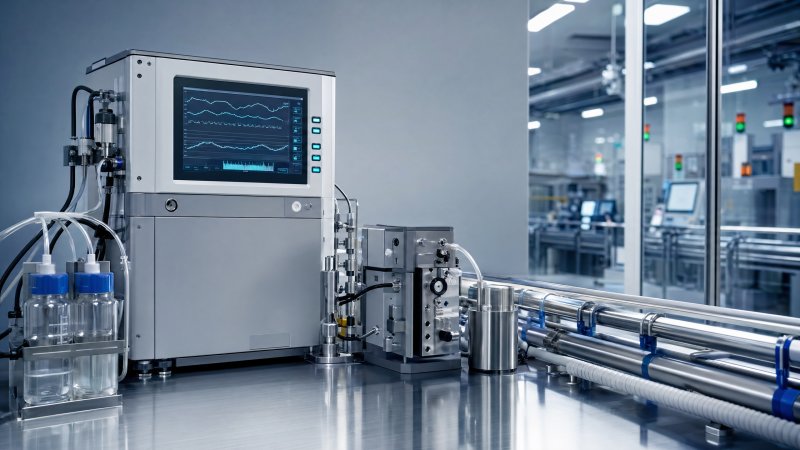
Scenario 1: Laboratory Testing Across Multiple Operators
In laboratory environments, the quality control analyzer usually benefits from stable temperature, controlled humidity, and cleaner sample conditions. Yet shift-to-shift variation still occurs because operator technique matters more than many teams expect. A 30-second difference in homogenization, a 2 mL pipetting inconsistency, or using a different waiting time before reading can be enough to move results beyond an internal action limit.
This scenario is especially common when one shift includes experienced technicians while another relies on newer staff or temporary coverage. The analyzer may appear inconsistent, but the pattern often follows personnel changes rather than instrument failure. Reviewing duplicate tests, standard recovery checks, and handover notes can quickly show whether human factors are driving the problem.
For labs, the first control target should be method discipline. If one team calibrates every 8 hours and another every 12 hours, or one shift accepts a blank check slightly outside the preferred range, data alignment will deteriorate. Tightening procedural control often improves consistency faster than replacing hardware.
Scenario 2: At-Line or In-Process Manufacturing Control
In industrial manufacturing, a quality control analyzer used at-line or online is exposed to changing process loads, utility fluctuations, dust, vibration, and operator interruptions. Shift variation may reflect actual process dynamics rather than poor analyzer quality. Night shifts, for example, may run at lower staffing levels, slower response times, or different production speeds, which changes sample representativeness and instrument attention.
Another issue in this scenario is maintenance timing. Purging filters, draining condensate, cleaning probes, and checking sample transport lines are often done differently between shifts. If a sample line starts partially blocked, the quality control analyzer may show lagging or damped results for several hours. The problem is operational, but the analyzer gets blamed because it is where the variation becomes visible.
For in-process use, teams should compare analyzer data with upstream process variables such as pressure, temperature, flow, and cycle timing. If the analyzer deviation aligns with process load every day between 18:00 and 22:00, then the issue may not be the analyzer at all. This is why integrated instrumentation review is critical in automated production environments.
Scenario 3: Safety and Environmental Monitoring Under Changing Conditions
Safety managers often encounter a different pattern. A quality control analyzer used for environmental or process safety purposes may show varying baseline values as ambient conditions change across the day. Temperature drift, moisture loading, ventilation changes, and background contamination can all affect measurement stability. Even a 5°C ambient swing can matter if the analyzer installation lacks proper thermal protection.
In this scenario, alarm behavior also matters. One shift may respond immediately to unstable readings and initiate checks, while another may assume the analyzer is “always noisy” and delay intervention. That creates both data inconsistency and safety exposure. The instrument is part of the issue, but organizational response discipline is equally important.
The best practice here is to separate measurement instability from alarm management instability. Review zero drift, span drift, environmental conditions, and operator response time together. If the average acknowledgment delay differs by more than 5 to 10 minutes between shifts, the site may have a control problem that extends beyond analyzer performance alone.
What Usually Causes a Quality Control Analyzer to Vary by Shift
Once the scenario is clear, the next step is to break causes into controllable categories. In most facilities, shift variation comes from five areas: operator behavior, sampling method, calibration and verification routine, environmental conditions, and process instability. These categories often overlap, which is why quick fixes sometimes fail.
The table below provides a practical diagnostic framework for teams using a quality control analyzer in mixed laboratory and industrial settings. It is designed for daily troubleshooting, weekly review meetings, or internal CAPA discussions when different shifts report inconsistent analyzer performance.
This framework is useful because it shifts the discussion from blame to evidence. If the quality control analyzer is checked only when an outlier appears, teams may miss pattern-based causes. A better approach is to review one full week of readings, then compare them against calibration timestamps, operator identity, sample age, and production conditions.
Most Overlooked Contributors
Some causes are easy to miss because they do not look like “instrument problems.” Examples include sample containers from different suppliers, inconsistent rinse solvent quality, maintenance completed without a post-check, and handover gaps during the 15 to 30 minutes around shift change. These details can have a measurable impact, especially when the analyzer is being used near specification limits.
Another overlooked factor is acceptance culture. One shift may retest any unusual result, while another may accept the first reading unless it is clearly impossible. This changes the data population and can make the quality control analyzer seem more variable than it truly is. Quality systems should define when retesting is allowed and how results are documented.
- Set the same calibration verification frequency for all shifts, such as every 8 hours or every batch change.
- Define maximum sample hold time, for example 15 minutes, 30 minutes, or another validated limit.
- Use a standardized handover checklist with at least 6 to 10 mandatory entries.
- Track repeat-test rate by shift; if one shift exceeds the others by 20% or more, investigate method consistency.
How to Judge Which Corrective Action Fits Your Scenario
Corrective action should match the business context. A laboratory serving product release needs method consistency and traceable records. A production line needs robust analyzer uptime and fast verification. A safety monitoring point needs reliable alarms and environmental protection. Applying the wrong fix wastes time. For example, adding more calibration checks will not solve poor sample representativeness.
The most effective sites use a scenario-based decision process. First, confirm whether the quality control analyzer is measuring a stable or unstable process. Second, decide whether variation is mainly procedural or technical. Third, set a correction window. Some issues can be controlled within 24 hours, while others require 2 to 6 weeks of procedural standardization, enclosure improvement, or maintenance planning.
If multiple shifts use the same analyzer, improvement should be visible in data. A practical target is to reduce between-shift bias, cut repeat-test frequency, and improve agreement on control samples over at least 10 consecutive operating days. Without measurable follow-up, teams may implement changes but still not know whether consistency truly improved.
A Practical Evaluation Checklist
- Verify whether the same sample tested by different shifts produces comparable results within your internal tolerance band.
- Check whether calibration, zero, span, or reference verification timing differs across shifts.
- Review environmental conditions during the highest-variation period, including temperature, humidity, dust, or vibration.
- Compare analyzer data against process records to determine whether the variation is real process movement.
- Audit handover routines, maintenance logs, and alarm response records for incomplete or inconsistent practice.
For many organizations, this checklist reveals that the quality control analyzer is only one part of a wider measurement system. That system includes sample collection, consumables, utilities, operator judgment, and maintenance timing. When the full system is stabilized, analyzer consistency typically improves as a result.
When to Consider Equipment or System Upgrades
If procedural controls are already mature but variation continues, a hardware review may be justified. Common triggers include repeated drift beyond acceptable limits, aging sensors, unstable sample conditioning, insufficient environmental protection, or analyzer architecture that no longer matches the process duty. In online applications, even upgrading a sample handling module can improve repeatability significantly.
However, upgrades should be based on evidence. Before changing the analyzer, document current precision, bias pattern, calibration stability, downtime, and maintenance frequency over at least 2 to 4 weeks. This makes it easier to compare options and justify whether the issue requires a component change, a full replacement, or simply a better operating procedure.
Common Misjudgments That Delay Improvement
One common misjudgment is assuming that identical analyzer models will automatically produce identical results under all shifts. In reality, the surrounding conditions matter. A quality control analyzer installed in a clean lab and the same model installed near a high-vibration production skid do not live in the same measurement environment. Teams should judge performance in context, not by model name alone.
Another mistake is treating all variation as bad. Some shift differences reflect true process changes caused by feedstock, startup timing, utility load, or production speed. If the process actually changes by 3% to 5% between shifts, the analyzer may be correctly reporting reality. The goal is to separate real process behavior from measurement inconsistency before deciding on corrective action.
A third misjudgment is relying on isolated retests. Repeating one suspicious sample may help in the moment, but it does not replace trend analysis. Quality personnel and safety managers should review repeatability, reproducibility, sample age, and event timing together. That is how a temporary anomaly becomes a diagnosable pattern.
Signs You Need a Broader System Review
Consider a broader review if the quality control analyzer passes verification checks but production teams still distrust the data, if different shifts rely on workarounds rather than the written method, or if maintenance intervention temporarily improves results but the same issue returns within 7 to 14 days. These are signs of system-level inconsistency, not just instrument drift.
It is also worth expanding the review when analyzer variation affects both quality and safety decisions. In those cases, the business impact is larger than a test discrepancy. It can influence release timing, waste generation, compliance risk, and confidence in automated control. A cross-functional review involving quality, operations, maintenance, and EHS is often the fastest path to a durable solution.
Contact Us for Scenario-Based Analyzer Support
If your quality control analyzer results vary by shift, the right answer depends on your application scenario, operating environment, sampling practice, and control requirements. We support quality teams and safety managers in evaluating analyzer-related issues across laboratory testing, in-process monitoring, industrial online analysis, and compliance-focused measurement points.
You can contact us to discuss practical topics such as parameter confirmation, analyzer selection, sampling configuration, calibration strategy, environmental suitability, delivery lead time, customization options, and integration with your existing instrumentation system. If you are comparing solutions, we can also help clarify which factors matter most for repeatability, shift consistency, and long-term maintenance control.
For projects in active planning or troubleshooting stages, send us your use scenario, current analyzer type, sample characteristics, operating schedule, and the main symptoms observed across shifts. We can help you review likely causes, define a more suitable technical path, and support quotation communication or sample-based evaluation where appropriate.
Recommended for You
 US-China Trade Talks Agree on Tariff Cuts for Key Test Equipment PartsUS-China tariff cuts on key test equipment parts—like pressure sensor chips & infrared thermal imaging modules—boost margins, cut costs, and strengthen global competitiveness for manufacturers.
 G7 Paris Meeting Focuses on Critical Mineral Supply SecurityCritical mineral supply security takes center stage at the G7 Paris meeting—key for rare-earth sensor exporters. Learn EU compliance impacts & actionable readiness steps.
 Brent Crude Surpasses $106/bbl, Raising Sea Freight Costs for Small Testing Equipment ExportsBrent Crude Surpasses $106/bbl—sea freight costs surge, impacting small testing equipment exporters. Learn how SMEs can adapt pricing, terms & logistics now.
 WTO Forecasts 1.9% Global Goods Trade Growth in 2026 Amid Supply Chain ShorteningWTO forecasts 1.9% global goods trade growth in 2026—sparking nearshoring demand for testing equipment, calibration services & OTA-ready solutions in ASEAN, Middle East & Mexico.
 UK-China Export Control Working Group Holds Second Meeting in LondonUK-China Export Control Working Group: Key updates on dual-use items—laser interferometers, quantum sensors & oscilloscopes. Learn compliance implications for exporters now.
 Japan's 10Y Yield Drop to 2.745% Lifts Yen, Raising China-Made Testing Equipment CostsJapan's 10Y yield drop to 2.745% lifts yen, raising costs for China-made testing equipment — explore FX impacts, procurement shifts & strategic responses.
 KOSPI 200 Futures Circuit Breaker Triggered, Impacting Industrial Automation Instrument Export TimelinesKOSPI 200 futures circuit breaker triggered — impact on PLC modules, transmitters & fieldbus instrument exports to Korea. Urgent timeline insights inside.
 South Korea’s Chip Exports Surge 202% in May 2026 Amid AI Test Equipment DemandAI test equipment demand surges as South Korea’s chip exports jump 202% in May 2026 — PCIe 6.0 & USB4.1 validation tools see sharp global procurement rise.
 Emission Gas Analyzer News in 2026: Regulatory Shifts Affecting DemandEmission gas analyzer demand is changing fast in 2026 as new regulations tighten limits, expand continuous monitoring, and raise data compliance standards. Explore key trends shaping smarter buying decisions.
 When a High Accuracy Analyzer Delivers Real ROI in Process ControlHigh accuracy analyzer ROI starts with better process control. Learn where tighter measurements cut waste, improve stability, reduce compliance risk, and deliver measurable operational savings.
 SR-2030P Analyzer Import Updates in 2026: Compliance Points to ReviewSR-2030P analyzer import updates for 2026: review classification, certification, customs documents, and market access risks to reduce delays, control costs, and source with confidence.
 Industrial Oxygen Analyzer Price Trends in 2026: Cost Drivers to WatchIndustrial oxygen analyzer price trends in 2026 explained: compare sensor, compliance, installation, and maintenance cost drivers to make smarter, lower-risk buying decisions.
 Laser Oxygen Analyzer or Industrial Oxygen Analyzer: Which Fits BetterLaser oxygen analyzer or industrial oxygen analyzer? Compare speed, accuracy, maintenance, and cost to find the best fit for smarter, more reliable process control.
 ATEX Gas Analyzer Demand in 2026: What Is Shaping the MarketATEX gas analyzer demand in 2026 is driven by safety, digital integration, and lifecycle value. See what shapes buying decisions across industry, utilities, hydrogen, and automation.
 Fixed Gas Analyzer vs Portable Options: What Matters for Plant UseFixed gas analyzer or portable detector for plant use? Compare safety, response time, maintenance, and cost to choose the right monitoring solution with confidence.
 Explosion Proof Analyzer Selection Mistakes That Increase Site RiskExplosion proof analyzer selection mistakes can raise compliance, maintenance, and safety risks. Learn the key errors to avoid and how to choose a safer, more reliable solution.
 SR-2000 Infrared Analyzer: Key Performance Checks Before InstallationSR-2000 infrared analyzer pre-installation guide: learn how to verify accuracy, drift, site readiness, and calibration support to reduce startup risk and ensure stable long-term performance.
 How to Choose a Continuous Gas Analyzer for Stable 24/7 MonitoringContinuous gas analyzer selection guide for stable 24/7 monitoring. Learn how to compare accuracy, response time, maintenance, and integration for smarter industrial decisions.
 IEC Approves China-Led Standard for Smart Sensor Semantic InteroperabilityIEC TR 63372 smart sensor semantic interoperability standard—led by China—cuts export certification time by 30%. Discover how it reshapes global IoT integration.
 MIIT Launches Joint Enforcement on EV Battery RecyclingMIIT's EV battery recycling enforcement targets BMS data leaks, illegal dismantling & electrolyte disposal—key for exporters, testers & procurement teams needing GDPR/CCPA compliance.
 SAMR Launches Unified Market Action on Testing & CertificationSAMR Launches Unified Market Action on Testing & Certification—tackling fragmentation, redundant fees & cross-border recognition barriers for exporters and manufacturers.
 Fifteenth Five-Year Urban Renewal Plan Approved, Signaling Overseas Procurement for Smart Water & Environmental Monitoring DevicesSmart water & environmental monitoring devices gain global momentum as China’s 15th Five-Year Urban Renewal Plan mandates intelligent infrastructure—key for Belt and Road exports.
 IMF Warns AI Amplifies Financial Cybersecurity RisksAI amplifies financial cybersecurity risks—IMF warns. Discover how XAI verification, adversarial attacks, and regulatory mandates impact AI detection equipment, FinTech, and banks.
 Tmall Health Launches 'Health Supplement Safety Alliance'Health Supplement Safety Alliance launched by Tmall Health—boosting traceability, lab credibility & cross-border quality for brands like By-Health and Centrum.
 EN IEC 61000-6-4:2026 EMC Standard Effective for AI Edge DevicesEN IEC 61000-6-4:2026 EMC standard is live—15% stricter radiated limits for AI edge devices. Act now to secure EU industrial IoT procurement eligibility.
 APEC Auto Dialogue Confirms Semi-Solid Battery Deployment and Fast ChargingSemi-solid battery deployment & 15-min fast charging confirmed at APEC Auto Dialogue—spurring global demand for China-made battery testing equipment, BMS validation, and thermal runaway simulation solutions.
 EU Imposes Final Anti-Dumping Duty on Chinese Adipic AcidEU anti-dumping duty on Chinese adipic acid takes effect May 2026—impacting pH meters, sensors & analytical instruments. Act now to secure supply chains.
 Colombia Upholds Anti-Dumping Duties on Chinese Acrylic SheetsColombia Upholds Anti-Dumping Duties on Chinese Acrylic Sheets — 32.7% tariff extended for 5 years. Critical for exporters of medical, lab & analytical instrument enclosures.
 Multi Component Analyzer Cost Trends for 2026 Expansion PlansMulti component analyzer cost trends for 2026: discover key pricing drivers, hidden costs, and smart supplier strategies to budget accurately and maximize expansion ROI.
 SR-2050 Analyzer Maintenance Points That Affect Service LifeSR-2050 analyzer maintenance points that directly impact service life, accuracy, and uptime. Learn how cleaning, calibration, inspection, and environment control reduce failures.
 SR-S2000 Shelter: Common Setup Mistakes to AvoidSR-S2000 shelter setup mistakes can cause heat, moisture, and maintenance issues. Learn what to avoid for safer installation, stable performance, and longer equipment life.
 Custom Gas Analyzer Import Risks and Spec Mismatch IssuesCustom gas analyzer import risks can derail projects through spec mismatch, compliance gaps, and integration issues. Learn how buyers can compare suppliers, verify requirements, and avoid costly rework.






Search Categories
Search Categories
Latest Article
- US-China Trade Talks Agree on Tariff Cuts for Key Test Equipment PartsUS-China tariff cuts on key test equipment parts—like pressure sensor chips & infrared thermal imaging modules—boost margins, cut costs, and strengthen global competitiveness for manufacturers.Posted by:
- G7 Paris Meeting Focuses on Critical Mineral Supply SecurityCritical mineral supply security takes center stage at the G7 Paris meeting—key for rare-earth sensor exporters. Learn EU compliance impacts & actionable readiness steps.Posted by:
- Brent Crude Surpasses $106/bbl, Raising Sea Freight Costs for Small Testing Equipment ExportsBrent Crude Surpasses $106/bbl—sea freight costs surge, impacting small testing equipment exporters. Learn how SMEs can adapt pricing, terms & logistics now.Posted by:
Please give us a message
