
Safety Gas Analyzer Response Time Can Change the Outcome


In critical environments, a safety gas analyzer does more than detect hazards—it buys time for action. When response time is too slow, even a small delay can increase safety risks, disrupt operations, and affect decision-making. Understanding how fast a safety gas analyzer reacts is essential for end users who rely on accurate, real-time readings to protect people, equipment, and the surrounding environment.
Why Response Time Matters Differently Across Real-World Use Scenarios
For end users, the most important question is not simply whether a safety gas analyzer can detect gas, but whether it can react fast enough for the environment it is installed in. A delay of 5 to 20 seconds may seem small on paper, yet in a confined area, a fast-moving process line, or a high-temperature combustion system, that interval can shape evacuation timing, alarm logic, shutdown behavior, and operator response.
Different industries within the broader instrumentation field use gas analysis in very different ways. A wastewater plant may tolerate slower concentration changes than a chemical dosing room. A laboratory exhaust line may need stable analytical accuracy, while a boiler room may prioritize immediate warning. This is why a safety gas analyzer should always be judged by scenario, not by brochure language alone.
Response time is often discussed as T90, meaning the time required for the instrument to reach 90% of the final reading after exposure to gas. In many industrial and environmental applications, common response ranges may fall between under 10 seconds and 60 seconds, depending on sensor type, sample path length, gas diffusion conditions, pump speed, and filter condition. Users who understand these variables make better purchasing and maintenance decisions.
What changes response time in practice
- Sensor principle, such as electrochemical, infrared, catalytic, photoionization, or thermal conductivity.
- Sampling method, including diffusion detection versus pump-driven sampling with tubing lengths of 1 to 30 meters.
- Environmental conditions such as humidity, temperature swings, dust loading, and air velocity around the sensor head.
- Maintenance status, especially blocked filters, aging sensors, contaminated sampling lines, and calibration drift.
This topic matters because many users compare analyzers by gas type and price first, then only later realize that installation location, alarm setpoints, and sample transport delay can have equal or greater influence on actual protection. In short, the same safety gas analyzer may perform acceptably in one setting and inadequately in another if the response requirement is misunderstood.
Typical Application Scenarios Where Response Time Can Change the Outcome
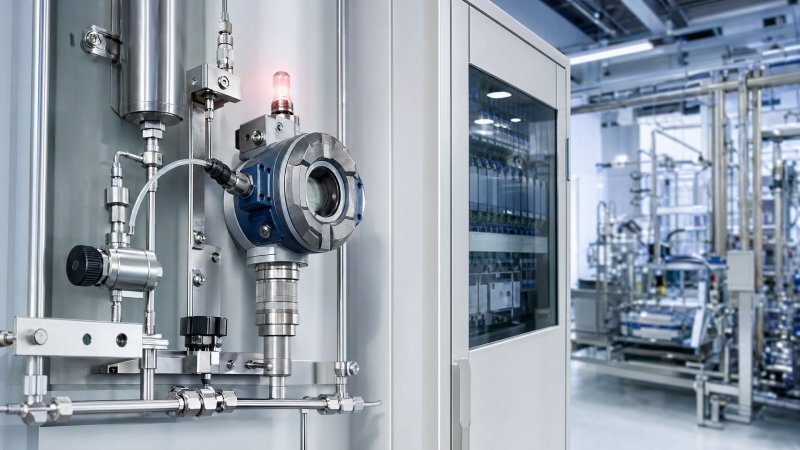
A practical way to evaluate a safety gas analyzer is to divide use cases into specific environments. End users in manufacturing, energy, building services, environmental monitoring, laboratories, and utility operations face different gas release patterns. Some releases are sudden and concentrated; others are gradual and intermittent. Some require shutdown in less than 10 seconds, while others support trend-based intervention over several minutes.
The table below compares common scenarios and shows why a one-size-fits-all view can lead to poor selection. It focuses on exposure speed, operational consequence, and the level of response urgency most users should expect when reviewing a safety gas analyzer for purchase or replacement.
This comparison shows that response time should be evaluated together with risk profile and user workflow. For example, a fixed analyzer with a 30-second effective delay may still be useful for a stable utility room, but the same delay could be unacceptable for confined-space pre-entry checks or a gas manifold area where concentration can spike rapidly.
Three scenario groups every buyer should assess
Fast-changing hazard zones
These include tank entry, process skids, enclosed pits, and service corridors near fuel or solvent handling. In these settings, users often need a safety gas analyzer that provides a strong response within roughly 10 to 15 seconds under realistic field conditions, not only in ideal laboratory testing. Portable units, bump test readiness, and clear alarms become central.
If air movement is poor and stratification is possible, analyzer placement also matters. A fast sensor installed 2 meters away from the actual gas pooling point may still fail the user in practice. This is why installation planning is part of response-time performance, not a separate issue.
In these areas, users should also ask about recovery time, not just rising response time. If gas concentration drops after ventilation but the reading clears too slowly, work restart decisions may be delayed and operating efficiency suffers.
Moderate-risk process monitoring areas
Examples include boiler houses, compressor rooms, paint mixing rooms, and utility tunnels. Here, the safety gas analyzer often works with ventilation systems, warning lights, or local shutdown logic. A response range around 15 to 30 seconds may be workable depending on gas type, room size, and mechanical ventilation rate.
The main concern for end users is integration. If the analyzer output triggers a fan, valve, or building management signal, even a modest delay can extend the time before corrective action begins. Users should therefore look at system response, not only sensor response. Sampling pump delay, controller processing, and relay activation all add to total time.
For these settings, a stable and maintainable safety gas analyzer can be a better long-term choice than the fastest available model if the speed difference is small but maintenance burden is much higher. The right balance depends on staffing, inspection frequency, and tolerance for downtime.
Slow-trend or compliance-oriented areas
Some environmental monitoring points, exhaust ducts, storage perimeters, and controlled laboratories deal more with trend observation than sudden emergency release. In these cases, a safety gas analyzer may focus on stable readings, low drift, and data continuity over 8-hour, 24-hour, or longer monitoring periods.
Even here, response time still matters. A slower analyzer can blur short exposure peaks and create a false sense of stability. If the process includes batch cycles, periodic venting, or startup purges, users should confirm whether short-duration gas events can still be captured with enough clarity to support safe decisions.
This scenario often calls for a careful trade-off between analytical precision, sample conditioning, and acceptable delay. A user buying for this application should review both the instrument specification and the full sampling layout, especially if heated lines, moisture traps, or long tubing are involved.
How Different Users Should Judge a Safety Gas Analyzer
A facility engineer, EHS manager, plant supervisor, and laboratory buyer may all use the term safety gas analyzer, but they often mean different things. One person may need portable entry safety, another may need fixed-point room protection, and a third may need process-linked online monitoring. Understanding the user’s role helps determine which response-time expectation is realistic and which features should be prioritized.
In the instrumentation industry, buyers also face a common challenge: product specifications are usually written around ideal test conditions. End users, however, live with tubing runs, maintenance limitations, dust, vibration, and changing ambient temperatures from 5°C to 45°C or wider. A suitable safety gas analyzer is one that performs consistently under those actual conditions.
The table below helps different user groups align their decision criteria with the scenario they manage. This reduces overbuying in low-risk spaces and under-protecting in high-risk ones.
This user-based view is important because good purchasing decisions come from matching performance to operational responsibility. A buyer responsible for 24/7 uptime may value service access and spare parts availability within 2 to 4 weeks, while an EHS lead may care more about alarm certainty in the first 15 seconds of a release event.
Questions users should ask before choosing
- What gas or gas combination must be detected, and is the risk toxic, combustible, oxygen-related, or process-related?
- Will the analyzer be installed directly at the risk point or through a sample line that adds 3 to 20 seconds of transport delay?
- Is the area occupied continuously, intermittently, or only during maintenance entry?
- Will the signal trigger alarms only, or also fans, valves, shutdowns, or remote notifications?
- How often can calibration, filter replacement, and sensor checks realistically be carried out?
A safety gas analyzer that matches these answers will usually perform better in service than one selected on gas type alone. This is especially true in mixed-use facilities where laboratory rooms, utility zones, and process areas each require different protection strategies.
Common Misjudgments That Lead to Slow or Misleading Detection
Many disappointing results are not caused by poor equipment design alone. They come from mismatches between the selected safety gas analyzer and the way it is applied. End users often assume that a published response number guarantees equal field performance, but real-world installation can significantly lengthen effective detection time.
One frequent error is ignoring sampling path delay. If a pumped system uses 15 meters of tubing and includes a dust filter plus a moisture trap, gas may take several additional seconds to reach the sensor even before the sensor begins responding. In some setups, the difference between specification and field reaction can exceed 10 to 25 seconds.
Another problem is selecting for sensitivity while underestimating maintenance. A highly responsive safety gas analyzer can still become unreliable if filters clog, pumps weaken, or sensor surfaces are contaminated. In dusty or humid spaces, maintenance intervals may need to be shortened from quarterly to monthly, depending on site conditions.
Common oversights by scenario
In confined spaces
Users may focus on portable device availability but overlook pre-entry testing behavior. If the analyzer is not bump tested or if the sensor has slow recovery from previous exposure, the displayed reading may not reflect current conditions accurately. This creates false confidence during entry approval.
Another oversight is gas layering. Some gases rise, others settle, and some mix unevenly. Taking a reading at only one height can delay recognition of a dangerous pocket even when the safety gas analyzer itself is operating correctly.
In these spaces, users should define a simple routine: test before entry, sample at multiple levels, confirm alarm function, and verify that the device response remains consistent within the expected service interval.
In fixed building or process monitoring
A common mistake is placing the analyzer where wiring is convenient rather than where gas accumulates first. For example, methane and hydrogen may collect higher, while heavier gases and some refrigerants may gather lower. A 1- to 2-meter placement error can matter as much as a sensor specification difference.
Users also sometimes overlook control logic delays. If a warning threshold is set too high or the controller uses time averaging, the total action delay may become much longer than expected. That can reduce the practical value of a fast safety gas analyzer.
Reviewing the full signal chain is the safer approach: detection, controller interpretation, relay output, alarm activation, ventilation start, and operator notification. Each stage should support the target response objective.
In laboratories and technical spaces
The main oversight here is assuming all low-concentration leaks are slow and easy to manage. In reality, a small leak near a regulator, manifold, or enclosed cabinet can accumulate quickly depending on room airflow. A safety gas analyzer that is stable but too slow may miss short peaks that still matter for worker exposure and room safety.
Cross-sensitivity is another concern. If multiple gases or vapors are present, the reading behavior may not be as straightforward as users expect. This does not automatically disqualify the analyzer, but it means the installation should be assessed with realistic background conditions in mind.
For these technical spaces, the better decision usually comes from a clear site review rather than choosing by catalog speed alone. The most suitable safety gas analyzer is the one that gives dependable, understandable data for the actual risk profile.
How to Match the Right Analyzer to the Right Scenario
For end users, selection should follow a practical path: define the hazard, estimate how quickly the gas condition can change, understand where the gas will travel, and confirm what action the analyzer must trigger. This scenario-first process usually leads to a better outcome than comparing only sensor technology or initial price.
In many instrumentation projects, the most useful decision framework is to separate needs into four layers: gas type, response requirement, installation condition, and maintenance capability. A safety gas analyzer that looks ideal on the first two layers may still be unsuitable if the site cannot support the required service frequency or if ambient conditions exceed the normal operating range.
End users should also think beyond the first purchase. Sensor replacement cycle, calibration gas access, spare filter availability, and expected lead time can all influence lifecycle performance. A 12-month service plan that is actually followed will usually protect better than a higher-spec system that is neglected after installation.
A practical scenario-fit checklist
- Choose direct diffusion sensing for localized, fast-alert needs when the sensor can be placed near the source.
- Choose pump sampling carefully when the gas point is inaccessible, but calculate transport delay in the total response budget.
- For occupied rooms, align alarm thresholds and response expectations with ventilation and evacuation procedures.
- For process-linked spaces, confirm compatibility with control systems, relay outputs, and signal timing.
- For corrosive or dusty areas, prioritize enclosure suitability and realistic maintenance intervals alongside speed.
When to be cautious
Be careful if a product’s response number is presented without context. Ask whether it refers to T50, T90, direct sensor exposure, or complete system response. Also ask whether the value changes significantly when the instrument is used with filters, conditioned sample gas, or low-temperature operation.
Be cautious as well when one analyzer is expected to serve very different spaces. A single solution may not be ideal for a lab, a boiler room, and a confined maintenance pit at the same time. In mixed facilities, it is often better to use different analyzer configurations matched to each zone.
Most importantly, do not treat response time as an isolated figure. A safety gas analyzer is part of a larger protection process that includes placement, alarm strategy, maintenance discipline, and user training. The best outcome comes from aligning all of these elements with the application.
Why Choose Us for Your Application Review
If you are comparing options for a safety gas analyzer, the right starting point is your actual use scenario. We help end users sort through practical questions such as gas type, expected response target, installation point, tubing or sampling layout, alarm connection needs, maintenance frequency, and environmental conditions. This makes product selection more accurate and more useful in daily operation.
You can contact us to discuss parameter confirmation, application-based model selection, delivery cycle expectations, custom monitoring configurations, common certification considerations, sample support, and quotation planning. If your facility includes more than one area type, such as process rooms, utility spaces, and laboratory zones, we can also help compare which analyzer approach fits each location better.
A well-chosen safety gas analyzer should match both the hazard and the working reality of your site. If you want to review response time requirements, installation conditions, or a replacement plan for an existing monitoring system, contact us with your application details. A clearer scenario leads to a better analyzer decision, safer operation, and fewer surprises after installation.
Recommended for You
 US-China Trade Talks Agree on Tariff Cuts for Key Test Equipment PartsUS-China tariff cuts on key test equipment parts—like pressure sensor chips & infrared thermal imaging modules—boost margins, cut costs, and strengthen global competitiveness for manufacturers.
 G7 Paris Meeting Focuses on Critical Mineral Supply SecurityCritical mineral supply security takes center stage at the G7 Paris meeting—key for rare-earth sensor exporters. Learn EU compliance impacts & actionable readiness steps.
 Brent Crude Surpasses $106/bbl, Raising Sea Freight Costs for Small Testing Equipment ExportsBrent Crude Surpasses $106/bbl—sea freight costs surge, impacting small testing equipment exporters. Learn how SMEs can adapt pricing, terms & logistics now.
 WTO Forecasts 1.9% Global Goods Trade Growth in 2026 Amid Supply Chain ShorteningWTO forecasts 1.9% global goods trade growth in 2026—sparking nearshoring demand for testing equipment, calibration services & OTA-ready solutions in ASEAN, Middle East & Mexico.
 UK-China Export Control Working Group Holds Second Meeting in LondonUK-China Export Control Working Group: Key updates on dual-use items—laser interferometers, quantum sensors & oscilloscopes. Learn compliance implications for exporters now.
 Japan's 10Y Yield Drop to 2.745% Lifts Yen, Raising China-Made Testing Equipment CostsJapan's 10Y yield drop to 2.745% lifts yen, raising costs for China-made testing equipment — explore FX impacts, procurement shifts & strategic responses.
 KOSPI 200 Futures Circuit Breaker Triggered, Impacting Industrial Automation Instrument Export TimelinesKOSPI 200 futures circuit breaker triggered — impact on PLC modules, transmitters & fieldbus instrument exports to Korea. Urgent timeline insights inside.
 South Korea’s Chip Exports Surge 202% in May 2026 Amid AI Test Equipment DemandAI test equipment demand surges as South Korea’s chip exports jump 202% in May 2026 — PCIe 6.0 & USB4.1 validation tools see sharp global procurement rise.
 Emission Gas Analyzer News in 2026: Regulatory Shifts Affecting DemandEmission gas analyzer demand is changing fast in 2026 as new regulations tighten limits, expand continuous monitoring, and raise data compliance standards. Explore key trends shaping smarter buying decisions.
 When a High Accuracy Analyzer Delivers Real ROI in Process ControlHigh accuracy analyzer ROI starts with better process control. Learn where tighter measurements cut waste, improve stability, reduce compliance risk, and deliver measurable operational savings.
 SR-2030P Analyzer Import Updates in 2026: Compliance Points to ReviewSR-2030P analyzer import updates for 2026: review classification, certification, customs documents, and market access risks to reduce delays, control costs, and source with confidence.
 Industrial Oxygen Analyzer Price Trends in 2026: Cost Drivers to WatchIndustrial oxygen analyzer price trends in 2026 explained: compare sensor, compliance, installation, and maintenance cost drivers to make smarter, lower-risk buying decisions.
 Laser Oxygen Analyzer or Industrial Oxygen Analyzer: Which Fits BetterLaser oxygen analyzer or industrial oxygen analyzer? Compare speed, accuracy, maintenance, and cost to find the best fit for smarter, more reliable process control.
 ATEX Gas Analyzer Demand in 2026: What Is Shaping the MarketATEX gas analyzer demand in 2026 is driven by safety, digital integration, and lifecycle value. See what shapes buying decisions across industry, utilities, hydrogen, and automation.
 Fixed Gas Analyzer vs Portable Options: What Matters for Plant UseFixed gas analyzer or portable detector for plant use? Compare safety, response time, maintenance, and cost to choose the right monitoring solution with confidence.
 Explosion Proof Analyzer Selection Mistakes That Increase Site RiskExplosion proof analyzer selection mistakes can raise compliance, maintenance, and safety risks. Learn the key errors to avoid and how to choose a safer, more reliable solution.
 SR-2000 Infrared Analyzer: Key Performance Checks Before InstallationSR-2000 infrared analyzer pre-installation guide: learn how to verify accuracy, drift, site readiness, and calibration support to reduce startup risk and ensure stable long-term performance.
 How to Choose a Continuous Gas Analyzer for Stable 24/7 MonitoringContinuous gas analyzer selection guide for stable 24/7 monitoring. Learn how to compare accuracy, response time, maintenance, and integration for smarter industrial decisions.
 IEC Approves China-Led Standard for Smart Sensor Semantic InteroperabilityIEC TR 63372 smart sensor semantic interoperability standard—led by China—cuts export certification time by 30%. Discover how it reshapes global IoT integration.
 MIIT Launches Joint Enforcement on EV Battery RecyclingMIIT's EV battery recycling enforcement targets BMS data leaks, illegal dismantling & electrolyte disposal—key for exporters, testers & procurement teams needing GDPR/CCPA compliance.
 SAMR Launches Unified Market Action on Testing & CertificationSAMR Launches Unified Market Action on Testing & Certification—tackling fragmentation, redundant fees & cross-border recognition barriers for exporters and manufacturers.
 Fifteenth Five-Year Urban Renewal Plan Approved, Signaling Overseas Procurement for Smart Water & Environmental Monitoring DevicesSmart water & environmental monitoring devices gain global momentum as China’s 15th Five-Year Urban Renewal Plan mandates intelligent infrastructure—key for Belt and Road exports.
 IMF Warns AI Amplifies Financial Cybersecurity RisksAI amplifies financial cybersecurity risks—IMF warns. Discover how XAI verification, adversarial attacks, and regulatory mandates impact AI detection equipment, FinTech, and banks.
 Tmall Health Launches 'Health Supplement Safety Alliance'Health Supplement Safety Alliance launched by Tmall Health—boosting traceability, lab credibility & cross-border quality for brands like By-Health and Centrum.
 EN IEC 61000-6-4:2026 EMC Standard Effective for AI Edge DevicesEN IEC 61000-6-4:2026 EMC standard is live—15% stricter radiated limits for AI edge devices. Act now to secure EU industrial IoT procurement eligibility.
 APEC Auto Dialogue Confirms Semi-Solid Battery Deployment and Fast ChargingSemi-solid battery deployment & 15-min fast charging confirmed at APEC Auto Dialogue—spurring global demand for China-made battery testing equipment, BMS validation, and thermal runaway simulation solutions.
 EU Imposes Final Anti-Dumping Duty on Chinese Adipic AcidEU anti-dumping duty on Chinese adipic acid takes effect May 2026—impacting pH meters, sensors & analytical instruments. Act now to secure supply chains.
 Colombia Upholds Anti-Dumping Duties on Chinese Acrylic SheetsColombia Upholds Anti-Dumping Duties on Chinese Acrylic Sheets — 32.7% tariff extended for 5 years. Critical for exporters of medical, lab & analytical instrument enclosures.
 Multi Component Analyzer Cost Trends for 2026 Expansion PlansMulti component analyzer cost trends for 2026: discover key pricing drivers, hidden costs, and smart supplier strategies to budget accurately and maximize expansion ROI.
 SR-2050 Analyzer Maintenance Points That Affect Service LifeSR-2050 analyzer maintenance points that directly impact service life, accuracy, and uptime. Learn how cleaning, calibration, inspection, and environment control reduce failures.
 SR-S2000 Shelter: Common Setup Mistakes to AvoidSR-S2000 shelter setup mistakes can cause heat, moisture, and maintenance issues. Learn what to avoid for safer installation, stable performance, and longer equipment life.
 Custom Gas Analyzer Import Risks and Spec Mismatch IssuesCustom gas analyzer import risks can derail projects through spec mismatch, compliance gaps, and integration issues. Learn how buyers can compare suppliers, verify requirements, and avoid costly rework.

Search Categories
Search Categories
Latest Article
- US-China Trade Talks Agree on Tariff Cuts for Key Test Equipment PartsUS-China tariff cuts on key test equipment parts—like pressure sensor chips & infrared thermal imaging modules—boost margins, cut costs, and strengthen global competitiveness for manufacturers.Posted by:
- G7 Paris Meeting Focuses on Critical Mineral Supply SecurityCritical mineral supply security takes center stage at the G7 Paris meeting—key for rare-earth sensor exporters. Learn EU compliance impacts & actionable readiness steps.Posted by:
- Brent Crude Surpasses $106/bbl, Raising Sea Freight Costs for Small Testing Equipment ExportsBrent Crude Surpasses $106/bbl—sea freight costs surge, impacting small testing equipment exporters. Learn how SMEs can adapt pricing, terms & logistics now.Posted by:
Please give us a message
