
When a Zone 2 Analyzer Is Enough and When It Is Not


Choosing between a Zone 2 analyzer and a Zone 1 analyzer is rarely just a technical specification exercise. It affects installation scope, safety strategy, maintenance access, approval complexity, and long-term operating cost. In most projects, a Zone 2 analyzer is enough when the analyzer is installed in an area where an explosive gas atmosphere is not likely in normal operation and, if it does occur, it will exist only for a short time. It is not enough when the installation area, process risk, operating practice, or corporate safety standard requires equipment suitable for more hazardous conditions. For buyers comparing IECEx analyzer, ATEX analyzer, intrinsically safe analyzer, and other hazardous area options, the key is to decide based on actual area classification, process conditions, maintenance reality, and total lifecycle risk—not just on upfront price.
What decision-makers really need to know before choosing Zone 2 or Zone 1
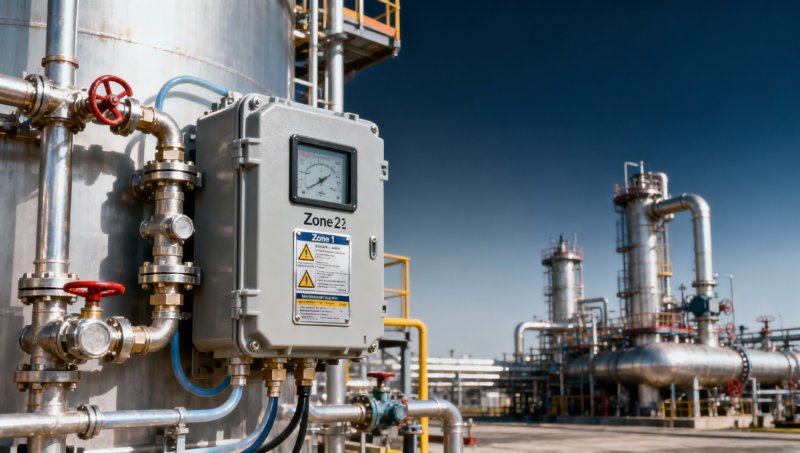
The core search intent behind this topic is practical: readers want to know when a Zone 2 analyzer is a safe, compliant, and cost-effective choice, and when selecting it would create unnecessary risk, approval problems, or future project limitations. They are not just looking for a textbook definition of hazardous zones. They want a usable decision framework.
Different stakeholders approach the same question from different angles:
- Operators and maintenance teams want equipment that is reliable, serviceable, and not overly restrictive in daily use.
- Technical evaluators and safety personnel want clear alignment with hazardous area classification, ignition protection method, and site standards.
- Procurement and commercial evaluators want to avoid over-specifying expensive equipment while also avoiding costly compliance mistakes.
- Project managers and engineering leads need a decision that will not delay installation, inspection, or startup.
- Business leaders and financial approvers care about total project cost, operational continuity, and risk exposure.
That means the most useful article is one that answers four questions clearly:
- What does Zone 2 suitability actually mean in practice?
- In what operating scenarios is a Zone 2 analyzer enough?
- What are the warning signs that Zone 1 or another protection concept is the better choice?
- How should a buyer compare safety, cost, maintainability, and certification across options?
When a Zone 2 analyzer is enough
A Zone 2 analyzer is generally enough when the installation environment and operational reality both support the lower hazard classification. In simple terms, Zone 2 means an explosive gas atmosphere is not expected during normal operation, and if it occurs, it is infrequent and short in duration. If that classification is valid and documented, then a properly certified Zone 2 analyzer can be the right choice.
Typical cases where a rugged gas analyzer or harsh environment analyzer rated for Zone 2 is often sufficient include:
- Outdoor analyzer installations with good natural ventilation and low probability of persistent gas accumulation.
- Skid-mounted systems located near, but not directly in, the highest-risk release points.
- Utility or balance-of-plant monitoring where process media are controlled and release scenarios are limited.
- Retrofit projects where area classification has already been verified as Zone 2 and the analyzer location is fixed within that classification.
- Applications with well-managed sampling systems where leaks are minimized and purge or ventilation strategies are part of the design.
In these situations, a Zone 2 analyzer may offer major advantages:
- Lower purchase cost than more heavily protected explosion proof equipment
- Simpler installation in some designs
- Reduced enclosure weight and footprint
- Better accessibility for maintenance depending on protection method
- Faster procurement if standard certified configurations are available
For many industrial users, this is the real value proposition: if the hazard classification genuinely supports Zone 2, then specifying Zone 1 equipment everywhere can be unnecessary overengineering.
When a Zone 2 analyzer is not enough
A Zone 2 analyzer is not enough when the actual risk is higher than the label “Zone 2 project” suggests. This happens more often than buyers expect. In many projects, the problem is not the analyzer itself, but the mismatch between equipment selection and the real operating environment.
You should strongly consider a Zone 1 analyzer, intrinsically safe analyzer architecture, or other higher-protection solution when any of the following apply:
- The analyzer will be installed in a classified Zone 1 area or near a known continuous or frequent release source.
- Gas accumulation is plausible because of poor ventilation, enclosed structures, trenches, shelters, or weather exposure.
- The sample system increases risk through heated lines, high-pressure extraction, corrosive gases, condensate management, or multiple fittings and valves.
- Maintenance requires live access in a hazardous area and the protection concept does not support practical service work.
- Corporate or site standards are stricter than minimum code, especially in oil and gas, chemicals, offshore, or high-consequence plants.
- The project may later be relocated or replicated into more hazardous areas, making a narrowly specified Zone 2 design less future-proof.
- Third-party inspectors, EPC firms, or end users require broader acceptance under IECEx analyzer or ATEX analyzer expectations.
Another important point: a rugged analyzer is not automatically a hazardous area analyzer. Harsh environment analyzer construction may handle dust, temperature swings, vibration, corrosion, and washdown, but that does not by itself make the equipment suitable for ignition-risk environments. Mechanical durability and hazardous area compliance are related, but not interchangeable.
What buyers often misunderstand about IECEx, ATEX, and intrinsically safe options
Many buyers compare hazardous area products by looking only at certification labels, but the practical differences matter more than the acronyms alone.
IECEx analyzer certification is widely used as an international conformity framework. It helps support acceptance across many global markets, especially for multinational projects.
ATEX analyzer compliance is especially relevant for the European market and projects aligned with EU requirements.
Intrinsically safe analyzer design focuses on limiting electrical and thermal energy so ignition cannot occur, even under fault conditions, within defined parameters. This can be highly beneficial for certain sensor circuits and low-power field installations.
Explosion proof equipment, depending on region and terminology, typically uses enclosure and containment principles so any internal ignition does not ignite the surrounding atmosphere.
These are not simply “better” or “worse” versions of one another. The right choice depends on:
- Area classification
- Gas group and temperature class
- Installation country and regulatory framework
- Analyzer type and power requirements
- Maintenance approach
- Cabinet, shelter, purge, or field-mount architecture
For example, some analyzer systems cannot practically be made intrinsically safe at the full system level because of power, heating, pumps, or optical components. In those cases, a buyer may need to evaluate a purged cabinet, flameproof design, or relocation of the analyzer to a safer area with a suitable sample handling strategy.
How to decide correctly: the most useful evaluation checklist
If you need a decision method that works across engineering, purchasing, and safety review, start with these questions:
- What is the verified hazardous area classification at the exact installation point?
Do not assume the whole site is “basically Zone 2.” Use the documented classification drawing and release assessment. - What happens around the analyzer during normal operation, upset, startup, shutdown, and maintenance?
Many selection mistakes happen because only steady-state operation is considered. - Does the sample system create additional hazardous scenarios?
The analyzer may be certified correctly while the total analyzer package introduces leak points, purge dependencies, or venting issues. - What certifications are required by the end user, project specification, and local authority?
A technically suitable product can still become a commercial problem if documentation or approvals do not match project requirements. - How often will the analyzer be accessed, calibrated, or serviced?
A design that is compliant on paper may be costly or unsafe to maintain in reality. - What is the cost of downtime or later redesign?
The cheapest initial option is often not the lowest total cost if reclassification, relocation, or replacement becomes necessary.
If the answer to these questions consistently supports low exposure risk, documented Zone 2 classification, manageable maintenance, and accepted certification, then a Zone 2 analyzer is likely enough. If several answers are uncertain or point toward more severe or less controlled conditions, move up to a more robust hazardous area strategy.
Cost, safety, and lifecycle trade-offs: why the cheapest compliant option is not always the best choice
For procurement teams and financial approvers, the most important insight is this: “enough” should mean enough for the full lifecycle, not enough just to pass initial review.
A Zone 2 analyzer can reduce capital expenditure, but the lifecycle outcome depends on context. Consider the following trade-offs:
- Lower upfront equipment cost may be offset by tighter installation constraints or less flexibility for future process changes.
- Simpler certification scope can become more difficult if the analyzer package includes pumps, heaters, shelters, sample conditioning, or third-party integration.
- Lower enclosure complexity may improve serviceability, but only if maintenance can be performed safely under site procedures.
- Higher-spec equipment may cost more initially but reduce redesign risk across multiple projects or plant areas.
This is especially relevant for EPCs, plant owners, and distributors standardizing product portfolios. If a business repeatedly sells into mixed-hazard environments, standardizing on a broader acceptance design may reduce engineering variation, documentation effort, and approval delays. On the other hand, if projects are clearly bounded and cost-sensitive, a properly selected Zone 2 analyzer can be the smarter commercial choice.
Practical examples: where the line is usually drawn
Here are simplified examples that reflect real-world decision patterns:
Zone 2 is usually enough:
An outdoor emissions monitoring point on a well-ventilated industrial utility line, with documented Zone 2 classification, low-frequency release risk, a sealed sample system, and a site that accepts IECEx analyzer certification.
Zone 2 is often not enough:
A hydrocarbon process analyzer mounted near separators, valves, and regular maintenance activity in an enclosed or semi-enclosed module where gas release is credible during normal or foreseeable abnormal conditions.
Borderline case:
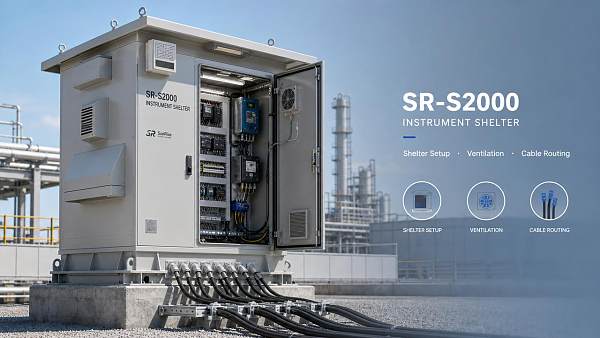
A packaged analyzer shelter in a nominally Zone 2 location, but with heated sample conditioning, multiple fittings, and vent management challenges. Here, the decision should not be made from the area label alone. The full analyzer house design, ventilation, purge strategy, and maintenance method must be reviewed.
These examples show why selecting between Zone 2 and Zone 1 is really about risk context, not just product category.
Final guidance: choose based on real operating risk, not just classification shorthand
A Zone 2 analyzer is enough when the installation point is truly Zone 2, the sample and maintenance conditions do not elevate risk, the applicable IECEx or ATEX requirements are satisfied, and the project does not demand broader hazardous area capability. It is not enough when the real operating environment behaves more like Zone 1, when service and process conditions create added ignition risk, or when project acceptance and lifecycle flexibility matter more than minimum upfront savings.
For operators, engineers, buyers, and decision-makers, the best approach is to treat analyzer selection as a combined safety, operations, and business decision. A compliant analyzer that is hard to maintain, difficult to approve, or vulnerable to future redesign is not truly the best value. The right choice is the one that matches the verified hazard, supports reliable operation, and makes sense over the full life of the project.
Recommended for You
 IEC Approves China-Led Standard for Smart Sensor Semantic InteroperabilityIEC TR 63372 smart sensor semantic interoperability standard—led by China—cuts export certification time by 30%. Discover how it reshapes global IoT integration.
 MIIT Launches Joint Enforcement on EV Battery RecyclingMIIT's EV battery recycling enforcement targets BMS data leaks, illegal dismantling & electrolyte disposal—key for exporters, testers & procurement teams needing GDPR/CCPA compliance.
 SAMR Launches Unified Market Action on Testing & CertificationSAMR Launches Unified Market Action on Testing & Certification—tackling fragmentation, redundant fees & cross-border recognition barriers for exporters and manufacturers.
 Fifteenth Five-Year Urban Renewal Plan Approved, Signaling Overseas Procurement for Smart Water & Environmental Monitoring DevicesSmart water & environmental monitoring devices gain global momentum as China’s 15th Five-Year Urban Renewal Plan mandates intelligent infrastructure—key for Belt and Road exports.
 IMF Warns AI Amplifies Financial Cybersecurity RisksAI amplifies financial cybersecurity risks—IMF warns. Discover how XAI verification, adversarial attacks, and regulatory mandates impact AI detection equipment, FinTech, and banks.
 Tmall Health Launches 'Health Supplement Safety Alliance'Health Supplement Safety Alliance launched by Tmall Health—boosting traceability, lab credibility & cross-border quality for brands like By-Health and Centrum.
 EN IEC 61000-6-4:2026 EMC Standard Effective for AI Edge DevicesEN IEC 61000-6-4:2026 EMC standard is live—15% stricter radiated limits for AI edge devices. Act now to secure EU industrial IoT procurement eligibility.
 APEC Auto Dialogue Confirms Semi-Solid Battery Deployment and Fast ChargingSemi-solid battery deployment & 15-min fast charging confirmed at APEC Auto Dialogue—spurring global demand for China-made battery testing equipment, BMS validation, and thermal runaway simulation solutions.
 EU Imposes Final Anti-Dumping Duty on Chinese Adipic AcidEU anti-dumping duty on Chinese adipic acid takes effect May 2026—impacting pH meters, sensors & analytical instruments. Act now to secure supply chains.
 Colombia Upholds Anti-Dumping Duties on Chinese Acrylic SheetsColombia Upholds Anti-Dumping Duties on Chinese Acrylic Sheets — 32.7% tariff extended for 5 years. Critical for exporters of medical, lab & analytical instrument enclosures.
 Multi Component Analyzer Cost Trends for 2026 Expansion PlansMulti component analyzer cost trends for 2026: discover key pricing drivers, hidden costs, and smart supplier strategies to budget accurately and maximize expansion ROI.
 SR-2050 Analyzer Maintenance Points That Affect Service LifeSR-2050 analyzer maintenance points that directly impact service life, accuracy, and uptime. Learn how cleaning, calibration, inspection, and environment control reduce failures.
 SR-S2000 Shelter: Common Setup Mistakes to AvoidSR-S2000 shelter setup mistakes can cause heat, moisture, and maintenance issues. Learn what to avoid for safer installation, stable performance, and longer equipment life.
 Custom Gas Analyzer Import Risks and Spec Mismatch IssuesCustom gas analyzer import risks can derail projects through spec mismatch, compliance gaps, and integration issues. Learn how buyers can compare suppliers, verify requirements, and avoid costly rework.
 When to Choose the SR-2030 Oxygen Analyzer for ComplianceSR-2030 oxygen analyzer: learn when it’s the right choice for compliance, safety, and stable process control. Explore key selection checks, audit-ready benefits, and deployment tips.
 SR-EX Analyzer Price Factors in 2026 ProjectsSR-EX analyzer price factors explained for 2026 projects: compare scope, compliance, integration, and lifecycle costs to approve budgets with less risk and more confidence.
 SR-2070 Analyzer vs Alternatives: Key Performance ChecksSR-2070 analyzer vs alternatives: compare accuracy, drift, response time, calibration effort, and lifecycle cost to choose a more reliable, efficient analyzer with confidence.
 2026 Market Trends for Predictive Analytics InstrumentsPredictive analytics instruments are reshaping 2026 market strategy. Explore key trends, risks, and buying checkpoints to improve uptime, integration, and ROI across industries.
 Wireless Measurement Systems: What Impacts Data Stability Most?Wireless measurement systems perform best when data stays stable. Discover the key factors affecting reliability, accuracy, and long-term performance across industrial applications.
 How Remote Monitoring Devices Cut Downtime in Field OperationsRemote monitoring devices help field teams detect issues early, reduce downtime, and improve maintenance planning. Discover how they keep operations reliable and on schedule.
 5th TCM High-Quality Development Conference Highlights NIR & AI QC for Global ExportNIR & AI QC take center stage at the 5th TCM High-Quality Development Conference—key for global export compliance, real-time quality control, and smart manufacturing.
 IEC Approves China-Led Guide for Smart Sensor Semantic InteroperabilityIEC TR 63388 semantic interoperability guide for smart sensors—China-led, globally approved. Boost IIoT integration across OPC UA, MQTT & TSN now.
 PBOC April Data Shows Strong Credit Flow to Tech & Inclusive LendingPBOC April data reveals surging tech & inclusive lending—boosting global demand for calibrated lab equipment, R&D instruments, and metrology-ready exports.
 SABIC Launches 'Smart Factory 2030' with China-Focused Online Analysis ProcurementSABIC's 'Smart Factory 2030' launches China-focused online analysis procurement—pH/ORP, IR gas & LIBS analyzers. SIL2-certified suppliers, act now!
 China Completes '14th Five-Year' Smart CNC Line R&DChina's '14th Five-Year' Smart CNC Line R&D is complete — boosting reliability & cutting delivery time for precision metrology equipment. Discover how it transforms global procurement.
 FDA Updates IVD Software Guidance: AI Diagnostic Devices Must Provide Verifiable Training DatasetsFDA mandates verifiable training datasets for AI diagnostic devices — critical for medical imaging, DICOM tools, and regulatory services entering the U.S. market.
 EU EN IEC 61000-6-4:2026 EMC Standard Takes EffectEU EN IEC 61000-6-4:2026 EMC standard is live—stricter radiated emission limits for AI edge devices. Act now to avoid EU customs delays & certification bottlenecks.
 APEC Auto Dialogue Confirms Semi-Solid Battery Deployment and 15-Minute Fast ChargingSemi-solid battery deployment and 15-minute fast charging confirmed at APEC Auto Dialogue — driving urgent global demand for BMS validation, thermal runaway, and high-voltage test equipment.
 MIIT Launches Joint Enforcement on EV Battery RecyclingMIIT Launches Joint Enforcement on EV Battery Recycling: Critical for battery test equipment exporters, data compliance, and global supply chains—act now to avoid delays.
 DIA China Annual Meeting Sells Out Despite $7,000+ FeeDIA China Annual Meeting sells out despite $7,000+ fee — a powerful signal for pharma exporters, manufacturers & regulatory service providers targeting China’s innovation ecosystem.
 Continuous Monitoring Solutions and the Shift Toward Smarter ComplianceContinuous monitoring solutions help enterprises strengthen compliance with real-time visibility, traceable data, and faster risk response. Discover how smarter oversight improves resilience and audit confidence.
 Confined Space Monitors: Key Mistakes That Raise Safety RiskConfined space monitors can fail when selection, bump testing, calibration, or sampling is wrong. Learn the biggest safety mistakes and how to prevent false safe readings.











Search Categories
Search Categories
Latest Article
- IEC Approves China-Led Standard for Smart Sensor Semantic InteroperabilityIEC TR 63372 smart sensor semantic interoperability standard—led by China—cuts export certification time by 30%. Discover how it reshapes global IoT integration.Posted by:
- MIIT Launches Joint Enforcement on EV Battery RecyclingMIIT's EV battery recycling enforcement targets BMS data leaks, illegal dismantling & electrolyte disposal—key for exporters, testers & procurement teams needing GDPR/CCPA compliance.Posted by:
- SAMR Launches Unified Market Action on Testing & CertificationSAMR Launches Unified Market Action on Testing & Certification—tackling fragmentation, redundant fees & cross-border recognition barriers for exporters and manufacturers.Posted by:
Please give us a message
