
When should plant engineers choose paramagnetic oxygen analyzers over electrochemical models?


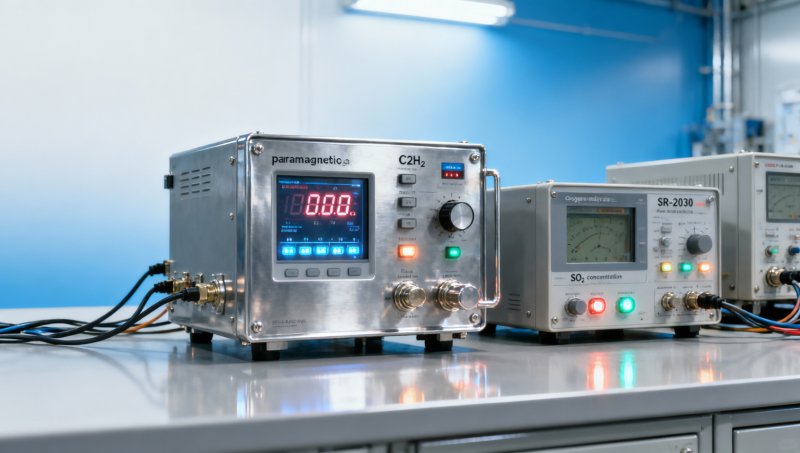
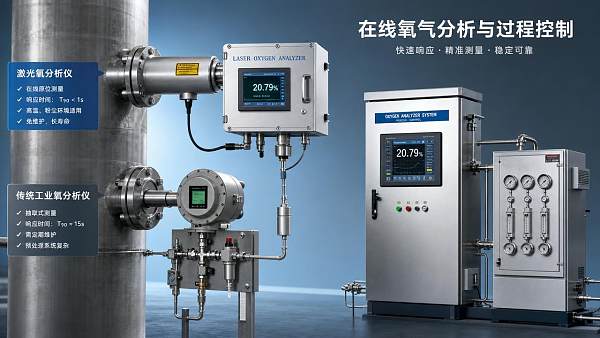
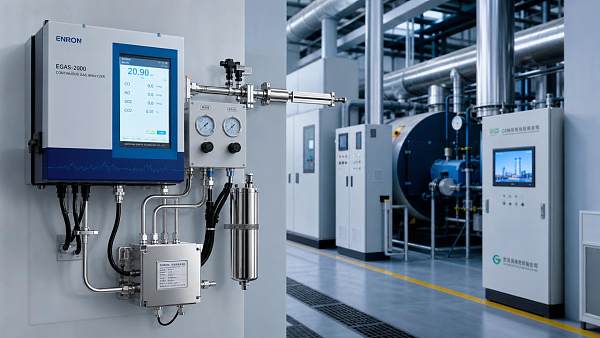
Plant engineers face critical decisions when selecting industrial oxygen analyzers—especially between paramagnetic and electrochemical models. Accuracy, longevity, and interference resistance matter most in demanding environments where C2H2 concentration analyzer, SO2 concentration analyzer, CO2 concentration analyzer, laser oxygen analyzer, and SR-2030 oxygen analyzer deployments coexist. Paramagnetic oxygen analyzers excel in stability and zero-drift performance, making them ideal for safety-critical or continuous process applications. This article clarifies when—and why—to choose paramagnetic over electrochemical solutions, addressing key concerns of users, procurement teams, safety managers, and engineering decision-makers.
When Stability and Long-Term Reliability Are Non-Negotiable
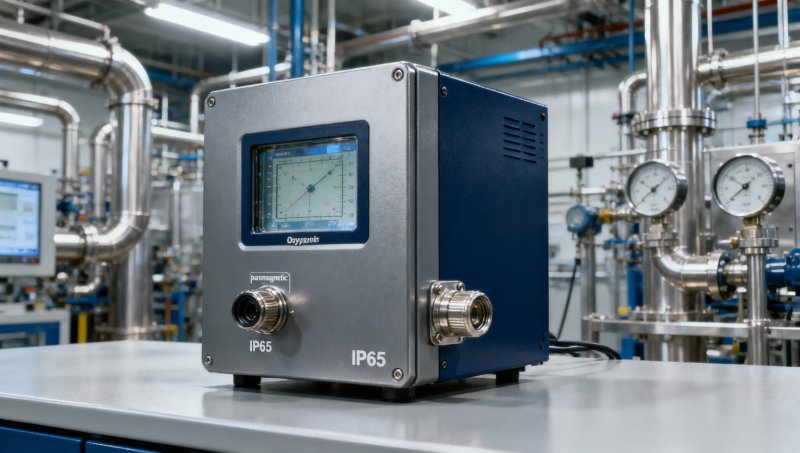
Paramagnetic oxygen analyzers leverage the unique magnetic susceptibility of O₂ molecules—a physical property unaffected by chemical consumption or electrode degradation. Unlike electrochemical sensors, which rely on consumable electrolytes and catalytic electrodes, paramagnetic units deliver true zero-drift operation over 2–4 years without recalibration under stable conditions. This makes them indispensable in energy generation plants, petrochemical refineries, and pharmaceutical cleanrooms where measurement drift could trigger false alarms or missed safety thresholds.
In contrast, electrochemical models typically require quarterly calibration and exhibit ±0.2% O₂ accuracy drift after 6–12 months—even with routine maintenance. For applications requiring <10 ppm detection limits (e.g., inerting control in solvent recovery systems), this drift directly impacts operational risk. Paramagnetic analyzers maintain ±0.05% O₂ full-scale accuracy across 0–100% range for up to 5 years with proper purge gas management.
The instrumentation industry’s role in enabling industrial automation means reliability isn’t just about uptime—it’s about data integrity across integrated control systems. Paramagnetic units interface seamlessly with DCS/SCADA platforms via 4–20 mA, Modbus RTU, and HART protocols, supporting predictive maintenance logic based on signal stability metrics—not just raw output values.
Which Applications Demand Paramagnetic Performance?
Not all oxygen monitoring scenarios justify the higher initial investment of paramagnetic technology. However, six high-stakes use cases consistently favor it:
- Continuous combustion air optimization in coal- or biomass-fired boilers (requiring <±0.1% O₂ repeatability over 8,000+ hours/year)
- Inert gas blanketing for flammable solvent storage tanks (where O₂ > 8% triggers automatic nitrogen injection)
- Medical-grade nitrogen generator quality assurance (meeting ISO 8573-1 Class 1 purity requirements)
- Carbon capture unit lean amine regeneration monitoring (exposed to CO₂-rich, moisture-saturated streams)
- High-purity argon production lines (O₂ < 1 ppm detection with <2% relative uncertainty)
- Safety interlock loops for confined-space entry systems (SIL-2 certified response within 1.5 seconds)
These scenarios share three common stressors: exposure to reactive gases (SO₂, CO₂, NH₃), temperature swings beyond 10℃–50℃, and long-duration unattended operation. Electrochemical sensors degrade rapidly under such conditions—often failing within 3–6 months in sour gas environments.
Key Interference Resistance Comparison
This immunity stems from physics—not chemistry. Paramagnetic detection measures molecular behavior, not redox reactions. That fundamental distinction defines its value in complex gas matrices typical of power, chemical, and environmental monitoring applications.
Procurement Decision Framework: 5 Critical Evaluation Dimensions
For procurement personnel and project managers, selection should follow a structured 5-dimension checklist—not just price or brand recognition:
- Measurement uncertainty budget: Verify traceable calibration certificates covering your operating range (e.g., 0–25% O₂ at 1 atm, 23℃) with stated k=2 uncertainty ≤±0.08% O₂
- Gas conditioning requirements: Assess whether sample system includes heated lines (≥120℃), particulate filtration (<0.3 µm), and dual-stage drying—paramagnetic units demand cleaner gas than electrochemical but reward lower lifetime cost
- Integration readiness: Confirm native support for your plant’s communication architecture (e.g., FOUNDATION Fieldbus H1 for refinery DCS integration)
- Maintenance labor cost projection: Estimate technician time savings: paramagnetic units average 0.5 hr/year vs. 8–12 hr/year for electrochemical sensor replacement + calibration
- Regulatory alignment: Check compliance with IEC 61511 (functional safety), EN 14181 (QAL2/QAL3 certification path), and EPA Method 3A for stack emissions reporting
For distributors and OEM integrators, this framework enables confident quoting—backed by verifiable technical boundaries rather than subjective preference.
Why Partner With an Instrumentation Industry Specialist?
Choosing the right oxygen analyzer isn’t a one-time purchase—it’s the foundation of process safety, energy efficiency, and regulatory compliance. As a core segment of the instrumentation industry, we provide more than hardware:
- Application-specific pre-engineering: 3-day site assessment including gas composition analysis, sample point evaluation, and DCS interface mapping
- Calibration traceability to NIST or UKAS standards—with documented uncertainty budgets for each delivered unit
- Field service network covering 48 U.S. states and 12 EU countries, with 72-hour response SLA for critical replacements
- Custom configuration support for hazardous area certifications (ATEX Zone 1, IECEx, Class I Div 1)
- Extended warranty options (3–5 years) tied to preventive maintenance schedules
Contact us today to request a paramagnetic suitability review for your specific application—including compatibility checks against your existing C2H2 concentration analyzer, SO2 concentration analyzer, and SR-2030 oxygen analyzer infrastructure. We’ll provide a side-by-side technical comparison, delivery timeline (standard lead time: 4–6 weeks), and lifecycle cost projection covering 5 years of operation.
Recommended for You
 US-China Trade Talks Agree on Tariff Cuts for Key Test Equipment PartsUS-China tariff cuts on key test equipment parts—like pressure sensor chips & infrared thermal imaging modules—boost margins, cut costs, and strengthen global competitiveness for manufacturers.
 G7 Paris Meeting Focuses on Critical Mineral Supply SecurityCritical mineral supply security takes center stage at the G7 Paris meeting—key for rare-earth sensor exporters. Learn EU compliance impacts & actionable readiness steps.
 Brent Crude Surpasses $106/bbl, Raising Sea Freight Costs for Small Testing Equipment ExportsBrent Crude Surpasses $106/bbl—sea freight costs surge, impacting small testing equipment exporters. Learn how SMEs can adapt pricing, terms & logistics now.
 WTO Forecasts 1.9% Global Goods Trade Growth in 2026 Amid Supply Chain ShorteningWTO forecasts 1.9% global goods trade growth in 2026—sparking nearshoring demand for testing equipment, calibration services & OTA-ready solutions in ASEAN, Middle East & Mexico.
 UK-China Export Control Working Group Holds Second Meeting in LondonUK-China Export Control Working Group: Key updates on dual-use items—laser interferometers, quantum sensors & oscilloscopes. Learn compliance implications for exporters now.
 Japan's 10Y Yield Drop to 2.745% Lifts Yen, Raising China-Made Testing Equipment CostsJapan's 10Y yield drop to 2.745% lifts yen, raising costs for China-made testing equipment — explore FX impacts, procurement shifts & strategic responses.
 KOSPI 200 Futures Circuit Breaker Triggered, Impacting Industrial Automation Instrument Export TimelinesKOSPI 200 futures circuit breaker triggered — impact on PLC modules, transmitters & fieldbus instrument exports to Korea. Urgent timeline insights inside.
 South Korea’s Chip Exports Surge 202% in May 2026 Amid AI Test Equipment DemandAI test equipment demand surges as South Korea’s chip exports jump 202% in May 2026 — PCIe 6.0 & USB4.1 validation tools see sharp global procurement rise.
 Emission Gas Analyzer News in 2026: Regulatory Shifts Affecting DemandEmission gas analyzer demand is changing fast in 2026 as new regulations tighten limits, expand continuous monitoring, and raise data compliance standards. Explore key trends shaping smarter buying decisions.
 When a High Accuracy Analyzer Delivers Real ROI in Process ControlHigh accuracy analyzer ROI starts with better process control. Learn where tighter measurements cut waste, improve stability, reduce compliance risk, and deliver measurable operational savings.
 SR-2030P Analyzer Import Updates in 2026: Compliance Points to ReviewSR-2030P analyzer import updates for 2026: review classification, certification, customs documents, and market access risks to reduce delays, control costs, and source with confidence.
 Industrial Oxygen Analyzer Price Trends in 2026: Cost Drivers to WatchIndustrial oxygen analyzer price trends in 2026 explained: compare sensor, compliance, installation, and maintenance cost drivers to make smarter, lower-risk buying decisions.
 Laser Oxygen Analyzer or Industrial Oxygen Analyzer: Which Fits BetterLaser oxygen analyzer or industrial oxygen analyzer? Compare speed, accuracy, maintenance, and cost to find the best fit for smarter, more reliable process control.
 ATEX Gas Analyzer Demand in 2026: What Is Shaping the MarketATEX gas analyzer demand in 2026 is driven by safety, digital integration, and lifecycle value. See what shapes buying decisions across industry, utilities, hydrogen, and automation.
 Fixed Gas Analyzer vs Portable Options: What Matters for Plant UseFixed gas analyzer or portable detector for plant use? Compare safety, response time, maintenance, and cost to choose the right monitoring solution with confidence.
 Explosion Proof Analyzer Selection Mistakes That Increase Site RiskExplosion proof analyzer selection mistakes can raise compliance, maintenance, and safety risks. Learn the key errors to avoid and how to choose a safer, more reliable solution.
 SR-2000 Infrared Analyzer: Key Performance Checks Before InstallationSR-2000 infrared analyzer pre-installation guide: learn how to verify accuracy, drift, site readiness, and calibration support to reduce startup risk and ensure stable long-term performance.
 How to Choose a Continuous Gas Analyzer for Stable 24/7 MonitoringContinuous gas analyzer selection guide for stable 24/7 monitoring. Learn how to compare accuracy, response time, maintenance, and integration for smarter industrial decisions.
 IEC Approves China-Led Standard for Smart Sensor Semantic InteroperabilityIEC TR 63372 smart sensor semantic interoperability standard—led by China—cuts export certification time by 30%. Discover how it reshapes global IoT integration.
 MIIT Launches Joint Enforcement on EV Battery RecyclingMIIT's EV battery recycling enforcement targets BMS data leaks, illegal dismantling & electrolyte disposal—key for exporters, testers & procurement teams needing GDPR/CCPA compliance.
 SAMR Launches Unified Market Action on Testing & CertificationSAMR Launches Unified Market Action on Testing & Certification—tackling fragmentation, redundant fees & cross-border recognition barriers for exporters and manufacturers.
 Fifteenth Five-Year Urban Renewal Plan Approved, Signaling Overseas Procurement for Smart Water & Environmental Monitoring DevicesSmart water & environmental monitoring devices gain global momentum as China’s 15th Five-Year Urban Renewal Plan mandates intelligent infrastructure—key for Belt and Road exports.
 IMF Warns AI Amplifies Financial Cybersecurity RisksAI amplifies financial cybersecurity risks—IMF warns. Discover how XAI verification, adversarial attacks, and regulatory mandates impact AI detection equipment, FinTech, and banks.
 Tmall Health Launches 'Health Supplement Safety Alliance'Health Supplement Safety Alliance launched by Tmall Health—boosting traceability, lab credibility & cross-border quality for brands like By-Health and Centrum.
 EN IEC 61000-6-4:2026 EMC Standard Effective for AI Edge DevicesEN IEC 61000-6-4:2026 EMC standard is live—15% stricter radiated limits for AI edge devices. Act now to secure EU industrial IoT procurement eligibility.
 APEC Auto Dialogue Confirms Semi-Solid Battery Deployment and Fast ChargingSemi-solid battery deployment & 15-min fast charging confirmed at APEC Auto Dialogue—spurring global demand for China-made battery testing equipment, BMS validation, and thermal runaway simulation solutions.
 EU Imposes Final Anti-Dumping Duty on Chinese Adipic AcidEU anti-dumping duty on Chinese adipic acid takes effect May 2026—impacting pH meters, sensors & analytical instruments. Act now to secure supply chains.
 Colombia Upholds Anti-Dumping Duties on Chinese Acrylic SheetsColombia Upholds Anti-Dumping Duties on Chinese Acrylic Sheets — 32.7% tariff extended for 5 years. Critical for exporters of medical, lab & analytical instrument enclosures.
 Multi Component Analyzer Cost Trends for 2026 Expansion PlansMulti component analyzer cost trends for 2026: discover key pricing drivers, hidden costs, and smart supplier strategies to budget accurately and maximize expansion ROI.
 SR-2050 Analyzer Maintenance Points That Affect Service LifeSR-2050 analyzer maintenance points that directly impact service life, accuracy, and uptime. Learn how cleaning, calibration, inspection, and environment control reduce failures.
 SR-S2000 Shelter: Common Setup Mistakes to AvoidSR-S2000 shelter setup mistakes can cause heat, moisture, and maintenance issues. Learn what to avoid for safer installation, stable performance, and longer equipment life.
 Custom Gas Analyzer Import Risks and Spec Mismatch IssuesCustom gas analyzer import risks can derail projects through spec mismatch, compliance gaps, and integration issues. Learn how buyers can compare suppliers, verify requirements, and avoid costly rework.






Search Categories
Search Categories
Latest Article
- US-China Trade Talks Agree on Tariff Cuts for Key Test Equipment PartsUS-China tariff cuts on key test equipment parts—like pressure sensor chips & infrared thermal imaging modules—boost margins, cut costs, and strengthen global competitiveness for manufacturers.Posted by:
- G7 Paris Meeting Focuses on Critical Mineral Supply SecurityCritical mineral supply security takes center stage at the G7 Paris meeting—key for rare-earth sensor exporters. Learn EU compliance impacts & actionable readiness steps.Posted by:
- Brent Crude Surpasses $106/bbl, Raising Sea Freight Costs for Small Testing Equipment ExportsBrent Crude Surpasses $106/bbl—sea freight costs surge, impacting small testing equipment exporters. Learn how SMEs can adapt pricing, terms & logistics now.Posted by:
Please give us a message
