
ATEX Gas Analyzer Requirements Are Tightening in 2026


As 2026 approaches, compliance expectations for every ATEX gas analyzer are becoming more demanding across hazardous industrial environments. For business decision-makers, this is no longer just a technical issue—it directly affects operational safety, regulatory readiness, project continuity, and long-term investment value. Understanding how ATEX requirements are tightening will help companies make smarter procurement, upgrade, and risk-management decisions before compliance gaps turn into costly disruptions.
For most decision-makers, the core question is simple: do current gas analysis assets still meet the level of protection, documentation, and lifecycle support that future projects and audits will require? In many cases, the answer is not automatically yes. Even analyzers that are functioning well may create compliance, insurance, or operational exposure if their certification scope, installation method, service records, or integration design no longer align with evolving expectations.
The practical takeaway is that 2026 should be treated as a planning milestone, not a last-minute technical deadline. Companies that review their installed base early can avoid rushed replacements, project delays, unplanned shutdowns, and weak supplier choices. Those that wait may face higher upgrade costs and tighter procurement conditions, especially in oil and gas, chemicals, hydrogen, power generation, pharmaceuticals, waste treatment, and other hazardous-area operations.
Why 2026 matters to buyers of ATEX gas analyzer systems

When people search for an ATEX gas analyzer in the current market, they are rarely looking for a generic product definition. They want to know whether upcoming compliance expectations will force equipment changes, whether existing installations are still defensible, and how to reduce risk without overspending. That business-oriented search intent is becoming stronger as plants modernize and regulators, insurers, and end users demand clearer evidence of safety and traceability.
The tightening does not necessarily mean an entirely new ATEX framework appears overnight. More often, the pressure comes from stricter enforcement, more rigorous project specifications, greater emphasis on documentation quality, cybersecurity-linked control requirements, hazardous-area design review, and stronger expectations for lifecycle support. In other words, the analyzer itself is only part of the compliance equation. The enclosure, sample conditioning system, purge strategy, wiring, maintenance process, and technical file often matter just as much.
For business leaders, this changes procurement logic. The lowest-cost analyzer may no longer be the lowest-cost solution once installation complexity, recertification risk, spare-part support, downtime exposure, and audit burden are considered. A compliant system that is easier to document, maintain, and defend in front of inspectors can have a much stronger total cost profile than a cheaper but weakly supported option.
What is actually tightening around ATEX gas analyzer compliance
Companies should think about tightening requirements in five practical layers. The first is equipment certification integrity. Buyers will face more scrutiny around whether the analyzer, accessories, interfaces, and ancillary components are certified for the exact hazardous area classification, gas group, temperature class, and environmental conditions involved. Broad assumptions are becoming harder to justify.
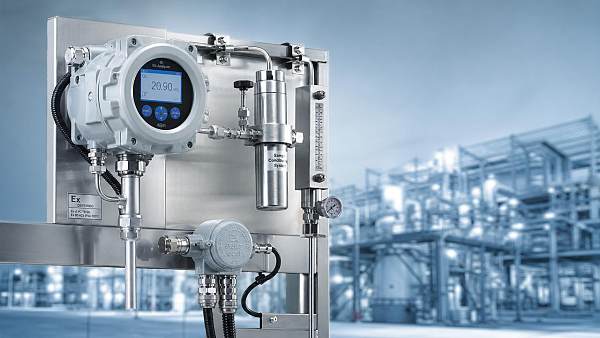
The second layer is system-level responsibility. Many industrial users historically focused on the analyzer nameplate, but more projects now evaluate the full package: sample handling, shelters, heated lines, panel design, purge units, flame arrestors, power supplies, and software interfaces. A certified analyzer can still become part of a non-compliant system if the integration is poorly executed or undocumented.
The third layer is documentation depth. Technical construction files, declarations, installation drawings, maintenance instructions, calibration procedures, and spare-part traceability are increasingly important. During audits, incidents, or insurer reviews, the absence of complete records can become as damaging as a hardware defect.
The fourth layer is lifecycle serviceability. Decision-makers should expect more attention on whether the supplier can support periodic inspection, compliant repairs, firmware management, recalibration, replacement parts, and obsolescence planning over the equipment life. An ATEX gas analyzer is not a one-time purchase; it is a managed safety asset.
The fifth layer is digital integration risk. As analyzers connect more closely to control systems, remote diagnostics, and plant networks, companies must consider whether new functionality introduces installation or operational concerns that affect hazardous-area integrity, alarm reliability, or change-management obligations.
Which business risks should decision-makers pay attention to first
The biggest mistake is to frame this issue purely as regulatory paperwork. In reality, tighter ATEX expectations affect four core business risks: safety exposure, downtime exposure, capital inefficiency, and project delay. These risks often interact, which is why executive attention is justified.
Safety exposure is the most obvious. If an analyzer is used in a hazardous area without a fully suitable protection concept, the consequences can go far beyond a failed audit. Even where no incident occurs, weak compliance can increase internal escalation, insurer concern, and customer scrutiny, especially in high-consequence sectors.
Downtime exposure is often underestimated. If a unit fails inspection, cannot be repaired with approved parts, or lacks proper support documentation, operations may face restricted use, temporary shutdowns, or prolonged maintenance windows. For continuous processes, that cost can easily exceed the purchase price of the analyzer itself.
Capital inefficiency appears when organizations buy equipment that cannot scale into future compliance needs. For example, a lower-cost analyzer may require expensive enclosure redesign, additional protective systems, or earlier replacement than expected. In contrast, a better-specified solution may preserve value across multiple expansion phases.
Project delay risk becomes critical for EPC contractors, plant expansions, and modernization programs. Incomplete ATEX documentation or uncertain certification status can block approvals late in the project cycle, delaying startup and increasing contractor claims. By 2026, buyers should expect less tolerance for ambiguity from engineering reviewers and end users.
How to evaluate whether your current analyzer fleet is still fit for 2026
Executives do not need to become hazardous-area specialists, but they do need a structured review framework. Start with an installed-base assessment. Identify every ATEX gas analyzer by model, certification type, location, process duty, age, maintenance status, and supplier support condition. Many companies discover that their real risk lies in legacy units with incomplete records rather than in their newest systems.
Next, compare each installation against actual operating conditions, not just original purchase assumptions. Has the area classification changed? Has the process gas composition changed? Has ambient temperature, washdown exposure, vibration level, or enclosure configuration shifted over time? Small operational changes can create a gap between certified use and real use.
Then review documentation quality. Can your team quickly produce certificates, manuals, wiring diagrams, inspection records, calibration histories, and repair evidence for each critical analyzer? If not, the problem is not just administrative. It indicates weak defensibility during audits, incidents, handovers, or acquisition due diligence.
Supplier supportability is another key filter. Ask whether the original manufacturer still supports the model, whether spare parts remain available, whether service personnel are qualified for the specific protection concept, and whether any components are approaching obsolescence. A technically compliant analyzer with poor lifecycle support is a hidden risk.
Finally, rank assets by business criticality. Focus first on analyzers tied to emissions compliance, process safety, product quality, custody transfer relevance, or high-value continuous production. Not every unit requires immediate action, but the units with the largest operational consequences should be reviewed first.
What buyers should demand from suppliers before making new investments
In a tightening market, supplier selection matters as much as product selection. Buyers should move beyond brochure claims and ask sharper questions. First, require clear evidence of certification scope and hazardous-area suitability at both equipment and system levels. If the supplier cannot explain integration boundaries, that is a warning sign.
Second, assess documentation maturity. Strong suppliers can provide organized technical files, installation guidance, maintenance procedures, certificate references, and support for project approval workflows. This reduces internal engineering burden and lowers the risk of late-stage project rejection.
Third, test lifecycle capability. Ask about spare-part lead times, service coverage, calibration support, firmware control, field repair policy, and expected product longevity. A robust ATEX gas analyzer solution should come with a support model that matches the operational life of your plant, not just the sales cycle.
Fourth, evaluate maintainability in the real operating environment. Can technicians safely access the unit? How often does calibration require intervention? Is the sample system prone to contamination or drift? Are consumables easy to source? Decision-makers should favor systems that reduce maintenance complexity in hazardous areas, where every intervention carries cost and risk.
Fifth, consider future adaptability. Industrial plants are changing quickly due to decarbonization, hydrogen blending, energy transition projects, stricter emissions control, and greater automation. The best procurement decisions are those that remain usable through these shifts rather than becoming stranded by narrow design assumptions.
When upgrade, retrofit, or replacement makes the most financial sense
Not every installed analyzer needs to be replaced before 2026. In many situations, a targeted retrofit or system redesign can close the compliance gap at a lower cost. However, decision-makers should avoid a simplistic “repair if possible” mindset. The right choice depends on the balance among risk, supportability, downtime cost, and remaining asset life.
Upgrade is usually sensible when the analyzer core remains suitable, the supplier still supports it, and the main issues involve documentation, accessories, enclosure elements, or peripheral safety components. This can be especially attractive where shutdown windows are limited and process integration is stable.
Retrofit becomes attractive when the measurement principle is still valuable, but sample handling, purge arrangements, alarm interfaces, or panel design need modernization. In these cases, system-level improvement may deliver better compliance and reliability without the cost of a full analyzer replacement.
Replacement is often the best business decision when a unit is obsolete, poorly documented, difficult to service, or fundamentally mismatched to current hazardous-area requirements. It is also justified when recurring maintenance, calibration drift, false alarms, or spare-part uncertainty are already eroding plant efficiency. Waiting too long in such cases usually increases total cost.
A useful executive rule is this: if the combined cost of compliance remediation, downtime exposure, and support uncertainty approaches the value of a modern supported system, replacement deserves serious consideration. This is particularly true for critical analyzers in continuous operations, where reliability and defensibility carry strategic value.
How to build a practical 2026 readiness plan without overreacting
A strong response does not require panic spending. It requires phased prioritization. Start by creating a compliance and asset visibility baseline in the next budgeting cycle. Identify high-risk locations, unsupported models, missing records, and installations tied to critical production or safety functions.
Then divide actions into three groups: immediate corrective actions, scheduled upgrades, and long-term replacement planning. Immediate actions may include document recovery, inspection updates, supplier consultations, or small integration fixes. Scheduled upgrades can be aligned with maintenance shutdowns. Long-term replacements should be integrated into capex planning rather than treated as emergency events.
Cross-functional coordination is essential. Operations, maintenance, engineering, procurement, EHS, and compliance teams should align on what “fit for 2026” means in practice. Without that alignment, organizations often under-specify purchases, delay decisions, or create conflicting standards across sites.
It is also wise to standardize decision criteria across the analyzer fleet. This includes certification suitability, documentation completeness, service support, integration quality, maintenance burden, and business criticality. Standardization improves procurement quality and helps groups with multiple plants avoid fragmented compliance outcomes.
Most importantly, treat ATEX readiness as part of operational resilience, not merely as a technical obligation. The companies that act early will likely secure better supplier attention, smoother project execution, and more cost-effective upgrade pathways than those entering the market under deadline pressure.
Conclusion: tighter ATEX expectations should reshape buying decisions now
The main message for decision-makers is clear: by 2026, expectations around the ATEX gas analyzer will be harder to satisfy through assumptions, legacy habits, or incomplete records. Compliance is becoming more system-based, more evidence-driven, and more closely tied to operational continuity. That makes this an executive issue, not just an engineering detail.
If your organization operates in hazardous environments, the smartest next step is an early, structured review of existing analyzer assets and procurement standards. Focus on high-consequence installations first, verify supportability and documentation, and challenge suppliers on lifecycle capability as well as certification claims.
Companies that respond now can reduce safety risk, protect uptime, improve audit readiness, and make capital decisions with greater confidence. In a market where industrial reliability and compliance are increasingly linked, choosing the right ATEX gas analyzer strategy before 2026 is not just about meeting a standard. It is about protecting the long-term performance and resilience of the business.
Recommended for You
 US-China Trade Talks Agree on Tariff Cuts for Key Test Equipment PartsUS-China tariff cuts on key test equipment parts—like pressure sensor chips & infrared thermal imaging modules—boost margins, cut costs, and strengthen global competitiveness for manufacturers.
 G7 Paris Meeting Focuses on Critical Mineral Supply SecurityCritical mineral supply security takes center stage at the G7 Paris meeting—key for rare-earth sensor exporters. Learn EU compliance impacts & actionable readiness steps.
 Brent Crude Surpasses $106/bbl, Raising Sea Freight Costs for Small Testing Equipment ExportsBrent Crude Surpasses $106/bbl—sea freight costs surge, impacting small testing equipment exporters. Learn how SMEs can adapt pricing, terms & logistics now.
 WTO Forecasts 1.9% Global Goods Trade Growth in 2026 Amid Supply Chain ShorteningWTO forecasts 1.9% global goods trade growth in 2026—sparking nearshoring demand for testing equipment, calibration services & OTA-ready solutions in ASEAN, Middle East & Mexico.
 UK-China Export Control Working Group Holds Second Meeting in LondonUK-China Export Control Working Group: Key updates on dual-use items—laser interferometers, quantum sensors & oscilloscopes. Learn compliance implications for exporters now.
 Japan's 10Y Yield Drop to 2.745% Lifts Yen, Raising China-Made Testing Equipment CostsJapan's 10Y yield drop to 2.745% lifts yen, raising costs for China-made testing equipment — explore FX impacts, procurement shifts & strategic responses.
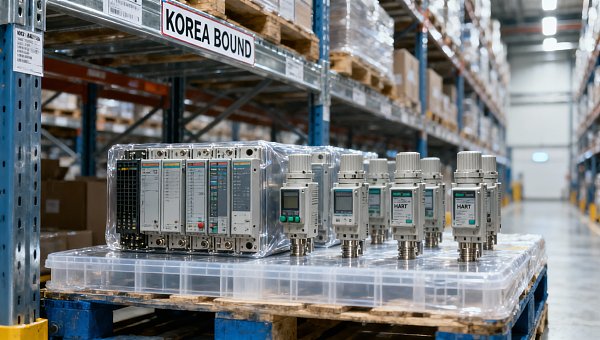
 KOSPI 200 Futures Circuit Breaker Triggered, Impacting Industrial Automation Instrument Export TimelinesKOSPI 200 futures circuit breaker triggered — impact on PLC modules, transmitters & fieldbus instrument exports to Korea. Urgent timeline insights inside.
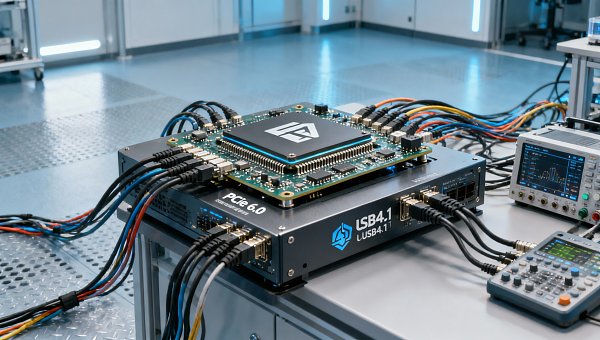
 South Korea’s Chip Exports Surge 202% in May 2026 Amid AI Test Equipment DemandAI test equipment demand surges as South Korea’s chip exports jump 202% in May 2026 — PCIe 6.0 & USB4.1 validation tools see sharp global procurement rise.
 Emission Gas Analyzer News in 2026: Regulatory Shifts Affecting DemandEmission gas analyzer demand is changing fast in 2026 as new regulations tighten limits, expand continuous monitoring, and raise data compliance standards. Explore key trends shaping smarter buying decisions.
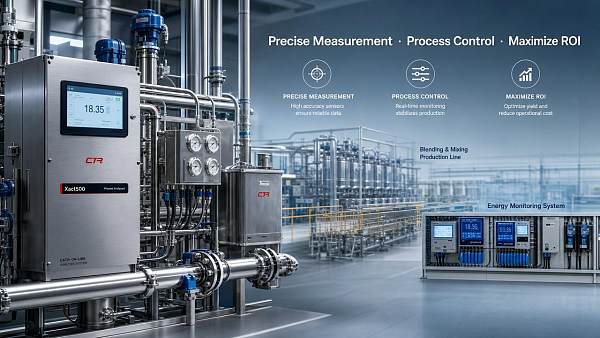
 When a High Accuracy Analyzer Delivers Real ROI in Process ControlHigh accuracy analyzer ROI starts with better process control. Learn where tighter measurements cut waste, improve stability, reduce compliance risk, and deliver measurable operational savings.
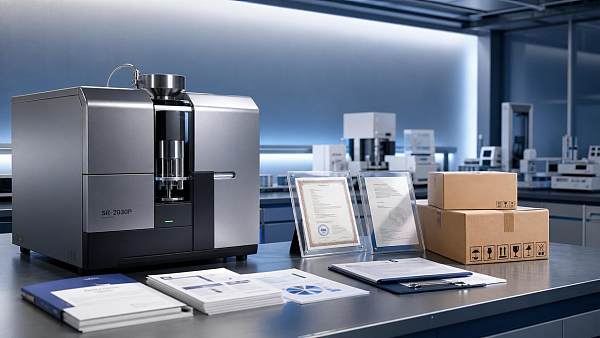
 SR-2030P Analyzer Import Updates in 2026: Compliance Points to ReviewSR-2030P analyzer import updates for 2026: review classification, certification, customs documents, and market access risks to reduce delays, control costs, and source with confidence.
 Industrial Oxygen Analyzer Price Trends in 2026: Cost Drivers to WatchIndustrial oxygen analyzer price trends in 2026 explained: compare sensor, compliance, installation, and maintenance cost drivers to make smarter, lower-risk buying decisions.
 Laser Oxygen Analyzer or Industrial Oxygen Analyzer: Which Fits BetterLaser oxygen analyzer or industrial oxygen analyzer? Compare speed, accuracy, maintenance, and cost to find the best fit for smarter, more reliable process control.
 ATEX Gas Analyzer Demand in 2026: What Is Shaping the MarketATEX gas analyzer demand in 2026 is driven by safety, digital integration, and lifecycle value. See what shapes buying decisions across industry, utilities, hydrogen, and automation.
 Fixed Gas Analyzer vs Portable Options: What Matters for Plant UseFixed gas analyzer or portable detector for plant use? Compare safety, response time, maintenance, and cost to choose the right monitoring solution with confidence.
 Explosion Proof Analyzer Selection Mistakes That Increase Site RiskExplosion proof analyzer selection mistakes can raise compliance, maintenance, and safety risks. Learn the key errors to avoid and how to choose a safer, more reliable solution.
 SR-2000 Infrared Analyzer: Key Performance Checks Before InstallationSR-2000 infrared analyzer pre-installation guide: learn how to verify accuracy, drift, site readiness, and calibration support to reduce startup risk and ensure stable long-term performance.
 How to Choose a Continuous Gas Analyzer for Stable 24/7 MonitoringContinuous gas analyzer selection guide for stable 24/7 monitoring. Learn how to compare accuracy, response time, maintenance, and integration for smarter industrial decisions.
 IEC Approves China-Led Standard for Smart Sensor Semantic InteroperabilityIEC TR 63372 smart sensor semantic interoperability standard—led by China—cuts export certification time by 30%. Discover how it reshapes global IoT integration.
 MIIT Launches Joint Enforcement on EV Battery RecyclingMIIT's EV battery recycling enforcement targets BMS data leaks, illegal dismantling & electrolyte disposal—key for exporters, testers & procurement teams needing GDPR/CCPA compliance.
 SAMR Launches Unified Market Action on Testing & CertificationSAMR Launches Unified Market Action on Testing & Certification—tackling fragmentation, redundant fees & cross-border recognition barriers for exporters and manufacturers.
 Fifteenth Five-Year Urban Renewal Plan Approved, Signaling Overseas Procurement for Smart Water & Environmental Monitoring DevicesSmart water & environmental monitoring devices gain global momentum as China’s 15th Five-Year Urban Renewal Plan mandates intelligent infrastructure—key for Belt and Road exports.
 IMF Warns AI Amplifies Financial Cybersecurity RisksAI amplifies financial cybersecurity risks—IMF warns. Discover how XAI verification, adversarial attacks, and regulatory mandates impact AI detection equipment, FinTech, and banks.
 Tmall Health Launches 'Health Supplement Safety Alliance'Health Supplement Safety Alliance launched by Tmall Health—boosting traceability, lab credibility & cross-border quality for brands like By-Health and Centrum.
 EN IEC 61000-6-4:2026 EMC Standard Effective for AI Edge DevicesEN IEC 61000-6-4:2026 EMC standard is live—15% stricter radiated limits for AI edge devices. Act now to secure EU industrial IoT procurement eligibility.
 APEC Auto Dialogue Confirms Semi-Solid Battery Deployment and Fast ChargingSemi-solid battery deployment & 15-min fast charging confirmed at APEC Auto Dialogue—spurring global demand for China-made battery testing equipment, BMS validation, and thermal runaway simulation solutions.
 EU Imposes Final Anti-Dumping Duty on Chinese Adipic AcidEU anti-dumping duty on Chinese adipic acid takes effect May 2026—impacting pH meters, sensors & analytical instruments. Act now to secure supply chains.
 Colombia Upholds Anti-Dumping Duties on Chinese Acrylic SheetsColombia Upholds Anti-Dumping Duties on Chinese Acrylic Sheets — 32.7% tariff extended for 5 years. Critical for exporters of medical, lab & analytical instrument enclosures.
 Multi Component Analyzer Cost Trends for 2026 Expansion PlansMulti component analyzer cost trends for 2026: discover key pricing drivers, hidden costs, and smart supplier strategies to budget accurately and maximize expansion ROI.
 SR-2050 Analyzer Maintenance Points That Affect Service LifeSR-2050 analyzer maintenance points that directly impact service life, accuracy, and uptime. Learn how cleaning, calibration, inspection, and environment control reduce failures.
 SR-S2000 Shelter: Common Setup Mistakes to AvoidSR-S2000 shelter setup mistakes can cause heat, moisture, and maintenance issues. Learn what to avoid for safer installation, stable performance, and longer equipment life.
 Custom Gas Analyzer Import Risks and Spec Mismatch IssuesCustom gas analyzer import risks can derail projects through spec mismatch, compliance gaps, and integration issues. Learn how buyers can compare suppliers, verify requirements, and avoid costly rework.







Search Categories
Search Categories
Latest Article
- US-China Trade Talks Agree on Tariff Cuts for Key Test Equipment PartsUS-China tariff cuts on key test equipment parts—like pressure sensor chips & infrared thermal imaging modules—boost margins, cut costs, and strengthen global competitiveness for manufacturers.Posted by:
- G7 Paris Meeting Focuses on Critical Mineral Supply SecurityCritical mineral supply security takes center stage at the G7 Paris meeting—key for rare-earth sensor exporters. Learn EU compliance impacts & actionable readiness steps.Posted by:
- Brent Crude Surpasses $106/bbl, Raising Sea Freight Costs for Small Testing Equipment ExportsBrent Crude Surpasses $106/bbl—sea freight costs surge, impacting small testing equipment exporters. Learn how SMEs can adapt pricing, terms & logistics now.Posted by:
Please give us a message
