
Environmental Protection Rules Changing in 2026


As Environmental Protection rules change in 2026, businesses across industries must adapt with Green Technology, Sustainable Monitoring, and stronger Emission Reduction strategies. From Industrial Control systems to every Precision Instrument and Efficient Gas Analyzer, smarter tools now drive Energy Efficiency, Clean Technology adoption, and Process Optimization—helping operators, buyers, and decision-makers stay compliant, competitive, and ready for the next stage of industrial transformation.
What Will Environmental Protection Rules Change in 2026 Mean for Industrial Operations?
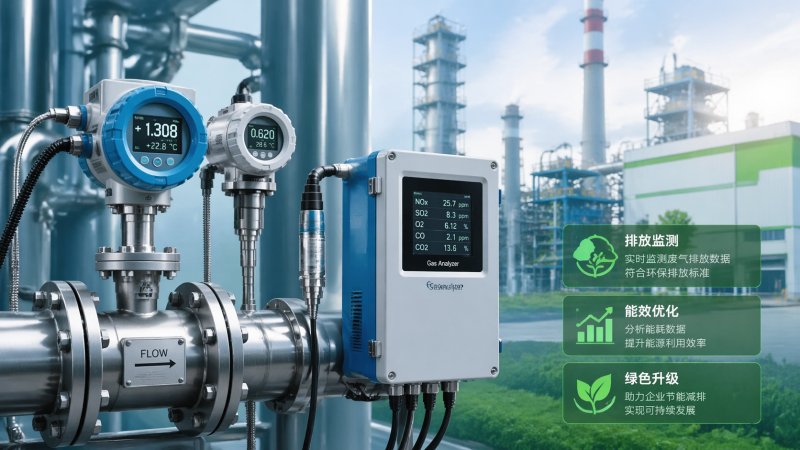
For many manufacturers, utilities, laboratories, engineering contractors, and environmental monitoring teams, 2026 is not just another compliance year. It is a transition point where environmental protection rules are expected to tighten around emissions visibility, energy consumption accountability, process traceability, and operating risk control. That shift directly affects how instrumentation is specified, installed, calibrated, and audited across industrial sites.
In practical terms, businesses will need more reliable measurement, faster reporting, and stronger integration between field devices and digital management systems. A pressure transmitter, flow meter, temperature sensor, stack gas analyzer, data logger, or online water quality monitor is no longer only a process tool. It also becomes part of a compliance evidence chain that may be reviewed monthly, quarterly, or during project acceptance and external inspection cycles.
This matters across the full decision chain. Operators need instruments that remain stable during continuous 8–24 hour operation. Technical evaluators need accuracy, repeatability, and signal compatibility. Procurement teams need a clear balance between purchase price, maintenance interval, and service life. Financial approvers need to see how a 2–5 year equipment plan can reduce rework, penalties, or avoidable shutdowns.
The instrumentation industry sits at the center of this transition because it supports measurement, testing, monitoring, analysis, and control in industrial manufacturing, energy and power, environmental monitoring, medical testing, laboratory analysis, construction engineering, and automation control. As environmental rules become more detailed, the quality of measurement infrastructure becomes a strategic issue rather than a routine maintenance task.
Why compliance pressure is moving from paperwork to real-time measurement
Historically, some businesses relied on periodic checks and manual records. That approach is becoming less effective where authorities, investors, and customers expect timely, traceable data. In many plants, the gap is not the absence of equipment but the lack of integrated monitoring: scattered sensors, limited calibration records, weak alarm logic, or analyzers that are not selected for the real operating range.
- Emission Reduction requirements increasingly depend on continuous or scheduled monitoring, not only end-of-year reports.
- Energy Efficiency programs require measurable baselines, often based on 3 core variables: flow, temperature, and power consumption.
- Sustainable Monitoring depends on data integrity, which means calibrated instruments, timestamped records, and auditable maintenance logs.
- Industrial Control performance is now linked to environmental outcomes, especially in combustion, wastewater treatment, ventilation, and chemical dosing processes.
For companies preparing for 2026, the first question is not “Do we have instruments?” but “Can our instruments generate trusted data under actual plant conditions?” That question shapes capital planning, retrofit decisions, and project schedules.
Which Instruments Matter Most for Green Technology and Sustainable Monitoring?
The answer depends on process type, regulatory exposure, and the cost of operational failure. However, across most sectors, several instrument categories carry the highest value in 2026 readiness: pressure, temperature, flow, level, composition analysis, industrial online monitoring, and control-layer signal acquisition. These devices translate environmental goals into measurable operating actions.
A modern Precision Instrument does more than display a reading. It supports stable control, loss prevention, and reporting confidence. For example, inaccurate flow measurement can distort both energy performance calculations and emissions intensity metrics. A poorly selected gas analyzer may create false alarms or miss threshold conditions. A level instrument with the wrong material compatibility can fail early in corrosive service and compromise wastewater handling.
For project managers and technical buyers, selection should start with application risk. Is the process continuous or batch? Is the medium corrosive, dusty, humid, or explosive? Does the plant need local display only, or 4–20 mA, Modbus, or other communication for supervisory systems? What calibration frequency is realistic: every 3 months, 6 months, or annually? These practical questions matter more than catalog claims.
The table below summarizes common instrumentation priorities under changing environmental protection rules. It is designed for cross-functional teams comparing monitoring depth, process fit, and implementation urgency.
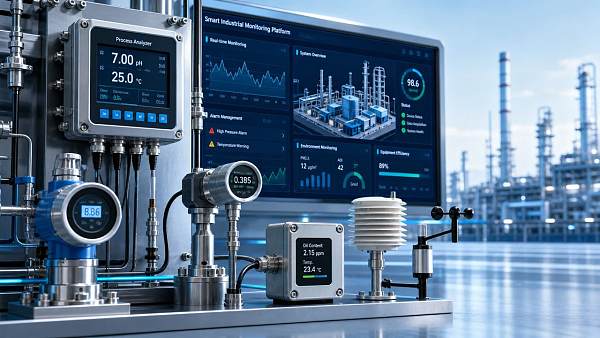
This comparison shows that Green Technology is rarely one device or one software layer. It is a connected measurement architecture. The strongest projects usually combine field instrumentation, signal transmission, calibration discipline, and Industrial Control logic so that environmental performance can be maintained rather than only reported.
Three selection principles that reduce future retrofit cost
1. Match actual process range, not only design range
If a system usually runs at 30%–60% load, choose instruments with reliable performance in that zone. Oversized measuring ranges often reduce useful sensitivity and make Process Optimization harder.
2. Plan maintenance access before installation
A technically correct instrument can still become a poor investment if calibration or sensor cleaning requires shutdown scaffolding or difficult access every 1–3 months.
3. Treat output compatibility as a lifecycle issue
Plants adding digitalization in stages should verify communication protocols and integration points early. Replacing field devices after only 12–24 months because of signal mismatch is a common avoidable cost.
How Should Buyers Compare Compliance, Cost, and Technical Fit?
Procurement for environmental protection projects is rarely decided by price alone. Buyers must compare total ownership factors: installation complexity, calibration effort, spare parts demand, expected service interval, signal integration, operator training, and shutdown risk. A lower upfront quote may lead to higher lifecycle cost if the device requires frequent manual intervention or cannot support Sustainable Monitoring goals.
Technical assessment teams usually focus on accuracy, repeatability, environmental resistance, and operating compatibility. Commercial reviewers focus on delivery risk, warranty terms, service responsiveness, and documentation completeness. Financial reviewers ask whether the investment aligns with compliance timing and whether phased implementation is possible over 2 or 3 budget cycles. These viewpoints should be aligned before bidding or final approval.
A useful method is to score each option across 5 key dimensions: compliance relevance, process fit, integration effort, operating cost, and supportability. This reduces the chance that one department chooses a device that later creates problems for another department. It also helps project leaders explain decisions to management in measurable terms.
The next table provides a practical comparison framework for instrumentation procurement under changing environmental protection rules in 2026.
Using this matrix helps companies compare alternatives more objectively. It is also useful when choosing between a basic replacement, a compliance upgrade, or a broader Clean Technology modernization package. In many cases, the right decision is not the highest specification, but the best fit between process reality, audit needs, and maintenance capacity.
A practical 4-step procurement workflow
- Define the monitoring objective: compliance evidence, energy optimization, safety control, or all three.
- Confirm 5 core site conditions: medium, range, environment, communication, and maintenance access.
- Compare 2–3 technical options with lifecycle cost, not only purchase value.
- Lock implementation milestones such as documentation review, factory test, installation, calibration, and acceptance.
For urgent retrofit projects, lead times often range from 2–6 weeks for standard devices and longer for engineered analyzer systems or panels. Early parameter confirmation can prevent schedule compression later in the project.
What Standards, Implementation Steps, and Risk Controls Should Teams Prioritize?
Environmental protection readiness depends on both hardware and process discipline. Even a strong instrument package can underperform if documentation is incomplete, calibration routines are inconsistent, or installation conditions are poor. This is why standards and implementation planning matter as much as specification sheets.
Most cross-industry projects should review general compliance areas such as electrical safety, environmental suitability, measurement traceability, and where relevant, hazardous area requirements. For measurement-critical applications, teams should verify calibration procedures, acceptance criteria, signal verification, and maintenance records. The exact standards vary by sector and region, but the evaluation logic remains similar.
A robust implementation plan usually runs through 4 stages over several days to several weeks depending on scope: site survey, technical confirmation, installation and loop check, then commissioning with operator handover. For larger environmental monitoring or utility optimization projects, a fifth stage is useful: performance review after 30–90 days of operation.
For quality managers and safety personnel, the most common risks are not dramatic failures. They are small reliability gaps that accumulate: drift not detected early, unverified alarms, sampling lines not maintained, process data not archived, or instrument enclosures exposed to heat, vibration, or moisture beyond their suitable range.
Five common mistakes before 2026 compliance reviews
- Buying based only on nominal range and ignoring actual process fluctuation, resulting in weak measurement quality during normal operation.
- Treating analyzer maintenance as optional, even though sampling system cleanliness and calibration intervals directly affect data credibility.
- Installing field devices without confirming cable routing, environmental protection level, and local access for future service.
- Separating procurement from control integration, which later creates interface delays between instruments and Industrial Control platforms.
- Missing cross-functional signoff from operations, engineering, EHS, and finance during the first review cycle.
Where Clean Technology projects often create measurable value
Value usually appears in three areas. First, better monitoring reduces uncertainty, which supports compliance and lowers the chance of repeat corrective work. Second, tighter measurement improves Process Optimization, especially in air-fuel control, pumping, thermal systems, and dosing. Third, integrated data supports management decisions about replacement timing, utility losses, and expansion planning.
For example, when energy and environmental data are linked through a common monitoring structure, operators can identify abnormal conditions faster. A weekly trend review may reveal drift, leakage, or inefficient cycling before it becomes a major cost issue. This is one reason Energy Efficiency programs increasingly depend on instrumentation quality rather than on administrative reporting alone.
FAQ: How Do Different Decision-Makers Prepare for 2026 Environmental Protection Rules?
How should a buyer choose between replacing one instrument and upgrading the full monitoring loop?
Start by checking whether the problem is isolated or systemic. If one device failed but the sampling, wiring, communication, and control logic are still suitable, a direct replacement may be enough. If data gaps, calibration issues, alarm delays, and reporting problems happen together, a loop-level upgrade is usually more cost-effective over 1–3 years than repeated spot repairs.
What delivery timeline is realistic for environmental monitoring and control projects?
Standard transmitters, gauges, and common sensors may fit normal lead times of about 1–4 weeks, depending on configuration. Analyzer systems, panels, integrated skids, or projects requiring documentation review and factory testing often need longer. Teams with fixed compliance deadlines should confirm technical parameters early and leave time for installation, loop check, and commissioning.
What should technical evaluators verify first in an Efficient Gas Analyzer?
Check the target gas components, expected concentration range, moisture and dust conditions, sample handling method, and maintenance burden. Also verify how quickly the system must respond for the intended purpose. Emission reporting, combustion tuning, and safety-related detection do not always require the same response profile or installation design.
How often should calibration and verification be reviewed?
There is no single schedule for every application, but many sites review critical instruments monthly, quarterly, or according to process risk and manufacturer guidance. High-impact environmental and safety points should be managed with documented intervals, acceptance criteria, and corrective actions, not informal maintenance habits.
What is the most common budgeting mistake before a compliance deadline?
Many teams budget for equipment only and underestimate installation accessories, signal integration, calibration tools, sampling components, commissioning time, and operator training. A more reliable plan includes hardware, engineering, documentation, startup support, and a post-start review window of at least several weeks.
Why Choose a Partner That Understands Instrumentation, Compliance, and Project Execution?
When environmental protection rules change in 2026, companies do not only need products. They need clear technical judgment across measurement, monitoring, analysis, and control. That is especially true in cross-industry projects where environmental targets interact with production stability, utility efficiency, lab verification, construction schedules, and automation architecture.
A capable instrumentation partner helps teams move faster through parameter confirmation, product selection, installation planning, and acceptance preparation. This includes clarifying operating range, medium compatibility, environmental conditions, communication needs, calibration expectations, and whether a standard device or tailored solution is more suitable. For buyers under time pressure, this reduces avoidable revision cycles and quotation delays.
If you are reviewing Green Technology upgrades, Sustainable Monitoring architecture, Precision Instrument selection, or Efficient Gas Analyzer options, it is useful to discuss the project in a structured way. Typical consultation topics include 3–5 core parameters, expected delivery cycle, integration requirements, compliance documentation, sample or pilot support, and budget alignment across phased implementation.
Contact us to discuss parameter confirmation, product selection, delivery timing, customized monitoring solutions, certification-related documentation needs, sample support, and quotation planning. Whether your team is preparing a single-point replacement or a broader Clean Technology and Industrial Control upgrade, a focused technical review can help you reduce procurement uncertainty and prepare more confidently for 2026 environmental protection requirements.
Recommended for You
 IEC Approves China-Led Standard for Smart Sensor Semantic InteroperabilityIEC TR 63372 smart sensor semantic interoperability standard—led by China—cuts export certification time by 30%. Discover how it reshapes global IoT integration.
 MIIT Launches Joint Enforcement on EV Battery RecyclingMIIT's EV battery recycling enforcement targets BMS data leaks, illegal dismantling & electrolyte disposal—key for exporters, testers & procurement teams needing GDPR/CCPA compliance.
 SAMR Launches Unified Market Action on Testing & CertificationSAMR Launches Unified Market Action on Testing & Certification—tackling fragmentation, redundant fees & cross-border recognition barriers for exporters and manufacturers.
 Fifteenth Five-Year Urban Renewal Plan Approved, Signaling Overseas Procurement for Smart Water & Environmental Monitoring DevicesSmart water & environmental monitoring devices gain global momentum as China’s 15th Five-Year Urban Renewal Plan mandates intelligent infrastructure—key for Belt and Road exports.
 IMF Warns AI Amplifies Financial Cybersecurity RisksAI amplifies financial cybersecurity risks—IMF warns. Discover how XAI verification, adversarial attacks, and regulatory mandates impact AI detection equipment, FinTech, and banks.
 Tmall Health Launches 'Health Supplement Safety Alliance'Health Supplement Safety Alliance launched by Tmall Health—boosting traceability, lab credibility & cross-border quality for brands like By-Health and Centrum.
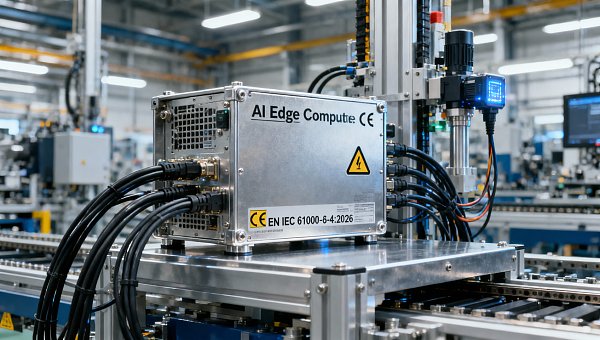
 EN IEC 61000-6-4:2026 EMC Standard Effective for AI Edge DevicesEN IEC 61000-6-4:2026 EMC standard is live—15% stricter radiated limits for AI edge devices. Act now to secure EU industrial IoT procurement eligibility.
 APEC Auto Dialogue Confirms Semi-Solid Battery Deployment and Fast ChargingSemi-solid battery deployment & 15-min fast charging confirmed at APEC Auto Dialogue—spurring global demand for China-made battery testing equipment, BMS validation, and thermal runaway simulation solutions.
 EU Imposes Final Anti-Dumping Duty on Chinese Adipic AcidEU anti-dumping duty on Chinese adipic acid takes effect May 2026—impacting pH meters, sensors & analytical instruments. Act now to secure supply chains.
 Colombia Upholds Anti-Dumping Duties on Chinese Acrylic SheetsColombia Upholds Anti-Dumping Duties on Chinese Acrylic Sheets — 32.7% tariff extended for 5 years. Critical for exporters of medical, lab & analytical instrument enclosures.
 Multi Component Analyzer Cost Trends for 2026 Expansion PlansMulti component analyzer cost trends for 2026: discover key pricing drivers, hidden costs, and smart supplier strategies to budget accurately and maximize expansion ROI.
 SR-2050 Analyzer Maintenance Points That Affect Service LifeSR-2050 analyzer maintenance points that directly impact service life, accuracy, and uptime. Learn how cleaning, calibration, inspection, and environment control reduce failures.
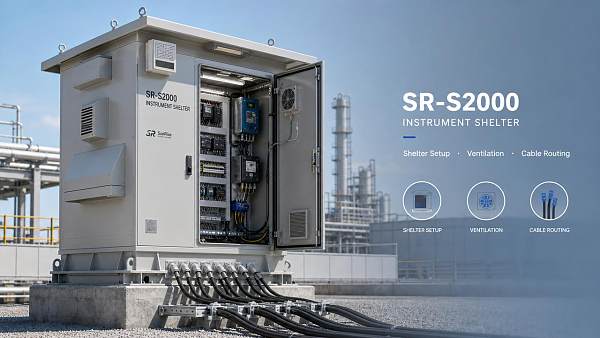
 SR-S2000 Shelter: Common Setup Mistakes to AvoidSR-S2000 shelter setup mistakes can cause heat, moisture, and maintenance issues. Learn what to avoid for safer installation, stable performance, and longer equipment life.
 Custom Gas Analyzer Import Risks and Spec Mismatch IssuesCustom gas analyzer import risks can derail projects through spec mismatch, compliance gaps, and integration issues. Learn how buyers can compare suppliers, verify requirements, and avoid costly rework.
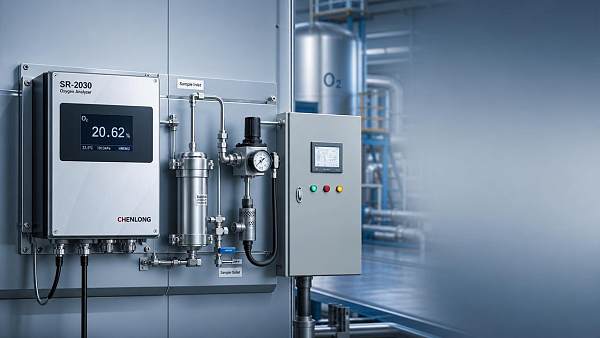
 When to Choose the SR-2030 Oxygen Analyzer for ComplianceSR-2030 oxygen analyzer: learn when it’s the right choice for compliance, safety, and stable process control. Explore key selection checks, audit-ready benefits, and deployment tips.
 SR-EX Analyzer Price Factors in 2026 ProjectsSR-EX analyzer price factors explained for 2026 projects: compare scope, compliance, integration, and lifecycle costs to approve budgets with less risk and more confidence.
 SR-2070 Analyzer vs Alternatives: Key Performance ChecksSR-2070 analyzer vs alternatives: compare accuracy, drift, response time, calibration effort, and lifecycle cost to choose a more reliable, efficient analyzer with confidence.
 2026 Market Trends for Predictive Analytics InstrumentsPredictive analytics instruments are reshaping 2026 market strategy. Explore key trends, risks, and buying checkpoints to improve uptime, integration, and ROI across industries.
 Wireless Measurement Systems: What Impacts Data Stability Most?Wireless measurement systems perform best when data stays stable. Discover the key factors affecting reliability, accuracy, and long-term performance across industrial applications.
 How Remote Monitoring Devices Cut Downtime in Field OperationsRemote monitoring devices help field teams detect issues early, reduce downtime, and improve maintenance planning. Discover how they keep operations reliable and on schedule.
 5th TCM High-Quality Development Conference Highlights NIR & AI QC for Global ExportNIR & AI QC take center stage at the 5th TCM High-Quality Development Conference—key for global export compliance, real-time quality control, and smart manufacturing.
 IEC Approves China-Led Guide for Smart Sensor Semantic InteroperabilityIEC TR 63388 semantic interoperability guide for smart sensors—China-led, globally approved. Boost IIoT integration across OPC UA, MQTT & TSN now.
 PBOC April Data Shows Strong Credit Flow to Tech & Inclusive LendingPBOC April data reveals surging tech & inclusive lending—boosting global demand for calibrated lab equipment, R&D instruments, and metrology-ready exports.
 SABIC Launches 'Smart Factory 2030' with China-Focused Online Analysis ProcurementSABIC's 'Smart Factory 2030' launches China-focused online analysis procurement—pH/ORP, IR gas & LIBS analyzers. SIL2-certified suppliers, act now!
 China Completes '14th Five-Year' Smart CNC Line R&DChina's '14th Five-Year' Smart CNC Line R&D is complete — boosting reliability & cutting delivery time for precision metrology equipment. Discover how it transforms global procurement.
 FDA Updates IVD Software Guidance: AI Diagnostic Devices Must Provide Verifiable Training DatasetsFDA mandates verifiable training datasets for AI diagnostic devices — critical for medical imaging, DICOM tools, and regulatory services entering the U.S. market.
 EU EN IEC 61000-6-4:2026 EMC Standard Takes EffectEU EN IEC 61000-6-4:2026 EMC standard is live—stricter radiated emission limits for AI edge devices. Act now to avoid EU customs delays & certification bottlenecks.
 APEC Auto Dialogue Confirms Semi-Solid Battery Deployment and 15-Minute Fast ChargingSemi-solid battery deployment and 15-minute fast charging confirmed at APEC Auto Dialogue — driving urgent global demand for BMS validation, thermal runaway, and high-voltage test equipment.
 MIIT Launches Joint Enforcement on EV Battery RecyclingMIIT Launches Joint Enforcement on EV Battery Recycling: Critical for battery test equipment exporters, data compliance, and global supply chains—act now to avoid delays.
 DIA China Annual Meeting Sells Out Despite $7,000+ FeeDIA China Annual Meeting sells out despite $7,000+ fee — a powerful signal for pharma exporters, manufacturers & regulatory service providers targeting China’s innovation ecosystem.
 Continuous Monitoring Solutions and the Shift Toward Smarter ComplianceContinuous monitoring solutions help enterprises strengthen compliance with real-time visibility, traceable data, and faster risk response. Discover how smarter oversight improves resilience and audit confidence.
 Confined Space Monitors: Key Mistakes That Raise Safety RiskConfined space monitors can fail when selection, bump testing, calibration, or sampling is wrong. Learn the biggest safety mistakes and how to prevent false safe readings.














Search Categories
Search Categories
Latest Article
- IEC Approves China-Led Standard for Smart Sensor Semantic InteroperabilityIEC TR 63372 smart sensor semantic interoperability standard—led by China—cuts export certification time by 30%. Discover how it reshapes global IoT integration.Posted by:
- MIIT Launches Joint Enforcement on EV Battery RecyclingMIIT's EV battery recycling enforcement targets BMS data leaks, illegal dismantling & electrolyte disposal—key for exporters, testers & procurement teams needing GDPR/CCPA compliance.Posted by:
- SAMR Launches Unified Market Action on Testing & CertificationSAMR Launches Unified Market Action on Testing & Certification—tackling fragmentation, redundant fees & cross-border recognition barriers for exporters and manufacturers.Posted by:
Please give us a message
