
Shenneng Etorkeqi Green Ammonia Project: Domestic Water Analyzers Validated


On April 28, 2026, the demineralized water station of the Shenneng Etorkeqi integrated wind-solar hydrogen-to-green-ammonia project—EPC-contracted by China Chemical Engineering Donghua Company—successfully produced water. This milestone signals growing relevance for domestic industrial water treatment instrumentation in global clean energy infrastructure, particularly for process-critical applications in green hydrogen and green ammonia production.
Event Overview
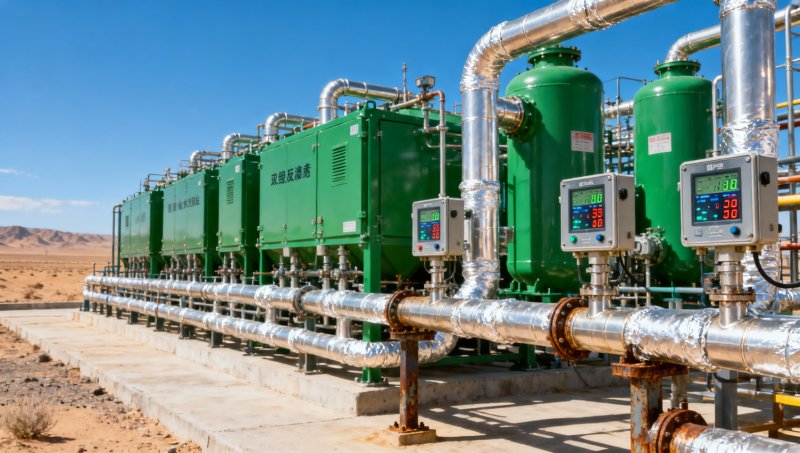
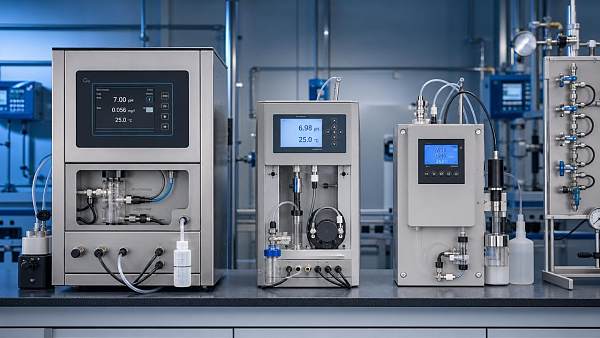
On April 28, 2026, the demineralized water station of the Shenneng Etorkeqi green ammonia project commenced operation. The station integrates ultrafiltration, dual-stage reverse osmosis, and electrodeionization (EDI) units. All online analytical instruments—including pH, conductivity, and TOC analyzers—as well as automatic control valve assemblies, are domestically manufactured and deployed across the full water treatment train. The project is recognized as the world’s largest single-unit green ammonia demonstration facility. Its instrumentation deployment has been cited by international owners—including Saudi Arabia’s ACWA Power and Chile’s ENAP—as a technical reference case for field validation of Chinese-made process analyzers in overseas renewable energy projects.
Industries Affected by This Development
Instrumentation exporters and OEMs serving process industries: Domestic manufacturers of online water quality analyzers (pH, conductivity, TOC) and smart control valves now have a verified reference site in a high-profile, internationally observed green ammonia project. This may influence procurement criteria in upcoming tenders for similar decarbonization-linked infrastructure in emerging markets.
Engineering, procurement, and construction (EPC) contractors focused on green hydrogen/ammonia: As owners increasingly require performance-validated instrumentation packages, EPC firms may face tighter specification alignment requirements—not only on functional compliance but also on documented field reliability under real-world operating conditions.
Green hydrogen and green ammonia plant operators and developers: With instrumentation playing a critical role in feedwater purity assurance (a prerequisite for electrolyzer and Haber-Bosch system longevity), this validation strengthens the feasibility of sourcing compliant, cost-competitive alternatives to established Western suppliers—particularly where local content or import substitution policies apply.
Supply chain service providers supporting industrial automation: Distributors, calibration labs, and after-sales support networks for domestic analytical instrumentation may see increased demand for localized technical documentation, spare parts logistics, and commissioning support aligned with international project execution standards (e.g., ISA-84, IEC 61511).
What Relevant Enterprises or Practitioners Should Focus On Now
Monitor official technical reports and third-party verification releases
While the event confirms successful startup, operational longevity, failure rate data, and maintenance intervals for the domestic instruments remain unreported. Current more actionable than speculative adoption is tracking whether Donghua or Shenneng publishes commissioning reports or performance summaries—including uptime, calibration drift, or fault response metrics.
Assess applicability to specific project phases and regulatory contexts
Domestic analyzers were deployed in the demineralized water loop—a non-safety-instrumented system (non-SIS) application. Their use in safety-critical loops (e.g., hydrogen purity monitoring pre-electrolysis or ammonia synthesis reactor feed control) remains unconfirmed. Practitioners should distinguish between validated use cases and areas still requiring further qualification.
Evaluate supply chain readiness for international project delivery
Export-oriented instrumentation vendors should verify whether their products meet documentation, certification (e.g., ATEX, SIL), and traceability requirements common in Middle Eastern and Latin American EPC contracts. This includes reviewing calibration certificates, material declarations, and cybersecurity compliance statements (e.g., IEC 62443 readiness).
Prepare for potential shifts in tender evaluation weightings
Given that ACWA Power and ENAP have listed the project as a technical考察 case, future RFPs from such owners may assign higher scoring weight to proven field deployment in comparable environments (e.g., arid climate, intermittent power supply, remote location). Bidders should proactively document and contextualize any prior installations meeting those criteria.
Editorial Perspective / Industry Observation
Observably, this milestone does not represent full instrumentation substitution across all green ammonia systems—but rather a targeted, functionally appropriate validation in a high-visibility, non-safety-critical subsystem. Analysis shows it functions less as an immediate commercial inflection point and more as a credibility-building signal for domestic suppliers aiming to expand beyond domestic utility-scale projects into international EPC supply chains. From an industry perspective, its significance lies not in displacing incumbents overnight, but in narrowing the perceived risk gap associated with adopting domestically engineered solutions in mission-critical clean energy infrastructure. Continued attention is warranted—not because adoption is guaranteed, but because owner-level technical scrutiny of alternative instrumentation is intensifying globally.
Conclusion
This event marks a step toward broader acceptance of domestically manufactured process analyzers in large-scale green ammonia infrastructure—not as a standalone achievement, but as one data point within a longer-term trend of technical maturation and international benchmarking. It is better understood as a confidence indicator for specific instrument categories under defined operating conditions, rather than evidence of wholesale market shift. For stakeholders, pragmatic engagement—focused on verifiable performance data, certification readiness, and context-specific applicability—remains more valuable than extrapolating broad conclusions.
Source Attribution
Main source: Public announcement by China Chemical Engineering Donghua Company regarding the Shenneng Etorkeqi project commissioning on April 28, 2026.
Notable reference: Acknowledgement by ACWA Power and ENAP as a technical case study—confirmed via publicly available project update briefings. No further performance metrics or long-term operational data have been released as of publication; these remain subjects for ongoing observation.
Recommended for You
 IEC Approves China-Led Standard for Smart Sensor Semantic InteroperabilityIEC TR 63372 smart sensor semantic interoperability standard—led by China—cuts export certification time by 30%. Discover how it reshapes global IoT integration.
 MIIT Launches Joint Enforcement on EV Battery RecyclingMIIT's EV battery recycling enforcement targets BMS data leaks, illegal dismantling & electrolyte disposal—key for exporters, testers & procurement teams needing GDPR/CCPA compliance.
 SAMR Launches Unified Market Action on Testing & CertificationSAMR Launches Unified Market Action on Testing & Certification—tackling fragmentation, redundant fees & cross-border recognition barriers for exporters and manufacturers.
 Fifteenth Five-Year Urban Renewal Plan Approved, Signaling Overseas Procurement for Smart Water & Environmental Monitoring DevicesSmart water & environmental monitoring devices gain global momentum as China’s 15th Five-Year Urban Renewal Plan mandates intelligent infrastructure—key for Belt and Road exports.
 IMF Warns AI Amplifies Financial Cybersecurity RisksAI amplifies financial cybersecurity risks—IMF warns. Discover how XAI verification, adversarial attacks, and regulatory mandates impact AI detection equipment, FinTech, and banks.
 Tmall Health Launches 'Health Supplement Safety Alliance'Health Supplement Safety Alliance launched by Tmall Health—boosting traceability, lab credibility & cross-border quality for brands like By-Health and Centrum.
 EN IEC 61000-6-4:2026 EMC Standard Effective for AI Edge DevicesEN IEC 61000-6-4:2026 EMC standard is live—15% stricter radiated limits for AI edge devices. Act now to secure EU industrial IoT procurement eligibility.
 APEC Auto Dialogue Confirms Semi-Solid Battery Deployment and Fast ChargingSemi-solid battery deployment & 15-min fast charging confirmed at APEC Auto Dialogue—spurring global demand for China-made battery testing equipment, BMS validation, and thermal runaway simulation solutions.
 EU Imposes Final Anti-Dumping Duty on Chinese Adipic AcidEU anti-dumping duty on Chinese adipic acid takes effect May 2026—impacting pH meters, sensors & analytical instruments. Act now to secure supply chains.
 Colombia Upholds Anti-Dumping Duties on Chinese Acrylic SheetsColombia Upholds Anti-Dumping Duties on Chinese Acrylic Sheets — 32.7% tariff extended for 5 years. Critical for exporters of medical, lab & analytical instrument enclosures.
 Multi Component Analyzer Cost Trends for 2026 Expansion PlansMulti component analyzer cost trends for 2026: discover key pricing drivers, hidden costs, and smart supplier strategies to budget accurately and maximize expansion ROI.
 SR-2050 Analyzer Maintenance Points That Affect Service LifeSR-2050 analyzer maintenance points that directly impact service life, accuracy, and uptime. Learn how cleaning, calibration, inspection, and environment control reduce failures.
 SR-S2000 Shelter: Common Setup Mistakes to AvoidSR-S2000 shelter setup mistakes can cause heat, moisture, and maintenance issues. Learn what to avoid for safer installation, stable performance, and longer equipment life.
 Custom Gas Analyzer Import Risks and Spec Mismatch IssuesCustom gas analyzer import risks can derail projects through spec mismatch, compliance gaps, and integration issues. Learn how buyers can compare suppliers, verify requirements, and avoid costly rework.
 When to Choose the SR-2030 Oxygen Analyzer for ComplianceSR-2030 oxygen analyzer: learn when it’s the right choice for compliance, safety, and stable process control. Explore key selection checks, audit-ready benefits, and deployment tips.
 SR-EX Analyzer Price Factors in 2026 ProjectsSR-EX analyzer price factors explained for 2026 projects: compare scope, compliance, integration, and lifecycle costs to approve budgets with less risk and more confidence.
 SR-2070 Analyzer vs Alternatives: Key Performance ChecksSR-2070 analyzer vs alternatives: compare accuracy, drift, response time, calibration effort, and lifecycle cost to choose a more reliable, efficient analyzer with confidence.
 2026 Market Trends for Predictive Analytics InstrumentsPredictive analytics instruments are reshaping 2026 market strategy. Explore key trends, risks, and buying checkpoints to improve uptime, integration, and ROI across industries.
 Wireless Measurement Systems: What Impacts Data Stability Most?Wireless measurement systems perform best when data stays stable. Discover the key factors affecting reliability, accuracy, and long-term performance across industrial applications.
 How Remote Monitoring Devices Cut Downtime in Field OperationsRemote monitoring devices help field teams detect issues early, reduce downtime, and improve maintenance planning. Discover how they keep operations reliable and on schedule.
 5th TCM High-Quality Development Conference Highlights NIR & AI QC for Global ExportNIR & AI QC take center stage at the 5th TCM High-Quality Development Conference—key for global export compliance, real-time quality control, and smart manufacturing.
 IEC Approves China-Led Guide for Smart Sensor Semantic InteroperabilityIEC TR 63388 semantic interoperability guide for smart sensors—China-led, globally approved. Boost IIoT integration across OPC UA, MQTT & TSN now.
 PBOC April Data Shows Strong Credit Flow to Tech & Inclusive LendingPBOC April data reveals surging tech & inclusive lending—boosting global demand for calibrated lab equipment, R&D instruments, and metrology-ready exports.
 SABIC Launches 'Smart Factory 2030' with China-Focused Online Analysis ProcurementSABIC's 'Smart Factory 2030' launches China-focused online analysis procurement—pH/ORP, IR gas & LIBS analyzers. SIL2-certified suppliers, act now!
 China Completes '14th Five-Year' Smart CNC Line R&DChina's '14th Five-Year' Smart CNC Line R&D is complete — boosting reliability & cutting delivery time for precision metrology equipment. Discover how it transforms global procurement.
 FDA Updates IVD Software Guidance: AI Diagnostic Devices Must Provide Verifiable Training DatasetsFDA mandates verifiable training datasets for AI diagnostic devices — critical for medical imaging, DICOM tools, and regulatory services entering the U.S. market.
 EU EN IEC 61000-6-4:2026 EMC Standard Takes EffectEU EN IEC 61000-6-4:2026 EMC standard is live—stricter radiated emission limits for AI edge devices. Act now to avoid EU customs delays & certification bottlenecks.
 APEC Auto Dialogue Confirms Semi-Solid Battery Deployment and 15-Minute Fast ChargingSemi-solid battery deployment and 15-minute fast charging confirmed at APEC Auto Dialogue — driving urgent global demand for BMS validation, thermal runaway, and high-voltage test equipment.
 MIIT Launches Joint Enforcement on EV Battery RecyclingMIIT Launches Joint Enforcement on EV Battery Recycling: Critical for battery test equipment exporters, data compliance, and global supply chains—act now to avoid delays.
 DIA China Annual Meeting Sells Out Despite $7,000+ FeeDIA China Annual Meeting sells out despite $7,000+ fee — a powerful signal for pharma exporters, manufacturers & regulatory service providers targeting China’s innovation ecosystem.
 Continuous Monitoring Solutions and the Shift Toward Smarter ComplianceContinuous monitoring solutions help enterprises strengthen compliance with real-time visibility, traceable data, and faster risk response. Discover how smarter oversight improves resilience and audit confidence.
 Confined Space Monitors: Key Mistakes That Raise Safety RiskConfined space monitors can fail when selection, bump testing, calibration, or sampling is wrong. Learn the biggest safety mistakes and how to prevent false safe readings.















Search Categories
Search Categories
Latest Article
- IEC Approves China-Led Standard for Smart Sensor Semantic InteroperabilityIEC TR 63372 smart sensor semantic interoperability standard—led by China—cuts export certification time by 30%. Discover how it reshapes global IoT integration.Posted by:
- MIIT Launches Joint Enforcement on EV Battery RecyclingMIIT's EV battery recycling enforcement targets BMS data leaks, illegal dismantling & electrolyte disposal—key for exporters, testers & procurement teams needing GDPR/CCPA compliance.Posted by:
- SAMR Launches Unified Market Action on Testing & CertificationSAMR Launches Unified Market Action on Testing & Certification—tackling fragmentation, redundant fees & cross-border recognition barriers for exporters and manufacturers.Posted by:
Please give us a message
