
2026 Bio-based Raw Material Sourcing Guide Released


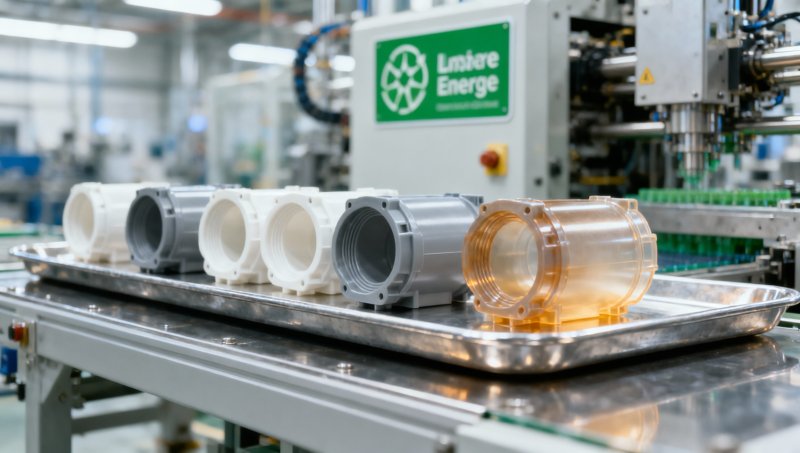
On May 1, 2026, the China Biomaterials Industry Alliance published the 2026 Bio-based Raw Material Supply Chain Sourcing Guide, marking a notable shift in material selection criteria for industrial instrumentation—particularly for instrument enclosures. The guide explicitly includes PLA/PBAT-blended engineering plastics in its recommended materials list, citing verified performance data: dimensional stability within −20°C to 70°C and UL94 V-0 flame retardancy compliance. This development is directly relevant to manufacturers of industrial instruments, suppliers of polymer components, and procurement teams managing green material transitions in global supply chains.
Event Overview
On May 1, 2026, the China Biomaterials Industry Alliance released the 2026 Bio-based Raw Material Supply Chain Sourcing Guide. It is the first edition to formally recommend PLA/PBAT-blended engineering plastics for industrial instrument enclosure applications, specifying their dimensional stability across −20°C to 70°C and UL94 V-0 flame retardancy rating. The guide is currently being used by procurement departments of multiple multinational instrumentation brands to assess Chinese suppliers’ capabilities in substituting conventional petroleum-based plastics with certified bio-based alternatives. Its adoption is estimated to influence over USD 42 million in annual procurement volume.
Impact on Specific Subsectors
Instrument Manufacturers (OEMs)
These companies are affected because the guide serves as a de facto technical benchmark adopted by key international buyers. Its inclusion of PLA/PBAT blends signals growing acceptance of bio-based alternatives for functional, safety-critical housing parts—potentially triggering internal material qualification updates and revised supplier evaluation criteria.
Plastic Component Suppliers & Contract Molders
Suppliers producing instrument housings or related structural parts face direct pressure to demonstrate compliance with the guide’s listed specifications. Impact manifests in increased demand for test reports (e.g., UL94, thermal cycling), tighter documentation requirements for bio-content verification, and possible retooling or formulation adjustments to meet dimensional stability targets.
Raw Material Distributors & Compounders
Distributors and compounders supplying PLA/PBAT blends must now align product datasheets and certifications with the guide’s stated performance thresholds. Their role shifts from general material availability to technical validation support—especially regarding batch-to-batch consistency under thermal stress and flame-retardant additive compatibility.
Procurement & Supply Chain Management Teams
For procurement professionals—especially those supporting multinational OEMs—the guide introduces a new reference point for supplier audits and material substitution roadmaps. Its use by buyer-side teams means sourcing decisions may now require cross-referencing against this document, elevating its weight beyond voluntary guidance.
What Relevant Enterprises or Practitioners Should Focus On
Monitor official updates to the guide’s implementation framework
The Alliance has not yet published accompanying assessment protocols or third-party verification procedures. Analysis shows that formalized testing standards or certification pathways—should they emerge—will likely define near-term compliance expectations more concretely than the current list alone.
Verify alignment of existing PLA/PBAT formulations with the specified thermal and flame-retardant benchmarks
Not all commercially available PLA/PBAT blends meet both −20°C–70°C dimensional stability and UL94 V-0 in one configuration. Observation shows that many suppliers offer variants optimized for either mechanical performance or flame resistance—but rarely both without trade-offs. Current verification should focus on certified test reports matching the exact conditions cited.
Distinguish between policy signaling and operational readiness
While the guide is being applied in procurement evaluations, it remains a non-mandatory industry reference—not a regulatory requirement or standard. From an industry perspective, its current utility lies more in shaping buyer expectations than enforcing compliance. Companies should avoid treating it as an immediate compliance deadline, but rather as a leading indicator of tightening material sustainability criteria.
Prepare technical documentation packages for supplier qualification requests
Multinational instrumentation brands are reportedly using the guide to screen Chinese suppliers. Practitioners should proactively compile test reports, composition disclosures (e.g., bio-based carbon content per ASTM D6866), and processing guidelines—particularly for thermal cycling and flame testing—to accelerate response times to RFQs referencing the guide.
Editorial Perspective / Industry Observation
This guide is better understood as a market signal than an enforcement mechanism. Observably, its significance lies not in regulatory authority, but in its adoption by influential procurement organizations—effectively turning technical recommendations into de facto selection filters. Analysis suggests it reflects growing confidence in the functional viability of certain bio-based blends for demanding industrial applications, yet also highlights lingering gaps: no lifecycle assessment (LCA) metrics, no supply chain traceability requirements, and no mention of end-of-life handling. Industry attention should therefore remain focused on how—and how quickly—this guidance translates into actual purchase orders, specification revisions, and updated qualification checklists.
It is neither a sudden disruption nor a completed transition. Rather, it marks a measurable step in the incremental alignment of bio-based material performance with industrial engineering requirements—where procurement behavior, not regulation, is currently driving change.
Conclusion
The release of the 2026 Bio-based Raw Material Supply Chain Sourcing Guide signifies a concrete advancement in the integration of certified bio-based polymers into functional industrial components. Its practical impact centers on procurement decision-making and supplier qualification—not regulatory compliance. For stakeholders, the most rational interpretation is that this represents an early-stage, buyer-led consolidation of technical expectations—not a broad-based mandate, but a focused benchmark gaining traction where performance, safety, and sustainability intersect.
Source Attribution
Main source: China Biomaterials Industry Alliance, 2026 Bio-based Raw Material Supply Chain Sourcing Guide, issued May 1, 2026.
Points requiring ongoing observation: official publication of verification protocols, third-party certification schemes linked to the guide, and documented cases of contract awards conditioned on its criteria.
Recommended for You
 US-China Trade Talks Agree on Tariff Cuts for Key Test Equipment PartsUS-China tariff cuts on key test equipment parts—like pressure sensor chips & infrared thermal imaging modules—boost margins, cut costs, and strengthen global competitiveness for manufacturers.
 G7 Paris Meeting Focuses on Critical Mineral Supply SecurityCritical mineral supply security takes center stage at the G7 Paris meeting—key for rare-earth sensor exporters. Learn EU compliance impacts & actionable readiness steps.
 Brent Crude Surpasses $106/bbl, Raising Sea Freight Costs for Small Testing Equipment ExportsBrent Crude Surpasses $106/bbl—sea freight costs surge, impacting small testing equipment exporters. Learn how SMEs can adapt pricing, terms & logistics now.
 WTO Forecasts 1.9% Global Goods Trade Growth in 2026 Amid Supply Chain ShorteningWTO forecasts 1.9% global goods trade growth in 2026—sparking nearshoring demand for testing equipment, calibration services & OTA-ready solutions in ASEAN, Middle East & Mexico.
 UK-China Export Control Working Group Holds Second Meeting in LondonUK-China Export Control Working Group: Key updates on dual-use items—laser interferometers, quantum sensors & oscilloscopes. Learn compliance implications for exporters now.
 Japan's 10Y Yield Drop to 2.745% Lifts Yen, Raising China-Made Testing Equipment CostsJapan's 10Y yield drop to 2.745% lifts yen, raising costs for China-made testing equipment — explore FX impacts, procurement shifts & strategic responses.
 KOSPI 200 Futures Circuit Breaker Triggered, Impacting Industrial Automation Instrument Export TimelinesKOSPI 200 futures circuit breaker triggered — impact on PLC modules, transmitters & fieldbus instrument exports to Korea. Urgent timeline insights inside.
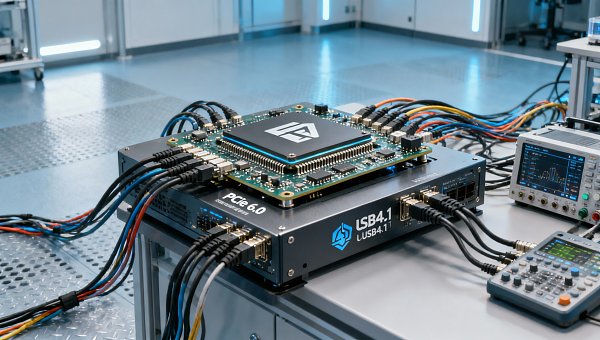
 South Korea’s Chip Exports Surge 202% in May 2026 Amid AI Test Equipment DemandAI test equipment demand surges as South Korea’s chip exports jump 202% in May 2026 — PCIe 6.0 & USB4.1 validation tools see sharp global procurement rise.
 Emission Gas Analyzer News in 2026: Regulatory Shifts Affecting DemandEmission gas analyzer demand is changing fast in 2026 as new regulations tighten limits, expand continuous monitoring, and raise data compliance standards. Explore key trends shaping smarter buying decisions.
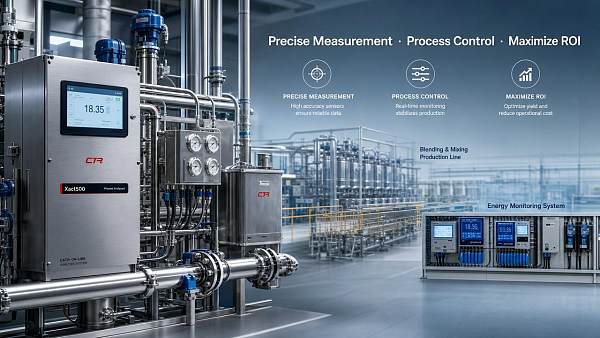
 When a High Accuracy Analyzer Delivers Real ROI in Process ControlHigh accuracy analyzer ROI starts with better process control. Learn where tighter measurements cut waste, improve stability, reduce compliance risk, and deliver measurable operational savings.
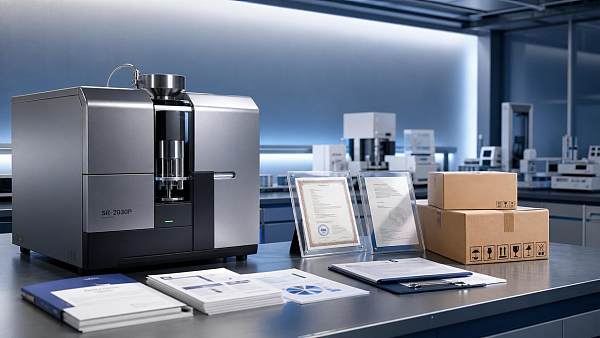
 SR-2030P Analyzer Import Updates in 2026: Compliance Points to ReviewSR-2030P analyzer import updates for 2026: review classification, certification, customs documents, and market access risks to reduce delays, control costs, and source with confidence.
 Industrial Oxygen Analyzer Price Trends in 2026: Cost Drivers to WatchIndustrial oxygen analyzer price trends in 2026 explained: compare sensor, compliance, installation, and maintenance cost drivers to make smarter, lower-risk buying decisions.
 Laser Oxygen Analyzer or Industrial Oxygen Analyzer: Which Fits BetterLaser oxygen analyzer or industrial oxygen analyzer? Compare speed, accuracy, maintenance, and cost to find the best fit for smarter, more reliable process control.
 ATEX Gas Analyzer Demand in 2026: What Is Shaping the MarketATEX gas analyzer demand in 2026 is driven by safety, digital integration, and lifecycle value. See what shapes buying decisions across industry, utilities, hydrogen, and automation.
 Fixed Gas Analyzer vs Portable Options: What Matters for Plant UseFixed gas analyzer or portable detector for plant use? Compare safety, response time, maintenance, and cost to choose the right monitoring solution with confidence.
 Explosion Proof Analyzer Selection Mistakes That Increase Site RiskExplosion proof analyzer selection mistakes can raise compliance, maintenance, and safety risks. Learn the key errors to avoid and how to choose a safer, more reliable solution.
 SR-2000 Infrared Analyzer: Key Performance Checks Before InstallationSR-2000 infrared analyzer pre-installation guide: learn how to verify accuracy, drift, site readiness, and calibration support to reduce startup risk and ensure stable long-term performance.
 How to Choose a Continuous Gas Analyzer for Stable 24/7 MonitoringContinuous gas analyzer selection guide for stable 24/7 monitoring. Learn how to compare accuracy, response time, maintenance, and integration for smarter industrial decisions.
 IEC Approves China-Led Standard for Smart Sensor Semantic InteroperabilityIEC TR 63372 smart sensor semantic interoperability standard—led by China—cuts export certification time by 30%. Discover how it reshapes global IoT integration.
 MIIT Launches Joint Enforcement on EV Battery RecyclingMIIT's EV battery recycling enforcement targets BMS data leaks, illegal dismantling & electrolyte disposal—key for exporters, testers & procurement teams needing GDPR/CCPA compliance.
 SAMR Launches Unified Market Action on Testing & CertificationSAMR Launches Unified Market Action on Testing & Certification—tackling fragmentation, redundant fees & cross-border recognition barriers for exporters and manufacturers.
 Fifteenth Five-Year Urban Renewal Plan Approved, Signaling Overseas Procurement for Smart Water & Environmental Monitoring DevicesSmart water & environmental monitoring devices gain global momentum as China’s 15th Five-Year Urban Renewal Plan mandates intelligent infrastructure—key for Belt and Road exports.
 IMF Warns AI Amplifies Financial Cybersecurity RisksAI amplifies financial cybersecurity risks—IMF warns. Discover how XAI verification, adversarial attacks, and regulatory mandates impact AI detection equipment, FinTech, and banks.
 Tmall Health Launches 'Health Supplement Safety Alliance'Health Supplement Safety Alliance launched by Tmall Health—boosting traceability, lab credibility & cross-border quality for brands like By-Health and Centrum.
 EN IEC 61000-6-4:2026 EMC Standard Effective for AI Edge DevicesEN IEC 61000-6-4:2026 EMC standard is live—15% stricter radiated limits for AI edge devices. Act now to secure EU industrial IoT procurement eligibility.
 APEC Auto Dialogue Confirms Semi-Solid Battery Deployment and Fast ChargingSemi-solid battery deployment & 15-min fast charging confirmed at APEC Auto Dialogue—spurring global demand for China-made battery testing equipment, BMS validation, and thermal runaway simulation solutions.
 EU Imposes Final Anti-Dumping Duty on Chinese Adipic AcidEU anti-dumping duty on Chinese adipic acid takes effect May 2026—impacting pH meters, sensors & analytical instruments. Act now to secure supply chains.
 Colombia Upholds Anti-Dumping Duties on Chinese Acrylic SheetsColombia Upholds Anti-Dumping Duties on Chinese Acrylic Sheets — 32.7% tariff extended for 5 years. Critical for exporters of medical, lab & analytical instrument enclosures.
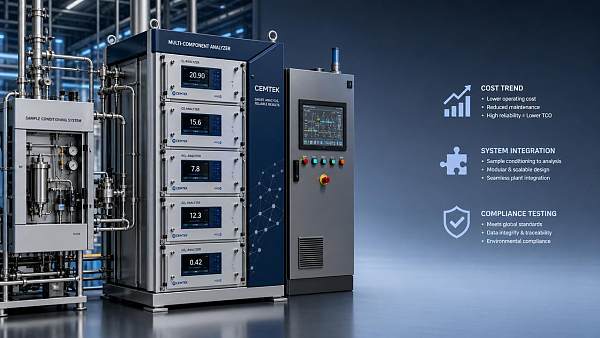
 Multi Component Analyzer Cost Trends for 2026 Expansion PlansMulti component analyzer cost trends for 2026: discover key pricing drivers, hidden costs, and smart supplier strategies to budget accurately and maximize expansion ROI.
 SR-2050 Analyzer Maintenance Points That Affect Service LifeSR-2050 analyzer maintenance points that directly impact service life, accuracy, and uptime. Learn how cleaning, calibration, inspection, and environment control reduce failures.
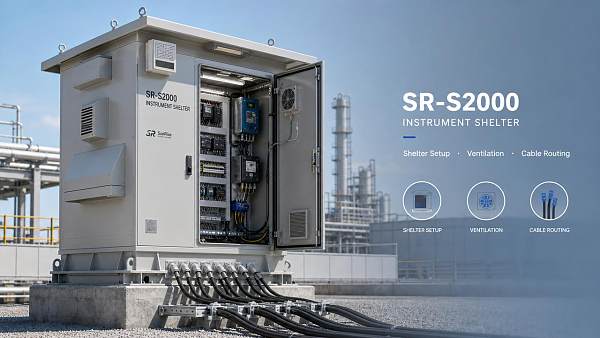
 SR-S2000 Shelter: Common Setup Mistakes to AvoidSR-S2000 shelter setup mistakes can cause heat, moisture, and maintenance issues. Learn what to avoid for safer installation, stable performance, and longer equipment life.
 Custom Gas Analyzer Import Risks and Spec Mismatch IssuesCustom gas analyzer import risks can derail projects through spec mismatch, compliance gaps, and integration issues. Learn how buyers can compare suppliers, verify requirements, and avoid costly rework.


















Search Categories
Search Categories
Latest Article
- US-China Trade Talks Agree on Tariff Cuts for Key Test Equipment PartsUS-China tariff cuts on key test equipment parts—like pressure sensor chips & infrared thermal imaging modules—boost margins, cut costs, and strengthen global competitiveness for manufacturers.Posted by:
- G7 Paris Meeting Focuses on Critical Mineral Supply SecurityCritical mineral supply security takes center stage at the G7 Paris meeting—key for rare-earth sensor exporters. Learn EU compliance impacts & actionable readiness steps.Posted by:
- Brent Crude Surpasses $106/bbl, Raising Sea Freight Costs for Small Testing Equipment ExportsBrent Crude Surpasses $106/bbl—sea freight costs surge, impacting small testing equipment exporters. Learn how SMEs can adapt pricing, terms & logistics now.Posted by:
Please give us a message
