
Gas Detection Analyzer Lead Times Are Shifting in 2026


Gas detection analyzer lead times are changing fast in 2026, creating new risks and opportunities for procurement teams. As supply chains, compliance requirements, and component availability continue to evolve, buyers need clearer timelines and smarter sourcing strategies. This article explores what is driving these shifts, how they affect purchasing decisions, and what procurement professionals can do to secure reliable delivery without compromising performance or project schedules.
Why are gas detection analyzer lead times getting more attention in 2026?
Procurement teams are paying closer attention because the delivery window for a gas detection analyzer is no longer a simple factory-to-site estimate. In many projects, the difference between a 4-week shipment and a 14-week shipment can affect commissioning dates, safety audits, shutdown planning, and capital spending schedules. For process plants, utilities, laboratories, and environmental monitoring programs, a delayed analyzer often delays a larger decision chain.
The issue is especially visible in the instrumentation industry because analyzers sit at the intersection of sensors, electronics, enclosures, software, calibration components, and compliance documentation. A gas detection analyzer used in petrochemical processing may need sampling systems, hazardous-area considerations, and factory acceptance checks, while a laboratory or emissions application may require different detectors, communication outputs, and reporting formats. Each added requirement can extend lead time by 1 to 6 weeks.
Another reason this topic matters is that many buyers are no longer purchasing a standalone instrument. They are buying a package that includes integration support, spare parts, calibration accessories, and documentation for installation or validation. In 2026, those bundled expectations make procurement more strategic. It is not enough to ask, “When can it ship?” The better question is, “When can the complete gas detection analyzer solution be installed and accepted?”
What has changed compared with earlier buying cycles?
Earlier, many standard analyzer models could be sourced in a relatively predictable range of 3 to 8 weeks. Today, standard units may still move quickly, but configured systems often fall into 8 to 16 weeks, and highly customized packages can reach 16 to 24 weeks. That spread makes planning harder for procurement personnel who are managing multiple vendors across automation, controls, and safety equipment.
In addition, buyers are facing more variation between suppliers. Two vendors may quote similar technical performance, but one may rely on stocked sensor modules while another depends on longer replenishment cycles for boards, transmitters, or specialty cells. This makes lead-time comparison as important as price comparison.
Typical 2026 lead-time drivers
- Detector type selection, such as electrochemical, infrared, catalytic, or photoionization, can change component availability.
- Hazardous-area or industrial enclosure requirements may add extra assembly and inspection steps.
- Protocol and control integration, including 4-20 mA, Modbus, or digital networking, may require additional testing.
- Calibration gas compatibility, sampling panels, pumps, and filtration accessories often extend package completion time.
- Project document demands, such as material traceability, test reports, and compliance files, can add 1 to 3 review cycles.
For procurement teams, the takeaway is clear: 2026 lead times deserve early review because the analyzer itself may represent only part of the real delivery schedule.
What factors are actually causing gas detection analyzer lead times to shift?
The biggest cause is uneven component availability. Not every gas detection analyzer uses the same bill of materials, and shortages do not hit all technologies equally. Infrared modules, specialty sensors, industrial displays, communication boards, and pressure-regulated sampling components can have different replenishment cycles. A supplier with strong assembly capacity can still face delays if one critical module is unavailable for 5 to 10 weeks.
A second cause is rising configuration complexity. Buyers in the instrumentation sector increasingly request system-level solutions rather than base instruments. They may need stainless steel tubing, weatherproof cabinets, data logging, alarm relays, local displays, or compatibility with existing PLC and DCS systems. Each option seems small in isolation, but together they add engineering review, part matching, wiring, software setup, and final test time.
The third cause is compliance and acceptance workflow. In regulated or safety-sensitive applications, the lead time includes more than production. It can also include document preparation, witness testing, calibration confirmation, packaging for export, and site-specific marking. For cross-border projects, logistics and customs handling can add another 1 to 4 weeks after factory release.
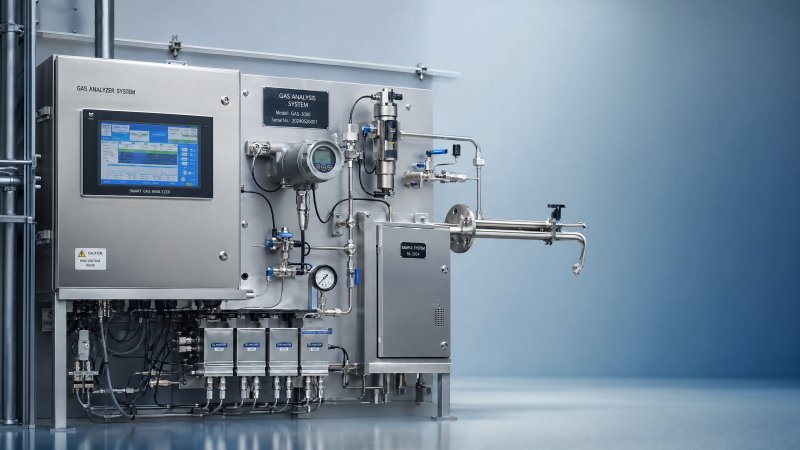
Which factors tend to add the most delay?
The table below summarizes common lead-time drivers and how they usually affect a gas detection analyzer purchase in industrial and general instrumentation projects.
This comparison shows why procurement should not rely on a single “catalog lead time.” A gas detection analyzer quote must be read as a combination of hardware, configuration, documentation, and logistics readiness.
It also explains why sourcing teams increasingly ask suppliers for component risk visibility. Even a rough indication of whether key sensors, boards, or accessories are stocked can improve planning and reduce last-minute schedule surprises.
How should procurement teams evaluate lead time when comparing suppliers?
The first rule is to compare like with like. A gas detection analyzer quoted at 5 weeks may appear better than one quoted at 9 weeks, but the faster quote may exclude calibration kits, mounting hardware, software configuration, or compliance files. Procurement professionals should request a line-by-line scope check before using lead time as a decision factor.
The second rule is to separate manufacturing lead time from usable delivery lead time. If a supplier says shipment is possible in 6 weeks, buyers still need to ask about inspection, packaging, transport mode, customs handling, and startup support. In many industrial projects, the difference between “ship date” and “site-ready date” is 7 to 21 days.
The third rule is to evaluate schedule reliability, not just speed. A supplier that consistently delivers within a quoted range of plus or minus 1 week may be more valuable than one promising aggressive timing but revising it later. For project procurement, dependable planning often protects cost and installation windows better than optimistic promises.
What questions should buyers ask before placing the order?
A structured question list helps reduce variation between quotes. It also reveals whether the supplier understands the operational context of the gas detection analyzer rather than only the product code.
- Is the quoted lead time based on stocked parts, incoming replenishment, or custom production?
- Does the quote include sensors, controller, display, enclosure, communication module, and calibration accessories?
- Are factory test records, calibration certificates, and manuals included in the delivery schedule?
- If the application needs hazardous-area or industry-specific compliance, has that been reflected in timing?
- What are the decision checkpoints within the first 3, 7, and 14 days after PO release?
Quick supplier comparison guide
The following table can be used as a practical screening tool when comparing gas detection analyzer offers from multiple sources.
When buyers use these criteria, the conversation changes from “Who is fastest?” to “Who can deliver the right gas detection analyzer with the least schedule risk?” That is a stronger basis for purchasing decisions in industrial automation and instrumentation projects.
Which applications are most affected by shifting gas detection analyzer lead times?
Lead-time pressure is highest where analyzer availability directly affects safety, compliance, or production continuity. In process manufacturing, an online gas detection analyzer may be linked to emissions control, combustion optimization, or area safety. If delivery slips, the plant may postpone maintenance windows or rely on temporary monitoring methods that are less efficient and more labor-intensive.
Energy and power projects also feel the impact because they often involve coordinated installation schedules across electrical, controls, mechanical, and instrumentation teams. A delay of even 2 weeks on one analyzer package can create idle labor, rescheduling costs, or incomplete handover. Environmental monitoring programs face similar issues when seasonal measurement windows or reporting deadlines are fixed.
Laboratory and medical-related testing environments are affected differently. Their gas detection analyzer requirements may be less about hazardous-area design and more about measurement stability, documentation, and calibration traceability. Even so, if a specific sensing technology or imported component is required, procurement timelines can stretch beyond the original budget plan.
Where should procurement teams prioritize early sourcing?
- Shutdown and turnaround projects with fixed installation windows of 5 to 15 days.
- Systems requiring custom sample conditioning, panel assembly, or outdoor protective cabinets.
- Projects with export packaging, multi-country shipping, or documentation review by third parties.
- Applications needing nonstandard gas ranges, special materials, or multiple communication protocols.
- Programs where delayed analyzer startup could affect inspection, qualification, or reporting milestones.
If a gas detection analyzer is tied to one of these situations, sourcing should begin earlier than many teams expect. In practical terms, initiating technical clarification 8 to 12 weeks before the required ship date is often safer than waiting for a final internal release.
What are the most common procurement mistakes when buying a gas detection analyzer?
One common mistake is treating all analyzers as interchangeable because they appear to measure similar gases. In reality, a gas detection analyzer for fixed industrial safety, process control, stack monitoring, or laboratory analysis may have very different sensor principles, environmental tolerances, and maintenance needs. Choosing on headline performance alone can result in a product that ships quickly but does not fit the actual application.
Another mistake is delaying parameter confirmation. Buyers sometimes request quotations before finalizing gas type, concentration range, ambient temperature, output requirements, installation location, or whether pumps and filters are needed. This creates a cycle of quote revision, internal approval delay, and lead-time reset. In many cases, each revision round adds 3 to 7 days.
A third mistake is ignoring lifecycle support. Procurement may secure a favorable unit price but overlook replacement sensors, calibration routines, spare parts lead times, or field service expectations. For a gas detection analyzer used continuously, long-term support matters almost as much as first delivery.
How can buyers reduce these risks?
A disciplined pre-order checklist makes a major difference. It helps purchasing teams align engineering, operations, and supplier communication before the order is locked.
- Confirm gas composition, range, response expectations, and installation environment before RFQ release.
- Ask whether the quoted gas detection analyzer includes all accessories needed for commissioning.
- Request a milestone schedule covering order review, assembly, testing, shipment, and document release.
- Check availability of consumables and replacement sensing elements for the next 12 months.
- Clarify who is responsible for site integration, wiring confirmation, and startup support.
These steps reduce avoidable delays and improve quote accuracy. They also help procurement teams defend purchasing decisions internally, since the selected gas detection analyzer is backed by a clearer technical and delivery logic.
What should procurement professionals do next if delivery timing is critical?
Start by classifying the purchase into one of three buckets: urgent replacement, planned project supply, or customized system package. An urgent replacement may justify accepting a standard gas detection analyzer with shorter lead time if it meets minimum technical and safety needs. A planned project can allow broader comparison, while a customized package requires earlier engineering collaboration and milestone management.
Next, share a concise requirement file with suppliers. The best files usually fit on 1 to 3 pages and include gas type, range, environment, power supply, outputs, enclosure expectations, document needs, and target delivery date. This improves quote quality quickly and reduces the chance of hidden scope gaps. For many procurement teams, this single step shortens the sourcing cycle more effectively than repeated price-only inquiries.
Finally, ask suppliers to identify both the shortest possible lead time and the lowest-risk lead time. Those are not always the same. A realistic delivery plan for a gas detection analyzer should include configuration freeze timing, factory test readiness, shipment method, and post-delivery support planning.
Why choose us for gas detection analyzer sourcing support?
We understand that procurement is not only about finding an instrument; it is about securing a workable delivery plan, suitable configuration, and dependable support across industrial, environmental, laboratory, and automation applications. Our approach focuses on practical selection guidance, realistic lead-time communication, and alignment with broader instrumentation project requirements.
If you are evaluating a gas detection analyzer for a new project, replacement order, or integrated monitoring package, we can help you confirm key parameters, compare configuration options, review delivery timing, and discuss documentation or compliance expectations. We can also support quotation alignment so your team compares suppliers on a consistent basis.
Contact us to discuss
Contact us if you need help with parameter confirmation, product selection, lead-time assessment, custom solution discussions, certification-related review, sample support, spare parts planning, or quotation communication. A clear early conversation can save days or even weeks in the purchasing cycle and improve the likelihood that the gas detection analyzer arrives ready for successful installation.
Recommended for You
 US-China Trade Talks Agree on Tariff Cuts for Key Test Equipment PartsUS-China tariff cuts on key test equipment parts—like pressure sensor chips & infrared thermal imaging modules—boost margins, cut costs, and strengthen global competitiveness for manufacturers.
 G7 Paris Meeting Focuses on Critical Mineral Supply SecurityCritical mineral supply security takes center stage at the G7 Paris meeting—key for rare-earth sensor exporters. Learn EU compliance impacts & actionable readiness steps.
 Brent Crude Surpasses $106/bbl, Raising Sea Freight Costs for Small Testing Equipment ExportsBrent Crude Surpasses $106/bbl—sea freight costs surge, impacting small testing equipment exporters. Learn how SMEs can adapt pricing, terms & logistics now.
 WTO Forecasts 1.9% Global Goods Trade Growth in 2026 Amid Supply Chain ShorteningWTO forecasts 1.9% global goods trade growth in 2026—sparking nearshoring demand for testing equipment, calibration services & OTA-ready solutions in ASEAN, Middle East & Mexico.
 UK-China Export Control Working Group Holds Second Meeting in LondonUK-China Export Control Working Group: Key updates on dual-use items—laser interferometers, quantum sensors & oscilloscopes. Learn compliance implications for exporters now.
 Japan's 10Y Yield Drop to 2.745% Lifts Yen, Raising China-Made Testing Equipment CostsJapan's 10Y yield drop to 2.745% lifts yen, raising costs for China-made testing equipment — explore FX impacts, procurement shifts & strategic responses.
 KOSPI 200 Futures Circuit Breaker Triggered, Impacting Industrial Automation Instrument Export TimelinesKOSPI 200 futures circuit breaker triggered — impact on PLC modules, transmitters & fieldbus instrument exports to Korea. Urgent timeline insights inside.
 South Korea’s Chip Exports Surge 202% in May 2026 Amid AI Test Equipment DemandAI test equipment demand surges as South Korea’s chip exports jump 202% in May 2026 — PCIe 6.0 & USB4.1 validation tools see sharp global procurement rise.
 Emission Gas Analyzer News in 2026: Regulatory Shifts Affecting DemandEmission gas analyzer demand is changing fast in 2026 as new regulations tighten limits, expand continuous monitoring, and raise data compliance standards. Explore key trends shaping smarter buying decisions.
 When a High Accuracy Analyzer Delivers Real ROI in Process ControlHigh accuracy analyzer ROI starts with better process control. Learn where tighter measurements cut waste, improve stability, reduce compliance risk, and deliver measurable operational savings.
 SR-2030P Analyzer Import Updates in 2026: Compliance Points to ReviewSR-2030P analyzer import updates for 2026: review classification, certification, customs documents, and market access risks to reduce delays, control costs, and source with confidence.
 Industrial Oxygen Analyzer Price Trends in 2026: Cost Drivers to WatchIndustrial oxygen analyzer price trends in 2026 explained: compare sensor, compliance, installation, and maintenance cost drivers to make smarter, lower-risk buying decisions.
 Laser Oxygen Analyzer or Industrial Oxygen Analyzer: Which Fits BetterLaser oxygen analyzer or industrial oxygen analyzer? Compare speed, accuracy, maintenance, and cost to find the best fit for smarter, more reliable process control.
 ATEX Gas Analyzer Demand in 2026: What Is Shaping the MarketATEX gas analyzer demand in 2026 is driven by safety, digital integration, and lifecycle value. See what shapes buying decisions across industry, utilities, hydrogen, and automation.
 Fixed Gas Analyzer vs Portable Options: What Matters for Plant UseFixed gas analyzer or portable detector for plant use? Compare safety, response time, maintenance, and cost to choose the right monitoring solution with confidence.
 Explosion Proof Analyzer Selection Mistakes That Increase Site RiskExplosion proof analyzer selection mistakes can raise compliance, maintenance, and safety risks. Learn the key errors to avoid and how to choose a safer, more reliable solution.
 SR-2000 Infrared Analyzer: Key Performance Checks Before InstallationSR-2000 infrared analyzer pre-installation guide: learn how to verify accuracy, drift, site readiness, and calibration support to reduce startup risk and ensure stable long-term performance.
 How to Choose a Continuous Gas Analyzer for Stable 24/7 MonitoringContinuous gas analyzer selection guide for stable 24/7 monitoring. Learn how to compare accuracy, response time, maintenance, and integration for smarter industrial decisions.
 IEC Approves China-Led Standard for Smart Sensor Semantic InteroperabilityIEC TR 63372 smart sensor semantic interoperability standard—led by China—cuts export certification time by 30%. Discover how it reshapes global IoT integration.
 MIIT Launches Joint Enforcement on EV Battery RecyclingMIIT's EV battery recycling enforcement targets BMS data leaks, illegal dismantling & electrolyte disposal—key for exporters, testers & procurement teams needing GDPR/CCPA compliance.
 SAMR Launches Unified Market Action on Testing & CertificationSAMR Launches Unified Market Action on Testing & Certification—tackling fragmentation, redundant fees & cross-border recognition barriers for exporters and manufacturers.
 Fifteenth Five-Year Urban Renewal Plan Approved, Signaling Overseas Procurement for Smart Water & Environmental Monitoring DevicesSmart water & environmental monitoring devices gain global momentum as China’s 15th Five-Year Urban Renewal Plan mandates intelligent infrastructure—key for Belt and Road exports.
 IMF Warns AI Amplifies Financial Cybersecurity RisksAI amplifies financial cybersecurity risks—IMF warns. Discover how XAI verification, adversarial attacks, and regulatory mandates impact AI detection equipment, FinTech, and banks.
 Tmall Health Launches 'Health Supplement Safety Alliance'Health Supplement Safety Alliance launched by Tmall Health—boosting traceability, lab credibility & cross-border quality for brands like By-Health and Centrum.
 EN IEC 61000-6-4:2026 EMC Standard Effective for AI Edge DevicesEN IEC 61000-6-4:2026 EMC standard is live—15% stricter radiated limits for AI edge devices. Act now to secure EU industrial IoT procurement eligibility.
 APEC Auto Dialogue Confirms Semi-Solid Battery Deployment and Fast ChargingSemi-solid battery deployment & 15-min fast charging confirmed at APEC Auto Dialogue—spurring global demand for China-made battery testing equipment, BMS validation, and thermal runaway simulation solutions.
 EU Imposes Final Anti-Dumping Duty on Chinese Adipic AcidEU anti-dumping duty on Chinese adipic acid takes effect May 2026—impacting pH meters, sensors & analytical instruments. Act now to secure supply chains.
 Colombia Upholds Anti-Dumping Duties on Chinese Acrylic SheetsColombia Upholds Anti-Dumping Duties on Chinese Acrylic Sheets — 32.7% tariff extended for 5 years. Critical for exporters of medical, lab & analytical instrument enclosures.
 Multi Component Analyzer Cost Trends for 2026 Expansion PlansMulti component analyzer cost trends for 2026: discover key pricing drivers, hidden costs, and smart supplier strategies to budget accurately and maximize expansion ROI.
 SR-2050 Analyzer Maintenance Points That Affect Service LifeSR-2050 analyzer maintenance points that directly impact service life, accuracy, and uptime. Learn how cleaning, calibration, inspection, and environment control reduce failures.
 SR-S2000 Shelter: Common Setup Mistakes to AvoidSR-S2000 shelter setup mistakes can cause heat, moisture, and maintenance issues. Learn what to avoid for safer installation, stable performance, and longer equipment life.
 Custom Gas Analyzer Import Risks and Spec Mismatch IssuesCustom gas analyzer import risks can derail projects through spec mismatch, compliance gaps, and integration issues. Learn how buyers can compare suppliers, verify requirements, and avoid costly rework.








Search Categories
Search Categories
Latest Article
- US-China Trade Talks Agree on Tariff Cuts for Key Test Equipment PartsUS-China tariff cuts on key test equipment parts—like pressure sensor chips & infrared thermal imaging modules—boost margins, cut costs, and strengthen global competitiveness for manufacturers.Posted by:
- G7 Paris Meeting Focuses on Critical Mineral Supply SecurityCritical mineral supply security takes center stage at the G7 Paris meeting—key for rare-earth sensor exporters. Learn EU compliance impacts & actionable readiness steps.Posted by:
- Brent Crude Surpasses $106/bbl, Raising Sea Freight Costs for Small Testing Equipment ExportsBrent Crude Surpasses $106/bbl—sea freight costs surge, impacting small testing equipment exporters. Learn how SMEs can adapt pricing, terms & logistics now.Posted by:
Please give us a message
