
Industrial Equipment Costs Rising in 2026


In 2026, rising industrial equipment costs are reshaping procurement, operations, and investment decisions across multiple sectors. From industrial sensor, process sensor, and gas sensor solutions to flue equipment, stack equipment, and emission equipment, buyers face growing pressure to balance compliance, performance, and budget. This article explores the key cost drivers, market impacts, and practical evaluation points for users, engineers, and decision-makers.
Why are industrial equipment costs rising in 2026?
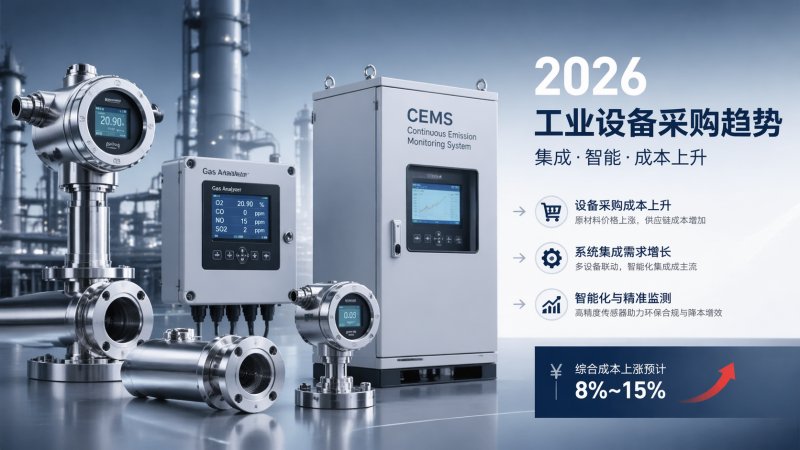
For the instrumentation industry, cost pressure is no longer limited to the purchase price of one device. In 2026, total spending is affected by raw material volatility, electronic component availability, stricter compliance demands, and higher expectations for digital integration. This matters across industrial manufacturing, power generation, environmental monitoring, laboratory analysis, construction engineering, and automation control, where measurement accuracy and system stability directly affect output, safety, and audit readiness.
A typical procurement cycle that once moved in 2–4 weeks for standard instruments may now extend to 4–8 weeks when projects require customized signal output, hazardous-area adaptation, enclosure upgrades, or protocol compatibility. Buyers evaluating pressure transmitters, flow meters, gas analyzers, stack monitoring devices, or industrial online monitoring systems need to assess not only hardware cost, but also calibration, software integration, commissioning, spare parts, and future maintenance intervals.
Another driver is the shift from isolated equipment to connected systems. Plants increasingly want process sensors that can communicate with PLC, DCS, SCADA, or cloud platforms. That requirement pushes specifications upward: better signal stability, broader temperature tolerance, improved ingress protection, and stronger diagnostics. Even when unit price changes seem moderate, the system-level budget can rise significantly once communication modules, installation accessories, and validation work are added.
The main cost drivers buyers should separate
Many companies treat all price increases as a single market issue, but procurement teams get better results when they split costs into four layers. First is device cost, which includes sensors, transmitters, analyzers, control components, and mounting hardware. Second is compliance cost, such as documentation, material traceability, and inspection records. Third is implementation cost, covering installation, wiring, configuration, and startup. Fourth is lifecycle cost, including calibration frequency, spare availability, operator training, and downtime risk.
- Material and component pressure: stainless steel, specialty alloys, semiconductors, displays, and industrial communication chips remain sensitive cost items.
- Compliance expansion: environmental monitoring and emission equipment often require more documentation, validation steps, and service records than general-purpose instruments.
- Customization growth: signal type, process connection, temperature range, and enclosure protection can move a standard product into a higher-price configuration.
- Project complexity: integration with existing automation systems can add 3–6 technical checkpoints before final approval.
For financial approvers and business evaluators, this breakdown helps control budget discussions. Instead of asking why a gas sensor system costs more than last year, they can ask which part of the increase comes from sensing technology, which part comes from compliance packaging, and which part comes from implementation scope. That creates a clearer path for comparing suppliers and avoiding hidden downstream expenses.
Which equipment categories are most affected, and why?
Not all industrial equipment is seeing the same cost pattern. In the instrumentation sector, the most exposed categories are usually those with higher sensing complexity, more rigorous environmental requirements, or stronger integration needs. Industrial sensor, process sensor, gas sensor, flue equipment, stack equipment, emission equipment, calibration tools, and industrial online monitoring systems each face different sourcing and engineering pressures. Understanding these differences helps distributors, end users, and project managers make more realistic budget plans.
Gas analysis and emission monitoring solutions often face the steepest total cost pressure because they combine sensing hardware, sample conditioning, environmental durability, data handling, and compliance documentation. By contrast, common pressure or temperature devices may remain relatively manageable if the application does not require special wetted materials, sanitary design, or hazardous-area adaptation. However, even a simple device can become expensive if delivery is urgent or site conditions are harsh.
The table below summarizes common equipment groups and the cost factors that buyers should examine during 2026 procurement planning. It is especially useful for technical evaluation teams balancing performance with lifecycle control.
This comparison shows why many 2026 budget discussions fail when all devices are grouped together. A plant may accept a 12–24 month calibration interval for some field instruments, while an emission monitoring setup may require tighter service planning, more documentation, and more frequent verification. Procurement teams should therefore compare equipment by application criticality, not by headline unit price alone.
How impact differs by application scenario
In power and energy projects, flue equipment and stack equipment are often affected by high-temperature exposure, corrosive gases, and continuous operation requirements. In industrial manufacturing, process sensor costs can rise when factories request tighter control for automation upgrades. In laboratory or medical testing environments, traceability, calibration history, and software compatibility may drive the budget more than housing or mechanical protection.
For project owners and engineering managers, the lesson is simple: the right budget question is not “Which instrument is cheapest?” but “Which specification level is necessary for this process, this environment, and this compliance obligation over the next 3–5 years?” That shift improves both technical fit and capital discipline.
How should buyers evaluate price versus long-term value?
When industrial equipment costs rise, many companies react by focusing on upfront savings. That can work for non-critical utilities, but it can create expensive risk in measurement, control, and compliance systems. For users, quality managers, safety personnel, and financial approvers, the smarter method is to compare total cost of ownership. This includes acquisition, installation, validation, calibration, downtime exposure, spare parts planning, and the cost of false readings or delayed alarm response.
A lower-priced gas sensor that requires more frequent replacement can become more expensive over 12–24 months than a more stable option. A low-cost flow device that does not match process chemistry may trigger seal degradation, maintenance shutdowns, or measurement drift. In emission equipment, under-specification can also increase reporting risk, especially where data continuity and inspection records matter. That is why procurement and technical review must be linked from the beginning.
A practical selection matrix for procurement teams
The following table can be used as a cross-functional selection tool. It helps technical evaluators, business reviewers, and finance teams score proposals using the same criteria, reducing internal disagreement and shortening approval time by 1–2 review rounds in many projects.
This matrix works best when teams assign weighted importance before requesting final quotations. For example, a continuous emission monitoring application may place 35%–40% of weight on compliance and data integrity, while a standard utility measurement point may focus more on technical fit and maintenance simplicity. Structured scoring is one of the most effective ways to handle rising industrial equipment costs without sacrificing operational reliability.
Five procurement checks before approving a quotation
- Confirm whether the specified range matches actual process conditions, including normal and upset operation.
- Check whether installation accessories, cabling, brackets, manifolds, or sample conditioning parts are included.
- Ask for the expected calibration or maintenance interval, such as every 6 months, 12 months, or based on site duty.
- Verify document requirements early, especially if the project includes quality audits, environmental reporting, or engineering handover packages.
- Review spare parts and service availability for the next 3–5 years, not only for the startup period.
These checks are particularly important for distributors and agents, who often need to compare multiple manufacturers quickly while still protecting their own service reputation. Clear evaluation criteria reduce rework and support more confident bid submissions.
What procurement and implementation strategies reduce cost risk?
Cost control in 2026 is not only about negotiating harder. It also depends on planning better. Many overruns happen because end users, engineering teams, and purchasing departments define requirements too late. If the process conditions are not frozen, the equipment may need reconfiguration after order placement. If communication requirements are unclear, integration costs can rise during commissioning. A disciplined front-end review can reduce avoidable variation and shorten approval cycles.
For complex instrumentation projects, a 4-step implementation path is usually more economical than a rushed purchase. Step 1 is application confirmation, including media, temperature, pressure, mounting conditions, and operating mode. Step 2 is technical matching, where range, output, and material selection are checked. Step 3 is documentation and compliance review. Step 4 is delivery, commissioning, and acceptance planning. This structure is especially useful for process sensor networks, gas monitoring packages, and industrial online monitoring systems.
Where substitutions make sense, and where they do not
Alternative selection can help control cost, but substitution should be based on application logic. In non-critical utility measurement, a simpler output option or a standard enclosure may be acceptable. In corrosive media, safety-related detection, or regulated emission monitoring, substitutions can introduce more risk than savings. The cheapest route is often a false economy when recalibration, retesting, or unplanned downtime are considered.
- Consider standard configurations first when the process is stable and environmental exposure is moderate.
- Avoid downgrading material, sealing, or protection ratings in high humidity, corrosive gas, dust-heavy, or outdoor installations.
- Use modular designs where possible so communication cards, displays, or accessories can be added later instead of included from day one.
- Request sample evaluation or parameter confirmation before bulk purchasing, especially for distributor channels or repeat projects across multiple sites.
Lead time management also matters. Standard industrial instrumentation may ship faster than customized builds, but the true delivery window depends on process connection type, output requirements, certificates, and factory test expectations. For planning purposes, buyers should ask suppliers to separate standard lead time from project lead time. That distinction helps project managers schedule installation more accurately and reduces expensive site idle time.
Common implementation mistakes that increase total cost
The first mistake is selecting by catalog value alone without verifying operating conditions. The second is ignoring maintenance access, which can turn a simple calibration task into a shutdown event. The third is failing to define the acceptance package, such as manuals, certificates, wiring details, and startup support. The fourth is underestimating operator training. Even a well-selected instrument can underperform if users do not understand calibration, alarm thresholds, or replacement cycles.
For safety managers and quality teams, these details are not administrative extras. They directly affect compliance records, incident prevention, and process consistency. In a market where industrial equipment costs are rising, waste from poor implementation becomes even more visible and more expensive.
FAQ: what do buyers ask most about rising industrial equipment costs?
How do I choose between a lower upfront price and a lower lifecycle cost?
Start by estimating the equipment’s role in the process. If the instrument affects safety, environmental reporting, product quality, or continuous operation, lifecycle cost should usually outweigh purchase price. Review 4 areas: calibration interval, spare part availability, maintenance frequency, and downtime consequence. A device that costs less initially but needs service every 3–6 months may be less economical than one with a 12-month interval and better stability.
Which applications are least suited to aggressive cost cutting?
Gas detection, emission equipment, stack equipment, corrosive process measurement, and systems tied to quality-critical control loops are poor candidates for aggressive cost reduction. These applications typically require reliable sensing, stable output, appropriate materials, and complete records. Cutting too deeply in those areas can create revalidation work, unreliable readings, or site safety concerns that cost more than the original savings.
What delivery questions should distributors and project buyers ask first?
Ask whether the quoted lead time applies to a standard configuration or a project-specific build. Then confirm if documentation, calibration, software setup, or accessory kits are included in the same timeline. A realistic delivery review should cover at least 5 points: technical confirmation, production time, inspection or testing, shipping arrangement, and commissioning support. That level of detail prevents misunderstanding and helps distributors manage customer commitments.
What standards or compliance topics usually affect cost?
The answer depends on industry and region, but common cost-related topics include calibration traceability, material and inspection documentation, electrical safety requirements, environmental monitoring records, and hazardous-area considerations where applicable. Buyers should request only the documents and compliance items truly needed for the project. Over-requesting can slow delivery and increase cost, while under-requesting can delay approval at the installation or audit stage.
Why choose us for instrumentation selection, budgeting, and project support?
We support buyers who need more than a basic quotation. In the instrumentation industry, the right decision depends on accurate parameter confirmation, application matching, practical cost control, and clear implementation planning. Whether you are evaluating industrial sensor, process sensor, gas sensor, flue equipment, stack equipment, emission equipment, laboratory instruments, or industrial online monitoring solutions, we can help organize the technical and commercial details that matter before purchase approval.
Our support can cover several concrete areas: parameter confirmation for pressure, temperature, flow, level, and gas applications; configuration review for control and monitoring systems; delivery cycle clarification for standard versus customized orders; documentation planning for project handover and quality review; and solution discussion for replacement, upgrade, or multi-site rollout. This is useful for end users, engineers, commercial evaluators, finance teams, EPC project managers, and channel partners who need fast but defensible decisions.
What you can contact us about
- Parameter confirmation: measuring range, media compatibility, operating temperature, output signal, and installation conditions.
- Product selection: comparison between standard and custom configurations for industrial monitoring, analysis, and control applications.
- Delivery planning: typical lead-time review, project sequencing, and urgent order feasibility.
- Compliance discussion: common documentation needs, calibration records, and project acceptance support.
- Sample support and quotation communication: suitable for distributor evaluation, pilot installation, or phased procurement.
A practical next step
If your team is facing rising industrial equipment costs in 2026, send the application details first rather than requesting a price list only. A useful inquiry should include 6 basic items: process medium, operating range, installation environment, output or communication requirement, compliance expectation, and target delivery window. With that information, it becomes easier to compare options, avoid mismatched specifications, and build a purchasing plan that supports both technical performance and budget discipline.
Recommended for You
 IEC Approves China-Led Standard for Smart Sensor Semantic InteroperabilityIEC TR 63372 smart sensor semantic interoperability standard—led by China—cuts export certification time by 30%. Discover how it reshapes global IoT integration.
 MIIT Launches Joint Enforcement on EV Battery RecyclingMIIT's EV battery recycling enforcement targets BMS data leaks, illegal dismantling & electrolyte disposal—key for exporters, testers & procurement teams needing GDPR/CCPA compliance.
 SAMR Launches Unified Market Action on Testing & CertificationSAMR Launches Unified Market Action on Testing & Certification—tackling fragmentation, redundant fees & cross-border recognition barriers for exporters and manufacturers.
 Fifteenth Five-Year Urban Renewal Plan Approved, Signaling Overseas Procurement for Smart Water & Environmental Monitoring DevicesSmart water & environmental monitoring devices gain global momentum as China’s 15th Five-Year Urban Renewal Plan mandates intelligent infrastructure—key for Belt and Road exports.
 IMF Warns AI Amplifies Financial Cybersecurity RisksAI amplifies financial cybersecurity risks—IMF warns. Discover how XAI verification, adversarial attacks, and regulatory mandates impact AI detection equipment, FinTech, and banks.
 Tmall Health Launches 'Health Supplement Safety Alliance'Health Supplement Safety Alliance launched by Tmall Health—boosting traceability, lab credibility & cross-border quality for brands like By-Health and Centrum.
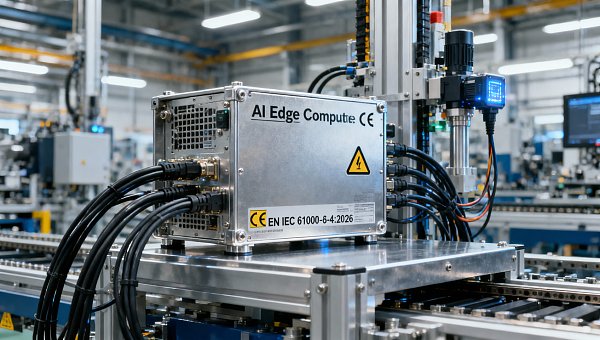
 EN IEC 61000-6-4:2026 EMC Standard Effective for AI Edge DevicesEN IEC 61000-6-4:2026 EMC standard is live—15% stricter radiated limits for AI edge devices. Act now to secure EU industrial IoT procurement eligibility.
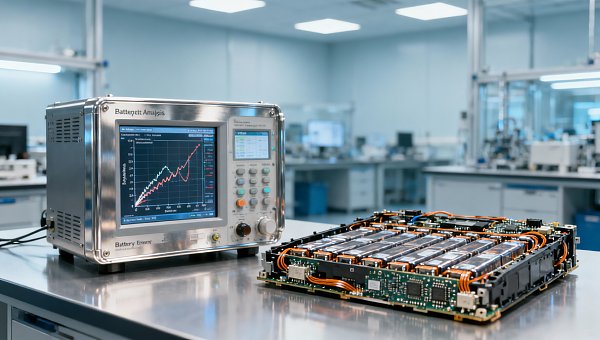
 APEC Auto Dialogue Confirms Semi-Solid Battery Deployment and Fast ChargingSemi-solid battery deployment & 15-min fast charging confirmed at APEC Auto Dialogue—spurring global demand for China-made battery testing equipment, BMS validation, and thermal runaway simulation solutions.
 EU Imposes Final Anti-Dumping Duty on Chinese Adipic AcidEU anti-dumping duty on Chinese adipic acid takes effect May 2026—impacting pH meters, sensors & analytical instruments. Act now to secure supply chains.
 Colombia Upholds Anti-Dumping Duties on Chinese Acrylic SheetsColombia Upholds Anti-Dumping Duties on Chinese Acrylic Sheets — 32.7% tariff extended for 5 years. Critical for exporters of medical, lab & analytical instrument enclosures.
 Multi Component Analyzer Cost Trends for 2026 Expansion PlansMulti component analyzer cost trends for 2026: discover key pricing drivers, hidden costs, and smart supplier strategies to budget accurately and maximize expansion ROI.
 SR-2050 Analyzer Maintenance Points That Affect Service LifeSR-2050 analyzer maintenance points that directly impact service life, accuracy, and uptime. Learn how cleaning, calibration, inspection, and environment control reduce failures.
 SR-S2000 Shelter: Common Setup Mistakes to AvoidSR-S2000 shelter setup mistakes can cause heat, moisture, and maintenance issues. Learn what to avoid for safer installation, stable performance, and longer equipment life.
 Custom Gas Analyzer Import Risks and Spec Mismatch IssuesCustom gas analyzer import risks can derail projects through spec mismatch, compliance gaps, and integration issues. Learn how buyers can compare suppliers, verify requirements, and avoid costly rework.
 When to Choose the SR-2030 Oxygen Analyzer for ComplianceSR-2030 oxygen analyzer: learn when it’s the right choice for compliance, safety, and stable process control. Explore key selection checks, audit-ready benefits, and deployment tips.
 SR-EX Analyzer Price Factors in 2026 ProjectsSR-EX analyzer price factors explained for 2026 projects: compare scope, compliance, integration, and lifecycle costs to approve budgets with less risk and more confidence.
 SR-2070 Analyzer vs Alternatives: Key Performance ChecksSR-2070 analyzer vs alternatives: compare accuracy, drift, response time, calibration effort, and lifecycle cost to choose a more reliable, efficient analyzer with confidence.
 2026 Market Trends for Predictive Analytics InstrumentsPredictive analytics instruments are reshaping 2026 market strategy. Explore key trends, risks, and buying checkpoints to improve uptime, integration, and ROI across industries.
 Wireless Measurement Systems: What Impacts Data Stability Most?Wireless measurement systems perform best when data stays stable. Discover the key factors affecting reliability, accuracy, and long-term performance across industrial applications.
 How Remote Monitoring Devices Cut Downtime in Field OperationsRemote monitoring devices help field teams detect issues early, reduce downtime, and improve maintenance planning. Discover how they keep operations reliable and on schedule.
 5th TCM High-Quality Development Conference Highlights NIR & AI QC for Global ExportNIR & AI QC take center stage at the 5th TCM High-Quality Development Conference—key for global export compliance, real-time quality control, and smart manufacturing.
 IEC Approves China-Led Guide for Smart Sensor Semantic InteroperabilityIEC TR 63388 semantic interoperability guide for smart sensors—China-led, globally approved. Boost IIoT integration across OPC UA, MQTT & TSN now.
 PBOC April Data Shows Strong Credit Flow to Tech & Inclusive LendingPBOC April data reveals surging tech & inclusive lending—boosting global demand for calibrated lab equipment, R&D instruments, and metrology-ready exports.
 SABIC Launches 'Smart Factory 2030' with China-Focused Online Analysis ProcurementSABIC's 'Smart Factory 2030' launches China-focused online analysis procurement—pH/ORP, IR gas & LIBS analyzers. SIL2-certified suppliers, act now!
 China Completes '14th Five-Year' Smart CNC Line R&DChina's '14th Five-Year' Smart CNC Line R&D is complete — boosting reliability & cutting delivery time for precision metrology equipment. Discover how it transforms global procurement.
 FDA Updates IVD Software Guidance: AI Diagnostic Devices Must Provide Verifiable Training DatasetsFDA mandates verifiable training datasets for AI diagnostic devices — critical for medical imaging, DICOM tools, and regulatory services entering the U.S. market.
 EU EN IEC 61000-6-4:2026 EMC Standard Takes EffectEU EN IEC 61000-6-4:2026 EMC standard is live—stricter radiated emission limits for AI edge devices. Act now to avoid EU customs delays & certification bottlenecks.
 APEC Auto Dialogue Confirms Semi-Solid Battery Deployment and 15-Minute Fast ChargingSemi-solid battery deployment and 15-minute fast charging confirmed at APEC Auto Dialogue — driving urgent global demand for BMS validation, thermal runaway, and high-voltage test equipment.
 MIIT Launches Joint Enforcement on EV Battery RecyclingMIIT Launches Joint Enforcement on EV Battery Recycling: Critical for battery test equipment exporters, data compliance, and global supply chains—act now to avoid delays.
 DIA China Annual Meeting Sells Out Despite $7,000+ FeeDIA China Annual Meeting sells out despite $7,000+ fee — a powerful signal for pharma exporters, manufacturers & regulatory service providers targeting China’s innovation ecosystem.
 Continuous Monitoring Solutions and the Shift Toward Smarter ComplianceContinuous monitoring solutions help enterprises strengthen compliance with real-time visibility, traceable data, and faster risk response. Discover how smarter oversight improves resilience and audit confidence.
 Confined Space Monitors: Key Mistakes That Raise Safety RiskConfined space monitors can fail when selection, bump testing, calibration, or sampling is wrong. Learn the biggest safety mistakes and how to prevent false safe readings.

















Search Categories
Search Categories
Latest Article
- IEC Approves China-Led Standard for Smart Sensor Semantic InteroperabilityIEC TR 63372 smart sensor semantic interoperability standard—led by China—cuts export certification time by 30%. Discover how it reshapes global IoT integration.Posted by:
- MIIT Launches Joint Enforcement on EV Battery RecyclingMIIT's EV battery recycling enforcement targets BMS data leaks, illegal dismantling & electrolyte disposal—key for exporters, testers & procurement teams needing GDPR/CCPA compliance.Posted by:
- SAMR Launches Unified Market Action on Testing & CertificationSAMR Launches Unified Market Action on Testing & Certification—tackling fragmentation, redundant fees & cross-border recognition barriers for exporters and manufacturers.Posted by:
Please give us a message
