
Personal Gas Detectors: What Impacts Long-Term Operating Cost


When evaluating personal gas detectors, finance approvers should look past the upfront unit price. In most organizations, the larger cost burden appears over years of calibration, sensor replacement, charging or battery programs, compliance checks, downtime, and administrative effort. A low purchase price can quickly lose its advantage if the device requires frequent service or creates avoidable operational interruptions.
The most practical way to assess long-term operating cost is to estimate the total cost of ownership across the device lifecycle. That means asking how often the detector needs calibration, how long sensors last, how easy it is to maintain, what labor is required, how reliable it remains in real field conditions, and what compliance risk the organization carries if performance slips.
For finance decision-makers, the key judgment is straightforward: the cheapest detector is rarely the lowest-cost detector over time. The better investment is usually the model that balances compliance, uptime, service simplicity, and predictable replacement cycles. This article breaks down the cost drivers that matter most and explains how to compare options with a financial lens rather than a spec-sheet lens alone.
What finance approvers are really trying to learn before approving a detector budget
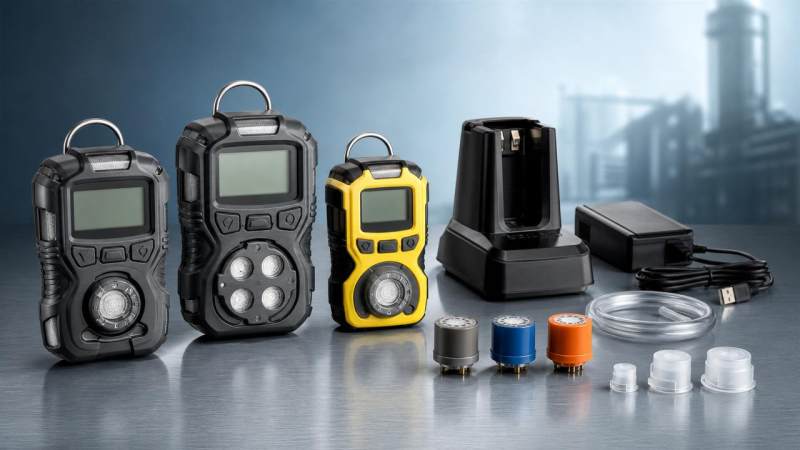
When someone searches for the operating cost of personal gas detectors, they are rarely looking for a generic product overview. They usually want to know what hidden or recurring expenses appear after procurement, how those expenses vary by brand or sensor type, and whether a higher-priced model may actually reduce cost over three to five years.
Finance approvers also tend to focus on budget predictability. A detector program that generates frequent sensor failures, unexpected calibration demand, inconsistent battery performance, or emergency replacement orders is difficult to control financially. Even if annual spend seems manageable, volatility creates administrative overhead and complicates planning across safety, operations, and procurement teams.
Another concern is exposure to operational and compliance risk. If a detector cannot be trusted in harsh environments, the issue is not only maintenance expense. It can also trigger lost productivity, delayed work permits, failed audits, and safety incidents that carry much greater financial consequences than the original equipment cost.
That is why the most useful evaluation approach combines direct cost, labor burden, reliability, and risk reduction. Finance teams do not need to become gas detection specialists, but they do need a framework that translates technical features into measurable cost outcomes.
The purchase price matters, but it is only the entry point
Upfront pricing is visible, easy to compare, and naturally influential during budget review. However, for personal gas detectors, acquisition cost often represents only one portion of the total spend. The longer the organization plans to use the devices, the more likely recurring operating costs will outweigh the initial difference between vendors.
A detector priced lower by a modest margin may appear attractive in a tender process. But if it needs more frequent bump tests, shorter sensor replacement cycles, more manual recordkeeping, or higher service intervention, its ownership cost can exceed that of a premium model within a relatively short period.
Finance approvers should therefore ask for a lifecycle comparison, not just a quotation. A useful side-by-side review includes unit price, expected service life, calibration interval, sensor replacement schedule, battery life, warranty coverage, software or docking requirements, and estimated labor hours per device per year.
This approach changes the conversation from “Which detector costs less today?” to “Which detector costs less to operate safely and compliantly over its real service life?” That question leads to better decisions in industrial purchasing.
Calibration frequency is one of the biggest long-term cost drivers
Calibration is essential for accuracy, but it is also a recurring cost center. Every calibration event involves gas, accessories, labor, documentation, and some level of device downtime. In larger fleets, even small differences in calibration workflow can materially affect annual operating budgets.
The first issue is frequency. Some environments, policies, or device types may require more frequent verification than others. If a detector design or sensor configuration leads to tighter service intervals, the organization absorbs more labor and consumable expense. Over hundreds of units, that difference can become substantial.
The second issue is process efficiency. A detector that integrates well with docking stations, automated record capture, and simple test procedures reduces technician time. A detector that requires more manual steps raises hidden cost, even if the calibration materials themselves are not especially expensive.
Finance teams should ask safety managers and maintenance staff how many annual touchpoints each device requires. Multiplying that number by labor time, gas consumption, and administrative work provides a far clearer picture than product price alone.
Sensor lifespan often determines whether the detector remains economical
Sensors are at the heart of personal gas detectors, and their replacement cycle has a direct effect on cost. Different sensor technologies and target gases produce very different lifespans. A detector with shorter-lived sensors can become expensive surprisingly quickly, particularly when deployed across multiple shifts or harsh field conditions.
Replacement cost is not limited to the sensor component itself. There is also labor for installation or service, recalibration after replacement, logistics for stocking spares, and possible downtime while units are unavailable. If replacement must be handled through external service channels, turnaround time adds another layer of cost.
Environmental exposure matters as well. Heat, humidity, dust, chemical contaminants, and repeated shock can shorten sensor life. A detector that performs well in controlled demonstrations may incur higher field cost if its sensors drift more quickly in the organization’s actual operating environment.
For finance approvers, the practical question is not simply “How long does the sensor last under ideal conditions?” It is “How long does it last in our sites, workflows, and exposure patterns?” Historical data from similar facilities can be more valuable than headline specifications.
Battery strategy affects both direct cost and workforce productivity
Battery cost is easy to underestimate because it accumulates gradually. Some detector programs rely on replaceable batteries, while others use rechargeable systems. Each model has different financial implications depending on workforce scale, shift structure, charging access, and replacement habits.
Replaceable batteries may seem simple, but recurring purchases add up over time. They also introduce stock management needs and the risk of downtime if workers discover depleted batteries at the start of a shift. Rechargeable units reduce consumable purchases but may require chargers, docking infrastructure, spare devices, and battery replacement later in the lifecycle.
Run time is just as important as battery type. A detector that comfortably lasts through a full shift with alarm activity provides operational stability. A unit that approaches its limit during overtime, cold weather, or extended fieldwork can create disruption, especially where workers depend on uninterrupted monitoring for permit-required tasks.
Finance reviewers should evaluate the battery ecosystem, not just the detector specification. Charging logistics, spare inventory, replacement intervals, and lost labor from battery-related interruptions all belong in the long-term cost model.
Maintenance labor and administrative burden can outweigh small equipment savings
In many organizations, labor is one of the largest hidden costs attached to gas detection programs. The time spent issuing devices, performing checks, maintaining records, troubleshooting failures, managing returns, and coordinating service can rival or exceed the direct cost of parts and consumables.
This is especially true where compliance documentation is still handled manually. If technicians or supervisors must log tests, calibration history, fault events, and assignment records by hand, the total administrative burden grows with every additional detector in the fleet. Errors and missing records can also create audit risk.
Devices and platforms that streamline data capture often justify a higher initial cost. Automatic logs, simplified fleet management, and easier status visibility reduce routine effort and improve decision-making. For finance teams, this translates into lower support labor and fewer surprise purchases caused by poor asset visibility.
Ease of maintenance matters too. If everyday servicing can be completed quickly by in-house teams, cost stays more controllable. If the detector requires specialized intervention or frequent vendor support, the operating model becomes more expensive and less flexible.
Compliance requirements shape cost whether organizations plan for them or not
Personal gas detectors are not ordinary wearable devices. They sit within a safety and compliance framework that can include internal policies, site rules, industry codes, and regulatory expectations. If a detector program cannot support that framework efficiently, cost rises through rework, failed inspections, and operational delays.
For example, a detector that makes it harder to prove test history or calibration status may increase audit preparation time. If records are incomplete, teams may need to repeat testing, quarantine devices, or accelerate replacement. Those responses consume labor and can interrupt field operations.
Compliance cost also includes the consequence of underperformance. If workers lose confidence in device reliability, organizations may overcompensate with extra checks, redundant devices, or stricter replacement policies. In other words, uncertainty itself becomes a cost driver.
Finance approvers should view compliance support as an economic feature, not only a safety requirement. Reliable documentation, consistent testing workflows, and defensible maintenance records reduce overhead and protect the organization from cost spikes tied to audits or incident investigations.
Reliability in real operating environments has direct financial value
Harsh environments expose the difference between nominal performance and field-ready performance. Impacts, moisture, dust, vibration, temperature swings, and chemical exposure can all influence detector life and service needs. A detector that fails early or produces repeated false alarms can create costs far beyond repair bills.
False alarms are a good example. They interrupt work, reduce user confidence, and can trigger unnecessary evacuations or permit stoppages. Frequent nuisance events also lead to more inspections and troubleshooting time. In this sense, reliability is not just a technical quality; it is a productivity factor.
Durability matters for fleet economics as well. If detectors are frequently dropped, exposed to weather, or transported between sites, housing strength and ingress protection can influence replacement rates. A ruggedized model may cost more upfront but reduce annual damage-related spend.
Finance teams should request evidence from comparable applications whenever possible. Real-world reliability data, return rates, and customer references from similar industries are often more useful than broad claims about performance.
How to compare personal gas detectors using a total cost of ownership model
A practical total cost of ownership review does not need to be overly complicated. Start with the expected service period, commonly three to five years. Then estimate every major cost category for each detector option: purchase price, calibration materials, labor, sensor replacement, batteries, software or docking, repairs, training, and expected device losses or damage.
Next, assign a realistic annual frequency to each recurring item. How many calibrations per year? How many bump tests? How often are batteries replaced? What percentage of sensors typically fail or age out annually? How many labor minutes are required for routine service and documentation? Even simple estimates improve decision quality.
Then include risk-adjusted items where possible. For example, if one detector platform has stronger automation and lower administrative effort, estimate the saved labor. If another has a history of shorter sensor life in demanding conditions, build in higher replacement cost. The goal is not mathematical perfection but financially grounded comparison.
Finally, test the model against scale. A small per-unit difference may look minor in isolation, yet become significant across 100, 500, or 1,000 devices. Finance approvers should always ask what the decision means at fleet level, not just per device.
Questions finance approvers should ask before signing off
Before approving a purchase, ask what the expected annual operating cost is per unit and across the entire fleet. If the vendor or internal requester cannot answer clearly, the business case is incomplete. A reliable detector decision requires visibility into both acquisition and support costs.
Ask how the detector will be tested, calibrated, documented, and serviced in practice. If the answer depends on manual effort from already stretched teams, budget assumptions may be too optimistic. Also ask what parts most commonly require replacement and what the expected lead times are.
It is also worth asking how performance changes in your actual environment. Are there known issues with humidity, temperature, dust, or chemical interference? Can the organization handle maintenance internally, or will it depend on external service contracts? These factors shape both direct cost and operational resilience.
Lastly, ask what failure really costs. A detector problem may not only mean replacing hardware. It may also mean delayed work, unplanned rentals, audit complications, or exposure to safety incidents. That broader view is where strong financial judgment adds the most value.
Conclusion: the lowest long-term cost comes from control, predictability, and reliability
For finance approvers, the most important insight is that long-term operating cost in personal gas detectors is driven less by initial purchase price and more by recurring service demands, consumables, labor, compliance management, and field reliability. The true financial risk lies in underestimating those ongoing factors.
Organizations usually achieve the best outcome when they choose detectors that are dependable, easy to maintain, simple to document, and suited to the actual environment of use. Predictable calibration workflows, longer sensor life, stable battery performance, and strong fleet management support all contribute to lower ownership cost.
In short, the right question is not whether one detector is cheaper to buy. It is whether it is cheaper to operate safely, consistently, and compliantly over its full life. When finance teams evaluate personal gas detectors through that lens, they are far more likely to approve investments that protect both budget discipline and worker safety.
Recommended for You
 IEC Approves China-Led Standard for Smart Sensor Semantic InteroperabilityIEC TR 63372 smart sensor semantic interoperability standard—led by China—cuts export certification time by 30%. Discover how it reshapes global IoT integration.
 MIIT Launches Joint Enforcement on EV Battery RecyclingMIIT's EV battery recycling enforcement targets BMS data leaks, illegal dismantling & electrolyte disposal—key for exporters, testers & procurement teams needing GDPR/CCPA compliance.
 SAMR Launches Unified Market Action on Testing & CertificationSAMR Launches Unified Market Action on Testing & Certification—tackling fragmentation, redundant fees & cross-border recognition barriers for exporters and manufacturers.
 Fifteenth Five-Year Urban Renewal Plan Approved, Signaling Overseas Procurement for Smart Water & Environmental Monitoring DevicesSmart water & environmental monitoring devices gain global momentum as China’s 15th Five-Year Urban Renewal Plan mandates intelligent infrastructure—key for Belt and Road exports.
 IMF Warns AI Amplifies Financial Cybersecurity RisksAI amplifies financial cybersecurity risks—IMF warns. Discover how XAI verification, adversarial attacks, and regulatory mandates impact AI detection equipment, FinTech, and banks.
 Tmall Health Launches 'Health Supplement Safety Alliance'Health Supplement Safety Alliance launched by Tmall Health—boosting traceability, lab credibility & cross-border quality for brands like By-Health and Centrum.
 EN IEC 61000-6-4:2026 EMC Standard Effective for AI Edge DevicesEN IEC 61000-6-4:2026 EMC standard is live—15% stricter radiated limits for AI edge devices. Act now to secure EU industrial IoT procurement eligibility.
 APEC Auto Dialogue Confirms Semi-Solid Battery Deployment and Fast ChargingSemi-solid battery deployment & 15-min fast charging confirmed at APEC Auto Dialogue—spurring global demand for China-made battery testing equipment, BMS validation, and thermal runaway simulation solutions.
 EU Imposes Final Anti-Dumping Duty on Chinese Adipic AcidEU anti-dumping duty on Chinese adipic acid takes effect May 2026—impacting pH meters, sensors & analytical instruments. Act now to secure supply chains.
 Colombia Upholds Anti-Dumping Duties on Chinese Acrylic SheetsColombia Upholds Anti-Dumping Duties on Chinese Acrylic Sheets — 32.7% tariff extended for 5 years. Critical for exporters of medical, lab & analytical instrument enclosures.
 Multi Component Analyzer Cost Trends for 2026 Expansion PlansMulti component analyzer cost trends for 2026: discover key pricing drivers, hidden costs, and smart supplier strategies to budget accurately and maximize expansion ROI.
 SR-2050 Analyzer Maintenance Points That Affect Service LifeSR-2050 analyzer maintenance points that directly impact service life, accuracy, and uptime. Learn how cleaning, calibration, inspection, and environment control reduce failures.
 SR-S2000 Shelter: Common Setup Mistakes to AvoidSR-S2000 shelter setup mistakes can cause heat, moisture, and maintenance issues. Learn what to avoid for safer installation, stable performance, and longer equipment life.
 Custom Gas Analyzer Import Risks and Spec Mismatch IssuesCustom gas analyzer import risks can derail projects through spec mismatch, compliance gaps, and integration issues. Learn how buyers can compare suppliers, verify requirements, and avoid costly rework.
 When to Choose the SR-2030 Oxygen Analyzer for ComplianceSR-2030 oxygen analyzer: learn when it’s the right choice for compliance, safety, and stable process control. Explore key selection checks, audit-ready benefits, and deployment tips.
 SR-EX Analyzer Price Factors in 2026 ProjectsSR-EX analyzer price factors explained for 2026 projects: compare scope, compliance, integration, and lifecycle costs to approve budgets with less risk and more confidence.
 SR-2070 Analyzer vs Alternatives: Key Performance ChecksSR-2070 analyzer vs alternatives: compare accuracy, drift, response time, calibration effort, and lifecycle cost to choose a more reliable, efficient analyzer with confidence.
 2026 Market Trends for Predictive Analytics InstrumentsPredictive analytics instruments are reshaping 2026 market strategy. Explore key trends, risks, and buying checkpoints to improve uptime, integration, and ROI across industries.
 Wireless Measurement Systems: What Impacts Data Stability Most?Wireless measurement systems perform best when data stays stable. Discover the key factors affecting reliability, accuracy, and long-term performance across industrial applications.
 How Remote Monitoring Devices Cut Downtime in Field OperationsRemote monitoring devices help field teams detect issues early, reduce downtime, and improve maintenance planning. Discover how they keep operations reliable and on schedule.
 5th TCM High-Quality Development Conference Highlights NIR & AI QC for Global ExportNIR & AI QC take center stage at the 5th TCM High-Quality Development Conference—key for global export compliance, real-time quality control, and smart manufacturing.
 IEC Approves China-Led Guide for Smart Sensor Semantic InteroperabilityIEC TR 63388 semantic interoperability guide for smart sensors—China-led, globally approved. Boost IIoT integration across OPC UA, MQTT & TSN now.
 PBOC April Data Shows Strong Credit Flow to Tech & Inclusive LendingPBOC April data reveals surging tech & inclusive lending—boosting global demand for calibrated lab equipment, R&D instruments, and metrology-ready exports.
 SABIC Launches 'Smart Factory 2030' with China-Focused Online Analysis ProcurementSABIC's 'Smart Factory 2030' launches China-focused online analysis procurement—pH/ORP, IR gas & LIBS analyzers. SIL2-certified suppliers, act now!
 China Completes '14th Five-Year' Smart CNC Line R&DChina's '14th Five-Year' Smart CNC Line R&D is complete — boosting reliability & cutting delivery time for precision metrology equipment. Discover how it transforms global procurement.
 FDA Updates IVD Software Guidance: AI Diagnostic Devices Must Provide Verifiable Training DatasetsFDA mandates verifiable training datasets for AI diagnostic devices — critical for medical imaging, DICOM tools, and regulatory services entering the U.S. market.
 EU EN IEC 61000-6-4:2026 EMC Standard Takes EffectEU EN IEC 61000-6-4:2026 EMC standard is live—stricter radiated emission limits for AI edge devices. Act now to avoid EU customs delays & certification bottlenecks.
 APEC Auto Dialogue Confirms Semi-Solid Battery Deployment and 15-Minute Fast ChargingSemi-solid battery deployment and 15-minute fast charging confirmed at APEC Auto Dialogue — driving urgent global demand for BMS validation, thermal runaway, and high-voltage test equipment.
 MIIT Launches Joint Enforcement on EV Battery RecyclingMIIT Launches Joint Enforcement on EV Battery Recycling: Critical for battery test equipment exporters, data compliance, and global supply chains—act now to avoid delays.
 DIA China Annual Meeting Sells Out Despite $7,000+ FeeDIA China Annual Meeting sells out despite $7,000+ fee — a powerful signal for pharma exporters, manufacturers & regulatory service providers targeting China’s innovation ecosystem.
 Continuous Monitoring Solutions and the Shift Toward Smarter ComplianceContinuous monitoring solutions help enterprises strengthen compliance with real-time visibility, traceable data, and faster risk response. Discover how smarter oversight improves resilience and audit confidence.
 Confined Space Monitors: Key Mistakes That Raise Safety RiskConfined space monitors can fail when selection, bump testing, calibration, or sampling is wrong. Learn the biggest safety mistakes and how to prevent false safe readings.

















Search Categories
Search Categories
Latest Article
- IEC Approves China-Led Standard for Smart Sensor Semantic InteroperabilityIEC TR 63372 smart sensor semantic interoperability standard—led by China—cuts export certification time by 30%. Discover how it reshapes global IoT integration.Posted by:
- MIIT Launches Joint Enforcement on EV Battery RecyclingMIIT's EV battery recycling enforcement targets BMS data leaks, illegal dismantling & electrolyte disposal—key for exporters, testers & procurement teams needing GDPR/CCPA compliance.Posted by:
- SAMR Launches Unified Market Action on Testing & CertificationSAMR Launches Unified Market Action on Testing & Certification—tackling fragmentation, redundant fees & cross-border recognition barriers for exporters and manufacturers.Posted by:
Please give us a message
