
Why Regulatory Compliance Delays Shipments


Regulatory Compliance is one of the most common reasons shipments are delayed, especially in the instrumentation industry where Industrial Standard requirements, Compliance Monitoring, and Operational Safety cannot be overlooked. From Calibration Service and Maintenance Service records to Technical Support documentation and broader Industrial Solution validation, every step affects Process Efficiency. Understanding these factors helps buyers, operators, and decision-makers reduce risk, avoid costly disruptions, and strengthen After Sales Service performance.
Why do compliance issues slow down instrumentation shipments so often?
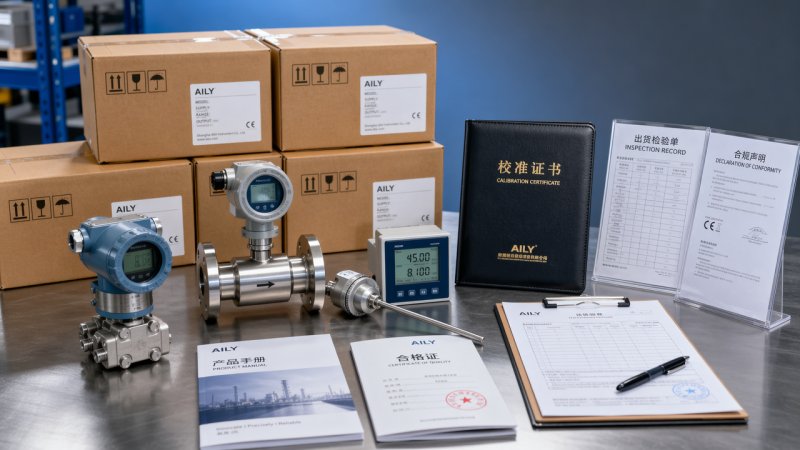
In the instrumentation industry, shipment delays rarely come from transport alone. They often begin earlier, during document review, pre-shipment inspection, labeling checks, and export-control confirmation. Instruments used in industrial manufacturing, energy and power, environmental monitoring, laboratory analysis, and automation control are closely tied to safety, measurement accuracy, and operational reliability. That means a missing certificate, incomplete calibration record, or unclear technical file can hold a shipment for 3–10 business days before it even reaches customs.
This is especially true for products such as pressure transmitters, temperature instruments, flow meters, gas analyzers, level sensors, metrology tools, and online monitoring systems. These products may need conformity evidence for electrical safety, electromagnetic compatibility, hazardous area use, material traceability, or performance verification. In practical purchasing cycles, a buyer may focus on price and lead time first, while a quality manager or project engineer later discovers that a required test report or user manual version is missing. That gap is where regulatory compliance delays shipments.
For procurement teams and project managers, the delay is not only logistical. It affects installation windows, contractor coordination, site acceptance, commissioning plans, and even payment approval. In many industrial projects, a delay of 1–2 weeks can trigger extra warehousing cost, missed shutdown schedules, or postponed production startup. For distributors and resellers, delayed customs clearance also weakens delivery commitments to end users and increases service pressure.
The root cause is simple: instrumentation sits at the intersection of product performance, compliance documentation, and application risk. If one of these three is incomplete, a shipment can be stopped, rechecked, or returned for correction. This makes regulatory compliance a supply chain issue as much as a legal one.
The most common delay points before and after shipment
Although exact requirements differ by country, industry, and application, most delays happen at a few repeated control points. These checkpoints affect both standard products and custom industrial solutions.
- Product documentation mismatch: model number, rated range, wiring diagram, or country of origin in the invoice does not fully match the nameplate or packing list.
- Incomplete calibration service records: the shipment includes test data, but not the required calibration interval, reference standard information, or traceability statement.
- Certification gaps: the buyer expects common compliance evidence such as electrical safety or EMC support, but the file set only covers internal inspection reports.
- Export and application screening: instruments for sensitive sectors, high-precision monitoring, or dual-use environments may require an additional review cycle of 5–15 working days.
When these gaps appear late, the shipment often waits in the warehouse, at the forwarder, or at the border. This is why experienced suppliers treat compliance preparation as part of order fulfillment, not as a last-minute paperwork task.
Which compliance documents matter most for buyers, engineers, and customs teams?
Different stakeholders look at different documents. An operator wants safe installation instructions. A technical evaluator checks performance range, accuracy class, and wiring details. A procurement manager needs shipping consistency. A finance approver may want to avoid payment disputes caused by non-compliant delivery. Customs and local regulators usually focus on whether the declared goods match the required documentation set. For this reason, a complete file package should be prepared in 4 layers: commercial, technical, regulatory, and service support.
Commercial files usually include the invoice, packing list, country of origin statement where applicable, and product description consistent with the order. Technical files often include datasheets, manuals, drawings, nameplate information, configuration records, and installation guidance. Regulatory files may include declarations, test reports, safety-related statements, and application-specific certificates. Service support files can include calibration service certificates, maintenance service recommendations, spare parts lists, and technical support contact details.
Instruments used in industrial online monitoring or process control usually require tighter control of serial number traceability and software or firmware version records. Laboratory and medical-adjacent testing environments may also expect clearer validation or handling documentation. Environmental monitoring projects often require stronger evidence on sensor performance stability and maintenance intervals, sometimes checked every 6 or 12 months during project operation.
The table below helps clarify which files are most often reviewed during shipment preparation and acceptance.
For buyers, the practical lesson is clear: regulatory compliance delays shipments when documentation is treated as an afterthought. A complete package reduces the need for repeated questions between supplier, freight forwarder, customs broker, end user, and project contractor.
How standards and application environments raise the document burden
The more demanding the application, the more detailed the compliance review. A standard indoor laboratory instrument and a field-installed industrial transmitter may both measure accurately, but the field device will usually face stricter scrutiny for ingress protection, temperature tolerance, cable entry, and operational safety. Hazardous or high-risk installations may add further evidence needs before approval to ship.
In many industrial projects, 3 categories of standards shape the shipping process: safety-related standards, performance-related standards, and market-access documentation. If the supplier confirms only one category, the order may look complete commercially but still fail the final review. This is why technical support teams should align with procurement and compliance personnel from the quotation stage onward.
A practical 5-item pre-shipment compliance checklist
- Verify that the product code on the nameplate, carton label, invoice, and packing list is identical, including suffixes for options or output signals.
- Check whether calibration service records show date, method, reference equipment, and measured tolerance range.
- Confirm whether manuals and labels match the destination language or minimum local import expectations.
- Review any required declarations, safety statements, or test summaries before cargo handover to the forwarder.
- Align with the end user on application-specific conditions such as hazardous area use, sanitary contact materials, or online monitoring continuity.
Using this checklist 7–10 days before shipment is often enough to prevent avoidable holds and expensive document corrections.
How can procurement teams reduce compliance-related delivery risk before placing the order?
The most effective way to avoid shipment delay is not faster logistics; it is earlier qualification. Procurement teams should ask compliance questions during supplier selection, quotation review, and technical clarification. In instrumentation, many delays come from assuming that a product is “standard” when the actual project needs calibration traceability, special labeling, or evidence for a regulated application. A short review at the RFQ stage can save 1–3 weeks later.
Cross-functional review matters here. The purchaser may focus on unit price, the engineer on measurement range, the safety manager on installation risk, and the finance team on payment terms tied to acceptance documents. If these teams review separately, critical compliance requirements surface too late. A better approach is to define 3 core decision blocks together: application environment, mandatory documentation, and delivery milestones.
For distributors, there is another layer: repeated resale across different countries or industries. A model that ships smoothly to one market may require additional statements or localized instructions in another. Building a reusable compliance file structure for frequently sold product families can shorten future processing cycles and improve Process Efficiency across multiple orders.
The following comparison table can help buyers evaluate whether a supplier is likely to prevent regulatory compliance delays shipments rather than simply react to them.
A stronger supplier response does not always mean a more expensive product. Often it means better preparation, fewer clarification loops, and more predictable delivery performance. That is especially valuable when projects run on shutdown windows, quarterly budgets, or staged commissioning schedules.
Recommended procurement workflow for regulated instrumentation orders
A practical workflow can reduce uncertainty for both standard and custom orders. It works well for pressure, temperature, flow, level, analytical, and control instruments.
- Define the application in detail, including medium, range, installation environment, and whether the instrument is for process control, laboratory use, or compliance monitoring.
- List mandatory files before purchase order release, such as datasheet, drawings, calibration service request, and any required declarations.
- Set a document review checkpoint 7 days before shipment and a final shipping approval checkpoint 48 hours before cargo handover.
- Link payment and acceptance milestones to both physical delivery and file completeness, not physical delivery alone.
This 4-step method helps procurement teams convert compliance from a reactive issue into a controlled part of delivery planning.
What mistakes cause avoidable shipment delays in real projects?
Many regulatory compliance delays shipments because teams underestimate how small mismatches can escalate. A simple difference between the ordered output signal and the declared product description can trigger a customs query. A calibration certificate without serial number reference may fail a quality review. A manual that does not match the delivered firmware revision may slow site commissioning. These are not unusual failures; they are routine avoidable errors.
Another common problem is late-stage customization. Buyers may add tag numbers, special packing, extra testing, or project-specific certificates after production is already complete. Each change can reopen verification steps, especially when the product will be used in high-risk environments or critical process lines. In many cases, even a small documentation change can add 2–5 working days if multiple departments must reapprove the release.
There is also a misconception that customs issues are separate from technical compliance. In reality, the two are connected. Customs checks depend on correct product identity, while technical acceptance depends on consistent records. If model code, packing, and certification evidence are not aligned, the shipment becomes vulnerable at both points.
For project leaders, the risk goes beyond delay. Non-compliant delivery can affect startup sequence, contractor labor allocation, safety approval, and spare parts planning. That makes early compliance review a project control tool, not just an export formality.
FAQ: the questions buyers and engineers ask most often
How long do compliance reviews usually add to shipment time?
For standard instruments with complete files, the extra review may be only 1–3 business days. If calibration service, application-specific declarations, or destination-specific checks are added late, the delay can easily extend to 1–2 weeks. For custom or sensitive applications, longer review cycles are possible depending on document complexity and local import procedures.
Which products are more likely to face shipment delays?
Products used in hazardous locations, continuous industrial online monitoring, high-accuracy metrology, analytical systems, and critical process control usually face more checks. The reason is not only product value. It is the combination of safety implications, traceability expectations, and installation risk. Instruments with custom ranges, special materials, or project-specific tags also need closer review.
What should purchasing teams ask suppliers before ordering?
Ask at least 5 things: what documents are included, what certificates are available on request, whether calibration service is traceable, what the standard lead time excludes, and when the final document review will happen. Also ask whether manuals, labels, and packing details can be aligned with project requirements before production starts.
Can After Sales Service reduce compliance-related problems?
Yes. Strong After Sales Service helps with replacement records, maintenance service plans, spare parts matching, and technical support during site acceptance. If the original documentation package is well organized, post-delivery support becomes faster and more accurate. This matters for recurring calibration cycles every 6 or 12 months and for plants that need uninterrupted process efficiency.
Why choose a supplier that integrates compliance, technical support, and delivery planning?
In instrumentation, the real value is not only in the device itself. It is in the ability to move from selection to shipment, installation, and ongoing support without document gaps or avoidable delays. A capable partner understands measurement performance, industrial standard expectations, compliance monitoring needs, and the operational safety concerns of different sectors. That combination helps reduce delivery risk across industrial manufacturing, energy, environmental projects, laboratories, construction engineering, and automation systems.
If your team is comparing options, we can support the practical questions that influence shipment success: parameter confirmation, product selection, calibration service scope, delivery timeline, required documentation, customization feasibility, and sample support. We can also help review whether your application needs additional technical support files, maintenance service planning, or a more complete industrial solution package before ordering.
For procurement managers, we can discuss lead time structure, document checkpoints, and quotation alignment. For engineers and quality teams, we can review operating conditions, traceability expectations, and installation risks. For distributors and project owners, we can help organize repeatable file sets that improve Process Efficiency across future orders.
If you want to reduce the chance that regulatory compliance delays shipments, contact us with your model list, application scenario, destination market, and required delivery date. We can work with you on product selection, certification expectations, shipping documentation, custom configuration, and quotation planning before the order enters production.
Recommended for You
 IEC Approves China-Led Standard for Smart Sensor Semantic InteroperabilityIEC TR 63372 smart sensor semantic interoperability standard—led by China—cuts export certification time by 30%. Discover how it reshapes global IoT integration.
 MIIT Launches Joint Enforcement on EV Battery RecyclingMIIT's EV battery recycling enforcement targets BMS data leaks, illegal dismantling & electrolyte disposal—key for exporters, testers & procurement teams needing GDPR/CCPA compliance.
 SAMR Launches Unified Market Action on Testing & CertificationSAMR Launches Unified Market Action on Testing & Certification—tackling fragmentation, redundant fees & cross-border recognition barriers for exporters and manufacturers.
 Fifteenth Five-Year Urban Renewal Plan Approved, Signaling Overseas Procurement for Smart Water & Environmental Monitoring DevicesSmart water & environmental monitoring devices gain global momentum as China’s 15th Five-Year Urban Renewal Plan mandates intelligent infrastructure—key for Belt and Road exports.
 IMF Warns AI Amplifies Financial Cybersecurity RisksAI amplifies financial cybersecurity risks—IMF warns. Discover how XAI verification, adversarial attacks, and regulatory mandates impact AI detection equipment, FinTech, and banks.
 Tmall Health Launches 'Health Supplement Safety Alliance'Health Supplement Safety Alliance launched by Tmall Health—boosting traceability, lab credibility & cross-border quality for brands like By-Health and Centrum.
 EN IEC 61000-6-4:2026 EMC Standard Effective for AI Edge DevicesEN IEC 61000-6-4:2026 EMC standard is live—15% stricter radiated limits for AI edge devices. Act now to secure EU industrial IoT procurement eligibility.
 APEC Auto Dialogue Confirms Semi-Solid Battery Deployment and Fast ChargingSemi-solid battery deployment & 15-min fast charging confirmed at APEC Auto Dialogue—spurring global demand for China-made battery testing equipment, BMS validation, and thermal runaway simulation solutions.
 EU Imposes Final Anti-Dumping Duty on Chinese Adipic AcidEU anti-dumping duty on Chinese adipic acid takes effect May 2026—impacting pH meters, sensors & analytical instruments. Act now to secure supply chains.
 Colombia Upholds Anti-Dumping Duties on Chinese Acrylic SheetsColombia Upholds Anti-Dumping Duties on Chinese Acrylic Sheets — 32.7% tariff extended for 5 years. Critical for exporters of medical, lab & analytical instrument enclosures.
 Multi Component Analyzer Cost Trends for 2026 Expansion PlansMulti component analyzer cost trends for 2026: discover key pricing drivers, hidden costs, and smart supplier strategies to budget accurately and maximize expansion ROI.
 SR-2050 Analyzer Maintenance Points That Affect Service LifeSR-2050 analyzer maintenance points that directly impact service life, accuracy, and uptime. Learn how cleaning, calibration, inspection, and environment control reduce failures.
 SR-S2000 Shelter: Common Setup Mistakes to AvoidSR-S2000 shelter setup mistakes can cause heat, moisture, and maintenance issues. Learn what to avoid for safer installation, stable performance, and longer equipment life.
 Custom Gas Analyzer Import Risks and Spec Mismatch IssuesCustom gas analyzer import risks can derail projects through spec mismatch, compliance gaps, and integration issues. Learn how buyers can compare suppliers, verify requirements, and avoid costly rework.
 When to Choose the SR-2030 Oxygen Analyzer for ComplianceSR-2030 oxygen analyzer: learn when it’s the right choice for compliance, safety, and stable process control. Explore key selection checks, audit-ready benefits, and deployment tips.
 SR-EX Analyzer Price Factors in 2026 ProjectsSR-EX analyzer price factors explained for 2026 projects: compare scope, compliance, integration, and lifecycle costs to approve budgets with less risk and more confidence.
 SR-2070 Analyzer vs Alternatives: Key Performance ChecksSR-2070 analyzer vs alternatives: compare accuracy, drift, response time, calibration effort, and lifecycle cost to choose a more reliable, efficient analyzer with confidence.
 2026 Market Trends for Predictive Analytics InstrumentsPredictive analytics instruments are reshaping 2026 market strategy. Explore key trends, risks, and buying checkpoints to improve uptime, integration, and ROI across industries.
 Wireless Measurement Systems: What Impacts Data Stability Most?Wireless measurement systems perform best when data stays stable. Discover the key factors affecting reliability, accuracy, and long-term performance across industrial applications.
 How Remote Monitoring Devices Cut Downtime in Field OperationsRemote monitoring devices help field teams detect issues early, reduce downtime, and improve maintenance planning. Discover how they keep operations reliable and on schedule.
 5th TCM High-Quality Development Conference Highlights NIR & AI QC for Global ExportNIR & AI QC take center stage at the 5th TCM High-Quality Development Conference—key for global export compliance, real-time quality control, and smart manufacturing.
 IEC Approves China-Led Guide for Smart Sensor Semantic InteroperabilityIEC TR 63388 semantic interoperability guide for smart sensors—China-led, globally approved. Boost IIoT integration across OPC UA, MQTT & TSN now.
 PBOC April Data Shows Strong Credit Flow to Tech & Inclusive LendingPBOC April data reveals surging tech & inclusive lending—boosting global demand for calibrated lab equipment, R&D instruments, and metrology-ready exports.
 SABIC Launches 'Smart Factory 2030' with China-Focused Online Analysis ProcurementSABIC's 'Smart Factory 2030' launches China-focused online analysis procurement—pH/ORP, IR gas & LIBS analyzers. SIL2-certified suppliers, act now!
 China Completes '14th Five-Year' Smart CNC Line R&DChina's '14th Five-Year' Smart CNC Line R&D is complete — boosting reliability & cutting delivery time for precision metrology equipment. Discover how it transforms global procurement.
 FDA Updates IVD Software Guidance: AI Diagnostic Devices Must Provide Verifiable Training DatasetsFDA mandates verifiable training datasets for AI diagnostic devices — critical for medical imaging, DICOM tools, and regulatory services entering the U.S. market.
 EU EN IEC 61000-6-4:2026 EMC Standard Takes EffectEU EN IEC 61000-6-4:2026 EMC standard is live—stricter radiated emission limits for AI edge devices. Act now to avoid EU customs delays & certification bottlenecks.
 APEC Auto Dialogue Confirms Semi-Solid Battery Deployment and 15-Minute Fast ChargingSemi-solid battery deployment and 15-minute fast charging confirmed at APEC Auto Dialogue — driving urgent global demand for BMS validation, thermal runaway, and high-voltage test equipment.
 MIIT Launches Joint Enforcement on EV Battery RecyclingMIIT Launches Joint Enforcement on EV Battery Recycling: Critical for battery test equipment exporters, data compliance, and global supply chains—act now to avoid delays.
 DIA China Annual Meeting Sells Out Despite $7,000+ FeeDIA China Annual Meeting sells out despite $7,000+ fee — a powerful signal for pharma exporters, manufacturers & regulatory service providers targeting China’s innovation ecosystem.
 Continuous Monitoring Solutions and the Shift Toward Smarter ComplianceContinuous monitoring solutions help enterprises strengthen compliance with real-time visibility, traceable data, and faster risk response. Discover how smarter oversight improves resilience and audit confidence.
 Confined Space Monitors: Key Mistakes That Raise Safety RiskConfined space monitors can fail when selection, bump testing, calibration, or sampling is wrong. Learn the biggest safety mistakes and how to prevent false safe readings.






























Search Categories
Search Categories
Latest Article
- IEC Approves China-Led Standard for Smart Sensor Semantic InteroperabilityIEC TR 63372 smart sensor semantic interoperability standard—led by China—cuts export certification time by 30%. Discover how it reshapes global IoT integration.Posted by:
- MIIT Launches Joint Enforcement on EV Battery RecyclingMIIT's EV battery recycling enforcement targets BMS data leaks, illegal dismantling & electrolyte disposal—key for exporters, testers & procurement teams needing GDPR/CCPA compliance.Posted by:
- SAMR Launches Unified Market Action on Testing & CertificationSAMR Launches Unified Market Action on Testing & Certification—tackling fragmentation, redundant fees & cross-border recognition barriers for exporters and manufacturers.Posted by:
Please give us a message
