
Which Industrial Solution Fits Small Plants


Choosing the right Industrial Solution for small plants means balancing cost, Process Efficiency, and Operational Safety without compromising quality. From Technical Support and After Sales Service to Calibration Service, Maintenance Service, and Compliance Monitoring, every factor affects uptime and Regulatory Compliance. This guide helps buyers, operators, and decision-makers compare options that meet Industrial Standard requirements while supporting reliable daily performance.
In small plants, the wrong instrumentation strategy can create a chain reaction: unstable measurements, preventable downtime, rework, excess manual checks, and delayed audits. Unlike large facilities with dedicated engineering teams and higher redundancy, smaller operations usually work with tighter budgets, leaner staffing, and faster payback expectations, often within 12–24 months.
That is why an industrial solution for small plants should not be judged by purchase price alone. It should be evaluated by total operating value, including installation complexity, calibration frequency, spare part availability, training needs, data visibility, and service response time. For procurement teams, the focus is cost control. For operators, it is ease of use. For quality and safety managers, it is traceability and compliance.
Across manufacturing, utilities, laboratories, environmental monitoring, and automated process lines, the best-fit setup is usually a right-sized combination of sensors, transmitters, controllers, monitoring software, and service support. The sections below break down how to compare these options in a practical, decision-oriented way.
What Small Plants Usually Need from an Industrial Solution
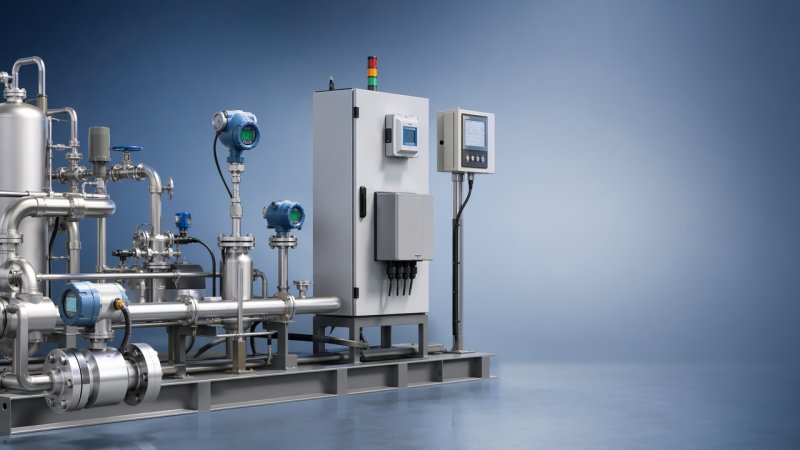
Small plants rarely need the most complex automation architecture on the market. In many cases, they need dependable measurement and control across 3–8 critical points such as pressure, temperature, flow, level, pH, conductivity, or gas concentration. The priority is stable operation with minimal manual intervention rather than a highly customized system that takes 6 months to commission.
A suitable industrial solution often starts with the process bottleneck. For one plant, that may be inaccurate flow monitoring causing material imbalance of 2%–5%. For another, it may be temperature drift of ±1.5°C affecting product consistency. In wastewater or emissions control, poor analyzer selection can trigger compliance risk if online data is not reliable over continuous 24/7 operation.
The challenge is that small plants often buy in stages. They may first install field instruments, then add local control, and only later connect data to SCADA, PLC, or a simple cloud dashboard. Therefore, flexibility matters. Devices should support common outputs such as 4–20 mA, Modbus, pulse, relay, or Ethernet, so expansion remains possible without replacing the whole system.
Another common requirement is serviceability. If one technician is responsible for utilities, production support, and quality records, the plant cannot manage instruments that require weekly specialist intervention. In practice, a calibration interval of 6–12 months and preventive maintenance every 3–6 months is often more realistic for smaller operations.
Core functions to prioritize first
- Reliable measurement of critical process variables that directly affect yield, safety, or compliance.
- Simple integration with existing PLC, HMI, panel meters, or data logging tools.
- Clear alarm handling for high, low, or deviation thresholds to reduce operator reaction time.
- Low maintenance design with accessible calibration points and replaceable wear components.
- Vendor support that can respond within 24–72 hours for troubleshooting or spare part coordination.
Typical solution profiles by plant maturity
The table below shows how instrumentation needs usually change as a small plant moves from manual monitoring to basic automation and then to data-driven control. This helps technical and commercial teams avoid overbuying at the first stage.
The key takeaway is that small plants should match the solution to the current process maturity. A modular path often delivers better ROI than installing a complex system with functions the team will not use during the first 12 months.
How to Compare Solution Types Without Overbuying
For most small plants, the main choice is not between “cheap” and “advanced.” It is between different levels of instrumentation coverage. A basic monitoring setup may be enough for stable batch processes. A control-oriented solution is more suitable where process variation quickly affects product quality, energy use, or safety. In regulated sectors, online monitoring and calibration records may be mandatory even in smaller facilities.
A common mistake is selecting devices based only on nameplate performance. For example, a pressure transmitter with a very wide range may look versatile, but if the actual operating band is narrow, low-end measurement resolution may suffer. Similarly, buying analyzers with high analytical capability but high consumable demand can create recurring costs every 1–3 months that the plant did not budget for.
Another issue is environmental fit. Instruments placed in dusty workshops, corrosive areas, outdoor utility stations, or washdown zones need proper enclosure, material compatibility, and temperature tolerance. A solution that performs well in a laboratory at 20°C may not be suitable for a field installation exposed to 5°C–45°C and vibration.
The comparison should include lifecycle factors: installation labor, cable routing, commissioning time, calibration tools, software licensing, and spare inventory. A unit that costs 15% more initially may still be the better option if it reduces downtime by several hours per quarter.
Three common industrial solution models
The following table compares three practical solution paths that small plants often consider when upgrading instrumentation and process monitoring.
In most cases, small plants benefit from the second model only when they have recurring deviations, operator-dependent quality, or utility cost pressure. If the operation is simple and stable, a disciplined standalone system with planned calibration may already solve 70% of the problem.
Practical buying filters
- Check measurement range against actual operating range, not only design maximum.
- Confirm communication compatibility before purchasing field devices.
- Ask for maintenance intervals, consumables, and calibration requirements in writing.
- Review spare part lead time; 2–3 weeks may be manageable, while 8–10 weeks can be risky.
- Estimate operator training needs; 2 hours and 2 days are very different adoption scenarios.
Key Selection Criteria: Performance, Safety, Service, and Compliance
Once the solution type is defined, the next step is evaluating suppliers and configurations against a consistent set of criteria. Small plants should use a short but disciplined scorecard. In practice, 5–7 evaluation dimensions are enough: measurement performance, installation fit, operational safety, maintenance burden, technical support, documentation quality, and total cost of ownership.
Measurement performance should reflect process reality. For flow, consider process fluid type, line size, pressure drop, and expected turndown. For level, tank geometry, foam, vapor, and mounting constraints matter. For temperature and pressure, response time and long-term stability are often as important as headline accuracy. In many small plants, a stable repeatability band is more useful than an expensive high-end specification that exceeds process needs.
Safety and compliance should also be visible in the selection process. If the instrument supports alarms, event logging, and calibration traceability, it reduces the audit burden on QA and safety teams. In hazardous, high-pressure, or environmentally sensitive processes, enclosure rating, material compatibility, and safe maintenance access should be reviewed before purchase, not after installation.
Service capability often determines the real value of the industrial solution. A small plant may not need a large service contract, but it does need predictable support. A realistic benchmark is remote troubleshooting within 24 hours, field service scheduling within 3–7 days where available, and access to calibration or maintenance documentation that internal teams can use without ambiguity.
Selection scorecard for small-plant decision teams
The table below can be used by engineering, procurement, quality, and finance teams to compare vendors or solution proposals on the same basis.
When small plants apply a scorecard like this, procurement decisions become less subjective. It also reduces disputes between technical teams focused on performance and finance teams focused on upfront budget, because both sides can see lifecycle implications more clearly.
Common red flags during evaluation
- Specifications are provided, but no maintenance cycle or calibration guidance is included.
- Communication protocol support is unclear, creating future integration risk.
- Lead time for essential spares exceeds the plant’s acceptable downtime window.
- Training is offered informally, with no operating checklist or maintenance document.
- Compliance monitoring needs are treated as an add-on instead of a core requirement.
Implementation, Calibration, and Ongoing Support
Even the right equipment can underperform if implementation is rushed. For small plants, a structured rollout usually works better than a large one-time installation. A typical project can be divided into 4 stages: site review, device selection confirmation, installation and commissioning, then calibration and training. Depending on complexity, this may take from 7–10 days for a simple line upgrade to 4–6 weeks for a broader monitoring system.
Site review is especially important because small plants often have legacy piping, crowded panels, and limited shutdown windows. Confirming nozzle size, cable routing, process temperature, ambient conditions, and access space in advance prevents costly changes later. A one-hour site verification can avoid several days of rework.
Calibration service should be planned from the start, not added after the plant starts running. Instruments that affect quality release, emissions records, or custody-like measurement tasks need clear calibration intervals and traceable records. In general, 6-month cycles are common for more critical loops, while 12-month cycles may be acceptable for stable utility or non-critical monitoring points, subject to process risk.
After sales service is also part of the industrial solution, not a separate issue. Small plants benefit most when suppliers provide concise manuals, startup support, alarm-setting guidance, and a practical maintenance checklist. If internal teams can solve 70%–80% of routine issues with clear documentation, external service can focus on higher-value tasks such as calibration, failure diagnosis, and optimization.
A practical rollout sequence
- Define 3–10 critical measurement points linked to output, quality, energy, or safety.
- Verify process and installation conditions, including temperature, pressure, medium, and utilities.
- Install devices during a planned shutdown window, often 1–3 days for small lines.
- Commission signals, alarms, and local displays before full production restart.
- Perform baseline calibration and train operators, maintenance staff, and quality personnel.
Support model options
Not every plant needs the same support structure. The best choice depends on staffing, process criticality, and compliance exposure.
For small facilities, the hybrid model often provides the best balance. It avoids the cost of a heavy service contract while still improving response speed and reducing prolonged troubleshooting.
Common Mistakes, FAQ, and Final Buying Advice
Many small plants make similar mistakes when selecting an industrial solution. They buy for maximum specification rather than actual application. They underestimate the cost of calibration and spare parts. Or they overlook training and documentation, assuming operators will adapt on the fly. These gaps do not always cause immediate failure, but over 6–18 months they often reduce efficiency, increase manual work, and weaken compliance control.
A better approach is to define success before purchase. That may mean reducing manual readings from 4 rounds per shift to 1, lowering unplanned downtime by several hours per month, keeping quality drift within a tighter band, or simplifying audit preparation with digital records. When outcomes are defined clearly, the right solution becomes easier to identify.
Buyers should also remember that small-plant success depends on fit, not scale. A compact, serviceable, well-supported instrumentation package can outperform a larger and more expensive system if it is better aligned with plant skills, maintenance capacity, and process priorities.
How do I know if a basic monitoring solution is enough?
If your process is stable, quality variation is low, and operators can manage exceptions without constant adjustments, a basic monitoring setup may be sufficient. This is common in plants with 1–2 production lines, fewer than 10 critical measurement points, and limited compliance reporting demands. If deviations frequently affect output or safety, a control-oriented solution is usually more appropriate.
What should procurement teams ask suppliers before ordering?
Request five essentials: actual application fit, installation requirements, maintenance cycle, spare part lead time, and support response expectations. Also ask whether the device requires consumables, special tools, software licensing, or recurring calibration services. These details often have more impact on total cost than the initial quotation.
How long does implementation usually take?
For a simple upgrade involving a few transmitters and local indicators, implementation may take 7–10 days including commissioning. A broader solution involving multiple measurement points, PLC integration, and operator training can take 3–6 weeks, especially if shutdown windows are limited or site modification is required.
What is the safest way to control lifecycle cost?
Use a lifecycle checklist that includes calibration interval, preventive maintenance frequency, spare availability, and expected operator training time. Plants that compare only purchase price often miss recurring cost items that appear after the first quarter of operation. A modestly higher upfront investment can be justified if it lowers service burden and reduces downtime exposure.
Final decision checklist
- Match the industrial solution to the number of critical process points, not to future assumptions alone.
- Prioritize serviceability, calibration planning, and documentation from day one.
- Choose scalable communication and control options so expansion remains possible.
- Balance cost with uptime, compliance monitoring, and operator usability.
- Involve engineering, procurement, quality, and finance early to avoid costly re-selection.
For small plants, the best industrial solution is the one that delivers dependable measurement, manageable maintenance, practical integration, and clear support over the long term. Whether your priority is process stability, quality assurance, safety, or digital visibility, a right-sized instrumentation strategy can improve daily performance without creating unnecessary complexity.
If you are comparing options for a new project, retrofit, or process upgrade, now is the right time to review your critical measurement points, service expectations, and compliance needs. Contact us to get a customized solution, discuss product details, or explore more instrumentation and monitoring options for small plants.
Recommended for You
 IEC Approves China-Led Standard for Smart Sensor Semantic InteroperabilityIEC TR 63372 smart sensor semantic interoperability standard—led by China—cuts export certification time by 30%. Discover how it reshapes global IoT integration.
 MIIT Launches Joint Enforcement on EV Battery RecyclingMIIT's EV battery recycling enforcement targets BMS data leaks, illegal dismantling & electrolyte disposal—key for exporters, testers & procurement teams needing GDPR/CCPA compliance.
 SAMR Launches Unified Market Action on Testing & CertificationSAMR Launches Unified Market Action on Testing & Certification—tackling fragmentation, redundant fees & cross-border recognition barriers for exporters and manufacturers.
 Fifteenth Five-Year Urban Renewal Plan Approved, Signaling Overseas Procurement for Smart Water & Environmental Monitoring DevicesSmart water & environmental monitoring devices gain global momentum as China’s 15th Five-Year Urban Renewal Plan mandates intelligent infrastructure—key for Belt and Road exports.
 IMF Warns AI Amplifies Financial Cybersecurity RisksAI amplifies financial cybersecurity risks—IMF warns. Discover how XAI verification, adversarial attacks, and regulatory mandates impact AI detection equipment, FinTech, and banks.
 Tmall Health Launches 'Health Supplement Safety Alliance'Health Supplement Safety Alliance launched by Tmall Health—boosting traceability, lab credibility & cross-border quality for brands like By-Health and Centrum.
 EN IEC 61000-6-4:2026 EMC Standard Effective for AI Edge DevicesEN IEC 61000-6-4:2026 EMC standard is live—15% stricter radiated limits for AI edge devices. Act now to secure EU industrial IoT procurement eligibility.
 APEC Auto Dialogue Confirms Semi-Solid Battery Deployment and Fast ChargingSemi-solid battery deployment & 15-min fast charging confirmed at APEC Auto Dialogue—spurring global demand for China-made battery testing equipment, BMS validation, and thermal runaway simulation solutions.
 EU Imposes Final Anti-Dumping Duty on Chinese Adipic AcidEU anti-dumping duty on Chinese adipic acid takes effect May 2026—impacting pH meters, sensors & analytical instruments. Act now to secure supply chains.
 Colombia Upholds Anti-Dumping Duties on Chinese Acrylic SheetsColombia Upholds Anti-Dumping Duties on Chinese Acrylic Sheets — 32.7% tariff extended for 5 years. Critical for exporters of medical, lab & analytical instrument enclosures.
 Multi Component Analyzer Cost Trends for 2026 Expansion PlansMulti component analyzer cost trends for 2026: discover key pricing drivers, hidden costs, and smart supplier strategies to budget accurately and maximize expansion ROI.
 SR-2050 Analyzer Maintenance Points That Affect Service LifeSR-2050 analyzer maintenance points that directly impact service life, accuracy, and uptime. Learn how cleaning, calibration, inspection, and environment control reduce failures.
 SR-S2000 Shelter: Common Setup Mistakes to AvoidSR-S2000 shelter setup mistakes can cause heat, moisture, and maintenance issues. Learn what to avoid for safer installation, stable performance, and longer equipment life.
 Custom Gas Analyzer Import Risks and Spec Mismatch IssuesCustom gas analyzer import risks can derail projects through spec mismatch, compliance gaps, and integration issues. Learn how buyers can compare suppliers, verify requirements, and avoid costly rework.
 When to Choose the SR-2030 Oxygen Analyzer for ComplianceSR-2030 oxygen analyzer: learn when it’s the right choice for compliance, safety, and stable process control. Explore key selection checks, audit-ready benefits, and deployment tips.
 SR-EX Analyzer Price Factors in 2026 ProjectsSR-EX analyzer price factors explained for 2026 projects: compare scope, compliance, integration, and lifecycle costs to approve budgets with less risk and more confidence.
 SR-2070 Analyzer vs Alternatives: Key Performance ChecksSR-2070 analyzer vs alternatives: compare accuracy, drift, response time, calibration effort, and lifecycle cost to choose a more reliable, efficient analyzer with confidence.
 2026 Market Trends for Predictive Analytics InstrumentsPredictive analytics instruments are reshaping 2026 market strategy. Explore key trends, risks, and buying checkpoints to improve uptime, integration, and ROI across industries.
 Wireless Measurement Systems: What Impacts Data Stability Most?Wireless measurement systems perform best when data stays stable. Discover the key factors affecting reliability, accuracy, and long-term performance across industrial applications.
 How Remote Monitoring Devices Cut Downtime in Field OperationsRemote monitoring devices help field teams detect issues early, reduce downtime, and improve maintenance planning. Discover how they keep operations reliable and on schedule.
 5th TCM High-Quality Development Conference Highlights NIR & AI QC for Global ExportNIR & AI QC take center stage at the 5th TCM High-Quality Development Conference—key for global export compliance, real-time quality control, and smart manufacturing.
 IEC Approves China-Led Guide for Smart Sensor Semantic InteroperabilityIEC TR 63388 semantic interoperability guide for smart sensors—China-led, globally approved. Boost IIoT integration across OPC UA, MQTT & TSN now.
 PBOC April Data Shows Strong Credit Flow to Tech & Inclusive LendingPBOC April data reveals surging tech & inclusive lending—boosting global demand for calibrated lab equipment, R&D instruments, and metrology-ready exports.
 SABIC Launches 'Smart Factory 2030' with China-Focused Online Analysis ProcurementSABIC's 'Smart Factory 2030' launches China-focused online analysis procurement—pH/ORP, IR gas & LIBS analyzers. SIL2-certified suppliers, act now!
 China Completes '14th Five-Year' Smart CNC Line R&DChina's '14th Five-Year' Smart CNC Line R&D is complete — boosting reliability & cutting delivery time for precision metrology equipment. Discover how it transforms global procurement.
 FDA Updates IVD Software Guidance: AI Diagnostic Devices Must Provide Verifiable Training DatasetsFDA mandates verifiable training datasets for AI diagnostic devices — critical for medical imaging, DICOM tools, and regulatory services entering the U.S. market.
 EU EN IEC 61000-6-4:2026 EMC Standard Takes EffectEU EN IEC 61000-6-4:2026 EMC standard is live—stricter radiated emission limits for AI edge devices. Act now to avoid EU customs delays & certification bottlenecks.
 APEC Auto Dialogue Confirms Semi-Solid Battery Deployment and 15-Minute Fast ChargingSemi-solid battery deployment and 15-minute fast charging confirmed at APEC Auto Dialogue — driving urgent global demand for BMS validation, thermal runaway, and high-voltage test equipment.
 MIIT Launches Joint Enforcement on EV Battery RecyclingMIIT Launches Joint Enforcement on EV Battery Recycling: Critical for battery test equipment exporters, data compliance, and global supply chains—act now to avoid delays.
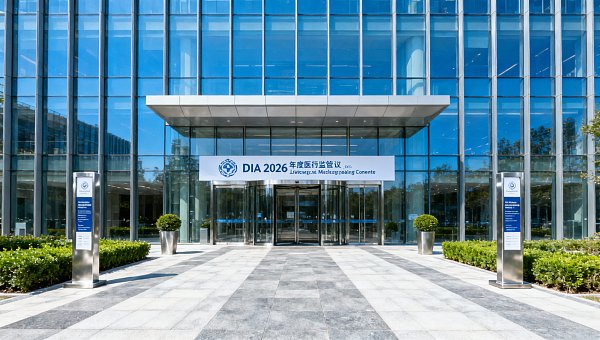
 DIA China Annual Meeting Sells Out Despite $7,000+ FeeDIA China Annual Meeting sells out despite $7,000+ fee — a powerful signal for pharma exporters, manufacturers & regulatory service providers targeting China’s innovation ecosystem.
 Continuous Monitoring Solutions and the Shift Toward Smarter ComplianceContinuous monitoring solutions help enterprises strengthen compliance with real-time visibility, traceable data, and faster risk response. Discover how smarter oversight improves resilience and audit confidence.
 Confined Space Monitors: Key Mistakes That Raise Safety RiskConfined space monitors can fail when selection, bump testing, calibration, or sampling is wrong. Learn the biggest safety mistakes and how to prevent false safe readings.















Search Categories
Search Categories
Latest Article
- IEC Approves China-Led Standard for Smart Sensor Semantic InteroperabilityIEC TR 63372 smart sensor semantic interoperability standard—led by China—cuts export certification time by 30%. Discover how it reshapes global IoT integration.Posted by:
- MIIT Launches Joint Enforcement on EV Battery RecyclingMIIT's EV battery recycling enforcement targets BMS data leaks, illegal dismantling & electrolyte disposal—key for exporters, testers & procurement teams needing GDPR/CCPA compliance.Posted by:
- SAMR Launches Unified Market Action on Testing & CertificationSAMR Launches Unified Market Action on Testing & Certification—tackling fragmentation, redundant fees & cross-border recognition barriers for exporters and manufacturers.Posted by:
Please give us a message
