
2026 International Food Safety & Health Conference Launches Sensor Standard Initiative


On April 30, 2026, the International Food Safety and Health Conference opened in Beijing, announcing the launch of a joint working group to develop the first internationally coordinated standard for smart sensing systems in food contact applications. This initiative directly impacts manufacturers and exporters of food-grade pressure, temperature, and gas sensors—particularly those targeting EU and US markets.
Event Overview
On April 30, 2026, the International Food Safety and Health Conference commenced in Beijing. During the opening, ISO/TC 34 (Food Standards Committee) and SAC/TC 313 (China National Technical Committee on Food Sensors) jointly announced the establishment of a Joint Working Group on the General Requirements for Smart Sensing Systems for Food Contact Applications. The group aims to deliver its first coordinated international standard by the end of 2027. This effort is intended to accelerate mutual recognition of certification for food-grade sensors—including pressure, temperature, and gas sensors—between China and major export markets such as the EU and US, thereby reducing market access costs.
Which Subsectors Are Affected
Direct Exporters of Food-Grade Sensors
Exporters supplying food-grade pressure, temperature, or gas sensors to regulated markets (e.g., EU under Regulation (EC) No 1935/2004, US FDA 21 CFR Part 174–179) are directly affected. Harmonized standards reduce redundant testing and certification burdens across jurisdictions.
Manufacturers of Smart Food Contact Devices
Firms integrating sensors into intelligent packaging, smart kitchen appliances, or automated food processing equipment face downstream implications. Compliance with an upcoming ISO-aligned standard may become a de facto requirement for OEM procurement or regulatory submissions in key markets.
Third-Party Certification and Testing Providers
Laboratories and conformity assessment bodies accredited for food contact material evaluation may need to align their test protocols and reporting frameworks with the emerging joint standard—especially where sensor performance (e.g., drift, leachability under thermal stress) intersects with food safety criteria.
Supply Chain Integrators Serving Global Food Processors
Companies managing sensor sourcing, validation, and documentation for multinational food producers must anticipate revised technical specifications and audit expectations tied to this standardization effort—particularly for traceability, calibration stability, and migration testing under dynamic use conditions.
What Relevant Enterprises or Practitioners Should Monitor and Do Now
Track official work plan updates from ISO/TC 34 and SAC/TC 313
The Joint Working Group’s scope, timeline, and draft scope document will be published via ISO and SAC channels. Current participants have not yet released a public roadmap; monitoring official announcements ensures early awareness of milestone deadlines and consultation windows.
Identify sensor categories and target markets most exposed to current certification fragmentation
Pressure sensors used in sterile filling lines and gas sensors in modified-atmosphere packaging equipment face the highest variance in existing regional requirements. Firms exporting these specific types to both EU and US should prioritize internal gap assessments against pending harmonized clauses—especially those covering electrical safety, chemical migration, and functional reliability under food contact conditions.
Distinguish between policy signal and operational readiness
This initiative signals intent—not immediate compliance obligation. No mandatory adoption date has been set, and national regulators (e.g., EFSA, FDA) have not endorsed the forthcoming standard. Companies should treat it as a strategic alignment opportunity, not an urgent regulatory trigger.
Review supplier qualification protocols and internal technical documentation templates
Where sensor suppliers provide declarations of conformity or test reports, verify whether documentation currently references ISO 22000, ISO/IEC 17025, or national food contact standards (e.g., GB 4806 series). Updating templates to accommodate future clauses on sensor-specific validation (e.g., response time under humidity, long-term drift in acidic food simulants) supports smoother transition later.
Editorial Perspective / Industry Observation
Observably, this joint standard initiative functions primarily as a coordination signal—not an implemented regulation. Its significance lies in institutional alignment: for the first time, China’s national sensor standardization body and ISO’s food standards committee are co-leading a food-grade sensing standard. Analysis shows that such collaboration typically precedes broader regulatory referencing within 3–5 years, but formal adoption depends on subsequent validation outcomes and regulator engagement. From an industry perspective, this is less about imminent compliance and more about early visibility into convergence pathways—especially for firms seeking to avoid parallel certification investments across markets.
Conclusion
This development marks the beginning of formal international alignment on performance and safety criteria for food-contact smart sensors—not a finalized standard or enforcement mechanism. It is best understood as a forward-looking infrastructure initiative, offering a window for technical preparation rather than requiring immediate operational change. Stakeholders benefit most by treating it as a reference point for medium-term product development and supply chain planning—not a near-term compliance deadline.
Information Sources
Main source: Official announcement issued during the International Food Safety and Health Conference, Beijing, April 30, 2026. No additional background documents, draft texts, or participant lists have been publicly released as of publication. Ongoing developments—including working group membership, draft scope, and timeline—remain subject to official disclosure by ISO/TC 34 and SAC/TC 313.
Recommended for You
 US-China Trade Talks Agree on Tariff Cuts for Key Test Equipment PartsUS-China tariff cuts on key test equipment parts—like pressure sensor chips & infrared thermal imaging modules—boost margins, cut costs, and strengthen global competitiveness for manufacturers.
 G7 Paris Meeting Focuses on Critical Mineral Supply SecurityCritical mineral supply security takes center stage at the G7 Paris meeting—key for rare-earth sensor exporters. Learn EU compliance impacts & actionable readiness steps.
 Brent Crude Surpasses $106/bbl, Raising Sea Freight Costs for Small Testing Equipment ExportsBrent Crude Surpasses $106/bbl—sea freight costs surge, impacting small testing equipment exporters. Learn how SMEs can adapt pricing, terms & logistics now.
 WTO Forecasts 1.9% Global Goods Trade Growth in 2026 Amid Supply Chain ShorteningWTO forecasts 1.9% global goods trade growth in 2026—sparking nearshoring demand for testing equipment, calibration services & OTA-ready solutions in ASEAN, Middle East & Mexico.
 UK-China Export Control Working Group Holds Second Meeting in LondonUK-China Export Control Working Group: Key updates on dual-use items—laser interferometers, quantum sensors & oscilloscopes. Learn compliance implications for exporters now.
 Japan's 10Y Yield Drop to 2.745% Lifts Yen, Raising China-Made Testing Equipment CostsJapan's 10Y yield drop to 2.745% lifts yen, raising costs for China-made testing equipment — explore FX impacts, procurement shifts & strategic responses.
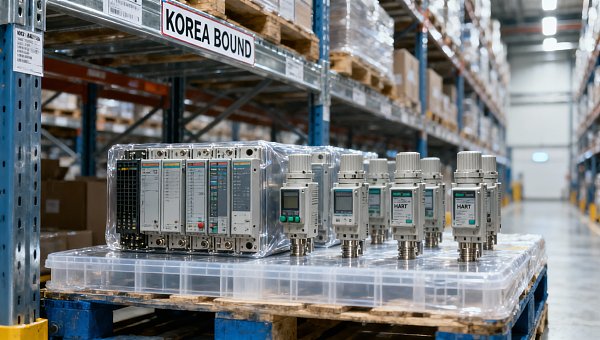
 KOSPI 200 Futures Circuit Breaker Triggered, Impacting Industrial Automation Instrument Export TimelinesKOSPI 200 futures circuit breaker triggered — impact on PLC modules, transmitters & fieldbus instrument exports to Korea. Urgent timeline insights inside.
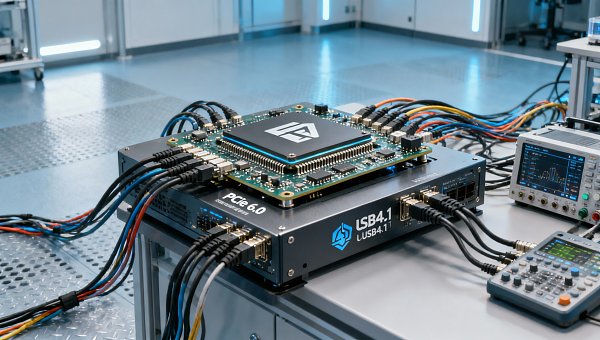
 South Korea’s Chip Exports Surge 202% in May 2026 Amid AI Test Equipment DemandAI test equipment demand surges as South Korea’s chip exports jump 202% in May 2026 — PCIe 6.0 & USB4.1 validation tools see sharp global procurement rise.
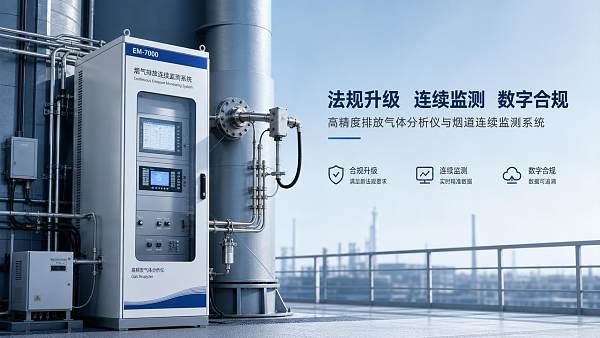
 Emission Gas Analyzer News in 2026: Regulatory Shifts Affecting DemandEmission gas analyzer demand is changing fast in 2026 as new regulations tighten limits, expand continuous monitoring, and raise data compliance standards. Explore key trends shaping smarter buying decisions.
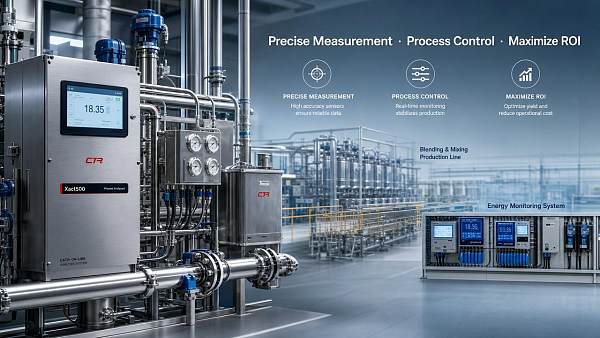
 When a High Accuracy Analyzer Delivers Real ROI in Process ControlHigh accuracy analyzer ROI starts with better process control. Learn where tighter measurements cut waste, improve stability, reduce compliance risk, and deliver measurable operational savings.
 SR-2030P Analyzer Import Updates in 2026: Compliance Points to ReviewSR-2030P analyzer import updates for 2026: review classification, certification, customs documents, and market access risks to reduce delays, control costs, and source with confidence.
 Industrial Oxygen Analyzer Price Trends in 2026: Cost Drivers to WatchIndustrial oxygen analyzer price trends in 2026 explained: compare sensor, compliance, installation, and maintenance cost drivers to make smarter, lower-risk buying decisions.
 Laser Oxygen Analyzer or Industrial Oxygen Analyzer: Which Fits BetterLaser oxygen analyzer or industrial oxygen analyzer? Compare speed, accuracy, maintenance, and cost to find the best fit for smarter, more reliable process control.
 ATEX Gas Analyzer Demand in 2026: What Is Shaping the MarketATEX gas analyzer demand in 2026 is driven by safety, digital integration, and lifecycle value. See what shapes buying decisions across industry, utilities, hydrogen, and automation.
 Fixed Gas Analyzer vs Portable Options: What Matters for Plant UseFixed gas analyzer or portable detector for plant use? Compare safety, response time, maintenance, and cost to choose the right monitoring solution with confidence.
 Explosion Proof Analyzer Selection Mistakes That Increase Site RiskExplosion proof analyzer selection mistakes can raise compliance, maintenance, and safety risks. Learn the key errors to avoid and how to choose a safer, more reliable solution.
 SR-2000 Infrared Analyzer: Key Performance Checks Before InstallationSR-2000 infrared analyzer pre-installation guide: learn how to verify accuracy, drift, site readiness, and calibration support to reduce startup risk and ensure stable long-term performance.
 How to Choose a Continuous Gas Analyzer for Stable 24/7 MonitoringContinuous gas analyzer selection guide for stable 24/7 monitoring. Learn how to compare accuracy, response time, maintenance, and integration for smarter industrial decisions.
 IEC Approves China-Led Standard for Smart Sensor Semantic InteroperabilityIEC TR 63372 smart sensor semantic interoperability standard—led by China—cuts export certification time by 30%. Discover how it reshapes global IoT integration.
 MIIT Launches Joint Enforcement on EV Battery RecyclingMIIT's EV battery recycling enforcement targets BMS data leaks, illegal dismantling & electrolyte disposal—key for exporters, testers & procurement teams needing GDPR/CCPA compliance.
 SAMR Launches Unified Market Action on Testing & CertificationSAMR Launches Unified Market Action on Testing & Certification—tackling fragmentation, redundant fees & cross-border recognition barriers for exporters and manufacturers.
 Fifteenth Five-Year Urban Renewal Plan Approved, Signaling Overseas Procurement for Smart Water & Environmental Monitoring DevicesSmart water & environmental monitoring devices gain global momentum as China’s 15th Five-Year Urban Renewal Plan mandates intelligent infrastructure—key for Belt and Road exports.
 IMF Warns AI Amplifies Financial Cybersecurity RisksAI amplifies financial cybersecurity risks—IMF warns. Discover how XAI verification, adversarial attacks, and regulatory mandates impact AI detection equipment, FinTech, and banks.
 Tmall Health Launches 'Health Supplement Safety Alliance'Health Supplement Safety Alliance launched by Tmall Health—boosting traceability, lab credibility & cross-border quality for brands like By-Health and Centrum.
 EN IEC 61000-6-4:2026 EMC Standard Effective for AI Edge DevicesEN IEC 61000-6-4:2026 EMC standard is live—15% stricter radiated limits for AI edge devices. Act now to secure EU industrial IoT procurement eligibility.
 APEC Auto Dialogue Confirms Semi-Solid Battery Deployment and Fast ChargingSemi-solid battery deployment & 15-min fast charging confirmed at APEC Auto Dialogue—spurring global demand for China-made battery testing equipment, BMS validation, and thermal runaway simulation solutions.
 EU Imposes Final Anti-Dumping Duty on Chinese Adipic AcidEU anti-dumping duty on Chinese adipic acid takes effect May 2026—impacting pH meters, sensors & analytical instruments. Act now to secure supply chains.
 Colombia Upholds Anti-Dumping Duties on Chinese Acrylic SheetsColombia Upholds Anti-Dumping Duties on Chinese Acrylic Sheets — 32.7% tariff extended for 5 years. Critical for exporters of medical, lab & analytical instrument enclosures.
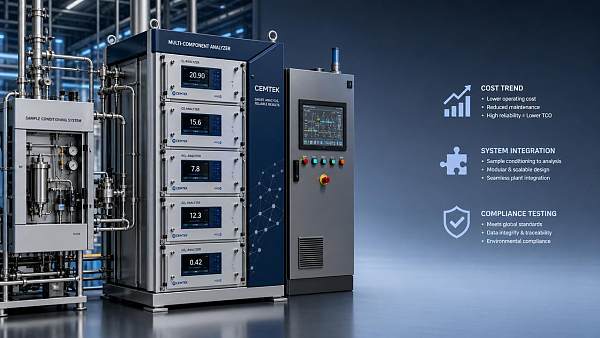
 Multi Component Analyzer Cost Trends for 2026 Expansion PlansMulti component analyzer cost trends for 2026: discover key pricing drivers, hidden costs, and smart supplier strategies to budget accurately and maximize expansion ROI.
 SR-2050 Analyzer Maintenance Points That Affect Service LifeSR-2050 analyzer maintenance points that directly impact service life, accuracy, and uptime. Learn how cleaning, calibration, inspection, and environment control reduce failures.
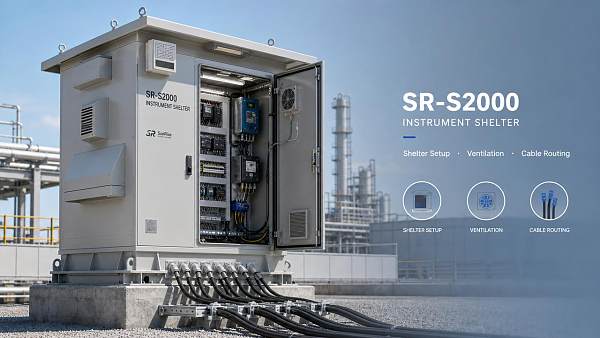
 SR-S2000 Shelter: Common Setup Mistakes to AvoidSR-S2000 shelter setup mistakes can cause heat, moisture, and maintenance issues. Learn what to avoid for safer installation, stable performance, and longer equipment life.
 Custom Gas Analyzer Import Risks and Spec Mismatch IssuesCustom gas analyzer import risks can derail projects through spec mismatch, compliance gaps, and integration issues. Learn how buyers can compare suppliers, verify requirements, and avoid costly rework.











Search Categories
Search Categories
Latest Article
- US-China Trade Talks Agree on Tariff Cuts for Key Test Equipment PartsUS-China tariff cuts on key test equipment parts—like pressure sensor chips & infrared thermal imaging modules—boost margins, cut costs, and strengthen global competitiveness for manufacturers.Posted by:
- G7 Paris Meeting Focuses on Critical Mineral Supply SecurityCritical mineral supply security takes center stage at the G7 Paris meeting—key for rare-earth sensor exporters. Learn EU compliance impacts & actionable readiness steps.Posted by:
- Brent Crude Surpasses $106/bbl, Raising Sea Freight Costs for Small Testing Equipment ExportsBrent Crude Surpasses $106/bbl—sea freight costs surge, impacting small testing equipment exporters. Learn how SMEs can adapt pricing, terms & logistics now.Posted by:
Please give us a message
