
General Mills Highlights Wanchai Dock Food Safety Innovation


On April 30, 2026, at the International Conference on Food Safety and Health in Beijing, General Mills China disclosed that its Wanchai Dock factory has fully deployed domestically produced high-precision temperature-pressure-flow composite sensors and an AI-powered predictive maintenance system—enabling millisecond-level data traceability across the cold chain. This development signals growing validation of Chinese industrial sensors within multinational food manufacturing operations and presents new opportunities for sensor and smart transmitter exporters targeting the global food processing equipment supply chain.
Event Overview
On April 30, 2026, during the International Conference on Food Safety and Health held in Beijing, Su Qiang, President of General Mills China, announced that the Wanchai Dock factory had completed full deployment of国产 high-precision temperature-pressure-flow composite sensors and an AI-based predictive maintenance system. The implementation enables end-to-end cold-chain monitoring with millisecond-level data traceability. The case was presented as a real-world, large-scale validation of Chinese industrial sensing technology within a globally recognized food production facility.
Impact on Specific Industry Segments
Industrial Sensor & Instrumentation Exporters
This deployment represents one of the first publicly confirmed, large-scale adoptions of domestically produced high-precision composite sensors by a Tier-1 global food company. It directly affects exporters of industrial sensors, smart transmitters, and edge-integrated measurement devices—particularly those targeting food-grade applications. Impact manifests in heightened international buyer scrutiny of technical compliance (e.g., IP67/IP69K, food-contact material certifications), calibration traceability, and integration readiness with MES/SCADA platforms.
Food Processing Equipment OEMs
OEMs integrating sensing modules into refrigerated conveyors, automated packaging lines, or blast freezers may face increased demand for embedded, pre-validated sensor subsystems. The Wanchai Dock case demonstrates that end users now expect seamless interoperability—not just hardware installation—between sensors, PLCs, and cloud analytics layers. OEMs must assess whether their current hardware interfaces support standardized protocols (e.g., IO-Link, MQTT over TLS) required for AI-driven maintenance workflows.
Third-Party Cold Chain Logistics Providers
As food manufacturers raise traceability expectations beyond internal facilities, logistics partners handling frozen or chilled transport may be asked to provide compatible telemetry infrastructure. The millisecond-level data requirement implies tighter synchronization between factory-floor systems and fleet telematics—potentially affecting SLA definitions, data handover formats, and audit readiness for HACCP-aligned verification.
What Relevant Enterprises or Practitioners Should Focus On Now
Monitor follow-up technical disclosures from General Mills or Wanchai Dock
While the April 30 announcement confirmed deployment, no public documentation has yet been released on sensor specifications, vendor names, communication architecture, or performance benchmarks. Observably, any subsequent white papers or supplier announcements will clarify minimum viable technical thresholds for global food equipment procurement.
Assess alignment of current product certifications with food-grade industrial IoT requirements
Analysis shows that successful adoption in this context likely required adherence to EN 14534 (food hygiene for measuring instruments), IEC 61511 (functional safety for SIS), and possibly FDA 21 CFR Part 11 for electronic records. Exporters and OEMs should verify whether their existing certifications cover both mechanical robustness (e.g., washdown resistance) and software-related compliance (e.g., secure firmware updates).
Evaluate integration pathways for predictive maintenance data flows
The referenced AI predictive maintenance system implies bidirectional data exchange—not just sensor readings but also model inference outputs (e.g., remaining useful life estimates). Current more suitable understanding is that compatibility with OPC UA PubSub or time-series databases (e.g., InfluxDB, TimescaleDB) may become de facto expectations for future tenders in regulated food environments.
Prepare for potential tightening of audit scope in supplier qualification processes
From industry perspective, multinational food companies are increasingly extending FSMA 204 traceability requirements upstream. The Wanchai Dock case suggests that sensor vendors may soon be subject to the same documentation rigor previously reserved for ingredient suppliers—including design history files, change control logs, and cybersecurity risk assessments per IEC 62443.
Editorial Perspective / Industry Observation
This event is best understood not as an isolated pilot but as a signal of maturing trust in domestic industrial sensing capabilities within high-stakes, regulated environments. Observably, it reflects a shift from ‘cost-driven localization’ to ‘performance-validated localization’—where technical parity, not just price, drives adoption. However, it remains a single-site implementation; broader supply chain impact depends on replication across other General Mills facilities or peer companies (e.g., Nestlé, Unilever) in Asia and emerging markets. Analysis shows the near-term significance lies less in immediate market share shifts and more in recalibrating global buyers’ perception thresholds for Chinese-made process instrumentation.
It is more accurate to view this as an early-stage credibility milestone than a fully scaled commercial inflection point. Continued observation is warranted—not only for further deployments but also for how certification bodies, standards committees (e.g., ISO/TC 34/SC 5), and regulatory agencies respond to such real-world validations.
Conclusion
The Wanchai Dock case marks a notable step in the integration of domestically developed industrial sensors into globally benchmarked food safety systems. Its primary industry significance lies in demonstrating technical viability under stringent operational conditions—not in signaling imminent wholesale substitution of legacy Western suppliers. For stakeholders, the current situation is better interpreted as a catalyst for strategic alignment: preparing certifications, validating interoperability, and anticipating expanded audit expectations—not as a trigger for reactive procurement shifts.
Information Source
Main source: Public statement delivered by Su Qiang, President of General Mills China, at the International Conference on Food Safety and Health, Beijing, April 30, 2026. No supplementary technical documentation or vendor disclosures have been publicly released as of the event date. Ongoing developments—particularly cross-facility rollout status or third-party verification reports—remain to be observed.
Recommended for You
 US-China Trade Talks Agree on Tariff Cuts for Key Test Equipment PartsUS-China tariff cuts on key test equipment parts—like pressure sensor chips & infrared thermal imaging modules—boost margins, cut costs, and strengthen global competitiveness for manufacturers.
 G7 Paris Meeting Focuses on Critical Mineral Supply SecurityCritical mineral supply security takes center stage at the G7 Paris meeting—key for rare-earth sensor exporters. Learn EU compliance impacts & actionable readiness steps.
 Brent Crude Surpasses $106/bbl, Raising Sea Freight Costs for Small Testing Equipment ExportsBrent Crude Surpasses $106/bbl—sea freight costs surge, impacting small testing equipment exporters. Learn how SMEs can adapt pricing, terms & logistics now.
 WTO Forecasts 1.9% Global Goods Trade Growth in 2026 Amid Supply Chain ShorteningWTO forecasts 1.9% global goods trade growth in 2026—sparking nearshoring demand for testing equipment, calibration services & OTA-ready solutions in ASEAN, Middle East & Mexico.
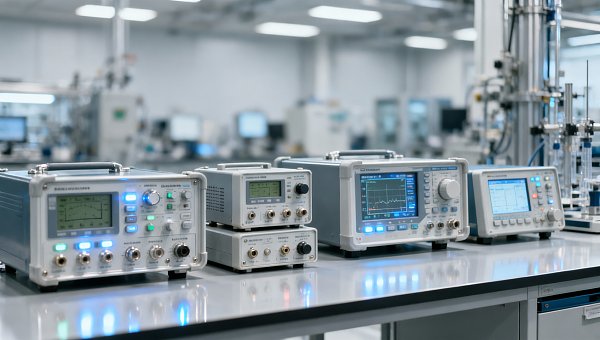
 UK-China Export Control Working Group Holds Second Meeting in LondonUK-China Export Control Working Group: Key updates on dual-use items—laser interferometers, quantum sensors & oscilloscopes. Learn compliance implications for exporters now.
 Japan's 10Y Yield Drop to 2.745% Lifts Yen, Raising China-Made Testing Equipment CostsJapan's 10Y yield drop to 2.745% lifts yen, raising costs for China-made testing equipment — explore FX impacts, procurement shifts & strategic responses.
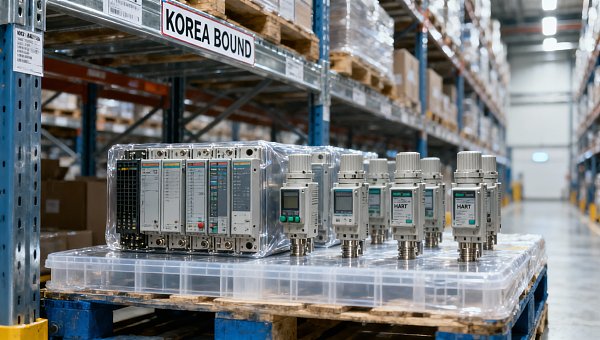
 KOSPI 200 Futures Circuit Breaker Triggered, Impacting Industrial Automation Instrument Export TimelinesKOSPI 200 futures circuit breaker triggered — impact on PLC modules, transmitters & fieldbus instrument exports to Korea. Urgent timeline insights inside.
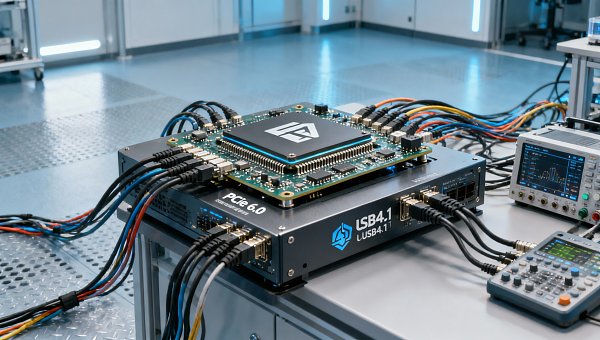
 South Korea’s Chip Exports Surge 202% in May 2026 Amid AI Test Equipment DemandAI test equipment demand surges as South Korea’s chip exports jump 202% in May 2026 — PCIe 6.0 & USB4.1 validation tools see sharp global procurement rise.
 Emission Gas Analyzer News in 2026: Regulatory Shifts Affecting DemandEmission gas analyzer demand is changing fast in 2026 as new regulations tighten limits, expand continuous monitoring, and raise data compliance standards. Explore key trends shaping smarter buying decisions.
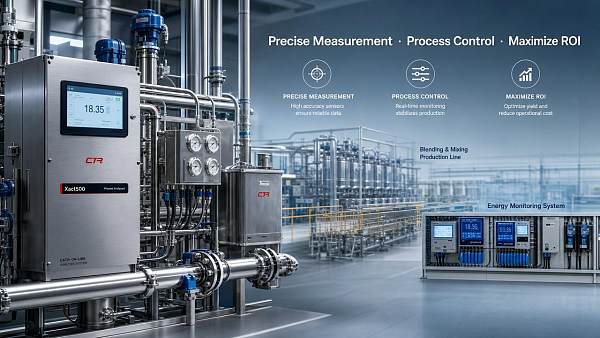
 When a High Accuracy Analyzer Delivers Real ROI in Process ControlHigh accuracy analyzer ROI starts with better process control. Learn where tighter measurements cut waste, improve stability, reduce compliance risk, and deliver measurable operational savings.
 SR-2030P Analyzer Import Updates in 2026: Compliance Points to ReviewSR-2030P analyzer import updates for 2026: review classification, certification, customs documents, and market access risks to reduce delays, control costs, and source with confidence.
 Industrial Oxygen Analyzer Price Trends in 2026: Cost Drivers to WatchIndustrial oxygen analyzer price trends in 2026 explained: compare sensor, compliance, installation, and maintenance cost drivers to make smarter, lower-risk buying decisions.
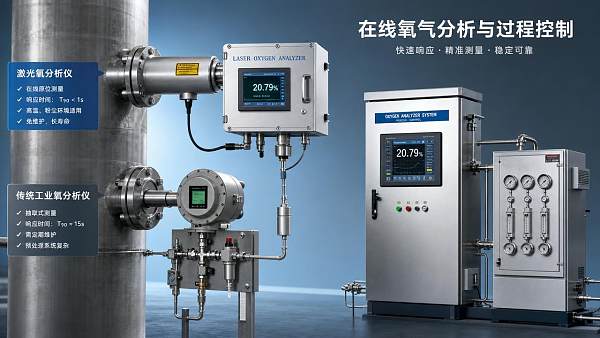
 Laser Oxygen Analyzer or Industrial Oxygen Analyzer: Which Fits BetterLaser oxygen analyzer or industrial oxygen analyzer? Compare speed, accuracy, maintenance, and cost to find the best fit for smarter, more reliable process control.
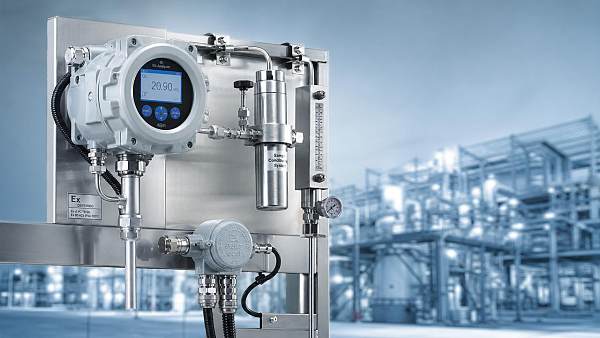
 ATEX Gas Analyzer Demand in 2026: What Is Shaping the MarketATEX gas analyzer demand in 2026 is driven by safety, digital integration, and lifecycle value. See what shapes buying decisions across industry, utilities, hydrogen, and automation.
 Fixed Gas Analyzer vs Portable Options: What Matters for Plant UseFixed gas analyzer or portable detector for plant use? Compare safety, response time, maintenance, and cost to choose the right monitoring solution with confidence.
 Explosion Proof Analyzer Selection Mistakes That Increase Site RiskExplosion proof analyzer selection mistakes can raise compliance, maintenance, and safety risks. Learn the key errors to avoid and how to choose a safer, more reliable solution.
 SR-2000 Infrared Analyzer: Key Performance Checks Before InstallationSR-2000 infrared analyzer pre-installation guide: learn how to verify accuracy, drift, site readiness, and calibration support to reduce startup risk and ensure stable long-term performance.
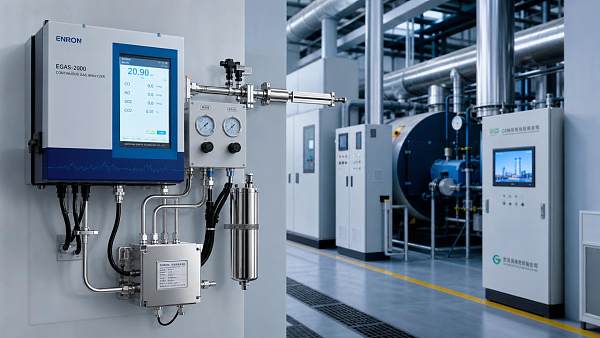
 How to Choose a Continuous Gas Analyzer for Stable 24/7 MonitoringContinuous gas analyzer selection guide for stable 24/7 monitoring. Learn how to compare accuracy, response time, maintenance, and integration for smarter industrial decisions.
 IEC Approves China-Led Standard for Smart Sensor Semantic InteroperabilityIEC TR 63372 smart sensor semantic interoperability standard—led by China—cuts export certification time by 30%. Discover how it reshapes global IoT integration.
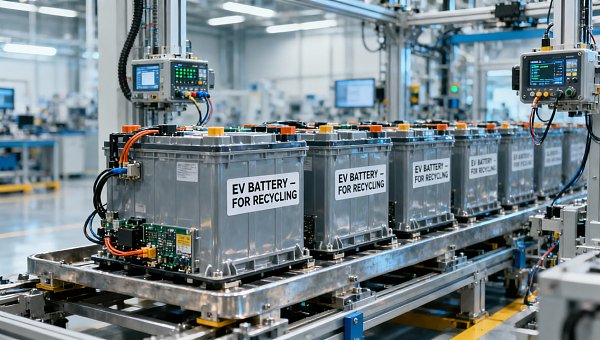
 MIIT Launches Joint Enforcement on EV Battery RecyclingMIIT's EV battery recycling enforcement targets BMS data leaks, illegal dismantling & electrolyte disposal—key for exporters, testers & procurement teams needing GDPR/CCPA compliance.
 SAMR Launches Unified Market Action on Testing & CertificationSAMR Launches Unified Market Action on Testing & Certification—tackling fragmentation, redundant fees & cross-border recognition barriers for exporters and manufacturers.
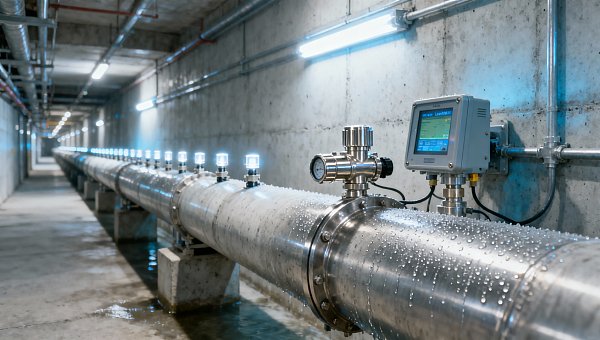
 Fifteenth Five-Year Urban Renewal Plan Approved, Signaling Overseas Procurement for Smart Water & Environmental Monitoring DevicesSmart water & environmental monitoring devices gain global momentum as China’s 15th Five-Year Urban Renewal Plan mandates intelligent infrastructure—key for Belt and Road exports.
 IMF Warns AI Amplifies Financial Cybersecurity RisksAI amplifies financial cybersecurity risks—IMF warns. Discover how XAI verification, adversarial attacks, and regulatory mandates impact AI detection equipment, FinTech, and banks.
 Tmall Health Launches 'Health Supplement Safety Alliance'Health Supplement Safety Alliance launched by Tmall Health—boosting traceability, lab credibility & cross-border quality for brands like By-Health and Centrum.
 EN IEC 61000-6-4:2026 EMC Standard Effective for AI Edge DevicesEN IEC 61000-6-4:2026 EMC standard is live—15% stricter radiated limits for AI edge devices. Act now to secure EU industrial IoT procurement eligibility.
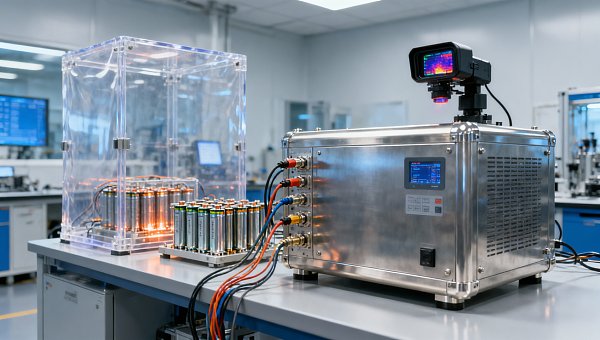
 APEC Auto Dialogue Confirms Semi-Solid Battery Deployment and Fast ChargingSemi-solid battery deployment & 15-min fast charging confirmed at APEC Auto Dialogue—spurring global demand for China-made battery testing equipment, BMS validation, and thermal runaway simulation solutions.
 EU Imposes Final Anti-Dumping Duty on Chinese Adipic AcidEU anti-dumping duty on Chinese adipic acid takes effect May 2026—impacting pH meters, sensors & analytical instruments. Act now to secure supply chains.
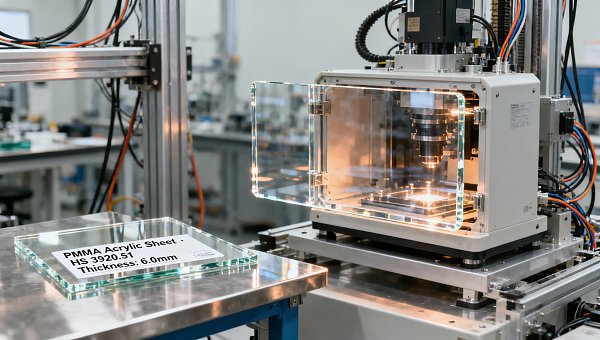
 Colombia Upholds Anti-Dumping Duties on Chinese Acrylic SheetsColombia Upholds Anti-Dumping Duties on Chinese Acrylic Sheets — 32.7% tariff extended for 5 years. Critical for exporters of medical, lab & analytical instrument enclosures.
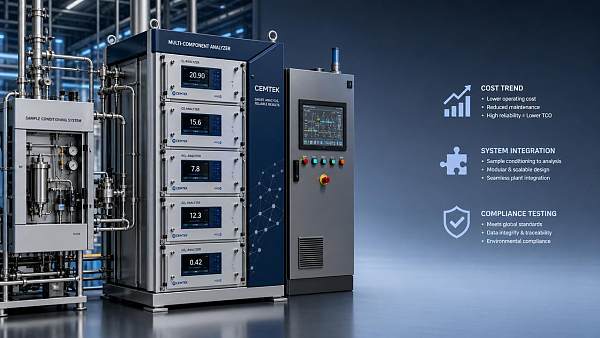
 Multi Component Analyzer Cost Trends for 2026 Expansion PlansMulti component analyzer cost trends for 2026: discover key pricing drivers, hidden costs, and smart supplier strategies to budget accurately and maximize expansion ROI.
 SR-2050 Analyzer Maintenance Points That Affect Service LifeSR-2050 analyzer maintenance points that directly impact service life, accuracy, and uptime. Learn how cleaning, calibration, inspection, and environment control reduce failures.
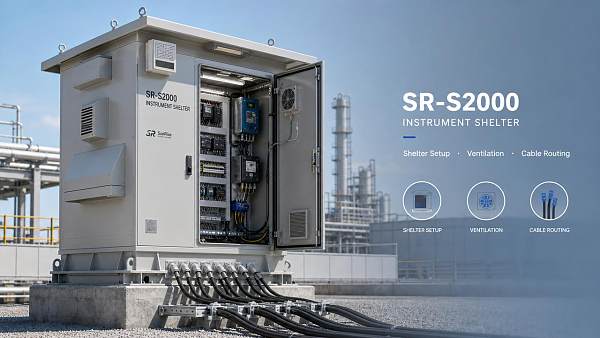
 SR-S2000 Shelter: Common Setup Mistakes to AvoidSR-S2000 shelter setup mistakes can cause heat, moisture, and maintenance issues. Learn what to avoid for safer installation, stable performance, and longer equipment life.
 Custom Gas Analyzer Import Risks and Spec Mismatch IssuesCustom gas analyzer import risks can derail projects through spec mismatch, compliance gaps, and integration issues. Learn how buyers can compare suppliers, verify requirements, and avoid costly rework.












Search Categories
Search Categories
Latest Article
- US-China Trade Talks Agree on Tariff Cuts for Key Test Equipment PartsUS-China tariff cuts on key test equipment parts—like pressure sensor chips & infrared thermal imaging modules—boost margins, cut costs, and strengthen global competitiveness for manufacturers.Posted by:
- G7 Paris Meeting Focuses on Critical Mineral Supply SecurityCritical mineral supply security takes center stage at the G7 Paris meeting—key for rare-earth sensor exporters. Learn EU compliance impacts & actionable readiness steps.Posted by:
- Brent Crude Surpasses $106/bbl, Raising Sea Freight Costs for Small Testing Equipment ExportsBrent Crude Surpasses $106/bbl—sea freight costs surge, impacting small testing equipment exporters. Learn how SMEs can adapt pricing, terms & logistics now.Posted by:
Please give us a message
