
Technical Support Outsourcing: Pros and Risks


Technical support outsourcing can help instrumentation companies strengthen After Sales Service, Calibration Service, and Maintenance Service while improving Process Efficiency and Operational Safety. For organizations facing complex Industrial Standard requirements, Regulatory Compliance, and Compliance Monitoring demands, outsourcing Technical Support may offer flexible Industrial Solution options. Yet cost savings and scalability must be weighed against risks in quality control, response speed, data security, and long-term service reliability.
Why Technical Support Outsourcing Matters in Instrumentation-Driven Operations
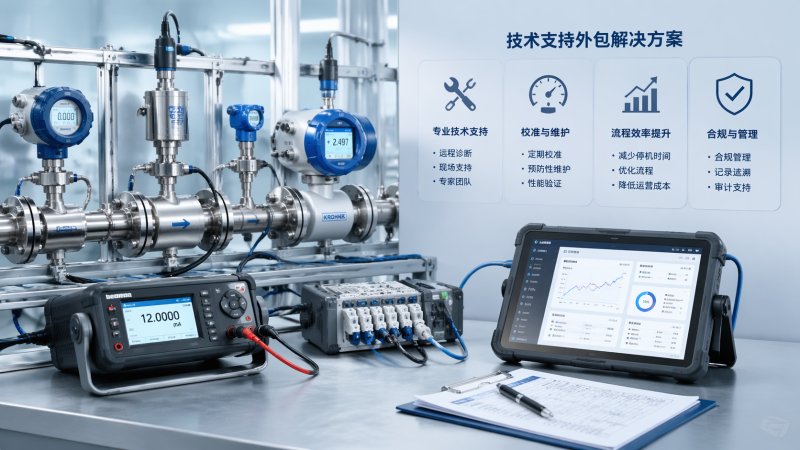
In the instrumentation industry, technical support is not a back-office add-on. It directly affects equipment uptime, calibration confidence, process safety, and operator trust. Whether a company supplies pressure transmitters, temperature sensors, flow meters, laboratory analyzers, or industrial online monitoring systems, users expect fast fault diagnosis, accurate service records, and practical guidance across installation, commissioning, maintenance, and compliance review.
This is why technical support outsourcing has become a practical option for manufacturers, distributors, and project-based service providers. Instead of building a large internal team in every region, companies can extend coverage through outsourced service desks, field support partners, calibration networks, or multilingual remote troubleshooting teams. A typical outsourcing scope may cover 3 service layers: first-line response, second-line technical analysis, and field-level intervention.
For procurement teams and decision makers, the central question is not simply whether outsourcing is cheaper. The real question is whether an external support model can maintain service quality across different industries such as energy, environmental monitoring, laboratory testing, medical applications, construction engineering, and automation control. Requirements vary by environment, response window, documentation depth, and risk tolerance.
In instrumentation environments, service failure can trigger more than customer complaints. It can lead to production delays, nonconforming measurements, missed calibration windows, or unsafe operation conditions. That is why outsourcing decisions should be linked to measurable service targets such as response within 2–4 hours for remote diagnosis, on-site attendance within 24–72 hours where feasible, and documented closure workflows with traceable records.
Which support functions are most often outsourced?
- Remote troubleshooting for instrument configuration, communication errors, alarm diagnosis, and routine user questions.
- Calibration scheduling support, certificate coordination, recall management, and maintenance planning.
- Field service dispatch for installation checks, commissioning, replacement support, and preventive maintenance rounds.
- Documentation support for compliance monitoring, audit preparation, service logs, and spare parts tracking.
These functions are especially relevant when product portfolios are broad and installed bases are distributed across multiple sites. In many cases, an internal team may handle high-complexity engineering issues while outsourced teams manage repeatable service tasks. This hybrid model can balance control and flexibility.
What Are the Main Pros of Outsourcing Technical Support?
The strongest advantage is scalable service capacity. Instrumentation suppliers often face uneven demand: new project launches, annual shutdown periods, calibration peaks, or post-installation support surges can create temporary workload spikes. Outsourcing allows companies to expand support capacity in 1 region, 3 time zones, or multiple product categories without immediately adding full internal headcount.
Another major benefit is faster market access. If a company enters a new industrial segment or overseas market, outsourced support partners can help establish initial service coverage before a permanent local organization is built. For distributors and channel partners, this is especially useful when customers ask for service commitments during tender review, factory acceptance planning, or after-sales negotiations.
Technical support outsourcing also improves cost visibility. Instead of maintaining a large all-purpose team for every scenario, companies can structure service by contract scope, response level, number of assets covered, or service hours. This helps financial approvers compare fixed internal cost against variable outsourced cost over quarterly or annual planning cycles.
In addition, specialized outsourcing partners may already have service routines for documentation control, calibration workflows, spare part handling, and escalation logic. When managed correctly, this can improve process efficiency, reduce duplicated effort, and support compliance tasks that would otherwise slow engineering teams.
Operational benefits by stakeholder group
Different audiences value different benefits. Operators want quicker answers and less downtime. Technical evaluators want consistent troubleshooting quality. Procurement teams want clear service scope and commercial transparency. Project managers want predictable implementation steps. Quality and safety personnel want traceable records and controlled procedures.
The table below summarizes how technical support outsourcing can create value across common instrumentation-related roles and decision points.
The practical takeaway is simple: outsourcing works best when it solves a clear operational bottleneck. It is most valuable when service demand fluctuates, installed equipment is geographically dispersed, or documentation and compliance requirements are heavy enough to strain internal teams.
Common performance gains to look for
- Reduced first-response delay through centralized ticket handling and pre-defined escalation levels.
- Better preventive maintenance planning based on asset type, calibration interval, and service history.
- Improved record consistency for 4 core items: fault description, root cause, corrective action, and closure confirmation.
- More predictable support cost when contracts define labor scope, exclusions, spare parts treatment, and reporting cadence.
What Risks Should Buyers and Engineering Teams Evaluate First?
The main risk is loss of technical depth where products or applications are complex. Instrumentation is not a single product category. A support provider may handle basic sensor replacement well but struggle with advanced composition analysis, control loop tuning, hazardous-area considerations, or specialized laboratory validation requirements. If service scope is too broad and qualification is too shallow, issue resolution quality drops quickly.
Response speed can also be misleading if contracts focus only on acknowledgment time. A provider may answer within 30 minutes but still require 2–3 days to access the right technical specialist, service manual, or field engineer. Buyers should separate first response, diagnosis time, dispatch time, and closure time rather than relying on a single headline SLA.
Data handling is another critical issue. Support teams often access calibration records, device configurations, communication settings, process values, maintenance history, and customer contact information. In regulated or sensitive environments, weak access control or unclear data ownership can create security, audit, or confidentiality problems.
A further risk is long-term dependence on an external provider that controls frontline customer interaction. If knowledge transfer is poor, internal teams may lose product feedback, recurring defect visibility, and customer relationship insight over a 12–24 month period. That weakens product improvement and can make future insourcing or partner replacement difficult.
Where outsourcing fails most often
- Service scope is not split by complexity, so routine tickets and high-risk technical issues are handled under the same resource model.
- Knowledge bases are incomplete, leaving outsourced teams dependent on informal internal contacts.
- Escalation rules are vague, causing repeated handoffs and unclear accountability during urgent downtime events.
- Compliance-sensitive tasks such as calibration certificate handling or maintenance traceability are not built into the service workflow.
The next table helps compare common risk dimensions in technical support outsourcing for instrumentation businesses, especially where service quality and operational safety are tightly connected.
A risk review should happen before contract signing, not after service issues appear. Strong outsourcing models are usually built around boundaries: what the provider can do independently, what requires OEM approval, and what must remain under direct internal control.
How to Compare In-House Support, Hybrid Models, and Full Outsourcing
There is no single best model for every instrumentation company. An in-house team provides stronger product control and closer customer feedback, but it can be expensive to scale across regions and product lines. Full outsourcing may improve flexibility, yet it can weaken knowledge retention. In many cases, a hybrid model offers the best balance by keeping engineering-critical knowledge internal while outsourcing repeatable service workflows.
The right choice depends on at least 5 factors: product complexity, installed base size, geographic spread, compliance sensitivity, and expected service speed. A business supporting laboratory instruments in a single domestic market may choose differently from one servicing industrial online analyzers across multiple plants and remote project sites.
Procurement teams should also consider whether the support requirement is stable or seasonal. If support demand rises sharply during annual shutdowns, project commissioning, or recurring calibration campaigns, hybrid or outsourced support can reduce idle internal capacity during slower months.
The comparison below can help decision makers align service model choice with operational needs, budget expectations, and risk tolerance.
Service model comparison for instrumentation businesses
For many instrumentation suppliers, the hybrid model is often the most resilient. First-line support, service coordination, and routine maintenance scheduling can be outsourced, while advanced diagnostics, application engineering, and compliance-critical review remain under internal ownership. This structure works well across 2–4 product maturity stages, from standard products to complex custom installations.
A practical 4-step evaluation process
- Map service demand by ticket volume, site visits, calibration frequency, and product family complexity over the last 6–12 months.
- Separate routine tasks from high-risk technical decisions such as parameter validation, compliance review, and control logic troubleshooting.
- Define service levels with at least 4 metrics: response, diagnosis, dispatch, and closure documentation completeness.
- Pilot the model in one region, one product line, or one service category before wider rollout.
What Should Be Included in an Outsourced Technical Support Procurement Checklist?
A good procurement process goes beyond price comparison. Buyers should evaluate service capability, training depth, documentation discipline, communication quality, and escalation readiness. This matters even more in instrumentation because support teams may interact with metrology records, operational alarms, calibration intervals, and maintenance decisions that influence product reliability and safe use.
Start by defining the actual support environment. Is the demand mostly remote? Does it include site intervention? Are instruments installed in laboratories, utility rooms, process lines, or outdoor monitoring stations? Each environment creates different expectations for staffing, spare parts, communication tools, and turnaround time. A remote-only model may be enough for configuration support, but not for recurring field failures or calibration recovery.
Next, check whether the service provider can support documentation and traceability. In many projects, the technical answer is only half the job. Customers also need readable service reports, revision control, test references, and clear handover notes. This is important for quality teams, project managers, and auditors who need evidence that the issue was addressed correctly.
Finally, validate implementation readiness. Many outsourcing contracts fail during the first 30–90 days because training is incomplete, ticket categories are undefined, or spare parts responsibility is unclear. A structured onboarding phase is often more important than commercial negotiation alone.
Key procurement and qualification criteria
- Coverage model: service hours, language capability, remote channels, regional field presence, and escalation contacts.
- Technical scope: supported product families, excluded tasks, training matrix, and problem categories requiring OEM sign-off.
- Documentation control: service report format, retention period, calibration record handling, and approval process.
- Commercial structure: fixed fee, per-ticket fee, per-site fee, emergency surcharge, and spare parts treatment.
- Governance rhythm: weekly startup reviews, monthly KPI review, and quarterly service optimization meeting.
Procurement guide table for technical support outsourcing
Use the following checklist to compare providers in a way that supports technical evaluation, financial review, and operational rollout rather than focusing only on headline price.
A robust procurement checklist helps align the interests of technical teams, commercial reviewers, and senior management. It also reduces implementation friction because expectations are documented before service starts.
How to Implement Outsourced Support Without Losing Control
Implementation should begin with service segmentation. Do not outsource every function at once. A phased rollout is usually safer: phase 1 for remote first-line support, phase 2 for documentation and service coordination, and phase 3 for selected field interventions. This staged approach gives the organization 30–60 days to test workflows before expanding service responsibility.
Training is not a one-time handover. Instrumentation support requires recurring updates because firmware, product revisions, compliance expectations, and installed applications evolve. A practical governance model includes monthly knowledge reviews, ticket sampling, failure pattern analysis, and revision updates for technical documents.
Control is also maintained through clear reporting. Good outsourced technical support should provide more than closed-ticket counts. It should track issue category, root cause trends, repeat incidents, unresolved cases, field visit ratio, and documentation completeness. These indicators help engineering teams improve products while helping procurement teams assess service value.
Where operational safety is involved, organizations should define non-delegable decisions. For example, changes affecting critical measurement integrity, alarm thresholds, control interlocks, or compliance-sensitive calibration status may require internal approval before execution. Outsourcing should extend capability, not transfer accountability without safeguards.
A controlled implementation framework
- Define 3 boundaries: what is fully outsourced, what is jointly handled, and what remains internal only.
- Prepare service playbooks covering ticket intake, escalation, field dispatch, closure notes, and approval checkpoints.
- Run a pilot for 4–8 weeks with KPI monitoring and weekly review meetings.
- Expand only after corrective actions are completed for documentation, accuracy, and response gaps.
Standards, compliance, and process discipline
Instrumentation businesses often work under customer-specific quality systems, metrology requirements, maintenance procedures, and industrial safety rules. Even where a contract does not name a single mandatory standard, service providers should still operate with controlled documentation, revision tracking, access management, and auditable service records. These are baseline expectations for mature technical support outsourcing.
If your operation involves calibration service, maintenance records, or regulated test environments, ask early how the provider handles certificate storage, service report approval, and data access permissions. These details often decide whether the outsourcing model supports real compliance performance or simply shifts workload without reducing risk.
FAQ: Common Questions About Technical Support Outsourcing
Is technical support outsourcing suitable for highly specialized instruments?
Yes, but usually not as a full replacement for internal expertise. For complex analyzers, calibration-critical devices, or systems integrated into automation controls, outsourcing works best in a hybrid structure. Routine support, ticket triage, and scheduled service coordination can be outsourced, while advanced diagnostics and application decisions stay internal.
What response time should buyers expect?
Expect separate metrics rather than one number. For example, first acknowledgment may be targeted within 30 minutes to 4 hours, remote diagnosis within the same business day for routine issues, and field attendance within 24–72 hours depending on region and contract scope. Critical assets may need priority escalation rules and named contacts.
How can a company protect data and service records?
Use role-based access, controlled ticket systems, documented retention periods, and approval steps for sensitive calibration or maintenance records. Buyers should also define data ownership, export format, and handover rules at contract start so records remain usable if the service model changes later.
What is the most common mistake during supplier selection?
Choosing based on price without verifying service boundaries and technical depth. A low-cost provider may still become expensive if repeat visits, delayed diagnosis, documentation errors, or unresolved compliance tasks create extra internal workload. Service fit matters more than headline rate alone.
Why Choose Us for Technical Support Planning and Service Evaluation
We understand that technical support outsourcing in the instrumentation field is never just a staffing issue. It is tied to equipment reliability, calibration discipline, maintenance execution, operational safety, and customer satisfaction. That is why our approach focuses on practical service architecture rather than generic outsourcing advice.
We can help you review support scope by product category, service complexity, and application environment. This includes parameter confirmation for instruments and systems, support model selection for After Sales Service and Maintenance Service, service process mapping, and evaluation of documentation requirements linked to compliance monitoring and industrial operations.
If you are comparing in-house and outsourced models, we can support discussions around response targets, onboarding steps, regional coverage, sample service workflow design, and quotation structure. If you are already working with a provider, we can help assess whether your current SLA, escalation path, and service records are strong enough for long-term reliability.
Contact us to discuss product selection support, technical support outsourcing strategy, delivery cycle planning, custom service scope, certification and compliance expectations, sample process review, or quotation communication. A clear early discussion can save weeks of rework and help you build a support model that fits both technical reality and commercial goals.
Recommended for You
 IEC Approves China-Led Standard for Smart Sensor Semantic InteroperabilityIEC TR 63372 smart sensor semantic interoperability standard—led by China—cuts export certification time by 30%. Discover how it reshapes global IoT integration.
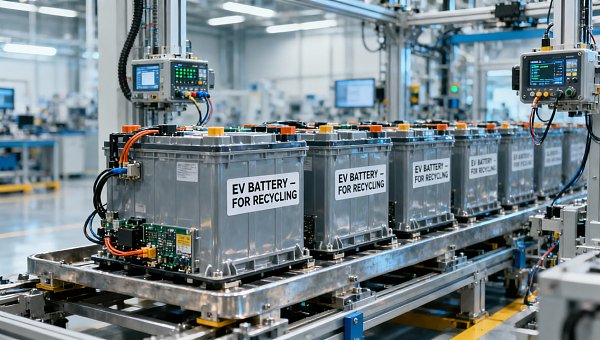
 MIIT Launches Joint Enforcement on EV Battery RecyclingMIIT's EV battery recycling enforcement targets BMS data leaks, illegal dismantling & electrolyte disposal—key for exporters, testers & procurement teams needing GDPR/CCPA compliance.
 SAMR Launches Unified Market Action on Testing & CertificationSAMR Launches Unified Market Action on Testing & Certification—tackling fragmentation, redundant fees & cross-border recognition barriers for exporters and manufacturers.
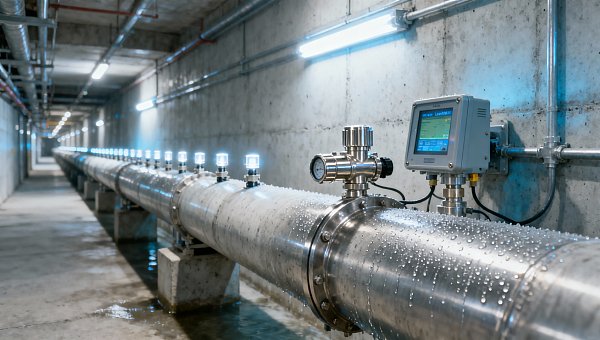
 Fifteenth Five-Year Urban Renewal Plan Approved, Signaling Overseas Procurement for Smart Water & Environmental Monitoring DevicesSmart water & environmental monitoring devices gain global momentum as China’s 15th Five-Year Urban Renewal Plan mandates intelligent infrastructure—key for Belt and Road exports.
 IMF Warns AI Amplifies Financial Cybersecurity RisksAI amplifies financial cybersecurity risks—IMF warns. Discover how XAI verification, adversarial attacks, and regulatory mandates impact AI detection equipment, FinTech, and banks.
 Tmall Health Launches 'Health Supplement Safety Alliance'Health Supplement Safety Alliance launched by Tmall Health—boosting traceability, lab credibility & cross-border quality for brands like By-Health and Centrum.
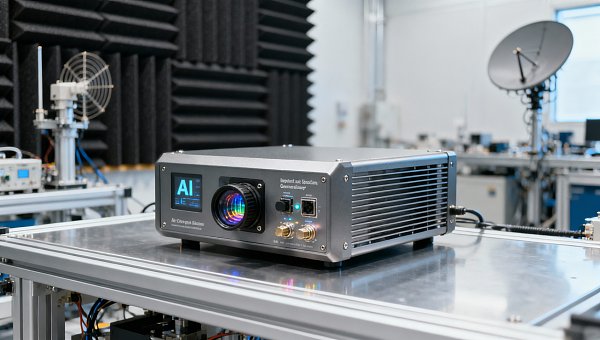
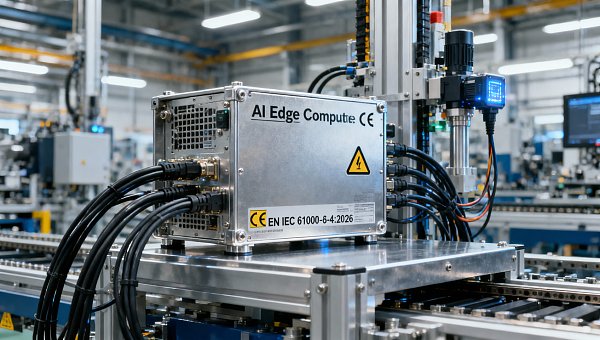
 EN IEC 61000-6-4:2026 EMC Standard Effective for AI Edge DevicesEN IEC 61000-6-4:2026 EMC standard is live—15% stricter radiated limits for AI edge devices. Act now to secure EU industrial IoT procurement eligibility.
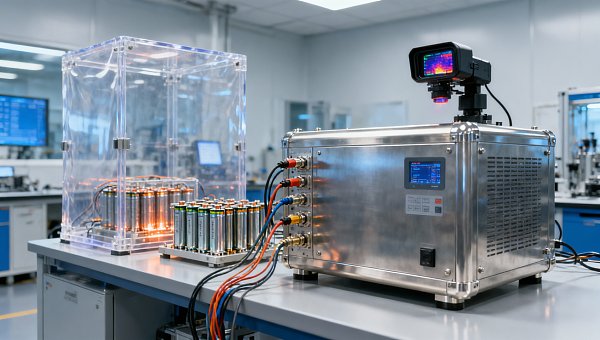
 APEC Auto Dialogue Confirms Semi-Solid Battery Deployment and Fast ChargingSemi-solid battery deployment & 15-min fast charging confirmed at APEC Auto Dialogue—spurring global demand for China-made battery testing equipment, BMS validation, and thermal runaway simulation solutions.
 EU Imposes Final Anti-Dumping Duty on Chinese Adipic AcidEU anti-dumping duty on Chinese adipic acid takes effect May 2026—impacting pH meters, sensors & analytical instruments. Act now to secure supply chains.
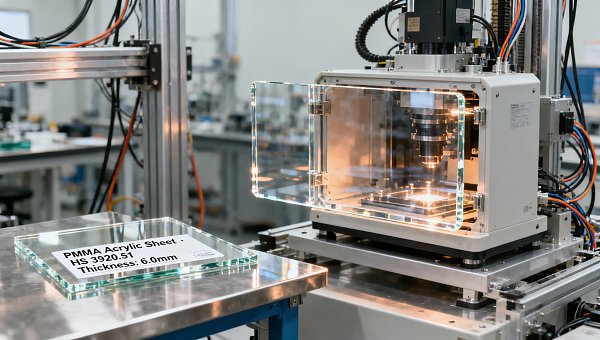
 Colombia Upholds Anti-Dumping Duties on Chinese Acrylic SheetsColombia Upholds Anti-Dumping Duties on Chinese Acrylic Sheets — 32.7% tariff extended for 5 years. Critical for exporters of medical, lab & analytical instrument enclosures.
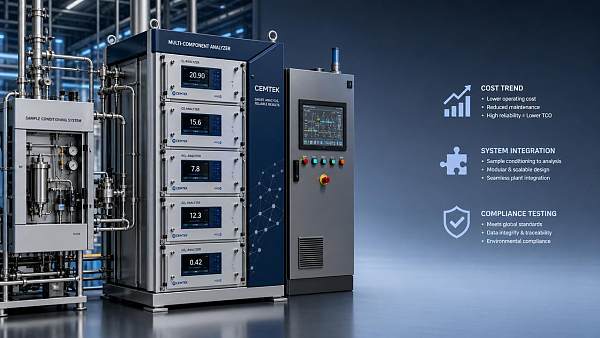
 Multi Component Analyzer Cost Trends for 2026 Expansion PlansMulti component analyzer cost trends for 2026: discover key pricing drivers, hidden costs, and smart supplier strategies to budget accurately and maximize expansion ROI.
 SR-2050 Analyzer Maintenance Points That Affect Service LifeSR-2050 analyzer maintenance points that directly impact service life, accuracy, and uptime. Learn how cleaning, calibration, inspection, and environment control reduce failures.
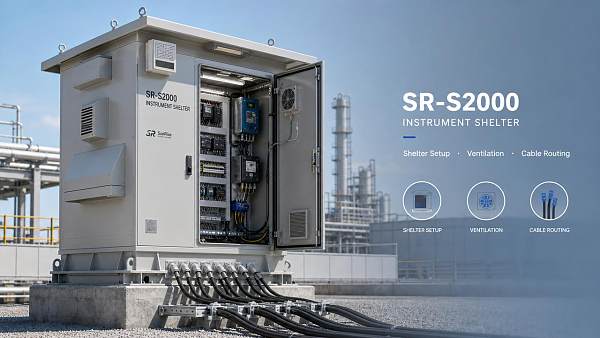
 SR-S2000 Shelter: Common Setup Mistakes to AvoidSR-S2000 shelter setup mistakes can cause heat, moisture, and maintenance issues. Learn what to avoid for safer installation, stable performance, and longer equipment life.
 Custom Gas Analyzer Import Risks and Spec Mismatch IssuesCustom gas analyzer import risks can derail projects through spec mismatch, compliance gaps, and integration issues. Learn how buyers can compare suppliers, verify requirements, and avoid costly rework.
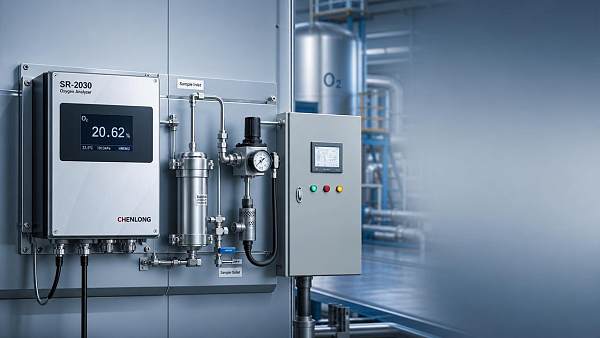
 When to Choose the SR-2030 Oxygen Analyzer for ComplianceSR-2030 oxygen analyzer: learn when it’s the right choice for compliance, safety, and stable process control. Explore key selection checks, audit-ready benefits, and deployment tips.
 SR-EX Analyzer Price Factors in 2026 ProjectsSR-EX analyzer price factors explained for 2026 projects: compare scope, compliance, integration, and lifecycle costs to approve budgets with less risk and more confidence.
 SR-2070 Analyzer vs Alternatives: Key Performance ChecksSR-2070 analyzer vs alternatives: compare accuracy, drift, response time, calibration effort, and lifecycle cost to choose a more reliable, efficient analyzer with confidence.
 2026 Market Trends for Predictive Analytics InstrumentsPredictive analytics instruments are reshaping 2026 market strategy. Explore key trends, risks, and buying checkpoints to improve uptime, integration, and ROI across industries.
 Wireless Measurement Systems: What Impacts Data Stability Most?Wireless measurement systems perform best when data stays stable. Discover the key factors affecting reliability, accuracy, and long-term performance across industrial applications.
 How Remote Monitoring Devices Cut Downtime in Field OperationsRemote monitoring devices help field teams detect issues early, reduce downtime, and improve maintenance planning. Discover how they keep operations reliable and on schedule.
 5th TCM High-Quality Development Conference Highlights NIR & AI QC for Global ExportNIR & AI QC take center stage at the 5th TCM High-Quality Development Conference—key for global export compliance, real-time quality control, and smart manufacturing.
 IEC Approves China-Led Guide for Smart Sensor Semantic InteroperabilityIEC TR 63388 semantic interoperability guide for smart sensors—China-led, globally approved. Boost IIoT integration across OPC UA, MQTT & TSN now.
 PBOC April Data Shows Strong Credit Flow to Tech & Inclusive LendingPBOC April data reveals surging tech & inclusive lending—boosting global demand for calibrated lab equipment, R&D instruments, and metrology-ready exports.
 SABIC Launches 'Smart Factory 2030' with China-Focused Online Analysis ProcurementSABIC's 'Smart Factory 2030' launches China-focused online analysis procurement—pH/ORP, IR gas & LIBS analyzers. SIL2-certified suppliers, act now!
 China Completes '14th Five-Year' Smart CNC Line R&DChina's '14th Five-Year' Smart CNC Line R&D is complete — boosting reliability & cutting delivery time for precision metrology equipment. Discover how it transforms global procurement.
 FDA Updates IVD Software Guidance: AI Diagnostic Devices Must Provide Verifiable Training DatasetsFDA mandates verifiable training datasets for AI diagnostic devices — critical for medical imaging, DICOM tools, and regulatory services entering the U.S. market.
 EU EN IEC 61000-6-4:2026 EMC Standard Takes EffectEU EN IEC 61000-6-4:2026 EMC standard is live—stricter radiated emission limits for AI edge devices. Act now to avoid EU customs delays & certification bottlenecks.
 APEC Auto Dialogue Confirms Semi-Solid Battery Deployment and 15-Minute Fast ChargingSemi-solid battery deployment and 15-minute fast charging confirmed at APEC Auto Dialogue — driving urgent global demand for BMS validation, thermal runaway, and high-voltage test equipment.
 MIIT Launches Joint Enforcement on EV Battery RecyclingMIIT Launches Joint Enforcement on EV Battery Recycling: Critical for battery test equipment exporters, data compliance, and global supply chains—act now to avoid delays.
 DIA China Annual Meeting Sells Out Despite $7,000+ FeeDIA China Annual Meeting sells out despite $7,000+ fee — a powerful signal for pharma exporters, manufacturers & regulatory service providers targeting China’s innovation ecosystem.
 Continuous Monitoring Solutions and the Shift Toward Smarter ComplianceContinuous monitoring solutions help enterprises strengthen compliance with real-time visibility, traceable data, and faster risk response. Discover how smarter oversight improves resilience and audit confidence.
 Confined Space Monitors: Key Mistakes That Raise Safety RiskConfined space monitors can fail when selection, bump testing, calibration, or sampling is wrong. Learn the biggest safety mistakes and how to prevent false safe readings.














Search Categories
Search Categories
Latest Article
- IEC Approves China-Led Standard for Smart Sensor Semantic InteroperabilityIEC TR 63372 smart sensor semantic interoperability standard—led by China—cuts export certification time by 30%. Discover how it reshapes global IoT integration.Posted by:
- MIIT Launches Joint Enforcement on EV Battery RecyclingMIIT's EV battery recycling enforcement targets BMS data leaks, illegal dismantling & electrolyte disposal—key for exporters, testers & procurement teams needing GDPR/CCPA compliance.Posted by:
- SAMR Launches Unified Market Action on Testing & CertificationSAMR Launches Unified Market Action on Testing & Certification—tackling fragmentation, redundant fees & cross-border recognition barriers for exporters and manufacturers.Posted by:
Please give us a message
