
Why Technical Support Fails Even When Tickets Close Fast


Fast ticket closure does not always mean real Technical Support success. In the instrumentation industry, weak After Sales Service, delayed Calibration Service, and inconsistent Maintenance Service can still damage Process Efficiency, Operational Safety, and Regulatory Compliance. This article explores why support appears efficient on paper but fails users, evaluators, and decision-makers who need reliable Industrial Solution outcomes and lasting Compliance Monitoring.
For buyers and operators of measurement, testing, monitoring, and control equipment, a “closed” support case can hide unresolved faults, repeated downtime, missed calibration windows, and rising risk exposure. This gap matters across manufacturing plants, power facilities, laboratories, environmental monitoring stations, and automation projects where small instrument errors can trigger larger process losses.
Technical evaluators may focus on response time, procurement teams may compare service terms, and finance teams may ask whether premium support is justified. Yet the real question is broader: does the support model restore measurement confidence, keep assets compliant, and reduce total operating cost over 12–36 months? In instrumentation, speed without resolution is often expensive.
Why Fast Ticket Metrics Can Mislead Industrial Support Decisions
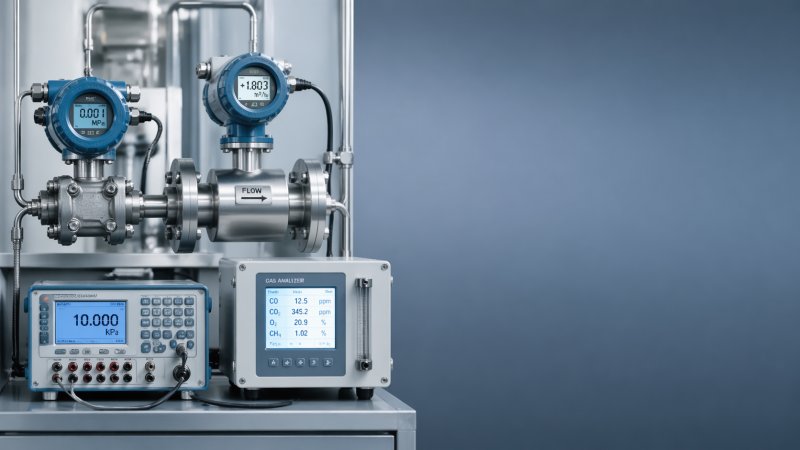
Many support dashboards prioritize first response time, average handling time, or same-day closure rate. These metrics are useful, but they only describe administrative efficiency. They do not confirm whether a pressure transmitter was recalibrated correctly, whether a flowmeter drift issue was eliminated, or whether a gas analyzer returned to stable operation under field conditions.
In instrumentation environments, a case may close in 2 hours while the root cause remains unresolved for 2 weeks. Operators may accept a workaround to keep production running, but repeated alarms, unstable readings, and manual data correction continue in the background. This creates hidden cost across quality control, energy use, batch consistency, and maintenance labor.
A fast closure culture also pushes service teams toward low-complexity answers. Remote resets, generic checklists, and “monitor and observe” recommendations can help for basic issues, but they are weak responses to calibration drift, intermittent signal interference, sampling contamination, or control loop mismatch. In these cases, a ticket is closed, but the plant risk stays open.
Where the KPI gap becomes visible
The problem usually appears in 4 measurable ways: repeat incidents within 7–30 days, growing spare parts usage, increased manual verification frequency, and missed compliance tasks. If an instrument requires three support contacts in one month for the same symptom, the original closure should not be treated as success.
Common hidden failure patterns
- Closing on symptom relief instead of verifying root cause under live operating load.
- Marking cases resolved after remote guidance without confirming actual field recovery.
- Ignoring calibration due dates because the device still appears to function within a broad tolerance band.
- Separating maintenance, calibration, and technical support into disconnected workflows.
The table below shows why closure speed alone is a weak decision metric for industrial support contracts and service partner evaluation.
For procurement and project management teams, the key lesson is clear: ticket speed should be a secondary metric. The primary metrics should include time to verified recovery, repeat issue ratio, calibration turnaround, and service impact on process continuity. These indicators reflect real operational value rather than helpdesk appearance.
How Weak After Sales, Calibration, and Maintenance Services Undermine Operations
Instrumentation assets rarely fail in isolation. A poorly maintained temperature sensor can affect controller tuning. A delayed calibration on a pressure gauge can distort inspection records. An unstable analyzer can reduce confidence in emissions reporting. When After Sales Service, Calibration Service, and Maintenance Service are fragmented, support quality drops even if each team appears busy and responsive.
The operational effect depends on application criticality. In laboratory analysis, a drift beyond the accepted range may invalidate a test run. In process automation, a 1–2% deviation in flow measurement may seem small but can shift dosing accuracy, energy consumption, or batch yield over hundreds of production hours. In safety-related monitoring, inconsistency is more serious than delay.
Calibration delays are especially damaging because they often remain invisible until an audit, customer complaint, or product variation appears. Many plants still rely on calendar reminders and spreadsheets, which increases the chance of missing 6-month or 12-month intervals. Once that happens, the issue is not only technical. It becomes a compliance and traceability problem.
Three service breakdowns that look minor but cost more later
- Reactive maintenance replaces failed parts but does not analyze contamination, vibration, wiring quality, or installation alignment.
- Calibration is scheduled too late, causing uncertainty about data validity for the previous operating period.
- After Sales Service does not connect ticket history with asset lifecycle records, so recurring faults are treated as new cases every time.
The table below compares common support gaps and their likely business consequences in instrumentation-heavy operations.
For quality managers and safety officers, the practical concern is that support weakness often emerges first as data doubt, not total failure. If the organization only reacts when an instrument stops completely, it may already be too late to protect compliance records and process confidence.
What Real Technical Support Success Looks Like in the Instrumentation Industry
Real support success should be measured at the asset, process, and decision levels. At the asset level, the instrument returns to stable and verified performance. At the process level, production, testing, or monitoring resumes without abnormal variation. At the decision level, engineers, auditors, and managers can trust the resulting data for control, reporting, and planning.
This means support should include more than troubleshooting. It should cover installation review, configuration validation, calibration planning, maintenance scheduling, documentation control, and feedback into future procurement. In practice, this integrated model reduces repeat incidents over 3–12 months more effectively than simply improving call center responsiveness.
For multi-site users, distributors, and project owners, consistency matters as much as speed. A good service model provides standard acceptance criteria, clear escalation thresholds, and defined field support windows. For example, critical measurement points may require 4-hour response acknowledgement, 24-hour diagnostic action, and on-site intervention within 48–72 hours depending on location and risk category.
Core indicators that reflect real support value
- Verified recovery time instead of ticket closure time.
- Repeat fault rate within 30 days and 90 days.
- Calibration turnaround time and percentage completed on schedule.
- Mean time between service events for critical instruments.
- Documentation completeness for traceability, acceptance, and audit readiness.
A practical 5-step support model
A reliable support framework usually follows 5 steps: issue intake, remote triage, field or bench verification, root cause correction, and post-recovery monitoring. The last step is often missing. Yet observing data stability for 24 hours in a laboratory or 72 hours in a process line can confirm whether the issue was truly fixed.
This approach is especially important for instruments affected by environmental variables such as temperature, humidity, vibration, electromagnetic interference, pressure fluctuation, or fluid contamination. A support team that closes quickly but does not validate these conditions may solve the wrong problem.
For decision-makers, the takeaway is simple: a support contract should define outcomes, not just reactions. Faster response is useful, but verified reliability, calibration continuity, and measurable reduction in repeat failures are stronger indicators of supplier capability.
How to Evaluate Service Providers, Integrators, and Equipment Partners
When comparing instrumentation suppliers or support partners, many teams look first at product specifications. That is necessary, but not sufficient. In B2B industrial environments, support capability can influence lifecycle cost as much as hardware quality, especially across 2-year to 5-year operating horizons with scheduled calibration and maintenance obligations.
Technical evaluators should ask whether the provider supports both installed asset performance and documentation traceability. Commercial evaluators should review service inclusions, exclusions, spare part lead times, and escalation conditions. Finance approvers should look at the cost of downtime, rework, and emergency outsourcing if support quality proves weaker than promised.
The most effective procurement reviews combine performance, service, and risk factors. This is particularly important for distributors and project managers who must support end users after installation and cannot rely only on factory brochures or hotline promises.
Key service evaluation criteria before purchase
The following matrix can help teams compare support readiness beyond ticket speed and general sales claims.
This comparison method helps procurement teams avoid a common mistake: selecting the lowest acquisition cost while underestimating lifecycle support exposure. For many instrumentation systems, a cheaper supply contract can become more expensive after 12 months if calibration backlog, repeat service visits, and unstable process data increase.
Questions every buyer should ask before approval
- How is technical support linked to maintenance records and calibration history?
- What acceptance criteria define a truly resolved case?
- How are repeat faults investigated within 30–90 days?
- What documentation is provided for auditors, quality teams, and project handover files?
A supplier that answers these questions clearly is usually better prepared for long-term industrial cooperation than one that emphasizes only fast hotline metrics.
Implementation Priorities, Risk Control, and Common Questions
Improving support performance does not always require a full system replacement. In many cases, the fastest gains come from service design changes: defining asset criticality, setting calibration windows by risk class, standardizing post-service validation, and integrating support records with maintenance planning. These measures are practical for manufacturers, laboratories, utilities, EPC teams, and channel partners.
A simple prioritization model often works well. Class A assets are safety, compliance, or production-critical and require strict scheduling. Class B assets affect quality or efficiency and need monitored response targets. Class C assets can use standard support intervals. This 3-tier structure helps teams allocate budget and service attention without treating every instrument the same.
Implementation should also include acceptance discipline. A support case should not close until the user confirms functional recovery, documentation is updated, and required calibration or maintenance follow-up has been scheduled. This small process change reduces false closure and improves supplier accountability.
A practical rollout checklist
- Identify the top 20% of instruments that create the highest operational or compliance risk.
- Set response, recovery, and validation targets separately instead of using one closure KPI.
- Review calibration due dates monthly and lock service windows 2–4 weeks in advance.
- Track repeat incidents by device type, site, and cause category every quarter.
- Require closure evidence such as trend stability, test results, or field verification notes.
FAQ: How should companies judge support quality?
Use at least 4 indicators together: verified recovery time, repeat issue rate, calibration on-time completion, and documentation completeness. A provider that closes tickets quickly but has high recurrence within 30 days is not delivering strong technical support.
FAQ: What is a reasonable calibration planning cycle?
It depends on asset criticality and operating conditions, but many organizations plan 6-month or 12-month intervals and begin scheduling 2–6 weeks before the due date. High-stress applications may require shorter intervals or event-based verification.
FAQ: When should on-site service be mandatory?
Field support is often necessary when the issue involves installation quality, environmental interference, contamination, unstable power, sampling systems, control loop interaction, or repeated faults after remote guidance. If the same issue returns twice in 30 days, on-site validation is usually justified.
FAQ: How can distributors and project teams reduce support complaints?
They should define service scope during quotation, include commissioning and training responsibilities, set spare part expectations, and confirm who owns calibration coordination after handover. Clear responsibility mapping reduces disputes and accelerates issue resolution.
In the instrumentation industry, support quality is not proven by how fast a case disappears from a dashboard. It is proven by stable measurement performance, controlled maintenance cycles, on-time calibration, and dependable compliance records. If your organization is reviewing support contracts, evaluating new suppliers, or trying to reduce repeat instrument issues, now is the right time to reassess the service model behind your equipment. Contact us to discuss your application, request a tailored support approach, or explore more reliable industrial solutions for long-term operational confidence.
Recommended for You
 IEC Approves China-Led Standard for Smart Sensor Semantic InteroperabilityIEC TR 63372 smart sensor semantic interoperability standard—led by China—cuts export certification time by 30%. Discover how it reshapes global IoT integration.
 MIIT Launches Joint Enforcement on EV Battery RecyclingMIIT's EV battery recycling enforcement targets BMS data leaks, illegal dismantling & electrolyte disposal—key for exporters, testers & procurement teams needing GDPR/CCPA compliance.
 SAMR Launches Unified Market Action on Testing & CertificationSAMR Launches Unified Market Action on Testing & Certification—tackling fragmentation, redundant fees & cross-border recognition barriers for exporters and manufacturers.
 Fifteenth Five-Year Urban Renewal Plan Approved, Signaling Overseas Procurement for Smart Water & Environmental Monitoring DevicesSmart water & environmental monitoring devices gain global momentum as China’s 15th Five-Year Urban Renewal Plan mandates intelligent infrastructure—key for Belt and Road exports.
 IMF Warns AI Amplifies Financial Cybersecurity RisksAI amplifies financial cybersecurity risks—IMF warns. Discover how XAI verification, adversarial attacks, and regulatory mandates impact AI detection equipment, FinTech, and banks.
 Tmall Health Launches 'Health Supplement Safety Alliance'Health Supplement Safety Alliance launched by Tmall Health—boosting traceability, lab credibility & cross-border quality for brands like By-Health and Centrum.
 EN IEC 61000-6-4:2026 EMC Standard Effective for AI Edge DevicesEN IEC 61000-6-4:2026 EMC standard is live—15% stricter radiated limits for AI edge devices. Act now to secure EU industrial IoT procurement eligibility.
 APEC Auto Dialogue Confirms Semi-Solid Battery Deployment and Fast ChargingSemi-solid battery deployment & 15-min fast charging confirmed at APEC Auto Dialogue—spurring global demand for China-made battery testing equipment, BMS validation, and thermal runaway simulation solutions.
 EU Imposes Final Anti-Dumping Duty on Chinese Adipic AcidEU anti-dumping duty on Chinese adipic acid takes effect May 2026—impacting pH meters, sensors & analytical instruments. Act now to secure supply chains.
 Colombia Upholds Anti-Dumping Duties on Chinese Acrylic SheetsColombia Upholds Anti-Dumping Duties on Chinese Acrylic Sheets — 32.7% tariff extended for 5 years. Critical for exporters of medical, lab & analytical instrument enclosures.
 Multi Component Analyzer Cost Trends for 2026 Expansion PlansMulti component analyzer cost trends for 2026: discover key pricing drivers, hidden costs, and smart supplier strategies to budget accurately and maximize expansion ROI.
 SR-2050 Analyzer Maintenance Points That Affect Service LifeSR-2050 analyzer maintenance points that directly impact service life, accuracy, and uptime. Learn how cleaning, calibration, inspection, and environment control reduce failures.
 SR-S2000 Shelter: Common Setup Mistakes to AvoidSR-S2000 shelter setup mistakes can cause heat, moisture, and maintenance issues. Learn what to avoid for safer installation, stable performance, and longer equipment life.
 Custom Gas Analyzer Import Risks and Spec Mismatch IssuesCustom gas analyzer import risks can derail projects through spec mismatch, compliance gaps, and integration issues. Learn how buyers can compare suppliers, verify requirements, and avoid costly rework.
 When to Choose the SR-2030 Oxygen Analyzer for ComplianceSR-2030 oxygen analyzer: learn when it’s the right choice for compliance, safety, and stable process control. Explore key selection checks, audit-ready benefits, and deployment tips.
 SR-EX Analyzer Price Factors in 2026 ProjectsSR-EX analyzer price factors explained for 2026 projects: compare scope, compliance, integration, and lifecycle costs to approve budgets with less risk and more confidence.
 SR-2070 Analyzer vs Alternatives: Key Performance ChecksSR-2070 analyzer vs alternatives: compare accuracy, drift, response time, calibration effort, and lifecycle cost to choose a more reliable, efficient analyzer with confidence.
 2026 Market Trends for Predictive Analytics InstrumentsPredictive analytics instruments are reshaping 2026 market strategy. Explore key trends, risks, and buying checkpoints to improve uptime, integration, and ROI across industries.
 Wireless Measurement Systems: What Impacts Data Stability Most?Wireless measurement systems perform best when data stays stable. Discover the key factors affecting reliability, accuracy, and long-term performance across industrial applications.
 How Remote Monitoring Devices Cut Downtime in Field OperationsRemote monitoring devices help field teams detect issues early, reduce downtime, and improve maintenance planning. Discover how they keep operations reliable and on schedule.
 5th TCM High-Quality Development Conference Highlights NIR & AI QC for Global ExportNIR & AI QC take center stage at the 5th TCM High-Quality Development Conference—key for global export compliance, real-time quality control, and smart manufacturing.
 IEC Approves China-Led Guide for Smart Sensor Semantic InteroperabilityIEC TR 63388 semantic interoperability guide for smart sensors—China-led, globally approved. Boost IIoT integration across OPC UA, MQTT & TSN now.
 PBOC April Data Shows Strong Credit Flow to Tech & Inclusive LendingPBOC April data reveals surging tech & inclusive lending—boosting global demand for calibrated lab equipment, R&D instruments, and metrology-ready exports.
 SABIC Launches 'Smart Factory 2030' with China-Focused Online Analysis ProcurementSABIC's 'Smart Factory 2030' launches China-focused online analysis procurement—pH/ORP, IR gas & LIBS analyzers. SIL2-certified suppliers, act now!
 China Completes '14th Five-Year' Smart CNC Line R&DChina's '14th Five-Year' Smart CNC Line R&D is complete — boosting reliability & cutting delivery time for precision metrology equipment. Discover how it transforms global procurement.
 FDA Updates IVD Software Guidance: AI Diagnostic Devices Must Provide Verifiable Training DatasetsFDA mandates verifiable training datasets for AI diagnostic devices — critical for medical imaging, DICOM tools, and regulatory services entering the U.S. market.
 EU EN IEC 61000-6-4:2026 EMC Standard Takes EffectEU EN IEC 61000-6-4:2026 EMC standard is live—stricter radiated emission limits for AI edge devices. Act now to avoid EU customs delays & certification bottlenecks.
 APEC Auto Dialogue Confirms Semi-Solid Battery Deployment and 15-Minute Fast ChargingSemi-solid battery deployment and 15-minute fast charging confirmed at APEC Auto Dialogue — driving urgent global demand for BMS validation, thermal runaway, and high-voltage test equipment.
 MIIT Launches Joint Enforcement on EV Battery RecyclingMIIT Launches Joint Enforcement on EV Battery Recycling: Critical for battery test equipment exporters, data compliance, and global supply chains—act now to avoid delays.
 DIA China Annual Meeting Sells Out Despite $7,000+ FeeDIA China Annual Meeting sells out despite $7,000+ fee — a powerful signal for pharma exporters, manufacturers & regulatory service providers targeting China’s innovation ecosystem.
 Continuous Monitoring Solutions and the Shift Toward Smarter ComplianceContinuous monitoring solutions help enterprises strengthen compliance with real-time visibility, traceable data, and faster risk response. Discover how smarter oversight improves resilience and audit confidence.
 Confined Space Monitors: Key Mistakes That Raise Safety RiskConfined space monitors can fail when selection, bump testing, calibration, or sampling is wrong. Learn the biggest safety mistakes and how to prevent false safe readings.

























Search Categories
Search Categories
Latest Article
- IEC Approves China-Led Standard for Smart Sensor Semantic InteroperabilityIEC TR 63372 smart sensor semantic interoperability standard—led by China—cuts export certification time by 30%. Discover how it reshapes global IoT integration.Posted by:
- MIIT Launches Joint Enforcement on EV Battery RecyclingMIIT's EV battery recycling enforcement targets BMS data leaks, illegal dismantling & electrolyte disposal—key for exporters, testers & procurement teams needing GDPR/CCPA compliance.Posted by:
- SAMR Launches Unified Market Action on Testing & CertificationSAMR Launches Unified Market Action on Testing & Certification—tackling fragmentation, redundant fees & cross-border recognition barriers for exporters and manufacturers.Posted by:
Please give us a message
