
What a Safety Monitoring Analyzer Should Catch Before People Do


A safety monitoring analyzer should identify unstable trends, abnormal readings, and hidden risks long before they turn into incidents. For quality control and safety managers, early detection is not just about compliance—it is about protecting people, processes, and production continuity. This article explores what a reliable analyzer must catch first, and why timely monitoring makes all the difference.
Why Early Detection Standards Are Rising Across Industrial Monitoring
In recent years, the role of the safety monitoring analyzer has shifted from simple alarm reporting to predictive risk recognition. Across manufacturing, power generation, environmental systems, laboratories, utility stations, and automated production lines, safety teams are no longer satisfied with devices that only react after a threshold is crossed. They increasingly expect analyzers to identify weak signals 10 minutes, 2 hours, or even several maintenance cycles before operators can see a visible problem.
This change is driven by three converging realities. First, production systems are more continuous, which means downtime in a single node can disrupt an entire process chain. Second, quality control and safety compliance are becoming more data-centered, with event traceability often reviewed over 30-day, 90-day, or annual audit windows. Third, many facilities are operating with leaner staffing, so manual observation is less frequent than it was 5 to 10 years ago.
For quality control personnel and safety managers, this means a safety monitoring analyzer is no longer just an accessory tied to instrumentation. It is increasingly treated as a decision layer between process behavior and human response. The question is not only whether the analyzer can detect a hazardous value, but whether it can distinguish between acceptable fluctuation, slow deterioration, and a meaningful pattern that signals a future incident.
Signals that show monitoring expectations have changed
Facilities in comprehensive industrial settings now monitor more variables at once, often combining pressure, temperature, flow, gas concentration, vibration, pH, conductivity, or particulate indicators within one decision workflow. A safety monitoring analyzer is therefore expected to catch deviations across multiple channels, not just within a single isolated point. In practical terms, users often expect 4-channel to 32-channel data integration, with update intervals ranging from 1 second to 60 seconds depending on process criticality.
Another visible trend is the move from static thresholds to dynamic interpretation. A reading that remains inside its nominal range can still indicate danger if its drift rate accelerates, its variability increases, or it begins correlating abnormally with another signal. This is especially relevant in industrial online monitoring, environmental exhaust systems, chemical dosing loops, and energy infrastructure where hidden instability can build gradually before any legal limit is exceeded.
The following table summarizes the change in expectations that many safety and quality teams are experiencing when evaluating a safety monitoring analyzer.
The key takeaway is that early warning capability has become part of normal operational expectations. For many sites, the best safety monitoring analyzer is now the one that reduces the gap between machine behavior and human awareness, especially during low-visibility shifts, transition periods, and startup or shutdown stages.
What a Safety Monitoring Analyzer Should Catch Before People Notice
A capable safety monitoring analyzer should recognize precursors, not just outcomes. In most industrial applications, incidents are rarely caused by a single sudden spike without any prior signal. More often, there is a sequence: a slight baseline drift, then higher variability, then intermittent abnormal readings, and finally an event that becomes obvious to personnel. Catching the first two stages is where monitoring systems create the most value.
For example, in gas detection or process composition analysis, a repeated 3% to 8% deviation from the normal baseline may not immediately trigger a shutdown, but it may indicate leakage, sensor contamination, process imbalance, or ventilation decline. In flow and pressure systems, rapid oscillation within an otherwise legal range may suggest valve wear, pump cavitation, or control loop instability. These are exactly the patterns a safety monitoring analyzer should flag before operators perceive a serious problem.
Quality managers should also pay attention to hidden links between safety and product consistency. A trend that appears only operational can lead to off-spec batches, contamination risk, or repeated rework. That is why analyzers used in modern industrial environments must support both hazard visibility and process quality interpretation, particularly in sectors with continuous production, frequent batch transitions, or strict environmental discharge control.
High-value abnormalities that matter most
The most useful analyzer is not the one that creates the most alarms, but the one that captures the most actionable abnormality types. Below are the categories that quality and safety teams should prioritize when judging monitoring value.
- Slow drift over 24 to 72 hours, especially where values remain technically in range but move consistently away from historical norms.
- Intermittent spikes that appear only during shift changes, load changes, cleaning cycles, or startup sequences.
- Growing fluctuation amplitude, such as vibration, pressure, or gas concentration swinging wider than the usual operating band.
- Signal disagreement between related measurement points, including upstream and downstream values that no longer track logically.
- Sensor health anomalies, including response lag, excessive noise, calibration drift, or repeatability loss.
These signals often appear before frontline personnel recognize them because people usually observe snapshots, while a safety monitoring analyzer can compare intervals continuously. In plants where operators rotate every 8 or 12 hours, the analyzer may be the only system that sees the complete pattern without interruption.
Why “normal-looking” data can still be unsafe
One of the most important industry shifts is the recognition that safe operation is not defined only by threshold compliance. A temperature line may stay within a 60°C to 75°C range, yet still show a meaningful upward drift every week after maintenance. A dissolved oxygen value may appear acceptable, yet become unstable whenever production volume exceeds 85% of rated load. These patterns are not obvious in isolated readings, but they are visible in trend-aware analysis.
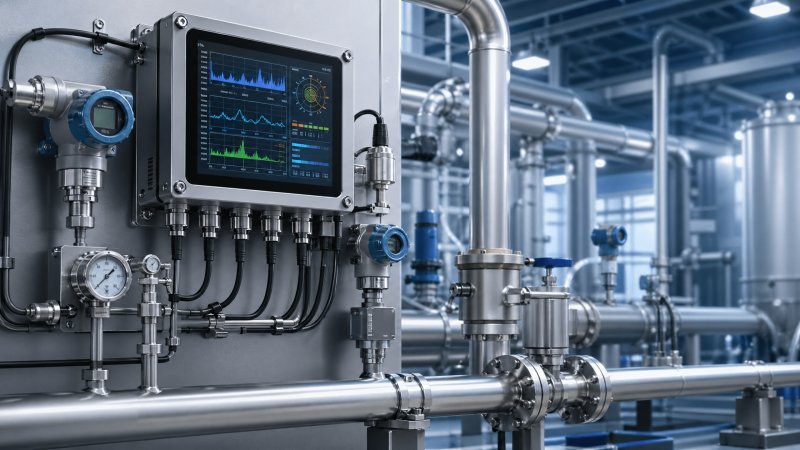
This is why many teams now evaluate a safety monitoring analyzer based on event context: what changed, how fast it changed, whether the deviation repeats, and which process condition accompanies it. That context allows better preventive action than a simple red-light alarm.
What Is Driving This Shift in Analyzer Requirements
The increasing demand for smarter safety monitoring is not random. It is tied to broader industrial changes in automation, traceability, risk management, and environmental accountability. As instrumentation becomes more connected, users naturally expect more from every measurement point. A sensor that only delivers a number is no longer enough; facilities want interpretation support that helps reduce decision delay.
At the same time, operational environments are becoming more variable. Production runs are shorter in some sectors, product changes are more frequent, and utilities are expected to support more flexible load profiles. This creates more transitional states where risk tends to hide. Many abnormal conditions emerge not during stable full-load operation, but during startup, shutdown, cleaning, calibration, handover, or low-load windows.
Another factor is accountability. Safety managers and quality teams are often expected to explain not just what happened, but what warning signals existed in the 1 hour, 24 hour, or 7 day period before the event. A safety monitoring analyzer therefore needs useful data records, timestamped alarms, and trend histories that support both intervention and post-event review.
Main drivers behind the monitoring upgrade trend
The table below organizes the main forces pushing analyzer expectations higher across the instrumentation industry.
These drivers explain why analyzer selection is becoming more strategic. The value of a safety monitoring analyzer increasingly depends on how well it aligns with the actual rhythm of a facility, including maintenance planning, reporting obligations, and the speed at which risk must be escalated.
How the Shift Affects Quality Control and Safety Management Decisions
For quality control personnel, the monitoring trend changes how process deviations are interpreted. Instead of waiting for nonconforming output, teams can use analyzer data to spot instability earlier in the production path. In many cases, preventing one contaminated batch or one failed environmental release check is worth far more than the cost difference between a basic monitor and a more capable safety monitoring analyzer.
For safety managers, the impact is equally practical. Better analyzers support earlier intervention, more focused inspections, and clearer prioritization of corrective actions. Rather than sending staff to investigate every alarm equally, teams can identify which conditions show persistent drift, repeated recurrence, or multi-point corroboration. This matters in facilities where staff must cover large areas, multiple process lines, or mixed-use utility systems.
Maintenance planning also changes. If an analyzer can detect sensor degradation, response lag, or periodic instability, recalibration and part replacement can be planned more intelligently. A typical review cycle may move from fixed monthly checks to condition-based checks every 2 to 6 weeks depending on signal quality and process stress. That approach supports both safety and maintenance efficiency.
Who is most affected by analyzer performance
When monitoring capability improves, the benefits are distributed across several operational roles. The following list shows where the impact is most direct.
- Quality control teams gain earlier visibility into process shifts that could lead to failed specifications or unstable product quality.
- Safety managers gain more credible early-warning indicators for hazardous atmospheres, thermal anomalies, emissions excursions, or control failures.
- Maintenance teams gain evidence for targeted calibration, troubleshooting, and spare-part planning instead of broad reactive repair.
- Operations teams gain fewer nuisance alarms and more useful priorities during shift-based response.
- Management gains stronger continuity protection because early warnings reduce the risk of costly stoppages and incident escalation.
The broader trend is clear: a safety monitoring analyzer is becoming a shared operational tool rather than a single-department device. That makes usability, data clarity, and integration logic just as important as measurement accuracy alone.
What to Evaluate Now When Choosing or Upgrading a Safety Monitoring Analyzer
As requirements evolve, selection criteria should evolve too. A common mistake is choosing an analyzer based only on nominal range, basic alarm output, or initial purchase cost. Those factors matter, but they do not fully determine whether the equipment will help detect subtle instability before it becomes operationally expensive or dangerous. For trend-aware decision-making, teams should evaluate functionality in real working conditions.
In many comprehensive industrial applications, the most practical selection process starts with the process risk profile. How quickly can a hazardous condition develop: in seconds, minutes, or hours? How many related variables should be compared? Is the process stable 90% of the time, or does it involve frequent transitions? The answer changes what your safety monitoring analyzer must detect, record, and communicate.
The table below provides a practical evaluation framework that quality control and safety managers can use when comparing systems.
A strong evaluation process also considers deployment realities. For example, lead times may vary from 2 to 8 weeks depending on configuration, and integration complexity can differ significantly between standalone applications and systems linked to PLC, DCS, or SCADA environments. These factors affect implementation speed as much as the product specification does.
A practical upgrade checklist
Before approving a new safety monitoring analyzer or retrofitting an existing setup, consider the following questions.
- Which abnormal patterns in your process are currently found by people, not by instruments?
- How long is the gap between first measurable deviation and human recognition: 5 minutes, 1 shift, or several days?
- Which variables should be interpreted together instead of separately?
- Are nuisance alarms causing staff to ignore useful warnings?
- Can your current system support records needed for internal review, maintenance planning, or external compliance inspection?
These questions help move selection away from catalog comparison and toward actual risk reduction. That is the direction the market is clearly taking.
How to Prepare for the Next Stage of Monitoring Expectations
The next stage of industrial monitoring will likely place even more value on context-rich detection. Instead of asking whether a reading is high or low, users will increasingly ask whether the condition is unusual for that process state, time period, or operating combination. A safety monitoring analyzer that cannot adapt to this broader expectation may still function, but it may not support the level of prevention modern facilities need.
For quality control and safety managers, the best response is to build a clear internal monitoring map. Identify where incidents have historically started, where product deviations first appear, and where environmental or utility instability tends to develop. In many facilities, the most useful improvement does not begin with more sensors everywhere. It begins with better analyzer logic at the 10% to 20% of points that carry the highest consequence or the weakest visibility.
It is also wise to align analyzer planning with maintenance and reporting cycles. If calibration is usually performed every 3 months, if audit reviews occur quarterly, or if production changes seasonally, your monitoring strategy should reflect those rhythms. Good monitoring is not only technical; it is operationally timed.
Why choose us
If you are evaluating a safety monitoring analyzer for industrial manufacturing, utilities, environmental monitoring, laboratories, or automation control environments, we can help you focus on the factors that matter before purchase. Our support can cover parameter confirmation, measurement range matching, signal type review, analyzer selection logic, delivery cycle discussion, and custom configuration planning based on your actual process risks.
We can also assist with practical questions that often determine project success: how many monitoring points are needed, whether trend and alarm logic should be adjusted by process stage, what calibration and maintenance rhythm is realistic, what communication interfaces should be considered, and what documentation is useful for compliance review or internal safety management.
Contact us to discuss your operating conditions, target parameters, certification expectations, sample support, quotation needs, and implementation timeline. If you want to understand how current monitoring trends may affect your own facility, we can help you compare options and clarify which safety monitoring analyzer features are most relevant to your application.
Recommended for You
 US-China Trade Talks Agree on Tariff Cuts for Key Test Equipment PartsUS-China tariff cuts on key test equipment parts—like pressure sensor chips & infrared thermal imaging modules—boost margins, cut costs, and strengthen global competitiveness for manufacturers.
 G7 Paris Meeting Focuses on Critical Mineral Supply SecurityCritical mineral supply security takes center stage at the G7 Paris meeting—key for rare-earth sensor exporters. Learn EU compliance impacts & actionable readiness steps.
 Brent Crude Surpasses $106/bbl, Raising Sea Freight Costs for Small Testing Equipment ExportsBrent Crude Surpasses $106/bbl—sea freight costs surge, impacting small testing equipment exporters. Learn how SMEs can adapt pricing, terms & logistics now.
 WTO Forecasts 1.9% Global Goods Trade Growth in 2026 Amid Supply Chain ShorteningWTO forecasts 1.9% global goods trade growth in 2026—sparking nearshoring demand for testing equipment, calibration services & OTA-ready solutions in ASEAN, Middle East & Mexico.
 UK-China Export Control Working Group Holds Second Meeting in LondonUK-China Export Control Working Group: Key updates on dual-use items—laser interferometers, quantum sensors & oscilloscopes. Learn compliance implications for exporters now.
 Japan's 10Y Yield Drop to 2.745% Lifts Yen, Raising China-Made Testing Equipment CostsJapan's 10Y yield drop to 2.745% lifts yen, raising costs for China-made testing equipment — explore FX impacts, procurement shifts & strategic responses.
 KOSPI 200 Futures Circuit Breaker Triggered, Impacting Industrial Automation Instrument Export TimelinesKOSPI 200 futures circuit breaker triggered — impact on PLC modules, transmitters & fieldbus instrument exports to Korea. Urgent timeline insights inside.
 South Korea’s Chip Exports Surge 202% in May 2026 Amid AI Test Equipment DemandAI test equipment demand surges as South Korea’s chip exports jump 202% in May 2026 — PCIe 6.0 & USB4.1 validation tools see sharp global procurement rise.
 Emission Gas Analyzer News in 2026: Regulatory Shifts Affecting DemandEmission gas analyzer demand is changing fast in 2026 as new regulations tighten limits, expand continuous monitoring, and raise data compliance standards. Explore key trends shaping smarter buying decisions.
 When a High Accuracy Analyzer Delivers Real ROI in Process ControlHigh accuracy analyzer ROI starts with better process control. Learn where tighter measurements cut waste, improve stability, reduce compliance risk, and deliver measurable operational savings.
 SR-2030P Analyzer Import Updates in 2026: Compliance Points to ReviewSR-2030P analyzer import updates for 2026: review classification, certification, customs documents, and market access risks to reduce delays, control costs, and source with confidence.
 Industrial Oxygen Analyzer Price Trends in 2026: Cost Drivers to WatchIndustrial oxygen analyzer price trends in 2026 explained: compare sensor, compliance, installation, and maintenance cost drivers to make smarter, lower-risk buying decisions.
 Laser Oxygen Analyzer or Industrial Oxygen Analyzer: Which Fits BetterLaser oxygen analyzer or industrial oxygen analyzer? Compare speed, accuracy, maintenance, and cost to find the best fit for smarter, more reliable process control.
 ATEX Gas Analyzer Demand in 2026: What Is Shaping the MarketATEX gas analyzer demand in 2026 is driven by safety, digital integration, and lifecycle value. See what shapes buying decisions across industry, utilities, hydrogen, and automation.
 Fixed Gas Analyzer vs Portable Options: What Matters for Plant UseFixed gas analyzer or portable detector for plant use? Compare safety, response time, maintenance, and cost to choose the right monitoring solution with confidence.
 Explosion Proof Analyzer Selection Mistakes That Increase Site RiskExplosion proof analyzer selection mistakes can raise compliance, maintenance, and safety risks. Learn the key errors to avoid and how to choose a safer, more reliable solution.
 SR-2000 Infrared Analyzer: Key Performance Checks Before InstallationSR-2000 infrared analyzer pre-installation guide: learn how to verify accuracy, drift, site readiness, and calibration support to reduce startup risk and ensure stable long-term performance.
 How to Choose a Continuous Gas Analyzer for Stable 24/7 MonitoringContinuous gas analyzer selection guide for stable 24/7 monitoring. Learn how to compare accuracy, response time, maintenance, and integration for smarter industrial decisions.
 IEC Approves China-Led Standard for Smart Sensor Semantic InteroperabilityIEC TR 63372 smart sensor semantic interoperability standard—led by China—cuts export certification time by 30%. Discover how it reshapes global IoT integration.
 MIIT Launches Joint Enforcement on EV Battery RecyclingMIIT's EV battery recycling enforcement targets BMS data leaks, illegal dismantling & electrolyte disposal—key for exporters, testers & procurement teams needing GDPR/CCPA compliance.
 SAMR Launches Unified Market Action on Testing & CertificationSAMR Launches Unified Market Action on Testing & Certification—tackling fragmentation, redundant fees & cross-border recognition barriers for exporters and manufacturers.
 Fifteenth Five-Year Urban Renewal Plan Approved, Signaling Overseas Procurement for Smart Water & Environmental Monitoring DevicesSmart water & environmental monitoring devices gain global momentum as China’s 15th Five-Year Urban Renewal Plan mandates intelligent infrastructure—key for Belt and Road exports.
 IMF Warns AI Amplifies Financial Cybersecurity RisksAI amplifies financial cybersecurity risks—IMF warns. Discover how XAI verification, adversarial attacks, and regulatory mandates impact AI detection equipment, FinTech, and banks.
 Tmall Health Launches 'Health Supplement Safety Alliance'Health Supplement Safety Alliance launched by Tmall Health—boosting traceability, lab credibility & cross-border quality for brands like By-Health and Centrum.
 EN IEC 61000-6-4:2026 EMC Standard Effective for AI Edge DevicesEN IEC 61000-6-4:2026 EMC standard is live—15% stricter radiated limits for AI edge devices. Act now to secure EU industrial IoT procurement eligibility.
 APEC Auto Dialogue Confirms Semi-Solid Battery Deployment and Fast ChargingSemi-solid battery deployment & 15-min fast charging confirmed at APEC Auto Dialogue—spurring global demand for China-made battery testing equipment, BMS validation, and thermal runaway simulation solutions.
 EU Imposes Final Anti-Dumping Duty on Chinese Adipic AcidEU anti-dumping duty on Chinese adipic acid takes effect May 2026—impacting pH meters, sensors & analytical instruments. Act now to secure supply chains.
 Colombia Upholds Anti-Dumping Duties on Chinese Acrylic SheetsColombia Upholds Anti-Dumping Duties on Chinese Acrylic Sheets — 32.7% tariff extended for 5 years. Critical for exporters of medical, lab & analytical instrument enclosures.
 Multi Component Analyzer Cost Trends for 2026 Expansion PlansMulti component analyzer cost trends for 2026: discover key pricing drivers, hidden costs, and smart supplier strategies to budget accurately and maximize expansion ROI.
 SR-2050 Analyzer Maintenance Points That Affect Service LifeSR-2050 analyzer maintenance points that directly impact service life, accuracy, and uptime. Learn how cleaning, calibration, inspection, and environment control reduce failures.
 SR-S2000 Shelter: Common Setup Mistakes to AvoidSR-S2000 shelter setup mistakes can cause heat, moisture, and maintenance issues. Learn what to avoid for safer installation, stable performance, and longer equipment life.
 Custom Gas Analyzer Import Risks and Spec Mismatch IssuesCustom gas analyzer import risks can derail projects through spec mismatch, compliance gaps, and integration issues. Learn how buyers can compare suppliers, verify requirements, and avoid costly rework.




Search Categories
Search Categories
Latest Article
- US-China Trade Talks Agree on Tariff Cuts for Key Test Equipment PartsUS-China tariff cuts on key test equipment parts—like pressure sensor chips & infrared thermal imaging modules—boost margins, cut costs, and strengthen global competitiveness for manufacturers.Posted by:
- G7 Paris Meeting Focuses on Critical Mineral Supply SecurityCritical mineral supply security takes center stage at the G7 Paris meeting—key for rare-earth sensor exporters. Learn EU compliance impacts & actionable readiness steps.Posted by:
- Brent Crude Surpasses $106/bbl, Raising Sea Freight Costs for Small Testing Equipment ExportsBrent Crude Surpasses $106/bbl—sea freight costs surge, impacting small testing equipment exporters. Learn how SMEs can adapt pricing, terms & logistics now.Posted by:
Please give us a message
