
Combustion Gas Analyzer Market Trends Shaping 2026 Upgrades


As industries accelerate efficiency, compliance, and digital upgrade plans, the combustion gas analyzer is becoming a critical tool for smarter emissions control and process optimization. For business decision-makers evaluating 2026 investments, understanding the market trends behind technology adoption, performance expectations, and industry demand can reveal where the next competitive advantages will emerge.
Across manufacturing, power generation, environmental monitoring, and automation-intensive facilities, the combustion gas analyzer now supports far more than basic flue gas checks. It influences fuel efficiency, furnace tuning, preventive maintenance, audit readiness, and digital reporting. For executives comparing budgets, vendors, and upgrade timing, the key issue is no longer whether analysis is needed, but what type of analyzer architecture can deliver measurable returns over the next 24 to 36 months.
This market is being shaped by stricter emissions expectations, wider adoption of connected instrumentation, and higher demand for stable measurement under variable operating loads. In practical terms, buyers are asking for faster response times, lower drift, multi-gas capability, easier calibration, and integration with plant control systems. Those requirements are directly changing 2026 upgrade priorities.
Why the Combustion Gas Analyzer Market Is Accelerating Toward 2026
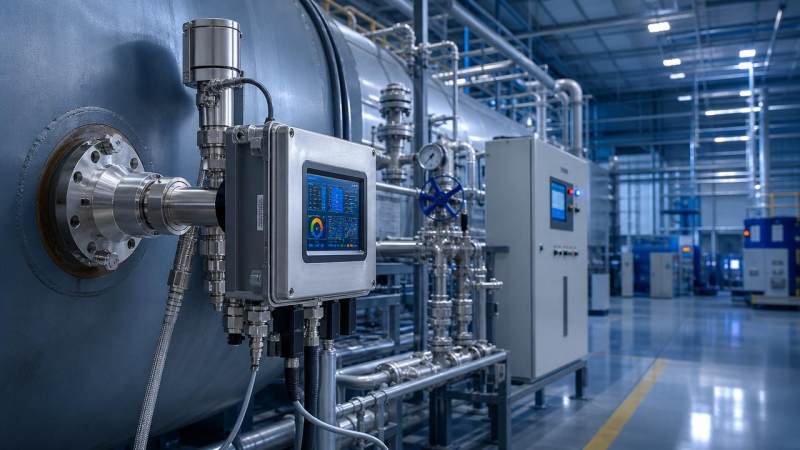
The combustion gas analyzer market is growing because the instrument now sits at the intersection of three board-level priorities: compliance, energy cost control, and digital operations. In many plants, even a 1% to 3% improvement in combustion efficiency can influence annual fuel spend enough to justify analyzer upgrades, especially in boiler rooms, kilns, ovens, turbines, and thermal process lines operating 16 to 24 hours per day.
Another driver is the shift from periodic testing to continuous or near-continuous monitoring. Older handheld devices still serve maintenance teams, but fixed and networked systems are being evaluated more often because they reduce manual sampling frequency, shorten troubleshooting cycles, and provide time-stamped data for audit trails. For decision-makers, this changes the investment logic from simple equipment replacement to operational risk reduction.
Regulatory Pressure and Documentation Demands
Compliance expectations are becoming more process-specific. Facilities are expected to document O2, CO, CO2, NOx, and sometimes SO2 trends with greater consistency, not only during inspections but throughout normal production. That means analyzers must support repeatable measurement, user-friendly record export, and calibration routines that can be performed on a weekly, monthly, or quarterly schedule depending on process criticality.
In sectors with combustion-intensive assets, unplanned deviations can trigger more than fines. They can lead to product quality loss, maintenance shutdowns, and delays in customer delivery. A combustion gas analyzer that detects inefficient air-fuel ratios early can help operations teams intervene before excess oxygen, carbon monoxide spikes, or unstable flame conditions affect throughput.
Digitalization Is Changing Expected Analyzer Functions
A modern buyer increasingly expects the combustion gas analyzer to connect with PLC, DCS, SCADA, or industrial IoT layers. Instead of isolated readings, the market is moving toward analyzers that deliver trend data, alarm thresholds, remote diagnostics, and maintenance prompts. In 2026 planning cycles, connectivity is often rated alongside accuracy and sensor life as one of the top 4 procurement criteria.
- Faster decision-making through live or scheduled data transfer
- Reduced manual recording workload across 2 to 5 operator shifts
- Improved maintenance planning based on drift, response time, and calibration history
- Better reporting consistency for environmental and internal efficiency reviews
The following table outlines common market drivers and how they translate into buying behavior for a combustion gas analyzer in industrial settings.
The main conclusion is that market growth is not driven by a single factor. It is the combination of compliance risk, fuel economics, and digitized plant management that is pushing the combustion gas analyzer from a maintenance tool into a strategic instrumentation asset.
Technology Trends Redefining Performance Expectations
By 2026, performance expectations will extend well beyond basic gas concentration display. Buyers increasingly compare sensor stability, startup time, sampling system durability, moisture handling, and software usability. In many industrial environments, the analyzer must hold stable readings in dusty, hot, or vibration-prone conditions while minimizing calibration drift over 30 to 90 days of operation.
Multi-Gas Measurement and Faster Response
A single-parameter device may still fit simple burner tuning, but more facilities now seek multi-gas capability. O2 and CO remain core measurements, while CO2, NO, NO2, calculated NOx, and flue temperature are increasingly requested for deeper combustion diagnostics. This matters in plants where one analyzer may support 3 to 8 combustion assets across varying load conditions.
Response time is another differentiator. Faster sampling helps operators identify instability during startup, ramp-up, or fuel switching. For process teams, a difference of even 15 to 30 seconds in stabilized readings can affect how quickly corrective actions are made during high-value production runs.
Sensor and Sampling Priorities
- Low-drift electrochemical or equivalent sensing paths for routine service intervals
- Sample conditioning suited for condensate, particulates, and elevated flue temperatures
- Clear alarm logic for threshold exceedance and sensor status changes
- Data storage that supports shift reviews, batch analysis, or audit preparation
Software, Connectivity, and Diagnostics
Software usability is now a buying factor, not an afterthought. A combustion gas analyzer with complicated menus or weak reporting tools may slow maintenance teams and limit adoption. Managers prefer systems that simplify trend review, user permissions, calibration logging, and export formats. In larger sites, remote diagnostics can shorten fault identification from several hours to less than 30 minutes.
The table below compares common analyzer upgrade directions and what they typically mean for industrial users planning 2026 investments.
The most important pattern is convergence. Buyers are not choosing one feature in isolation. They increasingly want a combustion gas analyzer that combines accurate sensing, robust sampling, easier service, and seamless data flow into one procurement package.
How Enterprise Buyers Should Evaluate Analyzer Upgrades
For decision-makers, selecting a combustion gas analyzer should begin with process mapping, not catalog browsing. The right system for a small packaged boiler can be very different from the right system for a high-temperature kiln, thermal oxidizer, or multi-burner furnace. A useful evaluation framework usually covers 4 dimensions: application conditions, required gases, integration needs, and lifecycle support.
Step 1: Define the Application Envelope
Start with the process environment. Key questions include flue gas temperature range, moisture level, dust load, expected oxygen band, and whether measurements are spot checks or continuous. For many industrial use cases, the analyzer must perform across startup, steady-state, and load-change conditions rather than at one stable point.
- Identify 3 to 5 target combustion assets and their duty cycles.
- List required gas parameters and acceptable response time windows.
- Check installation constraints such as probe access, vibration, and ambient temperature.
- Confirm whether local display, remote output, or both are needed.
- Align calibration and maintenance frequency with staffing reality.
Step 2: Evaluate Total Cost of Ownership
Purchase price alone rarely tells the full story. Consumables, calibration gas use, sensor replacement intervals, downtime risk, and service access all influence cost over 2 to 5 years. A lower-cost unit that drifts quickly or requires frequent manual intervention may become more expensive than a higher-specification system with stronger serviceability and better diagnostics.
The table below can support internal procurement discussions by turning technical features into business evaluation points.
A disciplined evaluation process helps procurement teams compare options beyond headline specifications. In most cases, the best combustion gas analyzer is the one that matches real process demands while keeping calibration, reporting, and support manageable at plant level.
Step 3: Plan Deployment and Acceptance Early
Implementation quality affects realized value. A typical rollout includes 3 stages: application review, installation and commissioning, then validation under operating load. Many sites underestimate the time required for probe placement checks, signal integration, operator training, and baseline comparison against existing methods. A realistic deployment window is often 2 to 6 weeks depending on site access and system complexity.
Common Upgrade Risks
- Choosing a sensor package without considering moisture or particulate loading
- Specifying data output after purchase instead of before vendor selection
- Assuming portable and continuous applications require the same configuration
- Ignoring spare parts and calibration planning during budget approval
Industry-Specific Demand Patterns and Practical 2026 Priorities
Demand for a combustion gas analyzer differs by sector, but several patterns are consistent across the broader instrumentation industry. Buyers want more reliable measurement in harsher environments, better integration into plant data systems, and stronger evidence that analyzer investment will improve both compliance control and process efficiency.
Power, Industrial Manufacturing, and Environmental Monitoring
In power and energy applications, the focus is often on combustion stability, fuel economy, and stack performance. In industrial manufacturing, the same analyzer may support product consistency in heat-treatment lines, ceramics, metals, glass, or food processing. In environmental monitoring contexts, documentation quality and repeatability may be as important as response speed.
For enterprise teams managing multiple sites, standardizing on a limited number of analyzer configurations can simplify training, spare parts planning, and reporting templates. Even reducing supported variants from 6 models to 2 or 3 can improve maintenance consistency across the fleet.
What Will Likely Matter Most in 2026 Procurement
Looking ahead, procurement priorities are likely to center on five practical outcomes: stable multi-gas measurement, lower service burden, stronger digital connectivity, faster commissioning, and clearer lifecycle visibility. The combustion gas analyzer that wins budget approval will usually be the one that can connect technical performance to measurable operating value within the first 6 to 12 months.
For many decision-makers, the best next step is to compare current analyzer limitations against upcoming production and compliance goals. If current systems struggle with drift, delayed readings, fragmented data, or labor-intensive maintenance, 2026 may be the right window to move from reactive replacement to a structured upgrade strategy.
Frequently Asked Questions from Buyers
Is a portable combustion gas analyzer still a good investment?
Yes, especially for service teams, routine inspection routes, and troubleshooting. However, where assets run continuously and reporting frequency is high, a fixed or hybrid setup often delivers better long-term value.
How often should calibration be planned?
That depends on application severity, required accuracy, and internal procedures. In practice, many facilities review zero and span performance weekly or monthly, with deeper service checks quarterly or semiannually.
What makes one combustion gas analyzer more future-ready than another?
Future-ready systems usually combine broader gas coverage, stronger data connectivity, easier calibration, and better support for remote diagnostics and software-based reporting.
The combustion gas analyzer market is moving toward smarter, more connected, and more application-specific solutions. For business leaders, the strongest 2026 upgrade decisions will come from aligning instrument selection with process realities, compliance expectations, and digital operations strategy rather than focusing on purchase price alone.
If your team is evaluating analyzer replacement, capacity expansion, or plant modernization, now is the time to review measurement gaps, service requirements, and integration needs. Contact us to discuss your application, get a tailored recommendation, and explore more solutions for combustion analysis, emissions monitoring, and industrial instrumentation upgrades.
Recommended for You
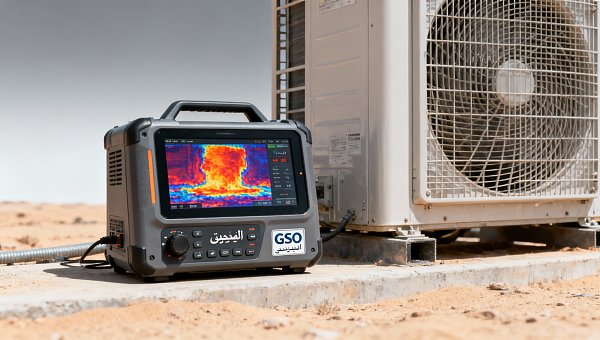
 Kuwait Bans HCFC Air Conditioners, Boosts IR Camera ExportsKuwait bans HCFC air conditioners—boosting demand for IR cameras, leak detectors & refrigerant analyzers. Discover GCC compliance insights and export opportunities.
 China's IC Exports Surge 78.3% in First Four Months of 2026China's IC exports surge 78.3% in early 2026 — driven by soaring global demand for AI chip test equipment, SMUs, and parametric analyzers. Discover the supply chain shift.
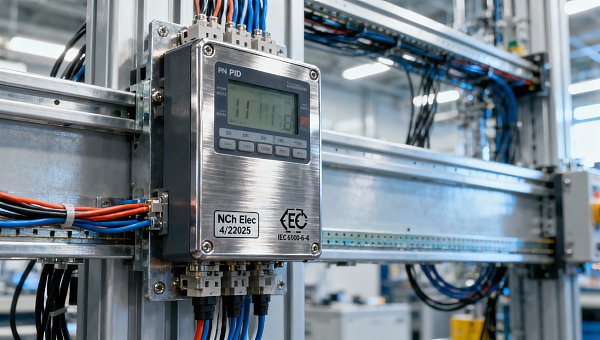
 Chile Enforces Mandatory INN Safety Certification for Industrial Temperature ControllersChile mandates INN safety certification (NCh Elec 4/2025) for industrial temperature controllers starting Aug 1, 2026—act now to avoid shipment delays & market bans.
 K-REACH Supply-Shortage Exemption Launches for pH/ORP ElectrodesK-REACH Supply-Shortage Exemption now applies to pH/ORP electrodes—act before June 30, 2026 to avoid customs delays & penalties. Key for exporters & manufacturers.
 4th China International Supply Chain Expo to Focus on Smart Sensing & In-Process InspectionSmart Sensing & In-Process Inspection take center stage at the 4th China International Supply Chain Expo in Beijing, Nov 26–30, 2026 — discover next-gen inspection tech, AI vision modules, and calibrated sensing solutions for global industrial buyers.
 ASTM F2100-26 Medical Mask Standard Takes Effect in USASTM F2100-26 medical mask standard is now in force—driving global demand for biosafety cabinets, particle counters & air velocity calibrators, especially China-made instruments.
 South Africa Enforces SABS Certification for IoT Monitoring DevicesSABS certification now mandatory for IoT monitoring devices entering South Africa via e-commerce—act before 1 June 2026 to avoid customs rejection and ensure market access.
 EU REACH Adds Fluorinated Substances; SVHC Reporting Required for Gas AnalyzersEU REACH now restricts fluorinated substances in gas analyzers—SVHC reporting is mandatory by 30 Nov 2026. Ensure compliance for sensors, membranes & monitoring systems.
 Revised Maritime Code Takes Effect May 1, 2026: Shift in Unclaimed Cargo LiabilityRevised Maritime Code (2026): Shippers now liable for unclaimed cargo—critical for industrial instrument exporters, logistics providers & cross-border supply chains. Act now.
 China Imposes Zero Tariffs on Goods from All African Diplomatic Partners Starting May 1, 2026China’s zero-tariff policy for African instrumentation & automation exports starts May 1, 2026—boosting competitiveness in EPC tenders and market access for exporters.
 Import and Export Shifts in the PPM Gas Analyzer Marketppm gas analyzer market insights: discover how import tariffs, export controls, and compliance shifts impact cost, supply stability, and growth opportunities across key applications.
 Single Gas Analyzer Maintenance Issues That Raise DowntimeSingle gas analyzer maintenance issues can quietly increase downtime. Learn how to spot drift, calibration errors, and sample path faults early to improve uptime and field efficiency.
 Combustion Gas Analyzer Market Trends Shaping 2026 UpgradesCombustion gas analyzer market trends shaping 2026: discover how smarter monitoring, multi-gas accuracy, and digital integration can improve compliance, efficiency, and ROI.
 Corrosive Gas Analyzer Risks That Impact Safety ComplianceCorrosive gas analyzer risks can quietly undermine safety compliance. Learn how drift, sampling failures, and poor maintenance affect accuracy—and how to strengthen monitoring reliability.
 Percent Range Analyzer Applications in Process ControlPercent range analyzer applications improve process control by turning raw signals into clear operating percentages. Discover faster decisions, better alarms, and more stable system performance.
 What Affects the Total Cost of a Dual Gas AnalyzerDual gas analyzer total cost goes beyond purchase price. Learn how sensors, calibration, compliance, integration, and maintenance shape lifecycle value and smarter buying decisions.
 High Temperature Analyzer Selection Mistakes to Avoid in 2026High temperature analyzer selection mistakes can delay projects and raise lifecycle costs. Discover the top 2026 pitfalls and how to choose a safer, smarter solution.
 2026 Price Trends for Multi Gas Analyzer SystemsMulti gas analyzer price trends for 2026: discover key cost drivers, ownership factors, and smart budgeting tips to compare systems, control risk, and choose the right solution.
 PPB Gas Analyzer vs PPM Gas Analyzer: What Changes in Real Useppb gas analyzer vs PPM gas analyzer: learn how sensitivity, calibration, maintenance, and sample handling change in real use to choose the right solution with less risk and cost.
 How to Choose a Trace Gas Analyzer for Low-Level Leak DetectionTrace gas analyzer selection for low-level leak detection: learn how to compare sensitivity, response time, interference control, and integration for safer, faster, more reliable results.
 US-China Trade Talks Agree on Tariff Cuts for Key Test Equipment PartsUS-China tariff cuts on key test equipment parts—like pressure sensor chips & infrared thermal imaging modules—boost margins, cut costs, and strengthen global competitiveness for manufacturers.
 G7 Paris Meeting Focuses on Critical Mineral Supply SecurityCritical mineral supply security takes center stage at the G7 Paris meeting—key for rare-earth sensor exporters. Learn EU compliance impacts & actionable readiness steps.
 Brent Crude Surpasses $106/bbl, Raising Sea Freight Costs for Small Testing Equipment ExportsBrent Crude Surpasses $106/bbl—sea freight costs surge, impacting small testing equipment exporters. Learn how SMEs can adapt pricing, terms & logistics now.
 WTO Forecasts 1.9% Global Goods Trade Growth in 2026 Amid Supply Chain ShorteningWTO forecasts 1.9% global goods trade growth in 2026—sparking nearshoring demand for testing equipment, calibration services & OTA-ready solutions in ASEAN, Middle East & Mexico.
 UK-China Export Control Working Group Holds Second Meeting in LondonUK-China Export Control Working Group: Key updates on dual-use items—laser interferometers, quantum sensors & oscilloscopes. Learn compliance implications for exporters now.
 Japan's 10Y Yield Drop to 2.745% Lifts Yen, Raising China-Made Testing Equipment CostsJapan's 10Y yield drop to 2.745% lifts yen, raising costs for China-made testing equipment — explore FX impacts, procurement shifts & strategic responses.
 KOSPI 200 Futures Circuit Breaker Triggered, Impacting Industrial Automation Instrument Export TimelinesKOSPI 200 futures circuit breaker triggered — impact on PLC modules, transmitters & fieldbus instrument exports to Korea. Urgent timeline insights inside.
 South Korea’s Chip Exports Surge 202% in May 2026 Amid AI Test Equipment DemandAI test equipment demand surges as South Korea’s chip exports jump 202% in May 2026 — PCIe 6.0 & USB4.1 validation tools see sharp global procurement rise.
 Emission Gas Analyzer News in 2026: Regulatory Shifts Affecting DemandEmission gas analyzer demand is changing fast in 2026 as new regulations tighten limits, expand continuous monitoring, and raise data compliance standards. Explore key trends shaping smarter buying decisions.
 When a High Accuracy Analyzer Delivers Real ROI in Process ControlHigh accuracy analyzer ROI starts with better process control. Learn where tighter measurements cut waste, improve stability, reduce compliance risk, and deliver measurable operational savings.
 SR-2030P Analyzer Import Updates in 2026: Compliance Points to ReviewSR-2030P analyzer import updates for 2026: review classification, certification, customs documents, and market access risks to reduce delays, control costs, and source with confidence.
 Industrial Oxygen Analyzer Price Trends in 2026: Cost Drivers to WatchIndustrial oxygen analyzer price trends in 2026 explained: compare sensor, compliance, installation, and maintenance cost drivers to make smarter, lower-risk buying decisions.



Search Categories
Search Categories
Latest Article
- Kuwait Bans HCFC Air Conditioners, Boosts IR Camera ExportsKuwait bans HCFC air conditioners—boosting demand for IR cameras, leak detectors & refrigerant analyzers. Discover GCC compliance insights and export opportunities.Posted by:
- China's IC Exports Surge 78.3% in First Four Months of 2026China's IC exports surge 78.3% in early 2026 — driven by soaring global demand for AI chip test equipment, SMUs, and parametric analyzers. Discover the supply chain shift.Posted by:
- Chile Enforces Mandatory INN Safety Certification for Industrial Temperature ControllersChile mandates INN safety certification (NCh Elec 4/2025) for industrial temperature controllers starting Aug 1, 2026—act now to avoid shipment delays & market bans.Posted by:
Please give us a message
