
China’s New Service Sector Policy Boosts Testing & Calibration Export


On April 30, 2026, the State Council issued the Opinions on Promoting Capacity Expansion and Quality Improvement in the Services Sector, explicitly supporting the international expansion of high-tech service sectors—including testing and inspection, metrological calibration, and certification & accreditation. This development is especially relevant for manufacturers and service providers in industrial instrumentation (e.g., pressure, flow, and temperature meters), third-party testing institutions, and calibration service operators targeting emerging markets such as Latin America and the Middle East.
Event Overview
The State Council released the Opinions on Promoting Capacity Expansion and Quality Improvement in the Services Sector on April 30, 2026. The document identifies testing and inspection, metrological calibration, and certification & accreditation as priority high-tech services for internationalization. It encourages the joint establishment of overseas laboratories and collaborative certification centers—particularly through partnerships between Chinese third-party testing institutions and industrial instrument manufacturers.
Industries Affected by This Policy
Industrial Instrument Manufacturers (especially mid-to-high-end pressure, flow, and temperature meter producers)
Why affected: The policy enables bundled export models (“equipment + calibration + localized service”), reducing technical barriers to market entry abroad. Impact includes increased demand for integrated service readiness, tighter coordination with testing partners, and potential shifts in product design or documentation to meet foreign regulatory expectations (e.g., traceable calibration chains).
Third-Party Testing & Calibration Service Providers
Why affected: Direct policy support for “going global” creates new business pathways—but also raises operational requirements. Impact includes heightened need for ISO/IEC 17025 compliance in target jurisdictions, capacity planning for overseas lab setup or partnership management, and alignment with instrument OEMs’ export timelines and regional priorities.
Certification & Accreditation Bodies (Domestic and Joint Ventures)
Why affected: The call for “joint certification centers” implies demand for cross-border recognition frameworks and mutual acceptance agreements. Impact includes opportunities to co-develop standards-aligned assessment protocols with foreign counterparts—and pressure to demonstrate equivalency under international accreditation systems (e.g., ILAC MRA).
What Relevant Enterprises or Practitioners Should Focus On Now
Monitor official implementation guidelines and sector-specific action plans
The Opinions are a framework-level document. Subsequent guidance from the Ministry of Commerce, SAMR (State Administration for Market Regulation), and CNAS (China National Accreditation Service) will clarify eligibility criteria, funding mechanisms, and procedural requirements for overseas lab or center initiatives.
Assess readiness for priority markets: Latin America and the Middle East
These regions are explicitly named as beneficiaries of accelerated market access. Enterprises should review local metrological regulations (e.g., INMETRO in Brazil, ESMA in Saudi Arabia), identify existing bilateral/multilateral recognition arrangements, and map gaps in current calibration traceability or certification coverage.
Distinguish between policy signal and near-term operational impact
While the policy sets strategic direction, actual overseas lab deployments or joint certification centers require multi-year coordination. Current focus should be on partnership scouting, pilot service bundling (e.g., offering pre-shipment calibration reports aligned with destination-country norms), and internal capability mapping—not immediate capital outlays.
Prepare cross-functional alignment across R&D, compliance, and export sales teams
Delivering an “equipment + calibration + localized service” package requires synchronized updates to technical documentation, calibration certificate formats, after-sales service infrastructure, and staff training—especially for field engineers operating in multilingual, multi-regulatory environments.
Editorial Perspective / Industry Observation
Observably, this policy functions primarily as a strategic enabler—not an immediate market catalyst. It formalizes a long-emerging trend: the convergence of hardware export and technical service localization in industrial instrumentation. Analysis shows that its significance lies less in creating wholly new markets and more in lowering friction for already-active exporters seeking deeper client engagement and longer service lifecycles abroad. From an industry perspective, it signals growing institutional recognition that calibration and testing credibility are now integral components of equipment competitiveness—not ancillary add-ons. Continued attention is warranted not just for regulatory developments, but for how domestic testing institutions and instrument makers coordinate their go-to-market sequencing and resource allocation.

Conclusion
This policy marks a formal elevation of metrological services as infrastructure for industrial exports. Its practical value emerges not from sudden market openings, but from reinforcing a service-integrated export model—one that rewards preparedness, interoperability, and sustained collaboration across manufacturing and technical service domains. Currently, it is best understood as a directional signal guiding medium-term capability building rather than a trigger for immediate tactical shifts.
Source: State Council of the People’s Republic of China, Opinions on Promoting Capacity Expansion and Quality Improvement in the Services Sector, issued April 30, 2026.
Note: Implementation details, funding mechanisms, and sectoral rollout schedules remain subject to further announcements and require ongoing observation.
Recommended for You
 Kuwait Bans HCFC Air Conditioners, Boosts IR Camera ExportsKuwait bans HCFC air conditioners—boosting demand for IR cameras, leak detectors & refrigerant analyzers. Discover GCC compliance insights and export opportunities.
 China's IC Exports Surge 78.3% in First Four Months of 2026China's IC exports surge 78.3% in early 2026 — driven by soaring global demand for AI chip test equipment, SMUs, and parametric analyzers. Discover the supply chain shift.
 Chile Enforces Mandatory INN Safety Certification for Industrial Temperature ControllersChile mandates INN safety certification (NCh Elec 4/2025) for industrial temperature controllers starting Aug 1, 2026—act now to avoid shipment delays & market bans.
 K-REACH Supply-Shortage Exemption Launches for pH/ORP ElectrodesK-REACH Supply-Shortage Exemption now applies to pH/ORP electrodes—act before June 30, 2026 to avoid customs delays & penalties. Key for exporters & manufacturers.
 4th China International Supply Chain Expo to Focus on Smart Sensing & In-Process InspectionSmart Sensing & In-Process Inspection take center stage at the 4th China International Supply Chain Expo in Beijing, Nov 26–30, 2026 — discover next-gen inspection tech, AI vision modules, and calibrated sensing solutions for global industrial buyers.
 ASTM F2100-26 Medical Mask Standard Takes Effect in USASTM F2100-26 medical mask standard is now in force—driving global demand for biosafety cabinets, particle counters & air velocity calibrators, especially China-made instruments.
 South Africa Enforces SABS Certification for IoT Monitoring DevicesSABS certification now mandatory for IoT monitoring devices entering South Africa via e-commerce—act before 1 June 2026 to avoid customs rejection and ensure market access.
 EU REACH Adds Fluorinated Substances; SVHC Reporting Required for Gas AnalyzersEU REACH now restricts fluorinated substances in gas analyzers—SVHC reporting is mandatory by 30 Nov 2026. Ensure compliance for sensors, membranes & monitoring systems.
 Revised Maritime Code Takes Effect May 1, 2026: Shift in Unclaimed Cargo LiabilityRevised Maritime Code (2026): Shippers now liable for unclaimed cargo—critical for industrial instrument exporters, logistics providers & cross-border supply chains. Act now.
 China Imposes Zero Tariffs on Goods from All African Diplomatic Partners Starting May 1, 2026China’s zero-tariff policy for African instrumentation & automation exports starts May 1, 2026—boosting competitiveness in EPC tenders and market access for exporters.
 Import and Export Shifts in the PPM Gas Analyzer Marketppm gas analyzer market insights: discover how import tariffs, export controls, and compliance shifts impact cost, supply stability, and growth opportunities across key applications.
 Single Gas Analyzer Maintenance Issues That Raise DowntimeSingle gas analyzer maintenance issues can quietly increase downtime. Learn how to spot drift, calibration errors, and sample path faults early to improve uptime and field efficiency.
 Combustion Gas Analyzer Market Trends Shaping 2026 UpgradesCombustion gas analyzer market trends shaping 2026: discover how smarter monitoring, multi-gas accuracy, and digital integration can improve compliance, efficiency, and ROI.
 Corrosive Gas Analyzer Risks That Impact Safety ComplianceCorrosive gas analyzer risks can quietly undermine safety compliance. Learn how drift, sampling failures, and poor maintenance affect accuracy—and how to strengthen monitoring reliability.
 Percent Range Analyzer Applications in Process ControlPercent range analyzer applications improve process control by turning raw signals into clear operating percentages. Discover faster decisions, better alarms, and more stable system performance.
 What Affects the Total Cost of a Dual Gas AnalyzerDual gas analyzer total cost goes beyond purchase price. Learn how sensors, calibration, compliance, integration, and maintenance shape lifecycle value and smarter buying decisions.
 High Temperature Analyzer Selection Mistakes to Avoid in 2026High temperature analyzer selection mistakes can delay projects and raise lifecycle costs. Discover the top 2026 pitfalls and how to choose a safer, smarter solution.
 2026 Price Trends for Multi Gas Analyzer SystemsMulti gas analyzer price trends for 2026: discover key cost drivers, ownership factors, and smart budgeting tips to compare systems, control risk, and choose the right solution.
 PPB Gas Analyzer vs PPM Gas Analyzer: What Changes in Real Useppb gas analyzer vs PPM gas analyzer: learn how sensitivity, calibration, maintenance, and sample handling change in real use to choose the right solution with less risk and cost.
 How to Choose a Trace Gas Analyzer for Low-Level Leak DetectionTrace gas analyzer selection for low-level leak detection: learn how to compare sensitivity, response time, interference control, and integration for safer, faster, more reliable results.
 US-China Trade Talks Agree on Tariff Cuts for Key Test Equipment PartsUS-China tariff cuts on key test equipment parts—like pressure sensor chips & infrared thermal imaging modules—boost margins, cut costs, and strengthen global competitiveness for manufacturers.
 G7 Paris Meeting Focuses on Critical Mineral Supply SecurityCritical mineral supply security takes center stage at the G7 Paris meeting—key for rare-earth sensor exporters. Learn EU compliance impacts & actionable readiness steps.
 Brent Crude Surpasses $106/bbl, Raising Sea Freight Costs for Small Testing Equipment ExportsBrent Crude Surpasses $106/bbl—sea freight costs surge, impacting small testing equipment exporters. Learn how SMEs can adapt pricing, terms & logistics now.
 WTO Forecasts 1.9% Global Goods Trade Growth in 2026 Amid Supply Chain ShorteningWTO forecasts 1.9% global goods trade growth in 2026—sparking nearshoring demand for testing equipment, calibration services & OTA-ready solutions in ASEAN, Middle East & Mexico.
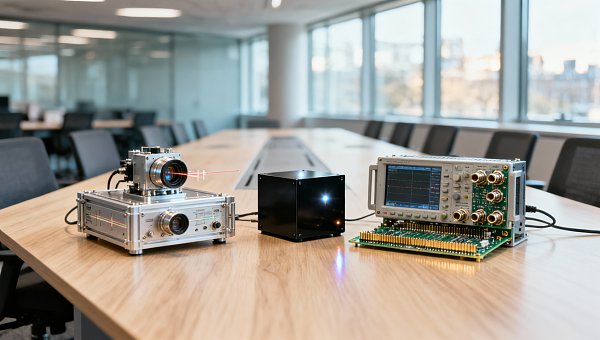
 UK-China Export Control Working Group Holds Second Meeting in LondonUK-China Export Control Working Group: Key updates on dual-use items—laser interferometers, quantum sensors & oscilloscopes. Learn compliance implications for exporters now.
 Japan's 10Y Yield Drop to 2.745% Lifts Yen, Raising China-Made Testing Equipment CostsJapan's 10Y yield drop to 2.745% lifts yen, raising costs for China-made testing equipment — explore FX impacts, procurement shifts & strategic responses.
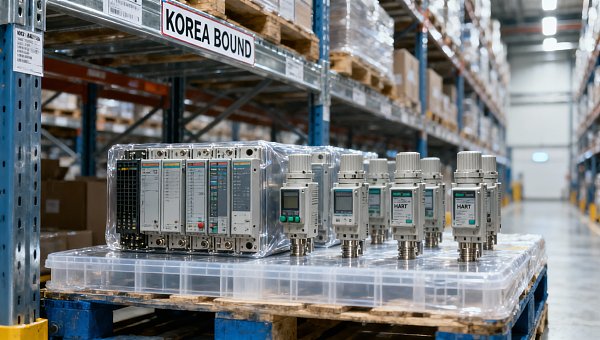
 KOSPI 200 Futures Circuit Breaker Triggered, Impacting Industrial Automation Instrument Export TimelinesKOSPI 200 futures circuit breaker triggered — impact on PLC modules, transmitters & fieldbus instrument exports to Korea. Urgent timeline insights inside.
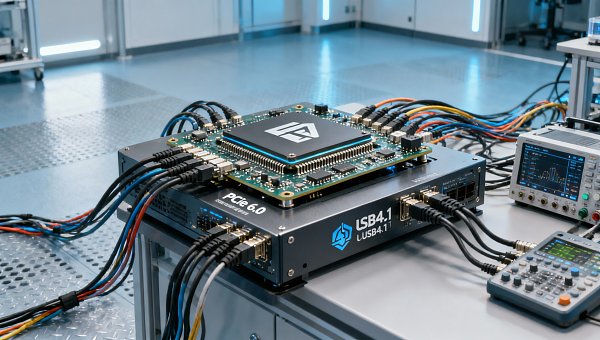
 South Korea’s Chip Exports Surge 202% in May 2026 Amid AI Test Equipment DemandAI test equipment demand surges as South Korea’s chip exports jump 202% in May 2026 — PCIe 6.0 & USB4.1 validation tools see sharp global procurement rise.
 Emission Gas Analyzer News in 2026: Regulatory Shifts Affecting DemandEmission gas analyzer demand is changing fast in 2026 as new regulations tighten limits, expand continuous monitoring, and raise data compliance standards. Explore key trends shaping smarter buying decisions.
 When a High Accuracy Analyzer Delivers Real ROI in Process ControlHigh accuracy analyzer ROI starts with better process control. Learn where tighter measurements cut waste, improve stability, reduce compliance risk, and deliver measurable operational savings.
 SR-2030P Analyzer Import Updates in 2026: Compliance Points to ReviewSR-2030P analyzer import updates for 2026: review classification, certification, customs documents, and market access risks to reduce delays, control costs, and source with confidence.
 Industrial Oxygen Analyzer Price Trends in 2026: Cost Drivers to WatchIndustrial oxygen analyzer price trends in 2026 explained: compare sensor, compliance, installation, and maintenance cost drivers to make smarter, lower-risk buying decisions.















Search Categories
Search Categories
Latest Article
- Kuwait Bans HCFC Air Conditioners, Boosts IR Camera ExportsKuwait bans HCFC air conditioners—boosting demand for IR cameras, leak detectors & refrigerant analyzers. Discover GCC compliance insights and export opportunities.Posted by:
- China's IC Exports Surge 78.3% in First Four Months of 2026China's IC exports surge 78.3% in early 2026 — driven by soaring global demand for AI chip test equipment, SMUs, and parametric analyzers. Discover the supply chain shift.Posted by:
- Chile Enforces Mandatory INN Safety Certification for Industrial Temperature ControllersChile mandates INN safety certification (NCh Elec 4/2025) for industrial temperature controllers starting Aug 1, 2026—act now to avoid shipment delays & market bans.Posted by:
Please give us a message
