
HCN Concentration Analyzer Selection Guide for High-Risk Monitoring Points


Selecting the right HCN concentration analyzer is critical for high-risk monitoring points where worker safety, process stability, and compliance depend on fast, accurate detection. For quality control and safety managers, the challenge is not just measuring hydrogen cyanide, but choosing an analyzer that matches site conditions, response requirements, and maintenance demands. This guide outlines the key factors that help ensure reliable monitoring and informed equipment selection.
A checklist-based approach is the most practical way to evaluate an HCN concentration analyzer because high-risk monitoring points rarely fail for one single reason. In most cases, problems come from mismatch: the sensor is accurate in the lab but unstable in humidity, the response time is acceptable on paper but too slow for an emergency alarm, or the maintenance cycle looks low-cost but is unrealistic for a busy plant. For quality control personnel and safety managers, selection should therefore start with a short list of decision items that connect exposure risk, process conditions, compliance needs, and long-term operating effort.
Start Here: What Must Be Confirmed Before Comparing Any HCN Concentration Analyzer
Before reviewing brands, models, or quotations, confirm the operating purpose of the HCN concentration analyzer. Hydrogen cyanide can appear in process vents, storage areas, waste treatment sections, electroplating facilities, chemical synthesis lines, emergency release zones, and confined spaces. Each monitoring point creates a different requirement for speed, range, installation method, and alarm logic. If the objective is unclear, even a high-performance analyzer may be poorly matched to the site.
- Define whether the analyzer is for continuous fixed monitoring, portable spot checking, perimeter leak detection, or process control verification.
- Identify the expected HCN concentration range, including normal background, upset conditions, and worst-case release scenarios.
- Clarify whether the primary purpose is personnel protection, product quality protection, regulatory reporting, or process optimization.
- Determine required alarm response time and who will act on the alarm: operators, EHS teams, control room staff, or emergency response personnel.
- Confirm whether local standards, internal corporate rules, or customer audits require specific documentation, calibration traceability, or data retention.
This pre-selection step prevents a common mistake: evaluating an HCN concentration analyzer only by price, sensor type, or stated accuracy without considering how the device will actually be used.
Core Selection Checklist for High-Risk Monitoring Points
1. Detection range and low-level sensitivity
The first judgment standard is whether the analyzer covers both low-level warning detection and higher-level incident conditions. A monitoring point near occupied work areas may require very sensitive detection at low ppm or even sub-ppm levels, while a process vent or scrubber outlet may need a broader range to capture spikes. An HCN concentration analyzer should not be chosen only for its maximum range; low-end resolution matters just as much for early warning.
2. Response time for safety-critical events
At high-risk points, fast response is not a marketing feature; it is a risk control requirement. Check T90 or equivalent response specifications under realistic field conditions. If the analyzer is connected to a sampling system, also assess transport delay in the tubing, filtration unit, and conditioning module. A technically sound HCN concentration analyzer may still react too late if sample handling adds excessive lag.
3. Measurement principle and cross-sensitivity
Different measurement technologies behave differently in complex gas matrices. Quality control and safety teams should ask which interfering gases are likely to be present, such as H2S, SO2, NH3, solvents, acids, or combustion byproducts. Cross-sensitivity can cause false alarms, under-reporting, or unstable readings. A suitable HCN concentration analyzer should have clear interference data, not just a general statement about selectivity.
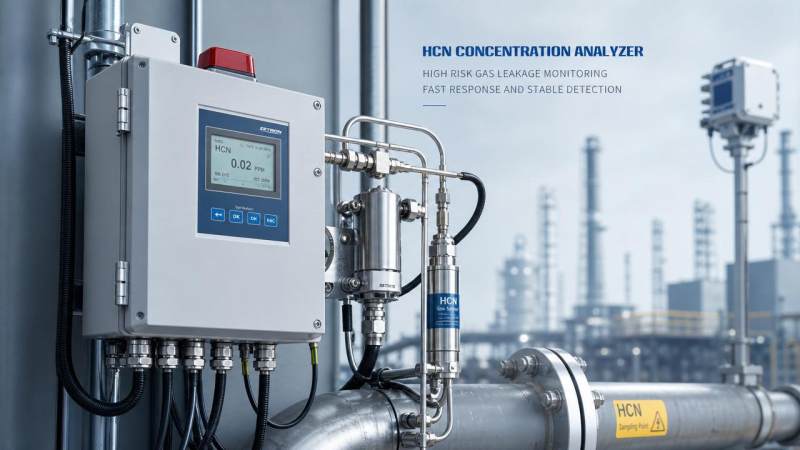
4. Environmental tolerance at the installation point
Temperature swings, condensation, dust, corrosive vapors, vibration, and high humidity can all affect performance. Outdoor installations near process units often require weather protection, heated sampling lines, or corrosion-resistant enclosures. Indoor locations may seem easier, but enclosed spaces can create stagnant air pockets that delay gas arrival. Always assess the actual environment rather than the nominal area description.
5. Installation method: diffusion or extractive sampling
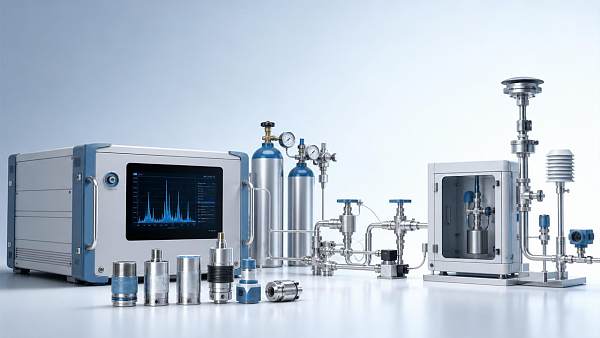
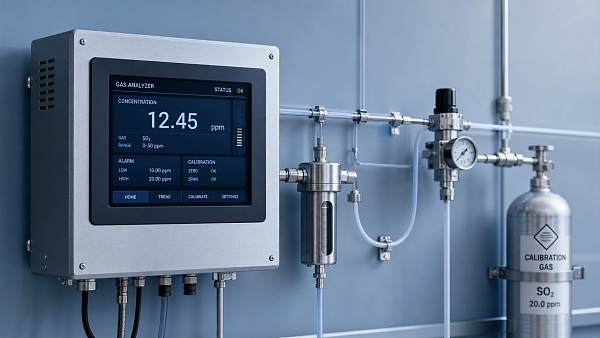
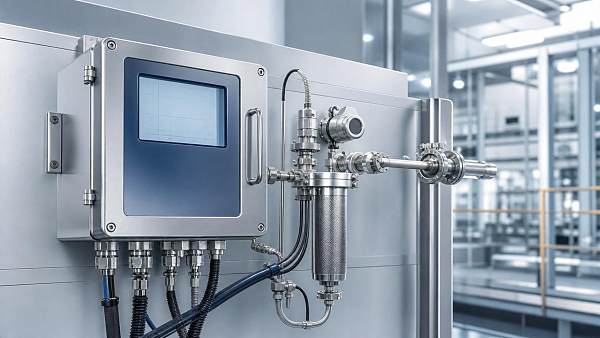
Diffusion-based analyzers are simpler and often lower maintenance, but they depend heavily on gas movement and detector placement. Extractive systems can improve control and protect the sensor through conditioning, yet they introduce pumps, filters, tubing, and potential failure points. The best HCN concentration analyzer for one site may be a simple fixed detector, while another site may require a full sample handling system for stable readings.
6. Maintenance burden and calibration practicality
A selection is only successful if the device can be kept reliable over time. Review calibration frequency, bump test requirements, consumables, spare sensor availability, and service skill requirements. A sophisticated HCN concentration analyzer may offer excellent performance but become a weak choice if your team cannot support routine verification without long downtime or outside specialists.
7. Alarm integration, outputs, and data logging
For safety management, data must lead to action. Confirm whether the analyzer supports local alarms, relay outputs, analog signals, Modbus or other industrial communication methods, event logging, and trend export. If your facility needs incident investigation, audit evidence, or remote oversight, the HCN concentration analyzer should support traceable records instead of simple on-screen indication only.
Quick Evaluation Table for Decision-Making
Use the following table as a practical screening tool when comparing candidate models of HCN concentration analyzer equipment for high-risk monitoring points.
Scenario-Based Checks: What Changes by Monitoring Location
Open process areas
In open areas, airflow can dilute HCN and shift gas clouds away from the source. Detector placement becomes as important as detector quality. Select an HCN concentration analyzer with proven field response and assess wind direction, release elevation, and worker pathways. Multiple points may be more effective than one high-end unit in the wrong location.
Confined or semi-enclosed spaces
These locations demand fast warning and reliable alarm transfer because gas accumulation can become dangerous quickly. Portable verification tools may complement fixed systems. If moisture or poor ventilation is present, confirm the analyzer’s tolerance for condensation and the practicality of pre-entry testing procedures.
Stack, vent, or treatment system monitoring
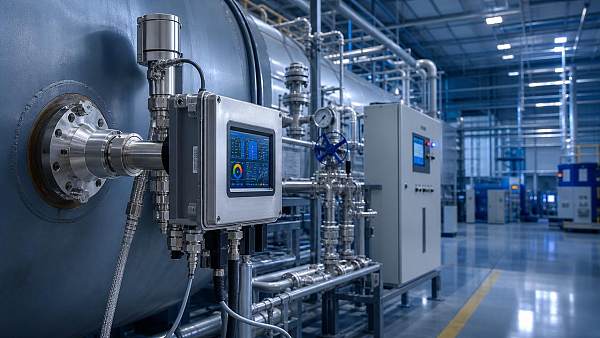
Here the priority may shift toward process trend accuracy, sample conditioning stability, and long operating cycles. A process-oriented HCN concentration analyzer should be reviewed for filtration design, line heating, pressure effects, and maintenance access, especially where dust or acid gases are present.
Laboratory and quality control support points
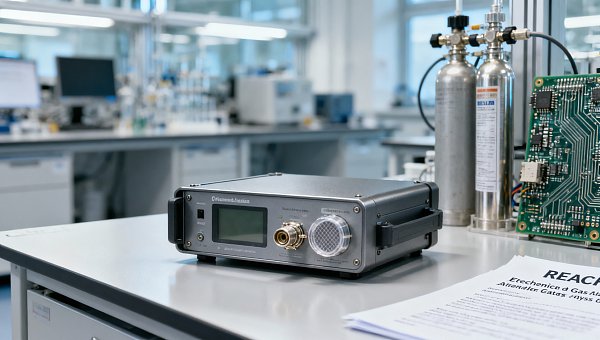
Where HCN measurement supports quality control, repeatability, calibration confidence, and traceable records often matter more than rugged outdoor housing. Still, if the laboratory is near process handling zones, safety functions and ventilation interlock capability should not be overlooked.
Commonly Overlooked Risks When Selecting an HCN Concentration Analyzer
- Assuming the specified accuracy applies equally across the full operating range, even though low-level performance may differ significantly.
- Ignoring sample line adsorption, moisture effects, or filter loading in extractive systems, which can distort the real response.
- Choosing based on purchase cost alone without calculating lifecycle cost for sensors, calibration gas, labor, and downtime.
- Failing to confirm availability of replacement parts and local technical support, especially for safety-critical installations.
- Placing the analyzer where maintenance access is difficult, causing delayed calibration and reduced long-term reliability.
- Using one HCN concentration analyzer specification for all monitoring points, even though risk profiles differ across the site.
Practical Execution Plan for Safety Managers and QC Teams
If your organization is preparing to purchase or upgrade an HCN concentration analyzer system, follow a staged process rather than requesting quotes immediately. This improves selection accuracy and makes vendor discussions more productive.
- Map all high-risk monitoring points and rank them by exposure severity, occupancy, and release probability.
- Document expected concentration range, environmental conditions, and required response time for each point.
- List interfering gases, dust, moisture, pressure, and temperature factors that may affect the HCN concentration analyzer.
- Define integration needs with alarms, PLC, DCS, SCADA, or incident reporting systems.
- Estimate maintenance resources, including calibration gas, technician availability, spare units, and shutdown windows.
- Request application-specific performance evidence from suppliers, not only brochure specifications.
- Run a pilot or side-by-side comparison at the most challenging monitoring point before larger rollout.
FAQ: Fast Answers for HCN Concentration Analyzer Selection
Should one analyzer model be used across the entire facility?
Not always. Standardization helps training and spare parts control, but a single HCN concentration analyzer model may not suit every location. High-humidity treatment areas, outdoor leak zones, and laboratory support points may require different configurations.
Is portable detection enough for high-risk points?
Portable units are useful for inspections and pre-entry checks, but they should not replace continuous monitoring where a release can occur unexpectedly. In many facilities, portable devices are best used as a supplement to a fixed HCN concentration analyzer network.
What is the most important parameter?
There is no single parameter. For high-risk monitoring points, the most important judgment is the combined fit between sensitivity, response time, site conditions, and maintainability. A technically advanced HCN concentration analyzer is only valuable if it stays accurate in real operation.
Final Selection Advice and Next-Step Questions
The best HCN concentration analyzer is the one that reliably detects risk under your actual site conditions, integrates into your response process, and can be maintained without compromise. For safety managers and quality control personnel, the strongest selection method is a structured review of detection range, response speed, interference resistance, environmental compatibility, installation mode, maintenance burden, and data connectivity.
If you are moving toward specification, budgeting, or supplier comparison, prepare these questions first: What concentration range must be covered at each point? What alarm time is acceptable? Which interfering gases are present? How often can calibration be performed? What data outputs are required? What spare parts and service support are available locally? Discussing these issues early will help you confirm parameter suitability, solution design, delivery cycle, budget alignment, and long-term operating reliability for any HCN concentration analyzer project.
Recommended for You
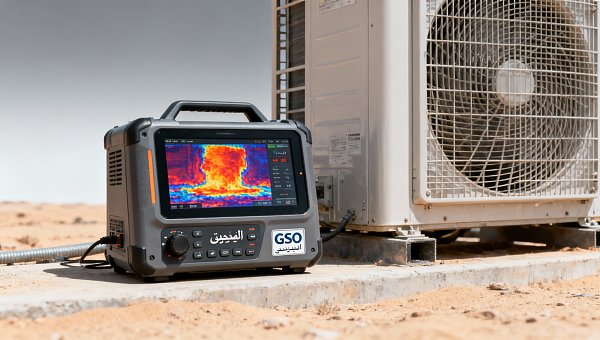
 Kuwait Bans HCFC Air Conditioners, Boosts IR Camera ExportsKuwait bans HCFC air conditioners—boosting demand for IR cameras, leak detectors & refrigerant analyzers. Discover GCC compliance insights and export opportunities.
 China's IC Exports Surge 78.3% in First Four Months of 2026China's IC exports surge 78.3% in early 2026 — driven by soaring global demand for AI chip test equipment, SMUs, and parametric analyzers. Discover the supply chain shift.
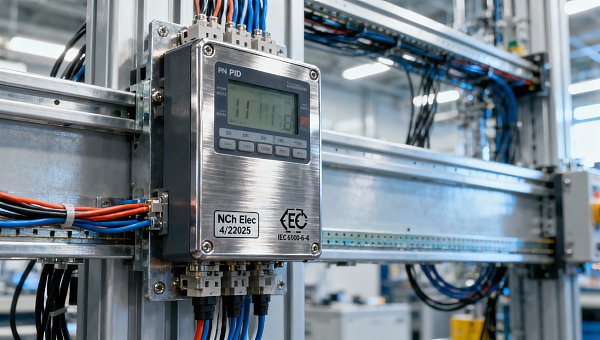
 Chile Enforces Mandatory INN Safety Certification for Industrial Temperature ControllersChile mandates INN safety certification (NCh Elec 4/2025) for industrial temperature controllers starting Aug 1, 2026—act now to avoid shipment delays & market bans.
 K-REACH Supply-Shortage Exemption Launches for pH/ORP ElectrodesK-REACH Supply-Shortage Exemption now applies to pH/ORP electrodes—act before June 30, 2026 to avoid customs delays & penalties. Key for exporters & manufacturers.
 4th China International Supply Chain Expo to Focus on Smart Sensing & In-Process InspectionSmart Sensing & In-Process Inspection take center stage at the 4th China International Supply Chain Expo in Beijing, Nov 26–30, 2026 — discover next-gen inspection tech, AI vision modules, and calibrated sensing solutions for global industrial buyers.
 ASTM F2100-26 Medical Mask Standard Takes Effect in USASTM F2100-26 medical mask standard is now in force—driving global demand for biosafety cabinets, particle counters & air velocity calibrators, especially China-made instruments.
 South Africa Enforces SABS Certification for IoT Monitoring DevicesSABS certification now mandatory for IoT monitoring devices entering South Africa via e-commerce—act before 1 June 2026 to avoid customs rejection and ensure market access.
 EU REACH Adds Fluorinated Substances; SVHC Reporting Required for Gas AnalyzersEU REACH now restricts fluorinated substances in gas analyzers—SVHC reporting is mandatory by 30 Nov 2026. Ensure compliance for sensors, membranes & monitoring systems.
 Revised Maritime Code Takes Effect May 1, 2026: Shift in Unclaimed Cargo LiabilityRevised Maritime Code (2026): Shippers now liable for unclaimed cargo—critical for industrial instrument exporters, logistics providers & cross-border supply chains. Act now.
 China Imposes Zero Tariffs on Goods from All African Diplomatic Partners Starting May 1, 2026China’s zero-tariff policy for African instrumentation & automation exports starts May 1, 2026—boosting competitiveness in EPC tenders and market access for exporters.
 Import and Export Shifts in the PPM Gas Analyzer Marketppm gas analyzer market insights: discover how import tariffs, export controls, and compliance shifts impact cost, supply stability, and growth opportunities across key applications.
 Single Gas Analyzer Maintenance Issues That Raise DowntimeSingle gas analyzer maintenance issues can quietly increase downtime. Learn how to spot drift, calibration errors, and sample path faults early to improve uptime and field efficiency.
 Combustion Gas Analyzer Market Trends Shaping 2026 UpgradesCombustion gas analyzer market trends shaping 2026: discover how smarter monitoring, multi-gas accuracy, and digital integration can improve compliance, efficiency, and ROI.
 Corrosive Gas Analyzer Risks That Impact Safety ComplianceCorrosive gas analyzer risks can quietly undermine safety compliance. Learn how drift, sampling failures, and poor maintenance affect accuracy—and how to strengthen monitoring reliability.
 Percent Range Analyzer Applications in Process ControlPercent range analyzer applications improve process control by turning raw signals into clear operating percentages. Discover faster decisions, better alarms, and more stable system performance.
 What Affects the Total Cost of a Dual Gas AnalyzerDual gas analyzer total cost goes beyond purchase price. Learn how sensors, calibration, compliance, integration, and maintenance shape lifecycle value and smarter buying decisions.
 High Temperature Analyzer Selection Mistakes to Avoid in 2026High temperature analyzer selection mistakes can delay projects and raise lifecycle costs. Discover the top 2026 pitfalls and how to choose a safer, smarter solution.
 2026 Price Trends for Multi Gas Analyzer SystemsMulti gas analyzer price trends for 2026: discover key cost drivers, ownership factors, and smart budgeting tips to compare systems, control risk, and choose the right solution.
 PPB Gas Analyzer vs PPM Gas Analyzer: What Changes in Real Useppb gas analyzer vs PPM gas analyzer: learn how sensitivity, calibration, maintenance, and sample handling change in real use to choose the right solution with less risk and cost.
 How to Choose a Trace Gas Analyzer for Low-Level Leak DetectionTrace gas analyzer selection for low-level leak detection: learn how to compare sensitivity, response time, interference control, and integration for safer, faster, more reliable results.
 US-China Trade Talks Agree on Tariff Cuts for Key Test Equipment PartsUS-China tariff cuts on key test equipment parts—like pressure sensor chips & infrared thermal imaging modules—boost margins, cut costs, and strengthen global competitiveness for manufacturers.
 G7 Paris Meeting Focuses on Critical Mineral Supply SecurityCritical mineral supply security takes center stage at the G7 Paris meeting—key for rare-earth sensor exporters. Learn EU compliance impacts & actionable readiness steps.
 Brent Crude Surpasses $106/bbl, Raising Sea Freight Costs for Small Testing Equipment ExportsBrent Crude Surpasses $106/bbl—sea freight costs surge, impacting small testing equipment exporters. Learn how SMEs can adapt pricing, terms & logistics now.
 WTO Forecasts 1.9% Global Goods Trade Growth in 2026 Amid Supply Chain ShorteningWTO forecasts 1.9% global goods trade growth in 2026—sparking nearshoring demand for testing equipment, calibration services & OTA-ready solutions in ASEAN, Middle East & Mexico.
 UK-China Export Control Working Group Holds Second Meeting in LondonUK-China Export Control Working Group: Key updates on dual-use items—laser interferometers, quantum sensors & oscilloscopes. Learn compliance implications for exporters now.
 Japan's 10Y Yield Drop to 2.745% Lifts Yen, Raising China-Made Testing Equipment CostsJapan's 10Y yield drop to 2.745% lifts yen, raising costs for China-made testing equipment — explore FX impacts, procurement shifts & strategic responses.
 KOSPI 200 Futures Circuit Breaker Triggered, Impacting Industrial Automation Instrument Export TimelinesKOSPI 200 futures circuit breaker triggered — impact on PLC modules, transmitters & fieldbus instrument exports to Korea. Urgent timeline insights inside.
 South Korea’s Chip Exports Surge 202% in May 2026 Amid AI Test Equipment DemandAI test equipment demand surges as South Korea’s chip exports jump 202% in May 2026 — PCIe 6.0 & USB4.1 validation tools see sharp global procurement rise.
 Emission Gas Analyzer News in 2026: Regulatory Shifts Affecting DemandEmission gas analyzer demand is changing fast in 2026 as new regulations tighten limits, expand continuous monitoring, and raise data compliance standards. Explore key trends shaping smarter buying decisions.
 When a High Accuracy Analyzer Delivers Real ROI in Process ControlHigh accuracy analyzer ROI starts with better process control. Learn where tighter measurements cut waste, improve stability, reduce compliance risk, and deliver measurable operational savings.
 SR-2030P Analyzer Import Updates in 2026: Compliance Points to ReviewSR-2030P analyzer import updates for 2026: review classification, certification, customs documents, and market access risks to reduce delays, control costs, and source with confidence.
 Industrial Oxygen Analyzer Price Trends in 2026: Cost Drivers to WatchIndustrial oxygen analyzer price trends in 2026 explained: compare sensor, compliance, installation, and maintenance cost drivers to make smarter, lower-risk buying decisions.
Search Categories
Search Categories
Latest Article
- Kuwait Bans HCFC Air Conditioners, Boosts IR Camera ExportsKuwait bans HCFC air conditioners—boosting demand for IR cameras, leak detectors & refrigerant analyzers. Discover GCC compliance insights and export opportunities.Posted by:
- China's IC Exports Surge 78.3% in First Four Months of 2026China's IC exports surge 78.3% in early 2026 — driven by soaring global demand for AI chip test equipment, SMUs, and parametric analyzers. Discover the supply chain shift.Posted by:
- Chile Enforces Mandatory INN Safety Certification for Industrial Temperature ControllersChile mandates INN safety certification (NCh Elec 4/2025) for industrial temperature controllers starting Aug 1, 2026—act now to avoid shipment delays & market bans.Posted by:
Please give us a message
