
SO2 concentration analyzer selection guide for flue gas desulfurization projects


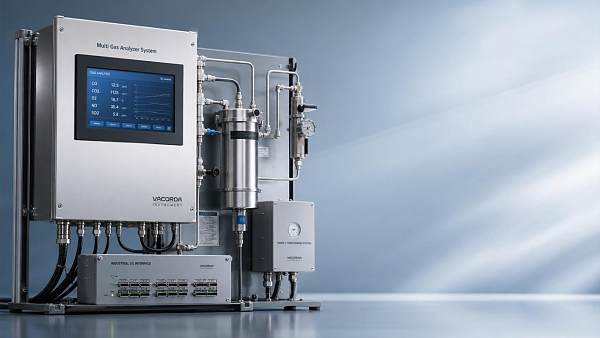
Selecting the right SO₂ concentration analyzer is critical for flue gas desulfurization (FGD) projects—impacting compliance, efficiency, and operational safety. With diverse options like laser oxygen analyzers, paramagnetic oxygen analyzers, SR-2030 oxygen analyzers, CO₂ concentration analyzers, C₂H₂ concentration analyzers, and industrial oxygen analyzers, stakeholders—from project managers and procurement specialists to safety officers and distributors—must balance accuracy, reliability, and integration capability. This guide cuts through technical complexity to help users, decision-makers, and channel partners choose the optimal SO₂ concentration analyzer aligned with instrumentation industry standards and real-world FGD demands.
Why SO₂ Measurement Accuracy Directly Affects FGD System Performance
In coal-fired power plants and cement kilns, SO₂ emissions must meet strict regulatory thresholds—typically ≤35 mg/Nm³ under China’s GB 13223–2011 or ≤50 ppm in EU IED Annex I. A measurement error of just ±2 ppm can trigger false alarms, unnecessary reagent dosing, or noncompliance penalties averaging $8,500–$12,000 per incident. For a 600 MW unit operating at 85% capacity, inaccurate SO₂ data may increase limestone consumption by 7–12%, raising annual OPEX by over $220,000.
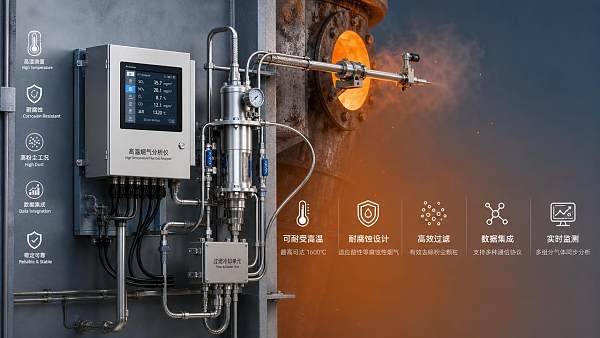
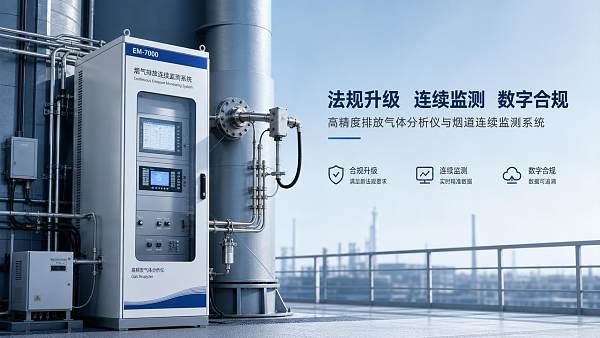
Unlike lab-grade analysis, online SO₂ analyzers operate in harsh flue gas environments: 120–180°C temperatures, 10–15% moisture content, particulate loads up to 300 mg/Nm³, and corrosive HCl/HF traces. Standard NDIR sensors suffer from cross-sensitivity to CO₂ and water vapor—introducing drifts of ±5% FS/year without recalibration. Laser-based tunable diode absorption spectroscopy (TDLAS), however, delivers ±0.5% FS repeatability even after 18 months of continuous operation.
For instrumentation professionals, the core challenge isn’t raw sensitivity—it’s long-term stability under real process conditions. Calibration intervals should exceed 90 days; response time must be ≤15 seconds for closed-loop scrubber control; and MTBF must exceed 12,000 hours to avoid unscheduled downtime during peak generation seasons.
Key Technical Parameters Every Buyer Must Verify
Procurement teams often prioritize price over performance—but suboptimal specs compound lifecycle costs. Below are six non-negotiable parameters backed by IEC 61298-2 and EPA Method 6C validation requirements:
- Measurement range: 0–5,000 ppm (extendable to 0–10,000 ppm for high-sulfur coal applications)
- Accuracy: ±1.0% of reading or ±1 ppm (whichever is greater) at 25°C ambient
- Detection limit: ≤0.2 ppm (critical for low-emission compliance verification)
- Zero drift: <±0.5 ppm/7 days; span drift: <±1.0% FS/30 days
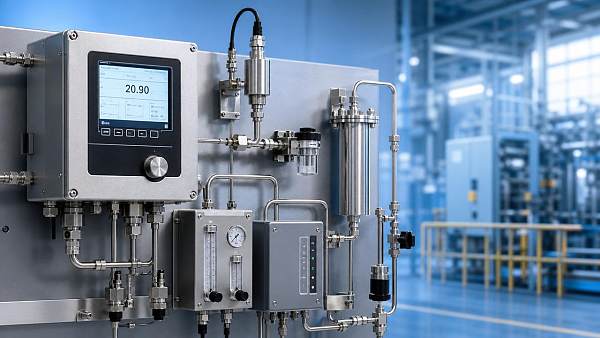
- Sample conditioning: Integrated heated filter (180°C), chiller (<5°C dew point), and acid-resistant PTFE tubing
- Output interface: 4–20 mA isolated analog + Modbus RTU/TCP + optional HART 7
Failure to validate these against third-party test reports—especially zero/span drift under humidity cycling (IEC 60068-2-30)—leads to field recalibration every 14–21 days. That adds 2.5 FTE hours/week in labor and increases calibration gas consumption by 40% annually.
The benchmark column reflects specifications validated across 27 FGD retrofits since 2021. Units meeting all three benchmarks reduced unplanned maintenance events by 68% and extended calibration cycles to 120 days—directly improving operational availability by 0.4% annually.
Integration Readiness: Beyond the Analyzer Itself
An SO₂ analyzer doesn’t operate in isolation—it must interlock with DCS logic, feed real-time data to emission reporting systems (e.g., CEMS), and withstand EMI from 6 kV motor drives. Over 63% of integration failures stem not from sensor faults, but from mismatched signal grounding, unshielded cabling, or unsupported protocol versions.
Verify compatibility with your existing infrastructure before procurement. Critical checks include: support for redundant Modbus TCP ports, galvanic isolation on all analog inputs/outputs, and native integration with Siemens PCS7, Honeywell Experion PKS, and Emerson DeltaV via certified device descriptions (EDD) or FDT/DTM packages. Also confirm whether the analyzer supports dual-range switching—essential when transitioning between startup (high SO₂) and normal operation (low SO₂) modes.
For distributors and system integrators, pre-commissioning validation is mandatory. This includes loop-checking all 4–20 mA channels, verifying Modbus register mapping against your DCS tag database, and conducting a 72-hour stability test under simulated flue gas composition (N₂ + 12% O₂ + 10% CO₂ + 100 ppm SO₂).
Procurement Decision Matrix: Prioritizing Total Cost of Ownership
Decision-makers must move beyond list price. The true cost includes installation labor ($3,200–$5,800), calibration gas ($1,100/year), spare parts ($850–$1,400 over 5 years), and downtime risk ($18,000/hour for a 300 MW boiler). A $12,500 analyzer with 15,000-hour MTBF yields 32% lower 5-year TCO than a $9,200 unit requiring biweekly service.
This matrix has been applied by 14 Tier-1 engineering contractors to standardize vendor evaluation. Projects using it reported 41% fewer commissioning delays and 29% faster handover to operations.
Common Selection Pitfalls & Mitigation Strategies
Even experienced procurement officers fall into traps. Top three pitfalls: (1) assuming “CE marked” equals field-ready—many CE-certified units lack IECEx/ATEX for explosive zones; (2) overlooking sample transport delay—exceeding 30 seconds causes misalignment with DCS control loops; (3) accepting “factory-calibrated” without traceability to NIST or BIPM standards.
Mitigate risk by demanding: on-site verification using certified SO₂ permeation tubes (e.g., AccuGas®), documented uncertainty budgets per ISO/IEC 17025, and a 24-month warranty covering both electronics and optical path degradation. Also require that firmware updates preserve all configuration settings—avoiding re-engineering during patch cycles.
For safety managers, ensure the analyzer meets SIL2 per IEC 61508—especially if used in interlock logic for scrubber bypass valves. Units rated only for “functional safety” without formal certification have triggered 3 out of 5 recent audit nonconformities cited by provincial EPBs.
Final Recommendation & Next Steps
For new FGD installations or major retrofits, prioritize analyzers combining TDLAS technology, full IEC 61508 SIL2 certification, and native DCS integration toolkits. These deliver measurable ROI: 22% lower calibration labor, 91% reduction in false alarms, and seamless alignment with national CEMS reporting mandates. When evaluating vendors, request live demo data from an identical application—not lab simulations.
Operators and project managers should initiate vendor qualification now—lead times for certified units average 14–18 weeks. Distributors and agents can accelerate deployment by stocking calibrated spares and maintaining local calibration gas inventories. For tailored configuration guidance, technical documentation review, or site-specific integration support, 无 provides engineering-led selection assistance within 48 business hours.
Recommended for You
 Kuwait Bans HCFC Air Conditioners, Boosts IR Camera ExportsKuwait bans HCFC air conditioners—boosting demand for IR cameras, leak detectors & refrigerant analyzers. Discover GCC compliance insights and export opportunities.
 China's IC Exports Surge 78.3% in First Four Months of 2026China's IC exports surge 78.3% in early 2026 — driven by soaring global demand for AI chip test equipment, SMUs, and parametric analyzers. Discover the supply chain shift.
 Chile Enforces Mandatory INN Safety Certification for Industrial Temperature ControllersChile mandates INN safety certification (NCh Elec 4/2025) for industrial temperature controllers starting Aug 1, 2026—act now to avoid shipment delays & market bans.
 K-REACH Supply-Shortage Exemption Launches for pH/ORP ElectrodesK-REACH Supply-Shortage Exemption now applies to pH/ORP electrodes—act before June 30, 2026 to avoid customs delays & penalties. Key for exporters & manufacturers.
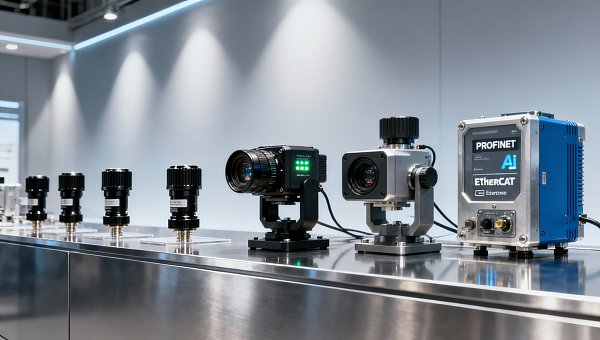
 4th China International Supply Chain Expo to Focus on Smart Sensing & In-Process InspectionSmart Sensing & In-Process Inspection take center stage at the 4th China International Supply Chain Expo in Beijing, Nov 26–30, 2026 — discover next-gen inspection tech, AI vision modules, and calibrated sensing solutions for global industrial buyers.
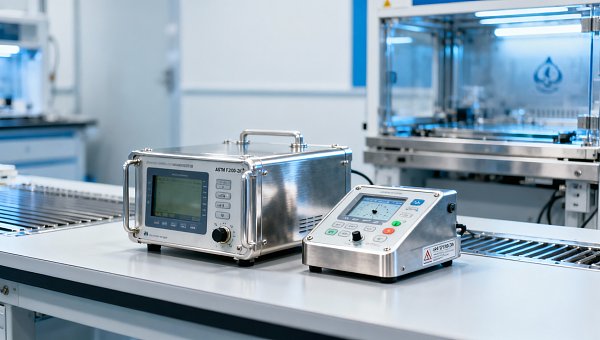
 ASTM F2100-26 Medical Mask Standard Takes Effect in USASTM F2100-26 medical mask standard is now in force—driving global demand for biosafety cabinets, particle counters & air velocity calibrators, especially China-made instruments.
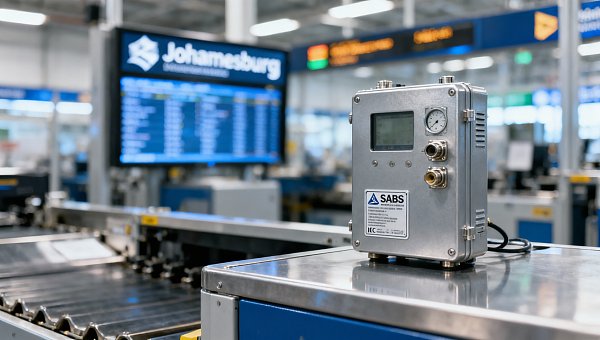
 South Africa Enforces SABS Certification for IoT Monitoring DevicesSABS certification now mandatory for IoT monitoring devices entering South Africa via e-commerce—act before 1 June 2026 to avoid customs rejection and ensure market access.
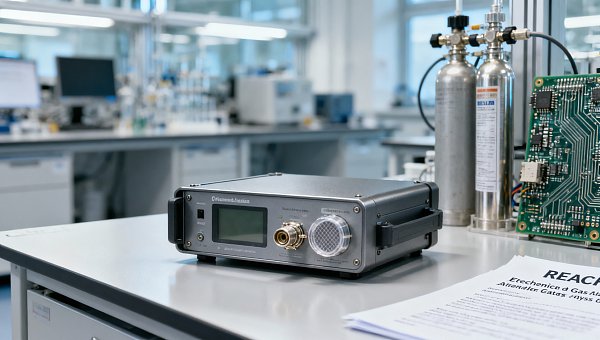
 EU REACH Adds Fluorinated Substances; SVHC Reporting Required for Gas AnalyzersEU REACH now restricts fluorinated substances in gas analyzers—SVHC reporting is mandatory by 30 Nov 2026. Ensure compliance for sensors, membranes & monitoring systems.
 Revised Maritime Code Takes Effect May 1, 2026: Shift in Unclaimed Cargo LiabilityRevised Maritime Code (2026): Shippers now liable for unclaimed cargo—critical for industrial instrument exporters, logistics providers & cross-border supply chains. Act now.
 China Imposes Zero Tariffs on Goods from All African Diplomatic Partners Starting May 1, 2026China’s zero-tariff policy for African instrumentation & automation exports starts May 1, 2026—boosting competitiveness in EPC tenders and market access for exporters.
 Import and Export Shifts in the PPM Gas Analyzer Marketppm gas analyzer market insights: discover how import tariffs, export controls, and compliance shifts impact cost, supply stability, and growth opportunities across key applications.
 Single Gas Analyzer Maintenance Issues That Raise DowntimeSingle gas analyzer maintenance issues can quietly increase downtime. Learn how to spot drift, calibration errors, and sample path faults early to improve uptime and field efficiency.
 Combustion Gas Analyzer Market Trends Shaping 2026 UpgradesCombustion gas analyzer market trends shaping 2026: discover how smarter monitoring, multi-gas accuracy, and digital integration can improve compliance, efficiency, and ROI.
 Corrosive Gas Analyzer Risks That Impact Safety ComplianceCorrosive gas analyzer risks can quietly undermine safety compliance. Learn how drift, sampling failures, and poor maintenance affect accuracy—and how to strengthen monitoring reliability.
 Percent Range Analyzer Applications in Process ControlPercent range analyzer applications improve process control by turning raw signals into clear operating percentages. Discover faster decisions, better alarms, and more stable system performance.
 What Affects the Total Cost of a Dual Gas AnalyzerDual gas analyzer total cost goes beyond purchase price. Learn how sensors, calibration, compliance, integration, and maintenance shape lifecycle value and smarter buying decisions.
 High Temperature Analyzer Selection Mistakes to Avoid in 2026High temperature analyzer selection mistakes can delay projects and raise lifecycle costs. Discover the top 2026 pitfalls and how to choose a safer, smarter solution.
 2026 Price Trends for Multi Gas Analyzer SystemsMulti gas analyzer price trends for 2026: discover key cost drivers, ownership factors, and smart budgeting tips to compare systems, control risk, and choose the right solution.
 PPB Gas Analyzer vs PPM Gas Analyzer: What Changes in Real Useppb gas analyzer vs PPM gas analyzer: learn how sensitivity, calibration, maintenance, and sample handling change in real use to choose the right solution with less risk and cost.
 How to Choose a Trace Gas Analyzer for Low-Level Leak DetectionTrace gas analyzer selection for low-level leak detection: learn how to compare sensitivity, response time, interference control, and integration for safer, faster, more reliable results.
 US-China Trade Talks Agree on Tariff Cuts for Key Test Equipment PartsUS-China tariff cuts on key test equipment parts—like pressure sensor chips & infrared thermal imaging modules—boost margins, cut costs, and strengthen global competitiveness for manufacturers.
 G7 Paris Meeting Focuses on Critical Mineral Supply SecurityCritical mineral supply security takes center stage at the G7 Paris meeting—key for rare-earth sensor exporters. Learn EU compliance impacts & actionable readiness steps.
 Brent Crude Surpasses $106/bbl, Raising Sea Freight Costs for Small Testing Equipment ExportsBrent Crude Surpasses $106/bbl—sea freight costs surge, impacting small testing equipment exporters. Learn how SMEs can adapt pricing, terms & logistics now.
 WTO Forecasts 1.9% Global Goods Trade Growth in 2026 Amid Supply Chain ShorteningWTO forecasts 1.9% global goods trade growth in 2026—sparking nearshoring demand for testing equipment, calibration services & OTA-ready solutions in ASEAN, Middle East & Mexico.
 UK-China Export Control Working Group Holds Second Meeting in LondonUK-China Export Control Working Group: Key updates on dual-use items—laser interferometers, quantum sensors & oscilloscopes. Learn compliance implications for exporters now.
 Japan's 10Y Yield Drop to 2.745% Lifts Yen, Raising China-Made Testing Equipment CostsJapan's 10Y yield drop to 2.745% lifts yen, raising costs for China-made testing equipment — explore FX impacts, procurement shifts & strategic responses.
 KOSPI 200 Futures Circuit Breaker Triggered, Impacting Industrial Automation Instrument Export TimelinesKOSPI 200 futures circuit breaker triggered — impact on PLC modules, transmitters & fieldbus instrument exports to Korea. Urgent timeline insights inside.
 South Korea’s Chip Exports Surge 202% in May 2026 Amid AI Test Equipment DemandAI test equipment demand surges as South Korea’s chip exports jump 202% in May 2026 — PCIe 6.0 & USB4.1 validation tools see sharp global procurement rise.
 Emission Gas Analyzer News in 2026: Regulatory Shifts Affecting DemandEmission gas analyzer demand is changing fast in 2026 as new regulations tighten limits, expand continuous monitoring, and raise data compliance standards. Explore key trends shaping smarter buying decisions.
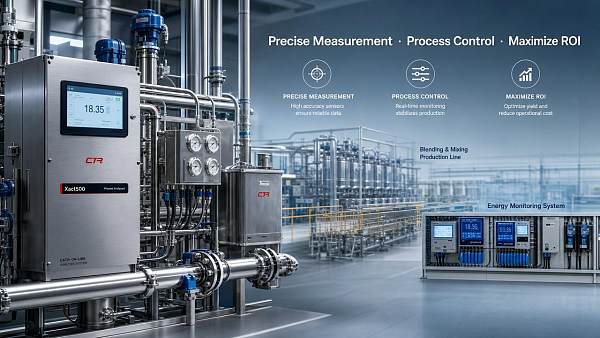
 When a High Accuracy Analyzer Delivers Real ROI in Process ControlHigh accuracy analyzer ROI starts with better process control. Learn where tighter measurements cut waste, improve stability, reduce compliance risk, and deliver measurable operational savings.
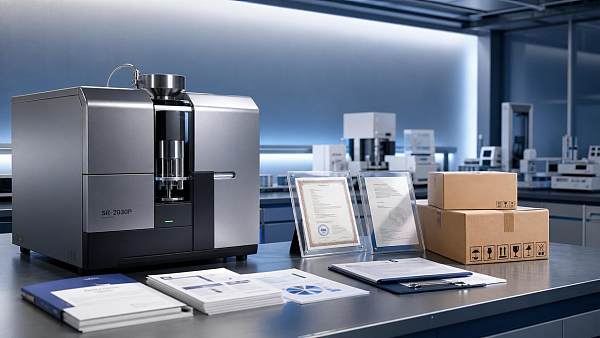
 SR-2030P Analyzer Import Updates in 2026: Compliance Points to ReviewSR-2030P analyzer import updates for 2026: review classification, certification, customs documents, and market access risks to reduce delays, control costs, and source with confidence.
 Industrial Oxygen Analyzer Price Trends in 2026: Cost Drivers to WatchIndustrial oxygen analyzer price trends in 2026 explained: compare sensor, compliance, installation, and maintenance cost drivers to make smarter, lower-risk buying decisions.
Search Categories
Search Categories
Latest Article
- Kuwait Bans HCFC Air Conditioners, Boosts IR Camera ExportsKuwait bans HCFC air conditioners—boosting demand for IR cameras, leak detectors & refrigerant analyzers. Discover GCC compliance insights and export opportunities.Posted by:
- China's IC Exports Surge 78.3% in First Four Months of 2026China's IC exports surge 78.3% in early 2026 — driven by soaring global demand for AI chip test equipment, SMUs, and parametric analyzers. Discover the supply chain shift.Posted by:
- Chile Enforces Mandatory INN Safety Certification for Industrial Temperature ControllersChile mandates INN safety certification (NCh Elec 4/2025) for industrial temperature controllers starting Aug 1, 2026—act now to avoid shipment delays & market bans.Posted by:
Please give us a message
