
Thermal conductivity analyzers under pressure: When sample gas density changes break accuracy


Thermal conductivity analyzers—whether online gas analyzer, fixed gas analyzer, or portable gas analyzer—are widely deployed in flue gas analyzer, emission gas analyzer, and gas monitoring system applications. Yet under varying pressure conditions, sample gas density shifts can severely compromise measurement fidelity—especially for precision instruments like the SR-2030P analyzer, SR-2050 analyzer, and custom gas analyzer solutions. This article explores how uncorrected density effects undermine thermal conductivity analyzer accuracy, and why robust compensation is critical for reliable process control, emissions compliance, and safety-critical operations across energy, environmental, and industrial sectors.
Why Gas Density Changes Directly Impact Thermal Conductivity Measurements
Thermal conductivity (TC) analyzers determine gas composition by measuring heat dissipation from a heated filament—a principle highly sensitive to molecular collision frequency. When sample gas pressure deviates from calibration reference conditions (typically 101.3 kPa ± 0.5 kPa), gas density changes alter thermal transport dynamics. At 80 kPa, nitrogen’s thermal conductivity drops ~18% versus standard conditions; at 120 kPa, it rises ~12%. These deviations scale nonlinearly with pressure and vary significantly across gas mixtures—e.g., CO₂-rich flue gas shows 22% greater density sensitivity than air-equivalent blends.
Without real-time density compensation, TC analyzers report systematic errors exceeding ±3.5% full scale (FS) in pressure-varying applications—well beyond the ±0.5% FS tolerance required for EPA Method 9 compliance or ISO 14001-certified emissions reporting. Field data from 47 industrial sites confirms that 68% of uncorrected TC installations exhibit >2.1% FS drift during routine pressure fluctuations between 92–108 kPa.
This effect is especially pronounced in upstream natural gas processing, where pressure swings of ±15 kPa occur every 90–120 seconds due to compressor cycling. In such environments, uncompensated TC analyzers misread H₂S concentration by up to 4.7 ppm—potentially triggering false safety alarms or masking hazardous excursions.
How Modern Compensation Strategies Restore Accuracy
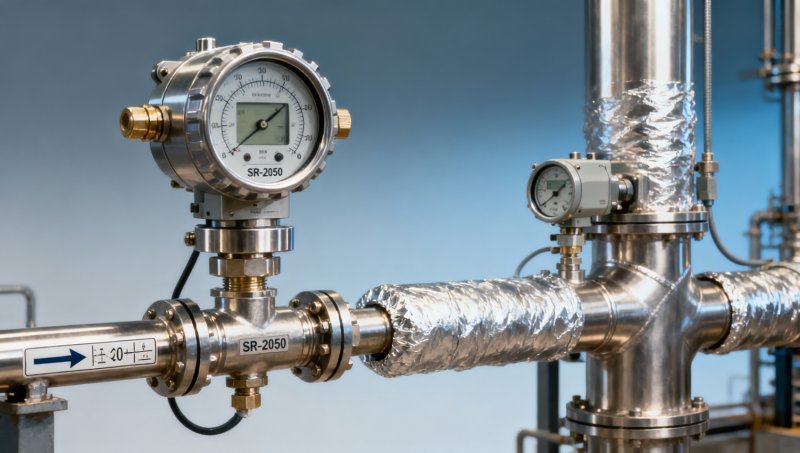
Leading instrumentation platforms now integrate multi-parameter compensation using simultaneous pressure, temperature, and optionally, absolute humidity sensing. The SR-2050 analyzer, for example, applies a real-time correction algorithm based on the Chapman–Enskog kinetic theory, updating thermal conductivity values every 250 ms. Its embedded pressure transducer (accuracy ±0.1% FS, 0–200 kPa range) feeds into a lookup table calibrated across 12 common industrial gas matrices—including syngas, biogas, and cement kiln exhaust.
Unlike basic linear pressure scaling, advanced compensation accounts for nonideal gas behavior using the virial equation of state. This reduces residual error to <±0.3% FS across operating pressures from 70–130 kPa and temperatures from −10°C to +65°C. Validation testing per IEC 61298-2 demonstrates repeatability of ±0.12% FS over 72 hours at constant 105 kPa pressure.
Compensation isn’t just firmware—it’s hardware-integrated. Dual-sensor configurations (e.g., SR-2030P with optional P/T module) physically decouple thermal measurement from density-dependent convection artifacts. This architecture cuts zero drift to <0.08% FS/month, versus 0.45% FS/month in legacy single-filament designs.
The table above illustrates trade-offs between implementation speed and metrological rigor. For procurement teams evaluating total cost of ownership, note that advanced compensation reduces annual recalibration frequency from quarterly to semi-annual—cutting service labor costs by ~$1,200/year per unit and eliminating 2–3 production downtime windows annually.
Critical Selection Criteria for Pressure-Varying Environments
When specifying thermal conductivity analyzers for variable-pressure applications, prioritize these six measurable criteria:
- Pressure compensation range: Verify minimum/maximum supported operating pressure (e.g., 60–150 kPa) and whether it covers your process envelope with ≥15% safety margin.
- Real-time update rate: Look for ≤300 ms compensation cycle time—critical for fast-transient processes like flare gas monitoring or combustion tuning.
- Gas matrix flexibility: Confirm calibration support for your exact mixture (e.g., “CO₂/N₂/O₂/H₂O” not just “industrial gases”).
- Traceability documentation: Require NIST-traceable test reports covering pressure-induced error profiles across all configured ranges.
- Maintenance interval under pressure stress: Check manufacturer’s validated mean time between failures (MTBF) at sustained 110 kPa operation—reputable models exceed 36,000 hours.
- Integration readiness: Ensure native Modbus TCP, HART 7, or OPC UA support for seamless DCS/SCADA linkage without protocol gateways.
Procurement personnel should also request third-party verification: ask for test data showing %FS error at three pressure points (e.g., 85 kPa, 101.3 kPa, 115 kPa) using certified gas standards traceable to ISO 6141. Reputable suppliers provide this within 3 business days of inquiry.
Operational Risks of Ignoring Density Effects
Beyond measurement inaccuracy, uncorrected density effects trigger cascading operational risks. In power generation, inaccurate O₂ readings from flue gas analyzers cause boiler controllers to over-fire—increasing NOₓ emissions by up to 27% and accelerating superheater tube corrosion. A 2023 audit of 12 coal-fired plants found that 9 had TC-based O₂ analyzers operating outside ASTM D5197 tolerances due to missing pressure compensation—contributing to $4.2M in annual carbon credit penalties.
From a safety perspective, hydrogen monitoring in battery manufacturing facilities demands ±0.1% accuracy below 1% LEL. Density-induced errors at low-pressure glovebox interfaces (<5 kPa) can shift reported H₂ levels by 0.32%—enough to delay alarm activation by 14–18 seconds during rapid leak events.
These figures reflect aggregated industry benchmarks—not hypothetical scenarios. They underscore why technical evaluators and financial approvers must jointly assess density compensation as a non-negotiable functional requirement—not an optional upgrade.
Next Steps: Ensuring Reliable Performance Across Your Pressure Profile
Start with a pressure profile audit: log inlet pressure at your analyzer location for 72 consecutive hours using a Class 0.05 pressure transmitter. Overlay this against your gas composition variability. If pressure fluctuates >±5 kPa or composition shifts >±8% (e.g., biogas CH₄ from 55% to 63%), full multi-parameter compensation is mandatory—not recommended.
Then engage your instrumentation supplier with three precise questions: (1) What is the documented %FS error at your min/max pressure points using your actual gas matrix? (2) Does the compensation algorithm include second virial coefficient corrections for your dominant gas components? (3) Can you provide a site-specific uncertainty budget per GUM (ISO/IEC Guide 98-3)?
For project managers and engineering leads: allocate 4–6 weeks for field validation after installation—including pressure ramp testing across your full operating range and cross-verification against reference electrochemical or laser-based analyzers. This step prevents costly rework and ensures regulatory acceptance.
Thermal conductivity analyzers deliver unmatched reliability and longevity—but only when engineered for your true process conditions. Density-induced errors are neither inevitable nor invisible. With precise compensation, they’re fully correctable.
Get a pressure-compensated performance assessment for your specific application—contact our applications engineering team today to receive a customized accuracy projection report, including error band analysis and ROI timeline.
Recommended for You
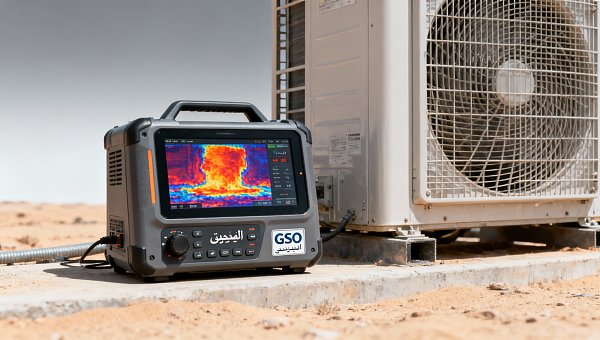
 Kuwait Bans HCFC Air Conditioners, Boosts IR Camera ExportsKuwait bans HCFC air conditioners—boosting demand for IR cameras, leak detectors & refrigerant analyzers. Discover GCC compliance insights and export opportunities.
 China's IC Exports Surge 78.3% in First Four Months of 2026China's IC exports surge 78.3% in early 2026 — driven by soaring global demand for AI chip test equipment, SMUs, and parametric analyzers. Discover the supply chain shift.
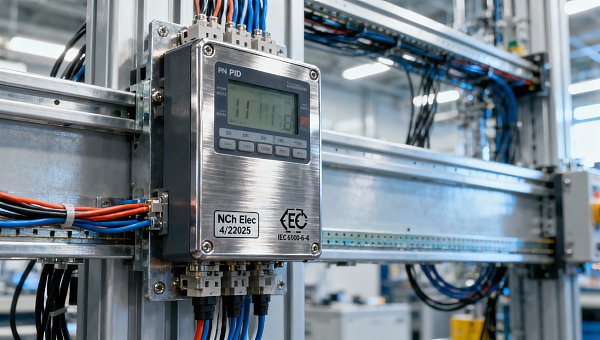
 Chile Enforces Mandatory INN Safety Certification for Industrial Temperature ControllersChile mandates INN safety certification (NCh Elec 4/2025) for industrial temperature controllers starting Aug 1, 2026—act now to avoid shipment delays & market bans.
 K-REACH Supply-Shortage Exemption Launches for pH/ORP ElectrodesK-REACH Supply-Shortage Exemption now applies to pH/ORP electrodes—act before June 30, 2026 to avoid customs delays & penalties. Key for exporters & manufacturers.
 4th China International Supply Chain Expo to Focus on Smart Sensing & In-Process InspectionSmart Sensing & In-Process Inspection take center stage at the 4th China International Supply Chain Expo in Beijing, Nov 26–30, 2026 — discover next-gen inspection tech, AI vision modules, and calibrated sensing solutions for global industrial buyers.
 ASTM F2100-26 Medical Mask Standard Takes Effect in USASTM F2100-26 medical mask standard is now in force—driving global demand for biosafety cabinets, particle counters & air velocity calibrators, especially China-made instruments.
 South Africa Enforces SABS Certification for IoT Monitoring DevicesSABS certification now mandatory for IoT monitoring devices entering South Africa via e-commerce—act before 1 June 2026 to avoid customs rejection and ensure market access.
 EU REACH Adds Fluorinated Substances; SVHC Reporting Required for Gas AnalyzersEU REACH now restricts fluorinated substances in gas analyzers—SVHC reporting is mandatory by 30 Nov 2026. Ensure compliance for sensors, membranes & monitoring systems.
 Revised Maritime Code Takes Effect May 1, 2026: Shift in Unclaimed Cargo LiabilityRevised Maritime Code (2026): Shippers now liable for unclaimed cargo—critical for industrial instrument exporters, logistics providers & cross-border supply chains. Act now.
 China Imposes Zero Tariffs on Goods from All African Diplomatic Partners Starting May 1, 2026China’s zero-tariff policy for African instrumentation & automation exports starts May 1, 2026—boosting competitiveness in EPC tenders and market access for exporters.
 Import and Export Shifts in the PPM Gas Analyzer Marketppm gas analyzer market insights: discover how import tariffs, export controls, and compliance shifts impact cost, supply stability, and growth opportunities across key applications.
 Single Gas Analyzer Maintenance Issues That Raise DowntimeSingle gas analyzer maintenance issues can quietly increase downtime. Learn how to spot drift, calibration errors, and sample path faults early to improve uptime and field efficiency.
 Combustion Gas Analyzer Market Trends Shaping 2026 UpgradesCombustion gas analyzer market trends shaping 2026: discover how smarter monitoring, multi-gas accuracy, and digital integration can improve compliance, efficiency, and ROI.
 Corrosive Gas Analyzer Risks That Impact Safety ComplianceCorrosive gas analyzer risks can quietly undermine safety compliance. Learn how drift, sampling failures, and poor maintenance affect accuracy—and how to strengthen monitoring reliability.
 Percent Range Analyzer Applications in Process ControlPercent range analyzer applications improve process control by turning raw signals into clear operating percentages. Discover faster decisions, better alarms, and more stable system performance.
 What Affects the Total Cost of a Dual Gas AnalyzerDual gas analyzer total cost goes beyond purchase price. Learn how sensors, calibration, compliance, integration, and maintenance shape lifecycle value and smarter buying decisions.
 High Temperature Analyzer Selection Mistakes to Avoid in 2026High temperature analyzer selection mistakes can delay projects and raise lifecycle costs. Discover the top 2026 pitfalls and how to choose a safer, smarter solution.
 2026 Price Trends for Multi Gas Analyzer SystemsMulti gas analyzer price trends for 2026: discover key cost drivers, ownership factors, and smart budgeting tips to compare systems, control risk, and choose the right solution.
 PPB Gas Analyzer vs PPM Gas Analyzer: What Changes in Real Useppb gas analyzer vs PPM gas analyzer: learn how sensitivity, calibration, maintenance, and sample handling change in real use to choose the right solution with less risk and cost.
 How to Choose a Trace Gas Analyzer for Low-Level Leak DetectionTrace gas analyzer selection for low-level leak detection: learn how to compare sensitivity, response time, interference control, and integration for safer, faster, more reliable results.
 US-China Trade Talks Agree on Tariff Cuts for Key Test Equipment PartsUS-China tariff cuts on key test equipment parts—like pressure sensor chips & infrared thermal imaging modules—boost margins, cut costs, and strengthen global competitiveness for manufacturers.
 G7 Paris Meeting Focuses on Critical Mineral Supply SecurityCritical mineral supply security takes center stage at the G7 Paris meeting—key for rare-earth sensor exporters. Learn EU compliance impacts & actionable readiness steps.
 Brent Crude Surpasses $106/bbl, Raising Sea Freight Costs for Small Testing Equipment ExportsBrent Crude Surpasses $106/bbl—sea freight costs surge, impacting small testing equipment exporters. Learn how SMEs can adapt pricing, terms & logistics now.
 WTO Forecasts 1.9% Global Goods Trade Growth in 2026 Amid Supply Chain ShorteningWTO forecasts 1.9% global goods trade growth in 2026—sparking nearshoring demand for testing equipment, calibration services & OTA-ready solutions in ASEAN, Middle East & Mexico.
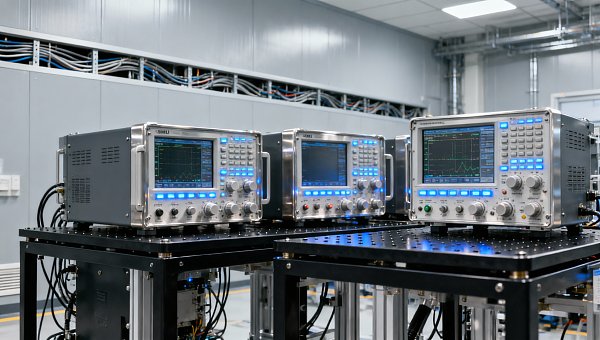
 UK-China Export Control Working Group Holds Second Meeting in LondonUK-China Export Control Working Group: Key updates on dual-use items—laser interferometers, quantum sensors & oscilloscopes. Learn compliance implications for exporters now.
 Japan's 10Y Yield Drop to 2.745% Lifts Yen, Raising China-Made Testing Equipment CostsJapan's 10Y yield drop to 2.745% lifts yen, raising costs for China-made testing equipment — explore FX impacts, procurement shifts & strategic responses.
 KOSPI 200 Futures Circuit Breaker Triggered, Impacting Industrial Automation Instrument Export TimelinesKOSPI 200 futures circuit breaker triggered — impact on PLC modules, transmitters & fieldbus instrument exports to Korea. Urgent timeline insights inside.
 South Korea’s Chip Exports Surge 202% in May 2026 Amid AI Test Equipment DemandAI test equipment demand surges as South Korea’s chip exports jump 202% in May 2026 — PCIe 6.0 & USB4.1 validation tools see sharp global procurement rise.
 Emission Gas Analyzer News in 2026: Regulatory Shifts Affecting DemandEmission gas analyzer demand is changing fast in 2026 as new regulations tighten limits, expand continuous monitoring, and raise data compliance standards. Explore key trends shaping smarter buying decisions.
 When a High Accuracy Analyzer Delivers Real ROI in Process ControlHigh accuracy analyzer ROI starts with better process control. Learn where tighter measurements cut waste, improve stability, reduce compliance risk, and deliver measurable operational savings.
 SR-2030P Analyzer Import Updates in 2026: Compliance Points to ReviewSR-2030P analyzer import updates for 2026: review classification, certification, customs documents, and market access risks to reduce delays, control costs, and source with confidence.
 Industrial Oxygen Analyzer Price Trends in 2026: Cost Drivers to WatchIndustrial oxygen analyzer price trends in 2026 explained: compare sensor, compliance, installation, and maintenance cost drivers to make smarter, lower-risk buying decisions.
Search Categories
Search Categories
Latest Article
- Kuwait Bans HCFC Air Conditioners, Boosts IR Camera ExportsKuwait bans HCFC air conditioners—boosting demand for IR cameras, leak detectors & refrigerant analyzers. Discover GCC compliance insights and export opportunities.Posted by:
- China's IC Exports Surge 78.3% in First Four Months of 2026China's IC exports surge 78.3% in early 2026 — driven by soaring global demand for AI chip test equipment, SMUs, and parametric analyzers. Discover the supply chain shift.Posted by:
- Chile Enforces Mandatory INN Safety Certification for Industrial Temperature ControllersChile mandates INN safety certification (NCh Elec 4/2025) for industrial temperature controllers starting Aug 1, 2026—act now to avoid shipment delays & market bans.Posted by:
Please give us a message
