
IEC 61511-3:2026 Released for SIS SIL Determination


On 28 April 2026, the International Electrotechnical Commission (IEC) published IEC 61511-3:2026 — Functional safety — Safety instrumented systems for the process industry sector — Part 3: Guidance for the determination of the required safety integrity level (SIL). This update directly affects stakeholders in petrochemical, chemical, and energy sectors where safety instrumented systems (SIS), including emergency shutdown valve controllers and safety transmitters, are deployed.
Event Overview
The IEC officially released IEC 61511-3:2026 on 28 April 2026. The standard specifies methods for determining Safety Integrity Level (SIL) requirements for safety instrumented functions in process industries. Confirmed updates include: (1) integration of AI-assisted risk analysis techniques; (2) validation pathways leveraging digital twin models; and (3) explicit requirements for compatibility assessment of domestically developed PLC and FPGA platforms. The standard takes immediate effect for SIS-related certification and compliance evaluation globally.
Industries Affected by Segment
Equipment manufacturers (SIS hardware & controller vendors):
They are affected because the new standard introduces mandatory compatibility verification for non-Western PLC/FPGA platforms. Impact manifests in extended design validation cycles, revised documentation requirements for SIL justification, and potential re-submission of existing certifications where AI-based or digital twin–supported evidence was not previously included.
Engineering, procurement, and construction (EPC) contractors:
These firms face revised scope definition and verification protocols for SIS deliverables. Impact appears in updated basis-of-design documentation, tighter interface control between automation and safety engineering teams, and increased scrutiny during HAZOP/SIL verification reviews — especially where AI tools or digital twin models are used to support SIL claims.
End-user operators (petrochemical, chemical, power generation facilities):
Operators must reassess their current SIS lifecycle management procedures. Impact includes revised internal audit checklists for functional safety assessments, updated vendor qualification criteria, and potential delays in project handover if supplier documentation does not yet align with the new Annexes on AI-assisted analysis or digital twin validation.
What Enterprises and Practitioners Should Monitor and Do Now
Track official IEC and national body interpretations
The IEC has not yet issued implementation guidance or transitional arrangements for IEC 61511-3:2026. National standards bodies (e.g., ANSI, BSI, SAC) may issue aligned adoptions or local interpretations — these will determine actual enforcement timelines and acceptable evidence formats. Monitoring official bulletins from such bodies is essential before finalizing 2026–2027 project plans.
Review active and upcoming SIS procurement specifications
Procurement documents issued after April 2026 should explicitly reference IEC 61511-3:2026. For contracts already under negotiation, assess whether SIL justification submissions must now include AI model traceability or digital twin validation reports — particularly when domestic PLC/FPGA platforms are specified.
Distinguish between policy signal and operational readiness
While the standard is published, third-party certification bodies have not yet confirmed updated audit checklists or accreditation criteria. Current audits may still follow prior editions unless explicitly upgraded by the certifier. Treat the publication as a formal signal — not an immediate operational shift — until notified by accredited certification partners.
Prepare technical documentation and cross-functional alignment
Manufacturers and EPCs should initiate internal gap assessments against the new clauses — especially those covering AI-assisted risk analysis (e.g., transparency of algorithm inputs/outputs) and digital twin validation (e.g., model fidelity verification against physical test data). Cross-departmental coordination among safety engineering, software development, and QA teams is now more critical than before.
Editorial Perspective / Industry Observation
Observably, IEC 61511-3:2026 signals a structural shift toward methodological modernization in functional safety — not just incremental revision. Its inclusion of AI and digital twin pathways reflects growing industry adoption of these tools, but also introduces new traceability and verification expectations. Analysis shows this standard is less about enforcing new safety thresholds and more about formalizing how emerging technologies can be credibly integrated into established safety lifecycles. From an industry perspective, it functions primarily as a forward-looking framework: its real-world impact will depend heavily on how certification bodies, national regulators, and end users interpret and implement its guidance over the next 12–24 months.
Conclusion:
IEC 61511-3:2026 marks the formal recognition of AI and digital twin methods in SIL determination — but it does not mandate immediate replacement of existing practices. It is better understood as an enabling specification that expands acceptable evidence types, while raising the bar for documentation rigor and platform interoperability. Stakeholders should treat it as a strategic milestone requiring coordinated technical preparation — not an urgent compliance deadline.
Source: International Electrotechnical Commission (IEC), official publication record for IEC 61511-3:2026, dated 28 April 2026.
Note: Implementation guidance, national adoptions, and certification body updates remain pending and require ongoing monitoring.
Recommended for You
 Brazil to Eliminate Import Duties on Cross-Border E-Commerce Orders Under USD 50Brazil to eliminate import duties on cross-border e-commerce orders under USD 50—key for portable testing instruments exporters targeting Mercado Livre & DIY buyers.
 New AI Agent Guidelines Impact Smart Inspection Device ExportsAI Agent Guidelines impact smart inspection device exports—learn how new China AI safety rules affect EU, US & Middle East market access.
 UPS Freight Rates Increase Effective May 17, 2026UPS freight rates increase effective May 17, 2026—impact FOB pricing for industrial monitoring equipment exporters. Act now to optimize packaging, revise quotes, and secure margins.
 新修订《海商法》施行:卸货港无人提货责任转向托运人,检测设备出口交期风控升级New Maritime Code shifts unclaimed cargo liability to shippers at discharge ports—critical for testing equipment exporters managing delivery timelines and compliance risk.
 China Imposes Zero Tariffs on Lab Analyzers for 20 African NationsChina's zero tariffs on lab analyzers for 20 African nations boost export competitiveness—pH meters, spectrophotometers & more now duty-free from May 2026.
 CA Toxic Chemical Tank Overheating Sparks Explosion Risk, Monitoring Equipment Orders SurgeGas leak detectors, remote temperature warning systems & explosion-proof thermal imagers surge in demand after CA toxic tank overheating incident.
 EU REACH Adds DBDPE to SVHC List, Impacting Brominated Flame Retardant Testing for Export EquipmentDBDPE added to EU REACH SVHC list—impact on brominated flame retardant testing for industrial instruments, sensors & export compliance. Act now.
 Thailand Customs Digital Reform Spurs RFID Equipment DemandRFID equipment demand surges in Thailand as Customs digital reform mandates e-labeling, real-time parcel tracking & API compliance—act now to meet TISI specs and platform rules.
 Lazada Thailand Cuts Import Duties on 528 CategoriesLazada Thailand cuts import duties on 528 categories — including wired headphones & notebooks — lowering costs for Chinese exporters and Thai SMEs via LGS.
 US Delays 400 Tomahawk Missiles to Japan Amid Iran Inventory ReplenishmentTomahawk missiles delay to Japan sparks urgent demand for alternative guidance, navigation & secure comms suppliers—key opportunity for export-ready defense electronics firms.
 What to Check Before Importing an F2 Concentration Analyzer in 2026F2 concentration analyzer import guide for 2026: learn what to check on compliance, performance, integration, lifecycle cost, and supplier support before you buy.
 SF6 Concentration Analyzer Market Trends for Power and Gas Applications in 2026SF6 concentration analyzer market trends for 2026: explore accuracy, digital integration, emissions control, and buying tips for power and gas applications.
 Common HCl Concentration Analyzer Mistakes That Lead to Unstable ReadingsHCl concentration analyzer unstable readings? Discover the most common installation, calibration, sampling, and maintenance mistakes—and the practical fixes that improve accuracy fast.
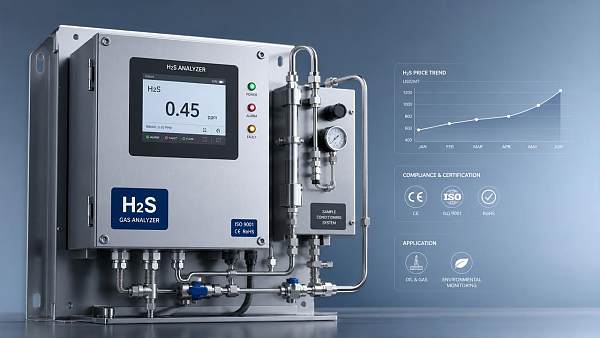
 H2S Concentration Analyzer Price Trends: What’s Driving Costs in 2026H2S concentration analyzer price trends in 2026: discover what drives costs, from sensor technology and compliance to materials and digital features, and make smarter buying decisions.
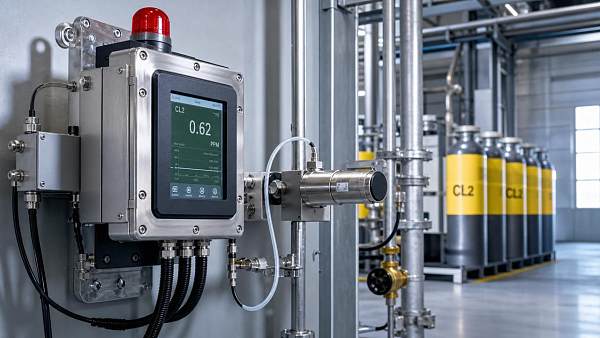
 How to Choose a Cl2 Concentration Analyzer for Process Safety in 2026Cl2 concentration analyzer selection in 2026 starts with process safety. Learn how to match scenarios, improve reliability, avoid costly mistakes, and choose with confidence.
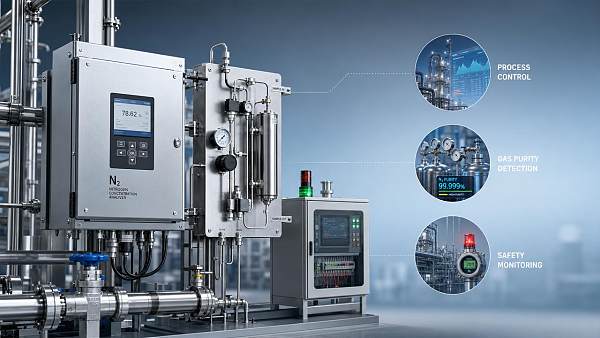
 N2 Concentration Analyzer Cost Factors for Bulk Industrial ProcurementN2 concentration analyzer cost depends on more than unit price. Compare process, purity, and safety applications with total cost logic to source smarter and reduce lifecycle risk.
 Oxygen Concentration Analyzer vs Sensor Systems: Which Fits Continuous UseOxygen concentration analyzer or sensor system? Compare stability, drift, maintenance, and uptime for continuous use to choose the most reliable fit for your process.
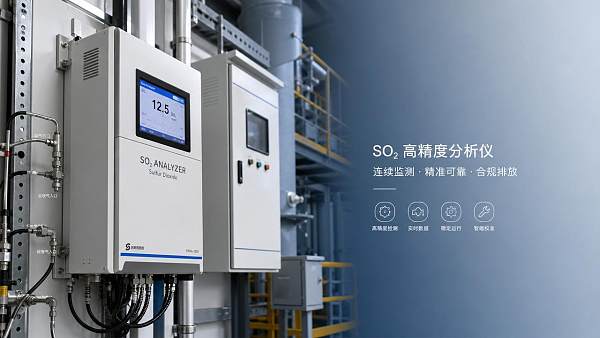
 SO2 Concentration Analyzer News: Compliance Demands Reshaping Product SpecsSO2 concentration analyzer trends are shifting with stricter compliance rules. Learn how new specs, data integrity, and uptime demands are reshaping smarter buying decisions.
 He Concentration Analyzer Maintenance Tips for Stable Long-Term ReadingsHe concentration analyzer maintenance tips for stable long-term readings. Learn how to reduce drift, improve calibration accuracy, cut downtime, and keep industrial systems reliable.
 CH4 Concentration Analyzer Selection Mistakes That Raise Operating RiskCH4 concentration analyzer selection mistakes can raise safety, compliance, and maintenance risk. Learn how to choose the right analyzer for reliable performance and lower lifecycle cost.
 CO Concentration Analyzer Import Rules to Watch in 2026CO concentration analyzer import rules for 2026: learn the key customs, certification, labeling, and compliance checks to reduce risk, avoid delays, and source with confidence.
 NH3 Concentration Analyzer Market Trends for Industrial Process Control in 2026NH3 concentration analyzer market trends in 2026: explore technologies, industrial applications, selection tips, and how smarter monitoring improves compliance, safety, and process control.
 Ar Concentration Analyzer Accuracy Issues in High-Purity Gas ApplicationsAr concentration analyzer accuracy issues can compromise high-purity gas quality, safety, and compliance. Learn the key causes, practical fixes, and how to improve reliable measurement performance.
 CO2 Concentration Analyzer Price Trends in 2026: What Shapes Total CostCO2 concentration analyzer price trends in 2026 depend on technology, accuracy, calibration, compliance, and integration. Discover total cost drivers to compare quotes smarter and control lifecycle risk.
 How to Choose a NOX Concentration Analyzer for Low-Emission MonitoringNOX concentration analyzer selection for low-emission monitoring made easier. Learn how to compare accuracy, response time, compliance, and lifecycle cost before you buy.
 2026 Summit Highlights China's Smart Inspection Equipment as New Global Cooperation FocusSmart inspection equipment takes center stage at the 2026 Summit—unlocking new global cooperation, standards alignment, and market opportunities for exporters, OEMs, and tech suppliers.
 White House Warns Oil Shock May Fuel Core Inflation, Delaying Industrial Instrument ExportsWhite House warns oil shock may fuel core inflation—impacting industrial instrument exports. Discover how pressure, temperature & flow instrumentation exporters can mitigate delays and optimize trade finance workflows now.
 New AI Agent Guidelines Impact Export of AI-Powered Testing EquipmentAI agent guidelines impact export of AI-powered testing equipment—learn how new China security & controllability rules affect global compliance, supply chains, and market access.
 Canton Fair Phase III Boosts Sensor & Energy Testing ExportsSensor & energy testing exports surge at Canton Fair Phase III—driven by global demand for new energy home appliances and smart furniture compliance solutions.
 UAE Announces $150B Energy Infrastructure InvestmentUAE's $150B energy infrastructure push drives demand for IP68/IP69K, ATEX/IECEx, and LPWAN-enabled industrial sensors — act now to align with ADNOC tenders.
 WTI Net Longs Surge, Boosting Demand for Lubricant Monitoring SystemsLubricant monitoring systems surge in demand as WTI net longs rise—real-time viscosity, moisture & oxidation tracking now critical for global manufacturers.
 Shanghai Pudong Launches E-Label Pilot for Imported CosmeticsShanghai Pudong’s e-label pilot for imported cosmetics drives global demand for RFID/NFC readers, traceability solutions & certified testing equipment—act now to comply and lead.















Search Categories
Search Categories
Latest Article
- Brazil to Eliminate Import Duties on Cross-Border E-Commerce Orders Under USD 50Brazil to eliminate import duties on cross-border e-commerce orders under USD 50—key for portable testing instruments exporters targeting Mercado Livre & DIY buyers.Posted by:
- New AI Agent Guidelines Impact Smart Inspection Device ExportsAI Agent Guidelines impact smart inspection device exports—learn how new China AI safety rules affect EU, US & Middle East market access.Posted by:
- UPS Freight Rates Increase Effective May 17, 2026UPS freight rates increase effective May 17, 2026—impact FOB pricing for industrial monitoring equipment exporters. Act now to optimize packaging, revise quotes, and secure margins.Posted by:
Please give us a message
