
Red Sea Crisis Pushes Asia-Europe Freight to $4,800/TEU


On April 30, 2026, persistent Red Sea vessel attacks and the常态化 (routine) rerouting via the Cape of Good Hope drove Asia–Europe mainline spot freight rates to $4,800 per TEU — a 63% increase over Q1 2026 averages — while industrial instrument shipments faced an average 11-day maritime delivery delay. This development warrants close attention from exporters of precision instrumentation, high-value industrial equipment, and temperature-sensitive process control systems.
Event Overview
According to Drewry Shipping Consultants’ report released on April 30, 2026, spot freight rates on key Asia–Europe container lanes — including Shanghai–Hamburg and Ningbo–Rotterdam — reached $4,800/TEU. This reflects sustained disruption from Red Sea security incidents and the operational normalization of Cape of Good Hope diversions. Concurrently, reduced Suez Canal transit windows have extended average sea freight lead times for industrial instruments by 11 days. Air freight substitution costs rose to $12.5/kg.
Which Sub-Sectors Are Affected
Direct Exporters of Industrial Instruments
These companies face direct pressure on delivery reliability and landed cost competitiveness. Industrial instruments — especially those requiring tight thermal stability, calibrated handling, or time-bound commissioning — are highly sensitive to both transit duration and mode-switching volatility. Extended ocean lead times risk breaching contractual delivery windows; air freight at $12.5/kg significantly erodes margin on mid-to-high-value units.
Manufacturers Relying on Just-in-Time Instrument Integration
Firms integrating flow meters, pressure transmitters, or analytical sensors into larger systems (e.g., semiconductor fab tools, pharma production lines) may experience line-stop risks. An 11-day maritime delay cascades into assembly planning, testing cycles, and customer acceptance timelines — particularly where instruments are non-substitutable or require vendor-led calibration pre-installation.
Global Distributors & Channel Partners
Distributors managing regional inventory for European or Middle Eastern end markets face increased working capital strain and forecast uncertainty. Longer and less predictable inbound lead times complicate safety stock modeling, promotional planning, and service-level agreement (SLA) compliance — especially for technical support–dependent product categories.
Freight Forwarders & Multimodal Logistics Providers
Providers supporting instrument shipments must now manage heightened complexity in documentation (e.g., temperature logs, shock monitoring), carrier capacity allocation across volatile routing options, and client expectations around contingency pricing. The $12.5/kg air rate signals constrained belly capacity and rising premium surcharges — not just for speed, but for guaranteed environmental control.
What Relevant Enterprises or Practitioners Should Monitor and Do Now
Track official Suez Canal Authority updates and EU/US maritime security advisories
Current delays stem partly from compressed Suez transit windows — a function of coordinated vessel scheduling and canal pilot availability. Any formal adjustment to daily transit slots or new convoy protocols would materially affect routing feasibility and cost trade-offs.
Map exposure by shipment lane, product sensitivity tier, and destination port
Not all industrial instruments face equal impact. High-precision, Class I/II medical-grade, or ATEX-certified devices warrant priority re-evaluation of routing, packaging, and multimodal fallbacks. Hamburg and Rotterdam remain high-congestion nodes; alternative EU gateways (e.g., Gdansk, Trieste) may offer shorter inland legs despite longer sea legs.
Validate air freight quotations with explicit environmental control terms
At $12.5/kg, air cargo is no longer merely a speed option — it’s a controlled-environment logistics service. Confirm whether quoted rates include active temperature management, vibration-dampened palletization, and real-time sensor reporting, as these directly affect post-arrival functionality validation.
Review Incoterms® usage and insurance clauses for current contracts
FOB or EXW terms shift routing risk to buyers; CIF or DAP may expose sellers to extended liability windows under force majeure interpretations. Assess whether existing policies cover extended storage, demurrage due to port congestion, or recalibration after prolonged transit — especially for devices with traceable calibration intervals.
Editorial Perspective / Industry Observation
Observably, this is not a short-term spike but a structural recalibration of Asia–Europe maritime logistics resilience. The $4,800/TEU rate and 11-day delay reflect embedded operational adaptations — not transient anomalies. Analysis shows that rerouting via the Cape is now the baseline assumption for carriers, not a contingency. From an industry perspective, this signals a shift from ‘route disruption’ to ‘route redefinition’: shippers must treat extended lead times and multimodal premiums as recurring cost inputs, not exceptions to plan around. Current more appropriate framing is that of a new operating environment — one demanding proactive lead-time engineering, rather than reactive delay mitigation.

Red Sea-related freight volatility has transitioned from episodic risk to a defining feature of industrial instrument supply chain planning. Its significance lies less in its novelty and more in its persistence: it tests the robustness of delivery commitments, inventory models, and cross-border service agreements built for pre-2024 assumptions. Rational interpretation treats this not as a crisis to be resolved, but as a constraint to be systematically integrated into procurement, pricing, and customer communication frameworks.
Source: Drewry Shipping Consultants, report dated April 30, 2026.
Note: Ongoing observation is recommended for changes in Suez Canal transit scheduling, carrier capacity reallocation announcements, and EU import customs processing delays at major North Sea ports.
Recommended for You
 Brazil to Eliminate Import Duties on Cross-Border E-Commerce Orders Under USD 50Brazil to eliminate import duties on cross-border e-commerce orders under USD 50—key for portable testing instruments exporters targeting Mercado Livre & DIY buyers.
 New AI Agent Guidelines Impact Smart Inspection Device ExportsAI Agent Guidelines impact smart inspection device exports—learn how new China AI safety rules affect EU, US & Middle East market access.
 UPS Freight Rates Increase Effective May 17, 2026UPS freight rates increase effective May 17, 2026—impact FOB pricing for industrial monitoring equipment exporters. Act now to optimize packaging, revise quotes, and secure margins.
 新修订《海商法》施行:卸货港无人提货责任转向托运人,检测设备出口交期风控升级New Maritime Code shifts unclaimed cargo liability to shippers at discharge ports—critical for testing equipment exporters managing delivery timelines and compliance risk.
 China Imposes Zero Tariffs on Lab Analyzers for 20 African NationsChina's zero tariffs on lab analyzers for 20 African nations boost export competitiveness—pH meters, spectrophotometers & more now duty-free from May 2026.
 CA Toxic Chemical Tank Overheating Sparks Explosion Risk, Monitoring Equipment Orders SurgeGas leak detectors, remote temperature warning systems & explosion-proof thermal imagers surge in demand after CA toxic tank overheating incident.
 EU REACH Adds DBDPE to SVHC List, Impacting Brominated Flame Retardant Testing for Export EquipmentDBDPE added to EU REACH SVHC list—impact on brominated flame retardant testing for industrial instruments, sensors & export compliance. Act now.
 Thailand Customs Digital Reform Spurs RFID Equipment DemandRFID equipment demand surges in Thailand as Customs digital reform mandates e-labeling, real-time parcel tracking & API compliance—act now to meet TISI specs and platform rules.
 Lazada Thailand Cuts Import Duties on 528 CategoriesLazada Thailand cuts import duties on 528 categories — including wired headphones & notebooks — lowering costs for Chinese exporters and Thai SMEs via LGS.
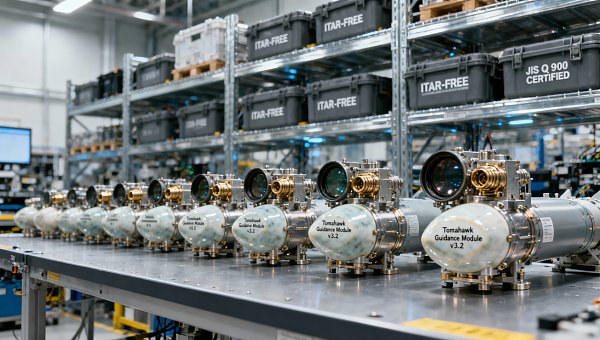
 US Delays 400 Tomahawk Missiles to Japan Amid Iran Inventory ReplenishmentTomahawk missiles delay to Japan sparks urgent demand for alternative guidance, navigation & secure comms suppliers—key opportunity for export-ready defense electronics firms.
 What to Check Before Importing an F2 Concentration Analyzer in 2026F2 concentration analyzer import guide for 2026: learn what to check on compliance, performance, integration, lifecycle cost, and supplier support before you buy.
 SF6 Concentration Analyzer Market Trends for Power and Gas Applications in 2026SF6 concentration analyzer market trends for 2026: explore accuracy, digital integration, emissions control, and buying tips for power and gas applications.
 Common HCl Concentration Analyzer Mistakes That Lead to Unstable ReadingsHCl concentration analyzer unstable readings? Discover the most common installation, calibration, sampling, and maintenance mistakes—and the practical fixes that improve accuracy fast.
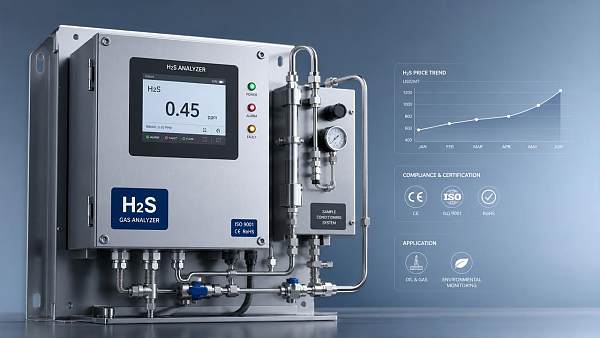
 H2S Concentration Analyzer Price Trends: What’s Driving Costs in 2026H2S concentration analyzer price trends in 2026: discover what drives costs, from sensor technology and compliance to materials and digital features, and make smarter buying decisions.
 How to Choose a Cl2 Concentration Analyzer for Process Safety in 2026Cl2 concentration analyzer selection in 2026 starts with process safety. Learn how to match scenarios, improve reliability, avoid costly mistakes, and choose with confidence.
 N2 Concentration Analyzer Cost Factors for Bulk Industrial ProcurementN2 concentration analyzer cost depends on more than unit price. Compare process, purity, and safety applications with total cost logic to source smarter and reduce lifecycle risk.
 Oxygen Concentration Analyzer vs Sensor Systems: Which Fits Continuous UseOxygen concentration analyzer or sensor system? Compare stability, drift, maintenance, and uptime for continuous use to choose the most reliable fit for your process.
 SO2 Concentration Analyzer News: Compliance Demands Reshaping Product SpecsSO2 concentration analyzer trends are shifting with stricter compliance rules. Learn how new specs, data integrity, and uptime demands are reshaping smarter buying decisions.
 He Concentration Analyzer Maintenance Tips for Stable Long-Term ReadingsHe concentration analyzer maintenance tips for stable long-term readings. Learn how to reduce drift, improve calibration accuracy, cut downtime, and keep industrial systems reliable.
 CH4 Concentration Analyzer Selection Mistakes That Raise Operating RiskCH4 concentration analyzer selection mistakes can raise safety, compliance, and maintenance risk. Learn how to choose the right analyzer for reliable performance and lower lifecycle cost.
 CO Concentration Analyzer Import Rules to Watch in 2026CO concentration analyzer import rules for 2026: learn the key customs, certification, labeling, and compliance checks to reduce risk, avoid delays, and source with confidence.
 NH3 Concentration Analyzer Market Trends for Industrial Process Control in 2026NH3 concentration analyzer market trends in 2026: explore technologies, industrial applications, selection tips, and how smarter monitoring improves compliance, safety, and process control.
 Ar Concentration Analyzer Accuracy Issues in High-Purity Gas ApplicationsAr concentration analyzer accuracy issues can compromise high-purity gas quality, safety, and compliance. Learn the key causes, practical fixes, and how to improve reliable measurement performance.
 CO2 Concentration Analyzer Price Trends in 2026: What Shapes Total CostCO2 concentration analyzer price trends in 2026 depend on technology, accuracy, calibration, compliance, and integration. Discover total cost drivers to compare quotes smarter and control lifecycle risk.
 How to Choose a NOX Concentration Analyzer for Low-Emission MonitoringNOX concentration analyzer selection for low-emission monitoring made easier. Learn how to compare accuracy, response time, compliance, and lifecycle cost before you buy.
 2026 Summit Highlights China's Smart Inspection Equipment as New Global Cooperation FocusSmart inspection equipment takes center stage at the 2026 Summit—unlocking new global cooperation, standards alignment, and market opportunities for exporters, OEMs, and tech suppliers.
 White House Warns Oil Shock May Fuel Core Inflation, Delaying Industrial Instrument ExportsWhite House warns oil shock may fuel core inflation—impacting industrial instrument exports. Discover how pressure, temperature & flow instrumentation exporters can mitigate delays and optimize trade finance workflows now.
 New AI Agent Guidelines Impact Export of AI-Powered Testing EquipmentAI agent guidelines impact export of AI-powered testing equipment—learn how new China security & controllability rules affect global compliance, supply chains, and market access.
 Canton Fair Phase III Boosts Sensor & Energy Testing ExportsSensor & energy testing exports surge at Canton Fair Phase III—driven by global demand for new energy home appliances and smart furniture compliance solutions.
 UAE Announces $150B Energy Infrastructure InvestmentUAE's $150B energy infrastructure push drives demand for IP68/IP69K, ATEX/IECEx, and LPWAN-enabled industrial sensors — act now to align with ADNOC tenders.
 WTI Net Longs Surge, Boosting Demand for Lubricant Monitoring SystemsLubricant monitoring systems surge in demand as WTI net longs rise—real-time viscosity, moisture & oxidation tracking now critical for global manufacturers.
 Shanghai Pudong Launches E-Label Pilot for Imported CosmeticsShanghai Pudong’s e-label pilot for imported cosmetics drives global demand for RFID/NFC readers, traceability solutions & certified testing equipment—act now to comply and lead.




























Search Categories
Search Categories
Latest Article
- Brazil to Eliminate Import Duties on Cross-Border E-Commerce Orders Under USD 50Brazil to eliminate import duties on cross-border e-commerce orders under USD 50—key for portable testing instruments exporters targeting Mercado Livre & DIY buyers.Posted by:
- New AI Agent Guidelines Impact Smart Inspection Device ExportsAI Agent Guidelines impact smart inspection device exports—learn how new China AI safety rules affect EU, US & Middle East market access.Posted by:
- UPS Freight Rates Increase Effective May 17, 2026UPS freight rates increase effective May 17, 2026—impact FOB pricing for industrial monitoring equipment exporters. Act now to optimize packaging, revise quotes, and secure margins.Posted by:
Please give us a message
