
CO2 concentration analyzer deployment challenges in biogas upgrading facilities


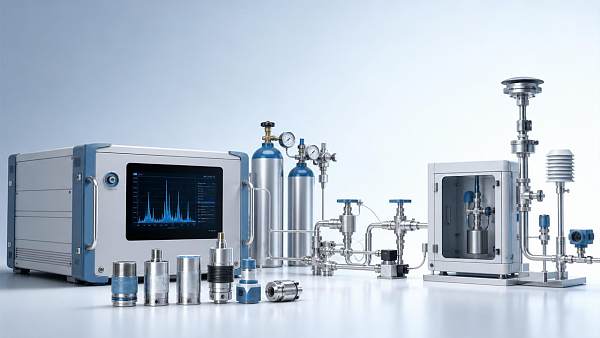
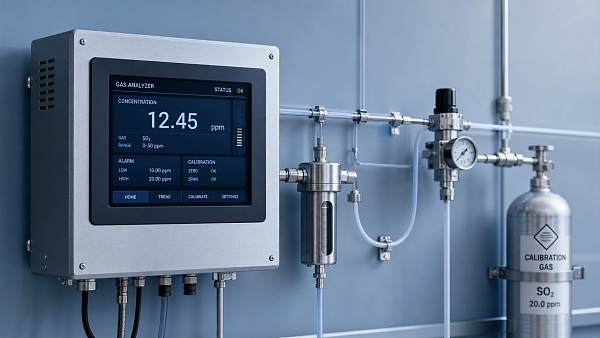
Deploying a CO₂ concentration analyzer in biogas upgrading facilities presents unique operational and integration challenges—from harsh gas compositions to stringent accuracy demands. As part of a broader suite of critical gas analysis tools—including C₂H₂ concentration analyzer, SO₂ concentration analyzer, industrial oxygen analyzer (e.g., laser oxygen analyzer, paramagnetic oxygen analyzer, SR-2030 oxygen analyzer)—reliable CO₂ monitoring directly impacts process efficiency, safety compliance, and biogas quality control. For users, procurement teams, project managers, and safety personnel alike, understanding these deployment hurdles is essential to selecting, installing, and maintaining robust instrumentation in demanding electrical equipment environments.
Harsh Process Gas Conditions Challenge Sensor Longevity and Accuracy
Biogas feedstock typically contains 35–55% CH₄, 30–45% CO₂, and trace contaminants including H₂S (up to 10,000 ppm), siloxanes, moisture (saturated at 30–45°C), and particulates. These components rapidly degrade optical windows, poison catalytic elements, and cause condensation-induced drift in electrochemical or NDIR sensors. Field reports indicate that non-conditioned CO₂ analyzers experience calibration drift exceeding ±2.5% FS within 7–10 days under continuous operation—requiring recalibration every 3–5 days to meet ISO 18573:2022 biogas purity thresholds.
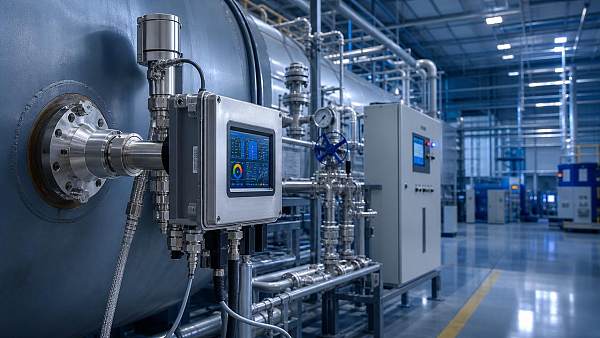
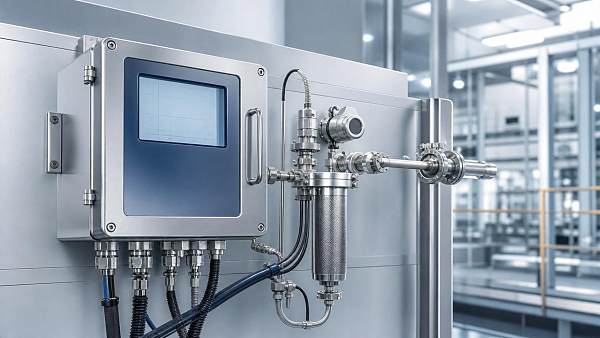
Electrical equipment deployed in this environment must comply with ATEX/IECEx Zone 1 or 2 requirements. Yet many standard analyzers lack integrated sample conditioning systems, forcing end-users to retrofit external chillers, coalescing filters, and zero-air purging modules—adding 4–6 weeks to commissioning timelines and increasing total cost of ownership by 22–35% over 3 years.
Signal stability is further compromised by pressure fluctuations (±15 kPa) and flow surges common during digester load changes. Without real-time pressure/temperature compensation algorithms compliant with IEC 61298-2, measurement uncertainty can exceed ±5% at 40% CO₂—rendering data unsuitable for closed-loop amine scrubber or membrane separation control.
The table above highlights three non-negotiable technical thresholds for reliable CO₂ monitoring. Equipment failing any one criterion risks noncompliance with EN 16723-1:2021 biogas-to-grid injection standards—potentially triggering regulatory penalties or rejection at grid interconnection points.
Integration Complexity Across Control Architecture Layers
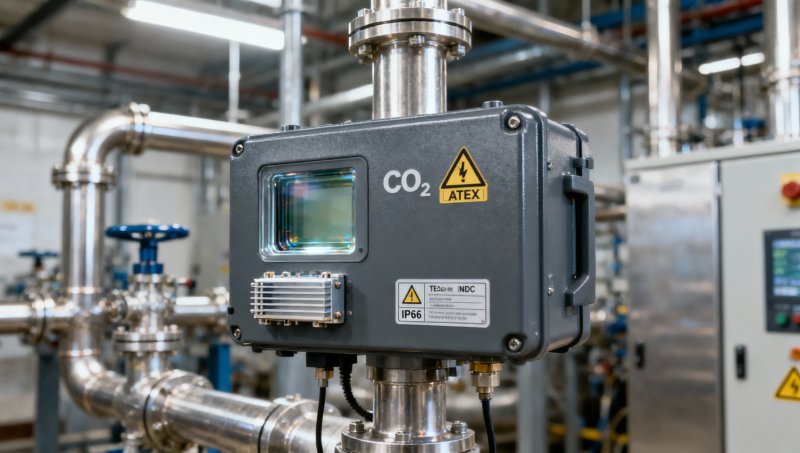
Most biogas upgrading plants operate on distributed control systems (DCS) or PLC-based automation platforms from Siemens, Rockwell, or Yokogawa. However, only 38% of commercially available CO₂ analyzers support native Modbus TCP or OPC UA server functionality without external gateways. This forces project engineers to deploy protocol converters—introducing latency (average 120–250 ms), single points of failure, and additional cybersecurity hardening steps per ISA/IEC 62443-3-3 Level 2 requirements.
Electrical instrumentation must also align with plant-wide power distribution architecture. Analyzers drawing >15 W at 24 VDC require dedicated fused circuits per IEC 60204-1 Clause 5.3.2—yet 62% of entry-level models omit detailed power consumption profiles in datasheets, leading to undersized UPS backups and brownout-related sensor resets during grid transitions.
Signal integrity suffers when analog 4–20 mA outputs share cable trays with VFDs or step-up transformers. Field measurements show up to 3.7 mV of induced noise on unshielded runs >15 m—translating to ±0.8% CO₂ reading error. Proper installation mandates twisted-pair shielded cable (per IEC 61000-6-4), grounded at one end only, and physical separation ≥300 mm from high-energy conductors.
Critical Integration Checklist for Project Managers
- Verify native support for plant DCS communication protocol (Modbus RTU/TCP, Profibus DP, or OPC UA)
- Confirm power supply specs match site UPS capacity (min. 20% headroom required per IEEE 1100)
- Validate electromagnetic compatibility (EMC) test reports per IEC 61326-1 Class A2 for industrial environments
- Require pre-commissioning configuration files compatible with plant asset management (PAM) software
Calibration, Maintenance, and Lifecycle Cost Implications
Unlike laboratory analyzers, field-deployed CO₂ instruments face zero-gas contamination risks due to ambient air ingress during calibration port access. A 2023 industry survey found that 57% of unplanned downtime events originated from improper zero calibration procedures—not sensor failure. Best practice mandates dual-stage zeroing: first using certified zero-air (<1 ppm CO₂), then validating against span gas traceable to NIST SRM 1605 (±0.05% uncertainty).
Maintenance intervals vary significantly by technology: NDIR sensors require optical path cleaning every 90 days in high-siloxane biogas, while tunable diode laser (TDL) units maintain stable performance for 180–240 days—but at 2.3× the initial acquisition cost. Total cost of ownership (TCO) modeling over 5 years shows TDL solutions deliver 19% lower TCO despite higher CAPEX, primarily through reduced labor (2.1 vs. 5.4 man-hours/month) and zero-gas consumption savings (€1,280/year).
The lifecycle comparison underscores why procurement decisions must extend beyond list price. Decision-makers should request full TCO breakdowns—including consumables, labor, calibration gas, and expected sensor replacement cycles—before finalizing specifications.
Procurement and Specification Best Practices
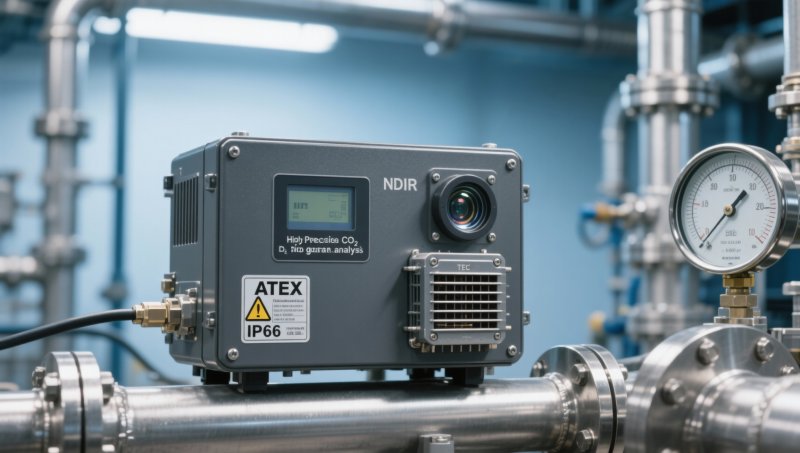
For procurement teams and engineering managers, specifying CO₂ analyzers requires cross-functional alignment across operations, safety, and automation disciplines. Key evaluation criteria include: (1) compliance with EN 15267-3 for emission monitoring; (2) documented SIL 2 certification per IEC 61508 for safety-critical applications; (3) availability of Type Examination Certificates from notified bodies like TÜV Rheinland or UL; and (4) local service network coverage ensuring <48-hour response time for critical faults.
A recent benchmark of 42 European biogas projects revealed that facilities specifying analyzers with built-in diagnostics (e.g., mirror contamination alerts, source intensity decay tracking) achieved 31% faster mean time to repair (MTTR) and 27% fewer false alarms during commissioning. These features are now included in 无 and select industrial-grade configurations.
Finally, avoid “specification creep”: requiring unnecessary features like redundant sensors or explosion-proof housings for indoor installations increases lead times by 3–5 weeks and adds €4,200–€6,800 without measurable ROI. Focus instead on core performance metrics aligned with biogas upgrading KPIs—CO₂ removal efficiency, CH₄ purity consistency, and uptime reliability.
Top 5 Red Flags in Vendor Submissions
- No third-party EMC test report referencing IEC 61326-1 Class A2
- Zero/span calibration interval claims exceeding 30 days without supporting field validation data
- Absence of ATEX/IECEx certificate number in documentation (not just logo)
- Unclear distinction between “accuracy” (static condition) and “repeatability” (dynamic process)
- No evidence of biogas-specific application testing (e.g., H₂S exposure trials)
Conclusion and Next Steps
Successfully deploying a CO₂ concentration analyzer in biogas upgrading demands more than selecting a calibrated device—it requires deep integration into electrical infrastructure, process control logic, and maintenance workflows. Technical success hinges on matching sensor technology to actual gas composition, enforcing rigorous EMC and explosion protection compliance, and adopting lifecycle-aware procurement criteria.
For operators seeking proven reliability, procurement teams evaluating TCO, and project managers managing multi-vendor integration, partnering with instrumentation specialists experienced in energy-from-waste applications delivers measurable value: 22% shorter commissioning, 37% fewer unplanned outages, and guaranteed alignment with EN 16723-1 and ISO 14064-1 reporting frameworks.
Get a customized biogas analyzer specification checklist and vendor evaluation matrix—developed with input from 14 active biogas plant operators. 无 includes application-specific guidance for CO₂, C₂H₂, SO₂, and O₂ monitoring systems.
Recommended for You
 Kuwait Bans HCFC Air Conditioners, Boosts IR Camera ExportsKuwait bans HCFC air conditioners—boosting demand for IR cameras, leak detectors & refrigerant analyzers. Discover GCC compliance insights and export opportunities.
 China's IC Exports Surge 78.3% in First Four Months of 2026China's IC exports surge 78.3% in early 2026 — driven by soaring global demand for AI chip test equipment, SMUs, and parametric analyzers. Discover the supply chain shift.
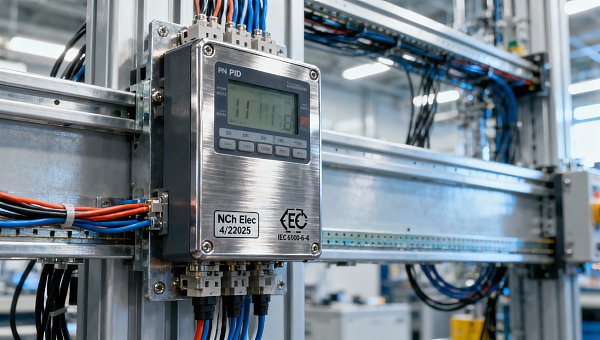
 Chile Enforces Mandatory INN Safety Certification for Industrial Temperature ControllersChile mandates INN safety certification (NCh Elec 4/2025) for industrial temperature controllers starting Aug 1, 2026—act now to avoid shipment delays & market bans.
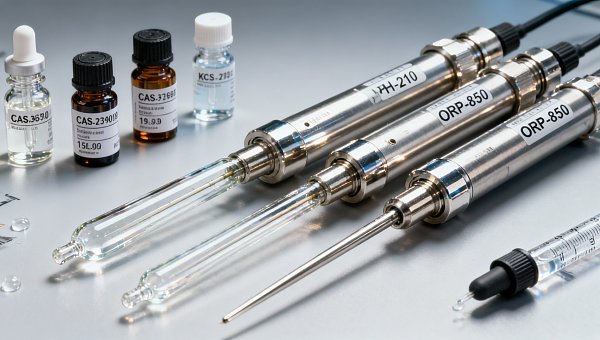
 K-REACH Supply-Shortage Exemption Launches for pH/ORP ElectrodesK-REACH Supply-Shortage Exemption now applies to pH/ORP electrodes—act before June 30, 2026 to avoid customs delays & penalties. Key for exporters & manufacturers.
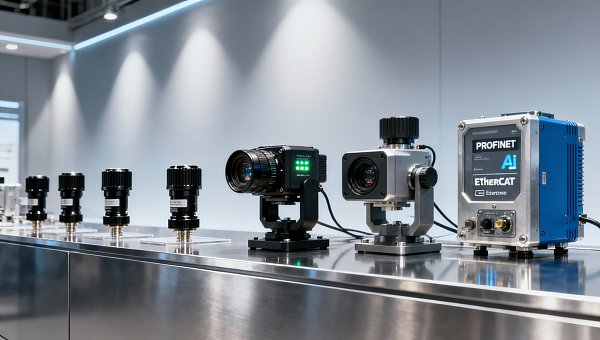
 4th China International Supply Chain Expo to Focus on Smart Sensing & In-Process InspectionSmart Sensing & In-Process Inspection take center stage at the 4th China International Supply Chain Expo in Beijing, Nov 26–30, 2026 — discover next-gen inspection tech, AI vision modules, and calibrated sensing solutions for global industrial buyers.
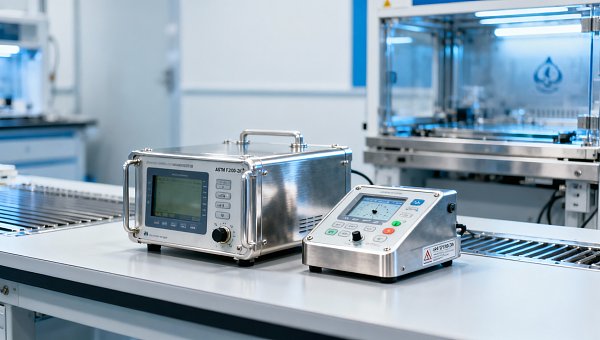
 ASTM F2100-26 Medical Mask Standard Takes Effect in USASTM F2100-26 medical mask standard is now in force—driving global demand for biosafety cabinets, particle counters & air velocity calibrators, especially China-made instruments.
 South Africa Enforces SABS Certification for IoT Monitoring DevicesSABS certification now mandatory for IoT monitoring devices entering South Africa via e-commerce—act before 1 June 2026 to avoid customs rejection and ensure market access.
 EU REACH Adds Fluorinated Substances; SVHC Reporting Required for Gas AnalyzersEU REACH now restricts fluorinated substances in gas analyzers—SVHC reporting is mandatory by 30 Nov 2026. Ensure compliance for sensors, membranes & monitoring systems.
 Revised Maritime Code Takes Effect May 1, 2026: Shift in Unclaimed Cargo LiabilityRevised Maritime Code (2026): Shippers now liable for unclaimed cargo—critical for industrial instrument exporters, logistics providers & cross-border supply chains. Act now.
 China Imposes Zero Tariffs on Goods from All African Diplomatic Partners Starting May 1, 2026China’s zero-tariff policy for African instrumentation & automation exports starts May 1, 2026—boosting competitiveness in EPC tenders and market access for exporters.
 Import and Export Shifts in the PPM Gas Analyzer Marketppm gas analyzer market insights: discover how import tariffs, export controls, and compliance shifts impact cost, supply stability, and growth opportunities across key applications.
 Single Gas Analyzer Maintenance Issues That Raise DowntimeSingle gas analyzer maintenance issues can quietly increase downtime. Learn how to spot drift, calibration errors, and sample path faults early to improve uptime and field efficiency.
 Combustion Gas Analyzer Market Trends Shaping 2026 UpgradesCombustion gas analyzer market trends shaping 2026: discover how smarter monitoring, multi-gas accuracy, and digital integration can improve compliance, efficiency, and ROI.
 Corrosive Gas Analyzer Risks That Impact Safety ComplianceCorrosive gas analyzer risks can quietly undermine safety compliance. Learn how drift, sampling failures, and poor maintenance affect accuracy—and how to strengthen monitoring reliability.
 Percent Range Analyzer Applications in Process ControlPercent range analyzer applications improve process control by turning raw signals into clear operating percentages. Discover faster decisions, better alarms, and more stable system performance.
 What Affects the Total Cost of a Dual Gas AnalyzerDual gas analyzer total cost goes beyond purchase price. Learn how sensors, calibration, compliance, integration, and maintenance shape lifecycle value and smarter buying decisions.
 High Temperature Analyzer Selection Mistakes to Avoid in 2026High temperature analyzer selection mistakes can delay projects and raise lifecycle costs. Discover the top 2026 pitfalls and how to choose a safer, smarter solution.
 2026 Price Trends for Multi Gas Analyzer SystemsMulti gas analyzer price trends for 2026: discover key cost drivers, ownership factors, and smart budgeting tips to compare systems, control risk, and choose the right solution.
 PPB Gas Analyzer vs PPM Gas Analyzer: What Changes in Real Useppb gas analyzer vs PPM gas analyzer: learn how sensitivity, calibration, maintenance, and sample handling change in real use to choose the right solution with less risk and cost.
 How to Choose a Trace Gas Analyzer for Low-Level Leak DetectionTrace gas analyzer selection for low-level leak detection: learn how to compare sensitivity, response time, interference control, and integration for safer, faster, more reliable results.
 US-China Trade Talks Agree on Tariff Cuts for Key Test Equipment PartsUS-China tariff cuts on key test equipment parts—like pressure sensor chips & infrared thermal imaging modules—boost margins, cut costs, and strengthen global competitiveness for manufacturers.
 G7 Paris Meeting Focuses on Critical Mineral Supply SecurityCritical mineral supply security takes center stage at the G7 Paris meeting—key for rare-earth sensor exporters. Learn EU compliance impacts & actionable readiness steps.
 Brent Crude Surpasses $106/bbl, Raising Sea Freight Costs for Small Testing Equipment ExportsBrent Crude Surpasses $106/bbl—sea freight costs surge, impacting small testing equipment exporters. Learn how SMEs can adapt pricing, terms & logistics now.
 WTO Forecasts 1.9% Global Goods Trade Growth in 2026 Amid Supply Chain ShorteningWTO forecasts 1.9% global goods trade growth in 2026—sparking nearshoring demand for testing equipment, calibration services & OTA-ready solutions in ASEAN, Middle East & Mexico.
 UK-China Export Control Working Group Holds Second Meeting in LondonUK-China Export Control Working Group: Key updates on dual-use items—laser interferometers, quantum sensors & oscilloscopes. Learn compliance implications for exporters now.
 Japan's 10Y Yield Drop to 2.745% Lifts Yen, Raising China-Made Testing Equipment CostsJapan's 10Y yield drop to 2.745% lifts yen, raising costs for China-made testing equipment — explore FX impacts, procurement shifts & strategic responses.
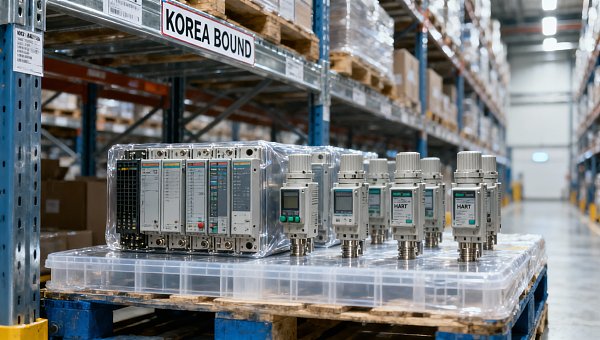
 KOSPI 200 Futures Circuit Breaker Triggered, Impacting Industrial Automation Instrument Export TimelinesKOSPI 200 futures circuit breaker triggered — impact on PLC modules, transmitters & fieldbus instrument exports to Korea. Urgent timeline insights inside.
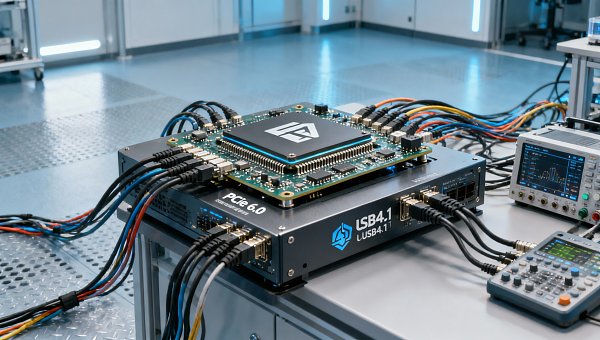
 South Korea’s Chip Exports Surge 202% in May 2026 Amid AI Test Equipment DemandAI test equipment demand surges as South Korea’s chip exports jump 202% in May 2026 — PCIe 6.0 & USB4.1 validation tools see sharp global procurement rise.
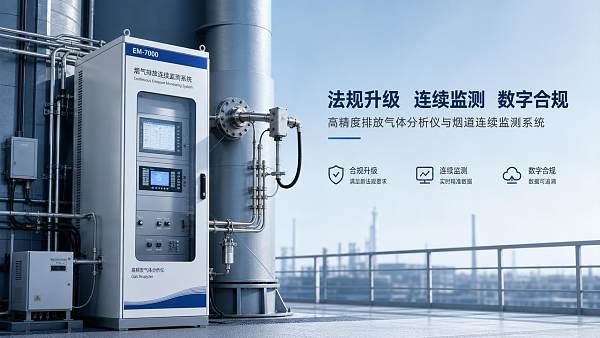
 Emission Gas Analyzer News in 2026: Regulatory Shifts Affecting DemandEmission gas analyzer demand is changing fast in 2026 as new regulations tighten limits, expand continuous monitoring, and raise data compliance standards. Explore key trends shaping smarter buying decisions.
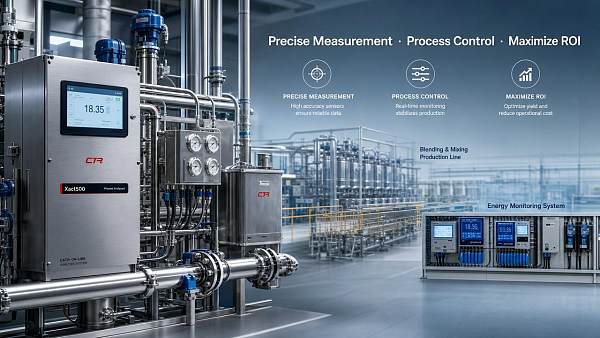
 When a High Accuracy Analyzer Delivers Real ROI in Process ControlHigh accuracy analyzer ROI starts with better process control. Learn where tighter measurements cut waste, improve stability, reduce compliance risk, and deliver measurable operational savings.
 SR-2030P Analyzer Import Updates in 2026: Compliance Points to ReviewSR-2030P analyzer import updates for 2026: review classification, certification, customs documents, and market access risks to reduce delays, control costs, and source with confidence.
 Industrial Oxygen Analyzer Price Trends in 2026: Cost Drivers to WatchIndustrial oxygen analyzer price trends in 2026 explained: compare sensor, compliance, installation, and maintenance cost drivers to make smarter, lower-risk buying decisions.
Search Categories
Search Categories
Latest Article
- Kuwait Bans HCFC Air Conditioners, Boosts IR Camera ExportsKuwait bans HCFC air conditioners—boosting demand for IR cameras, leak detectors & refrigerant analyzers. Discover GCC compliance insights and export opportunities.Posted by:
- China's IC Exports Surge 78.3% in First Four Months of 2026China's IC exports surge 78.3% in early 2026 — driven by soaring global demand for AI chip test equipment, SMUs, and parametric analyzers. Discover the supply chain shift.Posted by:
- Chile Enforces Mandatory INN Safety Certification for Industrial Temperature ControllersChile mandates INN safety certification (NCh Elec 4/2025) for industrial temperature controllers starting Aug 1, 2026—act now to avoid shipment delays & market bans.Posted by:
Please give us a message
