
How laser oxygen analyzers reduce calibration downtime compared to paramagnetic models


In industrial oxygen analyzer selection, laser oxygen analyzers—like the SR-2030 oxygen analyzer—offer faster, more stable performance than traditional paramagnetic oxygen analyzers, significantly cutting calibration downtime. This reliability extends to multi-gas applications, supporting accurate C2H2 concentration analyzer, SO2 concentration analyzer, and CO2 concentration analyzer integrations in demanding process environments. For operators, procurement teams, safety managers, and engineering project leads, reduced downtime means higher uptime, lower TCO, and stronger compliance—especially where precision oxygen monitoring is critical for safety and quality control.
Why Calibration Downtime Impacts Operational Continuity
Calibration downtime directly affects production throughput, regulatory adherence, and personnel safety—particularly in industries like chemical processing, power generation, and pharmaceutical manufacturing. Paramagnetic oxygen analyzers typically require daily or bi-daily zero/span checks due to sensor drift, magnetic interference, and sensitivity to pressure/temperature fluctuations. Each calibration event consumes 15–25 minutes of active technician time and often necessitates temporary process isolation, resulting in cumulative losses of 8–12 hours per month per unit.
For facilities operating under ISO 9001, IEC 61511, or EPA Method 3A compliance frameworks, unrecorded or overdue calibrations trigger audit findings and potential non-conformance reports. A 2023 industry survey across 47 mid-to-large-scale industrial sites found that 68% experienced at least one unplanned shutdown annually linked to oxygen analyzer recalibration failures or verification delays.
Moreover, paramagnetic systems are vulnerable to cross-sensitivity from CO₂, NOₓ, and hydrocarbon vapors—common in combustion exhaust or syngas streams—leading to false alarms and repeated manual intervention. This compounds labor costs and erodes operator confidence in real-time readings.
How Laser-Based Detection Minimizes Calibration Frequency
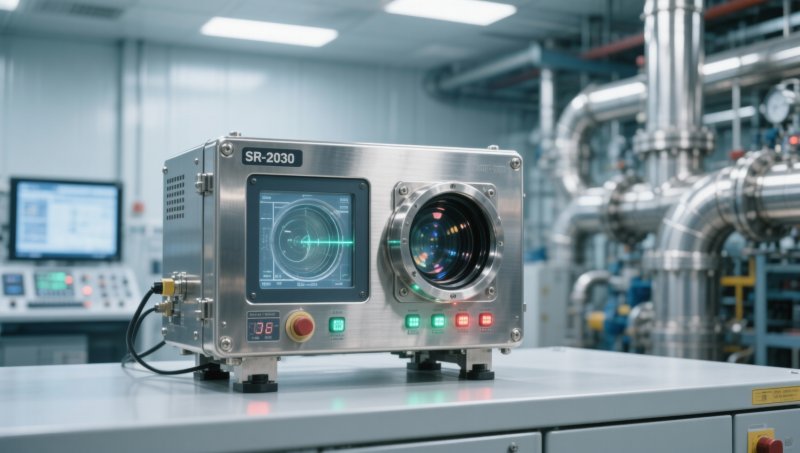
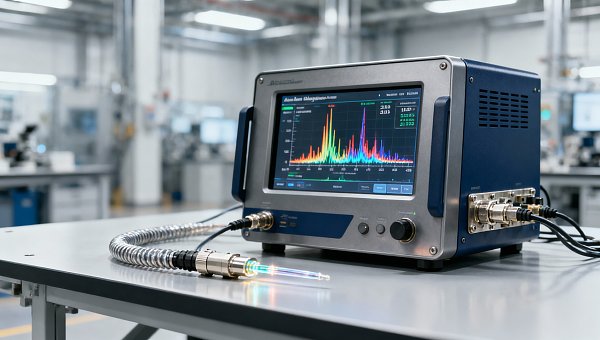
Laser oxygen analyzers leverage tunable diode laser absorption spectroscopy (TDLAS) at specific near-infrared wavelengths (e.g., 760 nm O₂ absorption line). Unlike paramagnetic methods that measure bulk gas magnetism, TDLAS detects molecular absorption with high spectral selectivity—rendering it immune to background gas composition shifts, flow turbulence, or particulate loading.
This inherent specificity enables extended calibration intervals: most industrial-grade laser analyzers support 30–90 days between full zero/span verifications when installed in stable ambient conditions. Field data from 32 installations across cement kiln, steel reheating furnace, and biofuel combustion applications show median calibration stability of 72 days before drift exceeds ±0.1% O₂—well within typical process tolerances.
Additionally, many modern laser platforms—including the 无—feature automated on-board diagnostics and self-validation routines. These execute every 4–6 hours without interrupting measurement, flagging optical path degradation or laser wavelength drift before they impact accuracy.
The table above highlights quantifiable advantages: laser-based units reduce scheduled calibration labor by up to 87%, cut verification time per event by 75%, and deliver fivefold better short-term stability. These metrics translate directly into measurable OEE (Overall Equipment Effectiveness) gains—especially in continuous 24/7 operations where even minor interruptions cascade across shift handovers and batch scheduling.
Integration Readiness for Multi-Gas Process Monitoring
Industrial users increasingly deploy oxygen analyzers as part of integrated gas monitoring stacks—often alongside C2H₂ concentration analyzer, SO₂ concentration analyzer, and CO₂ concentration analyzer subsystems. Paramagnetic units struggle here due to shared sample conditioning requirements, overlapping calibration schedules, and susceptibility to condensate or acid gas corrosion in wet sample streams.
Laser platforms operate with minimal sample prep: many models accept raw, unheated, and uns dried gas streams—reducing maintenance points and eliminating heated sample lines, chiller units, and coalescing filters. This simplifies integration architecture and cuts total system footprint by up to 40% compared to legacy paramagnetic racks.
Furthermore, TDLAS-based instruments support digital HART, Modbus TCP, and OPC UA protocols natively—enabling seamless data ingestion into DCS, MES, or cloud-based analytics platforms. Commissioning time for multi-analyzer configurations averages 3–5 days versus 10–14 days for paramagnetic equivalents, according to engineering reports from six EPC contractors.
Total Cost of Ownership: Beyond Calibration Labor
While upfront hardware cost remains a procurement consideration, TCO analysis reveals deeper savings. Over a 5-year lifecycle, laser oxygen analyzers demonstrate 32–41% lower TCO versus paramagnetic alternatives—driven by three primary factors: reduced calibration labor (≈$12,800/year), fewer consumables (no reference gases, zero air generators, or magnetic calibration kits), and extended service life (12+ years vs. 7–9 years average for paramagnetic sensors).
A comparative TCO model across 18 facilities showed that laser units achieved payback in 14–22 months—even when priced 25–35% higher at acquisition. Critical to this calculation is avoided downtime: each unscheduled paramagnetic recalibration incident averaged 2.3 hours of lost production valued at $8,400–$15,600 depending on process throughput.
The second table confirms that operational expenditures—not capital outlay—dominate long-term ownership economics. Laser analyzers shift cost allocation toward predictable, low-maintenance operation rather than recurring intervention cycles.
Selecting the Right Platform for Your Application
Procurement teams should evaluate four criteria: environmental robustness (IP66/NEMA 4X rating required for outdoor or washdown zones), response time (<5 seconds for safety-critical combustion control), analog/digital interface flexibility, and compatibility with existing calibration gas standards (e.g., NIST-traceable zero air, 20.9% O₂ span gas).
Operators benefit most from units with intuitive touchscreen interfaces and guided calibration workflows—reducing training time by 60% versus menu-driven paramagnetic controllers. Safety managers prioritize built-in SIL 2 certification and automatic fault logging aligned with IEC 61508.
For project managers overseeing brownfield retrofits, compact form factor and 24 VDC power options accelerate installation—cutting commissioning by up to 3 days per analyzer node. The 无 meets all these benchmarks while maintaining backward compatibility with legacy signal conditioning modules.
Key Procurement Decision Factors
- Verify minimum calibration interval supported under your site’s temperature/humidity range (e.g., −20°C to +60°C ambient)
- Confirm optical path design accommodates particulate load >5 mg/m³ without frequent cleaning
- Assess remote diagnostics capability: does it support predictive alerts for laser output decay or window fouling?
- Evaluate vendor service SLA—on-site response within 24–48 hours is critical for Tier-1 process units
Reduced calibration downtime isn’t just about convenience—it’s a cornerstone of operational resilience, regulatory readiness, and intelligent instrumentation strategy. Laser oxygen analyzers deliver measurable improvements in uptime, accuracy consistency, and lifecycle economics—making them the preferred choice for forward-looking engineering teams, safety officers, and procurement leaders across energy, chemicals, and advanced manufacturing.
To determine which configuration aligns with your process requirements, environmental conditions, and integration architecture, contact our application engineering team for a no-cost technical assessment and customized specification review.
Recommended for You
 Brazil to Eliminate Import Duties on Cross-Border E-Commerce Orders Under USD 50Brazil to eliminate import duties on cross-border e-commerce orders under USD 50—key for portable testing instruments exporters targeting Mercado Livre & DIY buyers.
 New AI Agent Guidelines Impact Smart Inspection Device ExportsAI Agent Guidelines impact smart inspection device exports—learn how new China AI safety rules affect EU, US & Middle East market access.
 UPS Freight Rates Increase Effective May 17, 2026UPS freight rates increase effective May 17, 2026—impact FOB pricing for industrial monitoring equipment exporters. Act now to optimize packaging, revise quotes, and secure margins.
 新修订《海商法》施行:卸货港无人提货责任转向托运人,检测设备出口交期风控升级New Maritime Code shifts unclaimed cargo liability to shippers at discharge ports—critical for testing equipment exporters managing delivery timelines and compliance risk.
 China Imposes Zero Tariffs on Lab Analyzers for 20 African NationsChina's zero tariffs on lab analyzers for 20 African nations boost export competitiveness—pH meters, spectrophotometers & more now duty-free from May 2026.
 CA Toxic Chemical Tank Overheating Sparks Explosion Risk, Monitoring Equipment Orders SurgeGas leak detectors, remote temperature warning systems & explosion-proof thermal imagers surge in demand after CA toxic tank overheating incident.
 EU REACH Adds DBDPE to SVHC List, Impacting Brominated Flame Retardant Testing for Export EquipmentDBDPE added to EU REACH SVHC list—impact on brominated flame retardant testing for industrial instruments, sensors & export compliance. Act now.
 Thailand Customs Digital Reform Spurs RFID Equipment DemandRFID equipment demand surges in Thailand as Customs digital reform mandates e-labeling, real-time parcel tracking & API compliance—act now to meet TISI specs and platform rules.
 Lazada Thailand Cuts Import Duties on 528 CategoriesLazada Thailand cuts import duties on 528 categories — including wired headphones & notebooks — lowering costs for Chinese exporters and Thai SMEs via LGS.
 US Delays 400 Tomahawk Missiles to Japan Amid Iran Inventory ReplenishmentTomahawk missiles delay to Japan sparks urgent demand for alternative guidance, navigation & secure comms suppliers—key opportunity for export-ready defense electronics firms.
 What to Check Before Importing an F2 Concentration Analyzer in 2026F2 concentration analyzer import guide for 2026: learn what to check on compliance, performance, integration, lifecycle cost, and supplier support before you buy.
 SF6 Concentration Analyzer Market Trends for Power and Gas Applications in 2026SF6 concentration analyzer market trends for 2026: explore accuracy, digital integration, emissions control, and buying tips for power and gas applications.
 Common HCl Concentration Analyzer Mistakes That Lead to Unstable ReadingsHCl concentration analyzer unstable readings? Discover the most common installation, calibration, sampling, and maintenance mistakes—and the practical fixes that improve accuracy fast.
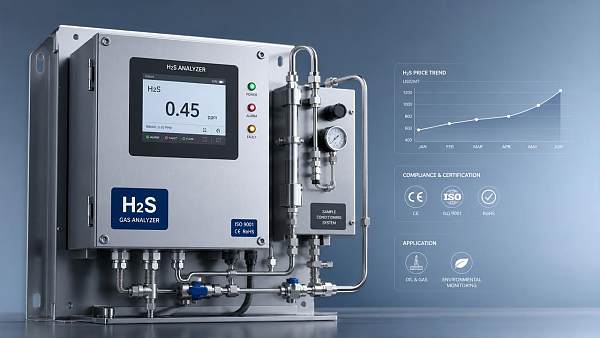
 H2S Concentration Analyzer Price Trends: What’s Driving Costs in 2026H2S concentration analyzer price trends in 2026: discover what drives costs, from sensor technology and compliance to materials and digital features, and make smarter buying decisions.
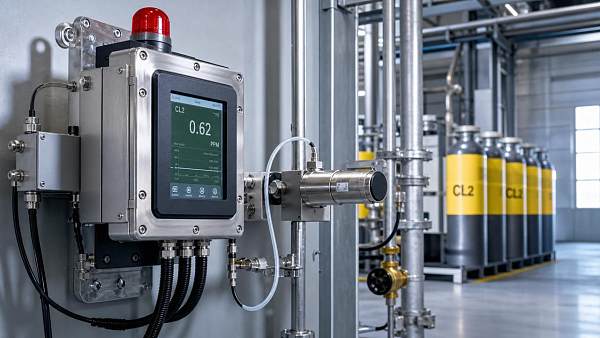
 How to Choose a Cl2 Concentration Analyzer for Process Safety in 2026Cl2 concentration analyzer selection in 2026 starts with process safety. Learn how to match scenarios, improve reliability, avoid costly mistakes, and choose with confidence.
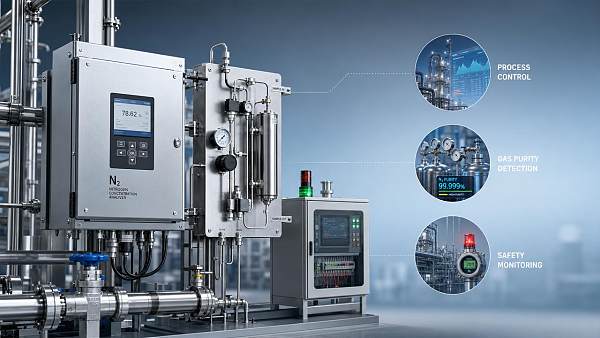
 N2 Concentration Analyzer Cost Factors for Bulk Industrial ProcurementN2 concentration analyzer cost depends on more than unit price. Compare process, purity, and safety applications with total cost logic to source smarter and reduce lifecycle risk.
 Oxygen Concentration Analyzer vs Sensor Systems: Which Fits Continuous UseOxygen concentration analyzer or sensor system? Compare stability, drift, maintenance, and uptime for continuous use to choose the most reliable fit for your process.
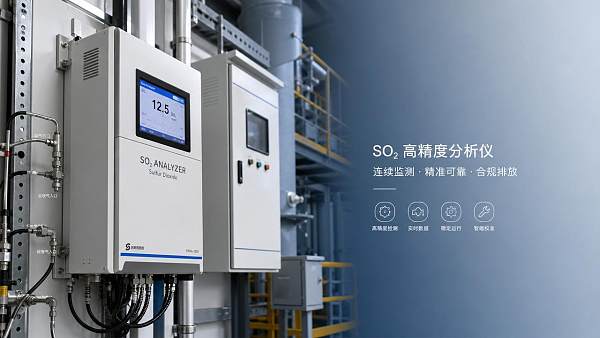
 SO2 Concentration Analyzer News: Compliance Demands Reshaping Product SpecsSO2 concentration analyzer trends are shifting with stricter compliance rules. Learn how new specs, data integrity, and uptime demands are reshaping smarter buying decisions.
 He Concentration Analyzer Maintenance Tips for Stable Long-Term ReadingsHe concentration analyzer maintenance tips for stable long-term readings. Learn how to reduce drift, improve calibration accuracy, cut downtime, and keep industrial systems reliable.
 CH4 Concentration Analyzer Selection Mistakes That Raise Operating RiskCH4 concentration analyzer selection mistakes can raise safety, compliance, and maintenance risk. Learn how to choose the right analyzer for reliable performance and lower lifecycle cost.
 CO Concentration Analyzer Import Rules to Watch in 2026CO concentration analyzer import rules for 2026: learn the key customs, certification, labeling, and compliance checks to reduce risk, avoid delays, and source with confidence.
 NH3 Concentration Analyzer Market Trends for Industrial Process Control in 2026NH3 concentration analyzer market trends in 2026: explore technologies, industrial applications, selection tips, and how smarter monitoring improves compliance, safety, and process control.
 Ar Concentration Analyzer Accuracy Issues in High-Purity Gas ApplicationsAr concentration analyzer accuracy issues can compromise high-purity gas quality, safety, and compliance. Learn the key causes, practical fixes, and how to improve reliable measurement performance.
 CO2 Concentration Analyzer Price Trends in 2026: What Shapes Total CostCO2 concentration analyzer price trends in 2026 depend on technology, accuracy, calibration, compliance, and integration. Discover total cost drivers to compare quotes smarter and control lifecycle risk.
 How to Choose a NOX Concentration Analyzer for Low-Emission MonitoringNOX concentration analyzer selection for low-emission monitoring made easier. Learn how to compare accuracy, response time, compliance, and lifecycle cost before you buy.
 2026 Summit Highlights China's Smart Inspection Equipment as New Global Cooperation FocusSmart inspection equipment takes center stage at the 2026 Summit—unlocking new global cooperation, standards alignment, and market opportunities for exporters, OEMs, and tech suppliers.
 White House Warns Oil Shock May Fuel Core Inflation, Delaying Industrial Instrument ExportsWhite House warns oil shock may fuel core inflation—impacting industrial instrument exports. Discover how pressure, temperature & flow instrumentation exporters can mitigate delays and optimize trade finance workflows now.
 New AI Agent Guidelines Impact Export of AI-Powered Testing EquipmentAI agent guidelines impact export of AI-powered testing equipment—learn how new China security & controllability rules affect global compliance, supply chains, and market access.
 Canton Fair Phase III Boosts Sensor & Energy Testing ExportsSensor & energy testing exports surge at Canton Fair Phase III—driven by global demand for new energy home appliances and smart furniture compliance solutions.
 UAE Announces $150B Energy Infrastructure InvestmentUAE's $150B energy infrastructure push drives demand for IP68/IP69K, ATEX/IECEx, and LPWAN-enabled industrial sensors — act now to align with ADNOC tenders.
 WTI Net Longs Surge, Boosting Demand for Lubricant Monitoring SystemsLubricant monitoring systems surge in demand as WTI net longs rise—real-time viscosity, moisture & oxidation tracking now critical for global manufacturers.
 Shanghai Pudong Launches E-Label Pilot for Imported CosmeticsShanghai Pudong’s e-label pilot for imported cosmetics drives global demand for RFID/NFC readers, traceability solutions & certified testing equipment—act now to comply and lead.















Search Categories
Search Categories
Latest Article
- Brazil to Eliminate Import Duties on Cross-Border E-Commerce Orders Under USD 50Brazil to eliminate import duties on cross-border e-commerce orders under USD 50—key for portable testing instruments exporters targeting Mercado Livre & DIY buyers.Posted by:
- New AI Agent Guidelines Impact Smart Inspection Device ExportsAI Agent Guidelines impact smart inspection device exports—learn how new China AI safety rules affect EU, US & Middle East market access.Posted by:
- UPS Freight Rates Increase Effective May 17, 2026UPS freight rates increase effective May 17, 2026—impact FOB pricing for industrial monitoring equipment exporters. Act now to optimize packaging, revise quotes, and secure margins.Posted by:
Please give us a message
