
Gas Quality Control for Safer Plant Operations


Gas quality control is essential for safer plant operations, helping teams reduce risk, improve efficiency, and meet compliance goals. By combining gas quality measurement, an emission measurement system, and a process monitoring system with reliable industrial control equipment, companies can strengthen every industrial control system and process measurement system for more stable, data-driven performance.
For researchers, operators, safety managers, project leaders, procurement teams, and financial approvers, gas quality is no longer a narrow technical issue. It affects combustion stability, product consistency, equipment life, environmental performance, and the quality of plant-wide decisions. In sectors supported by the instrumentation industry, from manufacturing and power generation to laboratories and environmental monitoring, poor gas quality can trigger downtime, unsafe conditions, and hidden operating losses.
A practical gas quality control strategy connects field sensors, analyzers, transmitters, sampling systems, and control platforms into one usable framework. This article explains why gas quality matters, how to build a reliable monitoring architecture, what decision-makers should evaluate before investment, and how plants can turn measurement data into safer and more efficient operations.
Why Gas Quality Control Matters Across Modern Plants
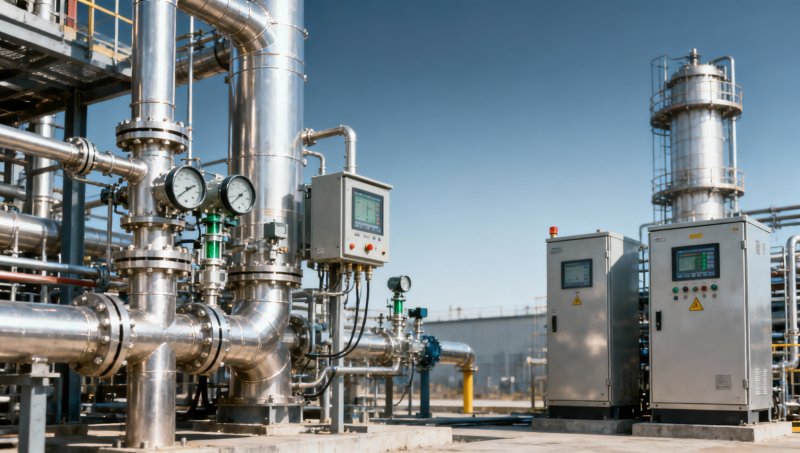
In plant environments, gas quality control refers to the continuous or periodic measurement of key parameters such as oxygen concentration, moisture, hydrocarbons, sulfur compounds, particulates, calorific value, and toxic components. In many applications, even a small drift can create process instability. For example, oxygen variation of 1%–2% in combustion systems may change flame efficiency, while excessive moisture can damage downstream analyzers, filters, and pneumatic components.
The issue is especially critical in facilities using fuel gas, process gas, compressed air, inert gas, or mixed gas streams. If the gas composition entering burners, reactors, or production lines is inconsistent, process control loops may respond too slowly or overcorrect. This can lead to off-spec production, increased emissions, and maintenance intervals shortening from 12 months to 6–8 months in harsh conditions.
For safety teams, gas quality control is directly tied to hazard prevention. Undetected contaminants may increase corrosion, create explosive atmospheres, poison catalysts, or affect confined-space safety. A well-designed process monitoring system provides early warnings before thresholds are exceeded. In many plants, alarm layers are often set at 2 stages: an early attention level and a critical intervention level, allowing teams to respond before the event becomes an incident.
For business evaluators and approvers, the value case is equally clear. Better gas quality measurement reduces unplanned shutdowns, improves fuel utilization, and supports traceable compliance records. In capital planning, this means the project is not only a safety investment but also an operational efficiency project. Typical evaluation windows range from 12 to 36 months depending on analyzer type, sampling complexity, and the cost of downtime in the plant.
Typical plant risks linked to poor gas quality
- Unstable combustion caused by fluctuating oxygen or calorific value, leading to energy waste and uneven process temperatures.
- Corrosion or sensor damage due to high moisture, acidic gas components, or particulates not removed by sample conditioning.
- Emission nonconformity when sulfur compounds, NOx precursors, or unburned hydrocarbons are not measured in time.
- False confidence in plant status when a process measurement system monitors pressure and flow but not actual gas composition.
Core parameters commonly monitored
The exact parameter list depends on the application, but a robust program usually covers 5 to 8 measurement points. These may include O2, CO, CO2, CH4, H2S, dew point, pressure, temperature, and particle load. In higher-risk systems, response time targets are often defined between 2 seconds and 30 seconds depending on whether the measurement is used for protection, optimization, or environmental reporting.
Building an Effective Measurement and Monitoring Architecture
A reliable gas quality control system is not built around one instrument alone. It is a coordinated architecture made up of field measurement devices, sample conditioning units, communication modules, alarm logic, and supervisory software. The best results come when gas quality measurement is integrated with an emission measurement system and a broader industrial control system, rather than treated as a disconnected island of data.
In practical terms, plants often use a layered design with 3 levels. The field level includes transmitters, probes, analyzers, and switching valves. The control level handles PLC, DCS, or RTU logic for alarms and interlocks. The information level consolidates trends, reports, calibration records, and maintenance history. This three-layer setup improves visibility for operators while giving managers usable data for performance reviews and compliance preparation.
System selection should match process conditions. High-temperature flue gas applications may require heated sample lines and continuous analyzers, while inert gas quality checks in storage or packaging operations may rely on point analyzers with faster installation and lower maintenance. In both cases, the process measurement system must be designed around sample integrity. If the sample changes before it reaches the analyzer, the data may look precise but still be wrong.
Another important design factor is redundancy. Plants with critical furnaces, gas blending stations, or emission reporting obligations often choose 1+1 analyzer arrangements or backup sensor paths. Although this increases initial cost, it can reduce single-point failure risk and support maintenance without shutting down monitoring for 24 to 72 hours.
Key design elements for stable performance
- Define the gas stream clearly: source, pressure range, temperature range, contaminants, and whether the stream is continuous or batch-based.
- Choose the right measurement principle: electrochemical, infrared, thermal conductivity, paramagnetic, zirconia, or laser-based depending on the gas and required accuracy.
- Design sample handling carefully: filtration, pressure reduction, cooling, heating, condensate removal, and flow control must match real plant conditions.
- Set data use rules: identify which signals are for trending, which are for control, and which are for safety interlock or reporting.
Comparison of common monitoring configurations
The table below shows how common gas monitoring setups differ in typical instrumentation projects. This helps procurement and engineering teams match system complexity with plant risk level, response expectations, and maintenance capacity.
The main conclusion is that architecture should follow risk and data usage, not just budget. A lower-cost setup may be enough for isolated checks, but plants seeking stable control, documented compliance, and cross-functional visibility usually benefit from integrated measurement and monitoring infrastructure.
How to Select Industrial Control Equipment for Gas Quality Applications
Selecting industrial control equipment for gas quality control requires more than comparing analyzer accuracy. Decision-makers should review measurement range, repeatability, environmental protection, communication compatibility, calibration method, spare parts access, and service support. In many projects, the hidden cost comes from poor integration rather than instrument purchase price.
For operators and quality teams, usability matters. A gas analysis system that needs complicated manual setup every week may create avoidable human error. Modern systems should support clear alarm status, intuitive calibration guidance, and trend review over at least 30 to 90 days. This helps users connect gas quality changes with events such as burner tuning, raw material shifts, line cleaning, or maintenance shutdowns.
For project managers and procurement staff, environmental and installation conditions must be checked early. These include ambient temperature, enclosure rating, vibration, electrical classification, and available utilities. A system intended for an indoor analyzer room may not perform reliably in an outdoor process area with dust, heat, and seasonal temperature variation from -10°C to 45°C.
For financial reviewers, a practical way to compare options is to separate cost into 4 blocks: hardware, installation, commissioning, and lifecycle maintenance. A lower bid with limited diagnostics or difficult spare sourcing can become more expensive over 2 to 5 years. Lifecycle view is especially important when the monitoring system supports safety-critical functions or mandated environmental reporting.
Selection criteria that should not be skipped
- Measurement fit: confirm the analyzer can handle the expected gas matrix, not just the target component in isolation.
- Maintenance interval: compare whether filters, sensors, and pumps need service every 1 month, 3 months, or 6 months.
- Integration capability: check support for 4–20 mA, Modbus, Ethernet, relay alarms, and historian compatibility.
- Calibration practicality: evaluate zero and span gas handling, auto-calibration options, and required technician skill level.
- Documentation support: installation drawings, loop diagrams, FAT/SAT support, and maintenance manuals should be available in usable form.
Procurement decision matrix for instrumentation projects
The following matrix can help distributors, end users, and plant investors compare gas quality control solutions beyond headline specifications. It is especially useful during technical-commercial evaluations involving multiple stakeholders.
This comparison shows why the best purchasing decision is usually a balanced one. Accuracy is essential, but serviceability, integration, and operating effort often decide whether the system delivers value in daily plant conditions.
Implementation, Commissioning, and Ongoing Performance Control
Once equipment is selected, implementation quality determines whether gas quality control performs as intended. A common project structure uses 5 stages: site survey, engineering review, installation, commissioning, and acceptance. Depending on scope, a single analyzer point may be completed in 1–2 weeks, while a multi-point plant-wide process monitoring system can take 6–12 weeks including wiring, control integration, and operator training.
During commissioning, the focus should not be limited to power-up checks. Teams should verify sample flow stability, line leakage, alarm logic, signal scaling, analyzer warm-up time, and communication with control systems. Acceptance should include both technical and operational criteria. A system may pass signal tests, but if operators cannot interpret alarms or maintenance cannot access filters safely, the implementation is still incomplete.
Routine performance control is equally important. Plants should define maintenance frequency by risk and operating conditions. In moderate-duty applications, monthly visual checks and quarterly functional checks are often sufficient. In dusty, corrosive, or high-temperature services, weekly inspections may be necessary. Calibration frequency may range from every 2 weeks to every 3 months depending on sensor type and process criticality.
Digitalization adds another layer of value. When gas quality data is connected to historian software, SCADA, or enterprise reporting tools, plant teams can identify trends that are not visible during shift-based operation. For example, a gradual rise in moisture over 30 days may indicate failing dryers or condensate issues long before a major process upset occurs.
Recommended implementation workflow
- Survey the gas stream and installation area, including pressure, temperature, hazardous area requirements, and maintenance access.
- Confirm analyzer principle, sample conditioning design, and I/O architecture with operations, engineering, and safety teams.
- Install and verify tubing, wiring, instrument air, enclosures, drains, and grounding before analyzer startup.
- Run commissioning tests for calibration, alarm setpoints, response behavior, and communication stability.
- Train end users and create a maintenance routine covering daily checks, spare parts, and escalation procedures.
Common operational mistakes to avoid
- Treating analyzer installation as complete without validating sample representativeness and line conditioning.
- Using one alarm threshold only, instead of separate warning and trip levels for better reaction time.
- Ignoring drift trends because the system still appears “within range” during manual spot checks.
- Delaying filter and consumable replacement until data becomes obviously unreliable.
FAQ and Practical Guidance for Buyers, Operators, and Distributors
In the instrumentation industry, gas quality control projects often involve mixed stakeholders. One team focuses on safety, another on process efficiency, while procurement looks at budget and support terms. The questions below reflect common decision points in real B2B projects and can help narrow the right solution faster.
How do you know whether a plant needs continuous gas quality measurement or periodic testing?
Continuous monitoring is usually the better choice when gas composition changes frequently, when the gas affects safety-critical equipment, or when emissions and process control depend on real-time data. Periodic testing may be suitable for stable utility streams or lower-risk applications. As a rule of thumb, if process conditions can shift within hours rather than weeks, continuous measurement provides stronger operational value.
What are the most important specifications to review before purchase?
Start with six points: target gas components, measurement range, response time, sample conditioning needs, integration protocol, and maintenance interval. If the system will feed an industrial control system, also confirm signal stability, alarm configuration, and whether the analyzer is intended for indication only or control use. These details affect both risk management and lifecycle cost.
How long does a typical gas quality control project take?
A basic packaged solution can move from technical confirmation to delivery in 2–4 weeks, while a more complete plant integration project may require 6–12 weeks. The schedule depends on enclosure assembly, sampling system complexity, software integration, hazardous area requirements, and factory testing scope. Early document alignment can reduce delay risk significantly.
What should distributors and channel partners look for when representing these systems?
They should prioritize product lines with clear application boundaries, serviceable documentation, and dependable spare parts pathways. Good channel suitability usually includes training support, commissioning guidance, and practical replacement intervals for wearable parts. A product that looks strong in a catalog but lacks after-sales structure can damage long-term customer trust.
Can gas quality control support both safety and efficiency goals at the same time?
Yes, and that is one of its biggest advantages. The same process monitoring system can help detect unsafe gas conditions, optimize combustion, reduce off-spec production, and improve maintenance planning. When data is shared across operations, quality, and management functions, one measurement investment can support multiple plant objectives instead of serving a single department only.
Safer plant operations depend on reliable measurement, timely analysis, and control decisions that reflect real gas conditions rather than assumptions. By combining gas quality measurement, an emission measurement system, a process monitoring system, and dependable industrial control equipment, plants can improve safety discipline, stabilize operations, and create a stronger basis for engineering and commercial decisions.
Whether you are planning a new installation, upgrading an existing industrial control system, or comparing options for distribution and project delivery, a structured gas quality control strategy can reduce risk and improve long-term plant performance. Contact us to discuss your application, request a tailored solution, or learn more about instrumentation options for your next project.
Recommended for You
 First Global White Paper on Humanoid Robot Industrial Calibration ReleasedHumanoid robot industrial calibration: First global white paper released—key for sensor makers, integrators & metrology labs. Learn impact & action steps.
 FDA Updates IVD Import Guidance: CNAS Calibration Chain RequiredFDA mandates CNAS calibration chain with NIST traceability for IVD instruments from China—act now to avoid U.S. import rejection starting July 1, 2026.
 IEC TC65 Releases Cybersecurity Validation Guidance for Industrial InstrumentsIEC TC65 releases cybersecurity validation guidance for industrial instruments—key for exporters, OEMs & integrators targeting EU/NA markets. Act now.
 ASEAN Green Corridor for Measuring Instruments Fully LaunchedASEAN Green Corridor for Measuring Instruments is live—unlock 3.8-hour customs clearance for CNAS-calibrated instruments across all 10 ASEAN nations. Act now!
 PTB Opens Direct VDA/ISO 17025 Report Portal for CNAS LabsPTB opens direct VDA/ISO 17025 report portal for CNAS labs — enabling dual-compliant calibration reports in <72h. Boost automotive audit readiness now!
 Vietnam Enforces Dual CNAS + Vietnamese Language Requirement for Industrial InstrumentsVietnam enforces dual CNAS + Vietnamese language requirement for industrial instruments (HS 9026/9027/9030) — avoid customs rejection. Act now!
 Red Sea Crisis Escalates: Gulf of Aden No-Sail Zone Extended to June 15, 2026Red Sea Crisis escalates: Gulf of Aden no-sail zone extended to June 15, 2026 — impacting industrial instrumentation trade, airfreight costs (+452%), and supply chain resilience between China and the Middle East.
 SASO Mandates AI-Driven Energy Simulation for Industrial Transmitters from June 2026SASO mandates AI-driven energy simulation for industrial transmitters from June 2026 — ensure compliance with NAIEC-certified testing now to avoid delays & rejections.
 BIS Adds 3 High-Precision Process Calibrators to EAR Supplement No. 4BIS Adds 3 High-Precision Process Calibrators to EAR Supplement No. 4—urgent compliance insights for semiconductor, nuclear, and calibration service providers operating with China.
 EU PEF Carbon Footprint Database Mandatory Integration CountdownEU PEF Carbon Footprint Database integration is mandatory for industrial instrument exporters by Jan 2027—act now to secure market access, customs clearance & B2B tenders.
 FDA Updates IVD Import Guidance: CNAS Calibration Traceability to NIST Required for Chinese ManufacturersFDA now requires CNAS calibration traceability to NIST for Chinese IVD manufacturers — critical for 510(k)/De Novo submissions. Act now to avoid RTA delays!
 ASEAN's Green Clearance Corridor Fully LaunchedGreen Clearance Corridor now live: CNAS calibration reports auto-verified for ASEAN customs clearance in under 4 hours — boost your China–ASEAN trade efficiency today!
 First Global Cybersecurity Verification Guide for Industrial Instruments ReleasedFirst global cybersecurity verification guide for industrial instruments launched—featuring a 5-level maturity model & standardized pentest library. Essential for exporters, OEMs, and critical infrastructure suppliers.
 SASO Shortens Energy Labeling for Industrial Transmitters to 7 Days, Adds AI Power Simulation RequirementSASO energy labeling for industrial transmitters now takes just 7 days — but requires AI power simulation. Learn how to comply fast and avoid delays.
 PTB Launches AI Calibration Cloud Platform 2.0PTB AI Calibration Cloud Platform 2.0 launches with CNAS-VDA 5/ISO/IEC 17025 dual-compliance reporting — streamline cross-border calibration for auto suppliers, labs & equipment makers.
 EU Mandates Carbon Footprint Labels on Industrial Instruments from 2027EU mandates carbon footprint labels on industrial instruments from 2027—key for pressure, temperature & flow meter exporters. Act now to ensure PEF compliance and market access.
 Red Sea Crisis Worsens: Gulf of Aden Ban Extends to 3 Weeks, Air Freight Premiums for Industrial Instruments Surge 420%Red Sea crisis deepens: Gulf of Aden ban hits 3 weeks, spiking air freight premiums for industrial instruments by 420%—urgent insights for exporters & EPC contractors.
 Vietnam Enforces CNAS + Vietnamese Dual Requirement for Industrial InstrumentsVietnam Enforces CNAS + Vietnamese Dual Requirement for Industrial Instruments: Key compliance update for exporters, labs & documentation teams ahead of June 2026.
 U.S. BIS Adds 5 High-Precision Pressure/Flow Calibration Sources to EAR ListU.S. BIS adds 5 high-precision pressure/flow calibration sources to EAR list — critical for exporters, instrument makers & supply chain teams. Act now.
 IEC 61508-3:2026 Published: Functional Safety Certification UpgradedIEC 61508-3:2026 is live—discover what the upgraded functional safety certification means for your industrial software, AI diagnostics & global market access.
 FDA Updates IVD Import Guidance: CNAS Calibration Chain Required for China-Made DevicesFDA now requires CNAS calibration chain reports for China-made IVD analyzers—pH, ion & clinical chemistry devices entering via 510(k)/De Novo. Act now to avoid U.S. port rejections.
 EN 61000-6-4:2026 Enters Force: Stricter EMC Requirements for Industrial Field InstrumentsEN 61000-6-4:2026 enforces stricter EMC requirements for industrial field instruments—key for AI edge controllers, sensors & exporters. Act now to ensure CE-EMC compliance by Nov 2026.
 Global Methanol Electric Alliance Launches Cross-Border Energy Efficiency Recognition RoadmapGlobal Methanol Electric Alliance launches cross-border energy efficiency recognition roadmap—key for exporters, cal labs & methanol-instrument manufacturers.
 Red Sea Crisis Escalates: Air Freight Premiums for China–Middle East Industrial Instruments Hit 390%Red Sea Crisis hits industrial instruments: China–Middle East air freight premiums surge 390%. Act now to secure Q3 capacity, avoid delays & optimize LCL alternatives.
 IEC TC65 Mandates Cybersecurity Certification for Industrial Field Instruments from 2027IEC TC65 mandates cybersecurity certification for industrial field instruments by 2027 — pressure, flow & analytical devices must meet IEC 62443-4-2:2026 and display SL1–SL3 labels. Act now to ensure market access.
 SASO Cuts Energy Labeling Turnaround for Industrial Transmitters to 7 Working DaysSASO Energy Labeling now takes just 7 working days for industrial transmitters — faster market access, CNAS reports accepted. Act now!
 PTB Launches CalCloud 2.0 with Direct CNAS Lab IntegrationCalCloud 2.0 now integrates directly with CNAS labs—enabling automated VDA 5 & ISO/IEC 17025 dual-compliant calibration reports for automotive and industrial exporters. Boost compliance efficiency today!
 ASEAN's Green Clearance Corridor for CNAS Calibration Reports LaunchesASEAN's Green Clearance Corridor now verifies CNAS calibration reports via blockchain—cut customs clearance to <48h for flow meters, analyzers & more. Act now!
 Vietnam Mandates CNAS Calibration Certificates & Vietnamese Manuals for Industrial Meters from June 1, 2026CNAS calibration certificates & Vietnamese manuals now mandatory for industrial meters entering Vietnam from June 1, 2026—avoid customs delays and ensure seamless market access.
 U.S. BIS Tightens Export Controls on High-Precision Laser InterferometersU.S. BIS tightens export controls on high-precision laser interferometers—critical for semiconductor metrology & ISO/IEC 17025 calibration. Act now to ensure compliance.
 Paramagnetic Monitor Calibration Tips for Stable OutputParamagnetic monitor calibration tips for stable output: learn how to reduce drift, improve accuracy, cut downtime, and keep oxygen measurement reliable in demanding industrial applications.
 Paramagnetic Measurement in Low-Oxygen Process ControlParamagnetic measurement enables accurate low-oxygen process control with fast response and stable oxygen analysis. Learn how it improves safety, consistency, and system performance.


Search Categories
Search Categories
Latest Article
- First Global White Paper on Humanoid Robot Industrial Calibration ReleasedHumanoid robot industrial calibration: First global white paper released—key for sensor makers, integrators & metrology labs. Learn impact & action steps.Posted by:
- FDA Updates IVD Import Guidance: CNAS Calibration Chain RequiredFDA mandates CNAS calibration chain with NIST traceability for IVD instruments from China—act now to avoid U.S. import rejection starting July 1, 2026.Posted by:
- IEC TC65 Releases Cybersecurity Validation Guidance for Industrial InstrumentsIEC TC65 releases cybersecurity validation guidance for industrial instruments—key for exporters, OEMs & integrators targeting EU/NA markets. Act now.Posted by:
Please give us a message
