
PTB Launches CalCloud 2.0 with Direct CNAS Lab Integration


On May 8, 2026, the German Federal Institute of Physics and Technology (PTB) launched CalCloud 2.0 — its AI-powered calibration cloud platform — opening direct API connectivity for laboratories accredited by China’s National Accreditation Service for Conformity Assessment (CNAS). This development is particularly relevant for manufacturers and suppliers in automotive, industrial instrumentation, and precision engineering sectors exporting to Germany and other VDA-aligned markets, as it enables automated generation of dual-compliant calibration reports meeting both VDA 5 and ISO/IEC 17025 requirements.
Event Overview
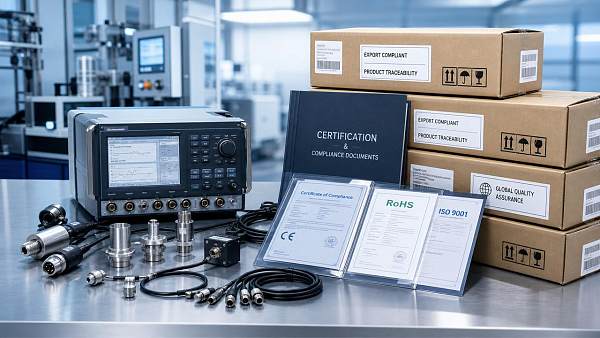
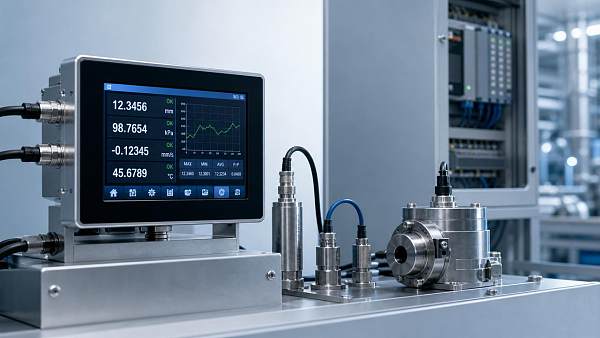
On May 8, 2026, PTB officially released CalCloud 2.0. The platform now supports direct API integration with CNAS-accredited laboratories. Once connected, these labs can remotely access PTB’s reference standard models and automatically generate calibration reports valid under both VDA 5 (German Automotive Industry Association) and ISO/IEC 17025 (international standard for testing and calibration laboratories). The service currently covers pressure, temperature, and electrical industrial field instruments.
Which Subsectors Are Affected
Direct Exporters to German Automotive OEMs
These companies rely on calibration documentation to meet VDA 5 requirements during supplier audits and PPAP submissions. With CalCloud 2.0, their CNAS-accredited calibration partners can now produce VDA-aligned reports without engaging third-party German labs — reducing report turnaround time and eliminating redundant verification steps.
Industrial Instrument Manufacturers (Pressure/Temperature/Electrical)
Manufacturers supplying sensors, transmitters, or portable calibrators to Tier 1 suppliers in Germany must ensure traceable, VDA-recognized calibration for device validation. CalCloud 2.0 lowers the barrier to obtaining such traceability via domestic CNAS labs — potentially accelerating product acceptance in German supply chains.
Calibration Service Providers (CNAS-Accredited)
CNAS-accredited calibration labs gain a new technical capability: direct invocation of PTB’s digital standards. This expands their service scope beyond national accreditation scope into internationally recognized automotive compliance — though actual implementation requires API integration, staff training, and internal process alignment with VDA 5 reporting logic.
What Relevant Companies or Practitioners Should Focus On — and How to Respond Now
Monitor official guidance from CNAS and PTB on API onboarding procedures
While PTB has announced API availability, CNAS has not yet published implementation guidelines or eligibility criteria for lab registration. Companies should track updates from both institutions — especially regarding data security protocols, audit readiness expectations, and versioning of supported calibration models.
Identify high-priority instrument categories tied to German customer deliverables
Not all calibration scopes are covered in CalCloud 2.0’s initial release. Firms should map current calibration needs for pressure, temperature, and electrical devices used in German-bound shipments — particularly those referenced in VDA 5 Annex A or cited in OEM-specific measurement system analysis (MSA) requirements.
Distinguish between policy announcement and operational readiness
The launch represents a technical capability, not an automatic compliance pathway. Labs must complete integration, validate report outputs against PTB reference values, and demonstrate consistency during CNAS surveillance assessments. Suppliers should avoid assuming report acceptance until their calibration partner confirms successful end-to-end workflow validation.
Prepare internal alignment between quality, procurement, and metrology teams
Adoption requires coordination across departments: quality teams to update internal calibration control plans; procurement to assess whether existing lab contracts support API-based reporting; and metrology staff to verify compatibility of local measurement equipment with CalCloud 2.0’s input formats and uncertainty calculation methods.
Editor Perspective / Industry Observation
Observably, this initiative signals a shift toward digitally enabled cross-border metrological equivalence — not full regulatory harmonization. It does not replace CNAS or DAkkS accreditation, nor does it confer VDA membership. Rather, it offers a pragmatic interoperability layer for specific calibration tasks. Analysis shows that its near-term impact will be most visible in supply chain responsiveness, not legal recognition. From an industry perspective, CalCloud 2.0 is best understood as an efficiency enabler within existing frameworks — one that reduces friction but does not eliminate the need for domain-specific competence or audit preparedness.
Current more appropriate interpretation is that this is an early-stage infrastructure upgrade — not a de facto standard revision. Its scalability depends on uptake by CNAS labs, stability of PTB’s API endpoints, and feedback from German notified bodies during actual audit reviews of generated reports.
Conclusion
This update reflects growing technical alignment between national metrology institutes in key trading economies — but remains narrowly scoped, technically conditional, and operationally dependent on lab-level implementation. For stakeholders, it is less a regulatory milestone than a procedural optimization opportunity — one requiring careful scoping, validation, and cross-functional coordination before deployment in formal compliance workflows.
Source Attribution
Main source: Announcement by Physikalisch-Technische Bundesanstalt (PTB), published May 8, 2026.
Points requiring ongoing observation: CNAS’s official implementation framework for CalCloud 2.0 API access; real-world acceptance of dual-standard reports by German automotive OEMs and certification bodies during audits.
Recommended for You
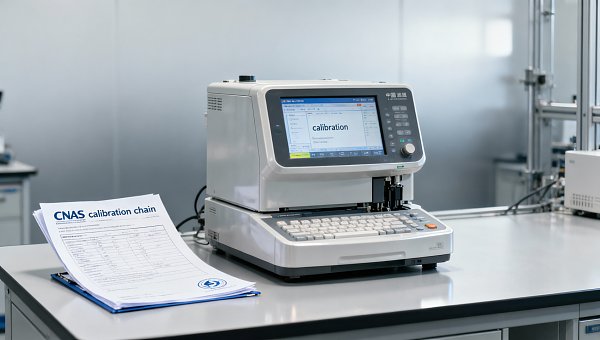
 FDA Updates IVD Import Guidance: CNAS Calibration Chain Required for China-Made DevicesFDA now requires CNAS calibration chain reports for China-made IVD analyzers—pH, ion & clinical chemistry devices entering via 510(k)/De Novo. Act now to avoid U.S. port rejections.
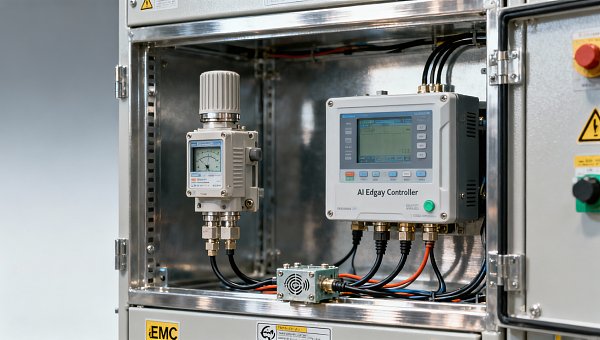
 EN 61000-6-4:2026 Enters Force: Stricter EMC Requirements for Industrial Field InstrumentsEN 61000-6-4:2026 enforces stricter EMC requirements for industrial field instruments—key for AI edge controllers, sensors & exporters. Act now to ensure CE-EMC compliance by Nov 2026.
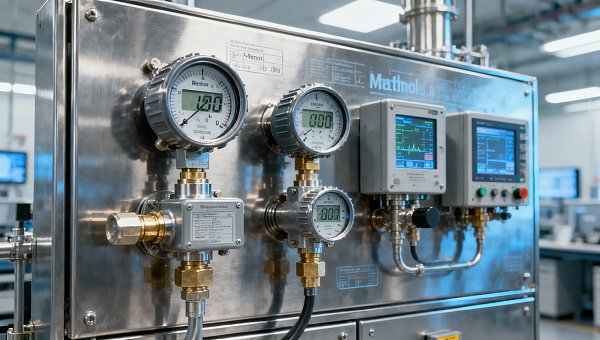
 Global Methanol Electric Alliance Launches Cross-Border Energy Efficiency Recognition RoadmapGlobal Methanol Electric Alliance launches cross-border energy efficiency recognition roadmap—key for exporters, cal labs & methanol-instrument manufacturers.
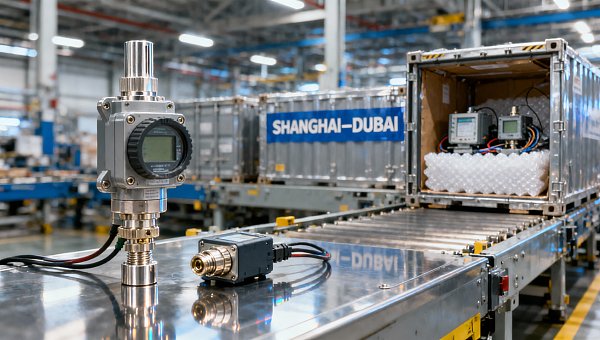
 Red Sea Crisis Escalates: Air Freight Premiums for China–Middle East Industrial Instruments Hit 390%Red Sea Crisis hits industrial instruments: China–Middle East air freight premiums surge 390%. Act now to secure Q3 capacity, avoid delays & optimize LCL alternatives.
 IEC TC65 Mandates Cybersecurity Certification for Industrial Field Instruments from 2027IEC TC65 mandates cybersecurity certification for industrial field instruments by 2027 — pressure, flow & analytical devices must meet IEC 62443-4-2:2026 and display SL1–SL3 labels. Act now to ensure market access.
 SASO Cuts Energy Labeling Turnaround for Industrial Transmitters to 7 Working DaysSASO Energy Labeling now takes just 7 working days for industrial transmitters — faster market access, CNAS reports accepted. Act now!
 PTB Launches CalCloud 2.0 with Direct CNAS Lab IntegrationCalCloud 2.0 now integrates directly with CNAS labs—enabling automated VDA 5 & ISO/IEC 17025 dual-compliant calibration reports for automotive and industrial exporters. Boost compliance efficiency today!
 ASEAN's Green Clearance Corridor for CNAS Calibration Reports LaunchesASEAN's Green Clearance Corridor now verifies CNAS calibration reports via blockchain—cut customs clearance to <48h for flow meters, analyzers & more. Act now!
 Vietnam Mandates CNAS Calibration Certificates & Vietnamese Manuals for Industrial Meters from June 1, 2026CNAS calibration certificates & Vietnamese manuals now mandatory for industrial meters entering Vietnam from June 1, 2026—avoid customs delays and ensure seamless market access.
 U.S. BIS Tightens Export Controls on High-Precision Laser InterferometersU.S. BIS tightens export controls on high-precision laser interferometers—critical for semiconductor metrology & ISO/IEC 17025 calibration. Act now to ensure compliance.
 Paramagnetic Monitor Calibration Tips for Stable OutputParamagnetic monitor calibration tips for stable output: learn how to reduce drift, improve accuracy, cut downtime, and keep oxygen measurement reliable in demanding industrial applications.
 Paramagnetic Measurement in Low-Oxygen Process ControlParamagnetic measurement enables accurate low-oxygen process control with fast response and stable oxygen analysis. Learn how it improves safety, consistency, and system performance.
 Laser Detector Import Risks and Certification DelaysLaser detector import risks can cause costly certification delays, customs issues, and testing setbacks. Learn how to avoid compliance failures before ordering.
 Explosion Proof Detector Demand Under New Safety RulesExplosion proof detector demand is rising under new safety rules. Discover how to compare certified, reliable options that improve compliance, integration, and long-term site safety.
 Laboratory Detector Accuracy Standards You Should CheckLaboratory detector accuracy standards explained: check detection limits, repeatability, drift, and traceability to reduce risk, improve audit readiness, and choose with confidence.
 Custom Measurement Lead Times and Budget PlanningCustom measurement lead times and budgets explained for procurement teams. Learn key cost drivers, planning steps, and supplier tips to reduce delays and buy with confidence.
 Laser Measurement for Leak Detection: Common PitfallsLaser measurement for leak detection can fail due to setup, airflow, and data interpretation errors. Learn the common pitfalls and proven fixes for more accurate, reliable results.
 How to Evaluate a High Accuracy Detector in the FieldHigh accuracy detector evaluation starts with real field performance. Learn how to compare stability, response time, and reliability to choose the right detector with confidence.
 Electrochemical Monitor Lifespan and Replacement CostsElectrochemical monitor lifespan and replacement costs explained for buyers. Learn how sensor life, maintenance, and total ownership cost affect safer, smarter purchasing decisions.
 Thermal Analysis Market Direction in Process IndustriesThermal analysis market direction in process industries: discover trends, applications, and investment insights that improve quality control, reduce risk, and support smarter industrial decisions.
 Monitoring Shelter Design Priorities for Outdoor SitesMonitoring shelter design starts with protection, climate control, and power reliability. Discover how to choose the right outdoor solution for stable data, safer maintenance, and lower lifecycle risk.
 Fixed Measurement Planning for Multi-Point InstallationsFixed measurement planning is essential for multi-point installations. Learn how to improve accuracy, reliability, compliance, and maintenance efficiency across complex industrial systems.
 Fixed Analysis Systems for Stable Long-Term MonitoringFixed analysis systems enable stable long-term monitoring, reliable data, and better process control. Discover how they improve safety, compliance, and operational efficiency.
 Thermal Gas Applications Expanding in Clean IndustryThermal gas applications are reshaping clean industry with smarter flow measurement, emissions control, and energy optimization. Discover where they cut risk, boost efficiency, and support automation.
 Monitoring Detector Export Rules to Watch in 2026Monitoring detector export rules are changing fast in 2026. Learn the key compliance risks, supplier checks, and trade signals to protect margins and make smarter sourcing decisions.
 Control Detector Setup Mistakes That Affect ReliabilityControl detector setup mistakes can quietly reduce accuracy and uptime. Learn the most common installation, wiring, and calibration errors—and how to avoid them for reliable performance.
 What Defines a High Accuracy Monitor TodayHigh accuracy monitor selection starts with real-world performance. Learn the key accuracy factors, buyer checklist, and how to choose a reliable monitor for industrial control.
 Infrared Monitor Demand in Industrial Safety UpgradesInfrared monitor demand is rising as industrial safety upgrades accelerate. Discover where buyers need it most, how channel partners can sell smarter, and which applications drive long-term growth.
 Thermal Conductivity Monitor Limits in Mixed Gas StreamsThermal conductivity monitor limits in mixed gas streams explained—learn where accuracy drops, what buyers should compare, and how to choose the right analyzer with confidence.
 Laser Monitor vs Infrared Monitor for Fast DetectionLaser monitor vs infrared monitor for fast detection: discover which delivers better precision, response speed, and reliability for industrial monitoring and smarter sensor selection.
 Thermal Gas Analyzer Price Shifts Across Global MarketsThermal gas analyzer price shifts are reshaping global budgets. Learn what drives costs, regional differences, and how buyers can reduce risk and improve long-term value.
 Custom Analysis Options for Complex Gas ApplicationsCustom analysis helps solve complex gas applications with better accuracy, compliance, and reliability. Discover practical selection insights that reduce risk and improve system performance.





Search Categories
Search Categories
Latest Article
- FDA Updates IVD Import Guidance: CNAS Calibration Chain Required for China-Made DevicesFDA now requires CNAS calibration chain reports for China-made IVD analyzers—pH, ion & clinical chemistry devices entering via 510(k)/De Novo. Act now to avoid U.S. port rejections.Posted by:
- EN 61000-6-4:2026 Enters Force: Stricter EMC Requirements for Industrial Field InstrumentsEN 61000-6-4:2026 enforces stricter EMC requirements for industrial field instruments—key for AI edge controllers, sensors & exporters. Act now to ensure CE-EMC compliance by Nov 2026.Posted by:
- Global Methanol Electric Alliance Launches Cross-Border Energy Efficiency Recognition RoadmapGlobal Methanol Electric Alliance launches cross-border energy efficiency recognition roadmap—key for exporters, cal labs & methanol-instrument manufacturers.Posted by:
Please give us a message
