
Explosion Proof Detector Demand Under New Safety Rules


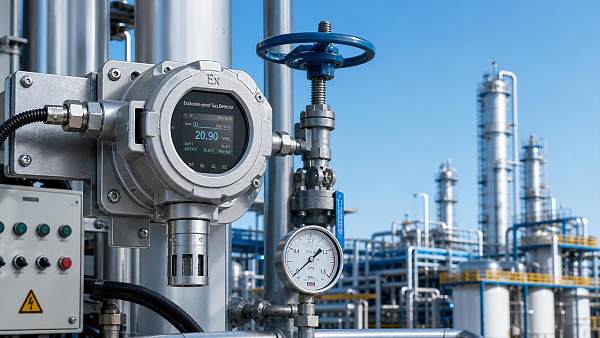
As new safety rules tighten across industrial sites, demand for the explosion proof detector is rising among buyers seeking compliant, reliable solutions. For the instrumentation industry, this shift is more than a short-term purchasing wave. It reflects a broader move toward safer automation, continuous monitoring, and higher accountability in hazardous environments. In sectors such as industrial manufacturing, energy and power, environmental monitoring, laboratory operations, and construction engineering, the right explosion proof detector now plays a direct role in compliance, operational continuity, and risk reduction.
Because regulations, site conditions, and certification requirements vary, a structured evaluation process is essential. A clear checklist helps compare detector options, avoid specification gaps, and align product decisions with actual application risks. It also supports more consistent communication across technical, commercial, and service teams involved in instrumentation projects.
Why a structured review matters for explosion proof detector selection
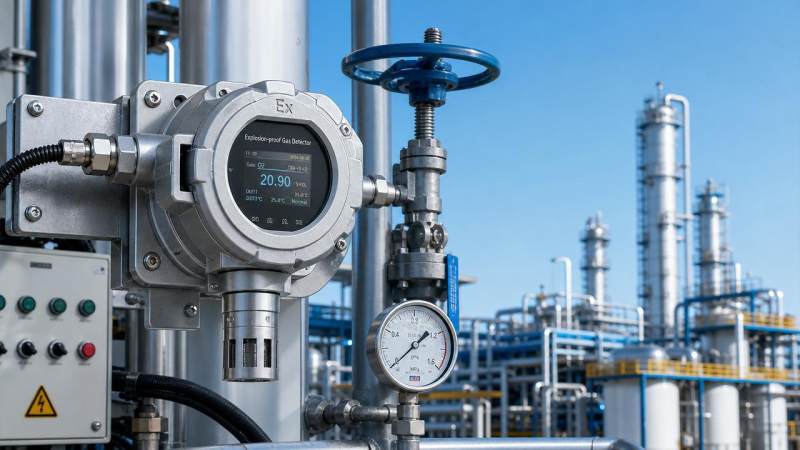
An explosion proof detector is not simply a standard gas or hazard monitoring device placed in a rugged enclosure. It must be suitable for hazardous areas, match the target gas or condition, withstand the operating environment, and comply with the latest safety expectations. New rules often increase scrutiny around certified installation, alarm integrity, maintenance records, and continuous performance verification.
In the broader instrumentation market, products are expected to integrate with control systems, plant networks, environmental monitoring platforms, and automation workflows. That means the explosion proof detector must be evaluated not only for sensing performance but also for communication compatibility, calibration support, lifecycle cost, and field service practicality. A checklist-based approach reduces costly oversights and improves long-term reliability.
Core points to check before choosing an explosion proof detector
- Confirm hazardous area certification, including the relevant explosion protection standard, zone classification, temperature class, and enclosure suitability for the exact installation environment.
- Verify gas or hazard coverage carefully so the explosion proof detector matches the target substance, expected concentration range, and required response threshold.
- Check sensor technology selection, such as catalytic, infrared, electrochemical, or photoionization, based on accuracy, interference resistance, and maintenance demands.
- Review environmental tolerance for temperature, humidity, vibration, dust, corrosion, washdown exposure, and electromagnetic interference common in industrial instrumentation settings.
- Assess signal output and system integration options, including 4-20 mA, relay, Modbus, HART, or other protocols needed for automation and monitoring platforms.
- Examine alarm logic, display clarity, local indication, fault diagnostics, and fail-safe behavior to support quicker response during abnormal events.
- Evaluate calibration intervals, bump test requirements, spare parts availability, and service tool access to keep the explosion proof detector reliable over time.
- Compare installation flexibility, including mounting method, cable entry options, sensor placement constraints, and compatibility with existing field infrastructure.
- Check documentation quality, including certificates, manuals, wiring guides, maintenance procedures, and traceable test records for audit readiness.
- Calculate total lifecycle value rather than unit price alone, covering maintenance labor, downtime risk, calibration consumables, and replacement frequency.
Certification and compliance should be checked first
Under stricter safety rules, certification is often the first filter. An explosion proof detector should be reviewed against the local and project-specific requirements, such as ATEX, IECEx, UL, CSA, or other recognized standards. It is important to verify that the certified configuration matches the actual delivered model, including sensor head, enclosure, cable gland, and accessory combination.
A common mistake is assuming that any certified detector is acceptable in every hazardous area. In reality, gas group, zone rating, ambient temperature limits, and installation practices all matter. A detector that is technically high quality may still be unsuitable if its certified use conditions do not match the site.
Performance fit is as important as compliance
The best explosion proof detector for one application may perform poorly in another. Gas type, expected leak pattern, airflow, humidity, and possible cross-interference all influence sensor choice. For example, infrared sensing can be effective for many hydrocarbon gases, while electrochemical technology may be preferred for toxic gas detection in certain environmental monitoring or laboratory-related applications.
Response time, detection range, and stability should also be aligned with the consequence of failure. Where continuous industrial online monitoring is critical, the detector should offer consistent output quality and clear fault signaling, not just basic detection capability.
Application notes across key instrumentation sectors
Industrial manufacturing
Manufacturing environments often combine solvents, fuel gases, dust-generating processes, and automated production lines. In these facilities, an explosion proof detector should be selected with attention to machine vibration, washdown procedures, and integration with PLC or DCS architecture. Placement is critical because air circulation and equipment layout can create blind spots.
When reviewing options, focus on rugged enclosure design, stable sensor performance under temperature fluctuations, and communication compatibility with existing automation control systems. This helps maintain both compliance and production efficiency.
Energy and power
In oil, gas, power generation, and fuel handling areas, the explosion proof detector is often part of a larger safety instrumented framework. Conditions may include outdoor weather exposure, corrosive atmospheres, and remote installation points. In such cases, ingress protection, long cable run performance, and maintenance accessibility become especially important.
Review whether the detector can support dependable alarm transmission during power disturbances or network interruptions. For remote stations, local display visibility and diagnostic capability can significantly improve service response.
Environmental monitoring and waste treatment
Environmental monitoring applications may involve methane, hydrogen sulfide, volatile compounds, or confined-space risks around treatment systems. Here, an explosion proof detector must balance sensitivity with resistance to contamination, condensation, and corrosive gases. Maintenance frequency should be considered early because harsh atmospheres can shorten sensor life.
It is also useful to review data output options if readings need to feed central monitoring platforms, reporting tools, or alarm history systems. This is increasingly important as compliance reporting becomes more digital and traceable.
Laboratory, pilot plant, and process development areas
Some laboratory or pilot environments handle flammable gases or solvents in smaller but highly variable quantities. The explosion proof detector in these areas should support precise monitoring, quick response, and straightforward maintenance. Limited space may also require compact installation and clear local indication.
Because operating conditions can change with different trials or formulations, flexibility matters. Check whether the detector configuration supports evolving process needs without requiring a full redesign of the safety setup.
Often-missed issues that can weaken explosion proof detector performance
- Improper mounting height can reduce effectiveness because many gases rise or sink, making detector location more important than device specification alone.
- Ignoring airflow patterns around fans, ducts, or enclosures may cause delayed detection even when the explosion proof detector itself is functioning correctly.
- Assuming sensor life equals maintenance-free operation can create hidden risk, especially in corrosive, dusty, or high-humidity industrial environments.
- Choosing based only on upfront price may increase total cost later through frequent calibration, shorter replacement cycles, or unplanned downtime.
- Overlooking control system compatibility can delay commissioning if signal types, alarm logic, or communication protocols do not match site requirements.
Each of these issues can reduce the real-world value of an explosion proof detector, even if the product appears compliant on paper. The safer approach is to combine document review with installation planning and ongoing service verification.
Practical steps for implementation and product evaluation
Start by mapping the hazardous areas, target gases, and expected operating conditions for each project. Then create a comparison matrix that includes certification, sensing principle, output options, maintenance cycle, environmental rating, and accessory requirements. This makes it easier to identify where one explosion proof detector fits multiple use cases and where specialized models are necessary.
Next, review installation and service needs before final selection. A detector that is difficult to calibrate, hard to access, or poorly documented can create recurring operational friction. In the instrumentation sector, where devices often connect into wider monitoring and control ecosystems, practical serviceability is a major part of product value.
It is also helpful to standardize around a manageable range of explosion proof detector models where possible. This can simplify training, spare parts planning, system integration, and long-term support across multiple industrial sites or project types.
FAQ about explosion proof detector demand under new safety rules
Why is demand for the explosion proof detector increasing now?
New safety rules, stricter enforcement, and broader digital monitoring requirements are pushing facilities to upgrade hazardous area detection. Many sites are also replacing aging equipment with more reliable and better-documented solutions.
What is the first thing to verify in an explosion proof detector?
Start with certification and site suitability. The detector must be approved for the relevant hazardous area classification and environmental conditions before performance features are compared.
Can one explosion proof detector model work across all industries?
Not usually. Different sectors have different gases, layouts, environmental stresses, and integration needs. A model suitable for energy applications may not be ideal for laboratory or environmental monitoring conditions.
How important is system integration for detector selection?
It is critical. A strong explosion proof detector should work smoothly with alarm panels, PLCs, DCS platforms, and industrial online monitoring systems so that safety data can be acted on quickly.
Final takeaways and next actions
The rising need for the explosion proof detector is closely tied to stricter safety rules and the wider modernization of industrial instrumentation. A well-chosen device supports compliance, strengthens hazard visibility, and fits into the larger goals of automation, digital monitoring, and operational resilience.
The most effective next step is to evaluate each explosion proof detector using a structured checklist: confirm certification, verify sensing fit, review environmental durability, test integration readiness, and account for lifecycle service demands. With that disciplined approach, product decisions become more defensible, more practical, and better aligned with long-term safety performance.
Recommended for You
 FDA Updates IVD Import Guidance: CNAS Calibration Chain Required for China-Made DevicesFDA now requires CNAS calibration chain reports for China-made IVD analyzers—pH, ion & clinical chemistry devices entering via 510(k)/De Novo. Act now to avoid U.S. port rejections.
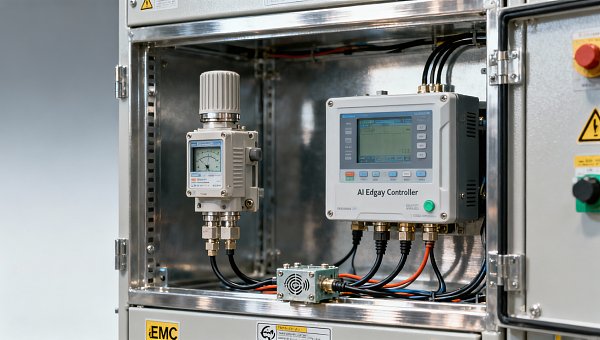
 EN 61000-6-4:2026 Enters Force: Stricter EMC Requirements for Industrial Field InstrumentsEN 61000-6-4:2026 enforces stricter EMC requirements for industrial field instruments—key for AI edge controllers, sensors & exporters. Act now to ensure CE-EMC compliance by Nov 2026.
 Global Methanol Electric Alliance Launches Cross-Border Energy Efficiency Recognition RoadmapGlobal Methanol Electric Alliance launches cross-border energy efficiency recognition roadmap—key for exporters, cal labs & methanol-instrument manufacturers.
 Red Sea Crisis Escalates: Air Freight Premiums for China–Middle East Industrial Instruments Hit 390%Red Sea Crisis hits industrial instruments: China–Middle East air freight premiums surge 390%. Act now to secure Q3 capacity, avoid delays & optimize LCL alternatives.
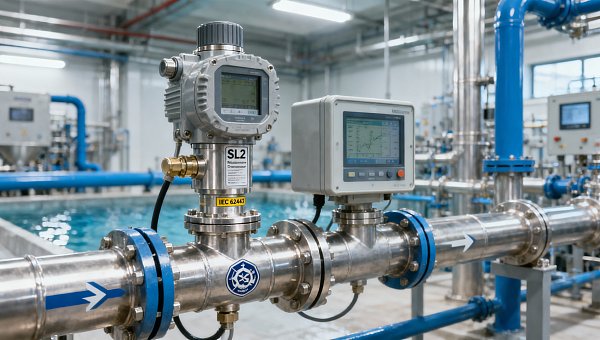
 IEC TC65 Mandates Cybersecurity Certification for Industrial Field Instruments from 2027IEC TC65 mandates cybersecurity certification for industrial field instruments by 2027 — pressure, flow & analytical devices must meet IEC 62443-4-2:2026 and display SL1–SL3 labels. Act now to ensure market access.
 SASO Cuts Energy Labeling Turnaround for Industrial Transmitters to 7 Working DaysSASO Energy Labeling now takes just 7 working days for industrial transmitters — faster market access, CNAS reports accepted. Act now!
 PTB Launches CalCloud 2.0 with Direct CNAS Lab IntegrationCalCloud 2.0 now integrates directly with CNAS labs—enabling automated VDA 5 & ISO/IEC 17025 dual-compliant calibration reports for automotive and industrial exporters. Boost compliance efficiency today!
 ASEAN's Green Clearance Corridor for CNAS Calibration Reports LaunchesASEAN's Green Clearance Corridor now verifies CNAS calibration reports via blockchain—cut customs clearance to <48h for flow meters, analyzers & more. Act now!
 Vietnam Mandates CNAS Calibration Certificates & Vietnamese Manuals for Industrial Meters from June 1, 2026CNAS calibration certificates & Vietnamese manuals now mandatory for industrial meters entering Vietnam from June 1, 2026—avoid customs delays and ensure seamless market access.
 U.S. BIS Tightens Export Controls on High-Precision Laser InterferometersU.S. BIS tightens export controls on high-precision laser interferometers—critical for semiconductor metrology & ISO/IEC 17025 calibration. Act now to ensure compliance.
 Paramagnetic Monitor Calibration Tips for Stable OutputParamagnetic monitor calibration tips for stable output: learn how to reduce drift, improve accuracy, cut downtime, and keep oxygen measurement reliable in demanding industrial applications.
 Paramagnetic Measurement in Low-Oxygen Process ControlParamagnetic measurement enables accurate low-oxygen process control with fast response and stable oxygen analysis. Learn how it improves safety, consistency, and system performance.
 Laser Detector Import Risks and Certification DelaysLaser detector import risks can cause costly certification delays, customs issues, and testing setbacks. Learn how to avoid compliance failures before ordering.
 Explosion Proof Detector Demand Under New Safety RulesExplosion proof detector demand is rising under new safety rules. Discover how to compare certified, reliable options that improve compliance, integration, and long-term site safety.
 Laboratory Detector Accuracy Standards You Should CheckLaboratory detector accuracy standards explained: check detection limits, repeatability, drift, and traceability to reduce risk, improve audit readiness, and choose with confidence.
 Custom Measurement Lead Times and Budget PlanningCustom measurement lead times and budgets explained for procurement teams. Learn key cost drivers, planning steps, and supplier tips to reduce delays and buy with confidence.
 Laser Measurement for Leak Detection: Common PitfallsLaser measurement for leak detection can fail due to setup, airflow, and data interpretation errors. Learn the common pitfalls and proven fixes for more accurate, reliable results.
 How to Evaluate a High Accuracy Detector in the FieldHigh accuracy detector evaluation starts with real field performance. Learn how to compare stability, response time, and reliability to choose the right detector with confidence.
 Electrochemical Monitor Lifespan and Replacement CostsElectrochemical monitor lifespan and replacement costs explained for buyers. Learn how sensor life, maintenance, and total ownership cost affect safer, smarter purchasing decisions.
 Thermal Analysis Market Direction in Process IndustriesThermal analysis market direction in process industries: discover trends, applications, and investment insights that improve quality control, reduce risk, and support smarter industrial decisions.
 Monitoring Shelter Design Priorities for Outdoor SitesMonitoring shelter design starts with protection, climate control, and power reliability. Discover how to choose the right outdoor solution for stable data, safer maintenance, and lower lifecycle risk.
 Fixed Measurement Planning for Multi-Point InstallationsFixed measurement planning is essential for multi-point installations. Learn how to improve accuracy, reliability, compliance, and maintenance efficiency across complex industrial systems.
 Fixed Analysis Systems for Stable Long-Term MonitoringFixed analysis systems enable stable long-term monitoring, reliable data, and better process control. Discover how they improve safety, compliance, and operational efficiency.
 Thermal Gas Applications Expanding in Clean IndustryThermal gas applications are reshaping clean industry with smarter flow measurement, emissions control, and energy optimization. Discover where they cut risk, boost efficiency, and support automation.
 Monitoring Detector Export Rules to Watch in 2026Monitoring detector export rules are changing fast in 2026. Learn the key compliance risks, supplier checks, and trade signals to protect margins and make smarter sourcing decisions.
 Control Detector Setup Mistakes That Affect ReliabilityControl detector setup mistakes can quietly reduce accuracy and uptime. Learn the most common installation, wiring, and calibration errors—and how to avoid them for reliable performance.
 What Defines a High Accuracy Monitor TodayHigh accuracy monitor selection starts with real-world performance. Learn the key accuracy factors, buyer checklist, and how to choose a reliable monitor for industrial control.
 Infrared Monitor Demand in Industrial Safety UpgradesInfrared monitor demand is rising as industrial safety upgrades accelerate. Discover where buyers need it most, how channel partners can sell smarter, and which applications drive long-term growth.
 Thermal Conductivity Monitor Limits in Mixed Gas StreamsThermal conductivity monitor limits in mixed gas streams explained—learn where accuracy drops, what buyers should compare, and how to choose the right analyzer with confidence.
 Laser Monitor vs Infrared Monitor for Fast DetectionLaser monitor vs infrared monitor for fast detection: discover which delivers better precision, response speed, and reliability for industrial monitoring and smarter sensor selection.
 Thermal Gas Analyzer Price Shifts Across Global MarketsThermal gas analyzer price shifts are reshaping global budgets. Learn what drives costs, regional differences, and how buyers can reduce risk and improve long-term value.
 Custom Analysis Options for Complex Gas ApplicationsCustom analysis helps solve complex gas applications with better accuracy, compliance, and reliability. Discover practical selection insights that reduce risk and improve system performance.








Search Categories
Search Categories
Latest Article
- FDA Updates IVD Import Guidance: CNAS Calibration Chain Required for China-Made DevicesFDA now requires CNAS calibration chain reports for China-made IVD analyzers—pH, ion & clinical chemistry devices entering via 510(k)/De Novo. Act now to avoid U.S. port rejections.Posted by:
- EN 61000-6-4:2026 Enters Force: Stricter EMC Requirements for Industrial Field InstrumentsEN 61000-6-4:2026 enforces stricter EMC requirements for industrial field instruments—key for AI edge controllers, sensors & exporters. Act now to ensure CE-EMC compliance by Nov 2026.Posted by:
- Global Methanol Electric Alliance Launches Cross-Border Energy Efficiency Recognition RoadmapGlobal Methanol Electric Alliance launches cross-border energy efficiency recognition roadmap—key for exporters, cal labs & methanol-instrument manufacturers.Posted by:
Please give us a message
