
Infrared Monitor Demand in Industrial Safety Upgrades


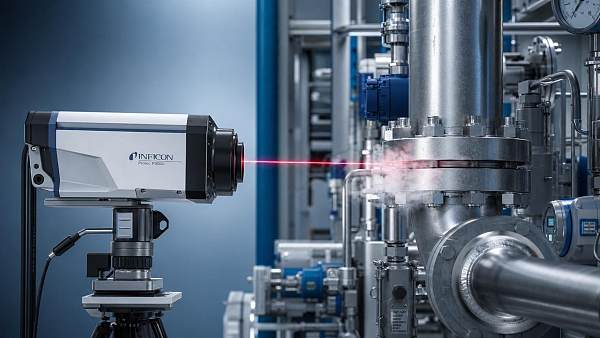
As industrial facilities accelerate safety upgrades, demand for the infrared monitor is rising among manufacturers, utilities, and automation-driven sectors. For distributors, agents, and channel partners in the instrumentation industry, this trend opens strong opportunities in preventive monitoring, compliance support, and intelligent control integration. Understanding where infrared monitor applications create the most value can help position your portfolio for long-term market growth.
For channel businesses, the key question is not whether infrared monitoring is gaining traction, but where demand is becoming urgent, which customer segments are most likely to buy, and how to translate technical capability into repeatable sales. In today’s market, buyers are under pressure to reduce safety incidents, avoid unplanned downtime, improve visibility across assets, and support digital maintenance programs. That combination makes infrared monitoring more commercially relevant than ever.
The strongest market signal is this: industrial users are no longer treating thermal and infrared monitoring as niche tools reserved for specialist inspections. They increasingly see them as part of broader safety modernization, asset reliability planning, and automated condition monitoring. For distributors and agents, that shift changes the opportunity from occasional equipment supply to solution-based selling tied to long-term industrial upgrades.
Why is infrared monitor demand increasing during industrial safety upgrades?
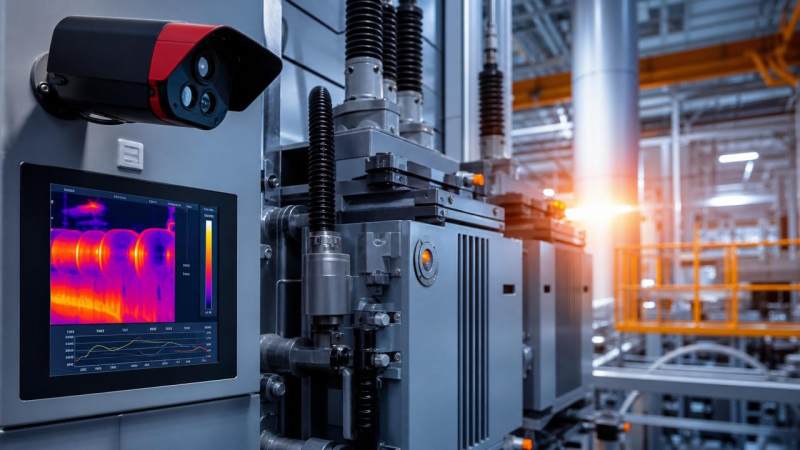
Demand is rising because industrial safety investment has become more proactive. Facilities in manufacturing, power generation, oil and gas, process industries, utilities, and infrastructure are moving from reactive fault response to early-risk detection. An infrared monitor supports that shift by identifying abnormal heat patterns before they become electrical failures, mechanical breakdowns, fire hazards, or process instability events.
In many plants, aging assets are still in operation while production targets continue to increase. This creates a difficult environment: equipment is stressed, maintenance windows are tight, and safety expectations are higher. Infrared monitoring helps maintenance and EHS teams detect overheating motors, transformers, switchgear, bearings, pipelines, furnaces, rotating equipment, and critical process points without interrupting operation.
Another driver is the convergence of safety and digitalization. As plants invest in industrial IoT, SCADA integration, predictive maintenance, and remote diagnostics, an infrared monitor becomes easier to justify. It is no longer just a standalone instrument. It can be positioned as a data-generating layer that strengthens alarm management, continuous monitoring, and risk-based maintenance workflows.
Regulatory pressure also matters. In sectors where electrical safety, fire prevention, environmental control, or process integrity are closely audited, end users want better documentation and traceable monitoring practices. Infrared-based monitoring can support inspection routines, operating records, and safety reporting, especially when paired with software, alarm thresholds, or centralized monitoring systems.
What do distributors, agents, and channel partners care about most?
The target audience for this topic is not looking for a generic explanation of infrared technology. They want to know where real demand exists, how to identify buyers with budget, what product configurations are easiest to move, and how to reduce technical objections during the sales cycle. Their concern is commercial practicality as much as technical fit.
First, they care about demand quality. A distributor wants to know whether infrared monitor inquiries are driven by mandatory upgrades, measurable risk reduction, or temporary interest. The best opportunities usually come from customers facing one of four pressures: recurring overheating incidents, stricter safety audits, costly downtime, or new automation investment that requires better condition visibility.
Second, they care about customer segmentation. Not every buyer needs the same product. Some need fixed infrared monitoring for continuous asset supervision. Others need portable thermal instruments for inspection teams. Some need integration into larger automation platforms, while others only need local alarm output. Channel partners need to recognize which application path matches the customer’s operational maturity and purchasing model.
Third, they care about solution complexity. Products that are technically impressive but difficult to explain, commission, or maintain may be harder to scale through distribution networks. Buyers often need help understanding detection range, environmental suitability, response speed, integration protocol, mounting constraints, and software value. Strong channel performance depends on turning those variables into a clear decision framework.
Finally, they care about margin and repeat business. Infrared monitoring becomes especially attractive when it leads to accessories, calibration, software services, maintenance contracts, training, system upgrades, or cross-sales into broader instrumentation categories such as temperature, pressure, flow, gas detection, control, and online monitoring platforms.
Which industrial applications create the strongest sales opportunities?
Not all application areas generate the same sales potential. The most promising segments are those where heat anomalies directly affect safety, uptime, product quality, or compliance. Distributors should prioritize sectors where an infrared monitor is tied to operational consequences that customers already understand.
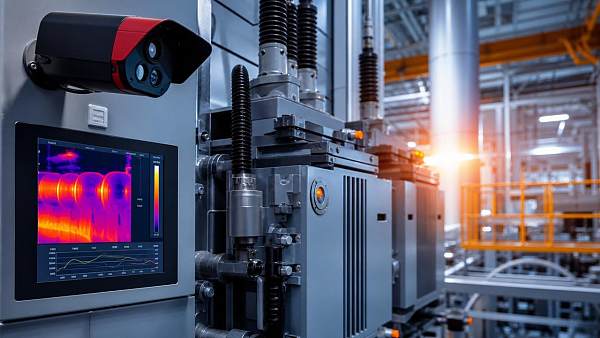
Electrical systems are among the strongest entry points. Switchgear, busbars, transformers, cable joints, panels, and power distribution rooms are common sources of overheating risk. Infrared monitoring can help identify loose connections, load imbalance, insulation breakdown, and component stress before failure occurs. This value is easy for buyers to grasp because the cost of an electrical incident is immediate and visible.
Rotating equipment and mechanical assets are another strong category. Bearings, motors, pumps, fans, gearboxes, and conveyor systems often show thermal symptoms before breakdown. In facilities with continuous production lines, early thermal detection supports predictive maintenance and can reduce the cost of emergency shutdowns.
High-temperature process operations also present major opportunities. Furnaces, kilns, reactors, boilers, and heated pipelines require stable thermal performance. Infrared monitoring can detect hot spots, refractory degradation, leakage patterns, or thermal imbalance. In such environments, safety and process efficiency are closely linked, making purchasing decisions easier to justify.
Utilities and energy infrastructure remain attractive due to their strong safety culture and asset criticality. Power plants, substations, renewable energy facilities, and battery energy storage systems increasingly require advanced thermal oversight. The rise of electrification and distributed energy can further support long-term demand.
Warehousing, hazardous material storage, and environmental control areas also deserve attention. Infrared monitoring can support early fire detection, temperature excursion alerts, and storage integrity management. These use cases often align well with insurance concerns, site audits, and remote monitoring strategies.
How should channel partners position infrared monitor products to buyers?
The most effective positioning is not “this is an advanced infrared device,” but “this helps you detect risk earlier, document safety actions, and prevent unplanned losses.” Industrial buyers respond better when the conversation begins with operational pain points rather than sensor specifications.
A useful sales approach is to frame the infrared monitor in three business outcomes. The first is risk prevention: identify overheating before it becomes a fire, shutdown, or safety event. The second is maintenance optimization: move from periodic manual inspection to more targeted or continuous monitoring. The third is digital integration: connect thermal data with alarms, controls, or plant-wide monitoring systems.
For price-sensitive customers, it helps to distinguish between high-consequence assets and general assets. Not every machine needs continuous infrared monitoring. But critical electrical rooms, high-load motors, process bottlenecks, and unattended sites often do. This targeted deployment model makes the investment easier to defend and creates an upgrade path for future expansion.
Distributors should also avoid overselling image quality alone. In many industrial applications, customers care more about reliability, alarm accuracy, environmental durability, communication compatibility, and installation practicality than cinematic thermal imaging performance. Positioning should reflect the customer’s actual operational priorities.
What product selection criteria matter most in real sales conversations?
Buyers often need guidance translating application risk into product choice. Channel partners who can simplify selection criteria will have an advantage. The best conversations focus on how the infrared monitor will be used, where it will be installed, and what action the customer expects when an abnormal temperature event occurs.
Important criteria include measurement range, accuracy, field of view, response time, and alarm functionality. These affect whether the monitor can detect the right event at the right distance with enough reliability to trigger intervention. In industrial settings, too little attention to mounting geometry or target emissivity can lead to disappointing results, so application support is essential.
Environmental robustness is another major factor. Dust, vibration, steam, corrosive atmospheres, electromagnetic interference, and ambient temperature extremes can all influence suitability. An infrared monitor for a clean electrical room may be entirely different from one intended for a harsh process line or outdoor utility site.
Connectivity strongly influences buying decisions in modern plants. Support for analog output, relay alarms, Modbus, Ethernet, industrial protocols, edge gateways, or cloud-compatible platforms may determine whether the instrument fits into a broader automation architecture. For many customers, integration value is what separates a one-time purchase from a scalable monitoring strategy.
Serviceability and support matter just as much as hardware. Buyers want calibration options, local technical support, training, spare availability, software updates, and installation guidance. For distributors, these service elements are not just support costs; they are often differentiators that improve close rates and build long-term account value.
How can distributors reduce customer objections and shorten the sales cycle?
Most objections fall into a few common categories: uncertainty about return on investment, concern about installation complexity, confusion about the difference between thermal cameras and infrared monitors, and doubt about whether continuous monitoring is truly necessary. Good pre-sales structure can address all of these.
On ROI, the most effective tactic is to quantify the cost of a missed event. Instead of discussing device price in isolation, compare it to the cost of a damaged switchboard, a day of line stoppage, an emergency repair, or a safety incident investigation. In many accounts, the business case becomes clear once the customer sees how even one avoided failure can justify the investment.
On complexity, offer deployment models. Present a basic standalone alarm solution, a mid-level networked monitoring option, and a higher-level integrated reliability package. Buyers are more comfortable when they can choose a stepwise path rather than feeling forced into a full-scale system redesign.
On technology confusion, explain use-case boundaries clearly. A portable thermal camera supports periodic inspection and diagnosis. A fixed infrared monitor supports unattended or continuous observation of critical assets. Many facilities need both, but for different purposes. This distinction helps customers make better decisions and prevents product mismatch.
Case-led selling also works well. Even if channel partners cannot disclose confidential projects, they can describe typical scenarios: electrical cabinet overheating detection, motor bearing thermal alarms, substation hot-spot supervision, or process equipment temperature drift monitoring. Real operating examples reduce hesitation and make value tangible.
Where does long-term channel value come from beyond the first order?
The first sale should be viewed as an entry point, not the end goal. The strongest channel value comes when infrared monitoring becomes embedded in the customer’s broader instrumentation and automation strategy. Once that happens, additional opportunities often follow naturally.
These can include complementary sensors, data acquisition modules, industrial communication devices, software dashboards, edge computing devices, power quality monitoring, gas detection, environmental monitoring, and calibration services. Customers who begin with one critical thermal application may later expand into multi-asset monitoring or plant-wide predictive maintenance programs.
There is also lifecycle revenue potential. Infrared monitor deployments may require periodic validation, accessory replacement, technical refresh, enclosure upgrades, or system integration support. Distributors and agents that offer application consulting and post-sales responsiveness can build stronger account retention than competitors focused only on transactional pricing.
Training is another underused value lever. Many end users need help setting alarm thresholds, interpreting thermal data, selecting installation points, and integrating outputs into control systems. A channel partner that offers practical onboarding can improve customer results and reduce the risk of underutilized equipment.
What is the market outlook for infrared monitor demand in industrial safety upgrades?
The outlook is favorable because the underlying drivers are durable. Industrial operators are under continuing pressure to modernize assets, improve safety performance, reduce labor-intensive inspection routines, and support data-driven maintenance. Infrared monitoring aligns with all of these priorities.
Demand is likely to remain especially strong where three trends overlap: aging infrastructure, increasing electrification, and investment in automation visibility. Facilities with distributed assets, remote operations, high fire risk, or tight uptime requirements are particularly promising. Channel partners that understand these demand patterns can prioritize better and sell more efficiently.
In practical terms, this means the infrared monitor market is not just about standalone thermal instrumentation. It sits at the intersection of industrial safety, reliability engineering, compliance management, and digital transformation. That makes it strategically relevant for distributors serving broad instrumentation portfolios.
For agents and distributors, the most important takeaway is clear: demand is real, but success depends on application focus. The winners will be those who identify high-risk use cases, explain business value in operational terms, support integration needs, and convert one product sale into a broader monitoring relationship.
As industrial safety upgrades continue, the infrared monitor will play a more visible role in early fault detection and intelligent asset protection. For channel partners in the instrumentation industry, this is a timely opportunity to move beyond product catalog selling and toward consultative, solution-led growth. If your portfolio can connect safety, reliability, and actionable monitoring data, you are well positioned to capture long-term value from this demand trend.
Recommended for You
 FDA Updates IVD Import Guidance: CNAS Calibration Chain Required for China-Made DevicesFDA now requires CNAS calibration chain reports for China-made IVD analyzers—pH, ion & clinical chemistry devices entering via 510(k)/De Novo. Act now to avoid U.S. port rejections.
 EN 61000-6-4:2026 Enters Force: Stricter EMC Requirements for Industrial Field InstrumentsEN 61000-6-4:2026 enforces stricter EMC requirements for industrial field instruments—key for AI edge controllers, sensors & exporters. Act now to ensure CE-EMC compliance by Nov 2026.
 Global Methanol Electric Alliance Launches Cross-Border Energy Efficiency Recognition RoadmapGlobal Methanol Electric Alliance launches cross-border energy efficiency recognition roadmap—key for exporters, cal labs & methanol-instrument manufacturers.
 Red Sea Crisis Escalates: Air Freight Premiums for China–Middle East Industrial Instruments Hit 390%Red Sea Crisis hits industrial instruments: China–Middle East air freight premiums surge 390%. Act now to secure Q3 capacity, avoid delays & optimize LCL alternatives.
 IEC TC65 Mandates Cybersecurity Certification for Industrial Field Instruments from 2027IEC TC65 mandates cybersecurity certification for industrial field instruments by 2027 — pressure, flow & analytical devices must meet IEC 62443-4-2:2026 and display SL1–SL3 labels. Act now to ensure market access.
 SASO Cuts Energy Labeling Turnaround for Industrial Transmitters to 7 Working DaysSASO Energy Labeling now takes just 7 working days for industrial transmitters — faster market access, CNAS reports accepted. Act now!
 PTB Launches CalCloud 2.0 with Direct CNAS Lab IntegrationCalCloud 2.0 now integrates directly with CNAS labs—enabling automated VDA 5 & ISO/IEC 17025 dual-compliant calibration reports for automotive and industrial exporters. Boost compliance efficiency today!
 ASEAN's Green Clearance Corridor for CNAS Calibration Reports LaunchesASEAN's Green Clearance Corridor now verifies CNAS calibration reports via blockchain—cut customs clearance to <48h for flow meters, analyzers & more. Act now!
 Vietnam Mandates CNAS Calibration Certificates & Vietnamese Manuals for Industrial Meters from June 1, 2026CNAS calibration certificates & Vietnamese manuals now mandatory for industrial meters entering Vietnam from June 1, 2026—avoid customs delays and ensure seamless market access.
 U.S. BIS Tightens Export Controls on High-Precision Laser InterferometersU.S. BIS tightens export controls on high-precision laser interferometers—critical for semiconductor metrology & ISO/IEC 17025 calibration. Act now to ensure compliance.
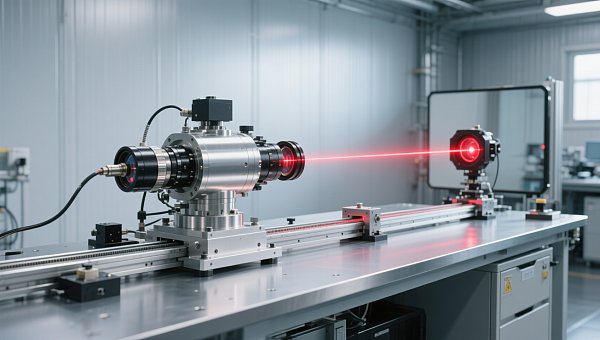
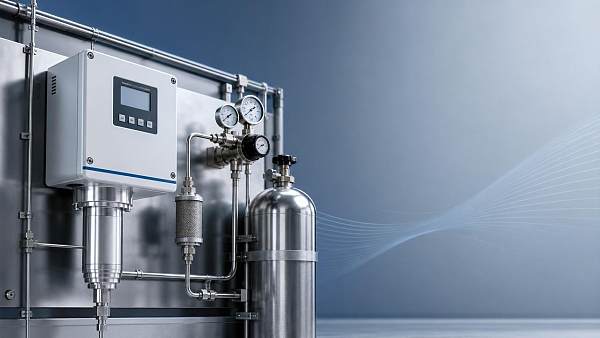
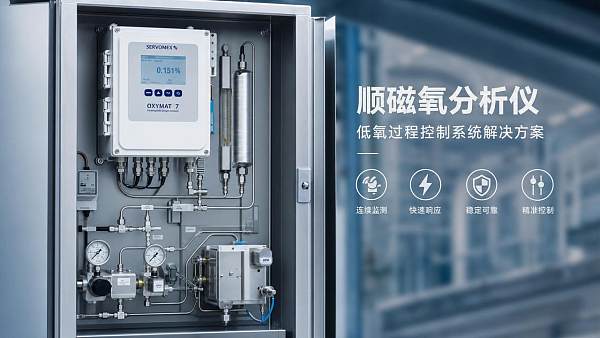
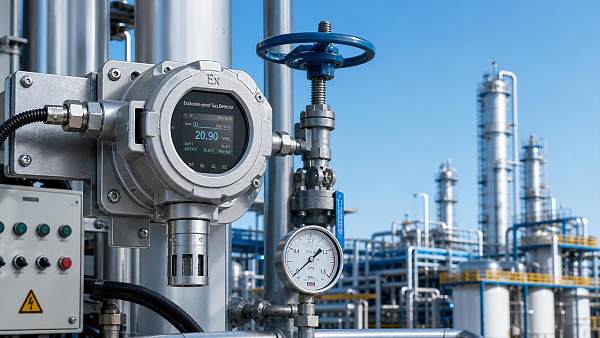
 Paramagnetic Monitor Calibration Tips for Stable OutputParamagnetic monitor calibration tips for stable output: learn how to reduce drift, improve accuracy, cut downtime, and keep oxygen measurement reliable in demanding industrial applications.
 Paramagnetic Measurement in Low-Oxygen Process ControlParamagnetic measurement enables accurate low-oxygen process control with fast response and stable oxygen analysis. Learn how it improves safety, consistency, and system performance.
 Laser Detector Import Risks and Certification DelaysLaser detector import risks can cause costly certification delays, customs issues, and testing setbacks. Learn how to avoid compliance failures before ordering.
 Explosion Proof Detector Demand Under New Safety RulesExplosion proof detector demand is rising under new safety rules. Discover how to compare certified, reliable options that improve compliance, integration, and long-term site safety.
 Laboratory Detector Accuracy Standards You Should CheckLaboratory detector accuracy standards explained: check detection limits, repeatability, drift, and traceability to reduce risk, improve audit readiness, and choose with confidence.
 Custom Measurement Lead Times and Budget PlanningCustom measurement lead times and budgets explained for procurement teams. Learn key cost drivers, planning steps, and supplier tips to reduce delays and buy with confidence.
 Laser Measurement for Leak Detection: Common PitfallsLaser measurement for leak detection can fail due to setup, airflow, and data interpretation errors. Learn the common pitfalls and proven fixes for more accurate, reliable results.
 How to Evaluate a High Accuracy Detector in the FieldHigh accuracy detector evaluation starts with real field performance. Learn how to compare stability, response time, and reliability to choose the right detector with confidence.
 Electrochemical Monitor Lifespan and Replacement CostsElectrochemical monitor lifespan and replacement costs explained for buyers. Learn how sensor life, maintenance, and total ownership cost affect safer, smarter purchasing decisions.
 Thermal Analysis Market Direction in Process IndustriesThermal analysis market direction in process industries: discover trends, applications, and investment insights that improve quality control, reduce risk, and support smarter industrial decisions.
 Monitoring Shelter Design Priorities for Outdoor SitesMonitoring shelter design starts with protection, climate control, and power reliability. Discover how to choose the right outdoor solution for stable data, safer maintenance, and lower lifecycle risk.
 Fixed Measurement Planning for Multi-Point InstallationsFixed measurement planning is essential for multi-point installations. Learn how to improve accuracy, reliability, compliance, and maintenance efficiency across complex industrial systems.
 Fixed Analysis Systems for Stable Long-Term MonitoringFixed analysis systems enable stable long-term monitoring, reliable data, and better process control. Discover how they improve safety, compliance, and operational efficiency.
 Thermal Gas Applications Expanding in Clean IndustryThermal gas applications are reshaping clean industry with smarter flow measurement, emissions control, and energy optimization. Discover where they cut risk, boost efficiency, and support automation.
 Monitoring Detector Export Rules to Watch in 2026Monitoring detector export rules are changing fast in 2026. Learn the key compliance risks, supplier checks, and trade signals to protect margins and make smarter sourcing decisions.
 Control Detector Setup Mistakes That Affect ReliabilityControl detector setup mistakes can quietly reduce accuracy and uptime. Learn the most common installation, wiring, and calibration errors—and how to avoid them for reliable performance.
 What Defines a High Accuracy Monitor TodayHigh accuracy monitor selection starts with real-world performance. Learn the key accuracy factors, buyer checklist, and how to choose a reliable monitor for industrial control.
 Infrared Monitor Demand in Industrial Safety UpgradesInfrared monitor demand is rising as industrial safety upgrades accelerate. Discover where buyers need it most, how channel partners can sell smarter, and which applications drive long-term growth.
 Thermal Conductivity Monitor Limits in Mixed Gas StreamsThermal conductivity monitor limits in mixed gas streams explained—learn where accuracy drops, what buyers should compare, and how to choose the right analyzer with confidence.
 Laser Monitor vs Infrared Monitor for Fast DetectionLaser monitor vs infrared monitor for fast detection: discover which delivers better precision, response speed, and reliability for industrial monitoring and smarter sensor selection.
 Thermal Gas Analyzer Price Shifts Across Global MarketsThermal gas analyzer price shifts are reshaping global budgets. Learn what drives costs, regional differences, and how buyers can reduce risk and improve long-term value.
 Custom Analysis Options for Complex Gas ApplicationsCustom analysis helps solve complex gas applications with better accuracy, compliance, and reliability. Discover practical selection insights that reduce risk and improve system performance.







Search Categories
Search Categories
Latest Article
- FDA Updates IVD Import Guidance: CNAS Calibration Chain Required for China-Made DevicesFDA now requires CNAS calibration chain reports for China-made IVD analyzers—pH, ion & clinical chemistry devices entering via 510(k)/De Novo. Act now to avoid U.S. port rejections.Posted by:
- EN 61000-6-4:2026 Enters Force: Stricter EMC Requirements for Industrial Field InstrumentsEN 61000-6-4:2026 enforces stricter EMC requirements for industrial field instruments—key for AI edge controllers, sensors & exporters. Act now to ensure CE-EMC compliance by Nov 2026.Posted by:
- Global Methanol Electric Alliance Launches Cross-Border Energy Efficiency Recognition RoadmapGlobal Methanol Electric Alliance launches cross-border energy efficiency recognition roadmap—key for exporters, cal labs & methanol-instrument manufacturers.Posted by:
Please give us a message
