
Laser Measurement for Leak Detection: Common Pitfalls


Laser measurement can be a powerful tool for leak detection, but even small setup errors or misread data can lead to costly mistakes. For operators working in industrial, environmental, energy, laboratory, and automated control systems, understanding the most common pitfalls is essential for accurate results and safer performance. This article explains where laser measurement often fails in practice, why those failures happen, and how to improve leak detection reliability across real operating conditions.
Why does laser measurement for leak detection fail even when the device is working?
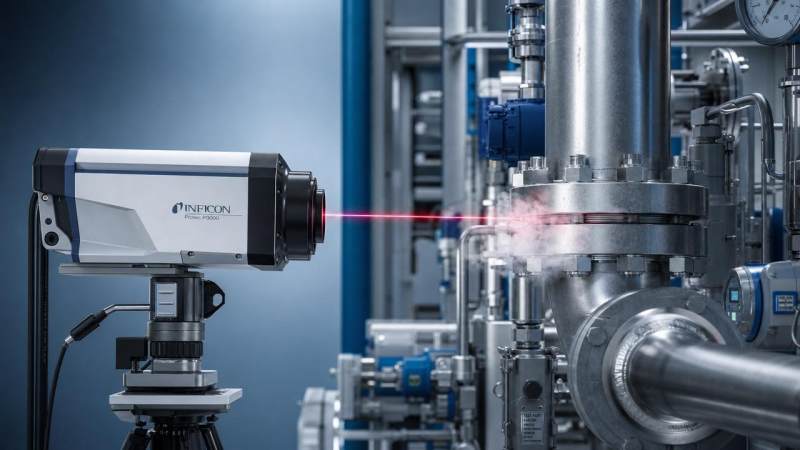
One of the most common misunderstandings is assuming that a functioning instrument automatically delivers correct results. In leak detection, laser measurement depends not only on hardware condition, but also on optical alignment, environmental stability, target surface behavior, gas movement, calibration status, and operator interpretation. A laser-based system may power on, pass a basic self-check, and still produce misleading data if the measurement path is compromised.
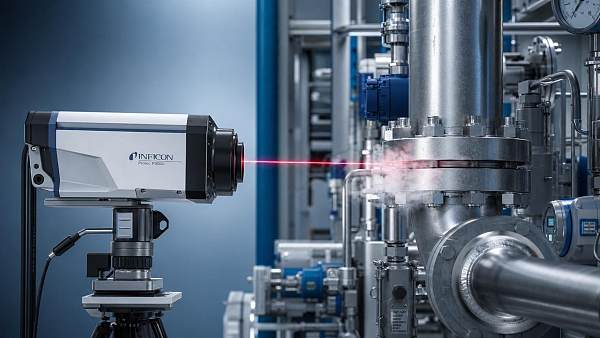
In the instrumentation industry, this matters because leak detection is rarely performed in clean laboratory isolation. It often takes place near hot pipes, reflective metal surfaces, vibrating skids, ventilation outlets, moving equipment, or outdoor process units. Under these conditions, laser measurement can be affected by beam scattering, thermal distortion, background absorption, and unstable stand-off distance. The result is often a false negative, a false positive, or uncertainty large enough to delay maintenance decisions.
Another frequent issue is using a laser measurement method designed for concentration sensing as if it were a direct leak-rate tool. Some systems detect the presence of gas along an optical path, while others estimate plume behavior or support scanning-based localization. If users treat all outputs as directly comparable, they may overestimate leak severity or ignore weak but persistent emissions. Knowing what the instrument truly measures is the first step in avoiding poor decisions.
What setup mistakes cause the biggest errors in laser measurement?
The most damaging errors usually begin before any reading is taken. Misalignment is a major problem. If the laser path does not properly intersect the suspected leak zone, the system may miss the gas plume entirely. This is especially common when technicians rely on visual assumptions rather than confirming flow direction, pressure condition, and air movement around valves, flanges, seals, or enclosed spaces.
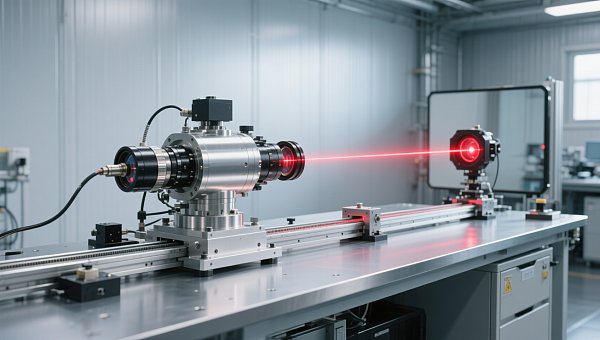
Distance control is another weak point. Many laser measurement systems have performance limits related to stand-off range, beam spread, signal return, or absorption path length. If the device is used too far from the target, the signal can weaken. If it is too close, the scan angle or plume coverage may be inadequate. In both cases, the leak detection result may look stable while actually representing poor measurement geometry.
Surface reflectivity also creates trouble. Shiny steel, painted structures, glass panels, wet surfaces, and rough insulation do not interact with a laser beam in the same way. Reflection quality can alter signal strength, especially in systems that rely on a return path from a background surface. A strong-looking beam path is not always a useful one. In industrial environments, a slight change in angle or target background can significantly improve data quality.
A practical setup checklist helps reduce these risks:
- Confirm what the laser measurement output represents: concentration, path-integrated value, plume indication, or leak estimate.
- Verify beam alignment against the likely gas path, not only the hardware location.
- Check stand-off distance against instrument specifications and field conditions.
- Assess background surface quality and adjust angle if reflection is unstable.
- Repeat measurements from more than one position when possible.
How do environmental conditions distort leak detection results?
Environmental influence is one of the most underestimated limits of laser measurement. Wind is the obvious factor, but not the only one. Fast air movement can dilute a gas plume before the beam crosses it. Turbulence can make the plume intermittent, causing the signal to pulse or disappear. In outdoor facilities, changing wind direction may make a genuine leak seem random, especially during short inspections.
Temperature gradients are equally important. Hot equipment, steam lines, sunlight on metal structures, and exhaust vents can create refractive distortion in the air. This can bend or destabilize the optical path enough to reduce measurement confidence. In power plants, process heating areas, and heavy manufacturing sites, thermal shimmer can make a good laser measurement setup behave inconsistently across different times of day.
Humidity, dust, fog, and aerosol particles can also interfere with leak detection. These factors may scatter the beam, weaken the return signal, or introduce noise that complicates gas identification. In environmental monitoring or wastewater treatment settings, the challenge becomes more pronounced because moisture and mixed gases often occur together. Without recognizing these limits, users may blame the instrument when the real problem is measurement atmosphere.
The best response is not simply “measure more,” but measure more intelligently. Repeat scans under different airflow conditions, compare readings from different angles, and correlate laser measurement data with pressure trends, process changes, or a secondary detection method. Leak detection becomes more reliable when optical readings are interpreted as part of a broader diagnostic picture rather than as a standalone verdict.
How can data interpretation mistakes turn laser measurement into the wrong maintenance decision?
Even when setup is acceptable, interpretation errors can still create serious problems. A common mistake is treating a single peak reading as proof of leak severity. In reality, a high peak may come from a brief plume crossing, a favorable reflection path, or short-term process variation. Conversely, a lower but repeatable reading may indicate a more persistent leak that deserves faster action.
Another issue is ignoring baseline conditions. Every site has some background level, optical noise, and normal process fluctuation. If baseline behavior is not documented, small leak signals may be dismissed as noise, or normal variation may be escalated as a fault. In automated systems and online monitoring, this can trigger unnecessary alarms or hide slow-developing problems.
Laser measurement data should also be interpreted with timing in mind. A reading taken during startup, shutdown, purge, or valve switching may not represent steady-state conditions. Leak detection programs often fail because they compare non-equivalent operating moments. Reliable trend analysis requires consistent timing, repeatable positioning, and awareness of process state.
When is laser measurement the right choice for leak detection, and when should it be combined with other methods?
Laser measurement is highly valuable when access is limited, measurement speed matters, or non-contact inspection improves safety. It works well in elevated pipe racks, fenced process zones, hazardous areas, large perimeter scans, and applications where direct contact methods are slow or disruptive. In the broader instrumentation field, this makes it attractive for industrial automation, environmental compliance, facility inspections, and online monitoring strategies.
However, laser measurement is not always sufficient on its own. If the site contains mixed gases, dense obstructions, enclosed volumes, or highly unstable airflow, a complementary method may be needed. Portable sniffers, fixed gas detectors, pressure decay testing, acoustic methods, soap solution checks, or process trend analysis can provide confirmation. Combining methods is not a sign of weakness; it is often the most efficient path to confident leak detection.
Selection should focus on the decision you need to make. If the goal is fast screening, laser measurement can quickly identify suspect zones. If the goal is precise localization at a fitting or joint, a close-range confirmatory tool may be better. If the goal is continuous safety monitoring, fixed instrumentation may outperform periodic scans. Matching the method to the maintenance question prevents wasted time and avoids overpromising what one technology can deliver.
What practical steps improve laser measurement accuracy over time?
Long-term reliability depends on process discipline more than occasional troubleshooting. Start with routine calibration verification and documented field checks. An instrument that meets calibration requirements in theory may still need practical confirmation under site-specific conditions. Standardizing the inspection route, scan angle, distance, and timing makes repeated laser measurement far more useful for trend comparison.
It is also important to record contextual data, not only final readings. Wind condition, ambient temperature, nearby heat sources, target surface type, and process state often explain why leak detection results differ from one shift to another. In digital plants and automated systems, attaching this context to inspection records improves later analysis and supports better alarm logic, maintenance prioritization, and compliance reporting.
Training should emphasize interpretation limits as much as operation steps. Teams often learn how to hold and aim the device but not how to challenge ambiguous data. A mature laser measurement program includes repeatability checks, uncertainty awareness, and clear rules for when to escalate to a second method. That discipline reduces both missed leaks and unnecessary repairs.
Use this practical improvement framework:
- Define the leak detection objective before scanning.
- Validate alignment, distance, and background surface.
- Observe airflow and thermal conditions before trusting a result.
- Compare repeated laser measurement readings, not isolated values.
- Confirm uncertain cases with another measurement method.
- Store field context for future trending and root-cause review.
Conclusion: how should leak detection teams use laser measurement more effectively?
Laser measurement is a valuable leak detection tool, but it performs best when its limits are understood. Most failures come from setup errors, environmental distortion, poor interpretation, or unrealistic expectations about what the data means. In industrial and instrumentation-driven environments, the most reliable results come from combining sound optical practice with process knowledge and disciplined verification.
To improve outcomes, review current inspection routines, identify where laser measurement results are most often uncertain, and build simple field rules for alignment, repeat checks, and secondary confirmation. A more structured approach can reduce false calls, improve maintenance timing, and make leak detection safer and more defensible in real-world operations.
Recommended for You
 FDA Updates IVD Import Guidance: CNAS Calibration Chain Required for China-Made DevicesFDA now requires CNAS calibration chain reports for China-made IVD analyzers—pH, ion & clinical chemistry devices entering via 510(k)/De Novo. Act now to avoid U.S. port rejections.
 EN 61000-6-4:2026 Enters Force: Stricter EMC Requirements for Industrial Field InstrumentsEN 61000-6-4:2026 enforces stricter EMC requirements for industrial field instruments—key for AI edge controllers, sensors & exporters. Act now to ensure CE-EMC compliance by Nov 2026.
 Global Methanol Electric Alliance Launches Cross-Border Energy Efficiency Recognition RoadmapGlobal Methanol Electric Alliance launches cross-border energy efficiency recognition roadmap—key for exporters, cal labs & methanol-instrument manufacturers.
 Red Sea Crisis Escalates: Air Freight Premiums for China–Middle East Industrial Instruments Hit 390%Red Sea Crisis hits industrial instruments: China–Middle East air freight premiums surge 390%. Act now to secure Q3 capacity, avoid delays & optimize LCL alternatives.
 IEC TC65 Mandates Cybersecurity Certification for Industrial Field Instruments from 2027IEC TC65 mandates cybersecurity certification for industrial field instruments by 2027 — pressure, flow & analytical devices must meet IEC 62443-4-2:2026 and display SL1–SL3 labels. Act now to ensure market access.
 SASO Cuts Energy Labeling Turnaround for Industrial Transmitters to 7 Working DaysSASO Energy Labeling now takes just 7 working days for industrial transmitters — faster market access, CNAS reports accepted. Act now!
 PTB Launches CalCloud 2.0 with Direct CNAS Lab IntegrationCalCloud 2.0 now integrates directly with CNAS labs—enabling automated VDA 5 & ISO/IEC 17025 dual-compliant calibration reports for automotive and industrial exporters. Boost compliance efficiency today!
 ASEAN's Green Clearance Corridor for CNAS Calibration Reports LaunchesASEAN's Green Clearance Corridor now verifies CNAS calibration reports via blockchain—cut customs clearance to <48h for flow meters, analyzers & more. Act now!
 Vietnam Mandates CNAS Calibration Certificates & Vietnamese Manuals for Industrial Meters from June 1, 2026CNAS calibration certificates & Vietnamese manuals now mandatory for industrial meters entering Vietnam from June 1, 2026—avoid customs delays and ensure seamless market access.
 U.S. BIS Tightens Export Controls on High-Precision Laser InterferometersU.S. BIS tightens export controls on high-precision laser interferometers—critical for semiconductor metrology & ISO/IEC 17025 calibration. Act now to ensure compliance.
 Paramagnetic Monitor Calibration Tips for Stable OutputParamagnetic monitor calibration tips for stable output: learn how to reduce drift, improve accuracy, cut downtime, and keep oxygen measurement reliable in demanding industrial applications.
 Paramagnetic Measurement in Low-Oxygen Process ControlParamagnetic measurement enables accurate low-oxygen process control with fast response and stable oxygen analysis. Learn how it improves safety, consistency, and system performance.
 Laser Detector Import Risks and Certification DelaysLaser detector import risks can cause costly certification delays, customs issues, and testing setbacks. Learn how to avoid compliance failures before ordering.
 Explosion Proof Detector Demand Under New Safety RulesExplosion proof detector demand is rising under new safety rules. Discover how to compare certified, reliable options that improve compliance, integration, and long-term site safety.
 Laboratory Detector Accuracy Standards You Should CheckLaboratory detector accuracy standards explained: check detection limits, repeatability, drift, and traceability to reduce risk, improve audit readiness, and choose with confidence.
 Custom Measurement Lead Times and Budget PlanningCustom measurement lead times and budgets explained for procurement teams. Learn key cost drivers, planning steps, and supplier tips to reduce delays and buy with confidence.
 Laser Measurement for Leak Detection: Common PitfallsLaser measurement for leak detection can fail due to setup, airflow, and data interpretation errors. Learn the common pitfalls and proven fixes for more accurate, reliable results.
 How to Evaluate a High Accuracy Detector in the FieldHigh accuracy detector evaluation starts with real field performance. Learn how to compare stability, response time, and reliability to choose the right detector with confidence.
 Electrochemical Monitor Lifespan and Replacement CostsElectrochemical monitor lifespan and replacement costs explained for buyers. Learn how sensor life, maintenance, and total ownership cost affect safer, smarter purchasing decisions.
 Thermal Analysis Market Direction in Process IndustriesThermal analysis market direction in process industries: discover trends, applications, and investment insights that improve quality control, reduce risk, and support smarter industrial decisions.
 Monitoring Shelter Design Priorities for Outdoor SitesMonitoring shelter design starts with protection, climate control, and power reliability. Discover how to choose the right outdoor solution for stable data, safer maintenance, and lower lifecycle risk.
 Fixed Measurement Planning for Multi-Point InstallationsFixed measurement planning is essential for multi-point installations. Learn how to improve accuracy, reliability, compliance, and maintenance efficiency across complex industrial systems.
 Fixed Analysis Systems for Stable Long-Term MonitoringFixed analysis systems enable stable long-term monitoring, reliable data, and better process control. Discover how they improve safety, compliance, and operational efficiency.
 Thermal Gas Applications Expanding in Clean IndustryThermal gas applications are reshaping clean industry with smarter flow measurement, emissions control, and energy optimization. Discover where they cut risk, boost efficiency, and support automation.
 Monitoring Detector Export Rules to Watch in 2026Monitoring detector export rules are changing fast in 2026. Learn the key compliance risks, supplier checks, and trade signals to protect margins and make smarter sourcing decisions.
 Control Detector Setup Mistakes That Affect ReliabilityControl detector setup mistakes can quietly reduce accuracy and uptime. Learn the most common installation, wiring, and calibration errors—and how to avoid them for reliable performance.
 What Defines a High Accuracy Monitor TodayHigh accuracy monitor selection starts with real-world performance. Learn the key accuracy factors, buyer checklist, and how to choose a reliable monitor for industrial control.
 Infrared Monitor Demand in Industrial Safety UpgradesInfrared monitor demand is rising as industrial safety upgrades accelerate. Discover where buyers need it most, how channel partners can sell smarter, and which applications drive long-term growth.
 Thermal Conductivity Monitor Limits in Mixed Gas StreamsThermal conductivity monitor limits in mixed gas streams explained—learn where accuracy drops, what buyers should compare, and how to choose the right analyzer with confidence.
 Laser Monitor vs Infrared Monitor for Fast DetectionLaser monitor vs infrared monitor for fast detection: discover which delivers better precision, response speed, and reliability for industrial monitoring and smarter sensor selection.
 Thermal Gas Analyzer Price Shifts Across Global MarketsThermal gas analyzer price shifts are reshaping global budgets. Learn what drives costs, regional differences, and how buyers can reduce risk and improve long-term value.
 Custom Analysis Options for Complex Gas ApplicationsCustom analysis helps solve complex gas applications with better accuracy, compliance, and reliability. Discover practical selection insights that reduce risk and improve system performance.



Search Categories
Search Categories
Latest Article
- FDA Updates IVD Import Guidance: CNAS Calibration Chain Required for China-Made DevicesFDA now requires CNAS calibration chain reports for China-made IVD analyzers—pH, ion & clinical chemistry devices entering via 510(k)/De Novo. Act now to avoid U.S. port rejections.Posted by:
- EN 61000-6-4:2026 Enters Force: Stricter EMC Requirements for Industrial Field InstrumentsEN 61000-6-4:2026 enforces stricter EMC requirements for industrial field instruments—key for AI edge controllers, sensors & exporters. Act now to ensure CE-EMC compliance by Nov 2026.Posted by:
- Global Methanol Electric Alliance Launches Cross-Border Energy Efficiency Recognition RoadmapGlobal Methanol Electric Alliance launches cross-border energy efficiency recognition roadmap—key for exporters, cal labs & methanol-instrument manufacturers.Posted by:
Please give us a message
